 plumi
Animal tissues, organs and organ systems: AQA GCSE Biology questions
Every AQA GCSE Biology exam question on 4.2.2 Animal tissues, organs and organ systems, 2018–2025, with its mark scheme and examiner’s report.
Find questions1,505
Calculations
Q02.1
The whole paper ↗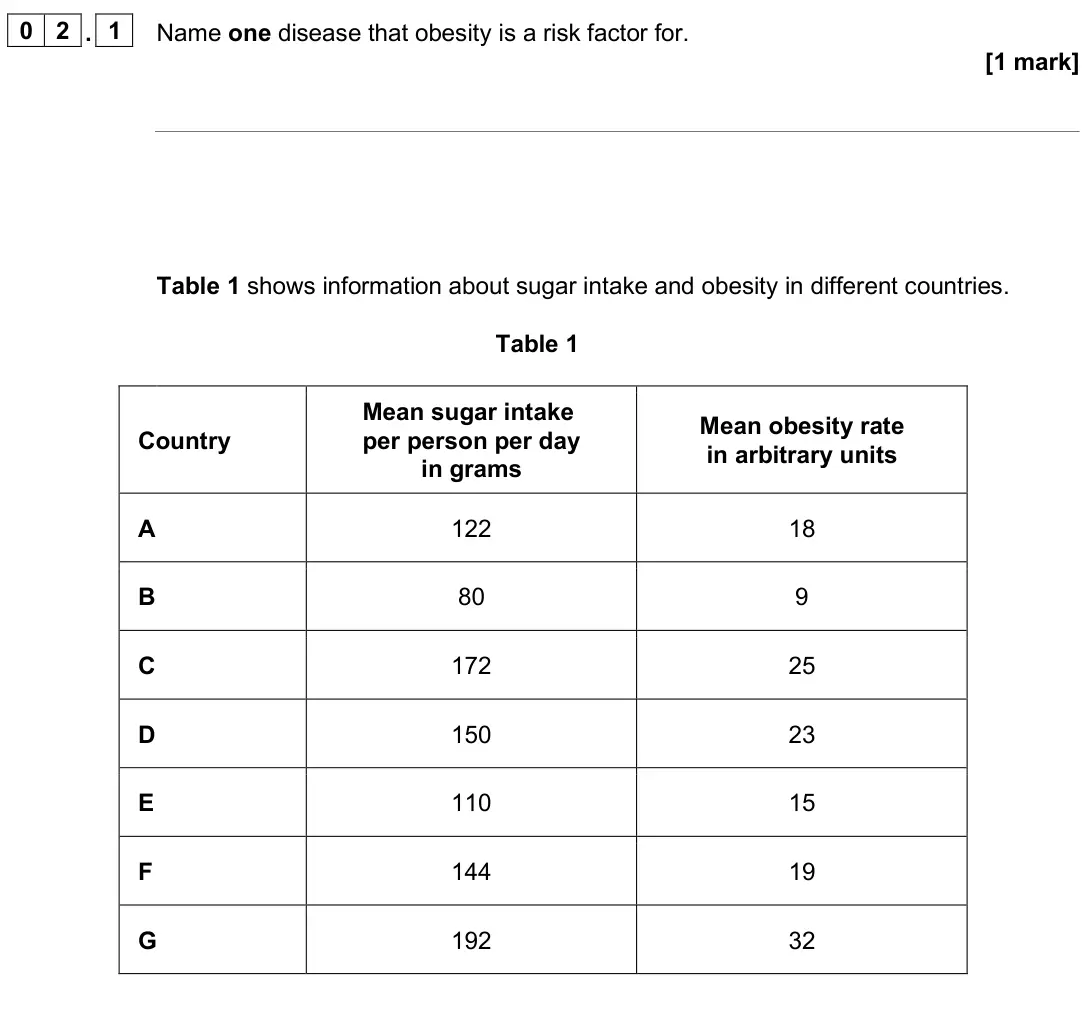
Q02.2
The whole paper ↗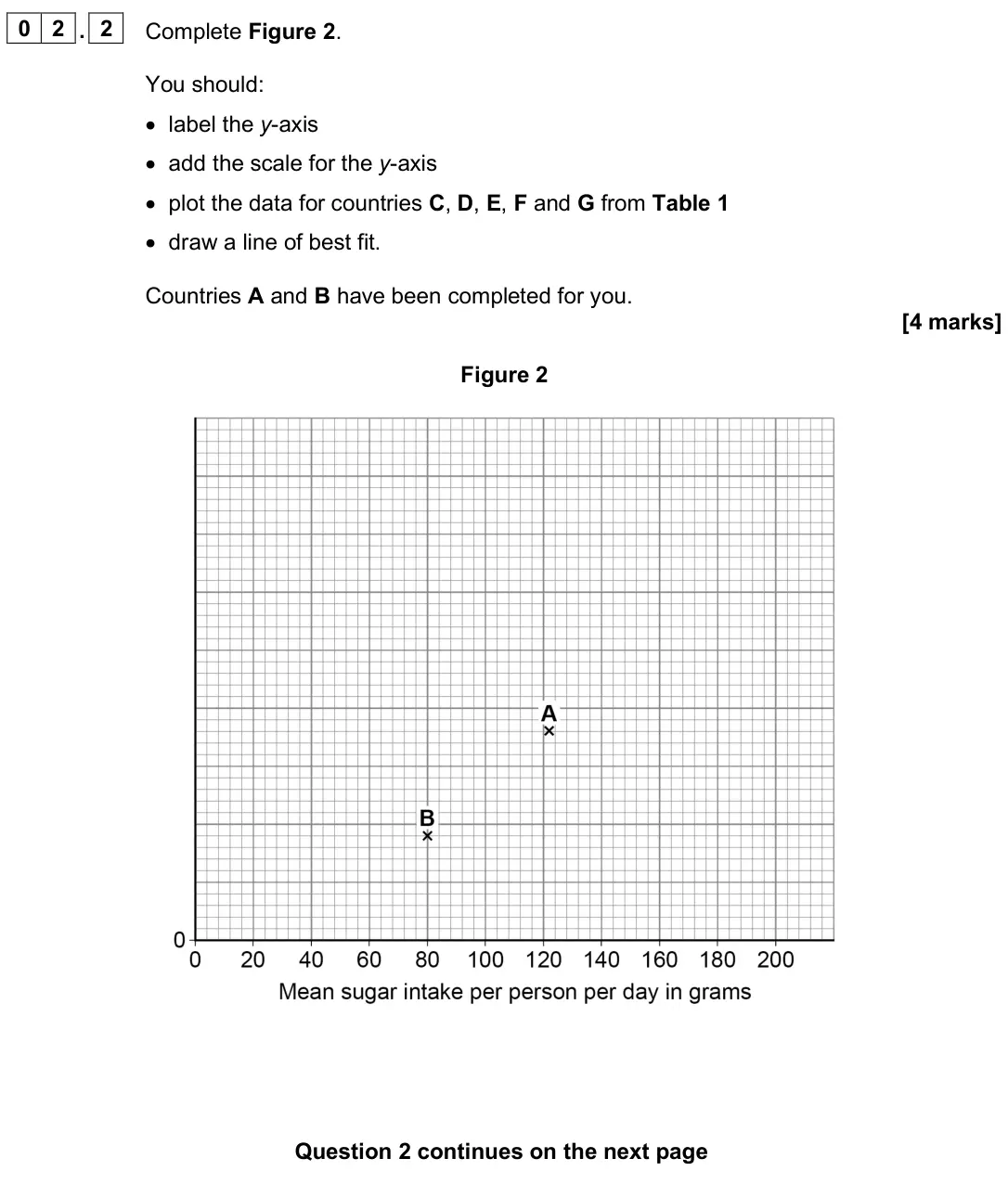
Q02.3
The whole paper ↗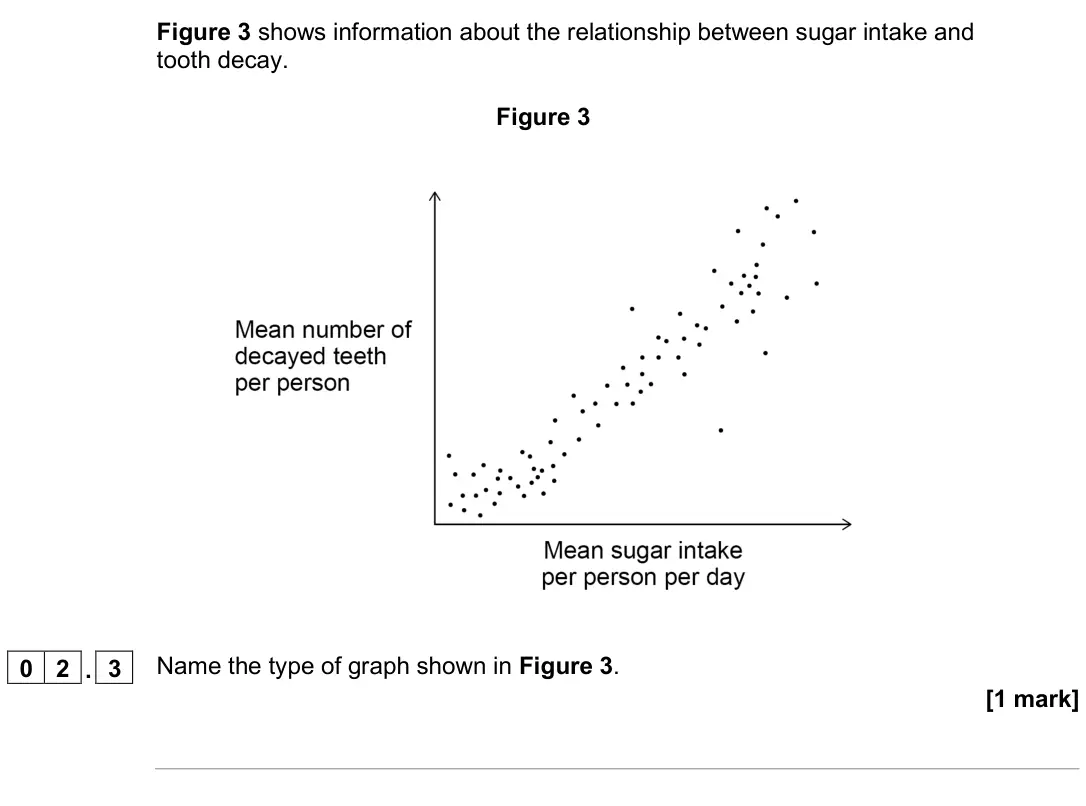
Q02.4
The whole paper ↗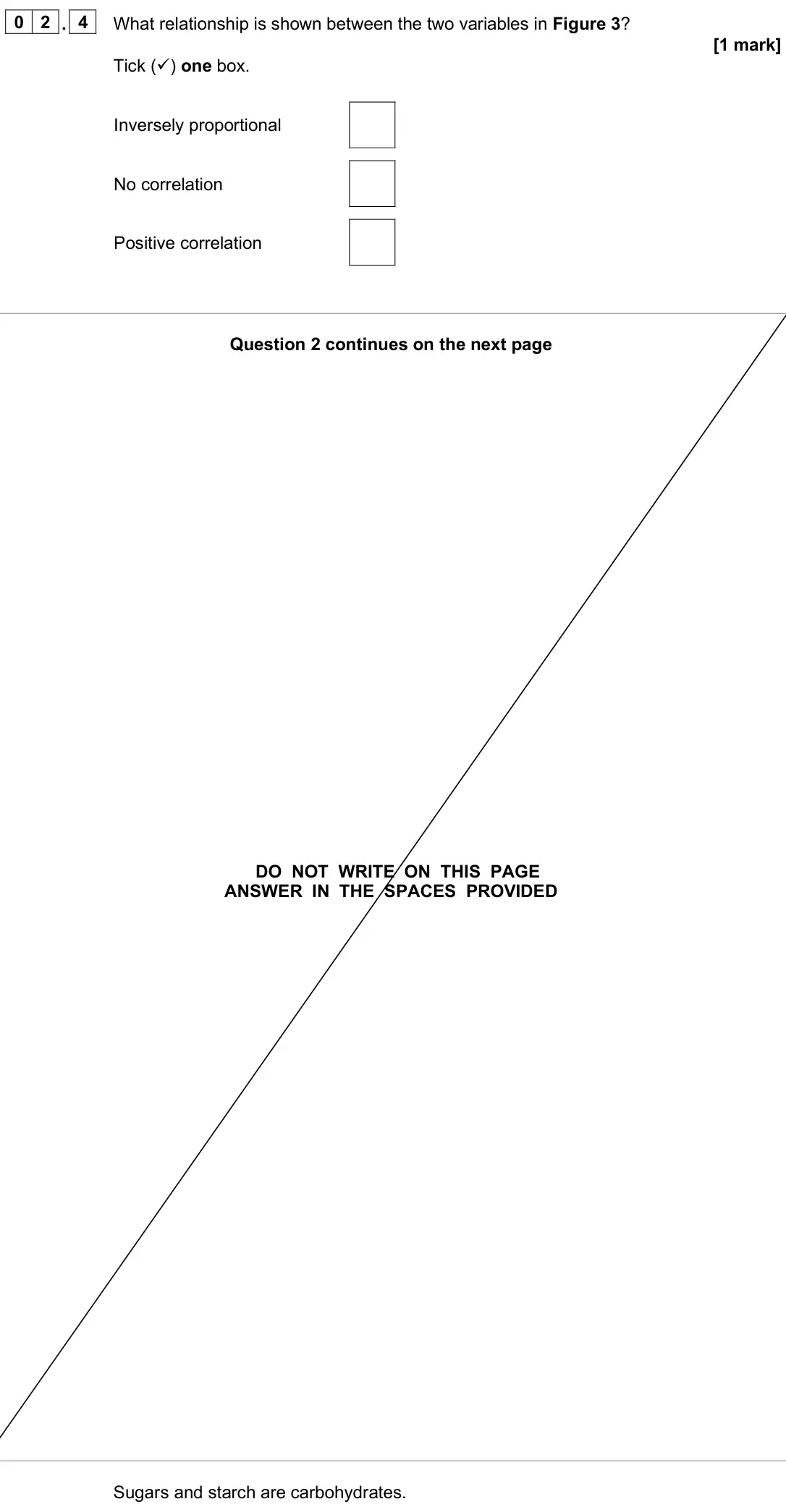
Q02.5
The whole paper ↗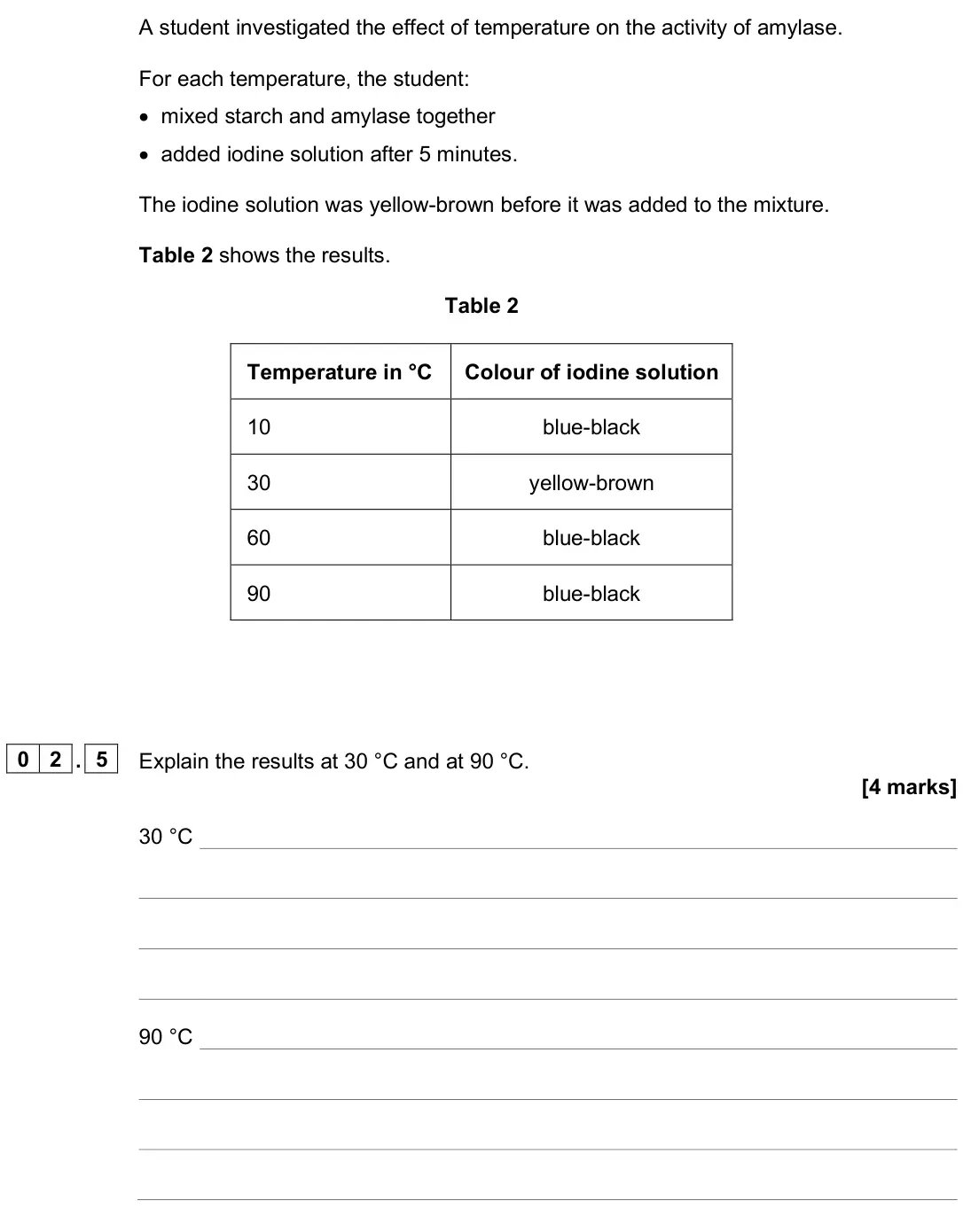
Q02.6
The whole paper ↗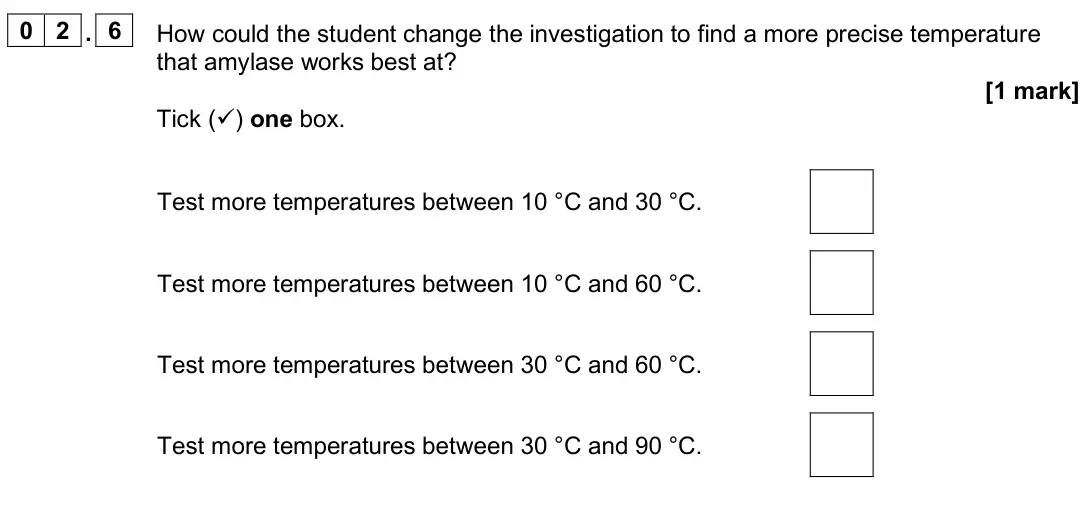
Q02.7
The whole paper ↗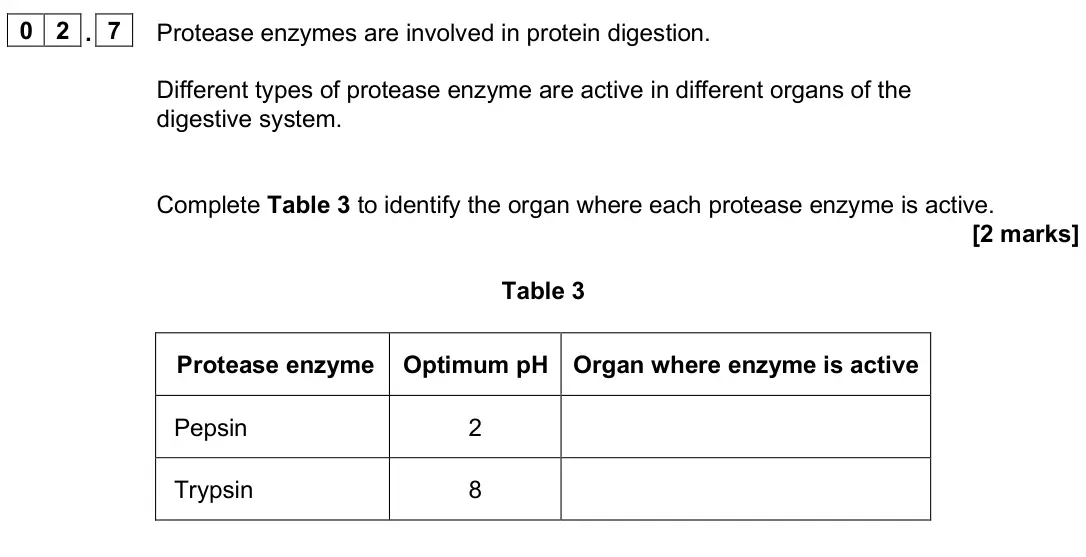
Q04.3
The whole paper ↗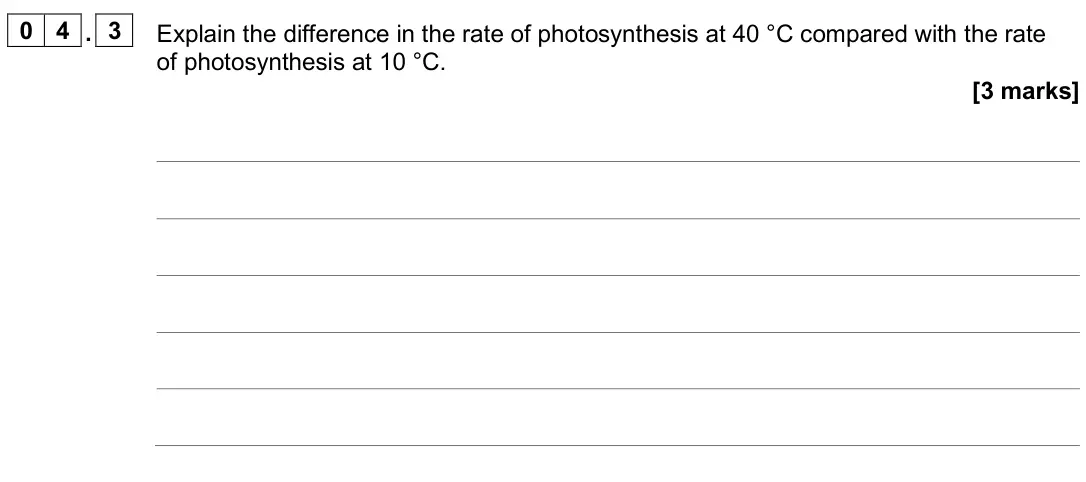
Q05.1
The whole paper ↗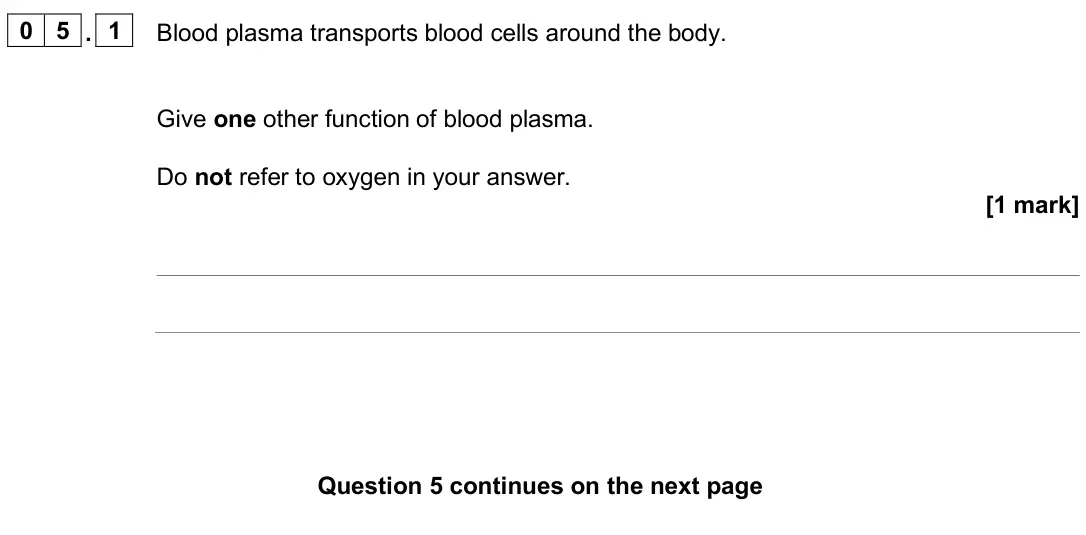
Q05.3
The whole paper ↗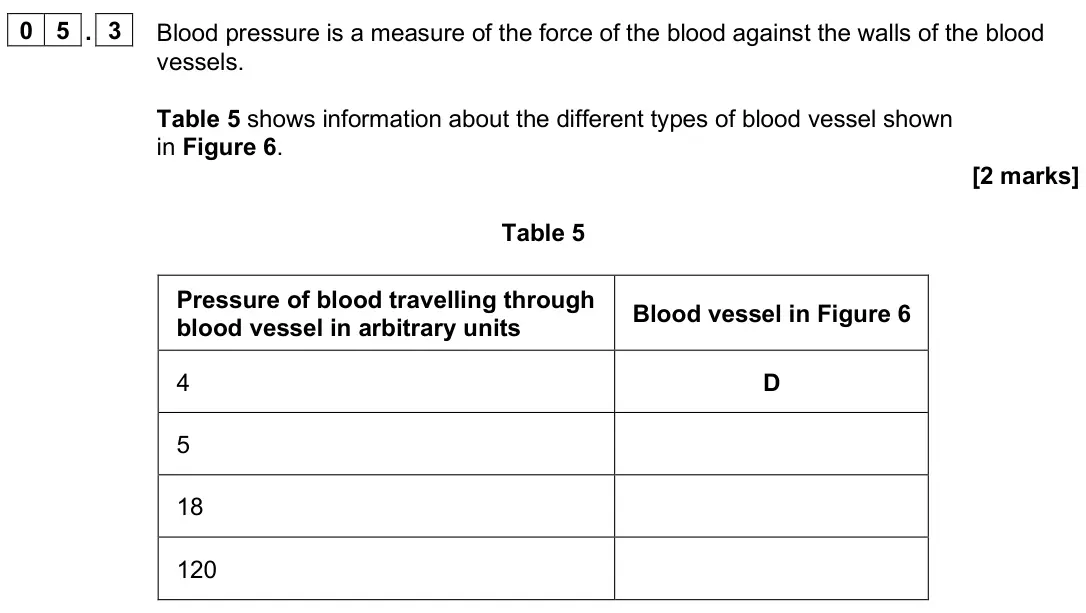
Q05.4
The whole paper ↗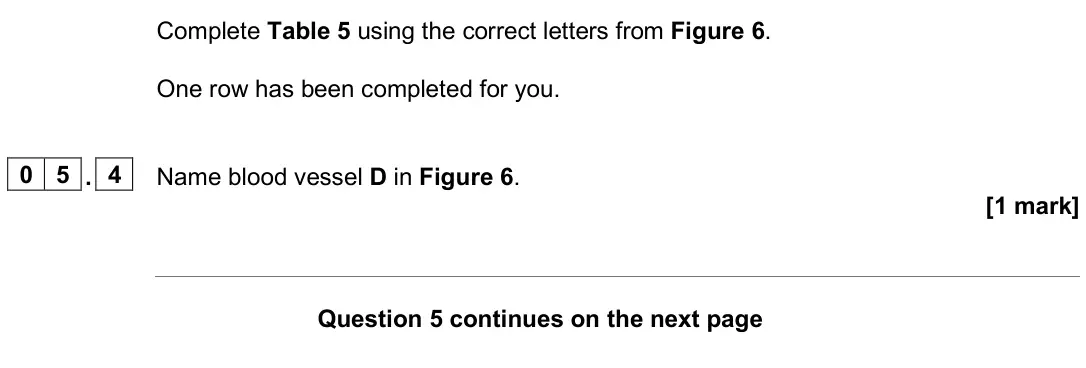
Q05.5
The whole paper ↗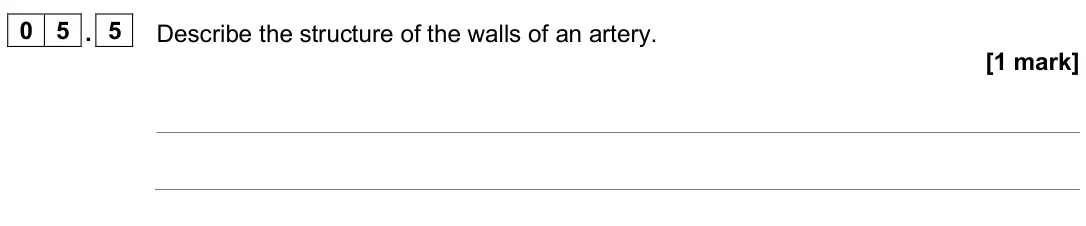
Q05.8
The whole paper ↗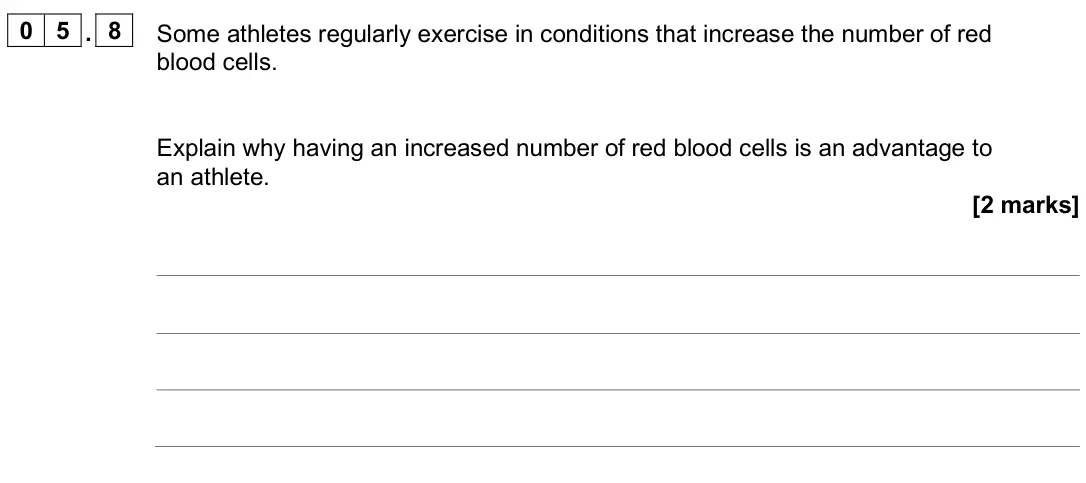
Q07.5
The whole paper ↗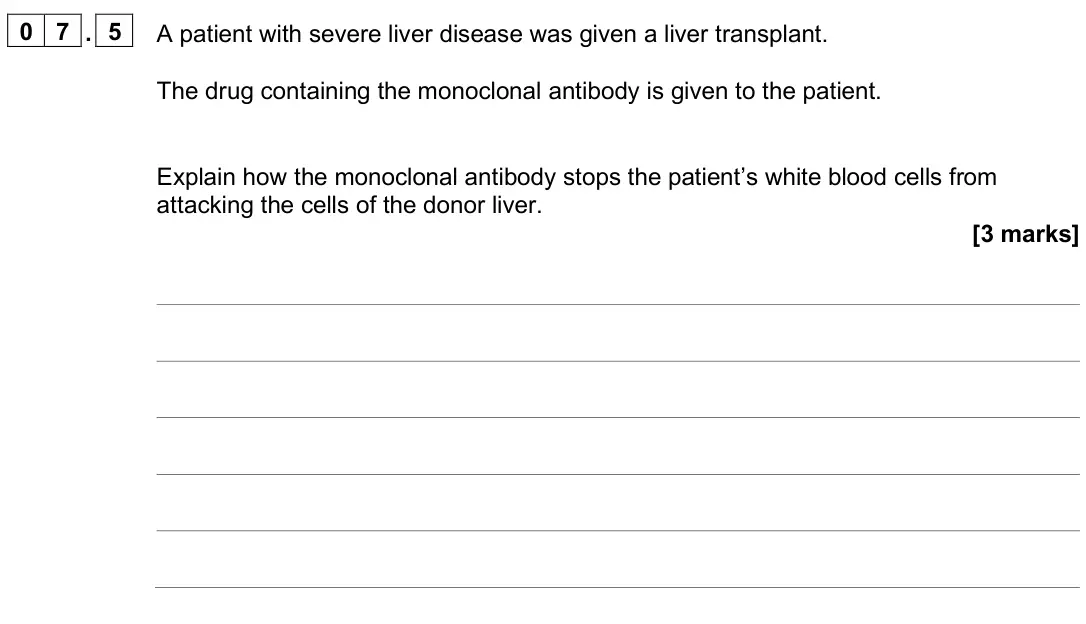
Q07.7
The whole paper ↗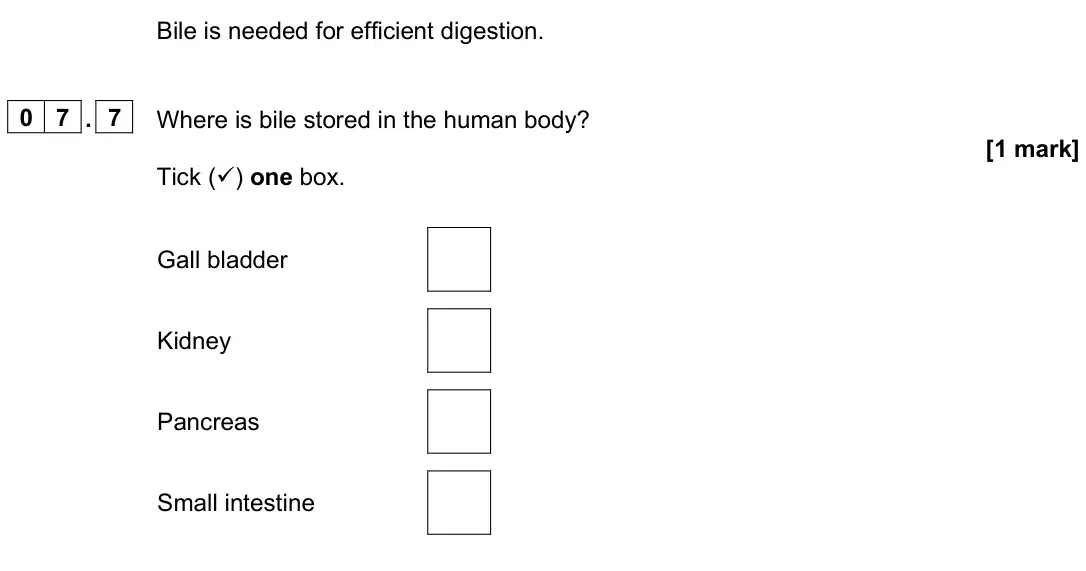
Q07.8
The whole paper ↗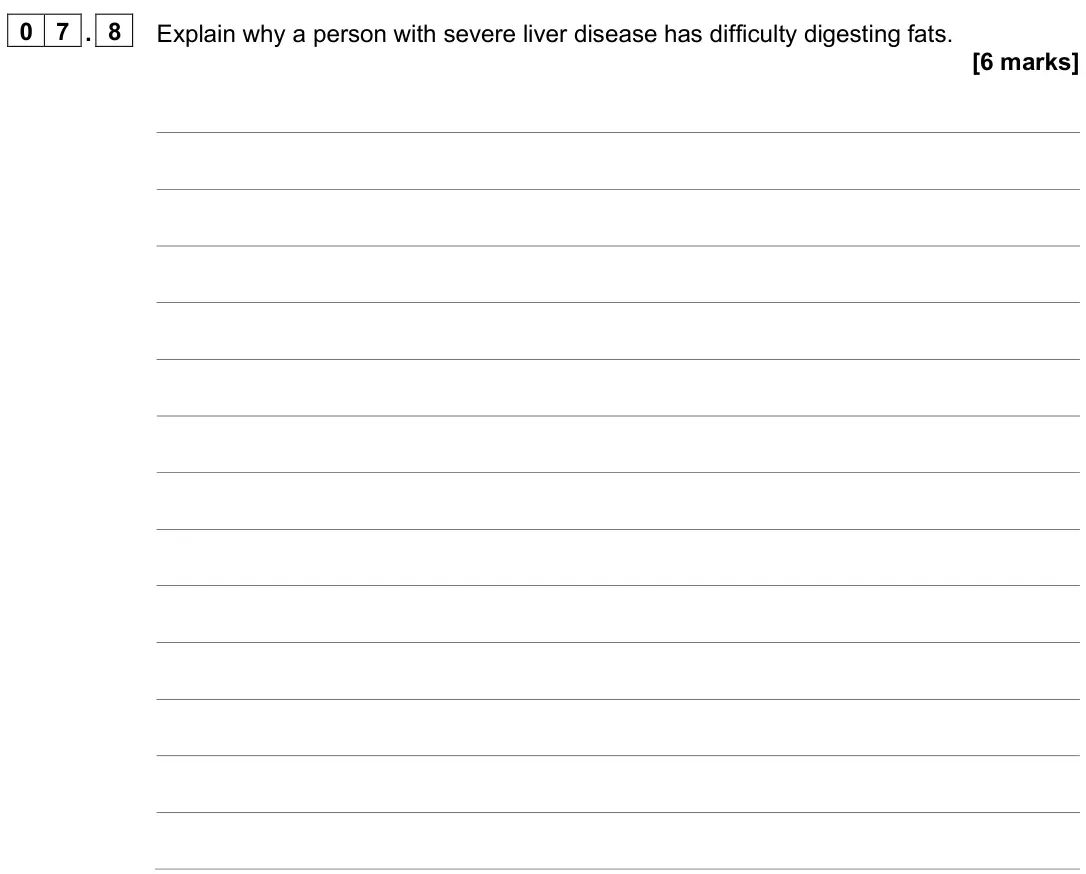
Q08.4
The whole paper ↗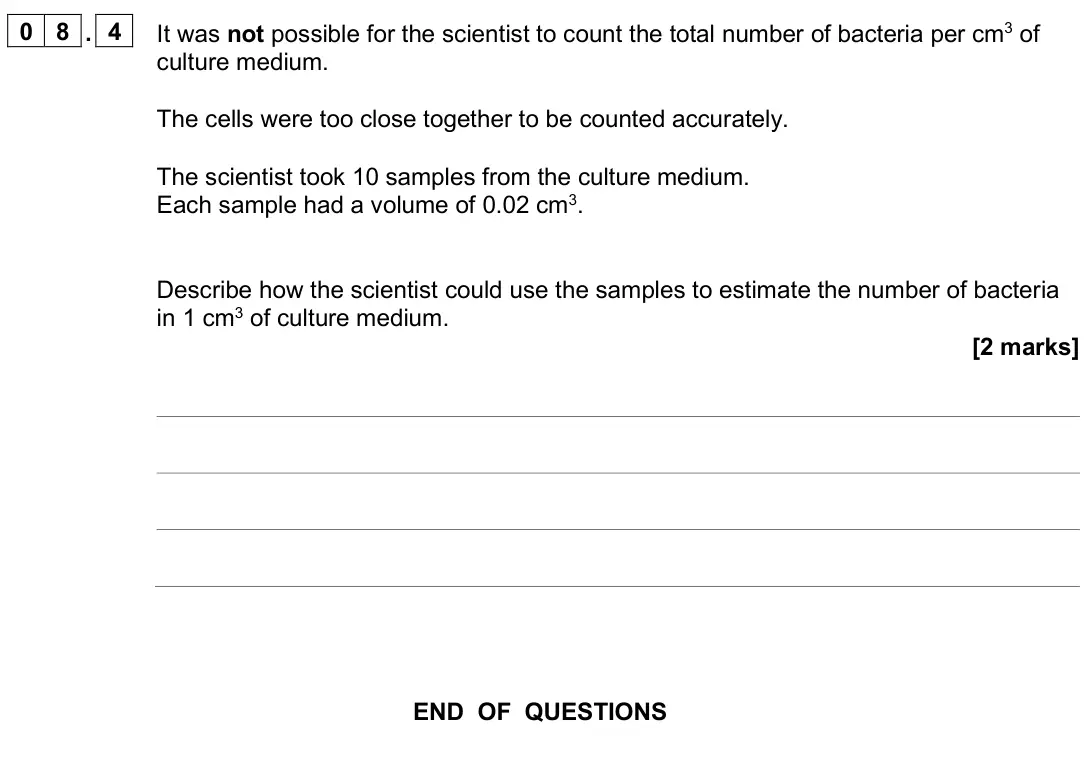
Q03.1
The whole paper ↗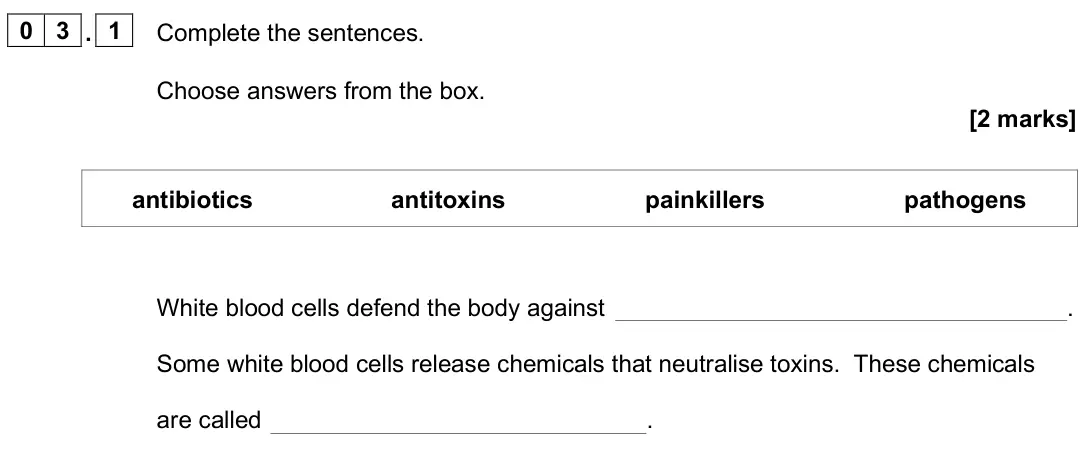
Q03.3
The whole paper ↗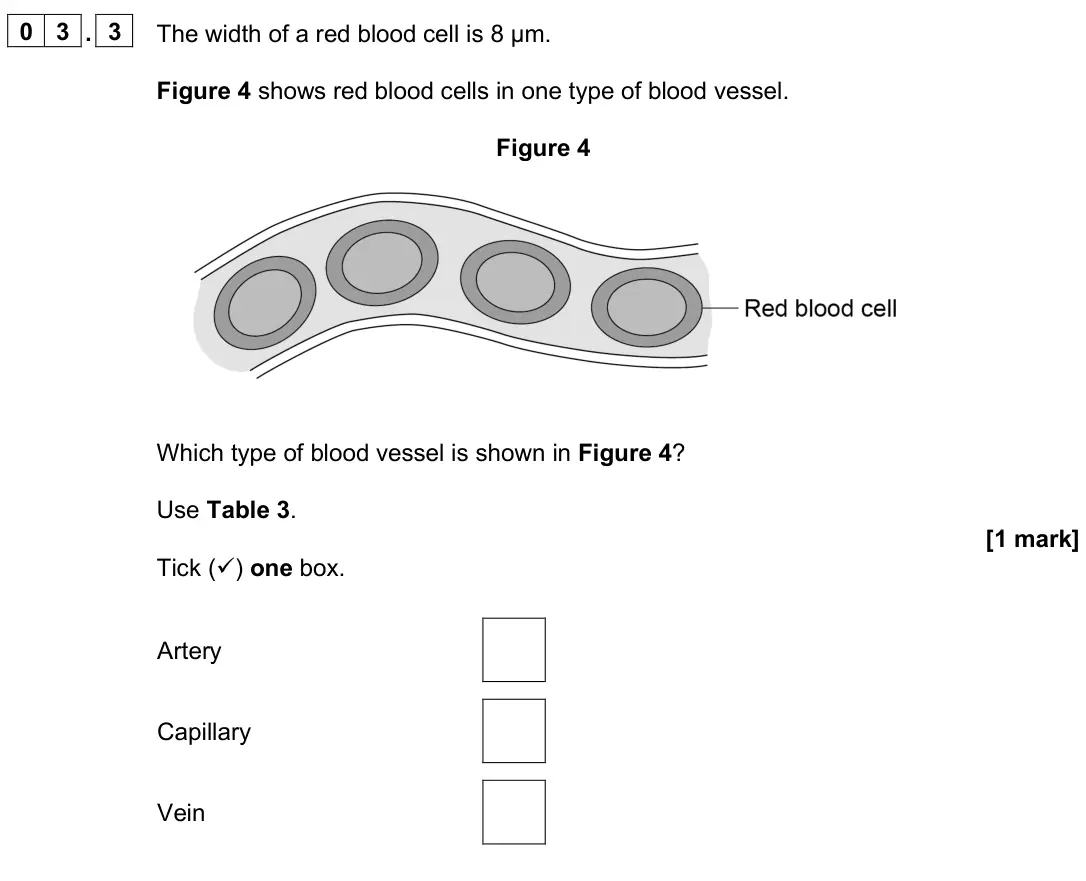
Q03.4
The whole paper ↗
All 246 questions on Animal tissues, organs and organ systems, as a list
- June 2025, Paper 1 Higher, Q02.1 (1 mark): Name one disease that obesity is a risk factor for. [1 mark] Table 1 shows information about sugar intake and obesity in different countries. Table 1 Country Me
- June 2025, Paper 1 Higher, Q02.2 (4 marks): Complete Figure 2. You should: • label the y-axis • add the scale for the y-axis • plot the data for countries C, D, E, F and G from Table 1 • draw a line of be
- June 2025, Paper 1 Higher, Q02.3 (1 mark): Name the type of graph shown in Figure 3. [1 mark]
- June 2025, Paper 1 Higher, Q02.4 (1 mark): What relationship is shown between the two variables in Figure 3? [1 mark] Tick () one box. Inversely proportional No correlation Positive correlation DO NOT W
- June 2025, Paper 1 Higher, Q02.5 (4 marks): Explain the results at 30 °C and at 90 °C. [4 marks] 30 °C 90 °C
- June 2025, Paper 1 Higher, Q02.6 (1 mark): How could the student change the investigation to find a more precise temperature that amylase works best at? [1 mark] Tick () one box. Test more temperatures
- June 2025, Paper 1 Higher, Q02.7 (2 marks): Protease enzymes are involved in protein digestion. Different types of protease enzyme are active in different organs of the digestive system. Complete Table 3
- June 2025, Paper 1 Higher, Q04.3 (3 marks): Explain the difference in the rate of photosynthesis at 40 °C compared with the rate of photosynthesis at 10 °C. [3 marks]
- June 2025, Paper 1 Higher, Q05.1 (1 mark): Blood plasma transports blood cells around the body. Give one other function of blood plasma. Do not refer to oxygen in your answer. [1 mark]
- June 2025, Paper 1 Higher, Q05.3 (2 marks): Blood pressure is a measure of the force of the blood against the walls of the blood vessels. Table 5 shows information about the different types of blood vesse
- June 2025, Paper 1 Higher, Q05.4 (1 mark): Name blood vessel D in Figure 6. [1 mark]
- June 2025, Paper 1 Higher, Q05.5 (1 mark): Describe the structure of the walls of an artery. [1 mark]
- June 2025, Paper 1 Higher, Q05.8 (2 marks): Some athletes regularly exercise in conditions that increase the number of red blood cells. Explain why having an increased number of red blood cells is an adva
- June 2025, Paper 1 Higher, Q07.5 (3 marks): A patient with severe liver disease was given a liver transplant. The drug containing the monoclonal antibody is given to the patient. Explain how the monoclona
- June 2025, Paper 1 Higher, Q07.7 (1 mark): Where is bile stored in the human body? [1 mark] Tick () one box. Gall bladder Kidney Pancreas Small intestine
- June 2025, Paper 1 Higher, Q07.8 (6 marks): Explain why a person with severe liver disease has difficulty digesting fats. [6 marks]
- June 2025, Paper 1 Higher, Q08.4 (2 marks): It was not possible for the scientist to count the total number of bacteria per cm3 of culture medium. The cells were too close together to be counted accuratel
- June 2025, Paper 1 Foundation, Q03.1 (2 marks): Complete the sentences. Choose answers from the box. [2 marks] antibiotics antitoxins painkillers pathogens White blood cells defend the body against . Some whi
- June 2025, Paper 1 Foundation, Q03.3 (1 mark): The width of a red blood cell is 8 µm. Figure 4 shows red blood cells in one type of blood vessel. Figure 4 Which type of blood vessel is shown in Figure 4? Use
- June 2025, Paper 1 Foundation, Q03.4 (2 marks): Explain why arteries need to have thick walls. Use Table 3. [2 marks]
- June 2025, Paper 1 Foundation, Q03.5 (1 mark): What happens inside coronary arteries to cause them to become narrowed? [1 mark]
- June 2025, Paper 1 Foundation, Q03.6 (2 marks): Explain why narrowed coronary arteries can be dangerous. [2 marks]
- June 2025, Paper 1 Foundation, Q03.7 (3 marks): Treatments are available for some cardiovascular diseases. Draw one line from each cardiovascular disease to a treatment for the disease. [3 marks]
- June 2025, Paper 1 Foundation, Q03.8 (1 mark): Why is coronary heart disease described as a ‘non-communicable disease’? [1 mark]
- June 2025, Paper 1 Foundation, Q05.2 (1 mark): Name the organs where gas exchange takes place in humans. [1 mark]
- June 2025, Paper 1 Foundation, Q07.1 (1 mark): Name one disease that obesity is a risk factor for. [1 mark] Table 5 shows information about sugar intake and obesity in different countries. Table 5 Country Me
- June 2025, Paper 1 Foundation, Q07.2 (4 marks): Complete Figure 10. You should: • label the y-axis • add the scale for the y-axis • plot the data for countries C, D, E, F and G from Table 5 • draw a line of b
- June 2025, Paper 1 Foundation, Q07.3 (1 mark): Name the type of graph shown in Figure 11. [1 mark]
- June 2025, Paper 1 Foundation, Q07.4 (1 mark): What relationship is shown between the two variables in Figure 11? [1 mark] Tick () one box. Inversely proportional No correlation Positive correlation DO NOT
- June 2025, Paper 1 Foundation, Q07.5 (4 marks): Explain the results at 30 °C and at 90 °C. [4 marks] 30 °C 90 °C
- June 2025, Paper 1 Foundation, Q07.6 (1 mark): How could the student change the investigation to find a more precise temperature that amylase works best at? [1 mark] Tick () one box. Test more temperatures
- June 2025, Paper 1 Foundation, Q07.7 (2 marks): Protease enzymes are involved in protein digestion. Different types of protease enzyme are active in different organs of the digestive system. Complete Table 7
- June 2025, Paper 2 Higher, Q04.2 (1 mark): hGH is a protein. A child with a deficiency of hGH can be given injections of hGH. What would happen to the hGH if it was given as a tablet that was swallowed?
- June 2025, Paper 2 Higher, Q08.3 (4 marks): White rabbits have one base change in the gene that codes for the enzyme tyrosinase. Explain how a change of one base in the DNA of the gene coding for tyrosina
- June 2025, Paper 2 Higher, Q08.4 (2 marks): The fur on the nose, ears and feet of Himalayan rabbits is white for the first four weeks of life. Explain what causes the fur to be white in the first four wee
- June 2025, Paper 2 Higher, Q08.6 (2 marks): Melanin is also produced in human skin. Melanin absorbs ultraviolet (UV) radiation from sunlight and prevents the radiation reaching deep into the skin. UV radi
- June 2024, Paper 1 Higher, Q01.1 (1 mark): Which blood vessels are affected by coronary heart disease? [1 mark] Tick () one box. Arteries Capillaries Veins A person’s heart stops beating. The person sto
- June 2024, Paper 1 Higher, Q01.2 (2 marks): Explain why putting pressure on the heart helps the person. [2 marks]
- June 2024, Paper 1 Higher, Q01.3 (1 mark): The first-aider also forces air into the person’s lungs by blowing into their mouth. Describe how forcing air into the person’s lungs helps the person. [1 mark]
- June 2024, Paper 1 Higher, Q01.4 (1 mark): The person’s heart starts to beat again and the person starts breathing. The person has a high level of cholesterol in their blood. Name one type of drug that w
- June 2024, Paper 1 Higher, Q01.5 (2 marks): A doctor decides that the person needs to have a stent fitted. Explain how a stent works to treat coronary heart disease. [2 marks]
- June 2024, Paper 1 Higher, Q01.6 (2 marks): Give two conclusions that can be made from the data in Table 1. [2 marks] 1 2
- June 2024, Paper 1 Higher, Q01.7 (4 marks): Complete Figure 1. You should: • label the y-axis • add the correct scale to the y-axis • plot the data from Table 1 • label each bar. The bar for cardiovascula
- June 2024, Paper 1 Higher, Q01.8 (1 mark): Describe one lifestyle factor that can increase the risk of cardiovascular disease. Do not refer to smoking in your answer. [1 mark]
- June 2024, Paper 1 Higher, Q02.2 (1 mark): Figure 2 shows organs of the human body. Figure 2 Which letters in Figure 2 show the lungs, the pancreas and the small intestine? [1 mark] Tick () one box. A,
- June 2024, Paper 1 Higher, Q02.3 (6 marks): The pancreas produces several digestive enzymes. CF reduces the amount of each enzyme that reaches the small intestine. Explain why a person with CF has: • diff
- June 2024, Paper 1 Higher, Q02.4 (3 marks): Gas exchange happens in the alveoli in the lungs. Describe three features of the alveoli that help maximise gas exchange. [3 marks] 1 2 3
- June 2024, Paper 1 Higher, Q03.1 (6 marks): Describe the chemical tests that could be used to show the presence of the two types of carbohydrate in cake. Include a risk assessment in your answer. [6 marks
- June 2024, Paper 1 Higher, Q03.2 (1 mark): What was the dependent variable in the investigation? [1 mark]
- June 2024, Paper 1 Higher, Q03.3 (1 mark): Give one control variable the student should have used in the investigation. [1 mark]
- June 2024, Paper 1 Higher, Q03.4 (3 marks): During the investigation, the bread began to taste sweet in the student’s mouth. Explain why the bread tasted sweet. [3 marks]
- June 2024, Paper 1 Higher, Q03.5 (1 mark): Suggest one reason why the results of the investigation were not valid. Do not refer to control variables in your answer. [1 mark]
- June 2024, Paper 1 Higher, Q08.5 (1 mark): Give the reason why a drug that stops cell division helps to treat cancer. [1 mark]
- June 2024, Paper 1 Foundation, Q02.3 (3 marks): How many more bacteria were killed at pH1 than at pH5 in 24 hours? Complete the following steps. [3 marks] Calculate the number of bacteria killed at pH1 Calcul
- June 2024, Paper 1 Foundation, Q02.4 (2 marks): A student calculated value X in Table 1 to be 43 Suggest how the student calculated this value. [2 marks]
- June 2024, Paper 1 Foundation, Q03.1 (2 marks): The measles vaccine is given to children to prevent them becoming ill with measles. Draw one line from each blood component to its function when someone is vacc
- June 2024, Paper 1 Foundation, Q04.1 (4 marks): Describe the chemical tests that a student could use to show if bread contains: • starch • sugar. You should include the results of a positive test and a negati
- June 2024, Paper 1 Foundation, Q04.2 (2 marks): Complete the sentences. Choose answers from the box. [2 marks] amylase fat lipase protease sugar The starch in the bread was broken down by the enzyme . The enz
- June 2024, Paper 1 Foundation, Q04.3 (1 mark): What was the independent variable in the investigation? [1 mark] Tick () one box. The size of the piece of bread The temperature of the mouth The type of bread
- June 2024, Paper 1 Foundation, Q04.4 (2 marks): Give two conclusions that can be made from the results in Table 2. [2 marks] 1 2 Table 2 is repeated below. Table 2 Type of bread Time taken for bread to taste
- June 2024, Paper 1 Foundation, Q04.5 (2 marks): What did the student do to improve the investigation? Use Table 2 and Table 3. [2 marks]
- June 2024, Paper 1 Foundation, Q04.6 (2 marks): Calculate value X in Table 3. [2 marks] X = seconds
- June 2024, Paper 1 Foundation, Q04.7 (1 mark): Why should the student do the investigation with more people? [1 mark] Tick () one box. Each person’s sense of taste is different. More people would make the i
- June 2024, Paper 1 Foundation, Q05.1 (2 marks): Which two factors can cause cancer? [2 marks] Tick () two boxes. Antibiotics Ionising radiation Monoclonal antibodies Salmonella Viruses
- June 2024, Paper 1 Foundation, Q05.2 (1 mark): What type of cell division occurs in cancerous cells? [1 mark] Tick () one box. Binary fission Fertilisation Mitosis
- June 2024, Paper 1 Foundation, Q07.1 (1 mark): Which blood vessels are affected by coronary heart disease? [1 mark] Tick () one box. Arteries Capillaries Veins A person’s heart stops beating. The person sto
- June 2024, Paper 1 Foundation, Q07.2 (2 marks): Explain why putting pressure on the heart helps the person. [2 marks]
- June 2024, Paper 1 Foundation, Q07.3 (1 mark): The first-aider also forces air into the person’s lungs by blowing into their mouth. Describe how forcing air into the person’s lungs helps the person. [1 mark]
- June 2024, Paper 1 Foundation, Q07.4 (1 mark): The person’s heart starts to beat again and the person starts breathing. The person has a high level of cholesterol in their blood. Name one type of drug that w
- June 2024, Paper 1 Foundation, Q07.5 (2 marks): A doctor decides that the person needs to have a stent fitted. Explain how a stent works to treat coronary heart disease. [2 marks]
- June 2024, Paper 1 Foundation, Q07.6 (2 marks): Give two conclusions that can be made from the data in Table 5. [2 marks] 1 2
- June 2024, Paper 1 Foundation, Q07.7 (4 marks): Complete Figure 6. You should: • label the y-axis • add the correct scale to the y-axis • plot the data from Table 5 • label each bar. The bar for cardiovascula
- June 2024, Paper 1 Foundation, Q07.8 (1 mark): Describe one lifestyle factor that can increase the risk of cardiovascular disease. Do not refer to smoking in your answer. [1 mark]
- June 2024, Paper 1 Foundation, Q08.2 (1 mark): Figure 7 shows organs of the human body. Figure 7 Which letters in Figure 7 show the lungs, the pancreas and the small intestine? [1 mark] Tick () one box. A,
- June 2024, Paper 1 Foundation, Q08.3 (6 marks): The pancreas produces several digestive enzymes. CF reduces the amount of each enzyme that reaches the small intestine. Explain why a person with CF has: • diff
- June 2024, Paper 1 Foundation, Q08.4 (3 marks): Gas exchange happens in the alveoli in the lungs. Describe three features of the alveoli that help maximise gas exchange. [3 marks] 1 2 3
- June 2024, Paper 2 Higher, Q02.1 (3 marks): Explain why most of the dead remains of plants in layer B do not decay. [3 marks]
- June 2024, Paper 2 Foundation, Q10.1 (3 marks): Explain why most of the dead remains of plants in layer B do not decay. [3 marks]
- June 2023, Paper 1 Higher, Q02.1 (1 mark): Which part of the heart receives oxygenated blood from the lungs? [1 mark] Tick () one box. A B C D
- June 2023, Paper 1 Higher, Q02.2 (1 mark): Which part of the heart pumps deoxygenated blood to the lungs? [1 mark] Tick () one box. A B C D
- June 2023, Paper 1 Higher, Q02.3 (1 mark): A group of cells called the pacemaker controls the resting heart rate. Where in the heart is the pacemaker found? [1 mark] Tick () one box. Left atrium Left ve
- June 2023, Paper 1 Higher, Q02.4 (2 marks): Figure 2 shows a cross section of an artery and of a vein. Figure 2 Describe two ways that the structure of an artery is different from the structure of a vein.
- June 2023, Paper 1 Higher, Q02.5 (1 mark): In coronary heart disease, the coronary arteries become narrower. A build-up of fatty material can cause a blockage in a coronary artery. Table 2 shows how a bl
- June 2023, Paper 1 Higher, Q02.6 (4 marks): Complete Figure 3. You should: • use a suitable scale for the y-axis • plot the data from Table 2 • draw a line of best fit. [4 marks] Figure 3
- June 2023, Paper 1 Higher, Q02.7 (1 mark): Predict the blood flow in a coronary artery with a 35% blockage. Use Figure 3. [1 mark] Blood flow = cm3/minute
- June 2023, Paper 1 Higher, Q02.8 (6 marks): Explain the effect of a partly blocked coronary artery on the human body. [6 marks]
- June 2023, Paper 1 Higher, Q02.9 (2 marks): There are different treatments for a blockage in a coronary artery. Explain how one treatment for a blockage in a coronary artery works. [2 marks]
- June 2023, Paper 1 Higher, Q05.3 (2 marks): During one stage of malaria infection, the malarial protists enter red blood cells and cause them to burst. Explain why the bursting of red blood cells causes t
- June 2023, Paper 1 Higher, Q05.7 (2 marks): Different types of disease may interact. Scientists studied the incidence of malaria infections in children: • with disorder S • without disorder S. The inciden
- June 2023, Paper 1 Foundation, Q02.3 (1 mark): Complete the sentence. Choose the answer from the box. [1 mark] digestion division metabolism A tumour can form when changes to cells cause uncontrolled cell .
- June 2023, Paper 1 Foundation, Q02.4 (2 marks): Malignant tumours are cancers. Which two sentences describe malignant tumours? [2 marks] Tick () two boxes. Malignant tumours are only found in the reproductiv
- June 2023, Paper 1 Foundation, Q02.5 (1 mark): What does Table 2 show about the percentage of females with HPV from 2010 to 2016? [1 mark]
- June 2023, Paper 1 Foundation, Q02.6 (1 mark): Suggest the reason for the change you described in Question 02.5. [1 mark]
- June 2023, Paper 1 Foundation, Q04.6 (1 mark): When a person has malaria, the protists destroy red blood cells. What change would happen in the blood of a person with malaria? [1 mark] Tick () one box. Decr
- June 2023, Paper 1 Foundation, Q04.9 (2 marks): Different types of disease may interact. Scientists studied how having disorder S interacts with malaria. The scientists calculated the chance of children with
- June 2023, Paper 1 Foundation, Q05.2 (1 mark): What are proteins made of? [1 mark] Tick () one box. Amino acids Fatty acids Glucose Starch
- June 2023, Paper 1 Foundation, Q05.3 (1 mark): Which chemical is used to test for protein in food? [1 mark] Tick () one box. Benedict’s reagent Biuret reagent Ethanol
- June 2023, Paper 1 Foundation, Q05.4 (1 mark): What colour would be seen in a positive test for protein? [1 mark] Tick () one box. Black Purple Red White Enzymes break down food molecules in the human body.
- June 2023, Paper 1 Foundation, Q05.5 (2 marks): Characteristics of enzymes are linked to their function. Draw one line from each characteristic to its effect on enzyme function. [2 marks] Characteristic Effec
- June 2023, Paper 1 Foundation, Q05.6 (1 mark): Which pH does enzyme Y work fastest at? [1 mark] pH =
- June 2023, Paper 1 Foundation, Q05.7 (2 marks): Explain why enzyme X works best in the stomach. [2 marks]
- June 2023, Paper 1 Foundation, Q05.8 (2 marks): Complete the sentences. Choose answers from the box. [2 marks] active site antigen glucose starch substrate
- June 2023, Paper 1 Foundation, Q05.9 (6 marks): Amylase is an enzyme which breaks down starch. A student investigated the effect of pH on the rate of starch breakdown by amylase. Figure 4 shows some of the ap
- June 2023, Paper 1 Foundation, Q07.1 (1 mark): Which part of the heart receives oxygenated blood from the lungs? [1 mark] Tick () one box. A B C D
- June 2023, Paper 1 Foundation, Q07.2 (1 mark): Which part of the heart pumps deoxygenated blood to the lungs? [1 mark] Tick () one box. A B C D
- June 2023, Paper 1 Foundation, Q07.3 (1 mark): A group of cells called the pacemaker controls the resting heart rate. Where in the heart is the pacemaker found? [1 mark] Tick () one box. Left atrium Left ve
- June 2023, Paper 1 Foundation, Q07.4 (2 marks): Figure 6 shows a cross section of an artery and of a vein. Figure 6 Describe two ways that the structure of an artery is different from the structure of a vein.
- June 2023, Paper 1 Foundation, Q07.5 (1 mark): In coronary heart disease, the coronary arteries become narrower. A build-up of fatty material can cause a blockage in a coronary artery. Table 6 shows how a bl
- June 2023, Paper 1 Foundation, Q07.6 (4 marks): Complete Figure 7. You should: • use a suitable scale for the y-axis • plot the data from Table 6 • draw a line of best fit. [4 marks] Figure 7
- June 2023, Paper 1 Foundation, Q07.7 (1 mark): Predict the blood flow in a coronary artery with a 35% blockage. Use Figure 7. [1 mark] Blood flow = cm3/minute
- June 2023, Paper 1 Foundation, Q07.8 (6 marks): Explain the effect of a partly blocked coronary artery on the human body. [6 marks]
- June 2023, Paper 1 Foundation, Q07.9 (2 marks): There are different treatments for a blockage in a coronary artery. Explain how one treatment for a blockage in a coronary artery works. [2 marks]
- June 2023, Paper 2 Higher, Q04.5 (3 marks): Milk contains lipids. The lipids are broken down when the milk decays. Explain why the pH changes more quickly when the temperature is higher. [3 marks]
- June 2023, Paper 2 Foundation, Q05.4 (1 mark): As the milk decays, the bacteria digest fats in the milk. What type of acid is produced by digestion of fats in the milk? [1 mark] Tick () one box. Amino acid
- June 2023, Paper 2 Foundation, Q05.5 (1 mark): Why did the pH not fall below pH 4.5 at 20 °C? [1 mark] Tick () one box. All the fat had been digested. The reaction was too fast. The temperature was too low.
- June 2022, Paper 1 Higher, Q02.4 (1 mark): Where is protein digested in the human digestive system? [1 mark] Tick () one box. Large intestine Liver Salivary glands Stomach
- June 2022, Paper 1 Higher, Q02.5 (1 mark): Which chemical could be used to test if the burgers contain protein? [1 mark] Tick () one box. Benedict’s reagent Biuret reagent Ethanol Iodine solution
- June 2022, Paper 1 Higher, Q02.6 (6 marks): Table 3 shows some information about burgers made from meat and meat-free burgers. Table 3 Mass per 100 g of burger Burgers made from meat Meat-free burgers Pro
- June 2022, Paper 1 Higher, Q06.5 (4 marks): Organism D and organism E both have alveoli in the lungs and villi in the small intestine. Figure 8 shows some alveoli and some villi. Figure 8 Describe how the
- June 2022, Paper 1 Foundation, Q02.6 (1 mark): Which organ system contains heart cells? [1 mark] Tick () one box. Circulatory system Digestive system Nervous system Respiratory system
- June 2022, Paper 1 Foundation, Q02.7 (1 mark): Name one medical condition that could be treated using heart cells created from an embryo. [1 mark]
- June 2022, Paper 1 Foundation, Q02.8 (1 mark): Give one reason why a patient may not want to be treated with heart cells created from an embryo. [1 mark]
- June 2022, Paper 1 Foundation, Q06.6 (6 marks): Figure 8 shows parts of the human breathing system. Figure 8 Explain how the human breathing system is adapted to maximise the rate of gas exchange. [6 marks]
- June 2022, Paper 1 Foundation, Q08.4 (1 mark): Where is protein digested in the human digestive system? [1 mark] Tick () one box. Large intestine Liver Salivary glands Stomach
- June 2022, Paper 1 Foundation, Q08.5 (1 mark): Which chemical could be used to test if the burgers contain protein? [1 mark] Tick () one box. Benedict’s reagent Biuret reagent Ethanol Iodine solution
- June 2022, Paper 1 Foundation, Q08.6 (6 marks): Table 7 shows some information about burgers made from meat and meat-free burgers. Table 7 Mass per 100 g of burger Burgers made from meat Meat-free burgers Pro
- June 2022, Paper 2 Higher, Q04.3 (6 marks): Describe how substances that pollute air and water could be harmful to humans and other living organisms. [6 marks]
- June 2022, Paper 2 Higher, Q05.4 (3 marks): Explain why the blood of a person with MSUD will have a high concentration of toxic substance P. Use information from Figure 5. [3 marks]
- November 2021, Paper 1 Higher, Q01.5 (6 marks): Red blood cells are specialised animal cells. Compare the structure of a red blood cell with the structure of a plant cell. [6 marks]
- November 2021, Paper 1 Higher, Q03.1 (1 mark): Which is the BMI category of person A in Table 1? [1 mark] Tick () one box. Clinically obese Normal Obese Overweight Underweight
- November 2021, Paper 1 Higher, Q03.2 (3 marks): Calculate value X in Table 1. Use the equation: BMI = body mass height2 Give your answer to 3 significant figures. [3 marks] X = kg/m2
- November 2021, Paper 1 Higher, Q03.3 (2 marks): Describe two patterns shown in Table 2 about the effects of BMI category. [2 marks] 1 2
- November 2021, Paper 1 Higher, Q03.4 (2 marks): Explain the financial impact on the UK economy of an increasing number of people who are obese. [2 marks]
- November 2021, Paper 1 Higher, Q03.5 (1 mark): A person who is obese is more at risk of arthritis. Arthritis is a condition that damages joints. Suggest how arthritis could affect a person’s lifestyle. [1 ma
- November 2021, Paper 1 Higher, Q03.6 (2 marks): A person who eats a diet high in saturated fat might become obese. Name two health conditions that might develop if a person eats a diet high in saturated fat.
- November 2021, Paper 1 Higher, Q05.1 (1 mark): Amylase is a polymer of smaller molecules. Name the type of smaller molecule. [1 mark]
- November 2021, Paper 1 Higher, Q05.2 (2 marks): Name the three parts of the human digestive system that produce amylase. [2 marks] 1 2 3
- November 2021, Paper 1 Higher, Q05.3 (3 marks): Explain how amylase breaks down starch. Answer in terms of the ‘lock and key theory’. [3 marks]
- November 2021, Paper 1 Higher, Q05.4 (2 marks): Name two control variables the student used in the investigation. [2 marks] 1 2
- November 2021, Paper 1 Higher, Q05.5 (1 mark): Why did the student leave the starch solution and amylase solution for 5 minutes before mixing them? [1 mark]
- November 2021, Paper 1 Higher, Q05.6 (1 mark): What conclusion can be made about the effect of temperature on amylase activity between 20 °C and 65 °C? [1 mark]
- November 2021, Paper 1 Higher, Q05.7 (5 marks): Explain the results at 5 °C and at 80 °C. Use Table 3. [5 marks]
- November 2021, Paper 1 Higher, Q05.8 (2 marks): The student investigated the effect of temperature on amylase activity. Describe how the student could extend the investigation to determine the effect of a dif
- November 2021, Paper 1 Higher, Q07.1 (1 mark): Describe what happens to cells when a tumour forms. [1 mark]
- November 2021, Paper 1 Higher, Q07.2 (1 mark): What evidence is there in Figure 11 to suggest that the tumour in the lung is malignant? [1 mark]
- November 2021, Paper 1 Higher, Q07.3 (6 marks): Some types of cancer can cause the numbers of blood components in a person’s body to fall to a dangerously low level. A person with one of these types of cancer
- November 2021, Paper 1 Higher, Q07.4 (3 marks): It is dangerous for a patient with blood group A to receive red blood cells from a donor with blood group B. Explain why. [3 marks]
- November 2021, Paper 1 Higher, Q07.5 (2 marks): Explain why blood group O red blood cells can be given to patients with any blood group. [2 marks]
- November 2021, Paper 1 Higher, Q07.6 (1 mark): Table 4 shows some of the risks associated with blood transfusions. Table 4 Risk Probability of risk occurring Allergic reaction 0.9 % Hepatitis B infection 1 i
- November 2021, Paper 1 Higher, Q07.7 (5 marks): A person has a tumour blocking the tube leading from the gall bladder to the small intestine. Explain why this person would have difficulty digesting fat. [5 ma
- November 2021, Paper 1 Foundation, Q04.2 (1 mark): Which type of enzyme breaks down starch? [1 mark] Tick () one box. Carbohydrase Lipase Protease
- November 2021, Paper 1 Foundation, Q04.3 (1 mark): Name apparatus Q in Figure 7. [1 mark]
- November 2021, Paper 1 Foundation, Q04.4 (1 mark): Why were the starch solution and the amylase solution left for five minutes before mixing them together? [1 mark] Tick () one box. So that both solutions could
- November 2021, Paper 1 Foundation, Q04.5 (1 mark): How many minutes did it take until the iodine solution and amylase-starch solution mixture was yellow-brown? Use Figure 8. [1 mark] minutes
- November 2021, Paper 1 Foundation, Q04.6 (1 mark): How could a more accurate time be obtained? [1 mark] Tick () one box. Add more iodine solution to the spotting tile. Test the mixture with iodine solution ever
- November 2021, Paper 1 Foundation, Q04.7 (1 mark): Which temperature did the enzyme work quickest at? [1 mark] Tick () one box. 20 °C 35 °C 50 °C 65 °C
- November 2021, Paper 1 Foundation, Q04.8 (2 marks): Explain why the iodine solution remained blue-black in the investigation at 80 °C. [2 marks]
- November 2021, Paper 1 Foundation, Q05.1 (2 marks): Why could the blockage in Figure 9 cause cells in the heart to die? [2 marks]
- November 2021, Paper 1 Foundation, Q05.2 (1 mark): Which person is in the medium cholesterol category? [1 mark] Tick () one box. A B C D
- November 2021, Paper 1 Foundation, Q05.3 (1 mark): Which person is most at risk of having a heart attack? [1 mark] Tick () one box. A B C D
- November 2021, Paper 1 Foundation, Q05.4 (1 mark): Give a reason for your answer to Question 05.3. [1 mark]
- November 2021, Paper 1 Foundation, Q05.5 (2 marks): The blood cholesterol concentration of person D is greater than the blood cholesterol concentration of person A. Calculate how many times greater. Use Figure 10
- November 2021, Paper 1 Foundation, Q05.6 (2 marks): Explain how a stent works as a treatment for a person with a blockage in a coronary artery. [2 marks]
- November 2021, Paper 1 Foundation, Q05.7 (1 mark): Which part of the blood starts the blood clotting process? [1 mark] Tick () one box. Antibodies Plasma Platelets Red blood cells
- November 2021, Paper 1 Foundation, Q05.8 (4 marks): When a stent is fitted the doctor gives the patient an injection of anti-clotting drugs. The patient then takes one anti-clotting tablet every day. Anti-clottin
- November 2021, Paper 1 Foundation, Q06.1 (1 mark): Which part of the breathing system is represented by the glass tube? [1 mark] Tick () one box. Alveoli Capillaries Lung Trachea
- November 2021, Paper 1 Foundation, Q06.2 (2 marks): Give two reasons why the teacher is correct. [2 marks] 1 2
- November 2021, Paper 1 Foundation, Q06.7 (1 mark): The men in the investigation were all non-smokers. Give one effect that smoking can have on the body. [1 mark]
- November 2021, Paper 1 Foundation, Q07.5 (6 marks): Red blood cells are specialised animal cells. Compare the structure of a red blood cell with the structure of a plant cell. [6 marks]
- November 2021, Paper 1 Foundation, Q09.1 (1 mark): Which is the BMI category of person A in Table 4? [1 mark] Tick () one box. Clinically obese Normal Obese Overweight Underweight
- November 2021, Paper 1 Foundation, Q09.2 (3 marks): Calculate value X in Table 4. Use the equation: BMI = body mass height2 Give your answer to 3 significant figures. [3 marks] X = kg/m2
- November 2021, Paper 1 Foundation, Q09.3 (2 marks): Describe two patterns shown in Table 5 about the effects of BMI category. [2 marks] 1 2
- November 2021, Paper 1 Foundation, Q09.4 (2 marks): Explain the financial impact on the UK economy of an increasing number of people who are obese. [2 marks]
- November 2021, Paper 1 Foundation, Q09.5 (1 mark): A person who is obese is more at risk of arthritis. Arthritis is a condition that damages joints. Suggest how arthritis could affect a person’s lifestyle. [1 ma
- November 2021, Paper 1 Foundation, Q09.6 (2 marks): A person who eats a diet high in saturated fat might become obese. Name two health conditions that might develop if a person eats a diet high in saturated fat.
- November 2021, Paper 2 Higher, Q08.1 (1 mark): Give the reason why a mutation in the gene coding for haemoglobin could be harmful. [1 mark]
- November 2021, Paper 2 Foundation, Q11 (6 marks): Decay occurs in a compost heap. Figure 19 shows a compost heap. Figure 19 Describe: • how microorganisms in the layers of soil help to recycle chemicals in the
- November 2020, Paper 1 Higher, Q01.8 (1 mark): Why did the rate of photosynthesis decrease from 35 °C to 45 °C? [1 mark]
- November 2020, Paper 1 Higher, Q02.3 (6 marks): Diffusion also happens in the human lungs. Figure 3 shows the human breathing system. Figure 3 Explain how the human lungs are adapted for efficient exchange of
- November 2020, Paper 1 Higher, Q04.1 (2 marks): Lipases break down lipids. Which two products are formed when lipids are broken down? [2 marks] Tick () two boxes. Amino acids Fatty acids Glucose Glycerol Gly
- November 2020, Paper 1 Higher, Q04.2 (3 marks): Explain the ‘lock and key theory’ of enzyme action. Use information from Figure 7 in your answer. [3 marks]
- November 2020, Paper 1 Higher, Q04.3 (1 mark): There are many different types of lipase in the human body. Why does each different type of lipase act on only one specific type of lipid molecule? [1 mark]
- November 2020, Paper 1 Higher, Q04.4 (3 marks): Describe how the students would find out if the liquid from the leaf contained glucose. [3 marks]
- November 2020, Paper 1 Higher, Q04.5 (2 marks): Describe how the students would find out if the liquid from the leaf contained starch. [2 marks] Table 2 shows the students’ results. Table 2 Test Leaf from pla
- November 2020, Paper 1 Higher, Q04.6 (2 marks): Explain why the leaf in the light for four days contained both glucose and starch. [2 marks]
- November 2020, Paper 1 Higher, Q06.1 (2 marks): Age and gender were two factors controlled in this analysis. Many other factors were also controlled. Suggest two other factors which the scientists would have
- November 2020, Paper 1 Higher, Q06.2 (2 marks): A woman drinks 150 g of alcohol per week not with meals. The woman decides to change to drinking 150 g of alcohol per week with meals. Calculate the percentage
- November 2020, Paper 1 Higher, Q06.3 (2 marks): One glass of wine contains 12 g of alcohol. A different woman drinks two glasses of wine each day with her meals. Calculate the relative risk of developing cirr
- November 2020, Paper 1 Higher, Q06.4 (2 marks): Consuming alcohol with meals instead of not with meals decreases the relative risk of developing cirrhosis of the liver. Give two other conclusions about the re
- November 2020, Paper 1 Higher, Q06.5 (2 marks): Suggest two reasons why the data is considered to be valid. [2 marks] 1 2
- November 2020, Paper 1 Higher, Q06.6 (1 mark): Suggest one aspect of the survey which might reduce validity. [1 mark]
- November 2020, Paper 1 Higher, Q06.7 (4 marks): Cirrhosis of the liver leads to liver failure. Describe the effects of liver failure on the human body. [4 marks]
- November 2020, Paper 1 Higher, Q07.2 (2 marks): Explain how increased phagocytosis of the Candida albicans pathogen will help the patient. [2 marks]
- November 2020, Paper 1 Foundation, Q03.2 (2 marks): Which two defence systems prevent microorganisms infecting the human body? [2 marks] Tick () two boxes. Air is warmed as it is breathed into the lungs. Hairs o
- November 2020, Paper 1 Foundation, Q03.3 (1 mark): If microorganisms enter the human body the immune system can destroy the microorganisms. How does the immune system destroy microorganisms? [1 mark] Tick () on
- November 2020, Paper 1 Foundation, Q05.5 (3 marks): A student wanted to show that the leaves of a gorse plant contain glucose. The student crushed the leaves to extract the liquid from the cells. Describe the met
- November 2020, Paper 1 Foundation, Q06.1 (2 marks): Draw one line from each type of blood vessel to the structure of the blood vessel. [2 marks]
- November 2020, Paper 1 Foundation, Q06.2 (2 marks): Explain how the structure of an artery is related to its function. [2 marks]
- November 2020, Paper 1 Foundation, Q06.3 (2 marks): Name A and B in Figure 9. [2 marks] A B
- November 2020, Paper 1 Foundation, Q06.4 (2 marks): A red blood cell: • has no nucleus • contains a red pigment called haemoglobin. Suggest how these adaptations help the red blood cell carry out its function. [2
- November 2020, Paper 1 Foundation, Q06.5 (1 mark): The blood components are carried around the body in the liquid part of the blood. What is the liquid part of the blood called? [1 mark] Tick () one box. Cell s
- November 2020, Paper 1 Foundation, Q06.6 (1 mark): Which component of the man’s blood is not within the normal range? [1 mark]
- November 2020, Paper 1 Foundation, Q06.7 (1 mark): Suggest a symptom the man might show. [1 mark]
- November 2020, Paper 1 Foundation, Q07.8 (1 mark): Why did the rate of photosynthesis decrease from 35 °C to 45 °C? [1 mark]
- November 2020, Paper 1 Foundation, Q08.3 (6 marks): Diffusion also happens in the human lungs. Figure 12 shows the human breathing system. Figure 12 Explain how the human lungs are adapted for efficient exchange
- November 2020, Paper 2 Higher, Q01.2 (1 mark): Cows’ milk is pH 6.6. As milk decays, lipids in the milk are broken down. One of the products of the breakdown of lipids causes the pH of milk to decrease. Name
- November 2020, Paper 2 Foundation, Q07.7 (1 mark): DNA analysis can show people which alleles they have. Patients who have certain types of cancer can be offered DNA analysis. The family of the patient can also
- November 2020, Paper 2 Foundation, Q08.2 (1 mark): Cows’ milk is pH 6.6. As milk decays, lipids in the milk are broken down. One of the products of the breakdown of lipids causes the pH of milk to decrease. Name
- June 2018, Paper 1 Higher, Q03.1 (2 marks): Urea is transported in the blood plasma. Name two other substances transported in the blood plasma. [2 marks] 1 2
- June 2018, Paper 1 Higher, Q03.2 (3 marks): Some athletes train at high altitude. Training at high altitude increases the number of red blood cells per cm3 of blood. Explain why having more red blood cell
- June 2018, Paper 1 Higher, Q03.3 (2 marks): Which two blood vessels carry deoxygenated blood? [2 marks] Tick two boxes. Aorta Coronary artery Pulmonary artery Pulmonary vein Vena cava
- June 2018, Paper 1 Higher, Q03.4 (1 mark): Which type of blood vessel carries blood into the right atrium? [1 mark] Tick one box. A B C
- June 2018, Paper 1 Higher, Q03.5 (3 marks): Compare the structure of an artery with the structure of a vein. [3 marks]
- June 2018, Paper 1 Higher, Q03.6 (1 mark): Heart rate is controlled by a group of cells. This group of cells act as a pacemaker. Figure 5 shows a section through the heart. Draw an X on Figure 5 to show
- June 2018, Paper 1 Higher, Q03.7 (1 mark): A patient may be fitted with an artificial pacemaker. What condition may be treated using an artificial pacemaker? [1 mark]
- June 2018, Paper 1 Higher, Q07.1 (3 marks): How much more milk would a typical adult have to drink to get their RDA for calcium compared with the amount of milk needed to get their RDA for vitamin B-12? [
- June 2018, Paper 1 Higher, Q07.2 (6 marks): Describe how a student could test cow’s milk to show whether it contains protein and different types of carbohydrate. [6 marks]
- June 2018, Paper 1 Higher, Q07.3 (3 marks): Explain why the indicator in both tubes became colourless. [3 marks]
- June 2018, Paper 1 Higher, Q07.4 (1 mark): Give the reason why the measurement of the time taken for the indicator to become colourless might be inaccurate. [1 mark]
- June 2018, Paper 1 Higher, Q07.5 (3 marks): Explain the difference in the results for the two test tubes in Table 9. [3 marks]
- Specimen, Paper 1 Higher, Q02.3 (2 marks): Some plants produce fruits which contain glucose. Describe how you would test for the presence of glucose in fruit. [2 marks
- Specimen, Paper 1 Higher, Q06.1 (1 mark): Label the stomach and pancreas on Figure 4. [1 mark 0
- Specimen, Paper 1 Higher, Q06.3: Helicobacter pylori can also cause stomach cancer. Describe how a person infected with Helicobacter pylori could also develop liver cancer. [3 mar
- Specimen, Paper 1 Higher, Q06.4 (2 marks): Gluten is a form of protein found in some grains. Describe the test you would use to find out if protein is present in food. [2 marks
- Specimen, Paper 1 Higher, Q06.5 (4 marks): Coeliac disease is a disease of the digestive system. It damages the lining of the small intestine when foods that contain gluten are eaten. When people with co
- Specimen, Paper 1 Foundation, Q01.1: What part of the heart is labelled A? [1 mar Tick one box. Aorta Atrium Valve Ventricle 3
- Specimen, Paper 1 Foundation, Q01.2 (1 mark): Where does the pulmonary artery take blood to? [1 mark] Tick one box. Brain Liver Lungs Stomach
- Specimen, Paper 1 Foundation, Q01.3: Circle a valve on Figure 1. [1 mar
- Specimen, Paper 1 Foundation, Q01.4: Describe two ways the healthy artery is different from the artery affected by corona heart disease. [2 mar 1 2
- Specimen, Paper 1 Foundation, Q01.5 (2 marks): What can be used to treat people with coronary heart disease? [2 mark Tick two boxes. Antibiotics Hormones Statins Stent Vaccination 5
- Specimen, Paper 1 Foundation, Q01.6 (2 marks): Suggest two risk factors for coronary heart disease. [2 marks 1 2 6
- Specimen, Paper 1 Foundation, Q01.7: Calculate the difference in the percentage of male and female adults aged 65 and over who have coronary heart disease. [1 ma
- Specimen, Paper 1 Foundation, Q01.8 (1 mark): Which is the correct conclusion for the data in Figure 3? [1 mark Tick one box. Children do not suffer from coronary heart disease More males suffer from corona
- Specimen, Paper 1 Foundation, Q02.1 (1 mark): 1.9 2.3 2.1 60 0.0 0.0 0.0 0.0 0 2 . 1 Why did the student carry out the experiment three times at each temperature? [1 mark] Tick one box. To make the experime
- Specimen, Paper 1 Foundation, Q02.2: The student thought one result was an anomaly. Circle the anomaly in Table 1. [1 mar
- Specimen, Paper 1 Foundation, Q02.3: What did the student do with the anomalous result? [1 mar 0
- Specimen, Paper 1 Foundation, Q02.4: Look at Table 1 on page 9. What conclusion can be made as the temperature increases? [1 ma Tick one box. Decreases the rate of reaction up to 30 °C Decreases th
- Specimen, Paper 1 Foundation, Q02.5: At which temperature was catalase denatured? [1 mar Tick one box. 10 °C 30 °C 40 °C 60 °C
- Specimen, Paper 1 Foundation, Q02.6: The student thought the optimum temperature for catalase activity was between 30 °C and 40 °C. How could the investigation be improved to find a more precise va
- Specimen, Paper 1 Foundation, Q02.7 (4 marks): Amylase is the enzyme that controls the breakdown of starch to glucose. Describe how the student could investigate the effect of pH on the breakdown of starch b
- Specimen, Paper 1 Foundation, Q07.1: At what distance along the small intestine is the glucose concentration highest? [1 ma c
- Specimen, Paper 1 Foundation, Q07.2 (4 marks): Use the data in Table 3 to plot a bar chart on Figure 11. • Label the y-axis. • Choose a suitable scale. [4 marks Figure 11 8
- Specimen, Paper 1 Foundation, Q07.3: Describe how the concentration of glucose changes as distance increases along th small intestine. [2 mar
- Specimen, Paper 1 Foundation, Q07.4: Explain why the concentration of glucose in the small intestine changes between 100 cm and 300 cm. [2 mar 9
- Specimen, Paper 1 Foundation, Q07.5 (3 marks): Explain why the concentration of glucose in the small intestine changes between 300 cm and 700 cm. [3 marks 30
- Specimen, Paper 1 Foundation, Q10.3 (2 marks): Some plants produce fruits which contain glucose. Describe how you would test for the presence of glucose in fruit. [2 marks
Questions, mark schemes and examiner’s reports are © AQA, from their published past papers. Plumi isn’t affiliated with any exam board. Want whole papers? Every AQA GCSE Biology paper.
Rather write your answers by hand on iPad? Plumi marks them against the same mark schemes.