 plumi
Transport across cell membranes: AQA A‑Level Biology questions
Every AQA A-Level Biology exam question on 3.2.3 Transport across cell membranes, 2016–2025, with its mark scheme and examiner’s report.
Find questions1,383
Calculations
Q01.2
The whole paper ↗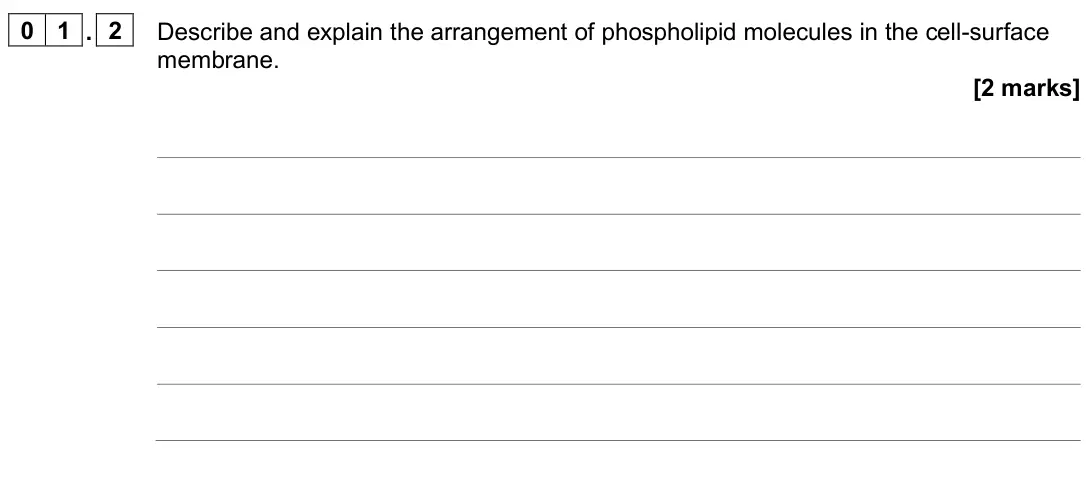
Q05.1
The whole paper ↗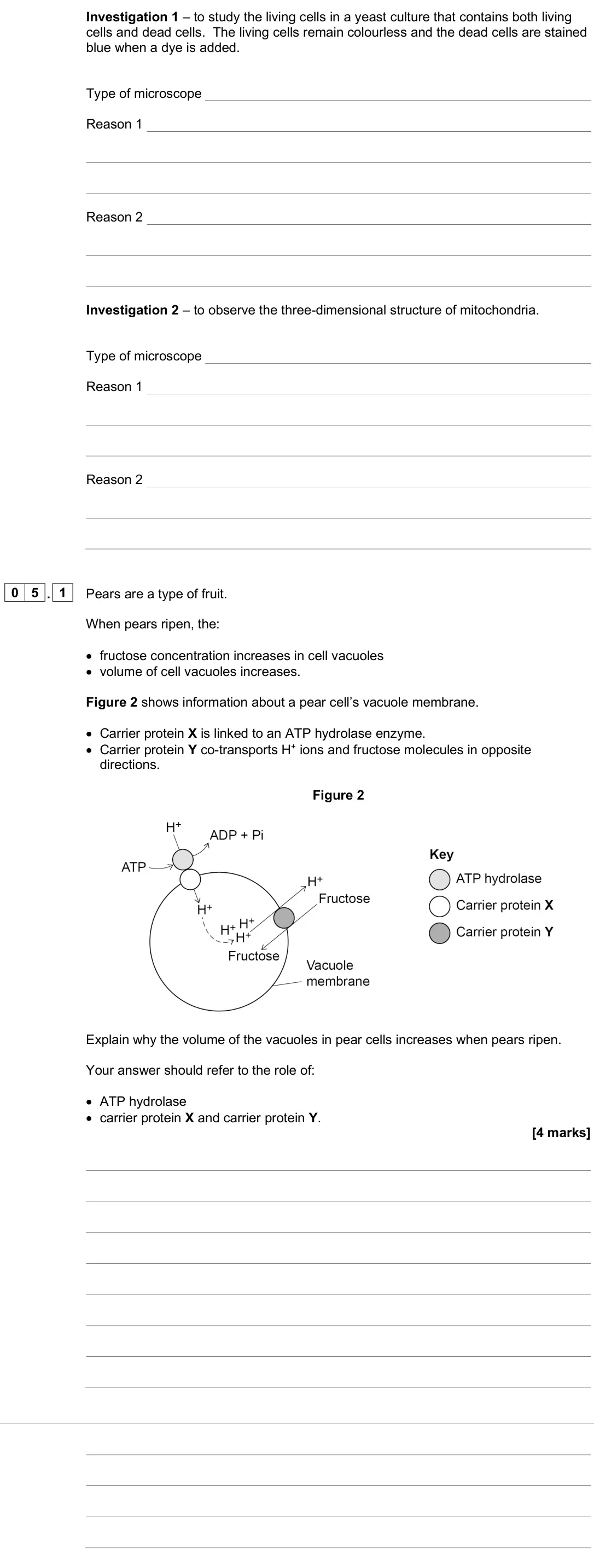
Q05.2
The whole paper ↗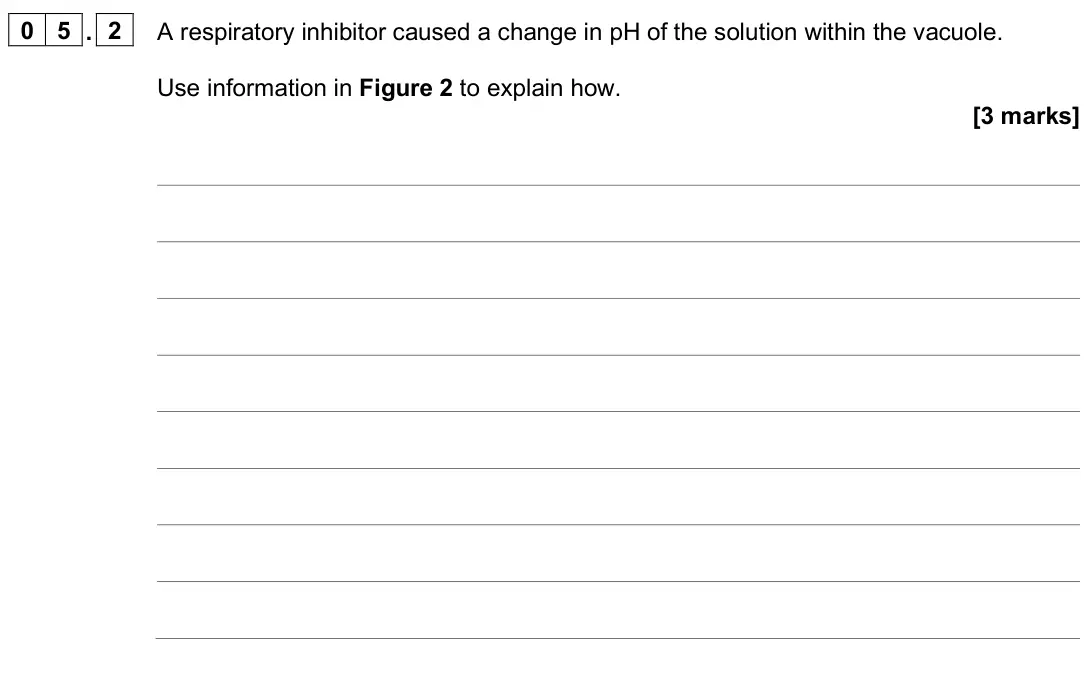
Q05.3
The whole paper ↗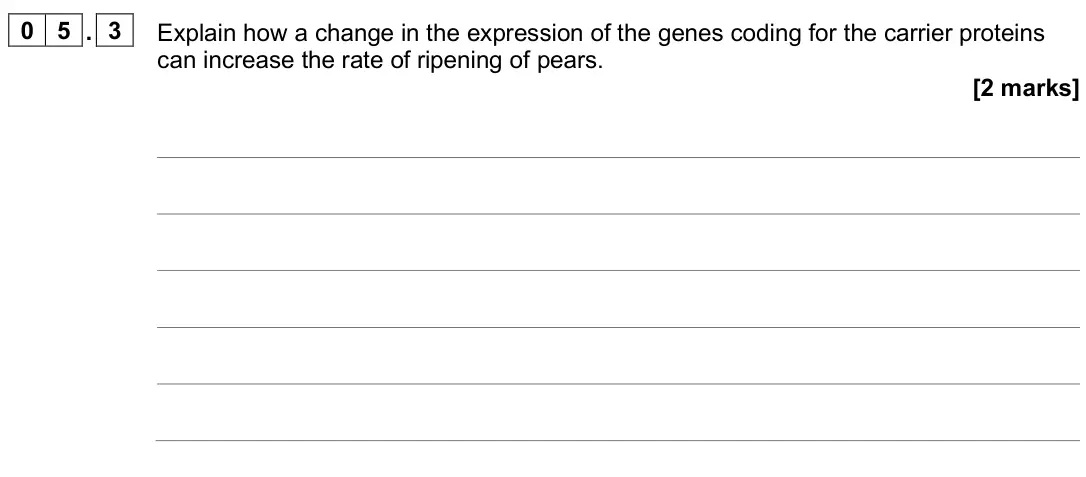
Q08.1
The whole paper ↗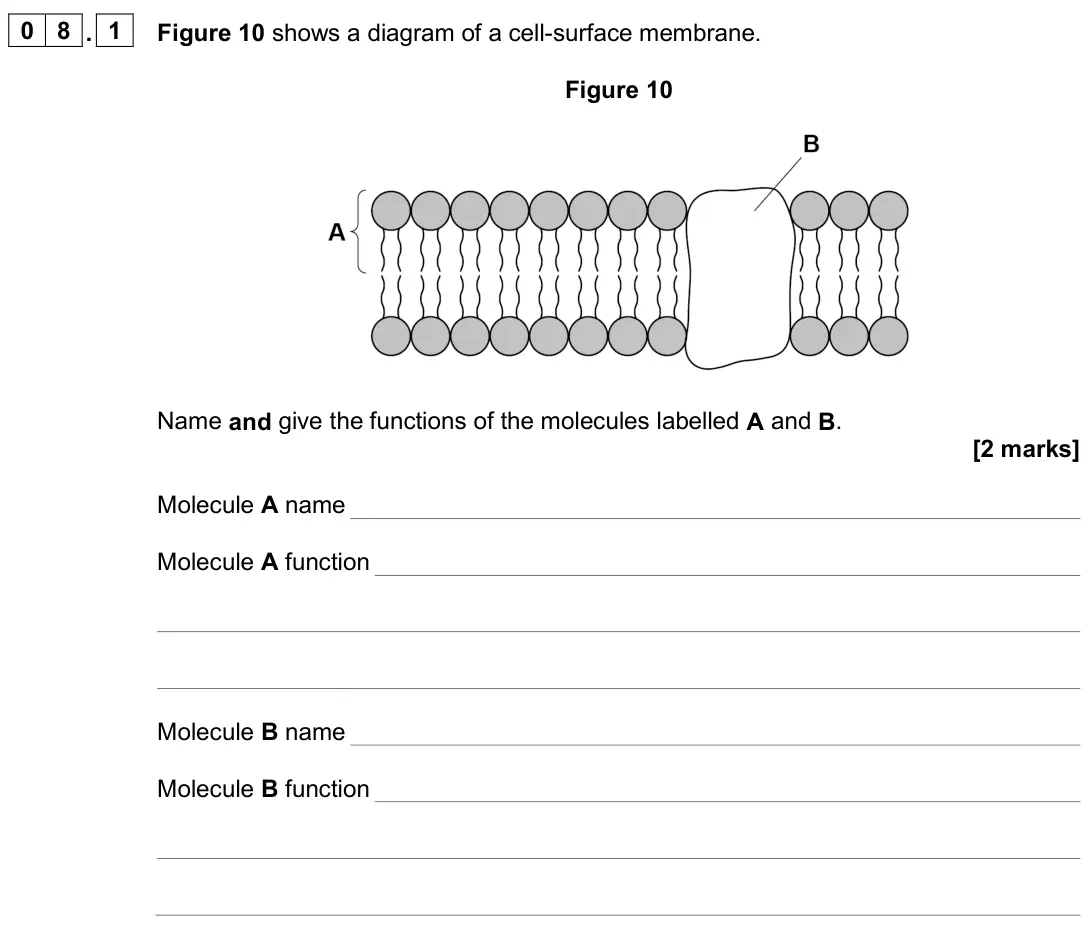
Q08.2
The whole paper ↗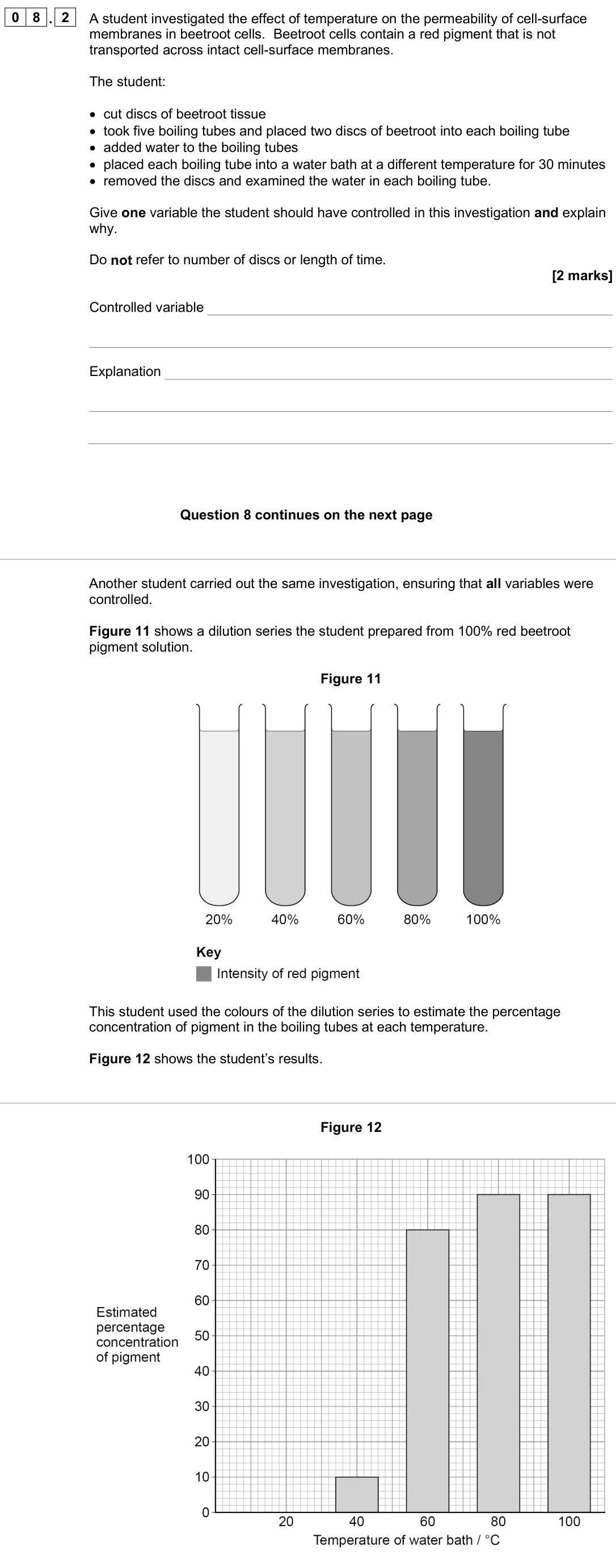
Q08.3
The whole paper ↗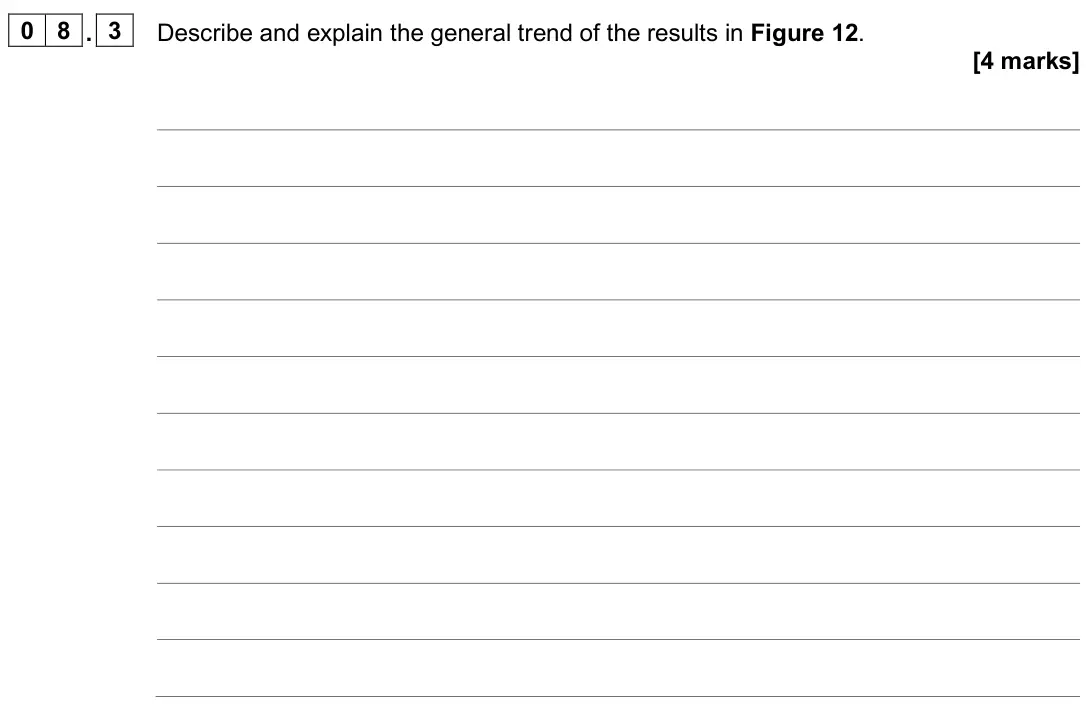
Q08.4
The whole paper ↗
Q02.3
The whole paper ↗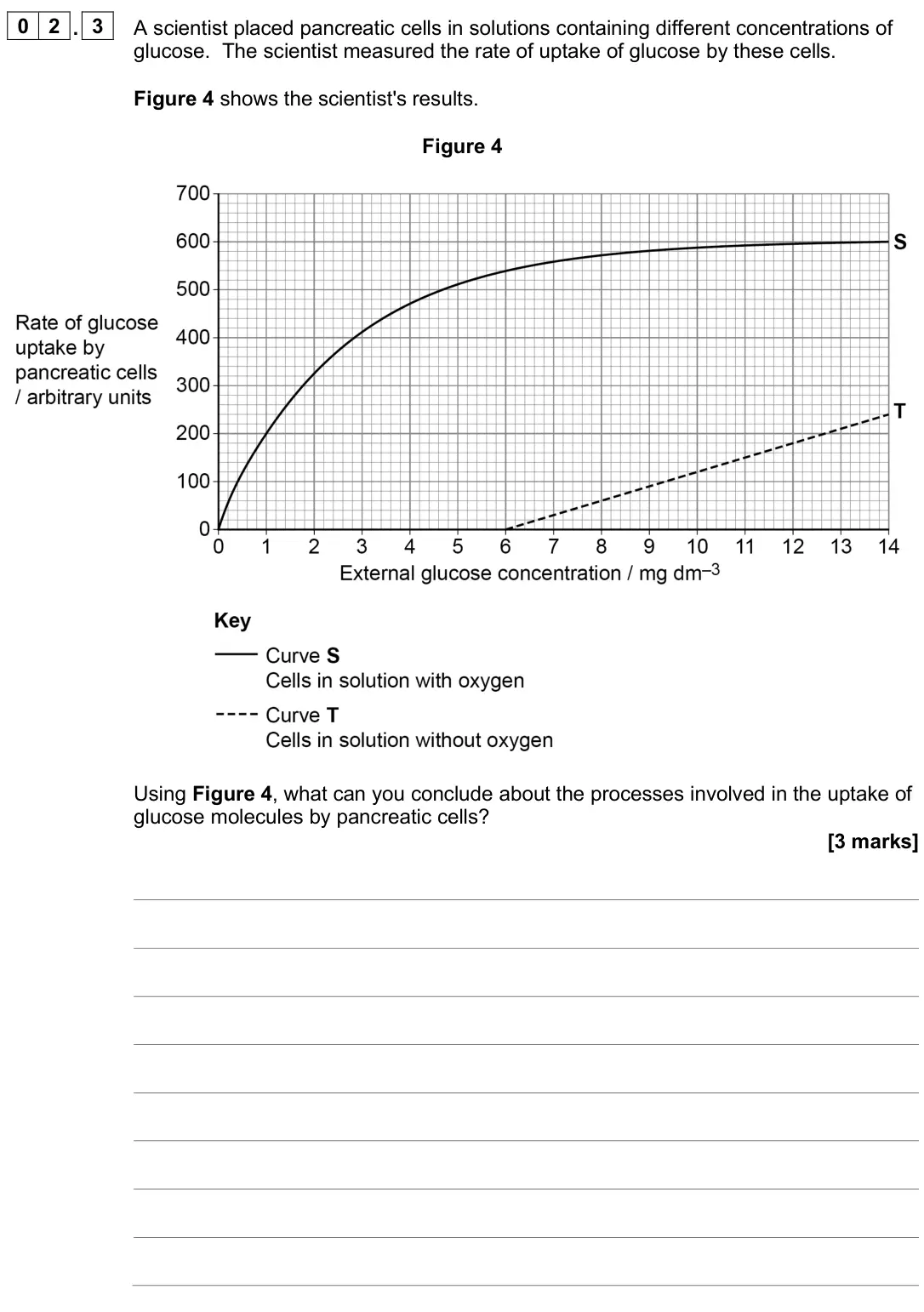
Q02.4
The whole paper ↗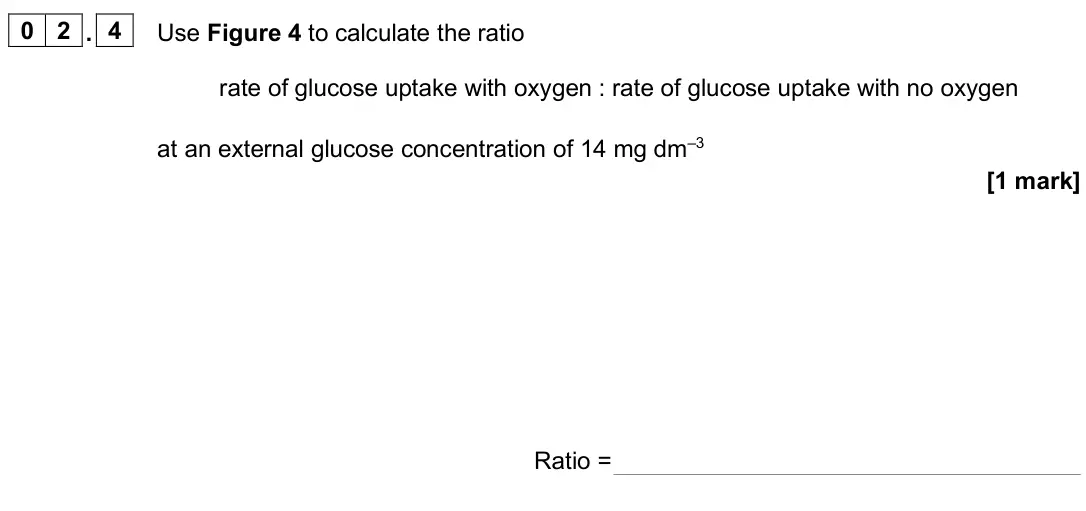
Q07.3
The whole paper ↗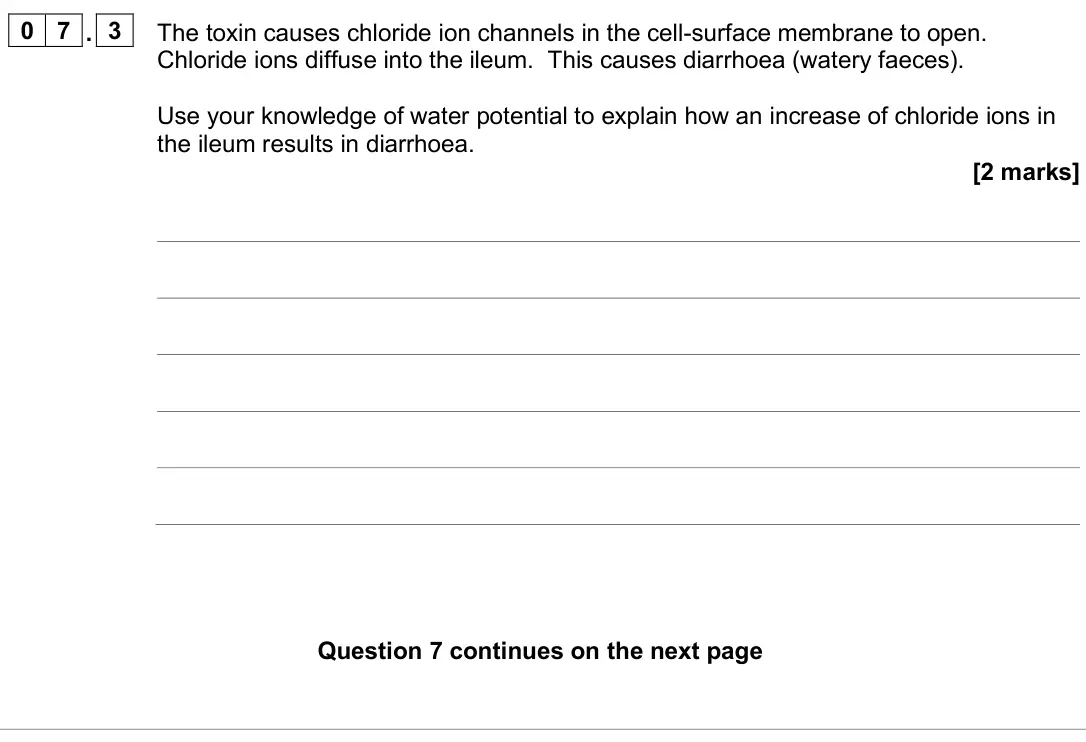
Q01.4
The whole paper ↗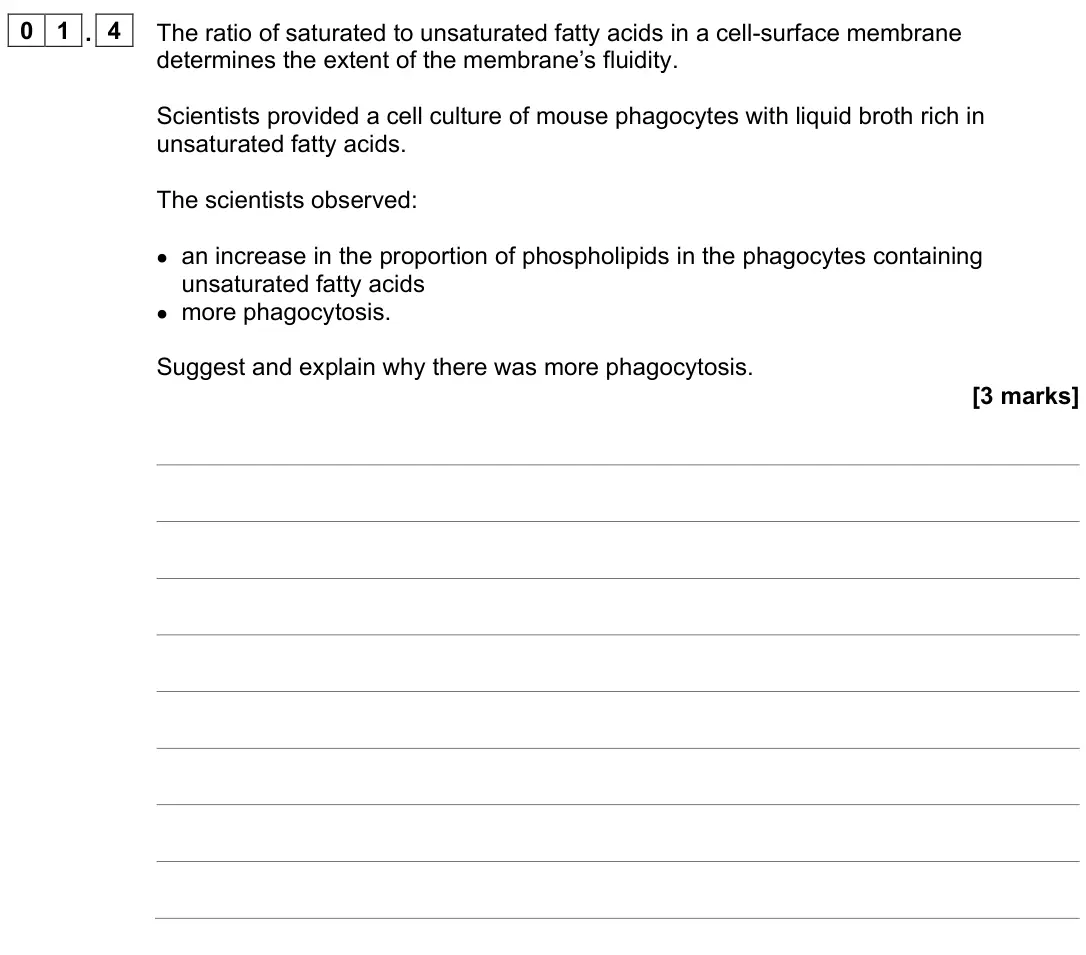
Q02.1
The whole paper ↗
Q04.4
The whole paper ↗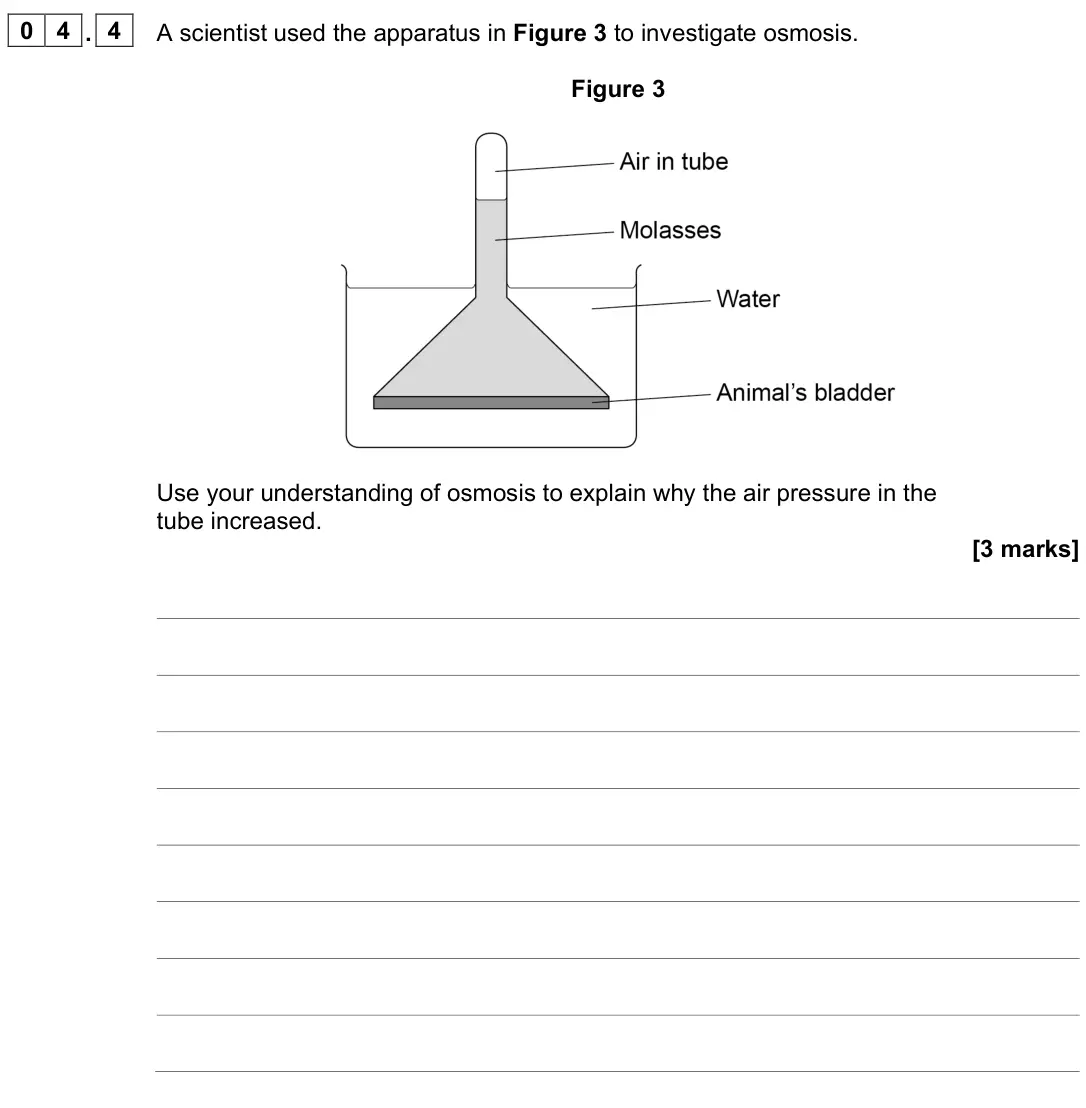
Q04.5
The whole paper ↗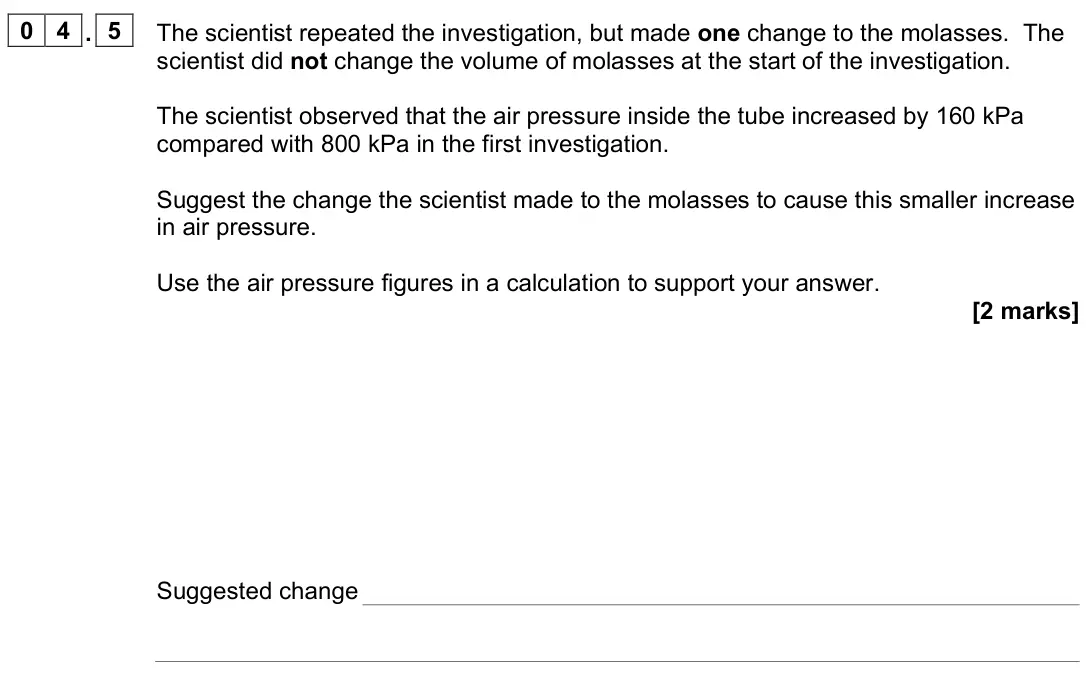
Q07.2
The whole paper ↗
Q06.4
The whole paper ↗
Q02.3
The whole paper ↗
Q10.4
The whole paper ↗
Q07.2
The whole paper ↗
All 60 questions on Transport across cell membranes, as a list
- June 2025, Paper 1, Q01.2 (2 marks): Describe and explain the arrangement of phospholipid molecules in the cell-surface membrane. [2 marks]
- June 2025, Paper 1, Q05.1 (4 marks): Pears are a type of fruit. When pears ripen, the: • fructose concentration increases in cell vacuoles • volume of cell vacuoles increases. Figure 2 shows inform
- June 2025, Paper 1, Q05.2 (3 marks): A respiratory inhibitor caused a change in pH of the solution within the vacuole. Use information in Figure 2 to explain how. [3 marks]
- June 2025, Paper 1, Q05.3 (2 marks): Explain how a change in the expression of the genes coding for the carrier proteins can increase the rate of ripening of pears. [2 marks]
- June 2025, AS Paper 1, Q08.1 (2 marks): Figure 10 shows a diagram of a cell-surface membrane. Figure 10 Name and give the functions of the molecules labelled A and B. [2 marks] Molecule A name Molecul
- June 2025, AS Paper 1, Q08.2 (2 marks): A student investigated the effect of temperature on the permeability of cell-surface membranes in beetroot cells. Beetroot cells contain a red pigment that is n
- June 2025, AS Paper 1, Q08.3 (4 marks): Describe and explain the general trend of the results in Figure 12. [4 marks]
- June 2025, AS Paper 1, Q08.4 (3 marks): Describe how the student could use the dilution series (Figure 11, on page 22) and a colorimeter to determine an accurate measurement of the pigment concentrati
- June 2025, AS Paper 2, Q02.3 (3 marks): A scientist placed pancreatic cells in solutions containing different concentrations of glucose. The scientist measured the rate of uptake of glucose by these c
- June 2025, AS Paper 2, Q02.4 (1 mark): Use Figure 4 to calculate the ratio rate of glucose uptake with oxygen : rate of glucose uptake with no oxygen at an external glucose concentration of 14 mg dm–
- June 2025, AS Paper 2, Q07.3 (2 marks): The toxin causes chloride ion channels in the cell-surface membrane to open. Chloride ions diffuse into the ileum. This causes diarrhoea (watery faeces). Use yo
- June 2024, Paper 1, Q01.4 (3 marks): The ratio of saturated to unsaturated fatty acids in a cell-surface membrane determines the extent of the membrane’s fluidity. Scientists provided a cell cultur
- June 2024, Paper 1, Q02.1 (3 marks): Describe the processes of facilitated diffusion and active transport. [3 marks] Facilitated diffusion Active transport
- June 2024, Paper 1, Q04.4 (3 marks): A scientist used the apparatus in Figure 3 to investigate osmosis. Figure 3 Use your understanding of osmosis to explain why the air pressure in the tube increa
- June 2024, Paper 1, Q04.5 (2 marks): The scientist repeated the investigation, but made one change to the molasses. The scientist did not change the volume of molasses at the start of the investiga
- June 2024, Paper 3, Q07.2 (25 marks): The mechanisms and importance of transport within organisms. [25 marks]
- June 2024, AS Paper 1, Q06.4 (2 marks): In these mammalian cells, the: • cell-surface membrane is permeable to sodium ions • sodium ion concentration does not increase in the cytoplasm over time. Use
- June 2024, AS Paper 2, Q02.3 (2 marks): The solution used to dilute the blood had to have the same water potential as the blood. Explain why. [2 marks]
- June 2023, Paper 2, Q10.4 (3 marks): Suggest and explain how GLUT4 and CD36 transport proteins (lines 10–11) are beneficial during exercise. [3 marks]
- June 2023, Paper 3, Q07.2 (25 marks): The importance of membranes in the functioning of cells. [25 marks]
- June 2022, Paper 1, Q03.3 (2 marks): The amino acids on one side of each AP helix have hydrophobic properties. The amino acids on the opposite side of each helix have hydrophilic properties. Figure
- June 2022, Paper 1, Q03.4 (2 marks): Use Figure 5 to calculate the cross-sectional area of the channel through which ions can pass. Assume the cross-sectional area is circular. Use π = 3.14 in your
- June 2022, Paper 1, Q03.5 (2 marks): The APs damage prokaryotic cells but do not damage the eukaryotic cells in the organisms that produce them. Prokaryotic cell membranes do not contain cholestero
- June 2022, Paper 1, Q06.3 (4 marks): The higher rate of transpiration at high tide shows that the mangrove tree is absorbing water from the sea water surrounding its roots. Describe an experiment t
- November 2021, Paper 1, Q10.2 (5 marks): Name and describe five ways substances can move across the cell-surface membrane into a cell. [5 marks]
- November 2021, Paper 2, Q07.2 (1 mark): One method of transferring RNAi molecules into cells involves combining these molecules with a lipid. Suggest why this increases uptake of RNAi molecules into c
- November 2021, AS Paper 1, Q08.1 (2 marks): Suggest one improvement to the design of Table 2 and one improvement to the way she presented the data contained in Table 2. [2 marks] Improvement to design of
- November 2021, AS Paper 1, Q08.2 (2 marks): Suggest and explain an advantage of carrying out this investigation at 30 °C rather than at 20 °C. [2 marks]
- November 2021, AS Paper 1, Q08.3 (3 marks): The student concluded from the information in Table 2 that the water potential of the solution inside the egg is higher than the water potential of the vinegar.
- November 2021, AS Paper 1, Q08.4 (4 marks): The student wanted to determine the water potential of chicken eggs. She: • produced a dilution series of sugar solution • followed the procedure described on p
- November 2021, AS Paper 2, Q01.4 (3 marks): Give one similarity and two differences between the membrane structure shown in Figure 2 and the fluid-mosaic model of membrane structure. [3 marks] Similarity
- November 2021, AS Paper 2, Q07.2 (1 mark): Use Figure 8 to calculate the percentage decrease in the rate of amino acid absorption by H cells in 30 mmol dm–3 cyanide solution. [1 mark] Answer %
- November 2021, AS Paper 2, Q07.3 (3 marks): Using Figure 8 and the information provided, what can you conclude about amino acid uptake by G cells and by H cells? [3 marks]
- November 2020, Paper 1, Q01.1 (2 marks): The action of the carrier protein X in Figure 1 is linked to a membrane-bound ATP hydrolase enzyme. Explain the function of this ATP hydrolase. [2 marks]
- November 2020, Paper 1, Q01.2 (2 marks): The movement of Na+ out of the cell allows the absorption of glucose into the cell lining the ileum. Explain how. [2 marks]
- November 2020, Paper 1, Q01.4 (2 marks): Draw phospholipids on Figure 2 to show how the carrier protein, SGLT1, would fit into the cell-surface membrane. Do not draw more than eight phospholipids. [2 m
- November 2020, Paper 1, Q04.1 (1 mark): When making up extraction solvent E, the student used a volume ratio of 70:30:1 ethanol:water:acid. Tick () one box that shows the most appropriate volumes she
- November 2020, Paper 1, Q04.2 (2 marks): The student kept constant: • the mass of fresh blueberries • the volume of extraction solvent • the time for the mixture to stand. Name two other variables the
- November 2020, Paper 1, Q04.3 (4 marks): After 1 hour, the student filtered the samples. She placed the filtrate in a colorimeter and measured the light absorbance. Her results are shown in Figure 4. F
- November 2020, Paper 1, Q04.4 (3 marks): A different student did this investigation. He did not have a colorimeter. Describe a method this student could use to prepare colour standards and use them to
- November 2020, Paper 2, Q02.1 (2 marks): Steroid hormones are hydrophobic. Explain why steroid hormones can rapidly enter a cell by passing through its cell-surface membrane. [2 marks]
- November 2020, Paper 3, Q04.4 (3 marks): A high concentration of sodium in the blood can affect blood volume and cause hypertension. Use your knowledge of water potential to suggest how high sodium con
- November 2020, AS Paper 1, Q02.1 (2 marks): Explain the arrangement of phospholipids in a cell-surface membrane. [2 marks]
- November 2020, AS Paper 1, Q09.2 (2 marks): Explain how an increase in the rate of transcription of the PIP1b gene (lines 6–7) will affect the permeability of tobacco plant cell membranes to water. [2 mar
- November 2020, AS Paper 1, Q09.4 (2 marks): How much greater is the ratio of movement of potassium ions to movement of water molecules across a vacuole membrane than across a cell-surface membrane (lines
- November 2020, AS Paper 2, Q04.1 (1 mark): Give one way in which the student could ensure the first three beetroot cylinders were kept at 25 oC throughout her experiment. [1 mark]
- November 2020, AS Paper 2, Q04.2 (2 marks): Give two variables that the student did not control in her procedure. [2 marks] 1 2
- November 2020, AS Paper 2, Q04.3 (2 marks): The student used a measuring cylinder to obtain 10 cm3 of each solution. Figure 2 shows some of the scale graduations on the side of this measuring cylinder. Fi
- November 2020, AS Paper 2, Q04.4 (4 marks): Using Figure 3, what can you conclude about the damage caused to beetroot cells by water, ethanol, hydrochloric acid and different temperatures? Provide explana
- June 2019, AS Paper 2, Q09.2 (5 marks): The movement of substances across cell membranes is affected by membrane structure. Describe how. [5 marks] Copyright information For confidentiality purposes,
- June 2017, Paper 3, Q06.4 (2 marks): Aquaporins are channel proteins that allow the diffusion of water across membranes. One type of aquaporin, called PIP1, can also transport carbon dioxide molecu
- June 2017, Paper 3, Q06.7 (3 marks): The scientists investigated the importance of PIP1 in the movement of water and carbon dioxide through the tissues of leaves of poplar trees. They measured the
- June 2017, Paper 3, Q07.2 (25 marks): The importance of diffusion in organisms. [25 marks] Copyright Information For confidentiality purposes, from the November 2015 examination series, acknowledgem
- June 2017, AS Paper 1, Q08.2 (1 mark): The student produced the sucrose solutions with different concentrations from a concentrated sucrose solution. Name the method she would have used to produce th
- June 2017, AS Paper 1, Q08.3 (3 marks): Calculate the ratio of final mass to initial mass of potato chips and plot a suitable graph of your processed data. Express the ratios in Table 4 as a single nu
- June 2017, AS Paper 1, Q08.4 (2 marks): Explain the result for the chip in 0.8 mol dm–3 sucrose solution. [2 marks]
- June 2016, AS Paper 2, Q03.4 (2 marks): Species of tubifex worm that live in ponds, lakes and rivers cannot survive in seawater. Use your knowledge of water potential to explain why they cannot surviv
- Specimen, Paper 1, Q05.1 (3 marks): [ ] This source has been removed due to third-party copyright restrictions.
- Specimen, Paper 1, Q05.2 (2 marks): Ratio = :1
- Specimen, Paper 1, Q05.3 (4 marks): [ ]
Questions, mark schemes and examiner’s reports are © AQA, from their published past papers. Plumi isn’t affiliated with any exam board. Want whole papers? Every AQA A-Level Biology paper.
Rather write your answers by hand on iPad? Plumi marks them against the same mark schemes.