 plumi
Mass transport: AQA A‑Level Biology questions
Every AQA A-Level Biology exam question on 3.3.4 Mass transport, 2016–2025, with its mark scheme and examiner’s report.
Find questions1,383
Calculations
Q06.1
The whole paper ↗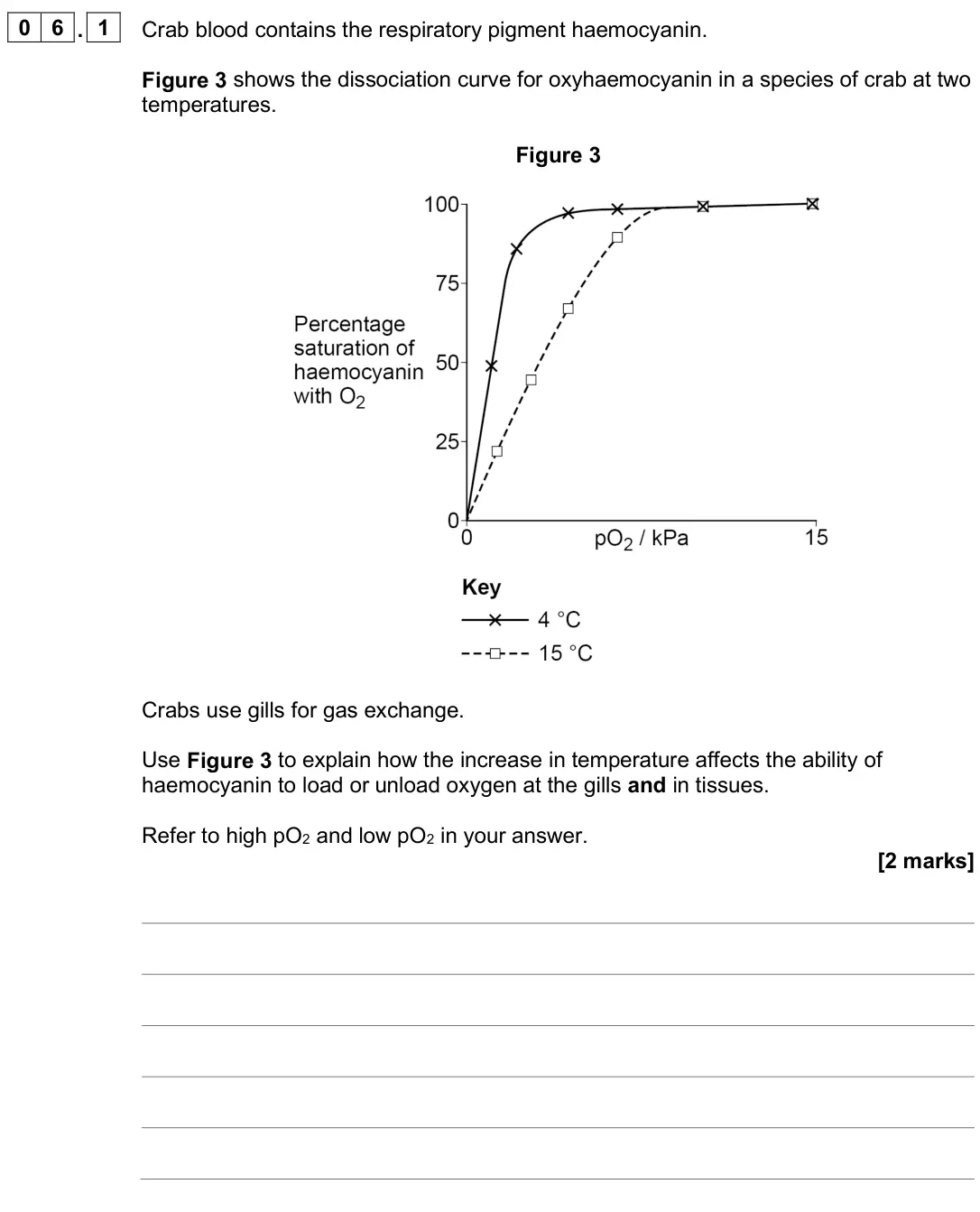
Q06.2
The whole paper ↗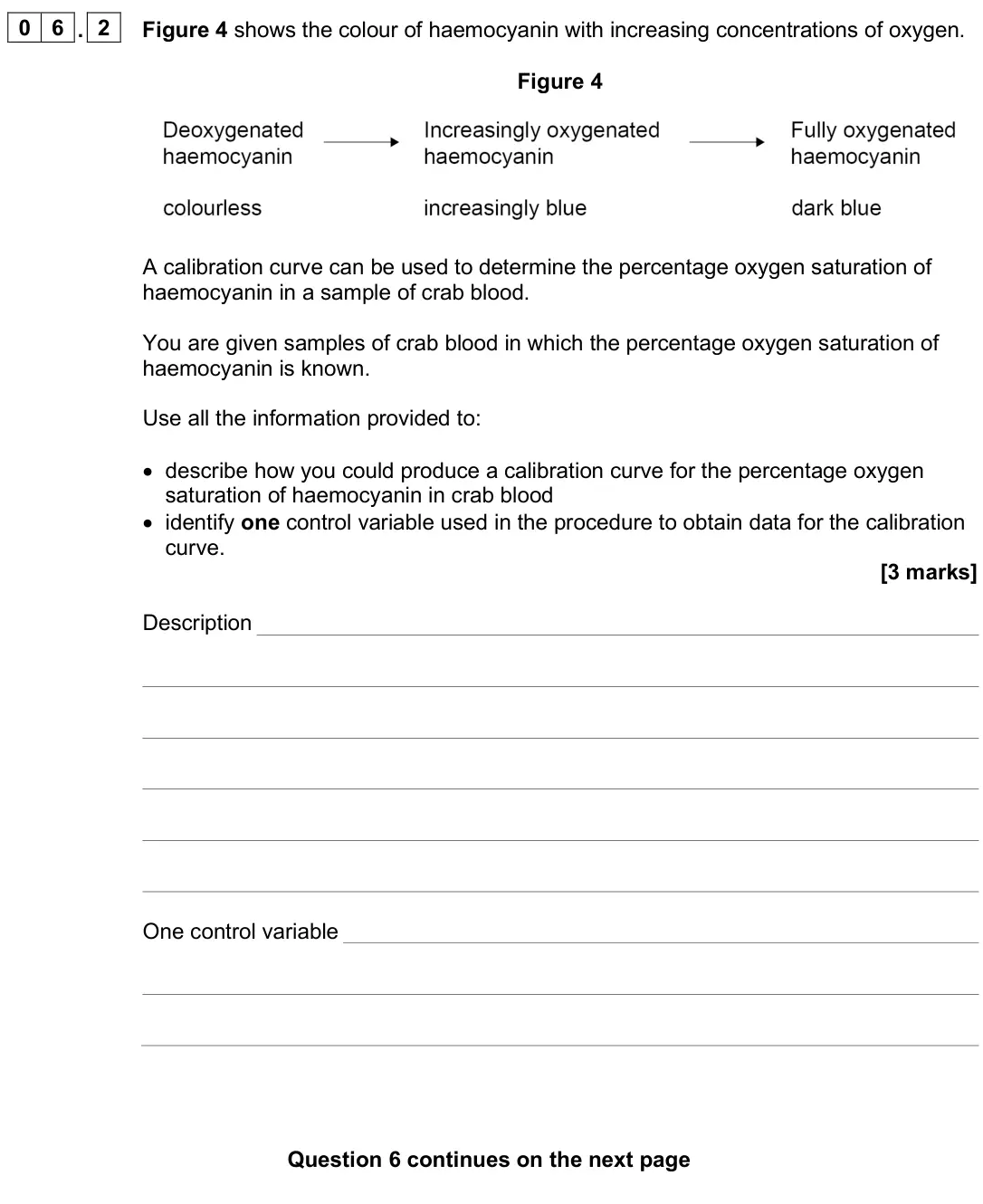
Q10.3
The whole paper ↗
Q07.1
The whole paper ↗
Q07.3
The whole paper ↗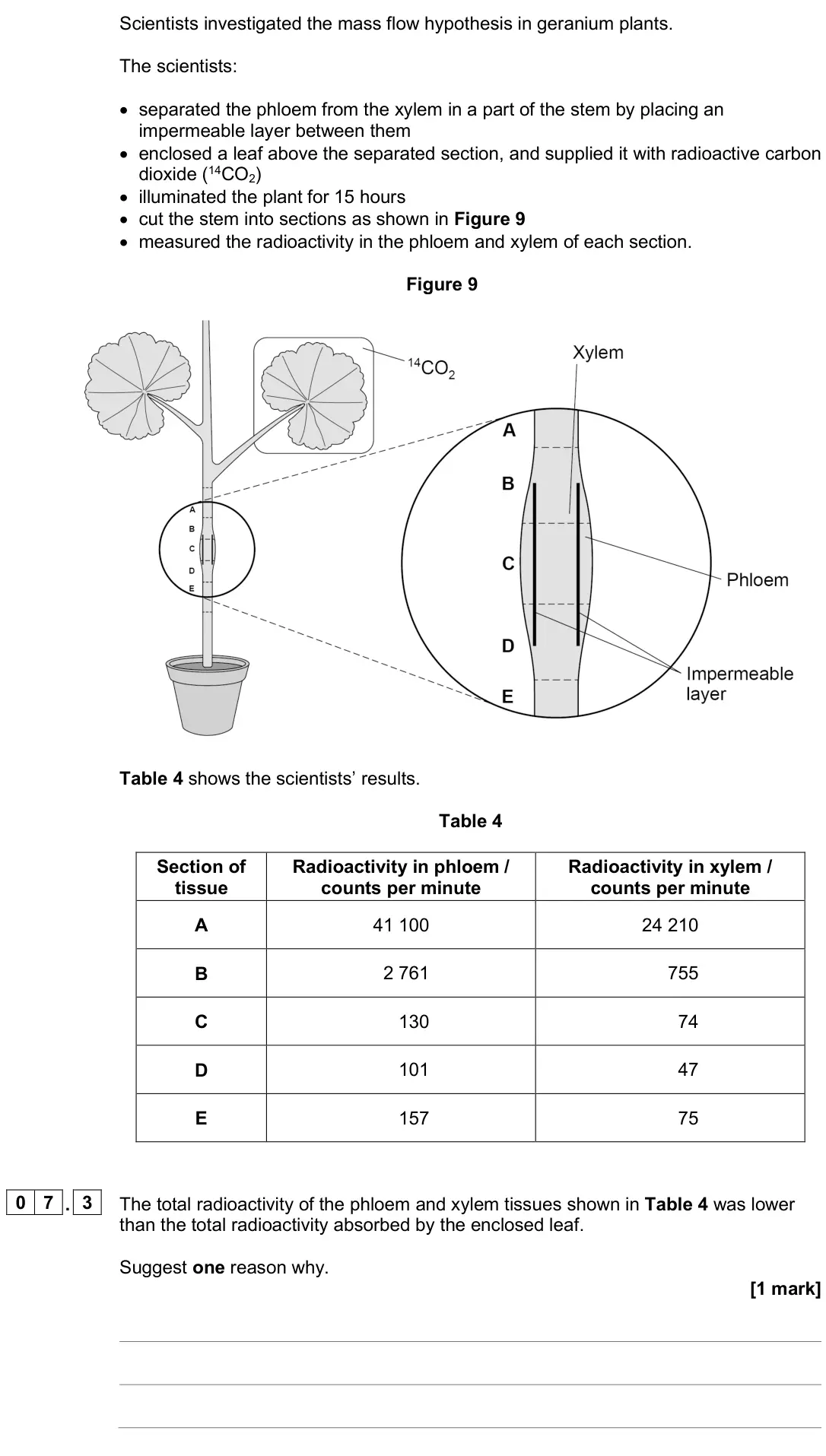
Q07.4
The whole paper ↗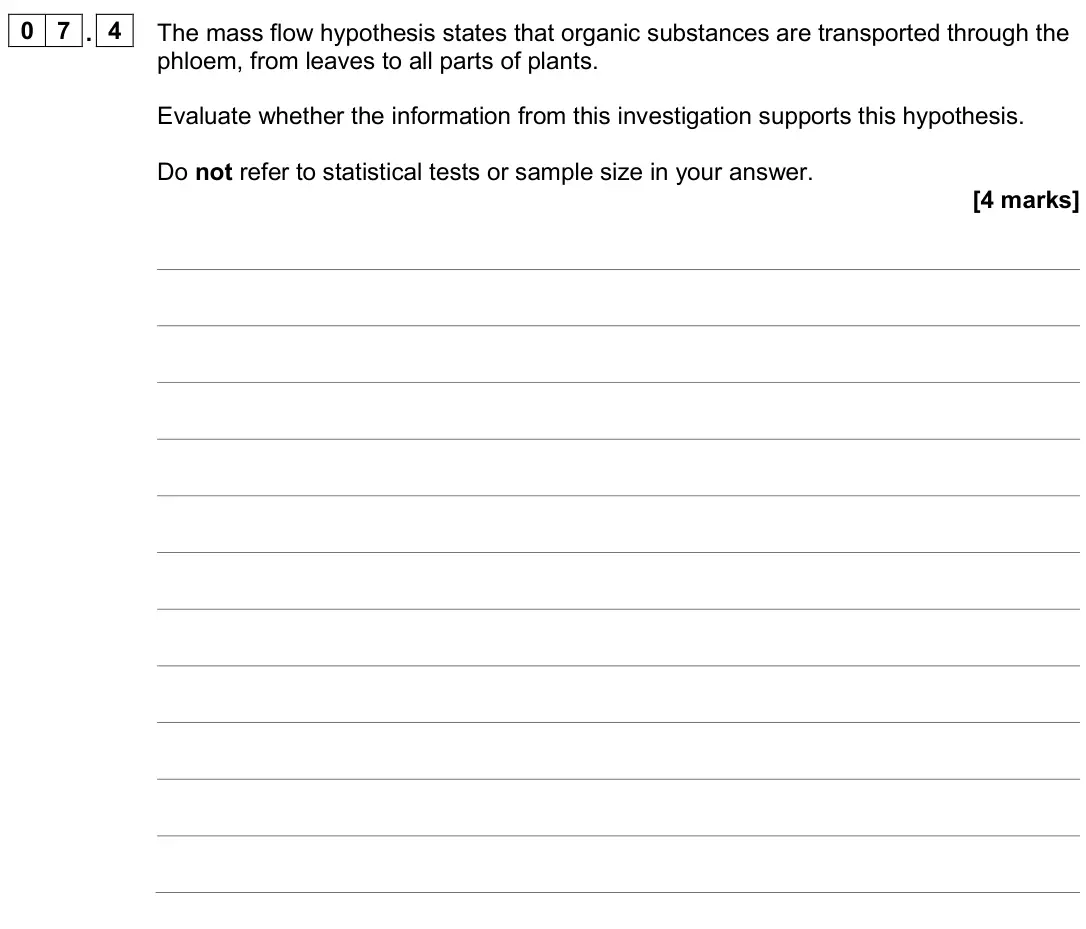
Q01.1
The whole paper ↗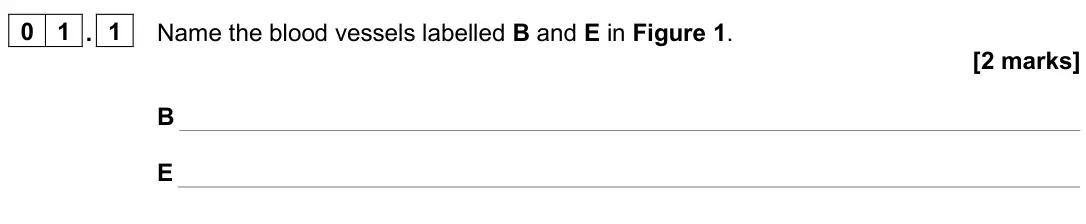
Q01.2
The whole paper ↗
Q01.4
The whole paper ↗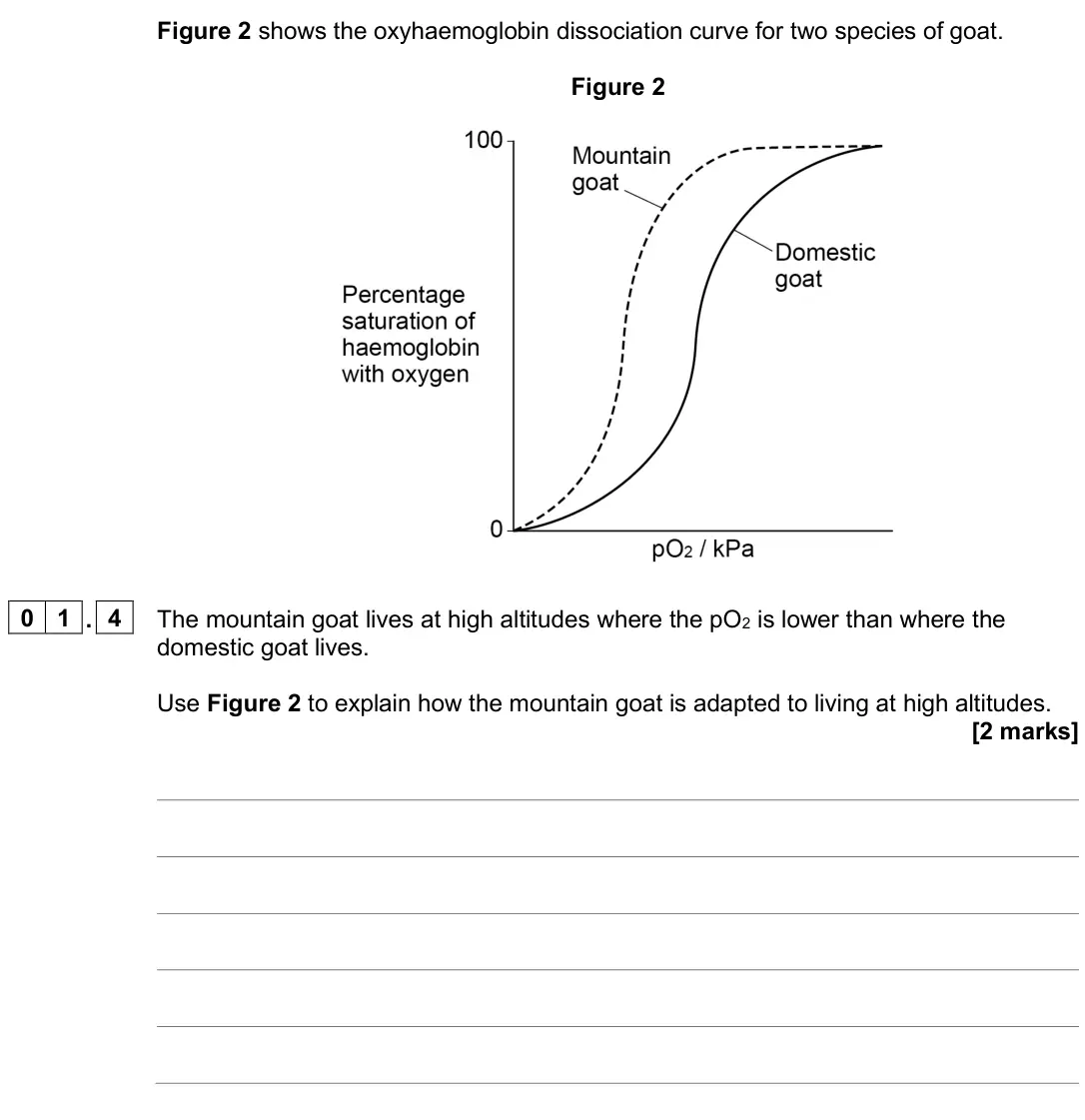
Q04.4
The whole paper ↗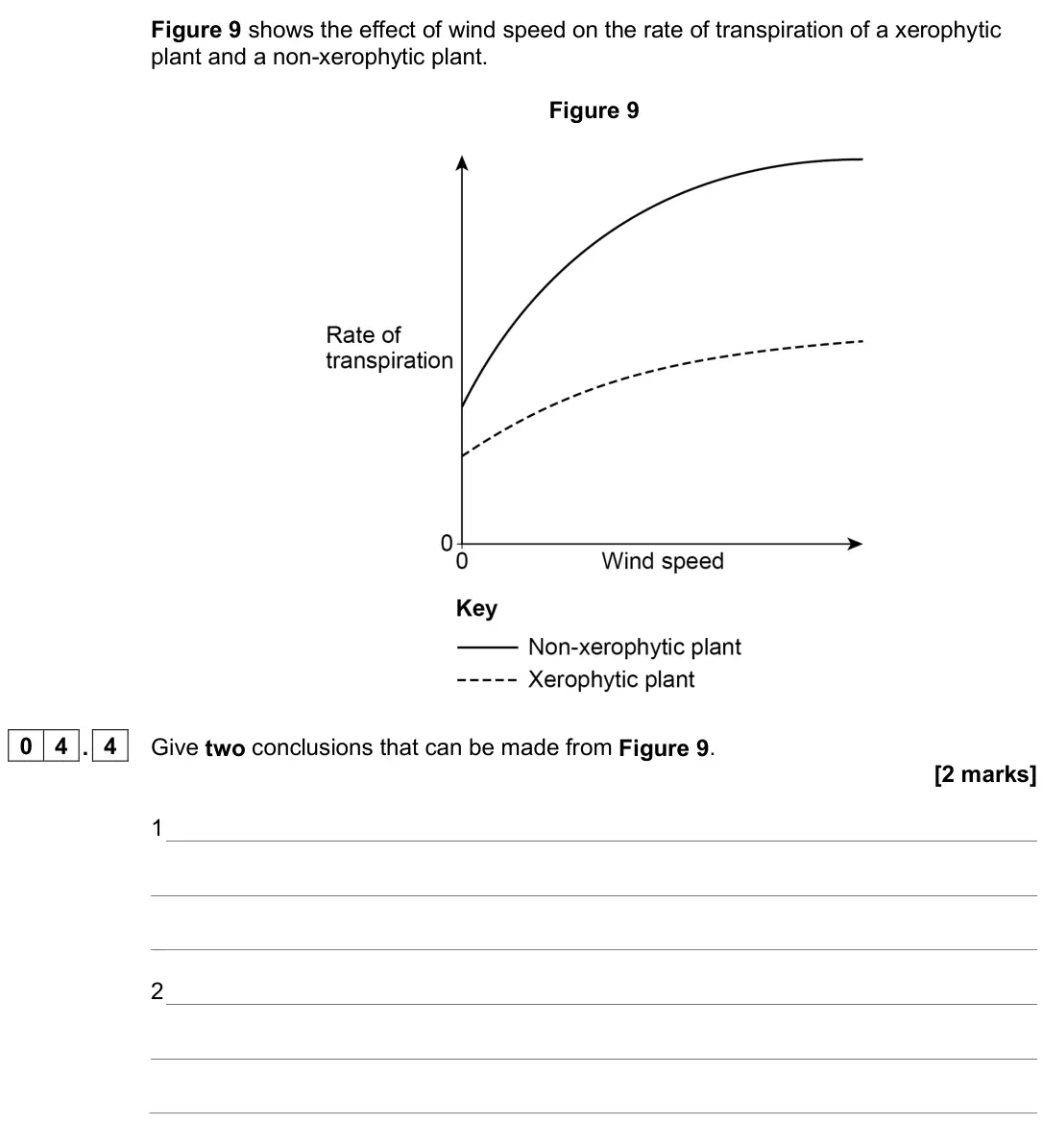
Q09.2
The whole paper ↗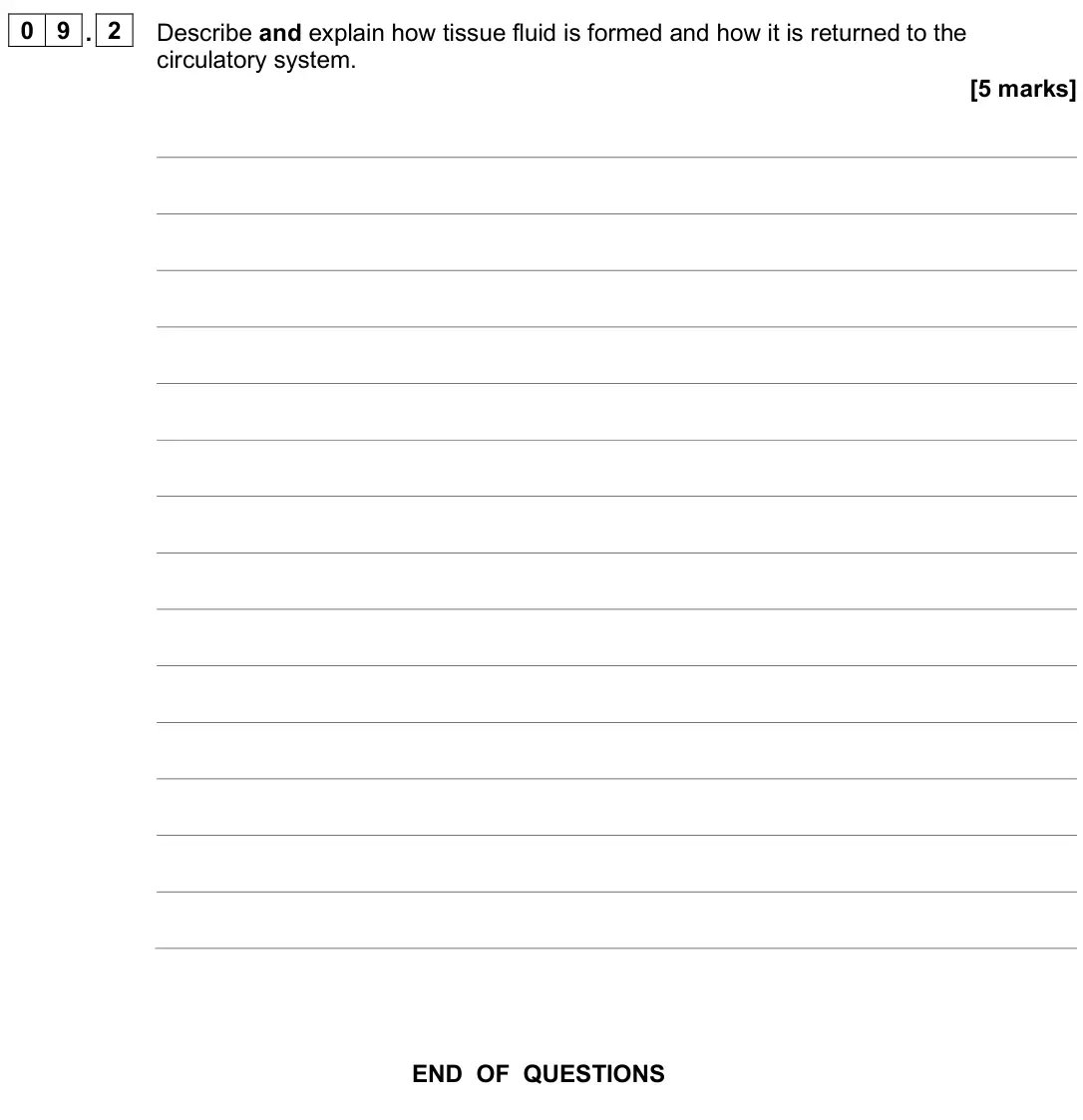
Q08.1
The whole paper ↗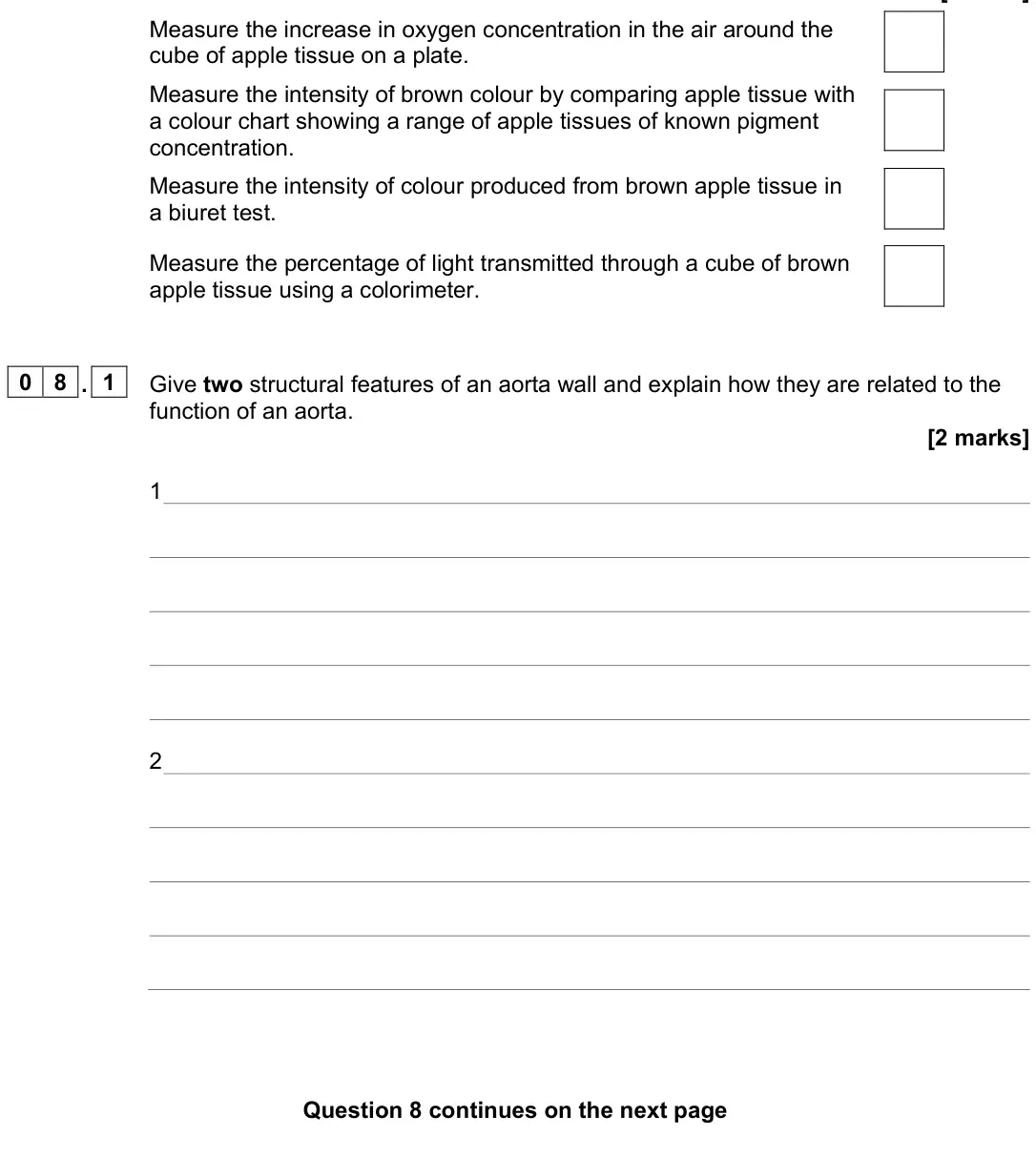
Q08.2
The whole paper ↗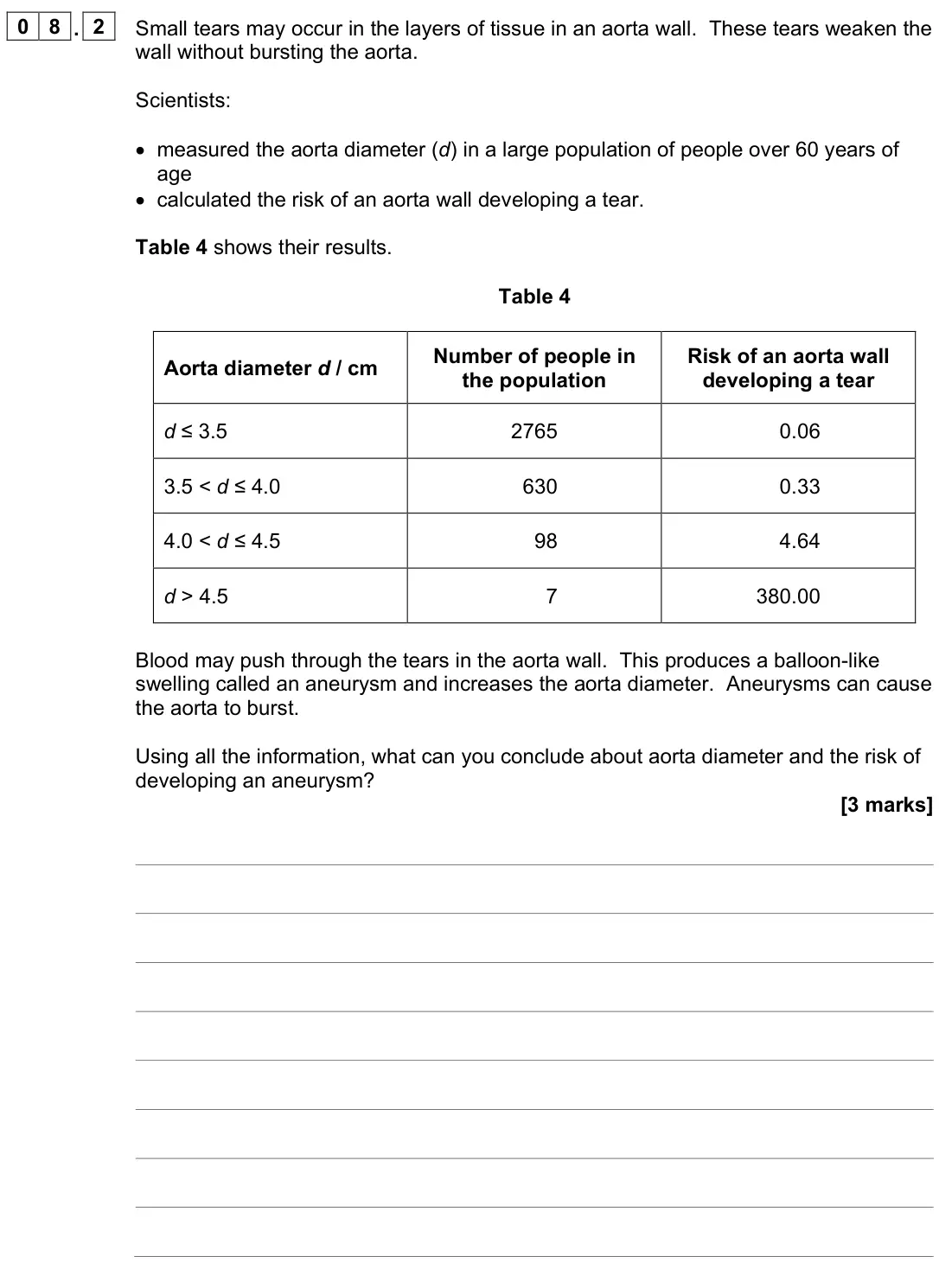
Q08.3
The whole paper ↗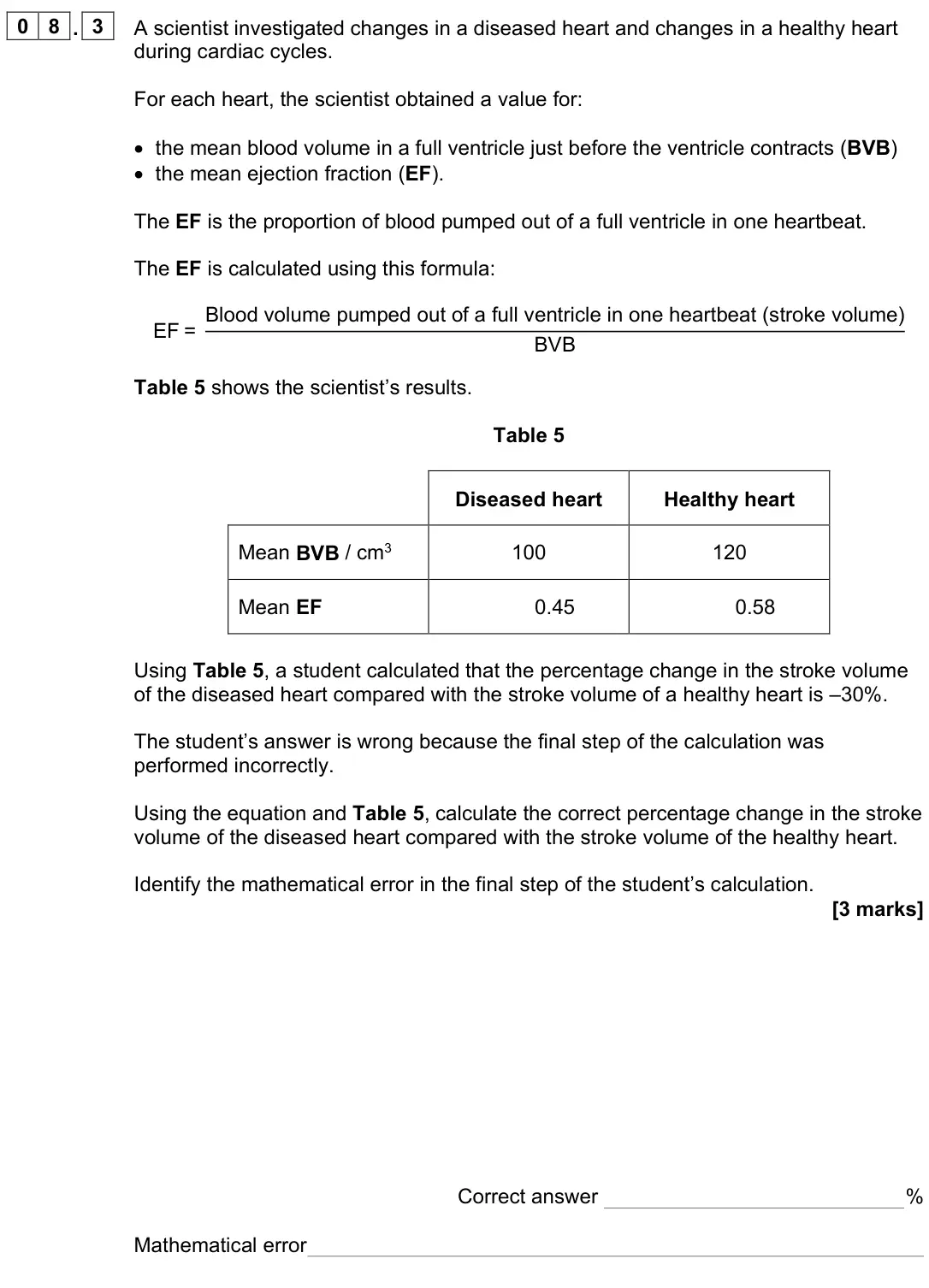
Q07.2
The whole paper ↗
Q01.2
The whole paper ↗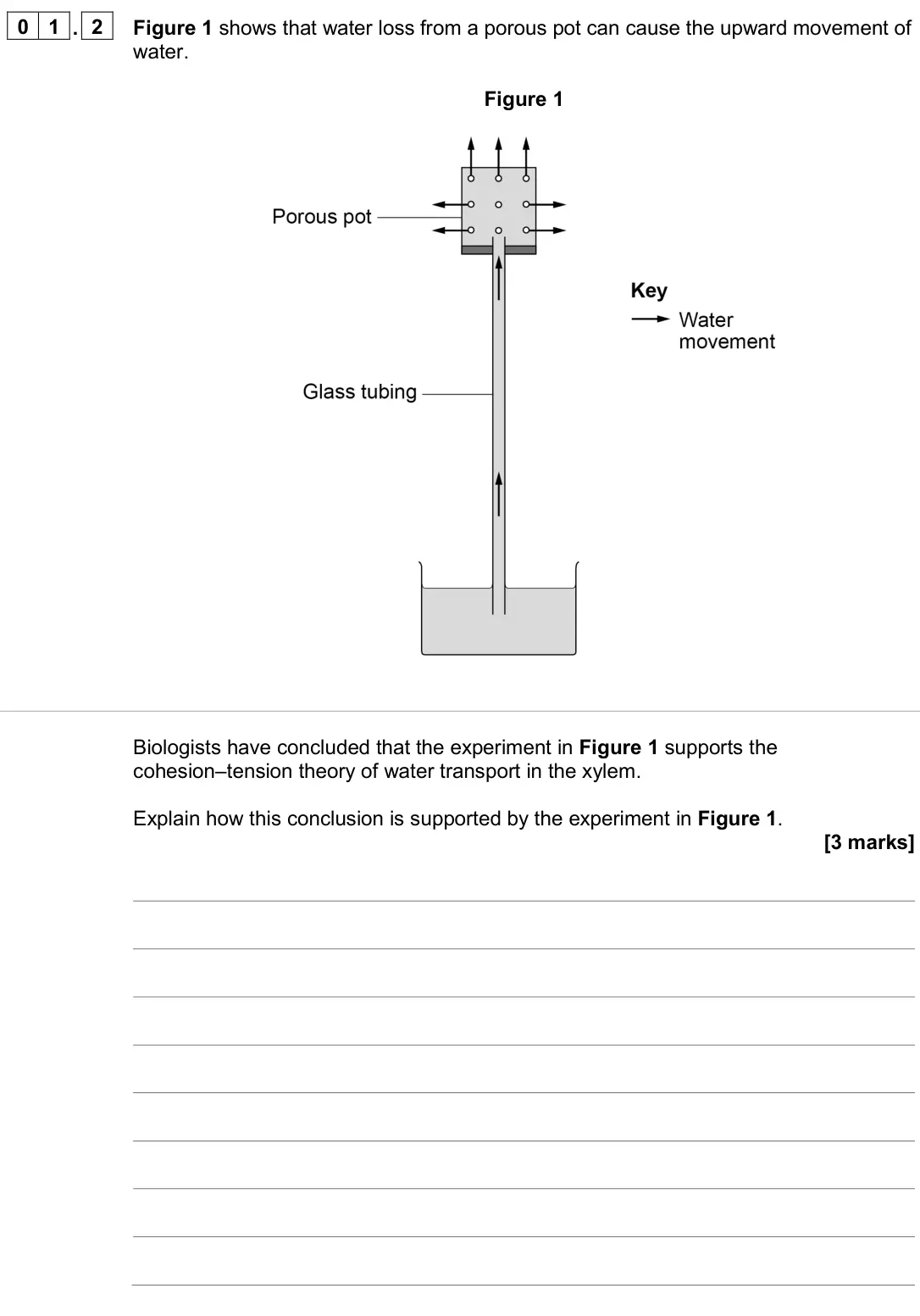
Q01.3
The whole paper ↗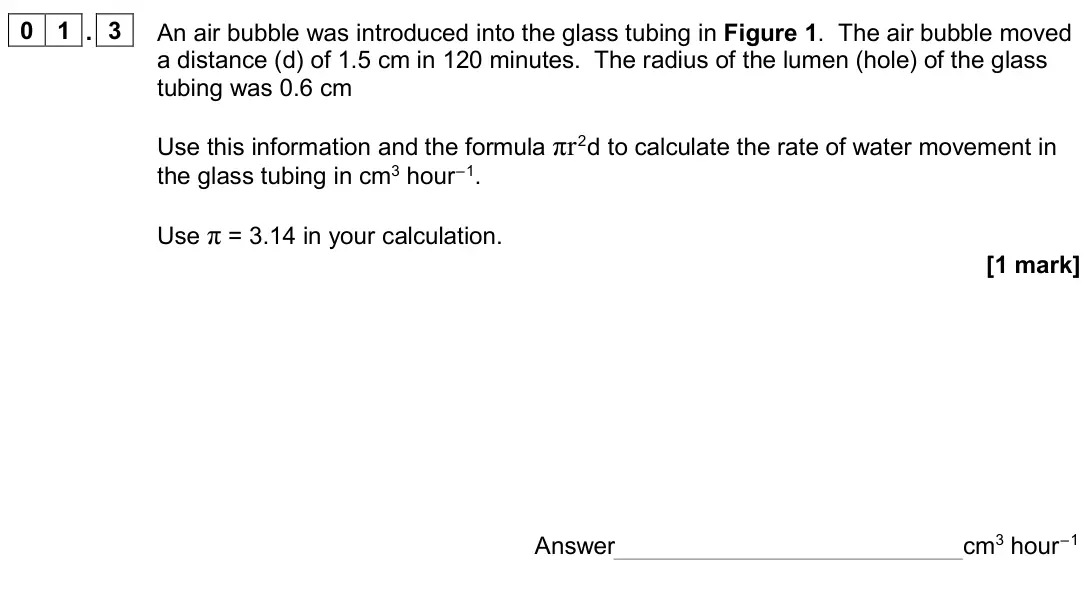
Q07.5
The whole paper ↗
Q09.1
The whole paper ↗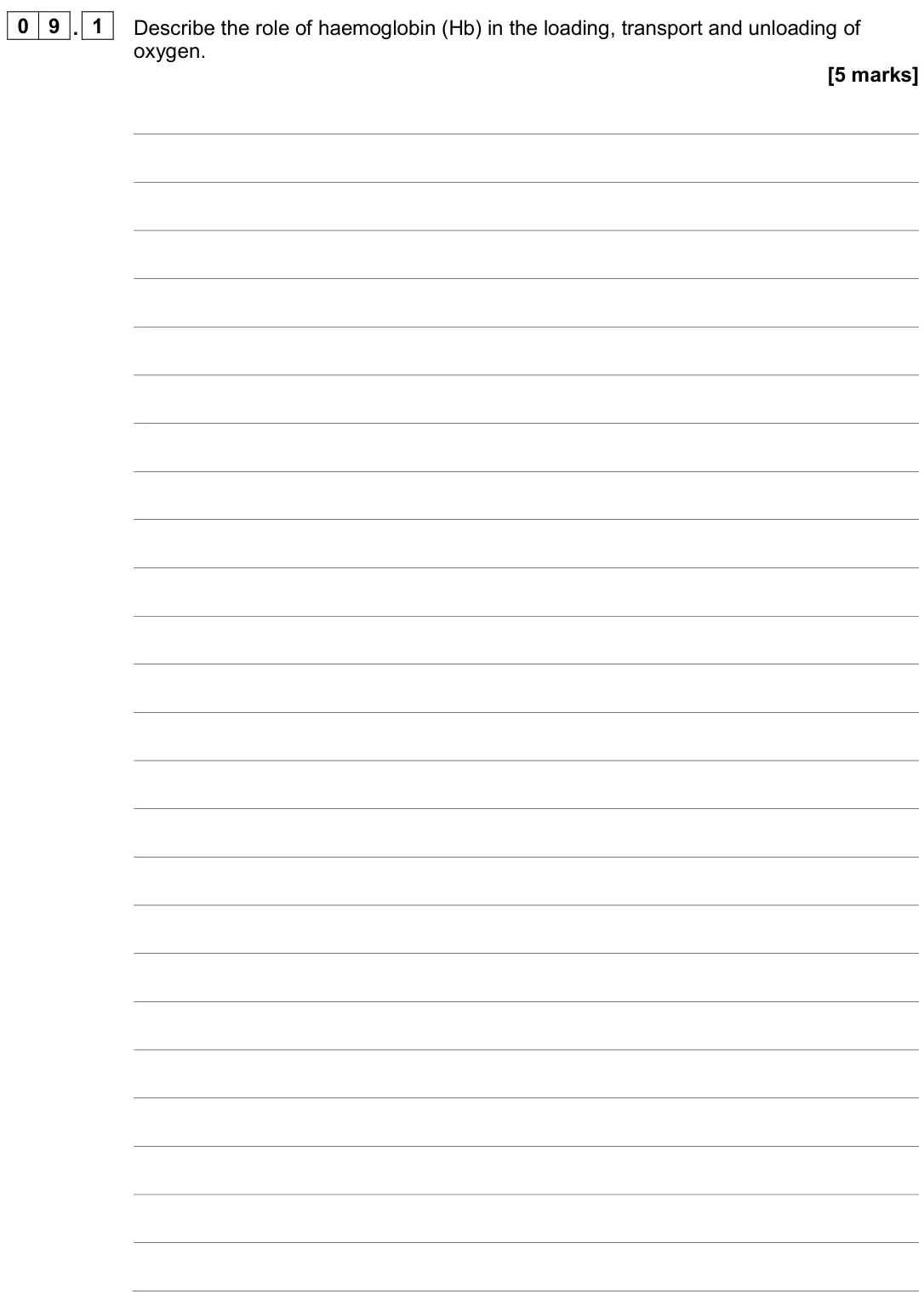
Q02.3
The whole paper ↗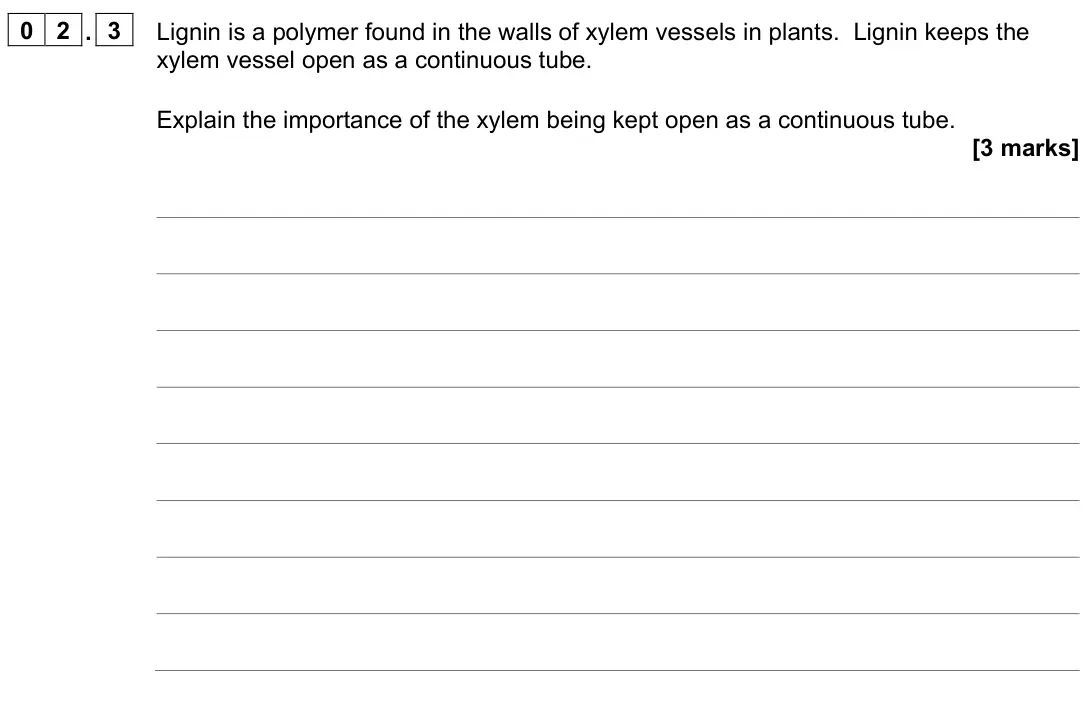
All 96 questions on Mass transport, as a list
- June 2025, Paper 1, Q06.1 (2 marks): Crab blood contains the respiratory pigment haemocyanin. Figure 3 shows the dissociation curve for oxyhaemocyanin in a species of crab at two temperatures. Figu
- June 2025, Paper 1, Q06.2 (3 marks): Figure 4 shows the colour of haemocyanin with increasing concentrations of oxygen. Figure 4 A calibration curve can be used to determine the percentage oxygen s
- June 2025, Paper 1, Q10.3 (5 marks): Describe the pathway taken by blood between a kidney and the coronary arteries. Include names of the major blood vessels (arteries and veins) and heart valves i
- June 2025, AS Paper 1, Q07.1 (1 mark): Name the main carbohydrate transported through the phloem. [1 mark]
- June 2025, AS Paper 1, Q07.3 (1 mark): The total radioactivity of the phloem and xylem tissues shown in Table 4 was lower than the total radioactivity absorbed by the enclosed leaf. Suggest one reaso
- June 2025, AS Paper 1, Q07.4 (4 marks): The mass flow hypothesis states that organic substances are transported through the phloem, from leaves to all parts of plants. Evaluate whether the information
- June 2025, AS Paper 2, Q01.1 (2 marks): Name the blood vessels labelled B and E in Figure 1. [2 marks] B E
- June 2025, AS Paper 2, Q01.2 (1 mark): Give the letters of all the blood vessels shown in Figure 1 that transport deoxygenated blood. [1 mark]
- June 2025, AS Paper 2, Q01.4 (2 marks): The mountain goat lives at high altitudes where the pO2 is lower than where the domestic goat lives. Use Figure 2 to explain how the mountain goat is adapted to
- June 2025, AS Paper 2, Q04.4 (2 marks): Give two conclusions that can be made from Figure 9. [2 marks] 1 2
- June 2025, AS Paper 2, Q09.2 (5 marks): Describe and explain how tissue fluid is formed and how it is returned to the circulatory system. [5 marks]
- June 2024, Paper 1, Q08.1 (2 marks): Give two structural features of an aorta wall and explain how they are related to the function of an aorta. [2 marks] 1 2
- June 2024, Paper 1, Q08.2 (3 marks): Small tears may occur in the layers of tissue in an aorta wall. These tears weaken the wall without bursting the aorta. Scientists: • measured the aorta diamete
- June 2024, Paper 1, Q08.3 (3 marks): A scientist investigated changes in a diseased heart and changes in a healthy heart during cardiac cycles. For each heart, the scientist obtained a value for: •
- June 2024, Paper 3, Q07.2 (25 marks): The mechanisms and importance of transport within organisms. [25 marks]
- June 2024, AS Paper 2, Q01.2 (3 marks): Figure 1 shows that water loss from a porous pot can cause the upward movement of water. Figure 1 Biologists have concluded that the experiment in Figure 1 supp
- June 2024, AS Paper 2, Q01.3 (1 mark): An air bubble was introduced into the glass tubing in Figure 1. The air bubble moved a distance (d) of 1.5 cm in 120 minutes. The radius of the lumen (hole) of
- June 2024, AS Paper 2, Q07.5 (2 marks): A ventricular septal defect (VSD) is a common feature of Edwards’ syndrome. A VSD is a hole in the wall between the two ventricles of the heart. A VSD can cause
- June 2024, AS Paper 2, Q09.1 (5 marks): Describe the role of haemoglobin (Hb) in the loading, transport and unloading of oxygen. [5 marks]
- June 2023, Paper 1, Q02.3 (3 marks): Lignin is a polymer found in the walls of xylem vessels in plants. Lignin keeps the xylem vessel open as a continuous tube. Explain the importance of the xylem
- June 2023, Paper 1, Q07.1 (3 marks): Carbon monoxide (CO) is released during incomplete combustion of fossil fuels. Figure 7 shows the dissociation curve for oxyhaemoglobin when: • not exposed to C
- June 2023, Paper 1, Q07.2 (3 marks): The World Health Organisation (WHO) suggests that to avoid long-term health effects, COHb concentrations should be kept below 2.5%. WHO recommends that people s
- June 2023, Paper 1, Q09.6 (2 marks): The dengue virus causes damage to capillaries so that blood proteins move out of the capillaries into the tissue fluid. Explain how this would affect the return
- June 2023, AS Paper 1, Q09.1 (3 marks): Explain how sucrose-transport proteins in leaf cells enable the production of a pressure gradient in the phloem. [3 marks]
- June 2023, AS Paper 1, Q09.2 (2 marks): Potato plants with fewer sucrose-transport proteins produce fewer potatoes and accumulate sugars in their leaves (lines 4, 5 and 6). Explain why. [2 marks]
- June 2023, AS Paper 2, Q04.1 (2 marks): This question is about the flow of blood into and through the heart. Add the numbers 1 to 6 to Table 2 to give the order of structures through which blood will
- June 2023, AS Paper 2, Q04.2 (2 marks): Scientists investigated the heart activity of humans at rest, during medium-intensity exercise and during high-intensity exercise. Figure 2 shows the scientists
- June 2023, AS Paper 2, Q04.3 (3 marks): Name the type of blood vessel that controls blood flow to muscles and explain how these blood vessels change blood flow during exercise. [3 marks] Name of blood
- June 2022, Paper 1, Q06.1 (4 marks): Explain the rate of transpiration between 5 am and midday shown in Figure 9. [4 marks]
- June 2022, Paper 1, Q06.2 (2 marks): Use Figure 9 to calculate the percentage increase in the rate of transpiration from 1 pm to 2 pm. [2 marks] Percentage increase in rate of transpiration %
- June 2022, Paper 1, Q08.4 (2 marks): Use Figure 12 to complete Table 5 to show two differences between the circulation of blood in fish and the circulation of blood in a mammal. [2 marks] Table 5 D
- June 2022, Paper 1, Q09.1 (5 marks): Describe the transport of carbohydrate in plants. [5 marks]
- June 2022, Paper 3, Q01.4 (1 mark): Figure 3 shows an oxyhaemoglobin dissociation curve for haemoglobin in normal conditions. Sketch a curve on Figure 3 to show the oxyhaemoglobin dissociation cur
- June 2022, Paper 3, Q01.5 (2 marks): Suggest and explain when it would be an advantage to a human for BPG to bind to haemoglobin. [2 marks]
- June 2022, AS Paper 1, Q04.2 (3 marks): Figure 4 shows the oxyhaemoglobin dissociation curve for a lugworm. Figure 4 The oxygen saturation in the blood of a lugworm is 92% The lugworm has 0.2 cm3 of b
- June 2022, AS Paper 1, Q04.3 (2 marks): The intensity of the red colour in blood is affected by the pO2 of the blood. The intensity of the colour in a solution is measured using a colorimeter. The sci
- June 2022, AS Paper 2, Q06.1 (2 marks): A student dissected a sheep’s heart. He prepared a risk assessment on: • carrying a scalpel • using a scalpel. Complete Table 3 by giving three control measures
- June 2022, AS Paper 2, Q06.2 (2 marks): A scientist measured the changes in blood volume inside the left ventricle of a mammalian heart during one heartbeat. Figure 5 shows her results. Figure 5 Use F
- June 2022, AS Paper 2, Q06.3 (4 marks): Using information in Figure 6 and Figure 7, evaluate the effect of these treatments on reducing the risk of developing cardiovascular disease in patients with a
- June 2022, AS Paper 2, Q07.2 (4 marks): Using information in Table 4, what can you conclude about the effect of different factors on the mean shelf life of cut flowers? Explain your conclusions. [4 ma
- June 2022, AS Paper 2, Q07.3 (3 marks): Other than a change in temperature, give one change the scientist could make to the environmental conditions to increase the cut flowers’ shelf life. Explain yo
- November 2021, Paper 1, Q04.1 (2 marks): Suggest two ways the student could improve the quality of his scientific drawing of the blood vessels in this dissection. [2 marks] 1 2
- November 2021, Paper 1, Q04.2 (2 marks): Identify the type of blood vessel labelled as X and the type of blood vessel labelled as Y in Figure 4. Describe one feature that allowed you to identify the bl
- November 2021, Paper 1, Q04.3 (2 marks): Describe two precautions the student should take when clearing away after the dissection. [2 marks] 1 2
- November 2021, Paper 3, Q06.3 (1 mark): The scientists hypothesised that lower rates of sucrose transport from leaves would cause reduced growth. To test this hypothesis, the scientists provided leave
- November 2021, Paper 3, Q06.4 (2 marks): In type B plants, the percentage of 14C remaining in the leaves does not reach zero per cent, as shown in Figure 5. Suggest two reasons why. [2 marks] 1 2 The s
- November 2021, Paper 3, Q06.5 (4 marks): Use all the information to suggest and explain how the physiological factors in Table 3 would contribute to the decreased dry mass observed in type A plants. [4
- November 2021, AS Paper 1, Q06.1 (3 marks): Give the pathway a red blood cell takes when travelling in the human circulatory system from a kidney to the lungs. Do not include descriptions of pressure chan
- November 2021, AS Paper 1, Q06.2 (2 marks): Identify the type of blood vessel labelled M in Figure 6. Explain your answer. [2 marks] Type of blood vessel Explanation
- November 2021, AS Paper 1, Q06.3 (4 marks): Tissue fluid is formed from blood at the arteriole end of a capillary bed. Explain how water from tissue fluid is returned to the circulatory system. [4 marks]
- November 2021, AS Paper 1, Q09.2 (2 marks): Explain the biological advantage to athletes of injecting synthetic EPO (lines 7−8). [2 marks]
- November 2020, Paper 1, Q03.1 (2 marks): At P on Figure 3, the pressure in the left ventricle is increasing. At this time, the rate of blood flow has not yet started to increase in the aorta. Use evide
- November 2020, Paper 1, Q03.2 (2 marks): At Q on Figure 3 there is a small increase in pressure and in rate of blood flow in the aorta. Explain how this happens and its importance. [2 marks]
- November 2020, Paper 1, Q03.3 (2 marks): A student correctly plotted the right ventricle pressure on the same grid as the left ventricle pressure in Figure 3. Describe one way in which the student’s cu
- November 2020, Paper 1, Q03.4 (1 mark): Use information from Figure 3 to calculate the heart rate of this dog. [1 mark] Heart rate beats minute–1
- November 2020, Paper 1, Q09.4 (4 marks): A journalist saw Figure 10 and suggested that future increases in atmospheric carbon dioxide concentration could result in less transpiration. Evaluate his sugg
- November 2020, Paper 3, Q06.1 (2 marks): Describe the advantage of the Bohr effect during intense exercise. [2 marks]
- November 2020, Paper 3, Q06.6 (2 marks): A heart attack is caused by a lack of glucose and oxygen being delivered to cardiac muscle via the coronary arteries. The overuse of EPO can increase the risk o
- November 2020, Paper 3, Q06.7 (2 marks): The normal haematocrit for human males is 47(±5)%. For professional male cyclists, the maximum haematocrit allowed is 50%. A student suggested that professional
- November 2020, AS Paper 2, Q03.1 (2 marks): Explain how an arteriole can reduce the blood flow into capillaries. [2 marks]
- November 2020, AS Paper 2, Q03.2 (4 marks): What can you conclude from the appearance of valves in Figure 1 about heart muscle activity and blood movement between: 1. ventricles and arteries? [2 marks] 2.
- November 2020, AS Paper 2, Q03.3 (1 mark): Tick () one box next to the blood vessel carrying blood at the lowest blood pressure. [1 mark] Capillary Pulmonary vein Renal vein Vena cava
- November 2020, AS Paper 2, Q03.4 (2 marks): A scientist measured the heart rate and the volume of blood pumped in a single heart beat (stroke volume) of an athlete before exercise and calculated the cardi
- November 2020, AS Paper 2, Q08.1 (2 marks): A scientist measured the pressure in a phloem tube in a willow plant stem. He repeated his measurements to obtain nine readings. His results are shown in Table
- November 2020, AS Paper 2, Q08.2 (3 marks): The mass flow hypothesis is used to explain the movement of substances through phloem. Use your understanding of the mass flow hypothesis to explain how pressur
- November 2020, AS Paper 2, Q08.3 (1 mark): The scientist also measured changes in the phloem pressure and changes in the rate of water movement in the xylem of a willow plant at intervals during a day. H
- November 2020, AS Paper 2, Q08.4 (3 marks): Phloem pressure is reduced during the hottest part of the day. Use information in Figure 6 along with your understanding of transpiration and mass flow to expla
- June 2019, Paper 3, Q03.1 (1 mark): Name valve A and chamber B. [1 mark] Valve A Chamber B
- June 2019, Paper 3, Q03.2 (1 mark): Give two safety precautions that should be followed when dissecting a heart. [1 mark] 1 2
- June 2019, Paper 3, Q03.3 (2 marks): Explain how valve A in Figure 2 maintains a unidirectional flow of blood. [2 marks]
- June 2019, Paper 3, Q03.5 (1 mark): Before taking the drink, the mean heart rate of Group J was 68 beats per minute. Fifteen minutes after taking the drink, the mean volume of blood leaving the he
- June 2019, AS Paper 2, Q02.1 (2 marks): Describe and explain the effect of increasing carbon dioxide concentration on the dissociation of oxyhaemoglobin. [2 marks]
- June 2019, AS Paper 2, Q02.2 (2 marks): Use information in Figure 3 to explain how the seal’s myoglobin dissociation curve shows the seal is adapted for diving. [2 marks] [ ]
- June 2019, AS Paper 2, Q02.3 (2 marks): Scientists measured the oxygen carrying capacity of seal blood. They found the haemoglobin in a 190 kg seal contained 1.07 × 104 cm3 oxygen. When the seal dived
- June 2019, AS Paper 2, Q05.1 (2 marks): The student measured the time taken for water movement. Give two other measurements he made to calculate the rate of water movement. [2 marks] 1 2
- June 2019, AS Paper 2, Q05.2 (1 mark): Give the reason for adding a layer of oil to the water in the beaker. [1 mark]
- June 2019, AS Paper 2, Q05.3 (3 marks): A different student used coloured water to investigate the movement of water in leaf stalks of celery. During the procedure she: • cut equal lengths of stalk fr
- June 2019, AS Paper 2, Q05.4 (2 marks): The student used a sharp scalpel to cut the celery. Describe how she should ensure she handled the scalpel safely during this procedure. [2 marks]
- June 2019, AS Paper 2, Q05.5 (2 marks): The student had to choose whether to summarise her measurements by calculating the mean, the median or the mode. Circle the most appropriate measure for this se
- June 2017, Paper 3, Q06.1 (2 marks): In one experiment, the air bubble moved 7.5 mm in 15 minutes. The diameter of the capillary tube was 1.0 mm. Calculate the rate of water uptake by the shoot in
- June 2017, Paper 3, Q06.2 (3 marks): The student wanted to determine the rate of water loss per mm2 of surface area of the leaves of the shoot in Figure 5. Outline a method she could have used to f
- June 2017, Paper 3, Q06.3 (1 mark): The rate of water movement through a shoot in a potometer may not be the same as the rate of water movement through the shoot of a whole plant. Suggest one reas
- June 2017, AS Paper 1, Q04.1 (2 marks): Use information from Figure 3 to complete Table 2. Place the number 1, 2, 3 or 4 in the appropriate box. [2 marks] Table 2 Valve opens Valve closes Semi-lunar v
- June 2017, AS Paper 1, Q04.2 (2 marks): Use Figure 3 to calculate the volume of blood pumped per minute by the left ventricle. [2 marks] Answer = cm3 min–1
- June 2017, AS Paper 1, Q04.3 (2 marks): Explain the role of the heart in the formation of tissue fluid. [2 marks]
- June 2017, AS Paper 1, Q04.4 (1 mark): Lymphoedema is a swelling in the legs which may be caused by a blockage in the lymphatic system. Suggest how a blockage in the lymphatic system could cause lymp
- June 2016, AS Paper 2, Q02.5 (2 marks): The student then compared the rate of transpiration (evaporation of water) from the two species of plant. She did this by measuring the rate of water uptake by
- June 2016, AS Paper 2, Q03.3 (2 marks): Most species of tubifex worms live at the bottom of ponds, lakes and rivers where the partial pressure of oxygen is low. Pollution of water by sewage can cause
- June 2016, AS Paper 2, Q09.1: Use Table 1 to calculate the heart rate in beats per minute. Tick () one box next to the correct answer. [1 mar 60 66.7 75 85.7
- June 2016, AS Paper 2, Q09.2: The stroke volume is the volume of blood pumped out of the left ventricle during one cardiac cycle. Use Table 1 to determine the stroke volume. [1 mar Stroke vo
- June 2016, AS Paper 2, Q09.3 (2 marks): Some people produce a much higher ventricular blood pressure than normal. This can cause tissue fluid to build up outside the blood capillaries of these people.
- June 2016, AS Paper 2, Q09.4 (2 marks): Some drugs used to reduce high ventricular blood pressure cause widening of blood vessels. Suggest how widening of blood vessels can reduce ventricular blood pr
- June 2016, AS Paper 2, Q10.2 (5 marks): Describe the processes involved in the transport of sugars in plant stems. [5 marks
- Specimen, Paper 1, Q09.1 (4 marks): [ ] This source has been removed due to third-party copyright restrictions. 9
- Specimen, Paper 1, Q09.3 (2 marks): How long did it take the 14C label to get from the top of the trunk to the bottom of the trunk? Explain how you reached your answer. [2 marks] 0 9 . 3
- Specimen, Paper 1, Q09.4 (1 mark): 0
Questions, mark schemes and examiner’s reports are © AQA, from their published past papers. Plumi isn’t affiliated with any exam board. Want whole papers? Every AQA A-Level Biology paper.
Rather write your answers by hand on iPad? Plumi marks them against the same mark schemes.