 plumi
Respiration: AQA A‑Level Biology questions
Every AQA A-Level Biology exam question on 3.5.2 Respiration, 2016–2025, with its mark scheme and examiner’s report.
Find questions1,383
Calculations
Q06.3
The whole paper ↗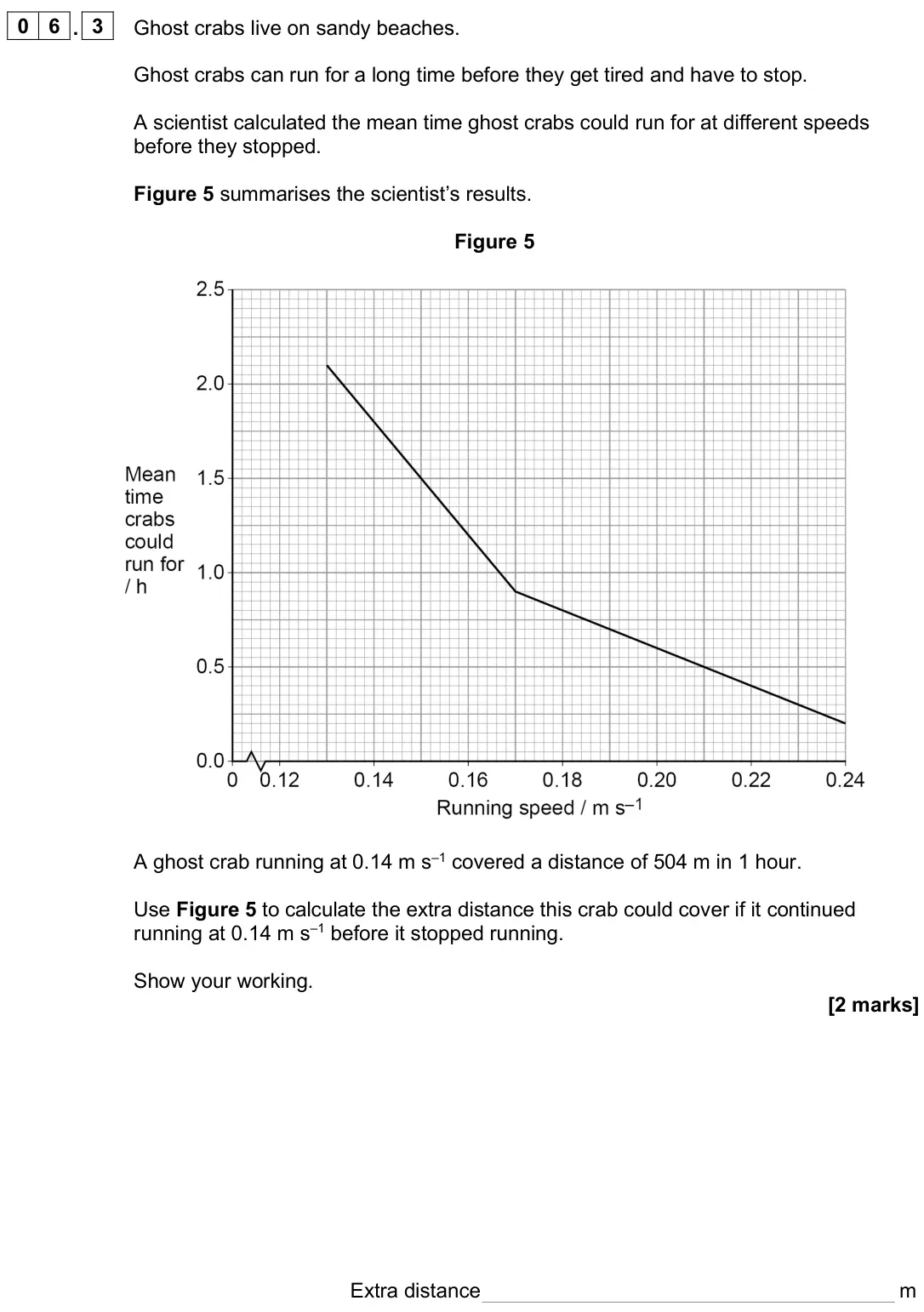
Q06.4
The whole paper ↗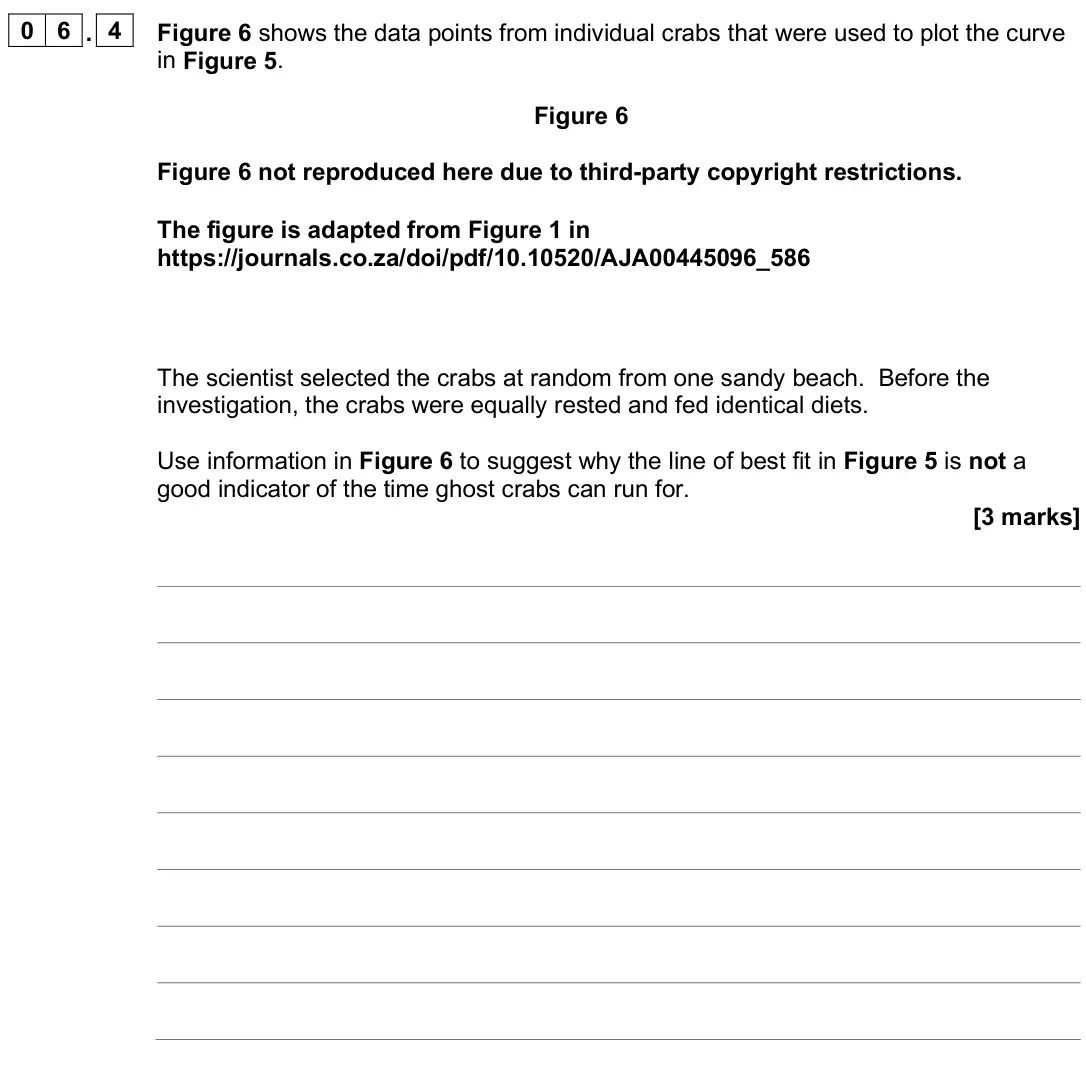
Q01.1
The whole paper ↗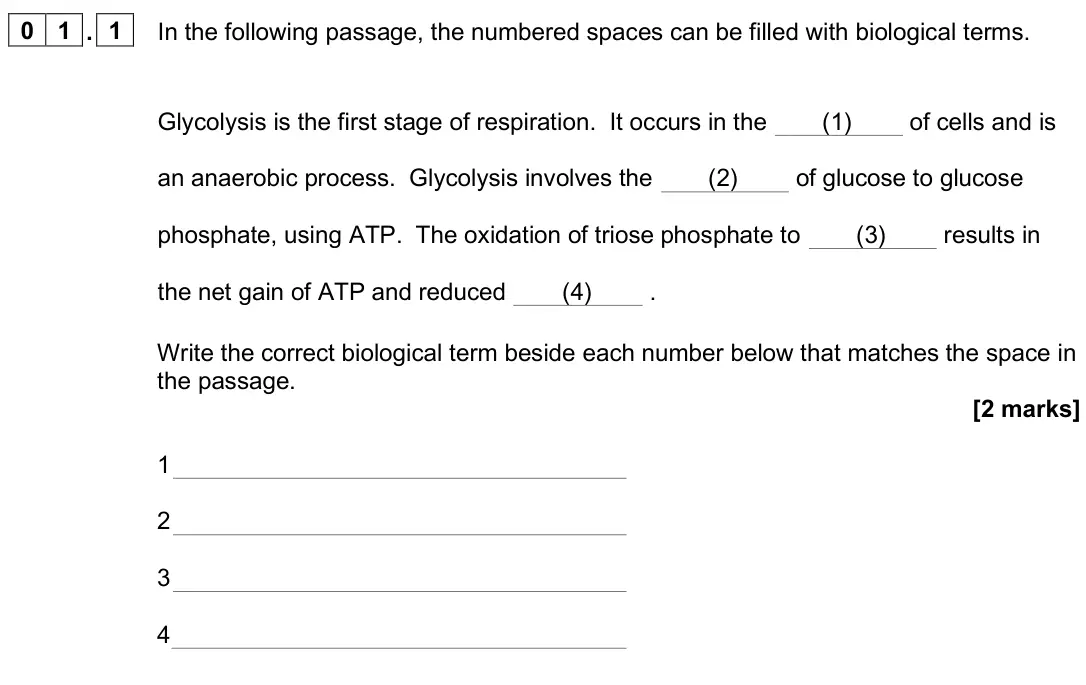
Q01.2
The whole paper ↗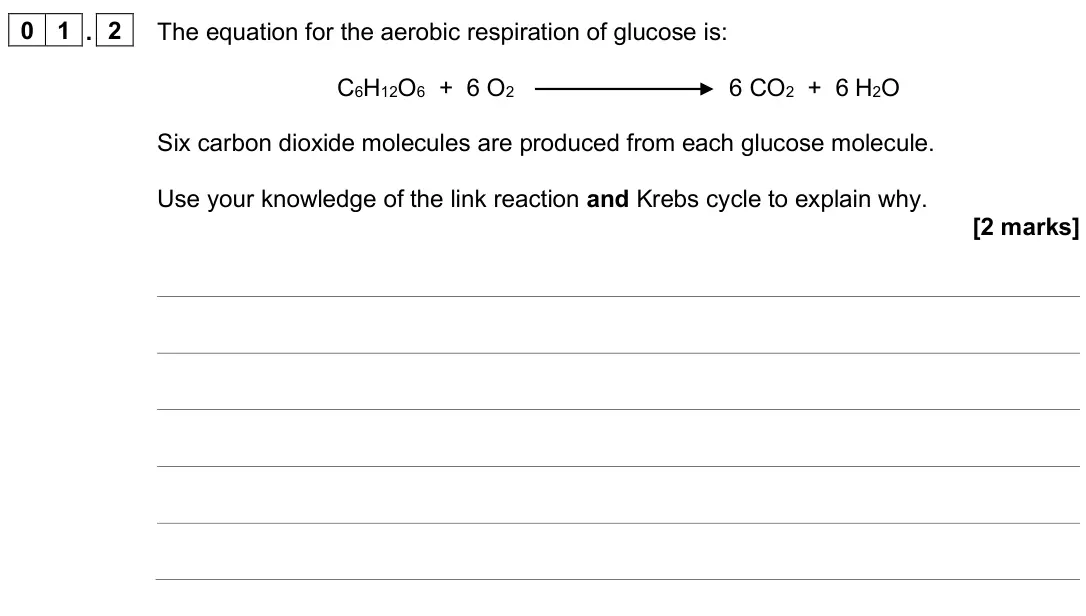
Q01.3
The whole paper ↗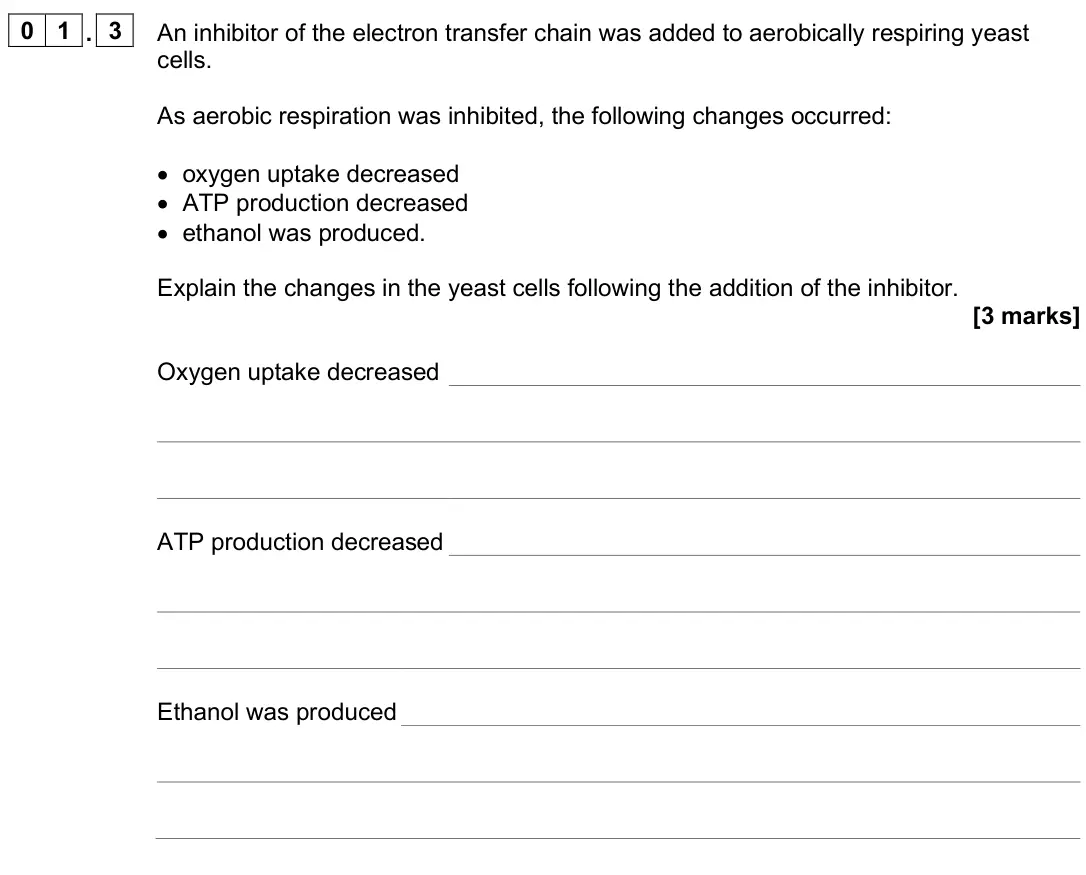
Q01.3
The whole paper ↗
Q02.1
The whole paper ↗
Q02.2
The whole paper ↗
Q02.3
The whole paper ↗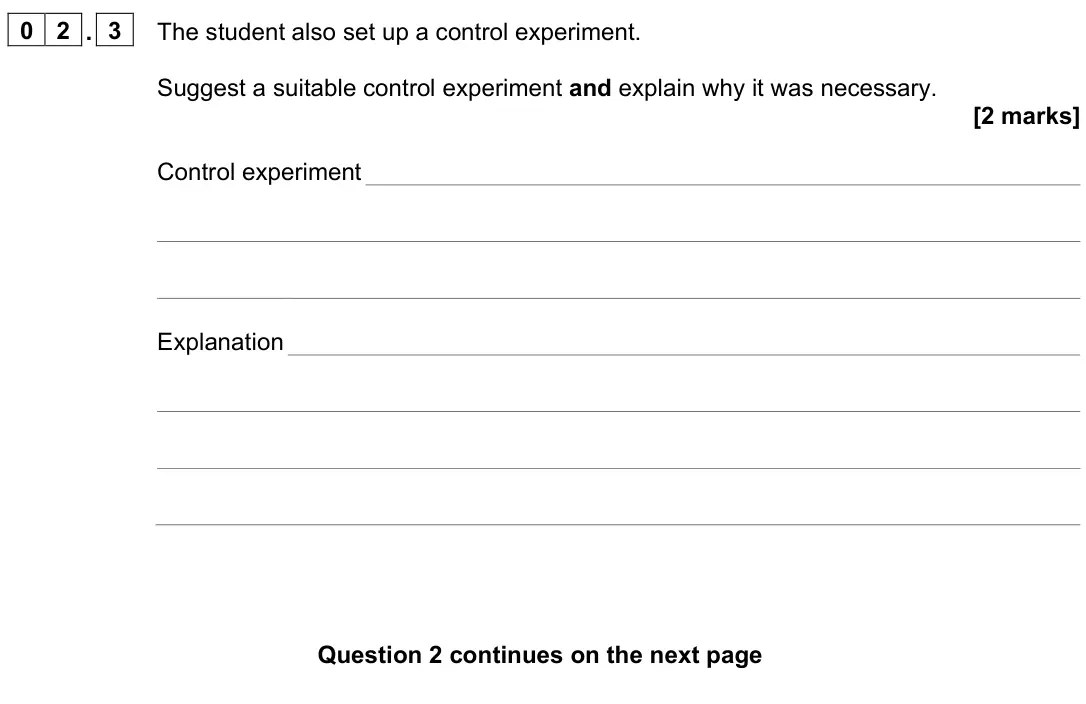
Q02.4
The whole paper ↗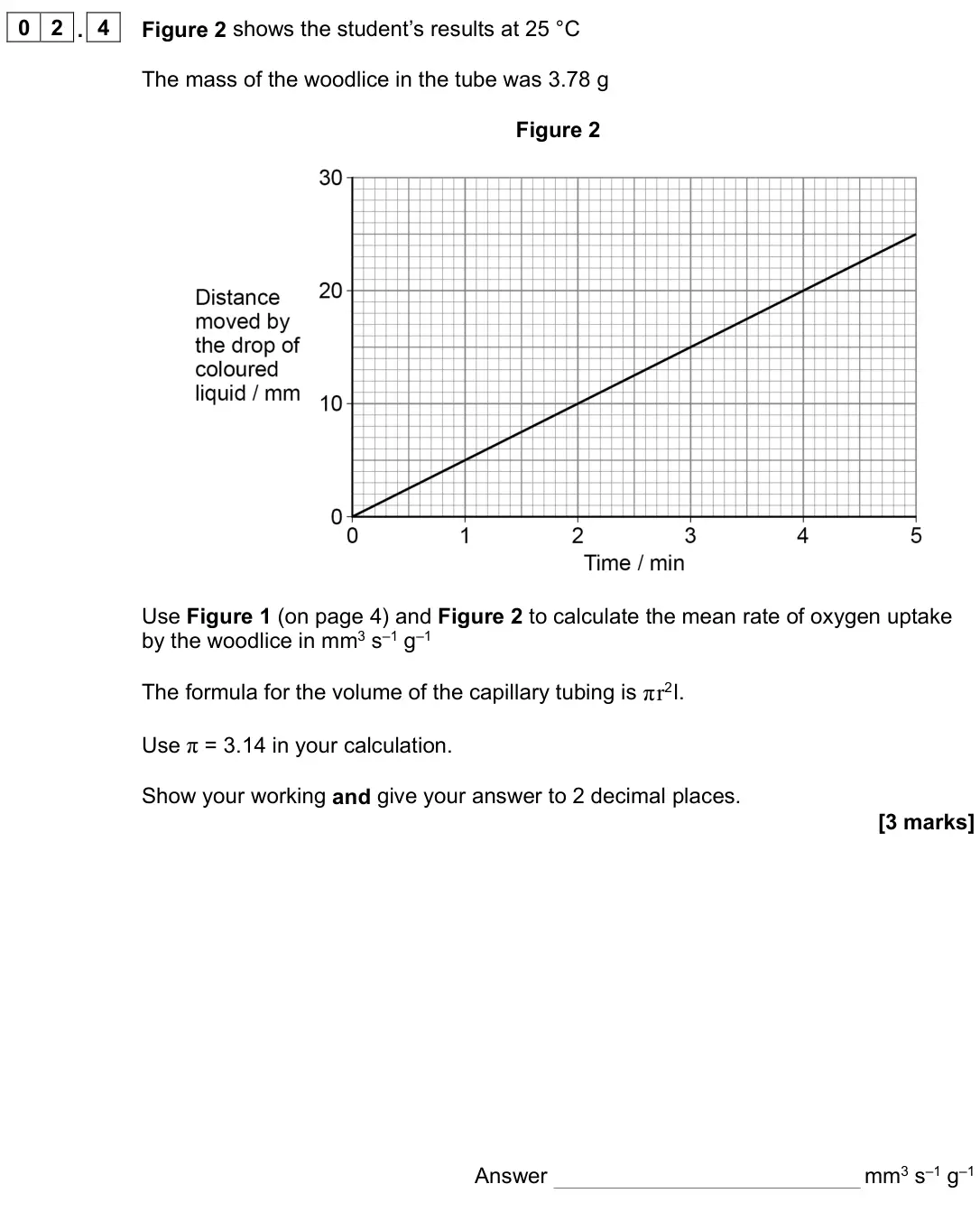
Q03.2
The whole paper ↗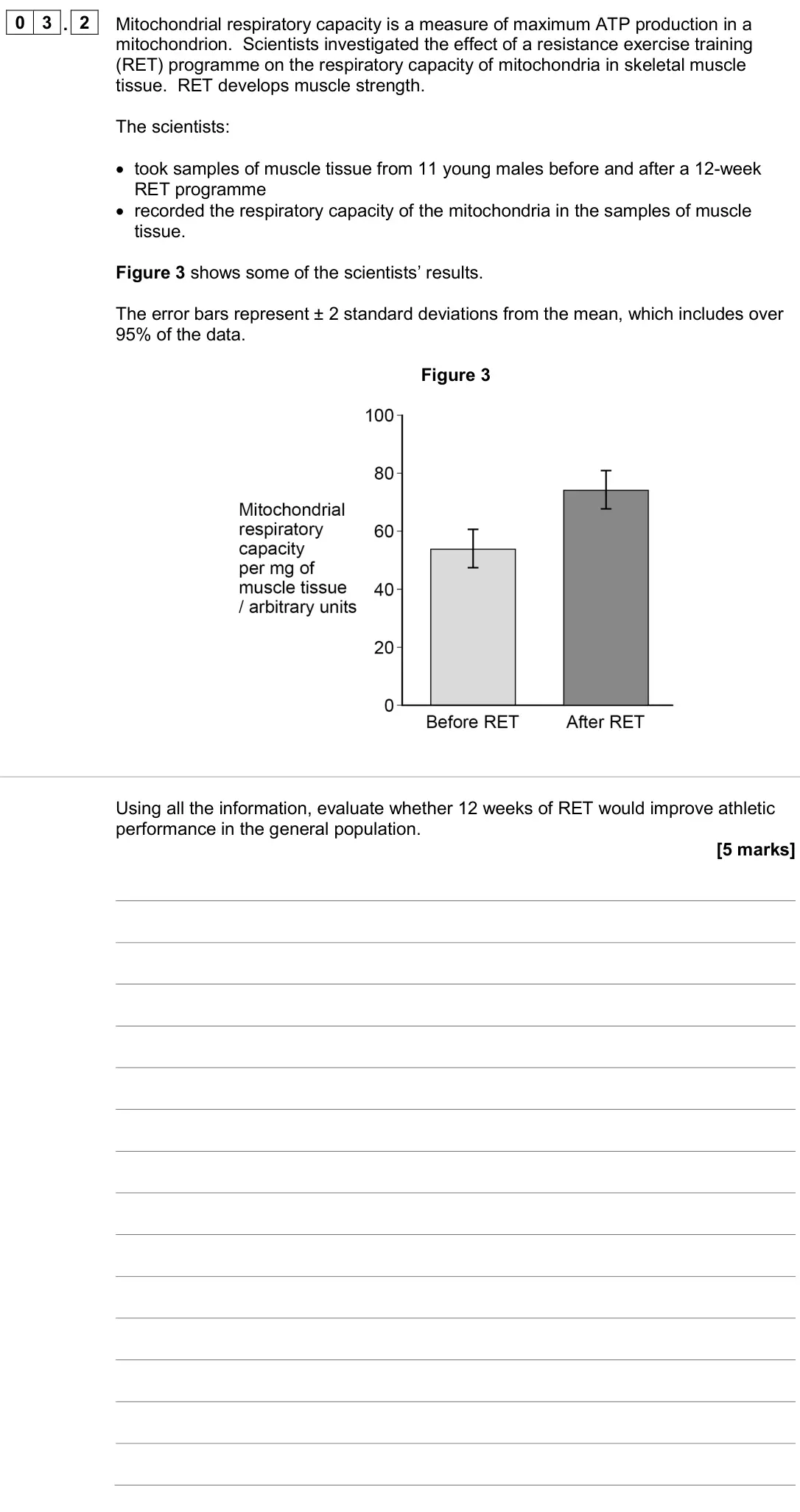
Q02.1
The whole paper ↗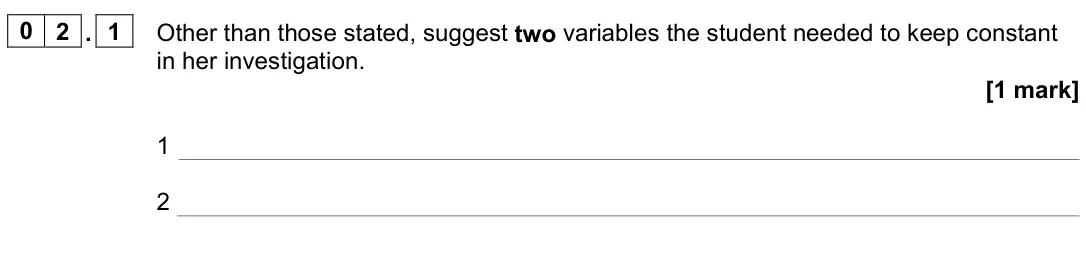
Q02.2
The whole paper ↗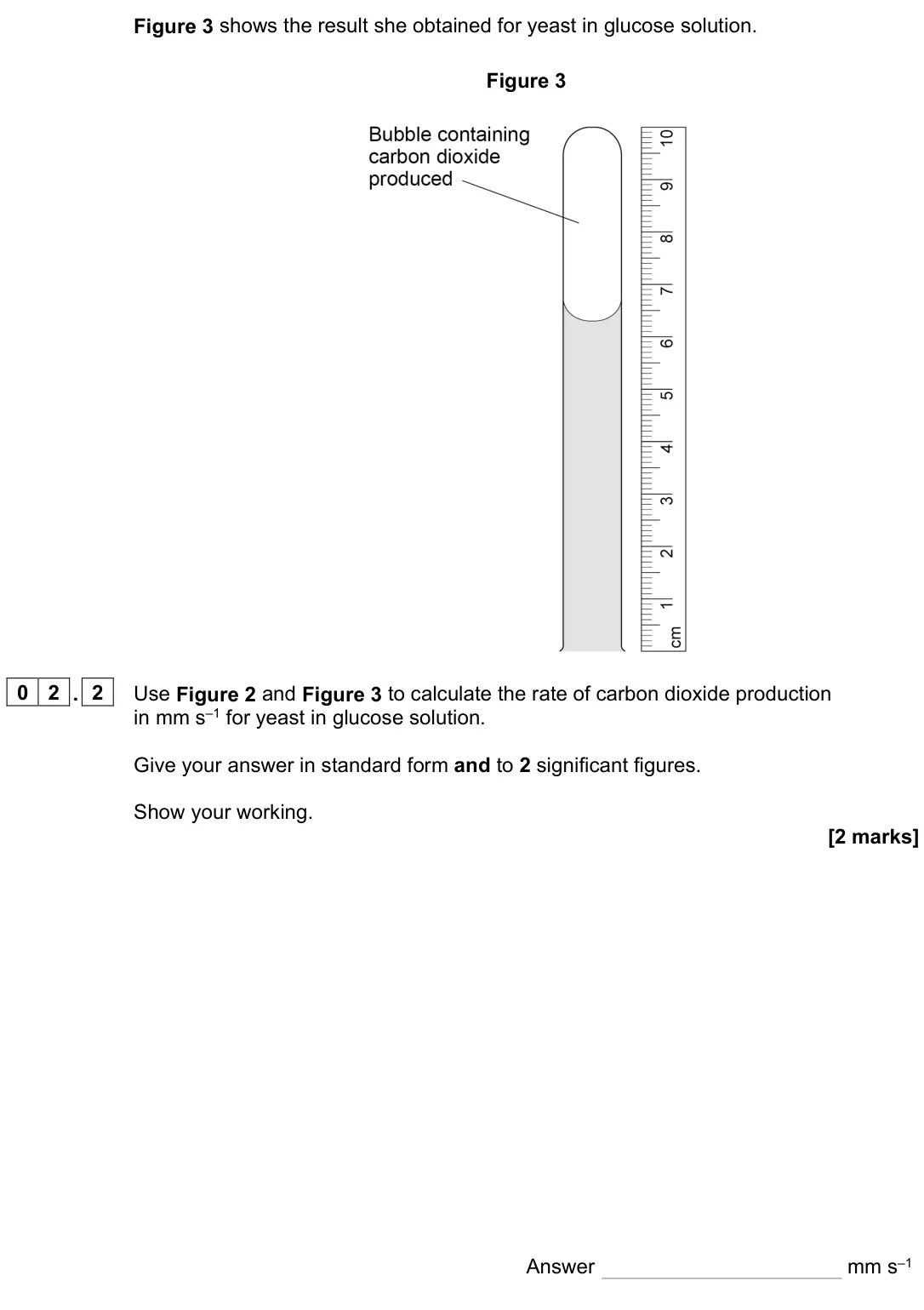
Q02.3
The whole paper ↗
Q02.4
The whole paper ↗
Q02.5
The whole paper ↗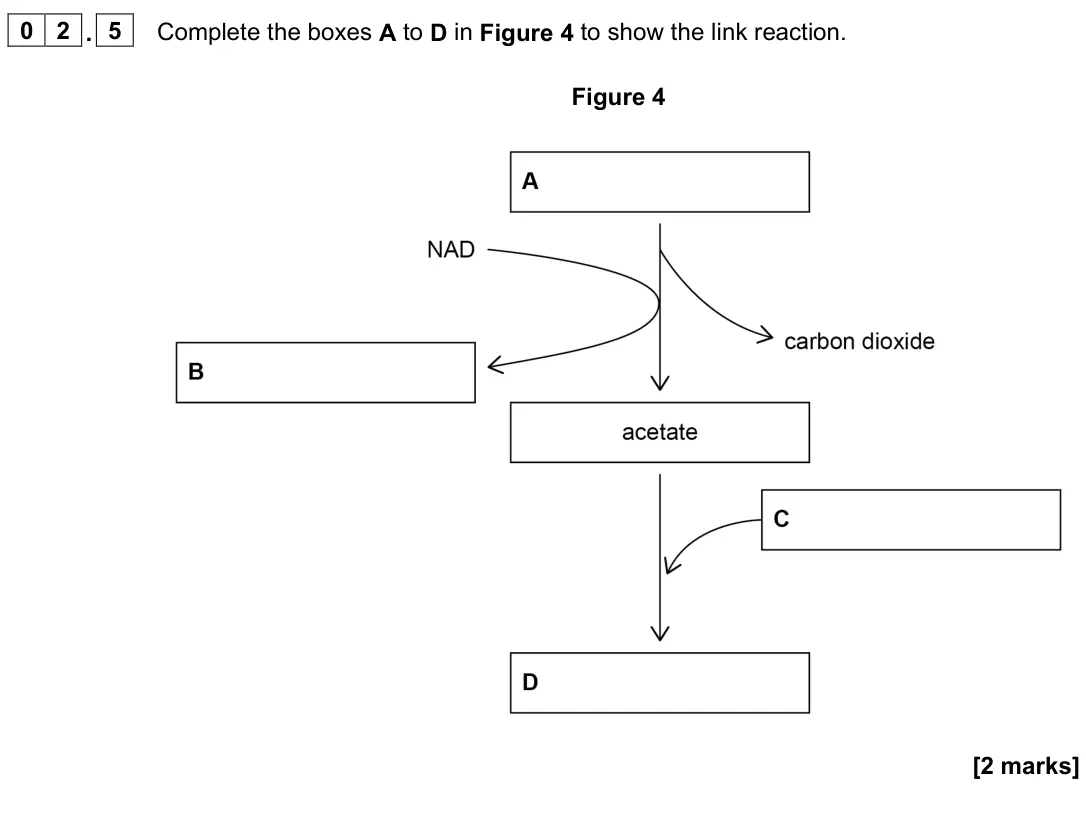
Q09.3
The whole paper ↗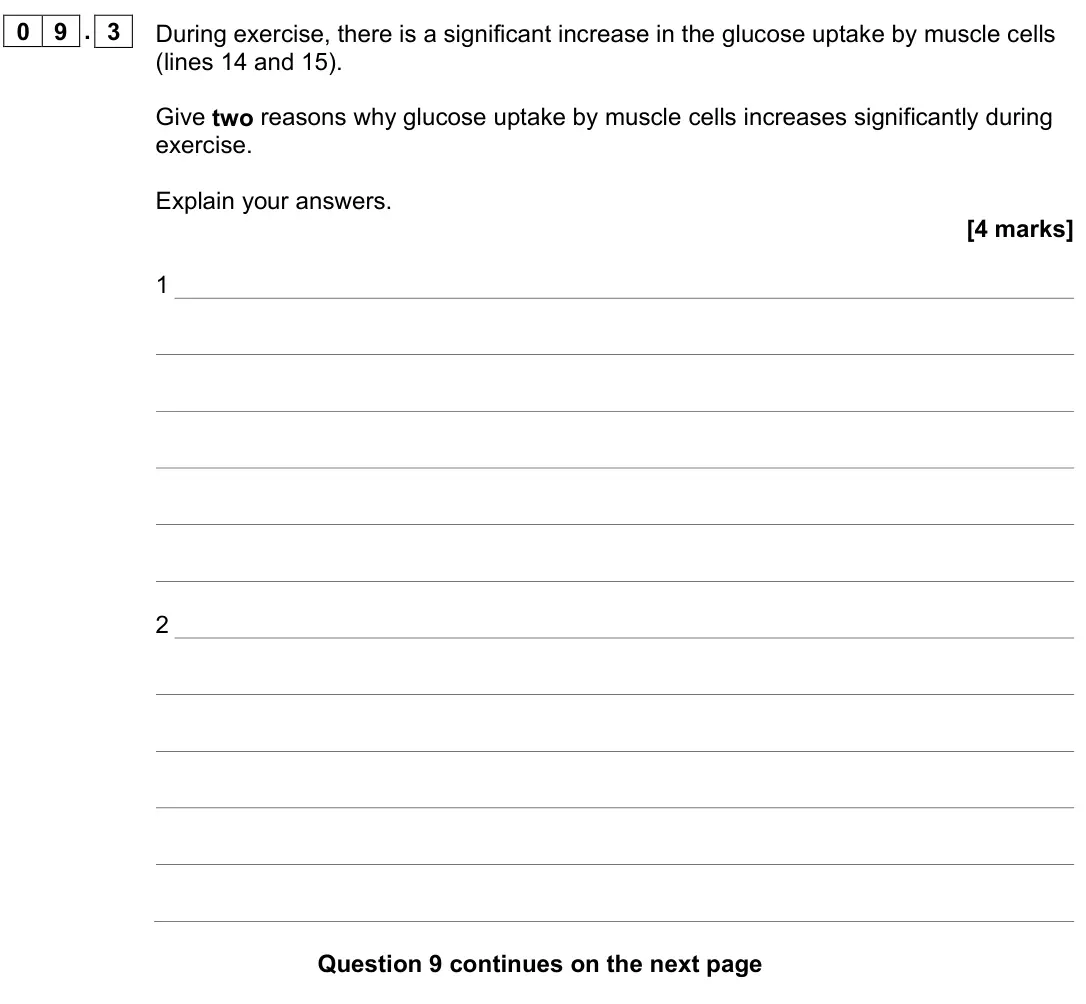
Q04.1
The whole paper ↗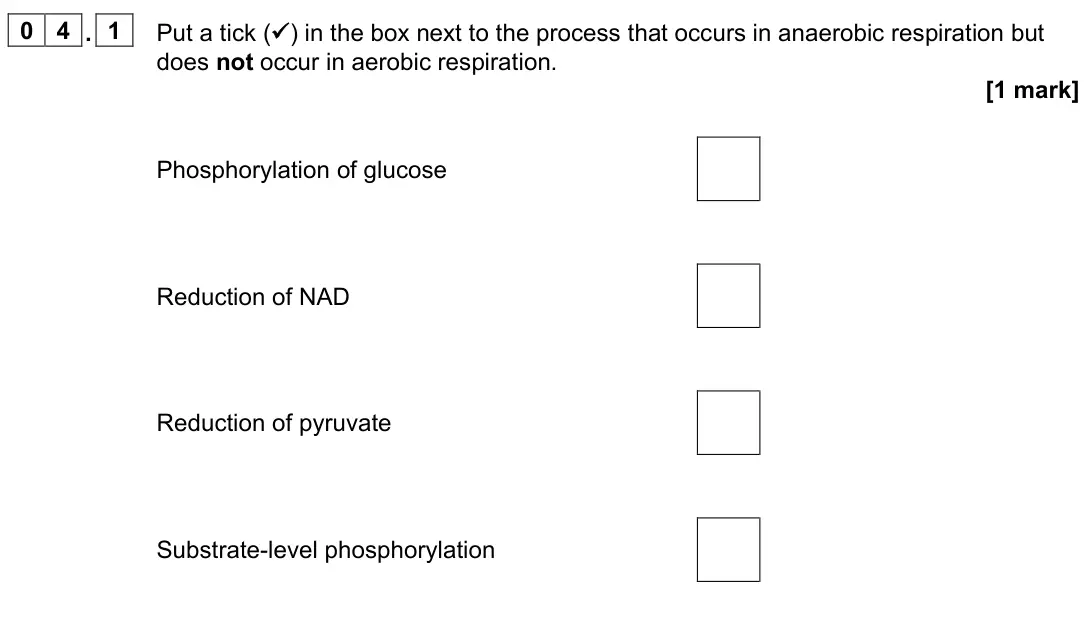
Q04.2
The whole paper ↗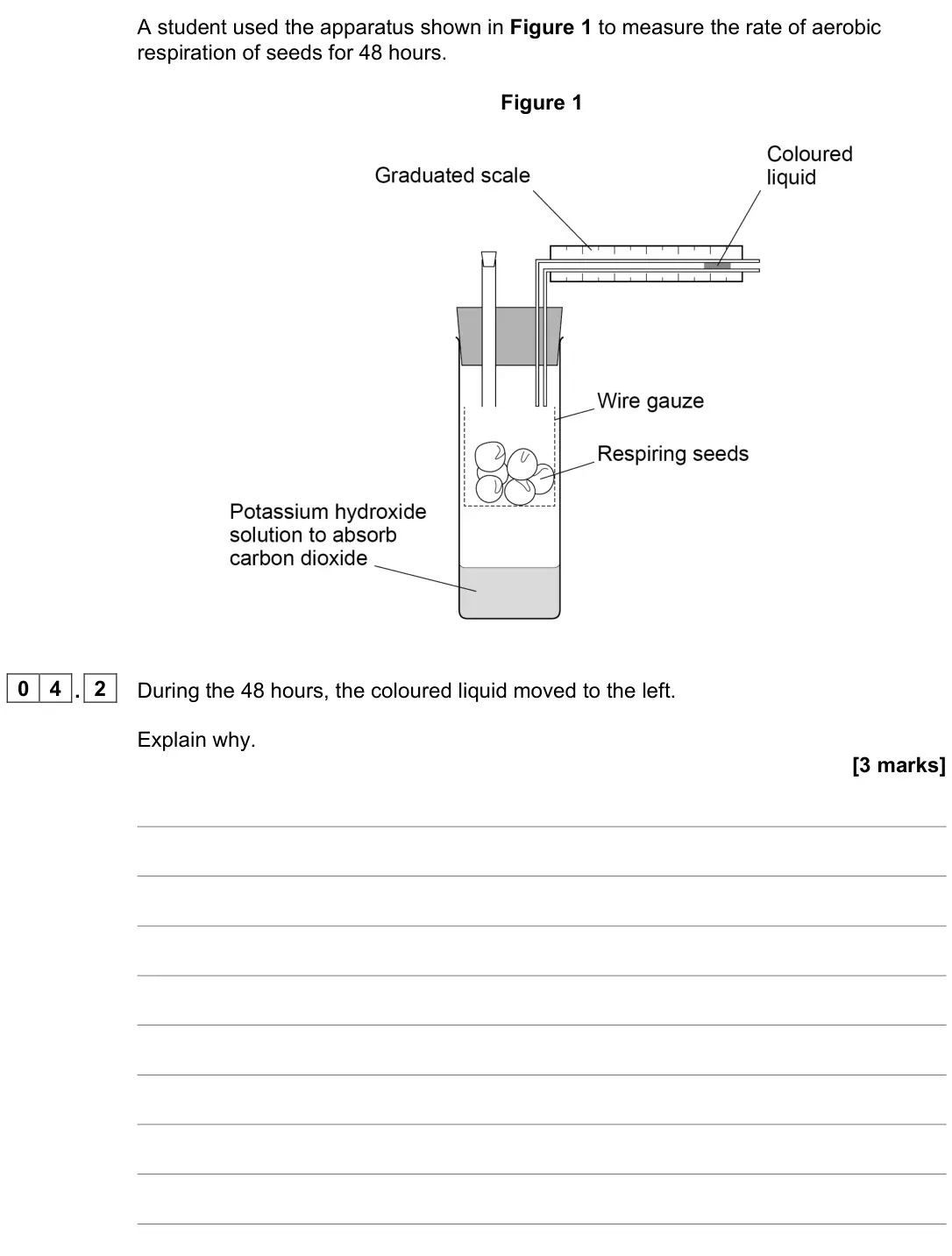
Q04.3
The whole paper ↗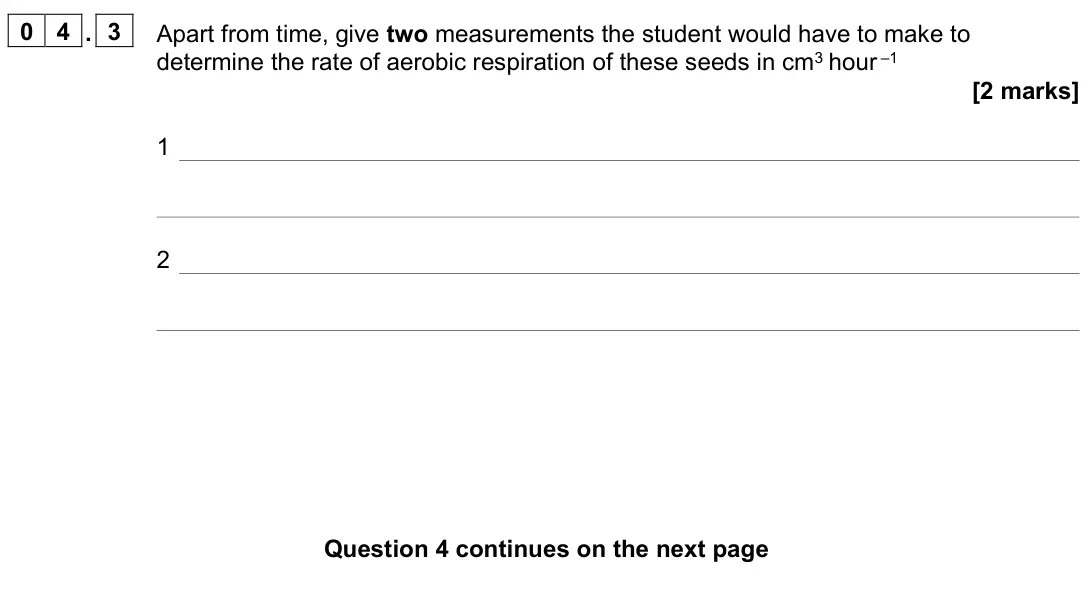
All 49 questions on Respiration, as a list
- June 2025, Paper 1, Q06.3 (2 marks): Ghost crabs live on sandy beaches. Ghost crabs can run for a long time before they get tired and have to stop. A scientist calculated the mean time ghost crabs
- June 2025, Paper 1, Q06.4 (3 marks): Figure 6 shows the data points from individual crabs that were used to plot the curve in Figure 5. Figure 6 Figure 6 not reproduced here due to third-party copy
- June 2025, Paper 2, Q01.1 (2 marks): In the following passage, the numbered spaces can be filled with biological terms. Glycolysis is the first stage of respiration. It occurs in the (1) of cells a
- June 2025, Paper 2, Q01.2 (2 marks): The equation for the aerobic respiration of glucose is: C6H12O6 + 6 O2 6 CO2 + 6 H2O Six carbon dioxide molecules are produced from each glucose molecule. Use y
- June 2025, Paper 2, Q01.3 (3 marks): An inhibitor of the electron transfer chain was added to aerobically respiring yeast cells. As aerobic respiration was inhibited, the following changes occurred
- June 2025, Paper 3, Q01.3 (3 marks): Bedaquiline is a drug that inhibits ATP synthase in mycobacteria by stopping hydrogen ion (proton) movement. Explain how bedaquiline can kill these bacteria. [3
- June 2024, Paper 3, Q02.1 (1 mark): Other than those stated, suggest two variables the student should have kept constant in this investigation. [1 mark] 1 2
- June 2024, Paper 3, Q02.2 (2 marks): Describe how the student used the apparatus in Figure 1 to reset the drop of coloured liquid back to the right-hand end of the tubing. [2 marks]
- June 2024, Paper 3, Q02.3 (2 marks): The student also set up a control experiment. Suggest a suitable control experiment and explain why it was necessary. [2 marks] Control experiment Explanation
- June 2024, Paper 3, Q02.4 (3 marks): Figure 2 shows the student’s results at 25 °C The mass of the woodlice in the tube was 3.78 g Figure 2 Use Figure 1 (on page 4) and Figure 2 to calculate the me
- June 2024, AS Paper 2, Q03.2 (5 marks): Mitochondrial respiratory capacity is a measure of maximum ATP production in a mitochondrion. Scientists investigated the effect of a resistance exercise traini
- June 2023, Paper 3, Q02.1 (1 mark): Other than those stated, suggest two variables the student needed to keep constant in her investigation. [1 mark] 1 2
- June 2023, Paper 3, Q02.2 (2 marks): Use Figure 2 and Figure 3 to calculate the rate of carbon dioxide production in mm s–1 for yeast in glucose solution. Give your answer in standard form and to 2
- June 2023, Paper 3, Q02.3 (2 marks): The student repeated the experiment using yeast in maltose solution. She found the rate of carbon dioxide production was slower than with yeast in glucose solut
- June 2023, Paper 3, Q02.4 (2 marks): A second student used a different method to investigate the effect of different sugars on the rate of respiration in yeast. He set up a tube with yeast in gluco
- June 2023, Paper 3, Q02.5 (2 marks): Complete the boxes A to D in Figure 4 to show the link reaction. Figure 4 [2 marks]
- June 2023, AS Paper 1, Q09.3 (4 marks): During exercise, there is a significant increase in the glucose uptake by muscle cells (lines 14 and 15). Give two reasons why glucose uptake by muscle cells in
- June 2022, Paper 2, Q04.1 (1 mark): Put a tick ( ) in the box next to the process that occurs in anaerobic respiration but does not occur in aerobic respiration. [1 mark] Phosphorylation of glucos
- June 2022, Paper 2, Q04.2 (3 marks): During the 48 hours, the coloured liquid moved to the left. Explain why. [3 marks]
- June 2022, Paper 2, Q04.3 (2 marks): Apart from time, give two measurements the student would have to make to determine the rate of aerobic respiration of these seeds in cm3 hour –1 [2 marks] 1 2
- June 2022, Paper 2, Q04.4 (3 marks): The student used the same apparatus to determine the volume of carbon dioxide the seeds produced during 48 hours. Give the change the student would need to make
- June 2022, Paper 2, Q04.5 (1 mark): The student calculated that during the 48 hours, 6.2 × 10⁻⁴ cm3 of oxygen was absorbed by 40 g of seeds. Calculate the oxygen uptake in cm3 g–1 hour –1 [1 mark]
- November 2021, Paper 2, Q01.1 (4 marks): Describe the process of glycolysis. [4 marks]
- November 2021, Paper 2, Q01.2 (2 marks): Malonate inhibits a reaction in the Krebs cycle. Explain why malonate would decrease the uptake of oxygen in a respiring cell. [2 marks]
- November 2020, Paper 2, Q10.1 (3 marks): Black bears can hibernate for up to 7 months without food or water (lines 1−2). Suggest and explain how. [3 marks]
- November 2020, Paper 2, Q10.3 (2 marks): In many mammals, ‘uncoupling proteins’ help to maintain a constant body temperature during hibernation (lines 6−7). Suggest and explain how. [2 marks]
- November 2020, Paper 3, Q06.2 (2 marks): VT can be identified as the first point when there is an increase in pO2 breathed out, without an equivalent increase in pCO2 breathed out. Use Figure 3 to dete
- November 2020, Paper 3, Q06.4 (1 mark): At more than 80% of maximum muscle effort, ATP can only be made for a limited time. Use Figure 4 to suggest one reason why. Tick () the correct box. [1 mark]
- November 2020, Paper 3, Q06.5 (4 marks): GW1516 is a performance-enhancing drug. GW1516 activates AMPK and develops slow muscle fibres at rest. Use Figure 4 to justify why professional athletes are not
- June 2019, Paper 2, Q04.3 (2 marks): In muscles, pyruvate is converted to lactate during prolonged exercise. Explain why converting pyruvate to lactate allows the continued production of ATP by ana
- June 2019, Paper 3, Q04.2 (3 marks): A student concluded from Figure 4 and Figure 5 that training has a positive effect on VO2 max and CS activity. Evaluate the student’s conclusion. [3 marks]
- June 2019, Paper 3, Q04.4 (3 marks): ‘Having thymine at nucleotide position 16 519 in Group T causes an increase in ability to exercise for longer.’ Evaluate this conclusion. Use all the data in th
- June 2018, Paper 2, Q03.1 (1 mark): Suggest one reason why it was important that the student left the apparatus for one hour after the yeast culture reached a constant temperature. [1 mark]
- June 2018, Paper 2, Q03.2 (2 marks): During her investigation, the coloured liquid moved to the right. Explain why it moved to the right. [2 marks]
- June 2018, Paper 2, Q03.3 (2 marks): The student found that the coloured liquid moved 1.5 cm in 24 hours. The diameter of the lumen (hole) of the capillary tubing was 1 mm. The volume of a capillar
- June 2018, Paper 2, Q03.4 (1 mark): Explain why a log scale is used to record the number of cells. [1 mark]
- June 2018, Paper 2, Q03.5 (1 mark): Many yeast cells die during the death phase. Suggest one reason why. [1 mark]
- June 2018, Paper 2, Q03.6 (2 marks): The following equation can be used to make predictions of the growth in the population of yeast cells under ideal laboratory conditions. Xt = X0 ert Xt = the po
- June 2017, Paper 2, Q01.2 (3 marks): AMP-activated protein kinase (AMPK) is an enzyme that regulates a number of cellular processes. Exercise leads to activation of AMPK. Figure 1 shows one effect
- June 2017, Paper 2, Q03.1 (1 mark): Succinic acid dehydrogenase is an enzyme used in the Krebs cycle. Suggest one reason for the difference in the staining between the muscle fibres of the control
- June 2017, Paper 2, Q03.2 (3 marks): The scientists then compared the length of time that the control mice and the trained mice could carry out prolonged exercise. The trained mice were able to exe
- June 2017, AS Paper 1, Q10.3 (2 marks): Suggest why high doses of AZT lead to muscle wastage (lines 10–11). [2 marks] Copyright Information For confidentiality purposes, from the November 2015 examina
- Specimen, Paper 1, Q09.2 (1 mark): Name the process that produced the 14CO2 released from the trunk. [1 mark] 0 9 . 2
- Specimen, Paper 2, Q01.1 (3 marks): 1 2 3 3
- Specimen, Paper 2, Q01.2 (2 marks): Suggest and explain why the chosen temperature was 20 °C for this experiment. [2 marks] 0 1 . 2
- Specimen, Paper 2, Q01.3 (3 marks): [ ] 5
- Specimen, Paper 2, Q01.4 (2 marks): cm3 g–1 hour–1 Rate =
- Specimen, Paper 2, Q10.1 (3 marks): Read the following passage carefully. A large and growing number of disorders are now known to be due to types of mitochondrial disease (MD). MD often affects s
- Specimen, Paper 2, Q10.4 (3 marks): Read the following passage carefully. A large and growing number of disorders are now known to be due to types of mitochondrial disease (MD). MD often affects s
Questions, mark schemes and examiner’s reports are © AQA, from their published past papers. Plumi isn’t affiliated with any exam board. Want whole papers? Every AQA A-Level Biology paper.
Rather write your answers by hand on iPad? Plumi marks them against the same mark schemes.