 plumi
Photosynthesis: AQA A‑Level Biology questions
Every AQA A-Level Biology exam question on 3.5.1 Photosynthesis, 2016–2025, with its mark scheme and examiner’s report.
Find questions1,383
Calculations
Q09.3
The whole paper ↗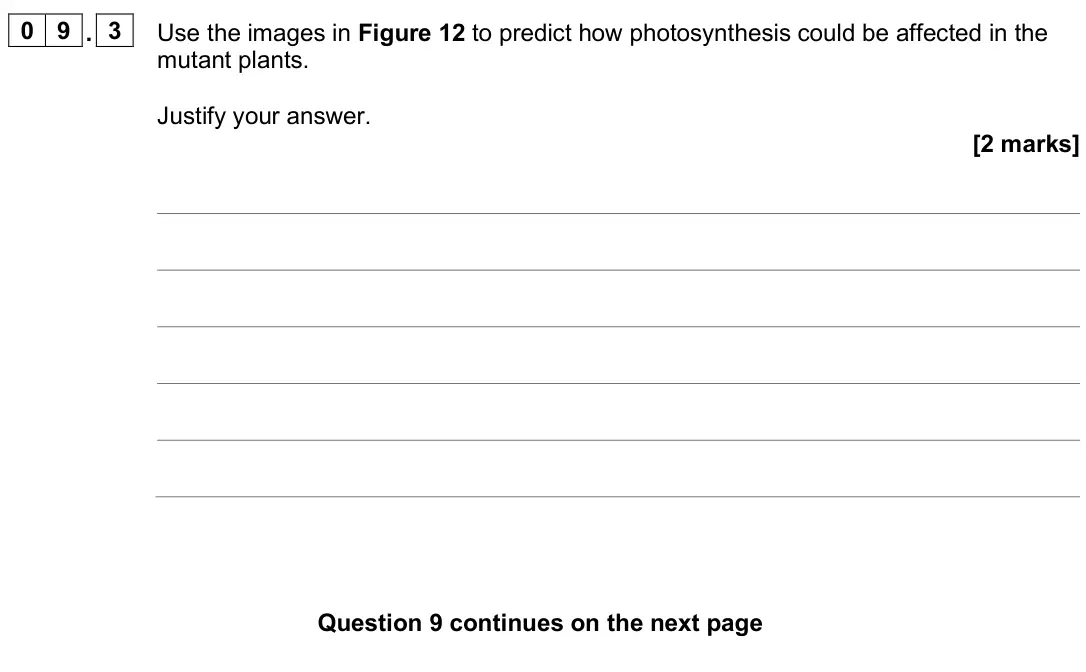
Q09.4
The whole paper ↗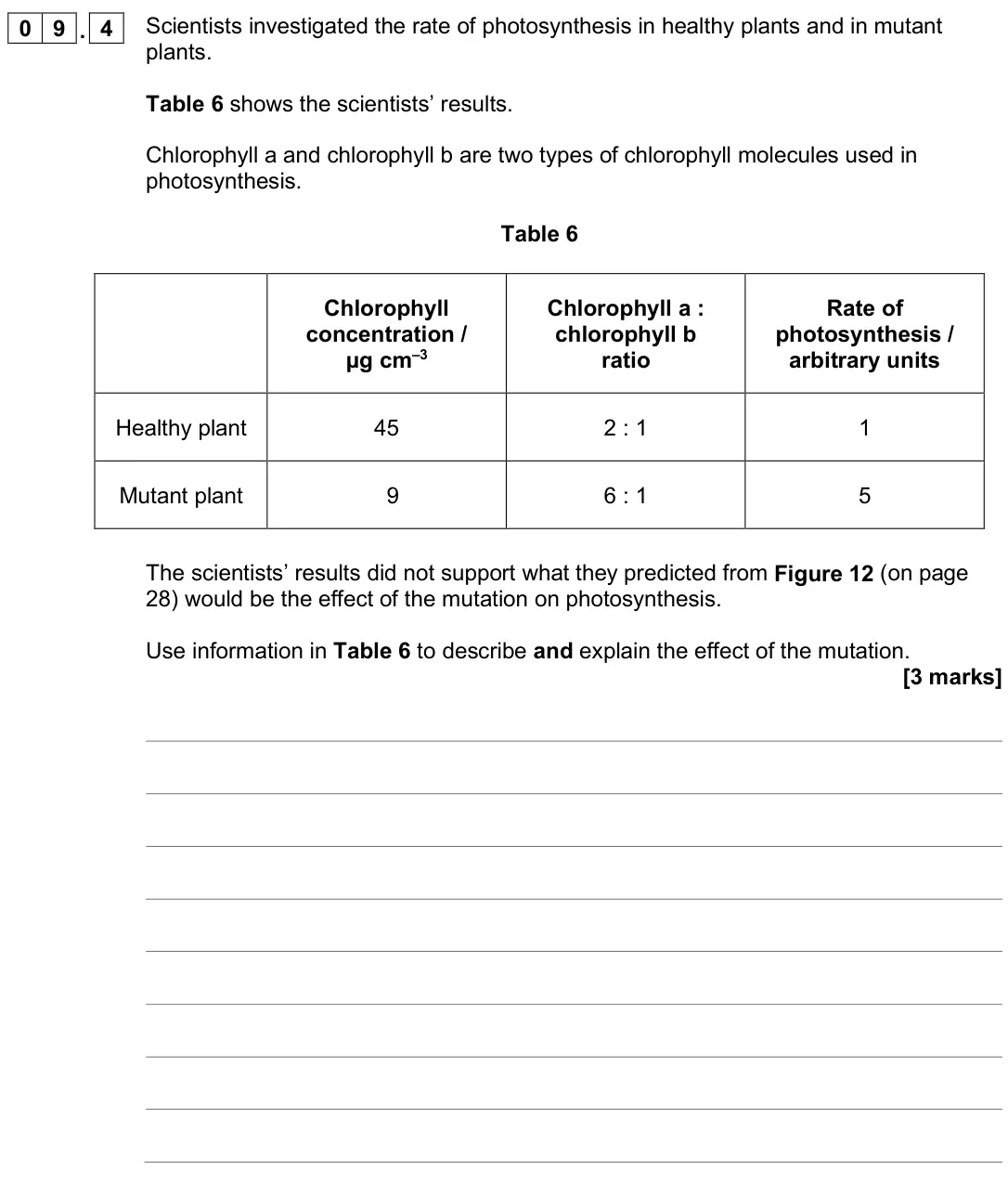
Q03.1
The whole paper ↗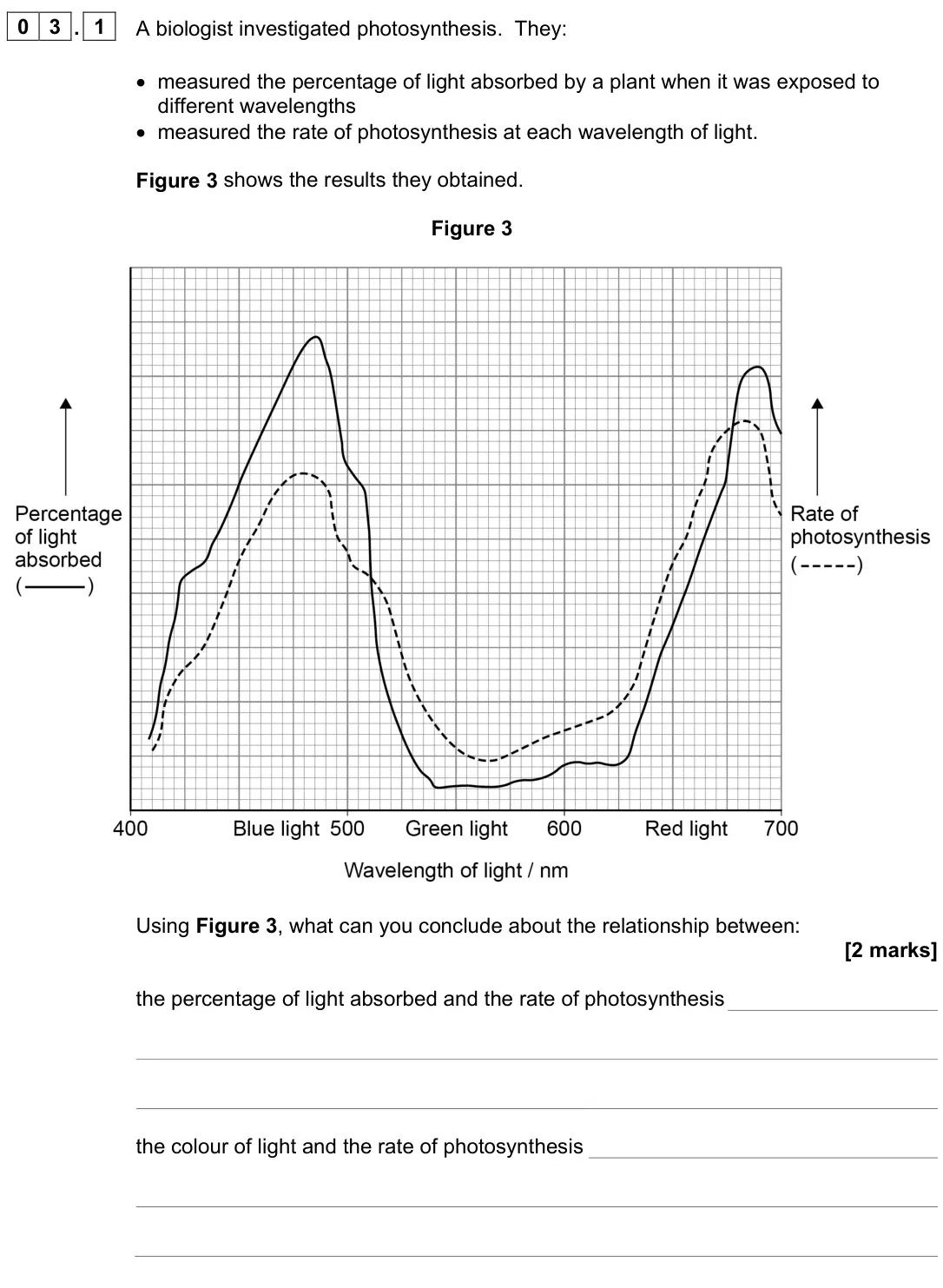
Q03.2
The whole paper ↗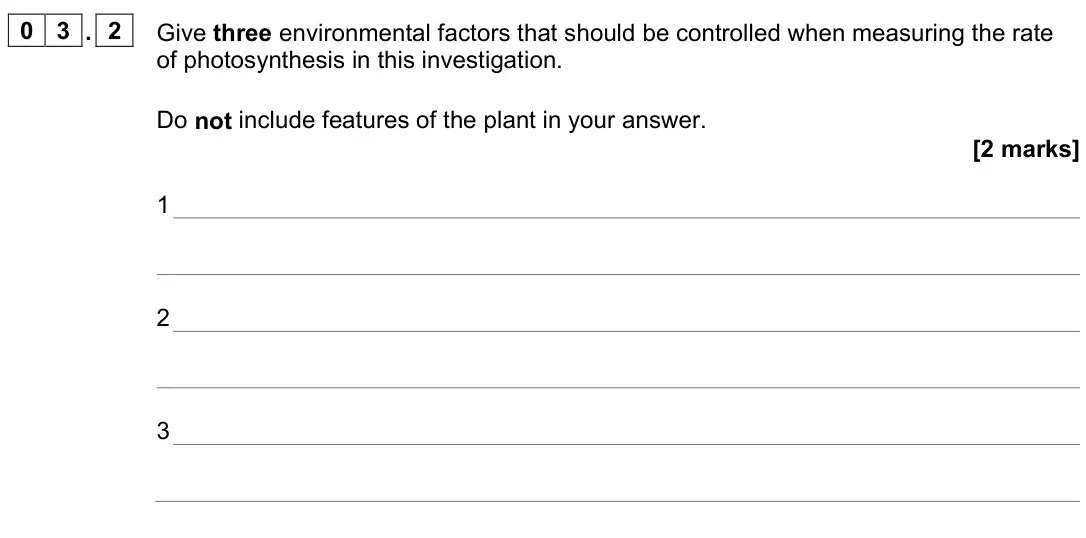
Q03.3
The whole paper ↗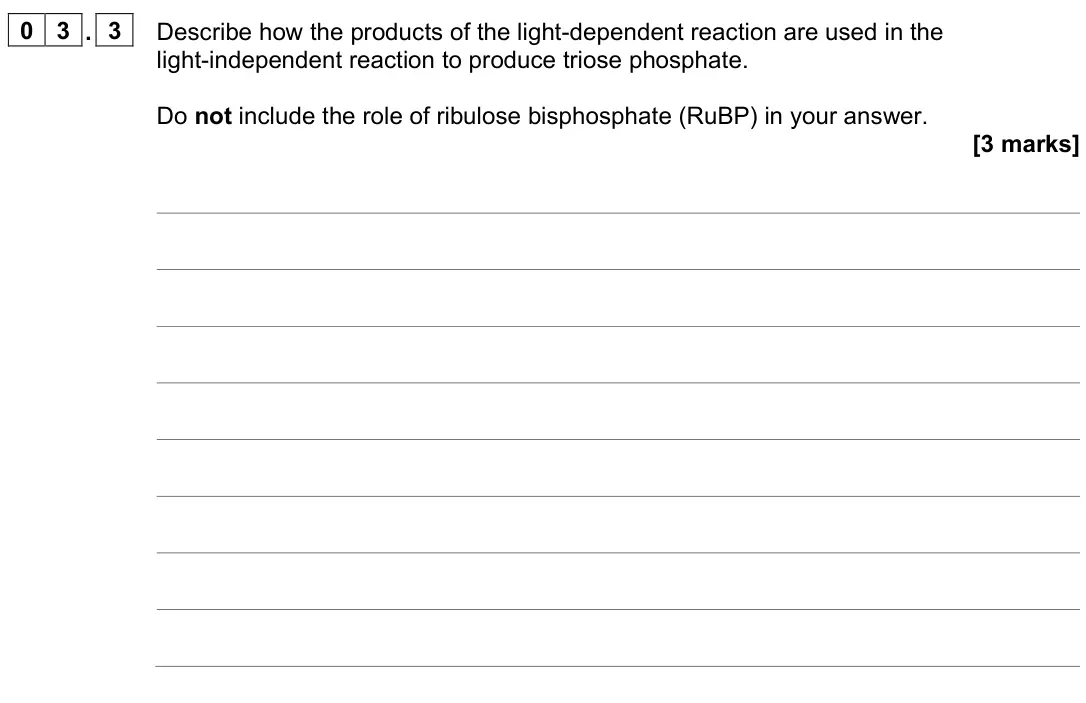
Q01.1
The whole paper ↗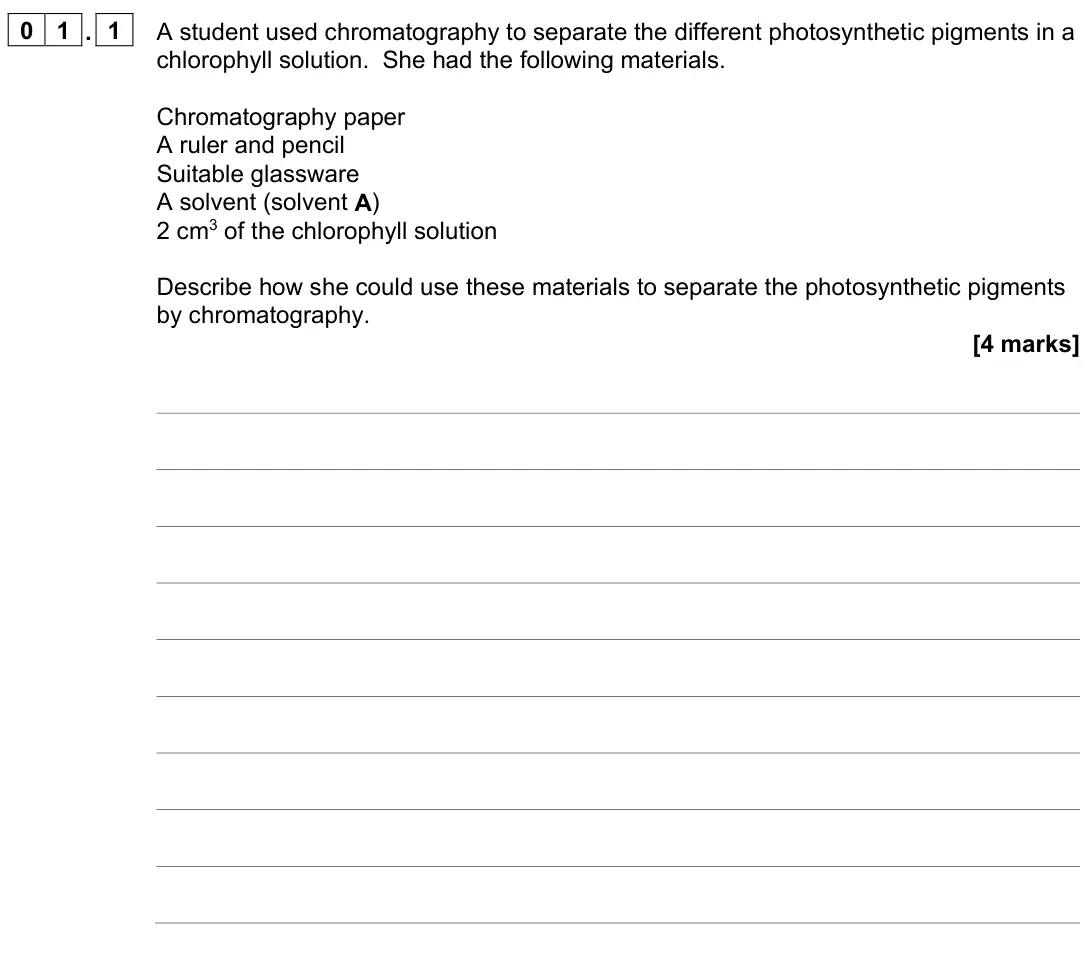
Q01.2
The whole paper ↗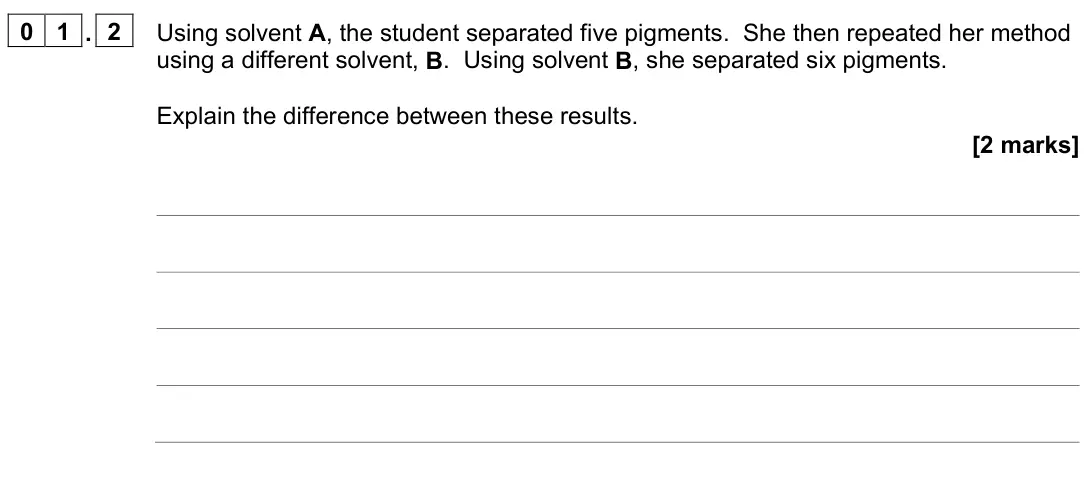
Q01.2
The whole paper ↗
Q05.1
The whole paper ↗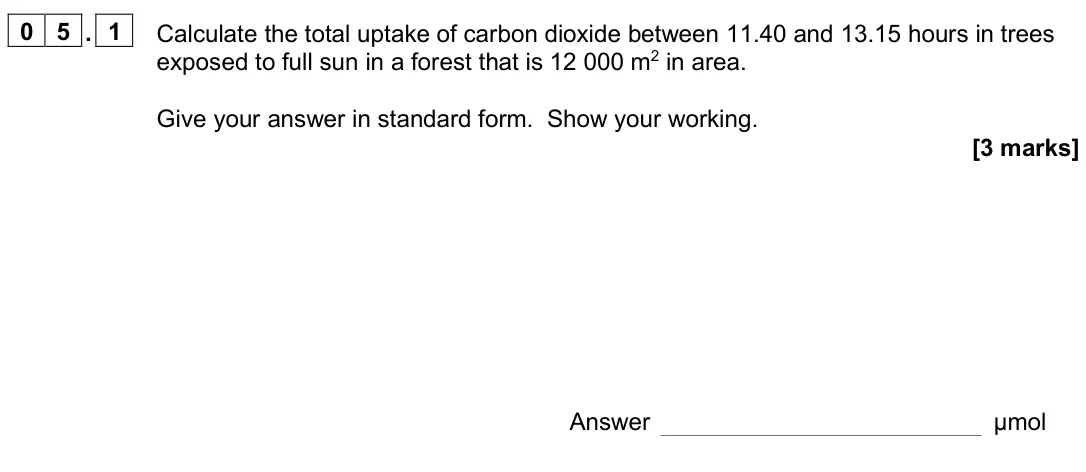
Q05.2
The whole paper ↗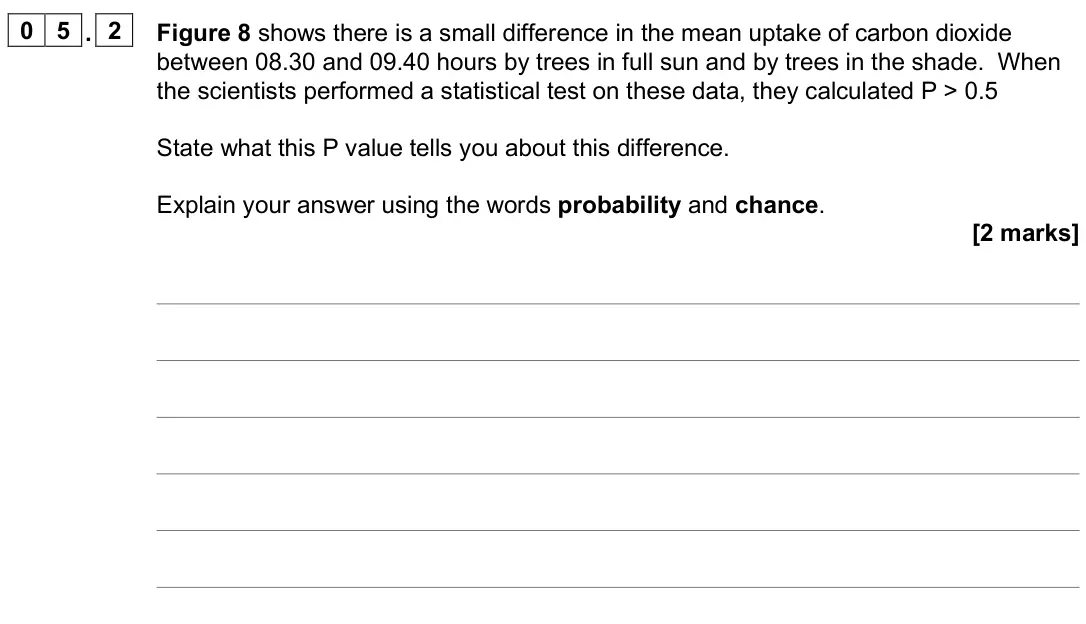
Q05.3
The whole paper ↗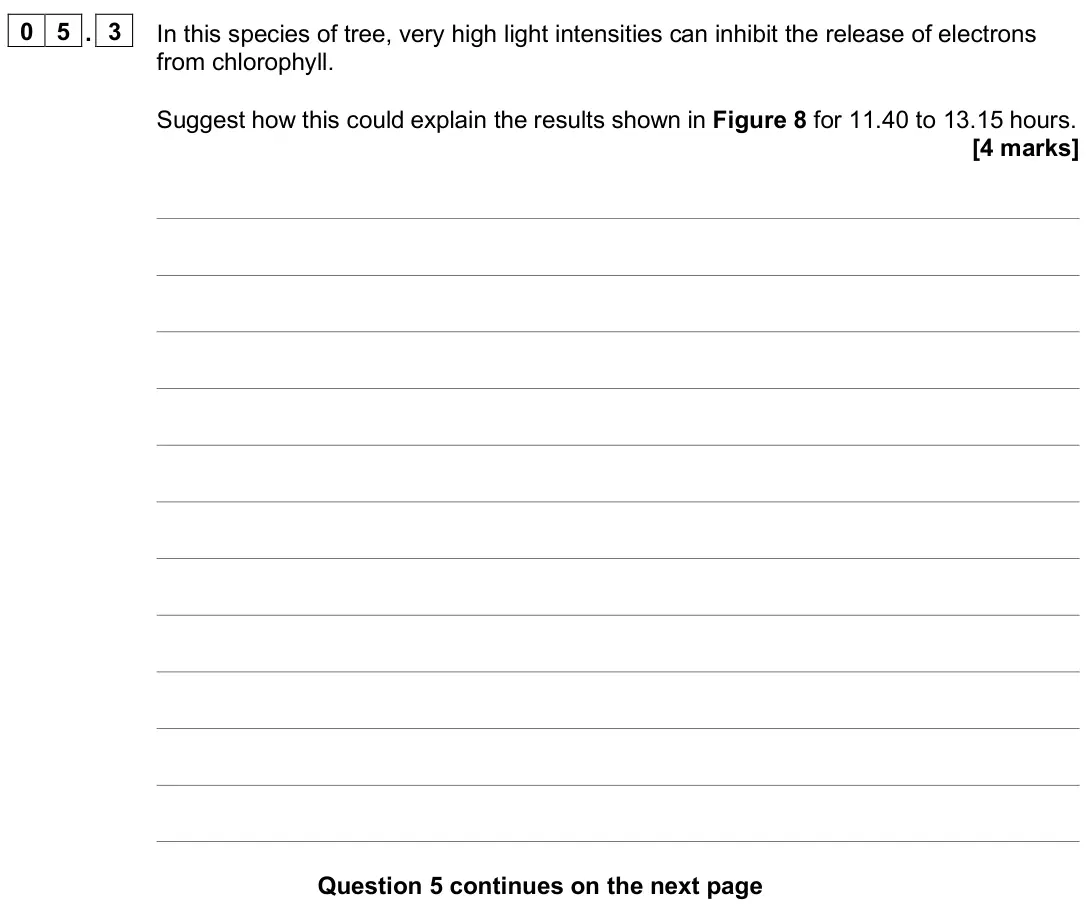
Q03.4
The whole paper ↗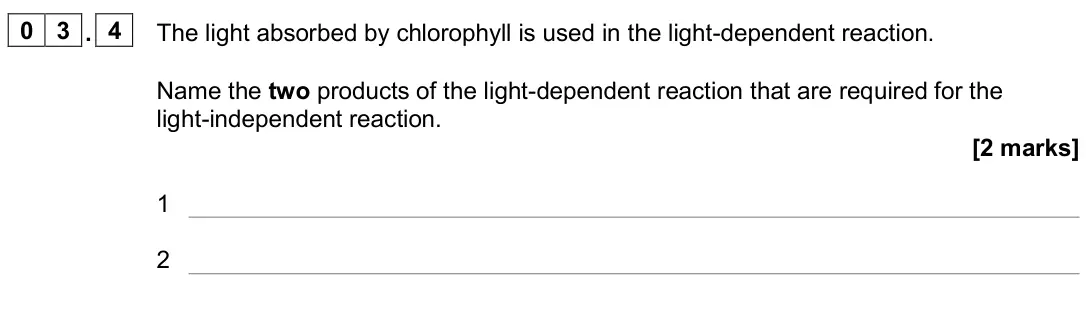
Q09.3
The whole paper ↗
Q07.1
The whole paper ↗
Q07.2
The whole paper ↗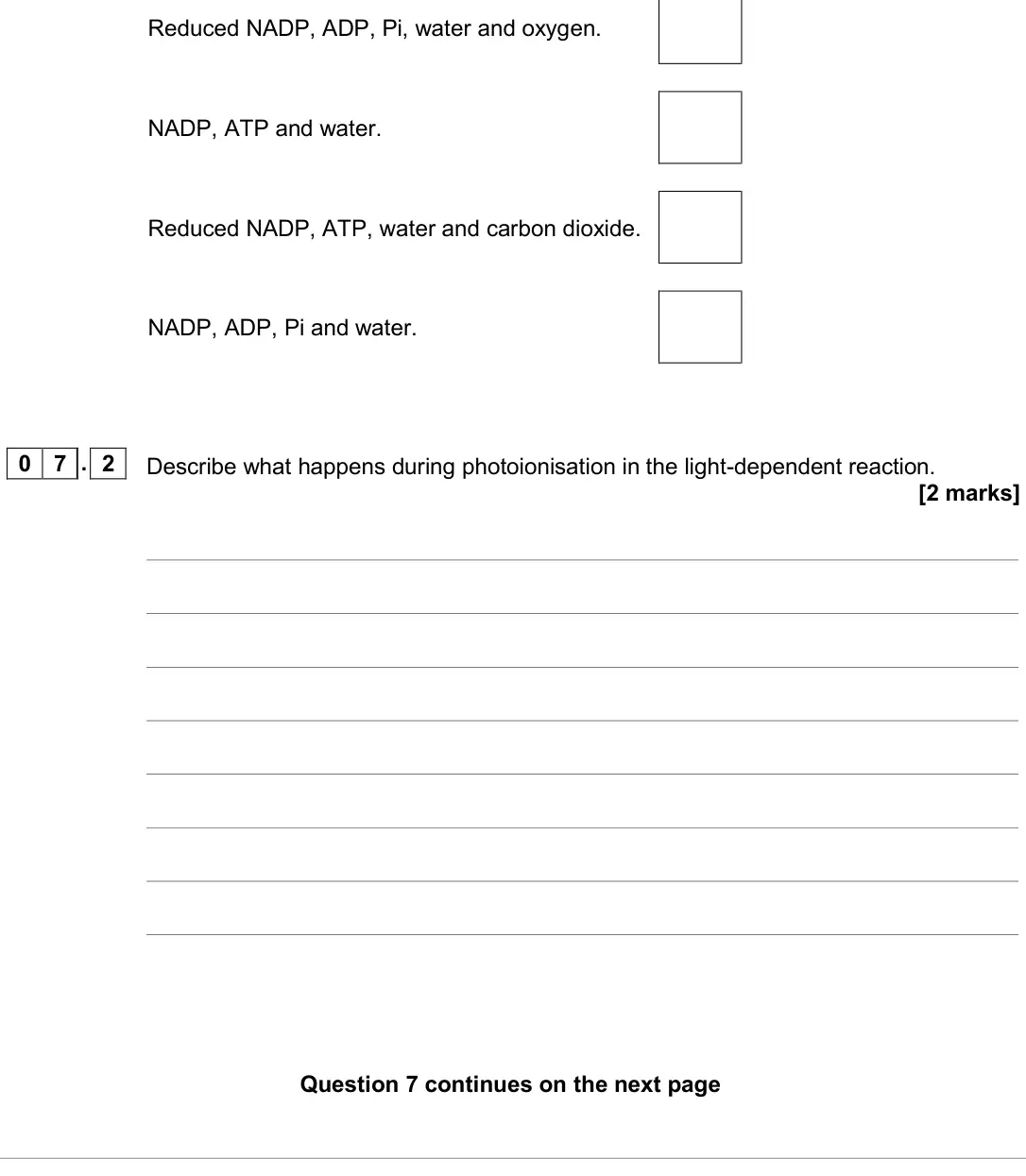
Q07.3
The whole paper ↗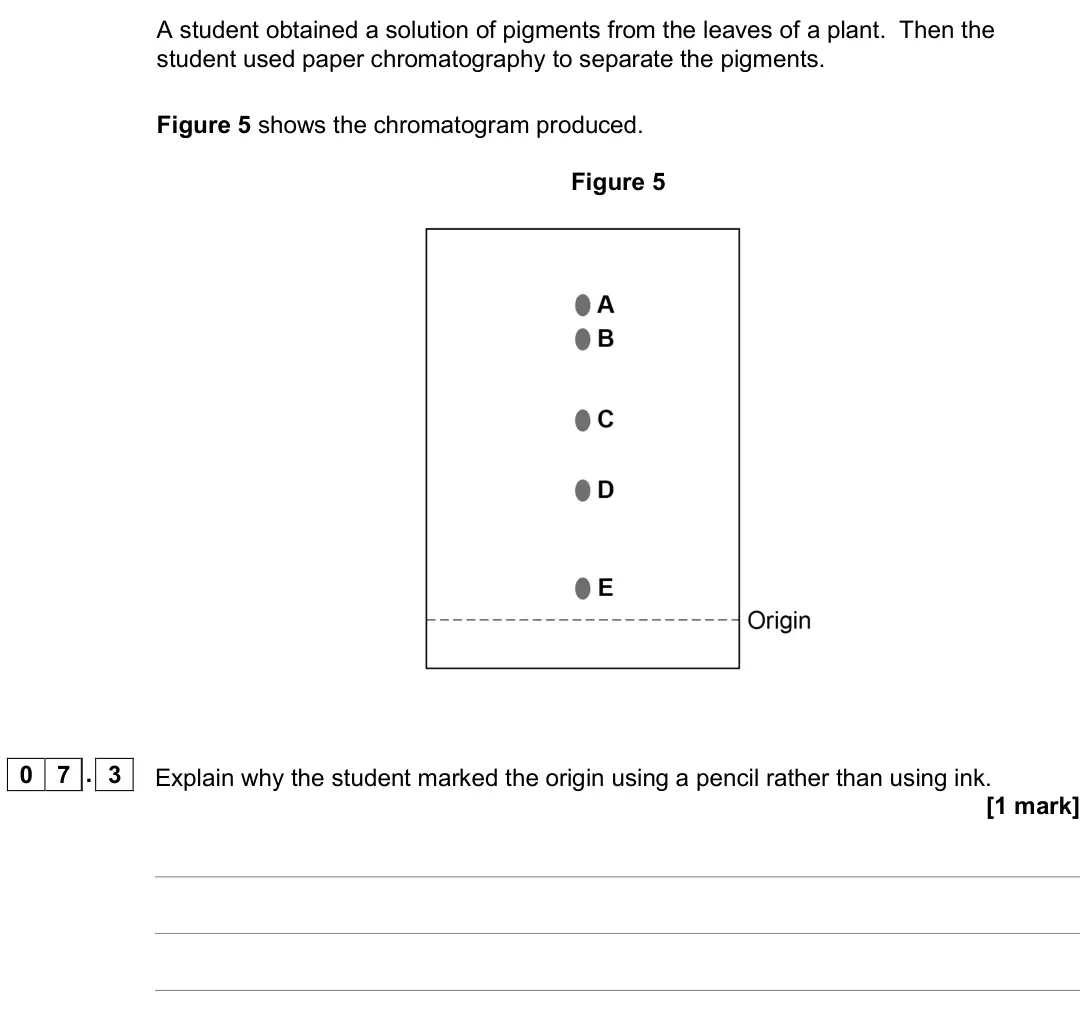
Q07.4
The whole paper ↗
Q07.5
The whole paper ↗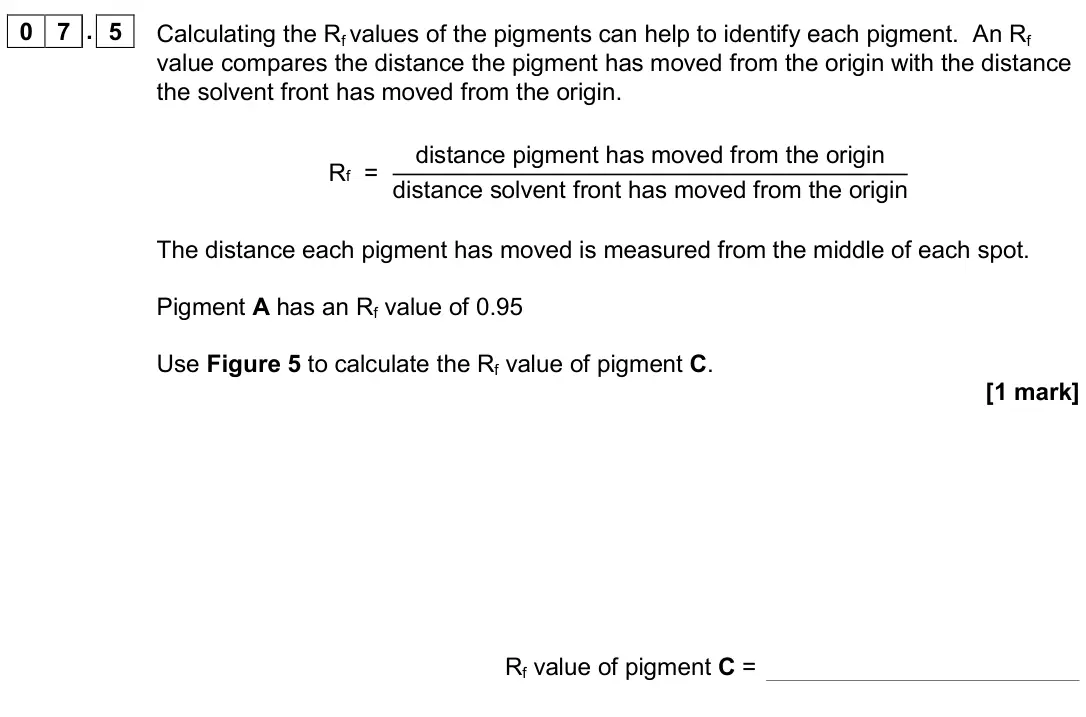
Q07.6
The whole paper ↗
Q01.1
The whole paper ↗
All 31 questions on Photosynthesis, as a list
- June 2025, Paper 1, Q09.3 (2 marks): Use the images in Figure 12 to predict how photosynthesis could be affected in the mutant plants. Justify your answer. [2 marks]
- June 2025, Paper 1, Q09.4 (3 marks): Scientists investigated the rate of photosynthesis in healthy plants and in mutant plants. Table 6 shows the scientists’ results. Chlorophyll a and chlorophyll
- June 2024, Paper 2, Q03.1 (2 marks): A biologist investigated photosynthesis. They: • measured the percentage of light absorbed by a plant when it was exposed to different wavelengths • measured th
- June 2024, Paper 2, Q03.2 (2 marks): Give three environmental factors that should be controlled when measuring the rate of photosynthesis in this investigation. Do not include features of the plant
- June 2024, Paper 2, Q03.3 (3 marks): Describe how the products of the light-dependent reaction are used in the light-independent reaction to produce triose phosphate. Do not include the role of rib
- June 2023, Paper 2, Q01.1 (4 marks): A student used chromatography to separate the different photosynthetic pigments in a chlorophyll solution. She had the following materials. Chromatography paper
- June 2023, Paper 2, Q01.2 (2 marks): Using solvent A, the student separated five pigments. She then repeated her method using a different solvent, B. Using solvent B, she separated six pigments. Ex
- June 2022, Paper 2, Q01.2 (6 marks): Describe the light-independent reaction of photosynthesis. [6 marks]
- June 2022, Paper 3, Q05.1 (3 marks): Calculate the total uptake of carbon dioxide between 11.40 and 13.15 hours in trees exposed to full sun in a forest that is 12 000 m2 in area. Give your answer
- June 2022, Paper 3, Q05.2 (2 marks): Figure 8 shows there is a small difference in the mean uptake of carbon dioxide between 08.30 and 09.40 hours by trees in full sun and by trees in the shade. Wh
- June 2022, Paper 3, Q05.3 (4 marks): In this species of tree, very high light intensities can inhibit the release of electrons from chlorophyll. Suggest how this could explain the results shown in
- November 2020, Paper 2, Q03.4 (2 marks): The light absorbed by chlorophyll is used in the light-dependent reaction. Name the two products of the light-dependent reaction that are required for the light
- November 2020, AS Paper 1, Q09.3 (4 marks): Suggest and explain one advantage and one disadvantage of increased stomatal density on the growth of tobacco plant leaves (lines 8–9). [4 marks] Advantage Disa
- June 2019, Paper 2, Q07.1 (1 mark): In photosynthesis, which chemicals are needed for the light-dependent reaction? Tick () one box. [1 mark]
- June 2019, Paper 2, Q07.2 (2 marks): Describe what happens during photoionisation in the light-dependent reaction. [2 marks]
- June 2019, Paper 2, Q07.3 (1 mark): Explain why the student marked the origin using a pencil rather than using ink. [1 mark]
- June 2019, Paper 2, Q07.4 (2 marks): Describe the method the student used to separate the pigments after the solution of pigments had been applied to the origin. [2 marks]
- June 2019, Paper 2, Q07.5 (1 mark): Calculating the Rf values of the pigments can help to identify each pigment. An Rf value compares the distance the pigment has moved from the origin with the di
- June 2019, Paper 2, Q07.6 (1 mark): The pigments in leaves are different colours. Suggest and explain the advantage of having different coloured pigments in leaves. [1 mark]
- June 2018, Paper 2, Q01.1 (2 marks): Heat stress decreases the light-dependent reaction of photosynthesis. Explain why this leads to a decrease in the light-independent reaction. [2 marks]
- June 2018, Paper 2, Q01.2 (2 marks): Another effect of heat stress is a decrease in the activity of the enzyme rubisco. A decrease in the activity of an enzyme means that the rate of the reaction i
- June 2018, Paper 2, Q01.3 (1 mark): Where precisely is rubisco found in a cell? [1 mark] Scientists investigated the effect of temperature on the activity of two enzymes isolated from the leaf cel
- June 2018, Paper 2, Q01.4 (4 marks): The scientists concluded that heat stress reduces the activity of rubisco in plant leaves by affecting rubisco activase. Use all the information to evaluate the
- June 2017, Paper 2, Q04.1 (2 marks): The solution that the student used to produce the chloroplast suspension had the same water potential as the chloroplasts. Explain why it was important that the
- June 2017, Paper 2, Q04.2 (2 marks): Explain why the student set up Tube 1. [2 marks]
- June 2017, Paper 2, Q04.3 (2 marks): Explain the results in Tube 3. [2 marks]
- June 2017, Paper 2, Q04.4 (1 mark): The student evaluated the effectiveness of different chemicals as weed-killers by assessing their ability to prevent the decolourisation of DCPIP in chloroplast
- June 2017, Paper 2, Q04.5 (2 marks): Explain how chemicals which inhibit the decolourisation of DCPIP could slow the growth of weeds. [2 marks]
- Specimen, Paper 2, Q08.1 (2 marks): 9
- Specimen, Paper 2, Q08.2 (2 marks): Difference
- Specimen, Paper 2, Q08.3 (4 marks): [ ] 0
Questions, mark schemes and examiner’s reports are © AQA, from their published past papers. Plumi isn’t affiliated with any exam board. Want whole papers? Every AQA A-Level Biology paper.
Rather write your answers by hand on iPad? Plumi marks them against the same mark schemes.