 plumi
Populations in ecosystems: AQA A‑Level Biology questions
Every AQA A-Level Biology exam question on 3.7.4 Populations in ecosystems, 2016–2025, with its mark scheme and examiner’s report.
Find questions1,383
Calculations
Q10.4
The whole paper ↗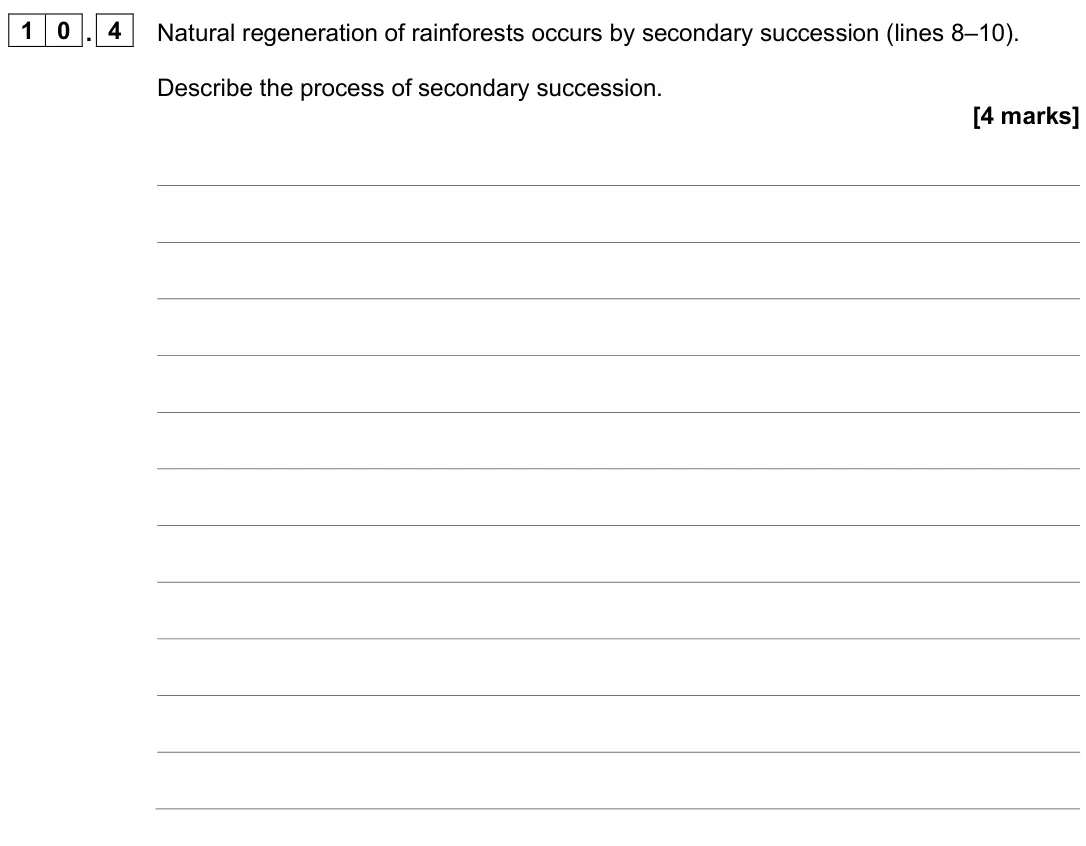
Q10.5
The whole paper ↗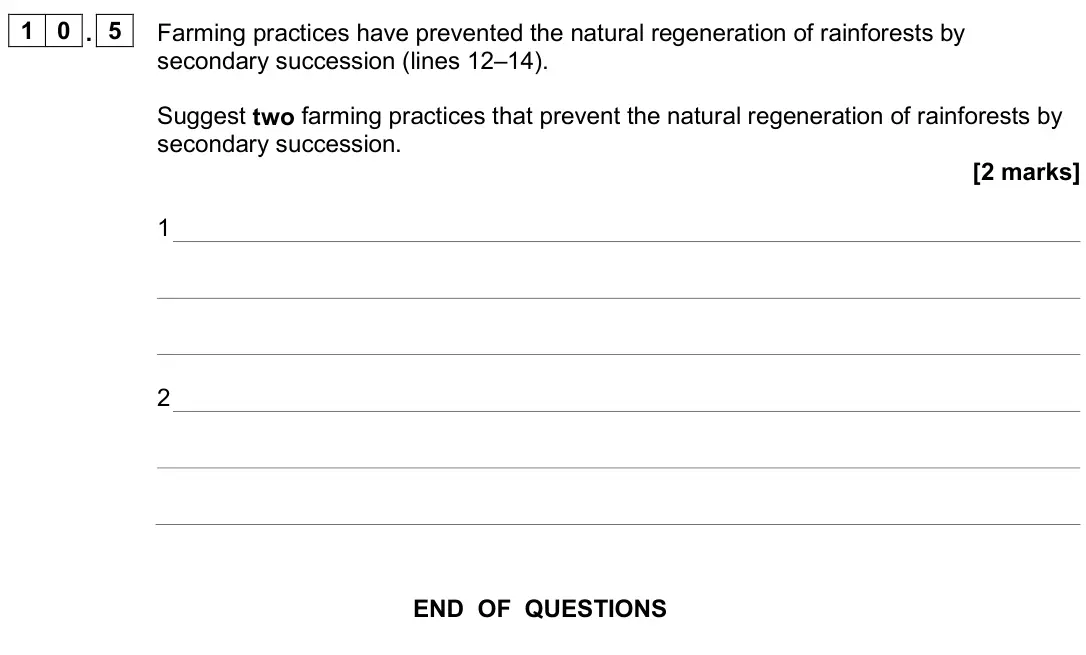
Q01.2
The whole paper ↗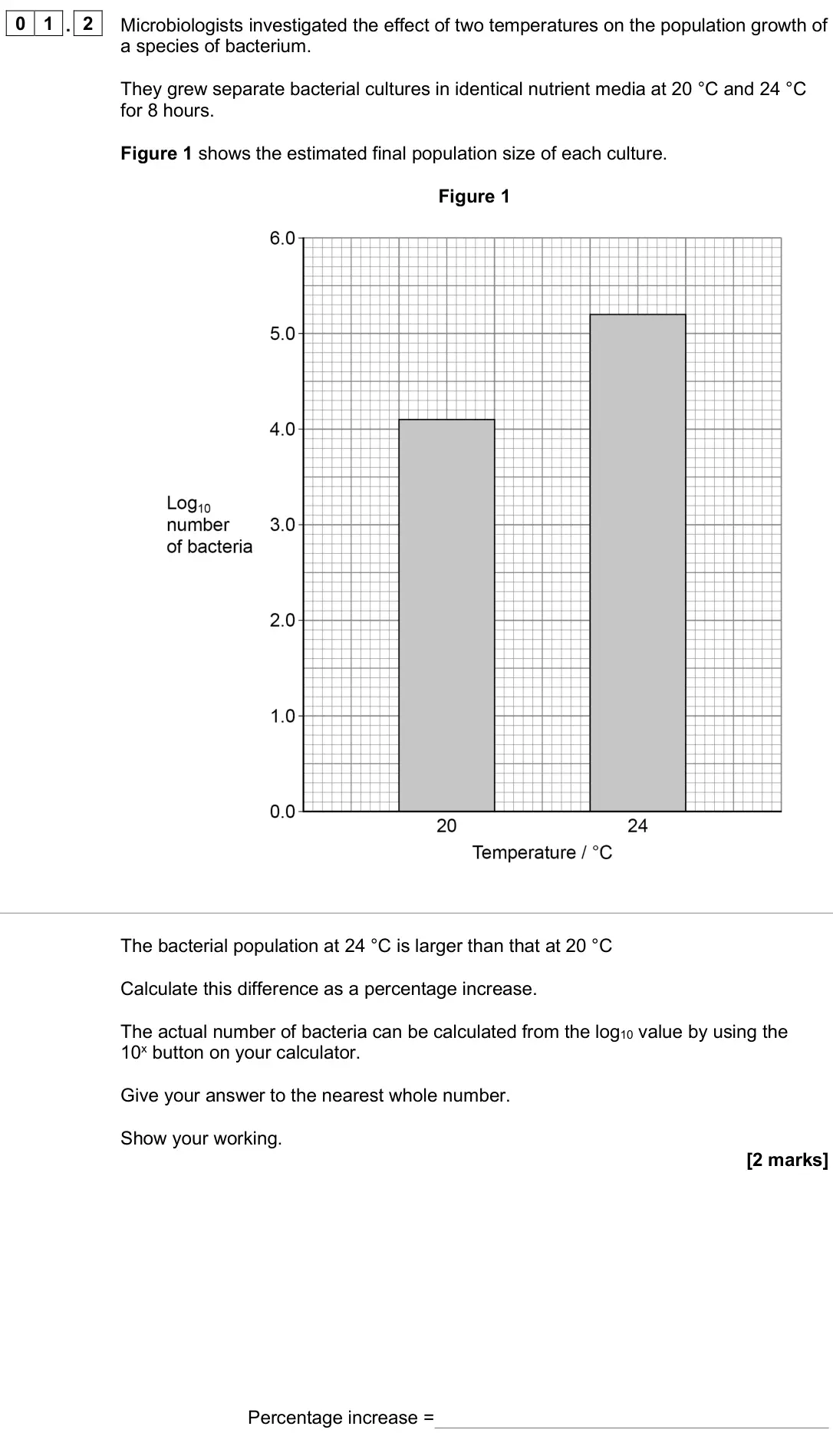
Q03.2
The whole paper ↗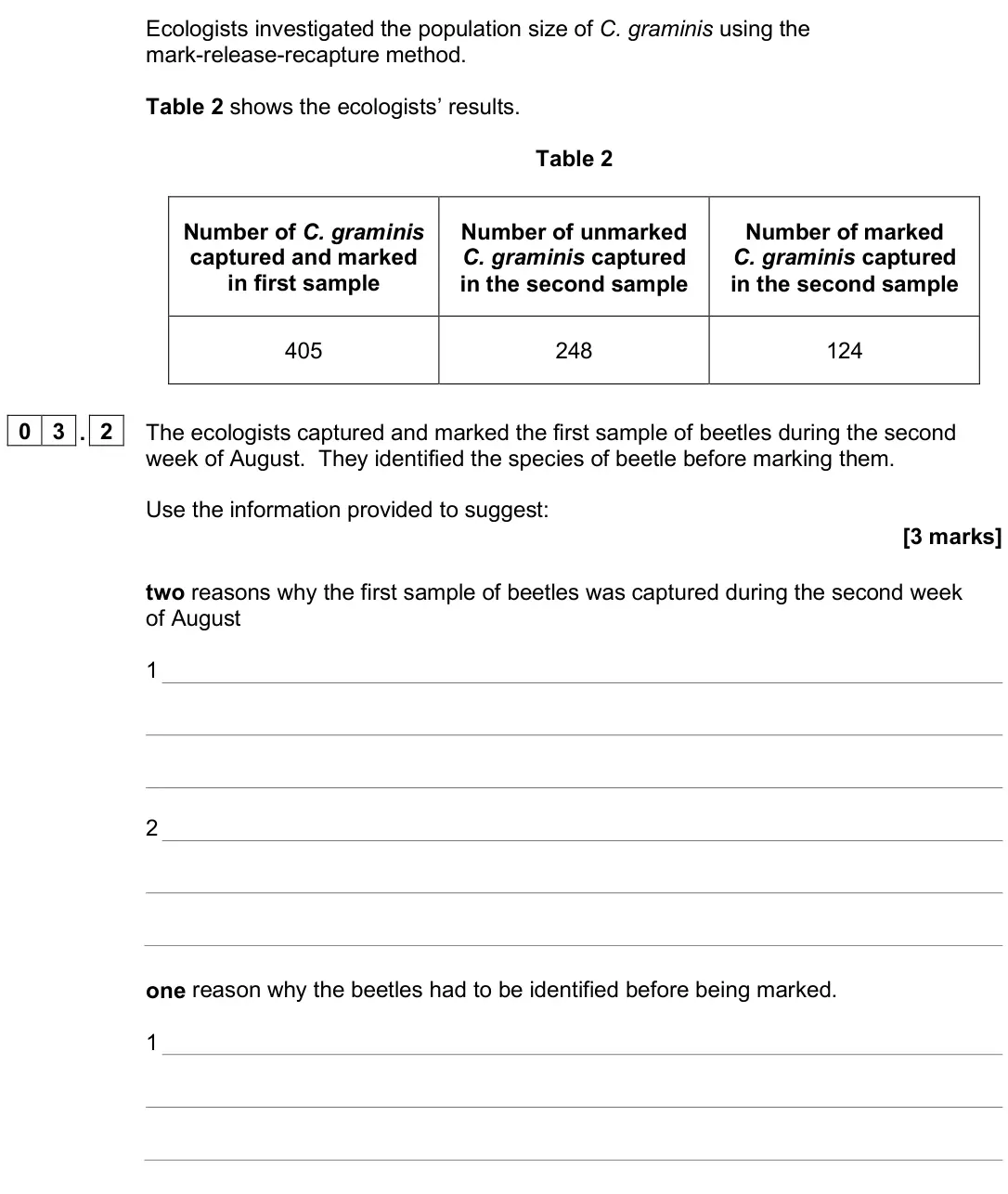
Q03.3
The whole paper ↗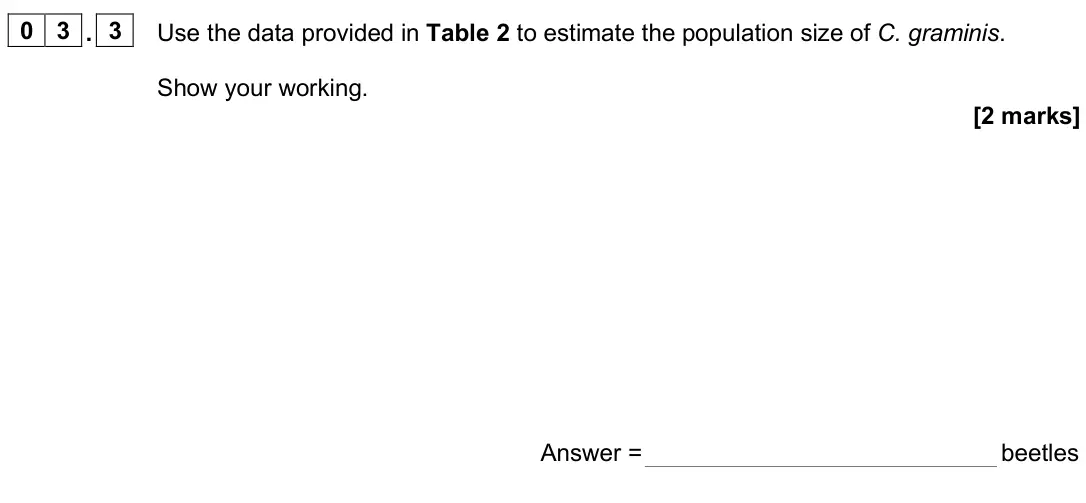
Q03.4
The whole paper ↗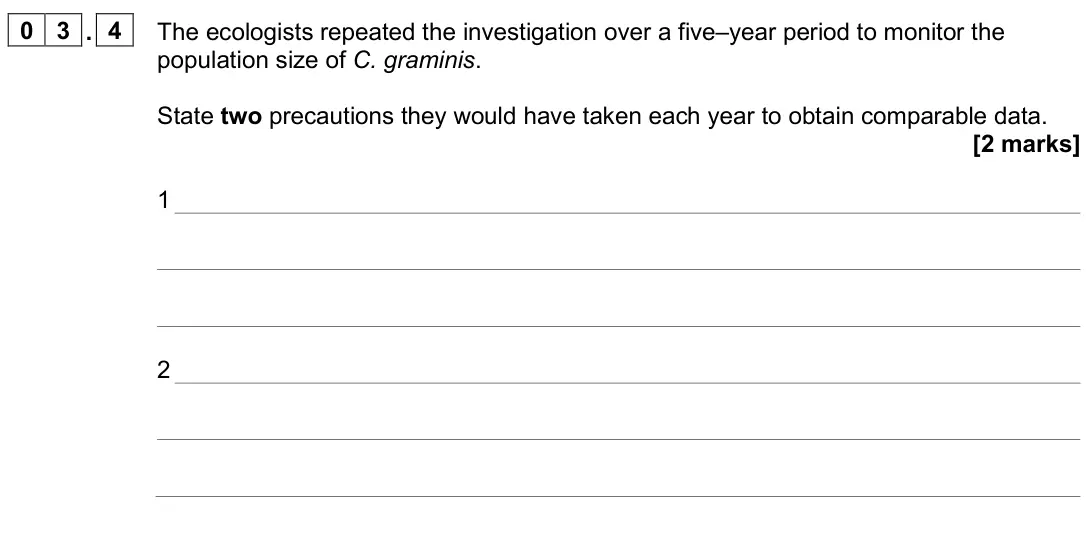
Q05.1
The whole paper ↗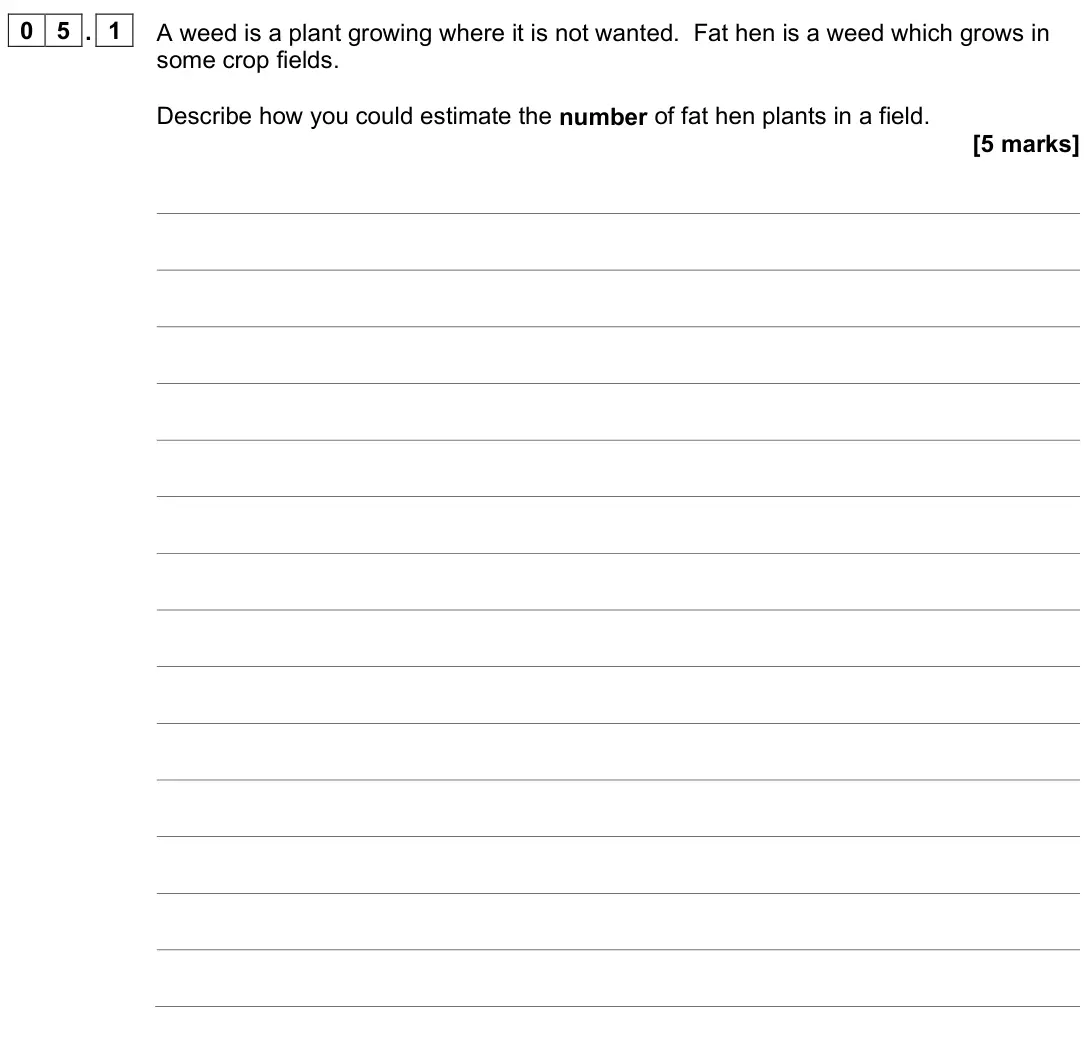
Q05.2
The whole paper ↗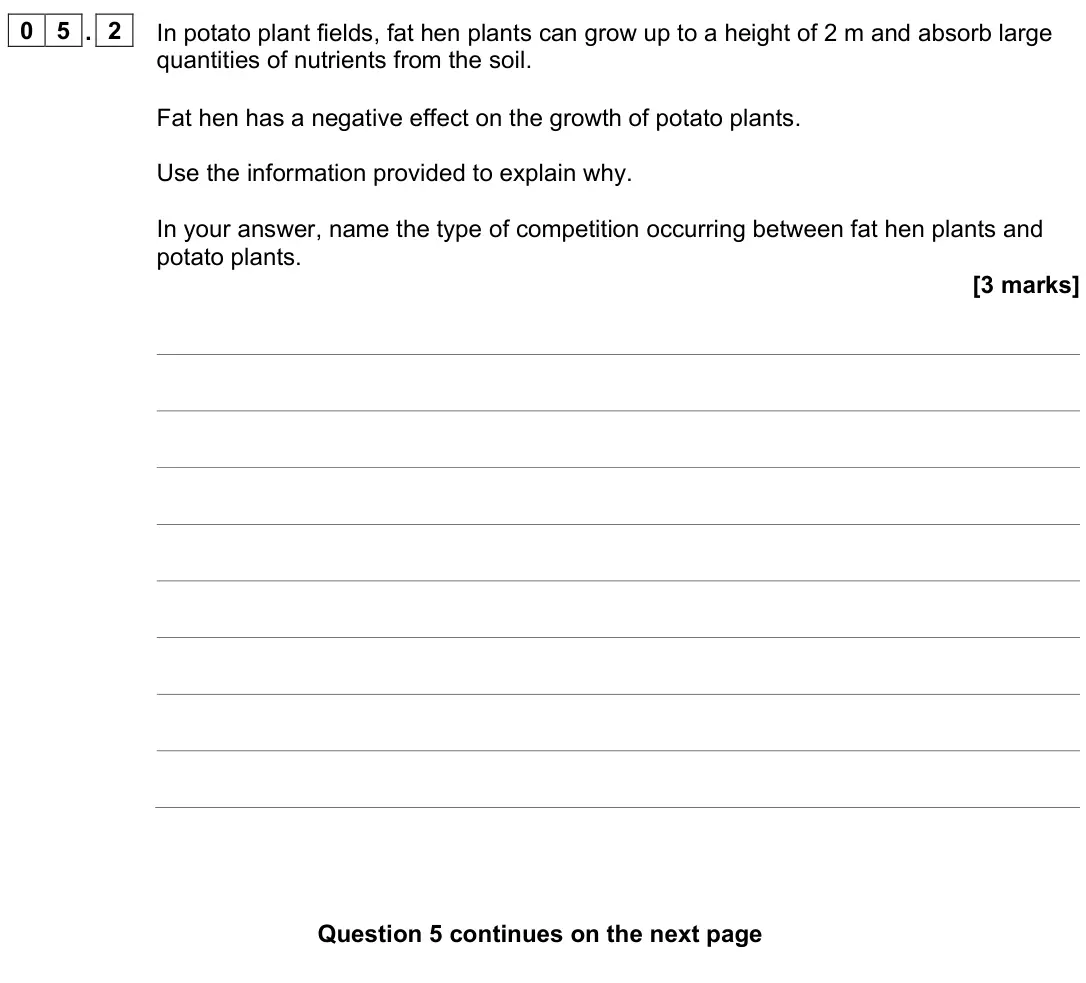
Q05.3
The whole paper ↗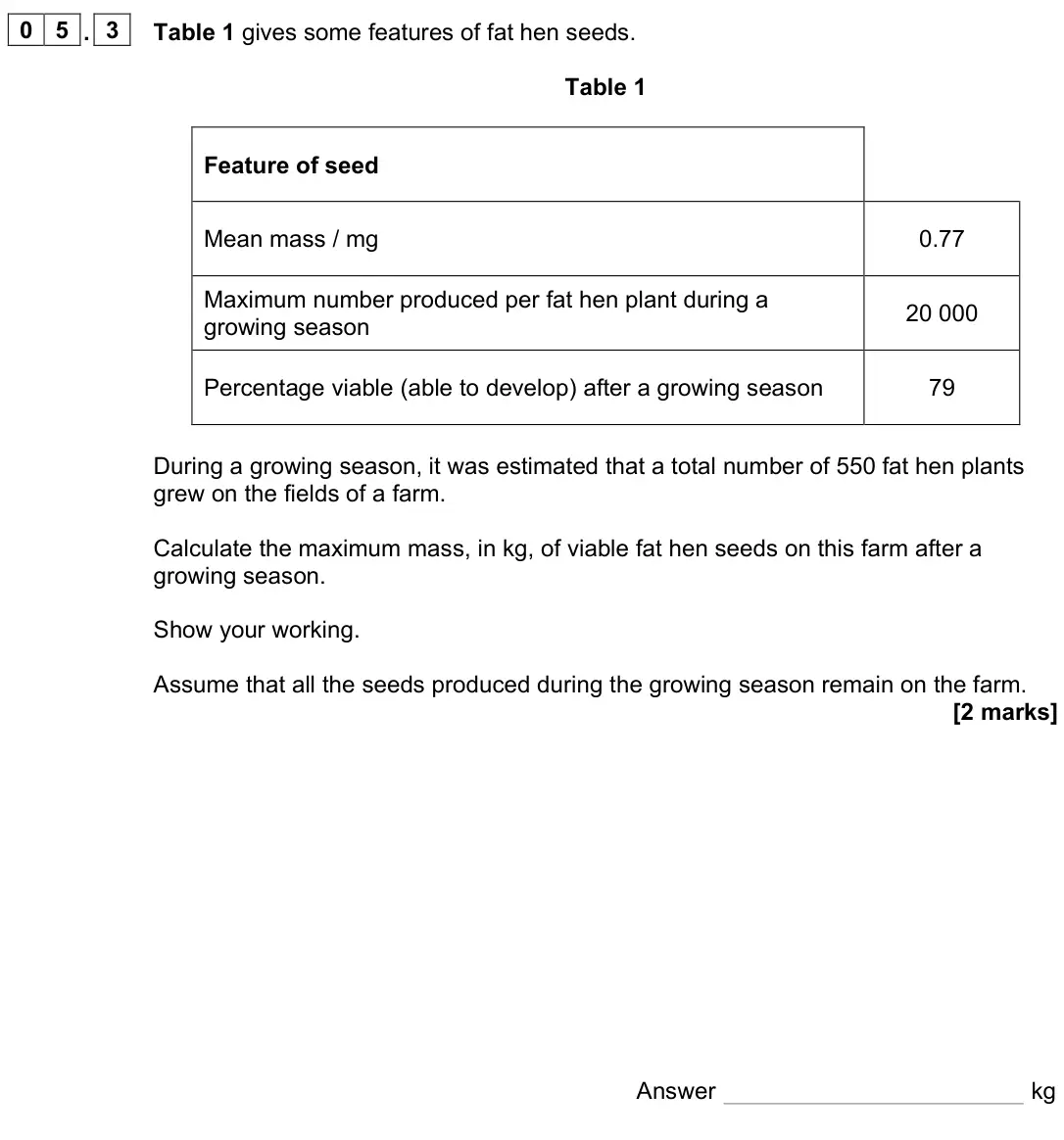
Q10.5
The whole paper ↗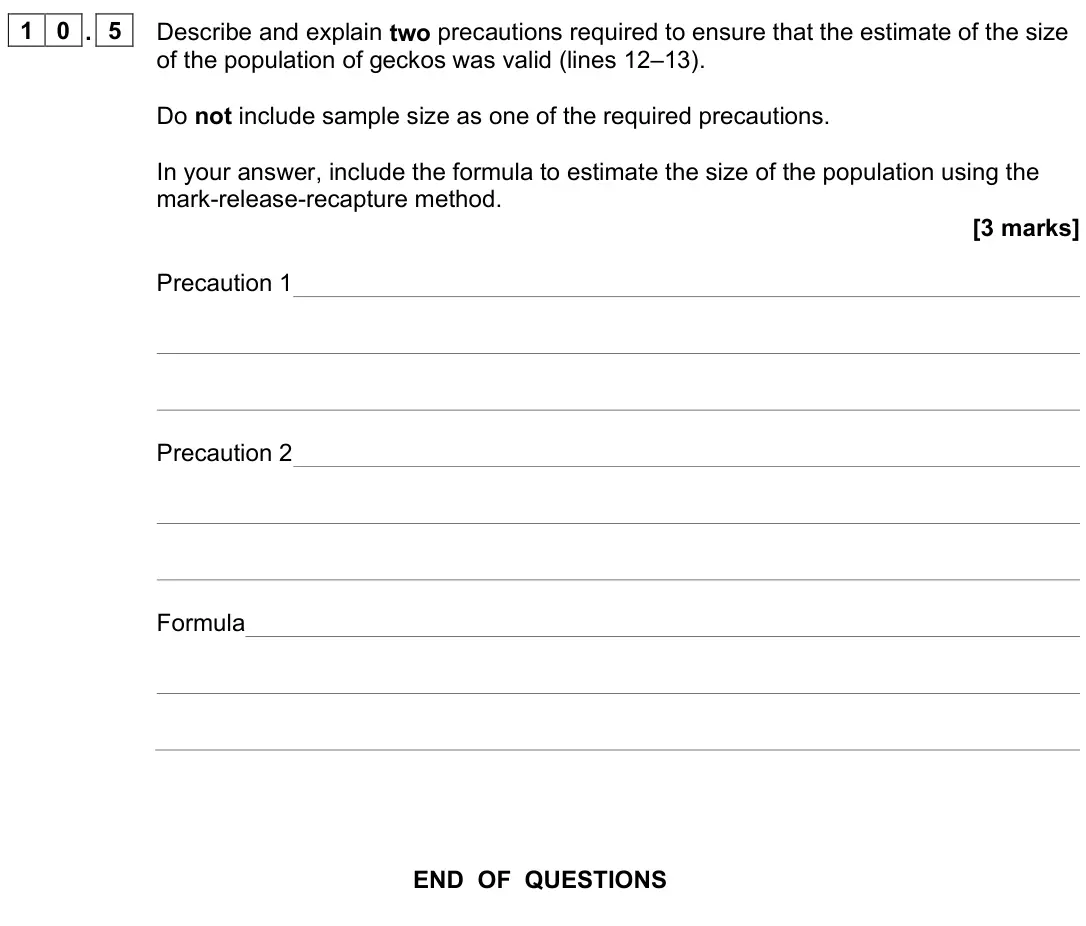
Q06.1
The whole paper ↗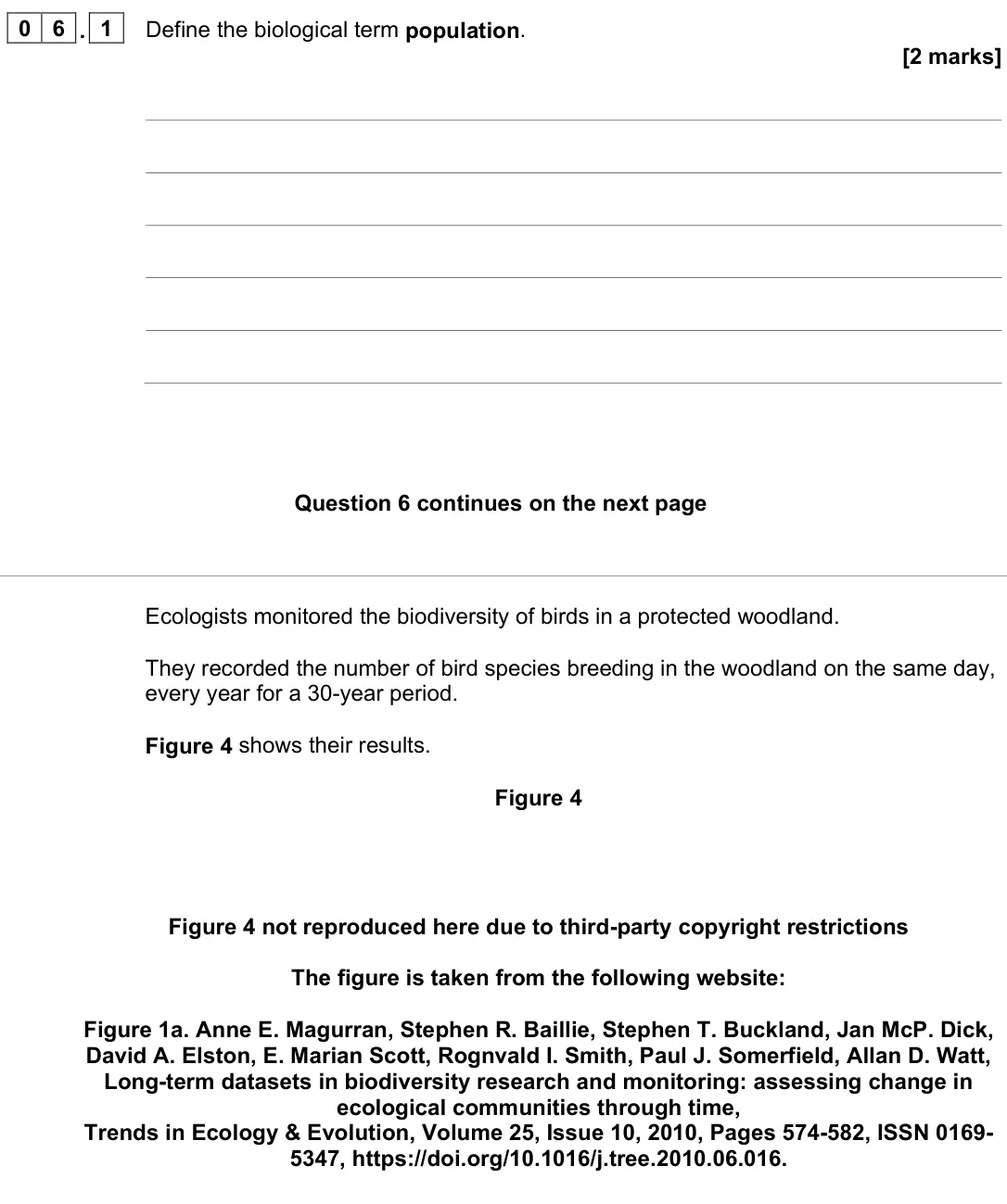
Q06.5
The whole paper ↗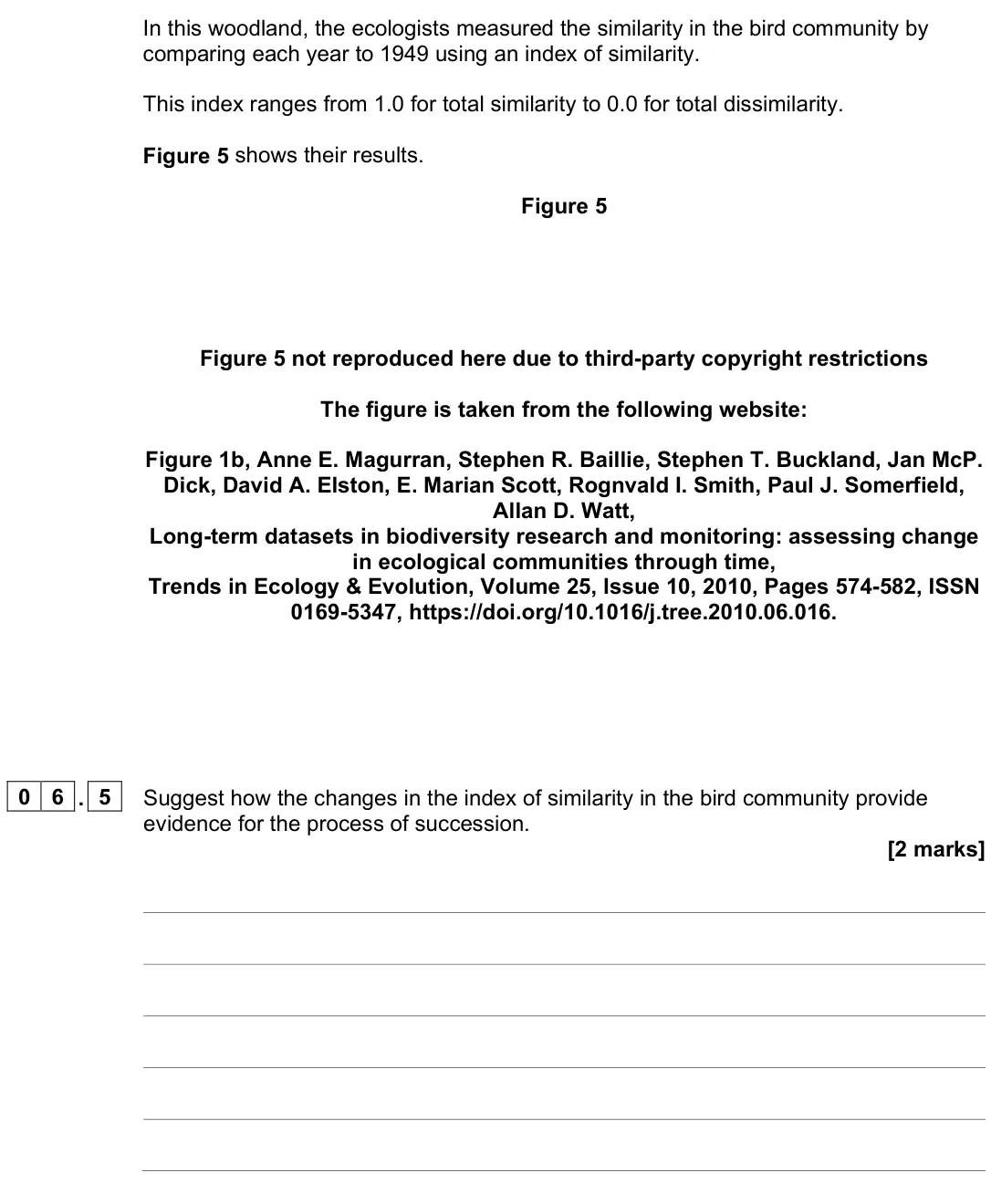
Q06.6
The whole paper ↗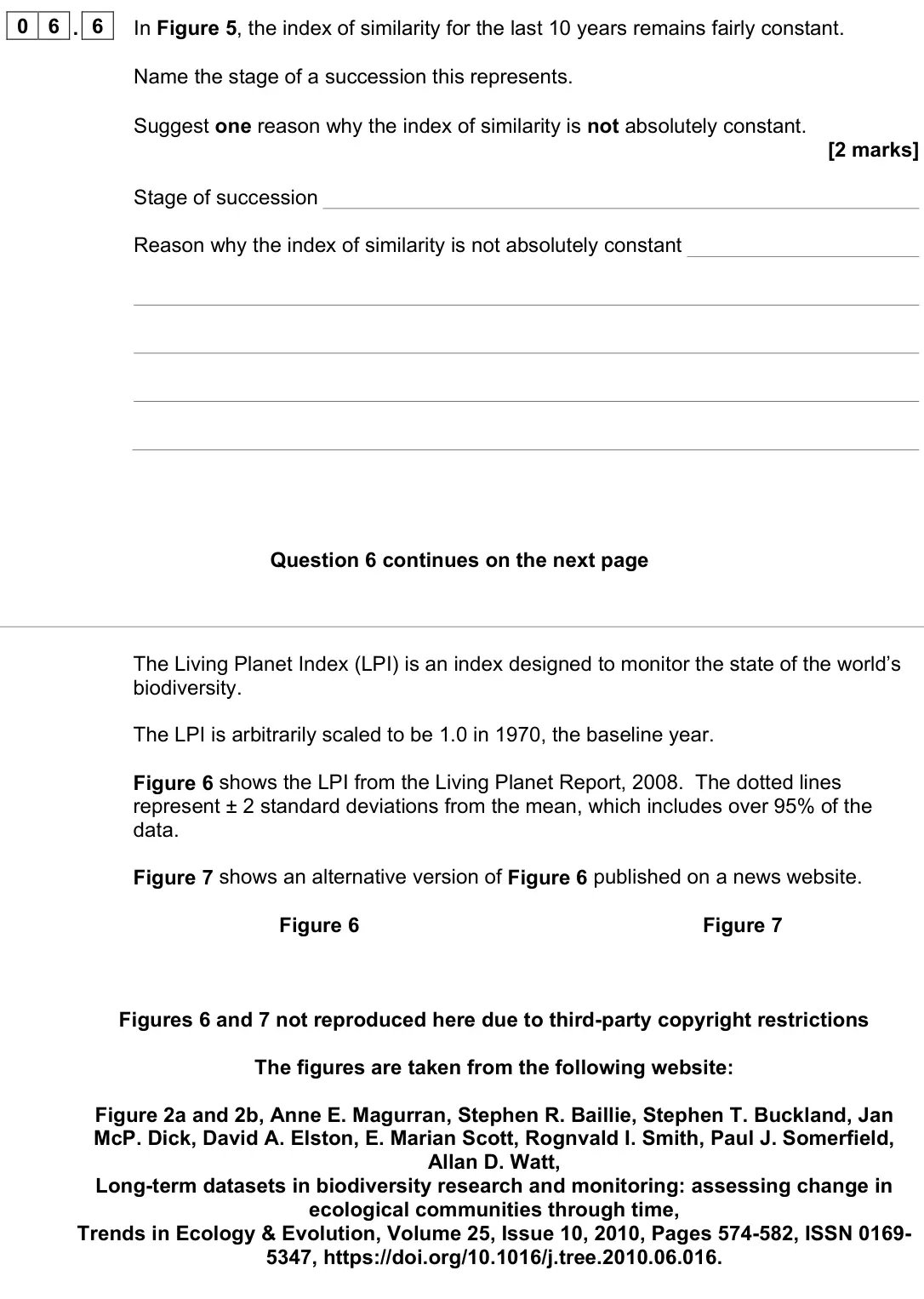
Q07.1
The whole paper ↗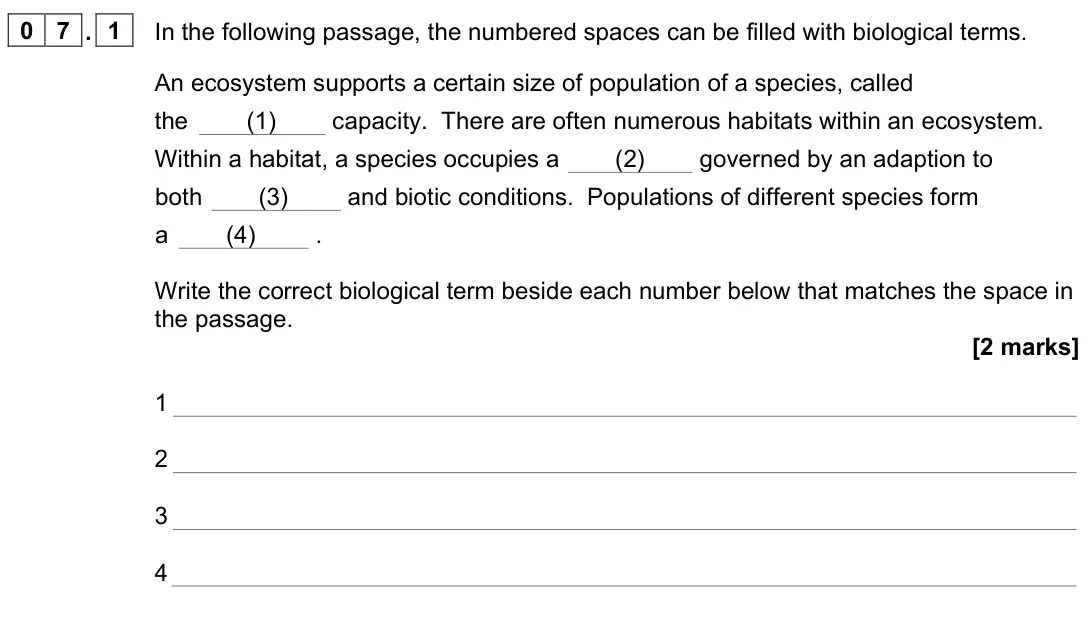
Q07.2
The whole paper ↗
Q07.1
The whole paper ↗
Q05.3
The whole paper ↗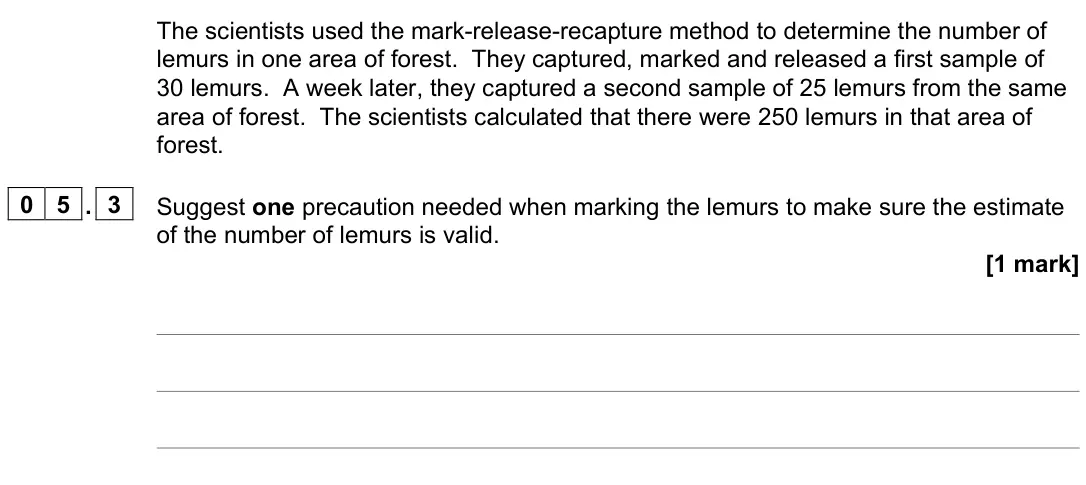
Q05.4
The whole paper ↗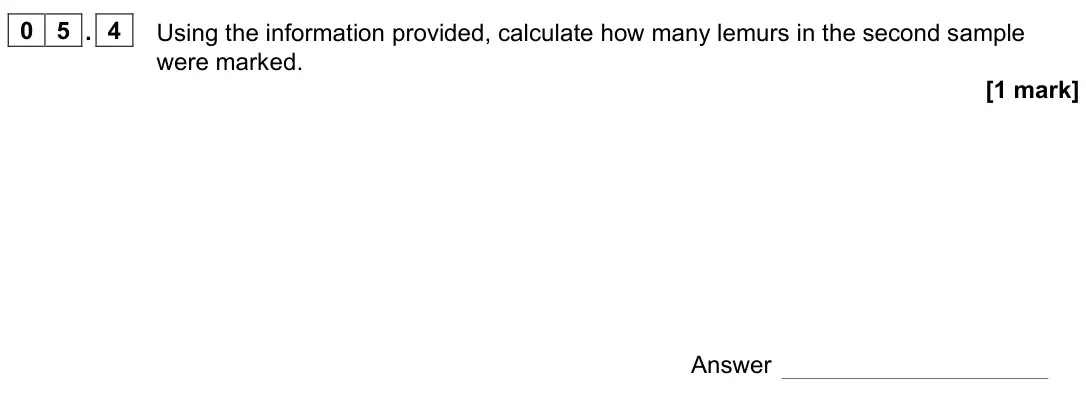
Q05.5
The whole paper ↗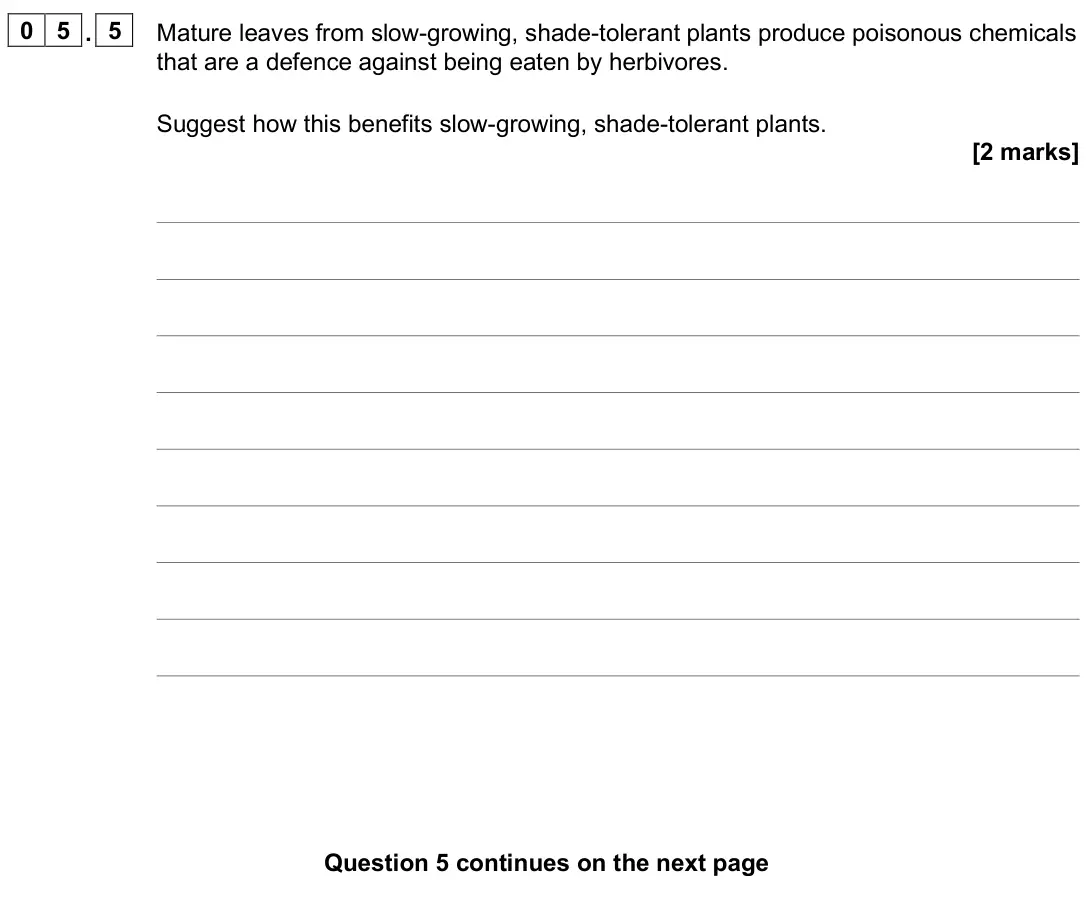
Q04.4
The whole paper ↗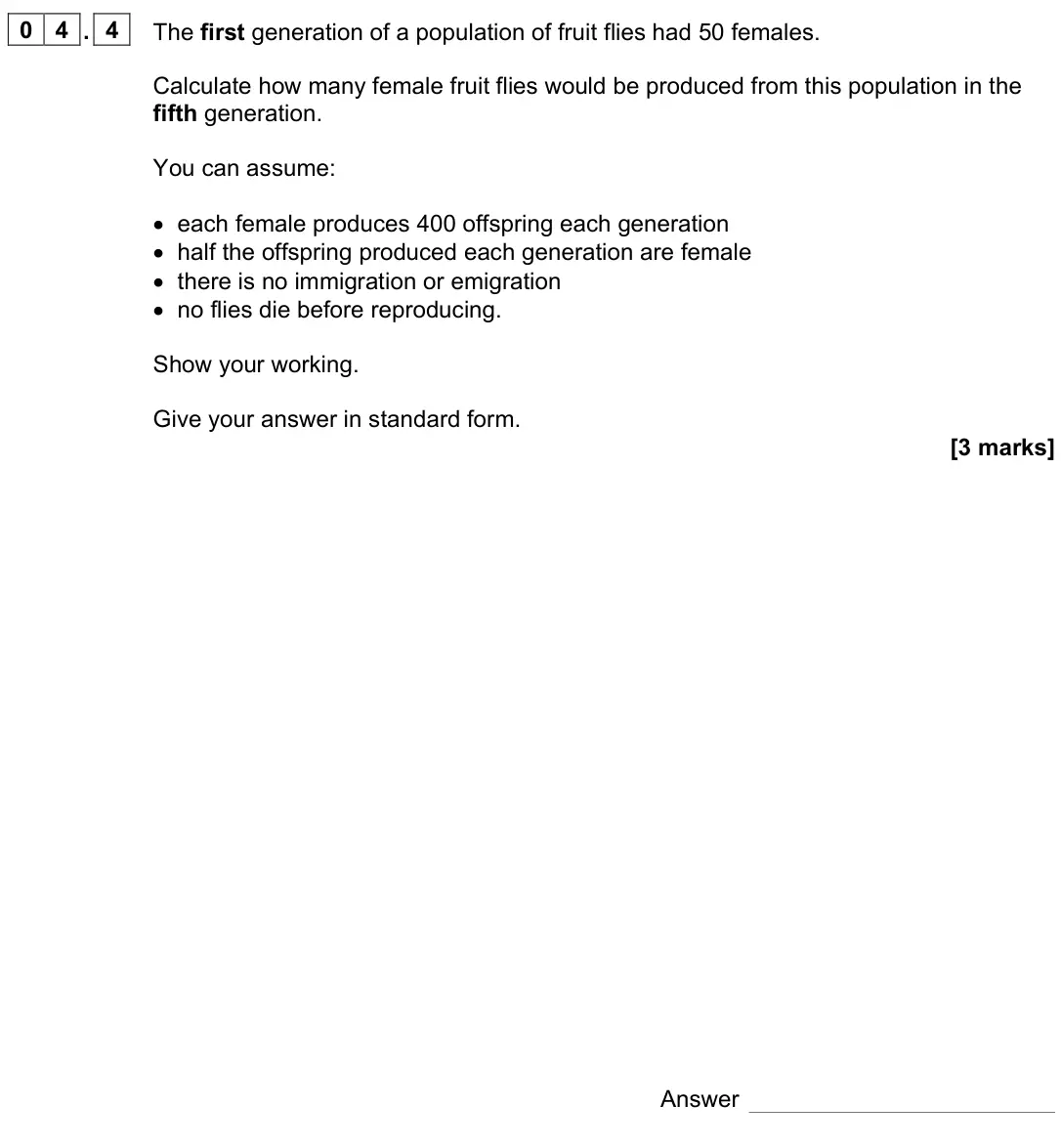
All 44 questions on Populations in ecosystems, as a list
- June 2025, Paper 2, Q10.4 (4 marks): Natural regeneration of rainforests occurs by secondary succession (lines 8–10). Describe the process of secondary succession. [4 marks]
- June 2025, Paper 2, Q10.5 (2 marks): Farming practices have prevented the natural regeneration of rainforests by secondary succession (lines 12–14). Suggest two farming practices that prevent the n
- June 2025, Paper 3, Q01.2 (2 marks): Microbiologists investigated the effect of two temperatures on the population growth of a species of bacterium. They grew separate bacterial cultures in identic
- June 2025, Paper 3, Q03.2 (3 marks): The ecologists captured and marked the first sample of beetles during the second week of August. They identified the species of beetle before marking them. Use
- June 2025, Paper 3, Q03.3 (2 marks): Use the data provided in Table 2 to estimate the population size of C. graminis. Show your working. [2 marks] Answer = beetles
- June 2025, Paper 3, Q03.4 (2 marks): The ecologists repeated the investigation over a five–year period to monitor the population size of C. graminis. State two precautions they would have taken eac
- June 2024, Paper 2, Q05.1 (5 marks): A weed is a plant growing where it is not wanted. Fat hen is a weed which grows in some crop fields. Describe how you could estimate the number of fat hen plant
- June 2024, Paper 2, Q05.2 (3 marks): In potato plant fields, fat hen plants can grow up to a height of 2 m and absorb large quantities of nutrients from the soil. Fat hen has a negative effect on t
- June 2024, Paper 2, Q05.3 (2 marks): Table 1 gives some features of fat hen seeds. Table 1 Feature of seed Mean mass / mg 0.77 Maximum number produced per fat hen plant during a growing season 20 0
- June 2024, Paper 2, Q10.5 (3 marks): Describe and explain two precautions required to ensure that the estimate of the size of the population of geckos was valid (lines 12–13). Do not include sample
- June 2024, Paper 3, Q06.1 (2 marks): Define the biological term population. [2 marks] Ecologists monitored the biodiversity of birds in a protected woodland. They recorded the number of bird specie
- June 2024, Paper 3, Q06.5 (2 marks): Suggest how the changes in the index of similarity in the bird community provide evidence for the process of succession. [2 marks]
- June 2024, Paper 3, Q06.6 (2 marks): In Figure 5, the index of similarity for the last 10 years remains fairly constant. Name the stage of a succession this represents. Suggest one reason why the i
- June 2023, Paper 2, Q07.1 (2 marks): In the following passage, the numbered spaces can be filled with biological terms. An ecosystem supports a certain size of population of a species, called the (
- June 2023, Paper 2, Q07.2 (2 marks): Suggest two reasons for conserving rainforests. [2 marks] 1 2
- June 2023, Paper 3, Q07.1 (25 marks): The importance of interactions between organisms and their environment. [25 marks] Or
- June 2022, Paper 2, Q05.3 (1 mark): Suggest one precaution needed when marking the lemurs to make sure the estimate of the number of lemurs is valid. [1 mark]
- June 2022, Paper 2, Q05.4 (1 mark): Using the information provided, calculate how many lemurs in the second sample were marked. [1 mark] Answer
- June 2022, Paper 3, Q05.5 (2 marks): Mature leaves from slow-growing, shade-tolerant plants produce poisonous chemicals that are a defence against being eaten by herbivores. Suggest how this benefi
- November 2021, Paper 2, Q04.4 (3 marks): The first generation of a population of fruit flies had 50 females. Calculate how many female fruit flies would be produced from this population in the fifth ge
- November 2021, Paper 2, Q09.1 (3 marks): Describe a method that could be used to determine the mean percentage cover of algae on a coral reef. Do not include information on the difficulties of using yo
- November 2021, Paper 2, Q09.2 (2 marks): Explain how succession results in a wide variety of fish living on coral reefs. Do not describe the process of succession in your answer. [2 marks]
- November 2021, Paper 2, Q09.3 (5 marks): Using all the information, evaluate the effect of the two fish species on algal growth on coral reefs. [5 marks]
- November 2021, Paper 2, Q10.4 (4 marks): The mark-release-recapture method can be used to estimate the size of a fish population (lines 13–14). Explain how. [4 marks]
- November 2021, Paper 2, Q10.5 (1 mark): Suggest why the mark-release-recapture method can produce unreliable results in very large lakes (lines 14–15). [1 mark]
- November 2021, AS Paper 1, Q07.3 (4 marks): The student wanted to use the data from plot 1 to estimate the total number of the beetle species in the meadow. Suggest how the student should use the data fro
- November 2020, Paper 3, Q02.1 (1 mark): Name the type of competition between livestock and ibex. [1 mark] Livestock will outcompete ibex if they: • are in the same habitat • eat a similar diet.
- November 2020, Paper 3, Q02.2 (3 marks): There must be a balance between the need for conservation of the ibex and the need for farmers to keep livestock. Using all the information, suggest and explain
- June 2019, Paper 2, Q01.1 (4 marks): Succession occurs in natural ecosystems. Describe and explain how succession occurs. [4 marks]
- June 2019, Paper 2, Q09.1 (5 marks): Describe how you could estimate the size of a population of sundews in a small marsh. [5 marks]
- June 2018, Paper 2, Q04.1 (3 marks): Describe how you would determine the mean percentage cover for beach grass on a sand dune. [3 marks]
- June 2018, Paper 2, Q04.2 (4 marks): The scientists concluded that the results shown in Figure 5 were due to succession taking place. Use Figure 5 to explain why the scientists reached this conclus
- June 2018, Paper 2, Q04.3 (1 mark): Use Figure 5 to explain the results in Figure 6. [1 mark]
- June 2017, Paper 2, Q02.1 (2 marks): Explain how using the SIT could reduce transmission of dengue. [2 marks]
- June 2017, Paper 2, Q02.2 (3 marks): Describe how the mark-release-recapture method could be used to determine the population of A. aegypti at the start of the investigation. [3 marks]
- June 2017, Paper 2, Q02.3 (1 mark): The release of radiation-sterilised A. aegypti has not been very successful in controlling the transmission of dengue. Suggest one reason why. [1 mark]
- June 2017, Paper 2, Q02.4 (1 mark): Recently a new method was developed to control A. aegypti. Scientists produced transgenic males carrying a ‘lethal gene’ which kills their offspring before they
- June 2017, Paper 2, Q02.5 (2 marks): The release of transgenic males proved successful in reducing the number of A. aegypti. Describe how the results in Figure 2 support this conclusion. [2 marks]
- June 2017, Paper 2, Q05.2 (1 mark): Suggest one way in which AMF may benefit from their association with plants. [1 mark]
- Specimen, Paper 3, Q01.1 (2 marks): The ecologists captured insects from a number of sites on the island. Suggest how they decided where to take their samples. [2 marks] 0 1 . 1
- Specimen, Paper 3, Q01.2 (2 marks): 1 2
- Specimen, Paper 3, Q01.3 (2 marks): Suggest the advantage of using the fluorescent powder in this experiment. [2 marks] 0 1 . 3
- Specimen, Paper 3, Q01.4 (2 marks): Answer =
- Specimen, Paper 3, Q01.5 (2 marks): The ecologists expected to obtain the same result from their calculations of the number of insects on this island on each day during the period 1–5 days after r
Questions, mark schemes and examiner’s reports are © AQA, from their published past papers. Plumi isn’t affiliated with any exam board. Want whole papers? Every AQA A-Level Biology paper.
Rather write your answers by hand on iPad? Plumi marks them against the same mark schemes.