 plumi
Populations: AQA A‑Level Biology questions
Every AQA A-Level Biology exam question on 3.7.2 Populations, 2016–2025, with its mark scheme and examiner’s report.
Find questions1,383
Calculations
Q09.1
The whole paper ↗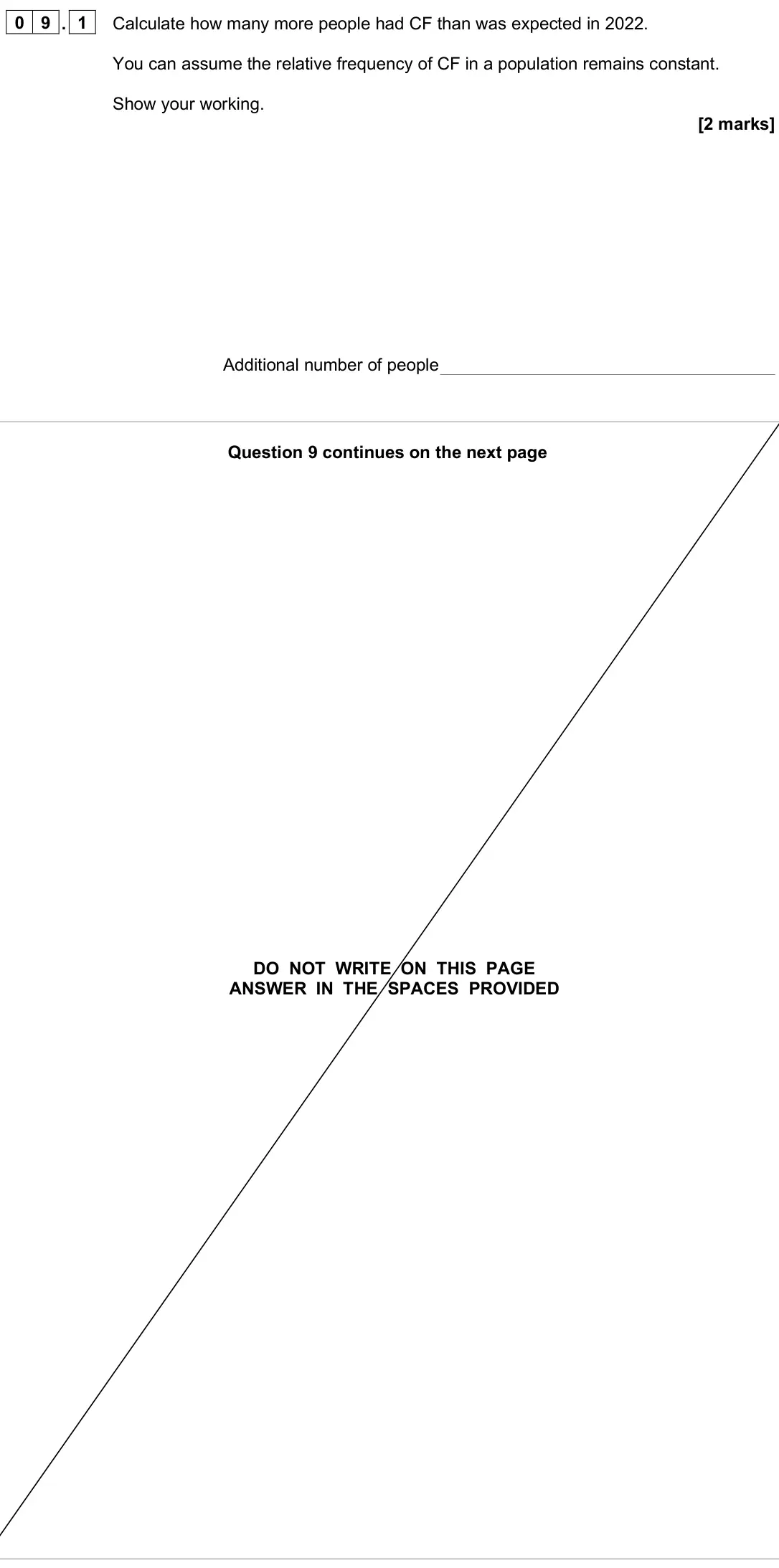
Q05.1
The whole paper ↗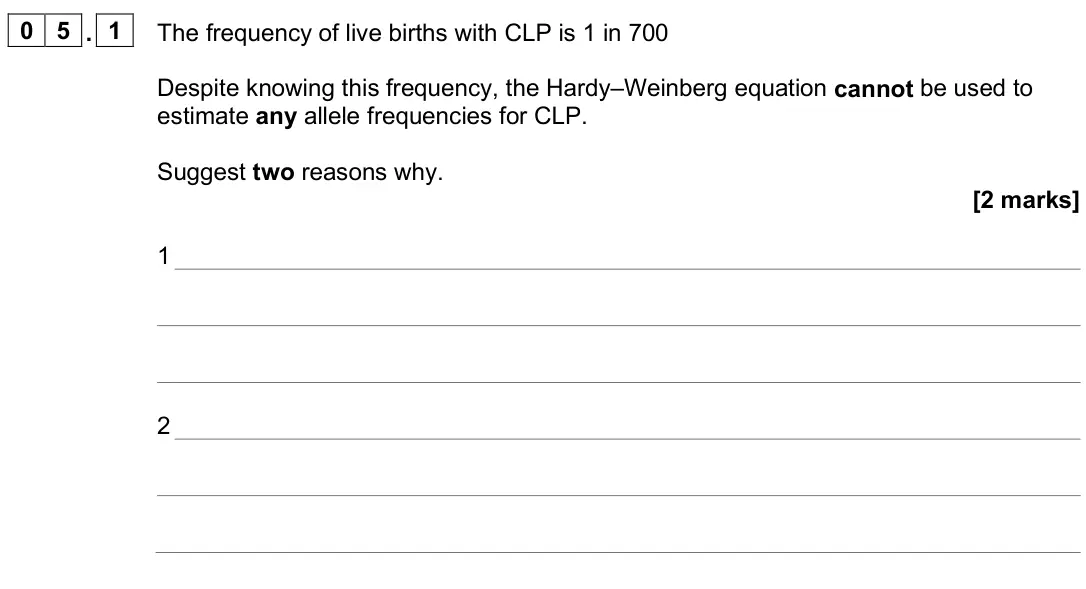
Q04.3
The whole paper ↗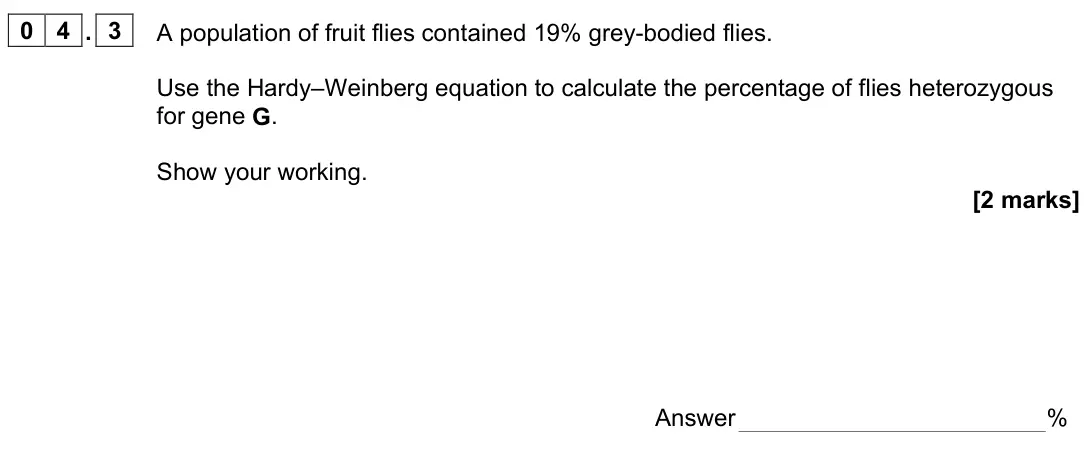
Q05.2
The whole paper ↗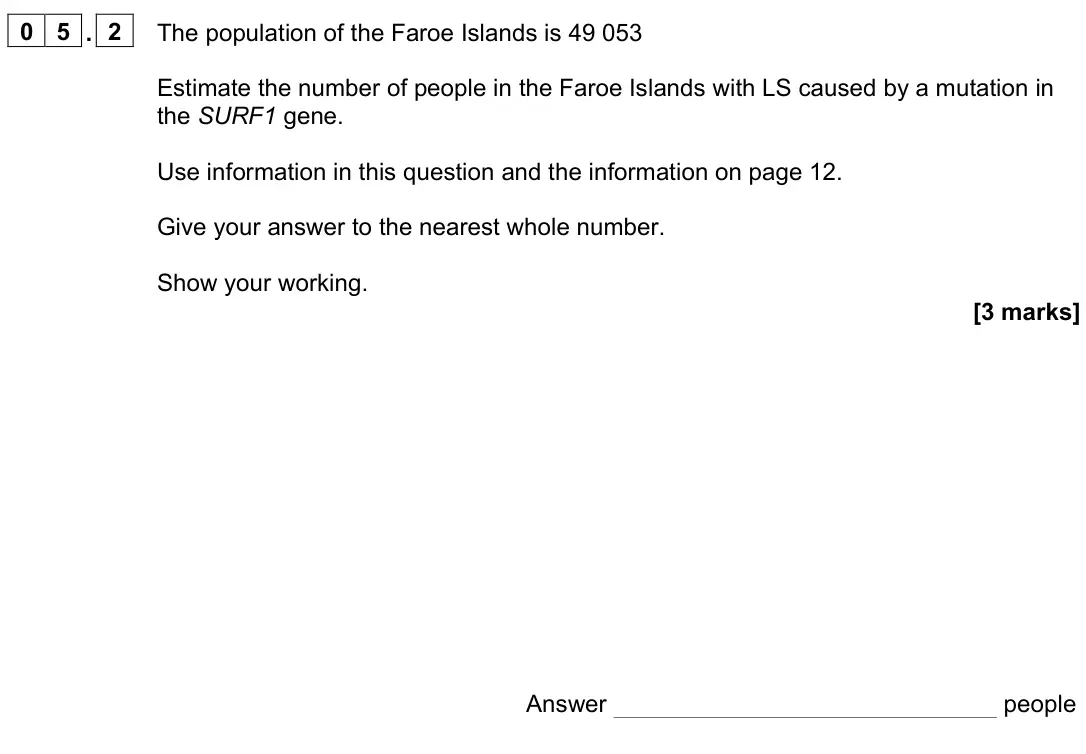
Q04.4
The whole paper ↗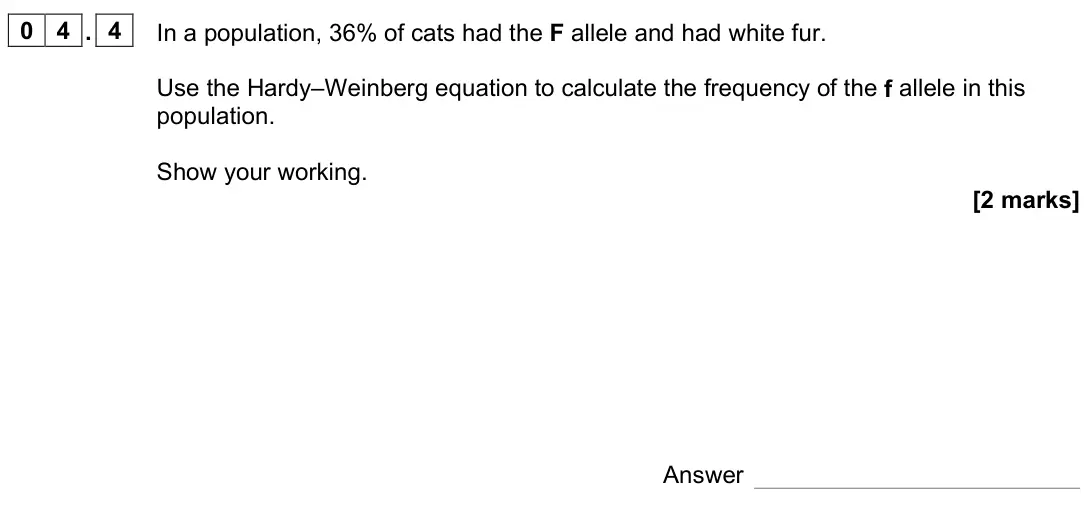
Q06.6
The whole paper ↗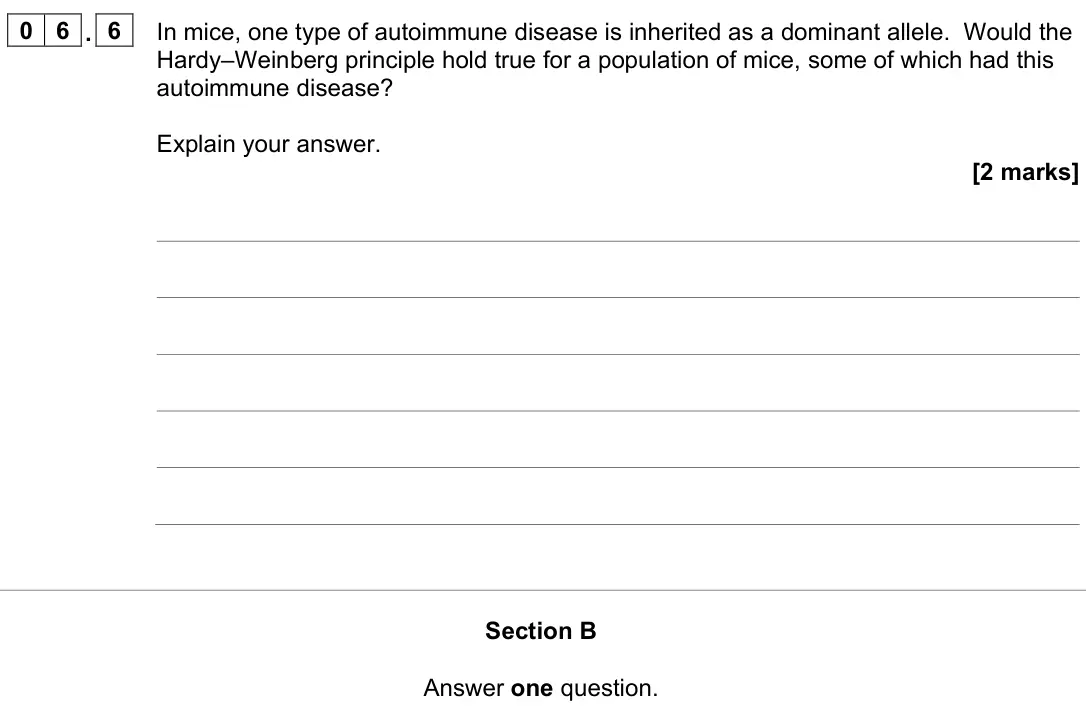
Q06.4
The whole paper ↗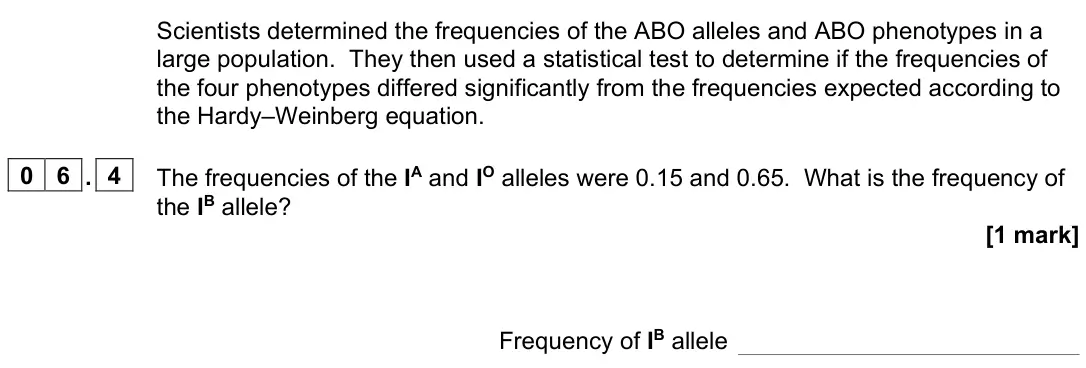
Q06.5
The whole paper ↗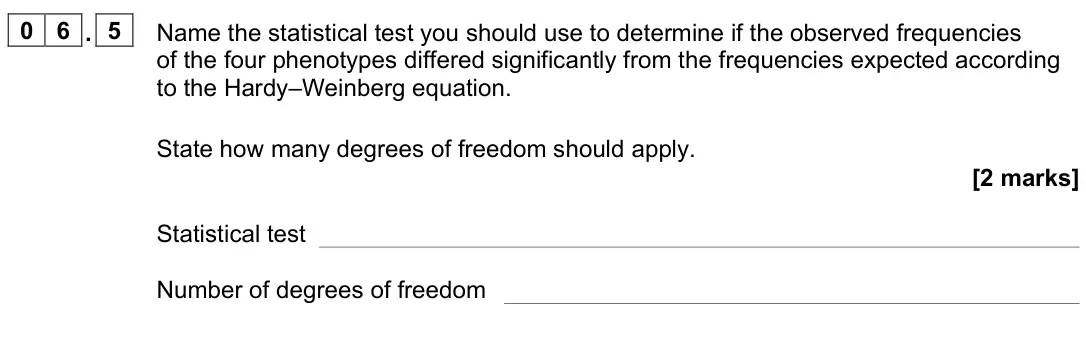
Q06.6
The whole paper ↗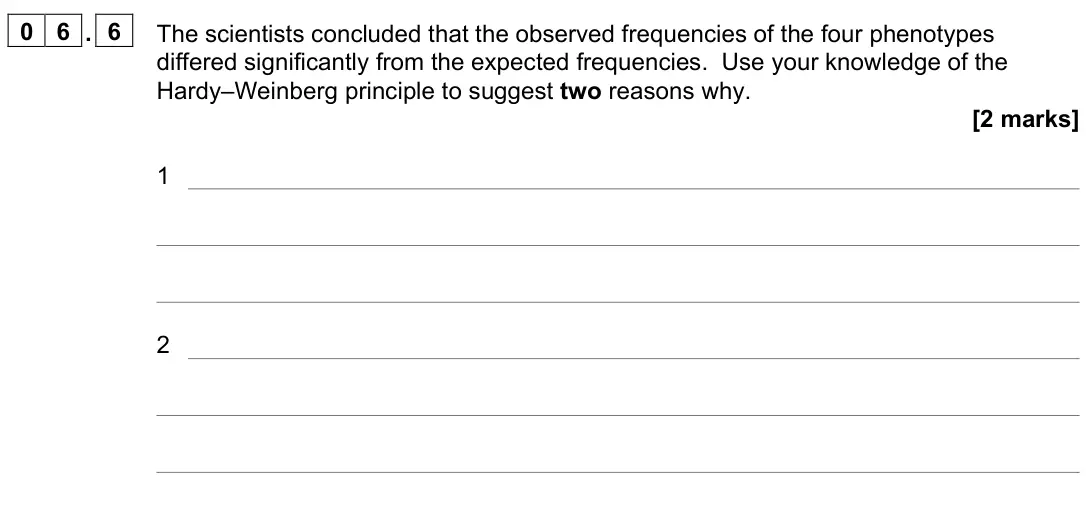
Q01.1
The whole paper ↗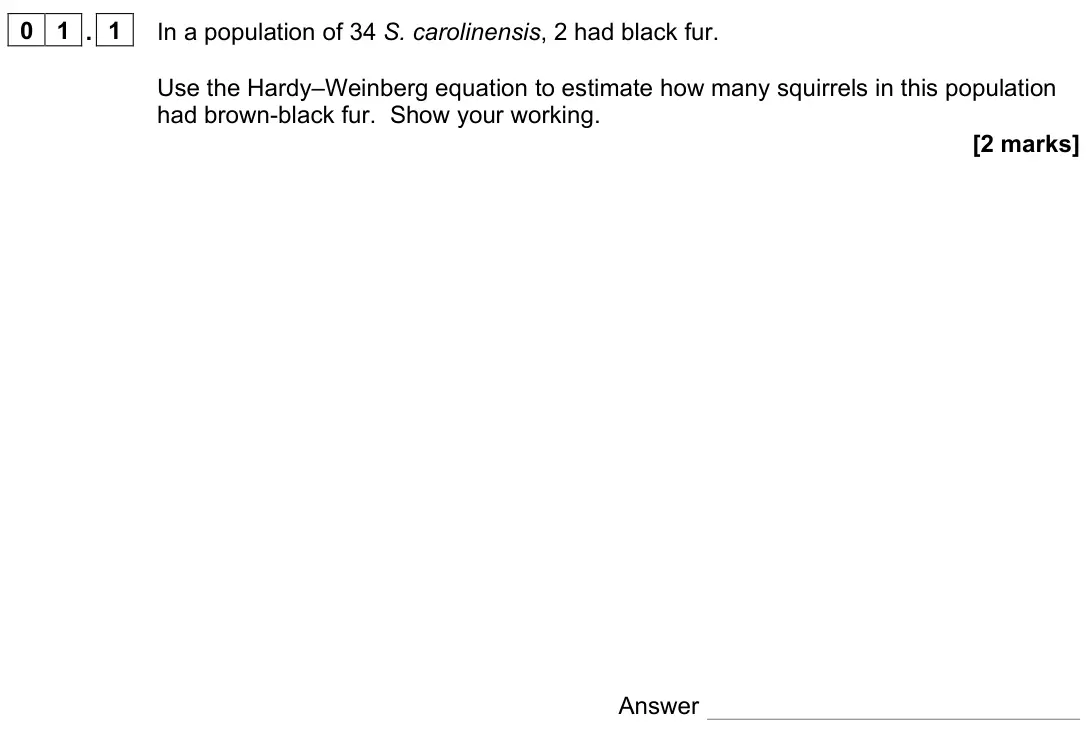
Q06.2
The whole paper ↗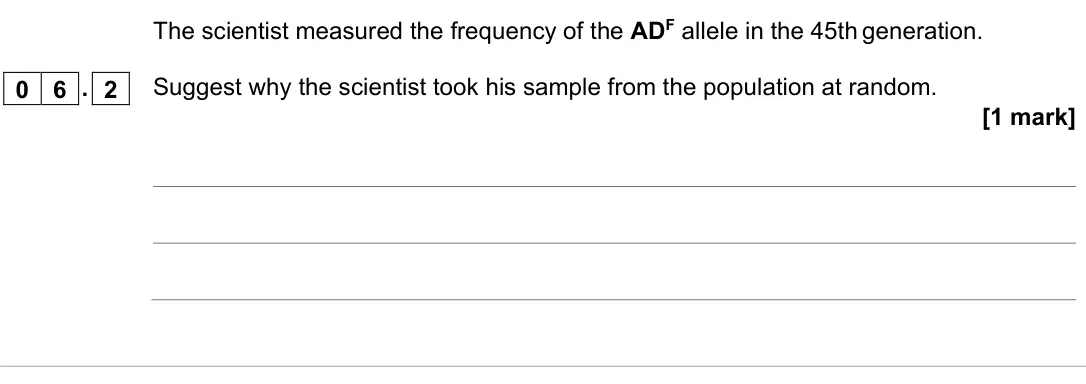
Q06.4
The whole paper ↗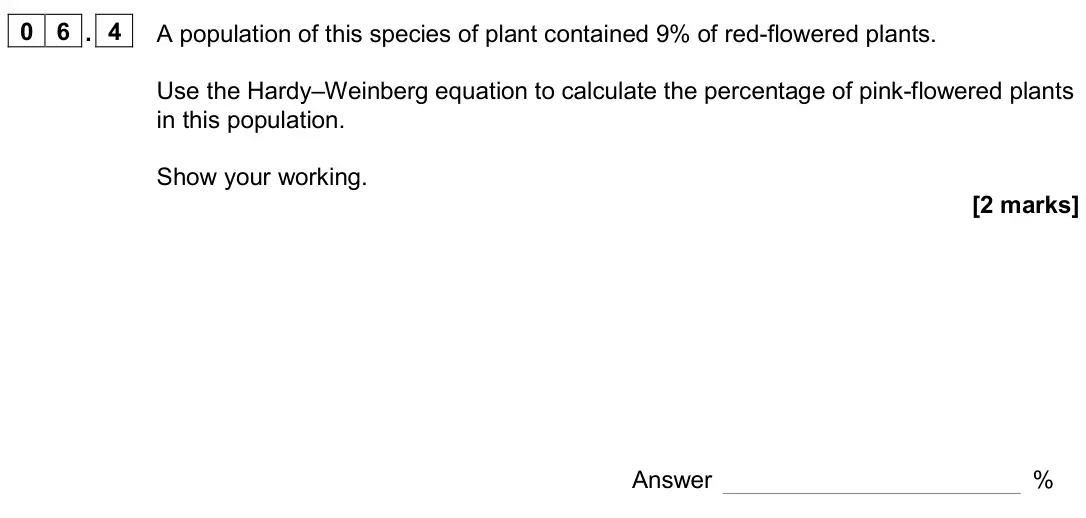
Q06.5
The whole paper ↗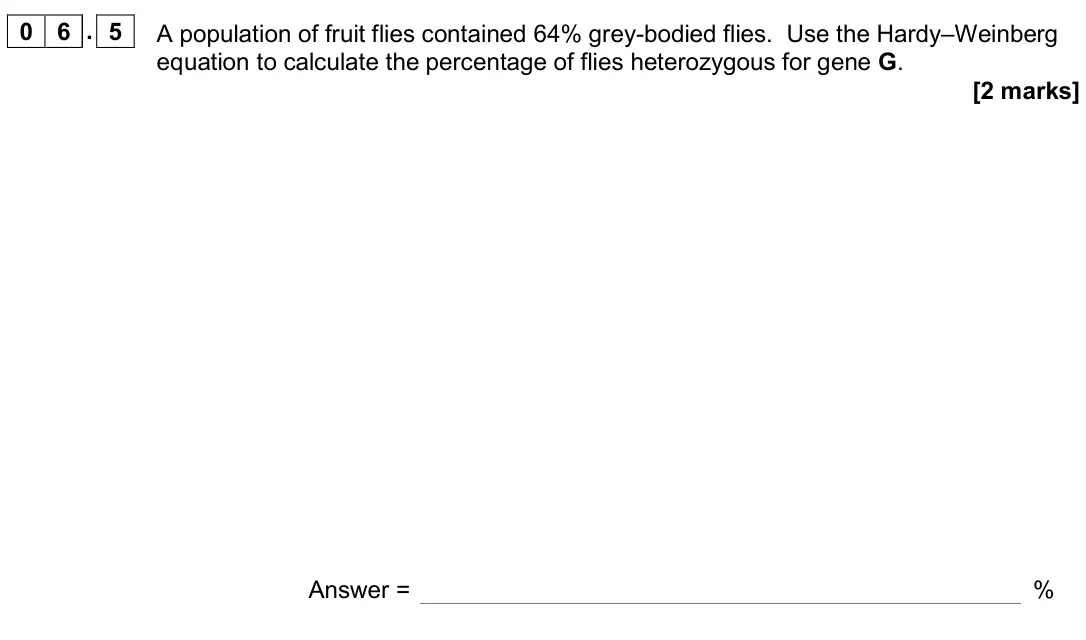
Q09.2
The whole paper ↗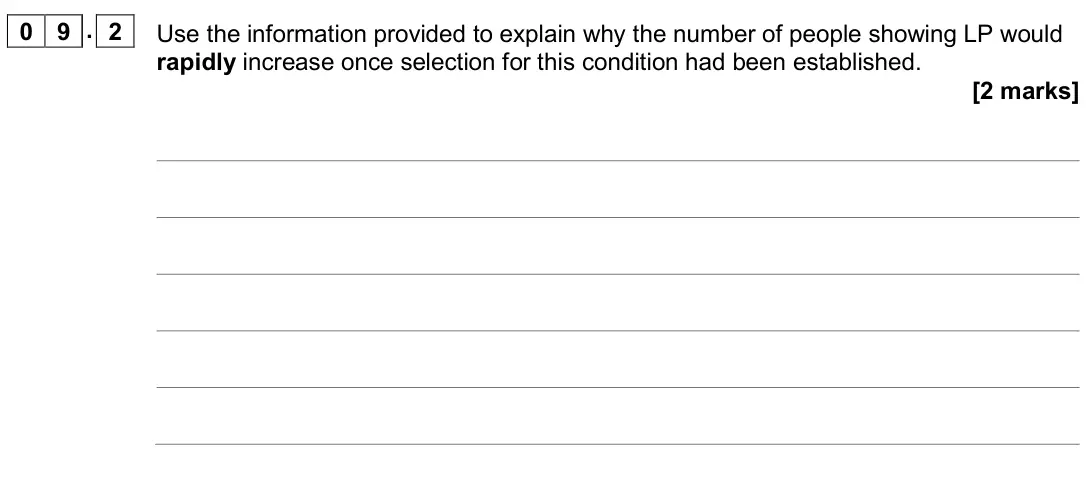
Q10.2
The whole paper ↗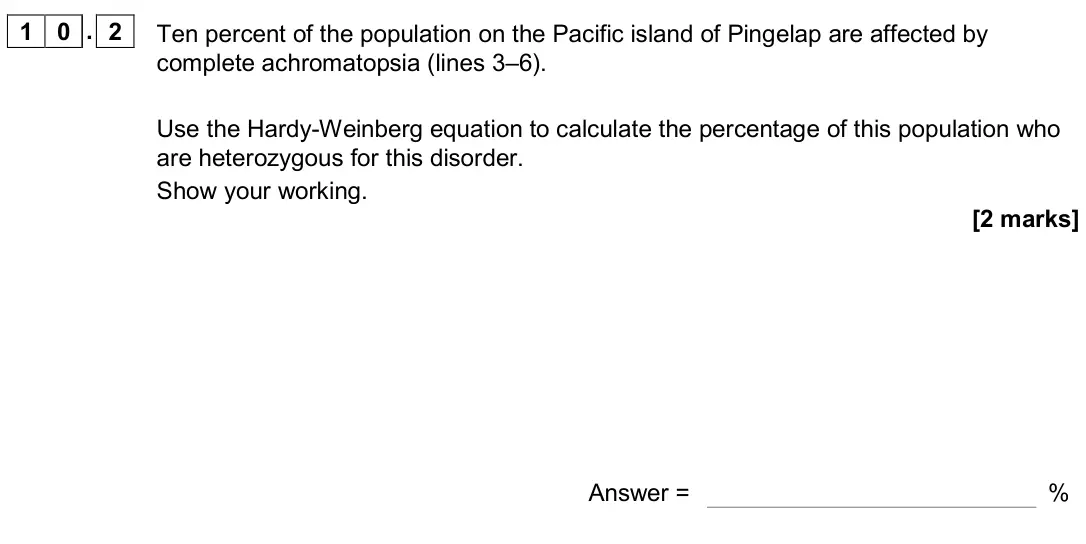
Q07.5
The whole paper ↗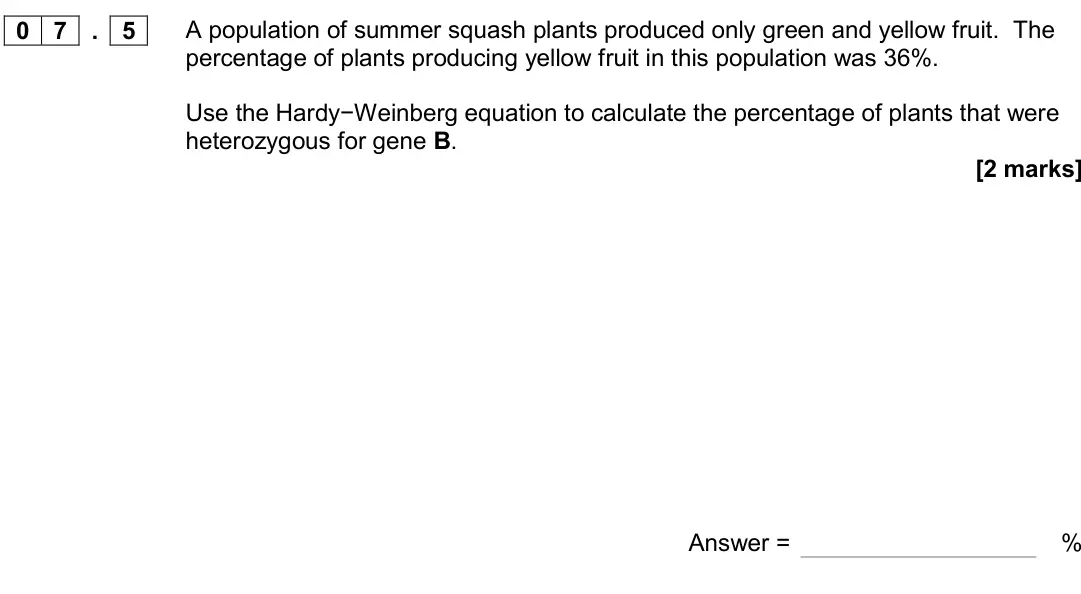
Q09.1
The whole paper ↗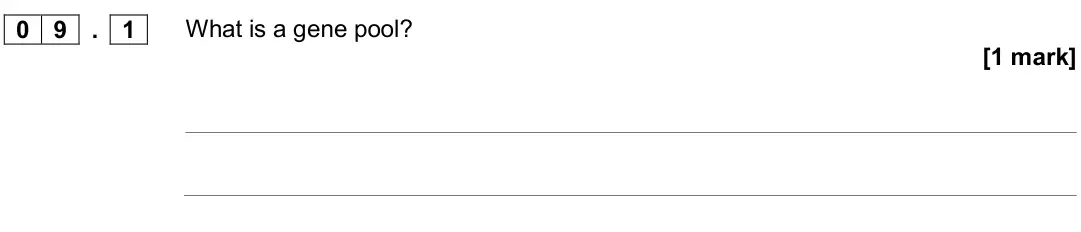
Q10.3
The whole paper ↗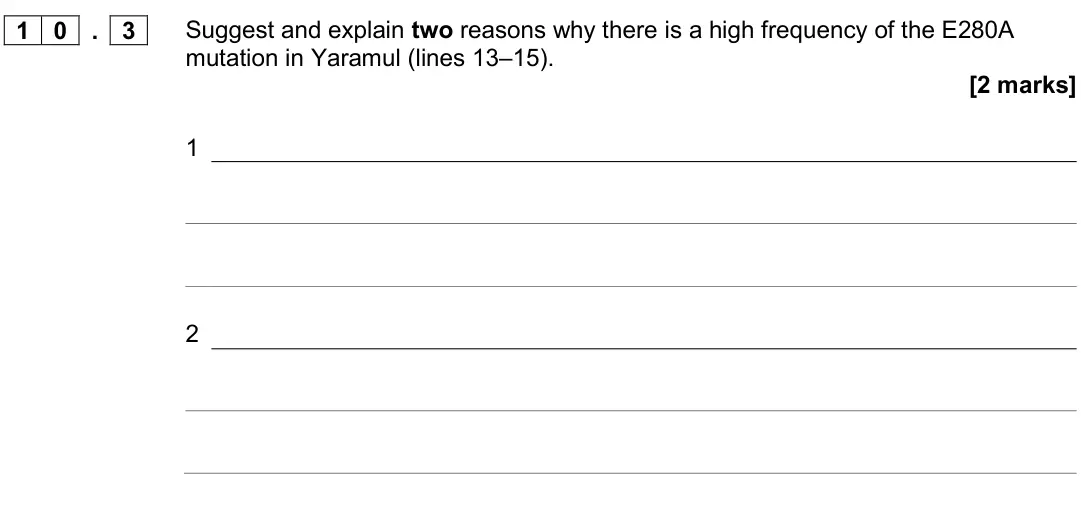
Q06.1
The whole paper ↗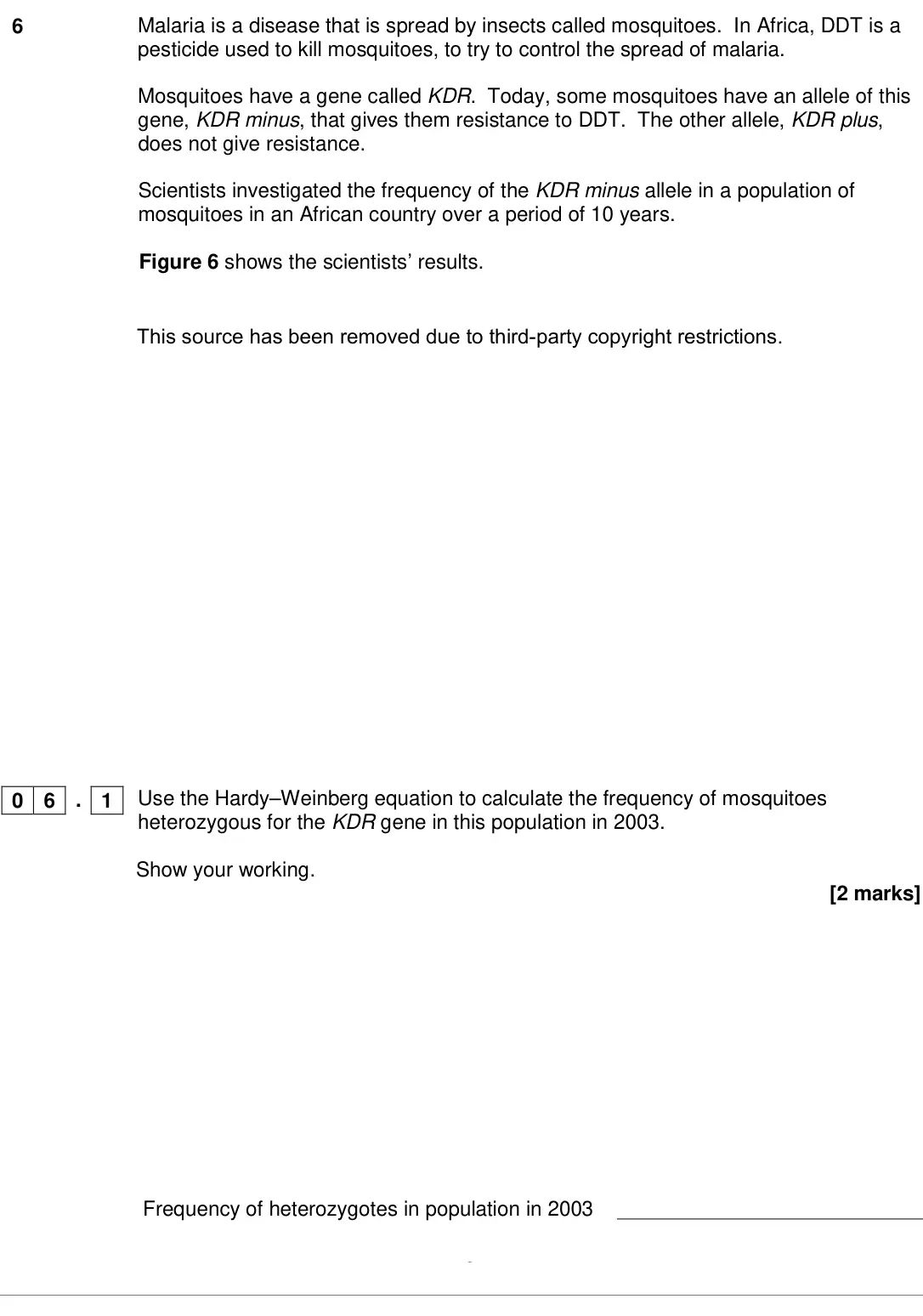
All 20 questions on Populations, as a list
- June 2025, Paper 2, Q09.1 (2 marks): Calculate how many more people had CF than was expected in 2022. You can assume the relative frequency of CF in a population remains constant. Show your working
- June 2025, Paper 3, Q05.1 (2 marks): The frequency of live births with CLP is 1 in 700 Despite knowing this frequency, the Hardy–Weinberg equation cannot be used to estimate any allele frequencies
- June 2024, Paper 2, Q04.3 (2 marks): A population of fruit flies contained 19% grey-bodied flies. Use the Hardy–Weinberg equation to calculate the percentage of flies heterozygous for gene G. Show
- June 2024, Paper 3, Q05.2 (3 marks): The population of the Faroe Islands is 49 053 Estimate the number of people in the Faroe Islands with LS caused by a mutation in the SURF1 gene. Use information
- June 2023, Paper 2, Q04.4 (2 marks): In a population, 36% of cats had the F allele and had white fur. Use the Hardy–Weinberg equation to calculate the frequency of the f allele in this population.
- June 2023, Paper 3, Q06.6 (2 marks): In mice, one type of autoimmune disease is inherited as a dominant allele. Would the Hardy–Weinberg principle hold true for a population of mice, some of which
- June 2022, Paper 2, Q06.4 (1 mark): The frequencies of the IA and IO alleles were 0.15 and 0.65. What is the frequency of the IB allele? [1 mark] Frequency of IB allele
- June 2022, Paper 2, Q06.5 (2 marks): Name the statistical test you should use to determine if the observed frequencies of the four phenotypes differed significantly from the frequencies expected ac
- June 2022, Paper 2, Q06.6 (2 marks): The scientists concluded that the observed frequencies of the four phenotypes differed significantly from the expected frequencies. Use your knowledge of the Ha
- November 2021, Paper 3, Q01.1 (2 marks): In a population of 34 S. carolinensis, 2 had black fur. Use the Hardy–Weinberg equation to estimate how many squirrels in this population had brown-black fur. S
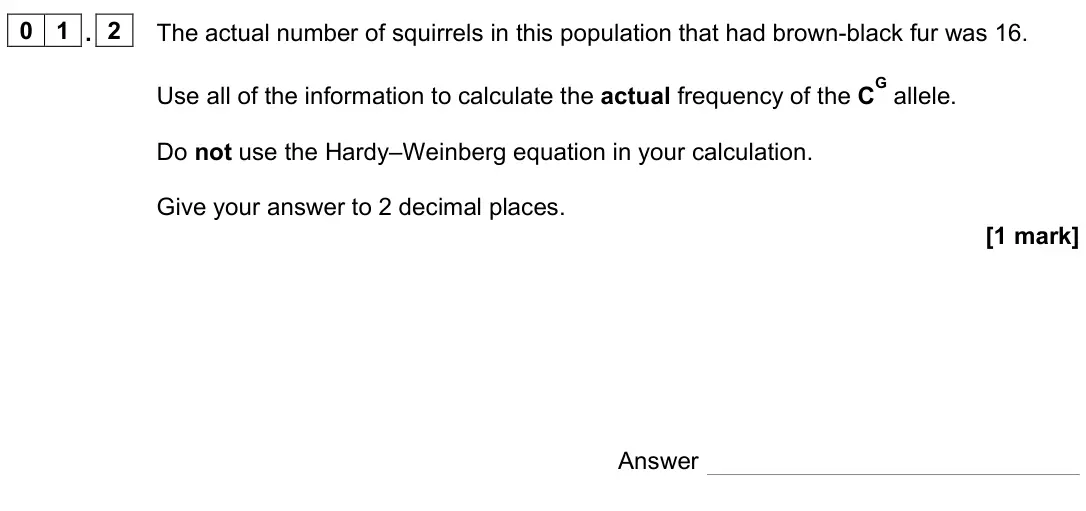
- November 2021, Paper 3, Q01.2 (1 mark): The actual number of squirrels in this population that had brown-black fur was 16. Use all of the information to calculate the actual frequency of the C G allel
- November 2021, AS Paper 2, Q06.2 (1 mark): Suggest why the scientist took his sample from the population at random. [1 mark]
- November 2020, Paper 2, Q06.4 (2 marks): A population of this species of plant contained 9% of red-flowered plants. Use the Hardy–Weinberg equation to calculate the percentage of pink-flowered plants i
- June 2019, Paper 2, Q06.5 (2 marks): A population of fruit flies contained 64% grey-bodied flies. Use the Hardy–Weinberg equation to calculate the percentage of flies heterozygous for gene G. [2 ma
- June 2018, Paper 2, Q09.2 (2 marks): Use the information provided to explain why the number of people showing LP would rapidly increase once selection for this condition had been established. [2 ma
- June 2018, Paper 2, Q10.2 (2 marks): 1 0 Read the following passage. Complete achromatopsia is a form of complete colour blindness. It is caused by having only rods and no functional cone cells. Pe
- June 2017, Paper 2, Q07.5 (2 marks): A population of summer squash plants produced only green and yellow fruit. The percentage of plants producing yellow fruit in this population was 36%. Use the H
- June 2017, Paper 2, Q09.1 (1 mark): What is a gene pool? [1 mark]
- June 2017, Paper 2, Q10.3 (2 marks): 1 0 Alzheimer’s disease (AD) is a non-reversible brain disorder that develops over a number of years. At the start of 2014 the number of Americans with AD was e
- Specimen, Paper 2, Q06.1 (2 marks): Frequency of heterozygotes in population in 2003 5
Questions, mark schemes and examiner’s reports are © AQA, from their published past papers. Plumi isn’t affiliated with any exam board. Want whole papers? Every AQA A-Level Biology paper.
Rather write your answers by hand on iPad? Plumi marks them against the same mark schemes.