 plumi
Thermal physics: WJEC A‑Level Physics questions
Every WJEC A-Level Physics exam question on 3.4 Thermal physics, 2016–2025, with its mark scheme and examiner’s report.
Find questions1,173
Calculations
Q1(a)
The whole paper ↗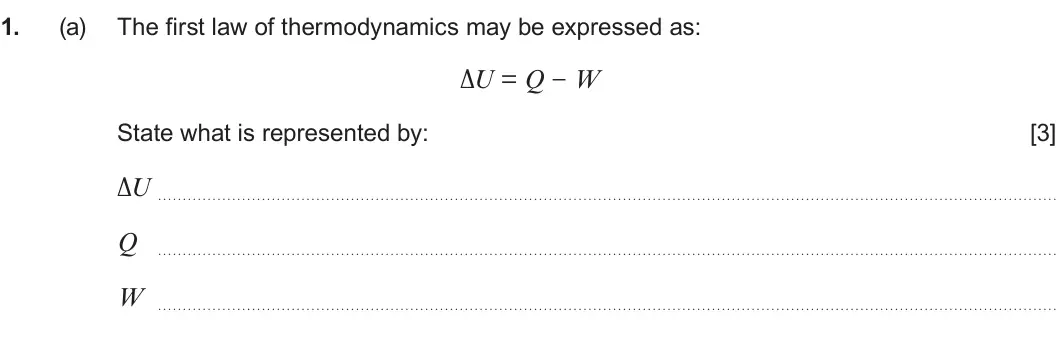
Q1(b)(ii)
The whole paper ↗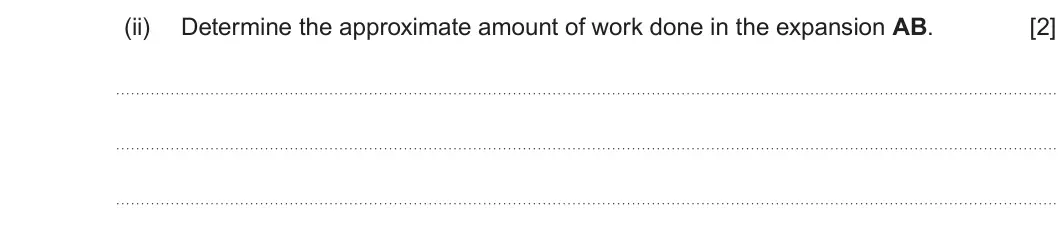
Q1(b)(iii)
The whole paper ↗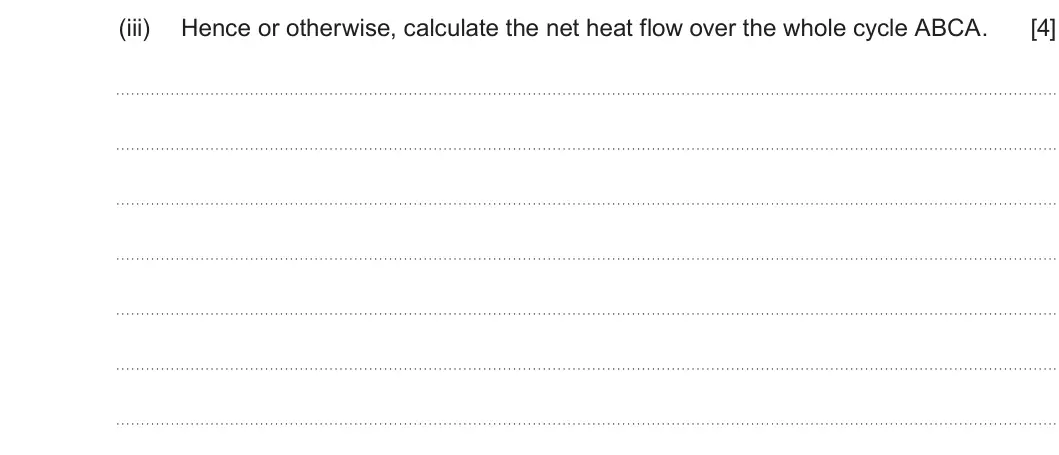
Q2(b)(i)
The whole paper ↗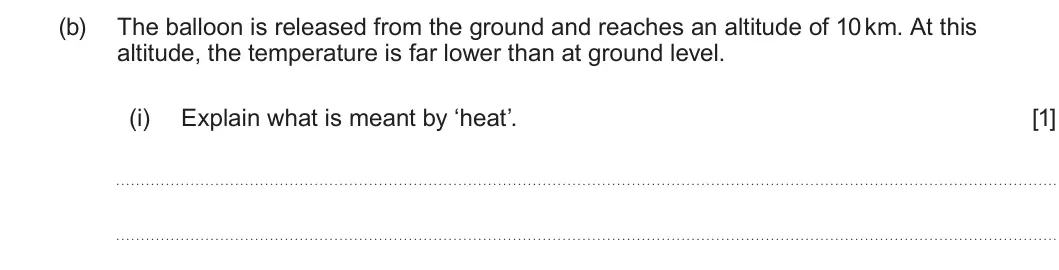
Q2(b)(ii)
The whole paper ↗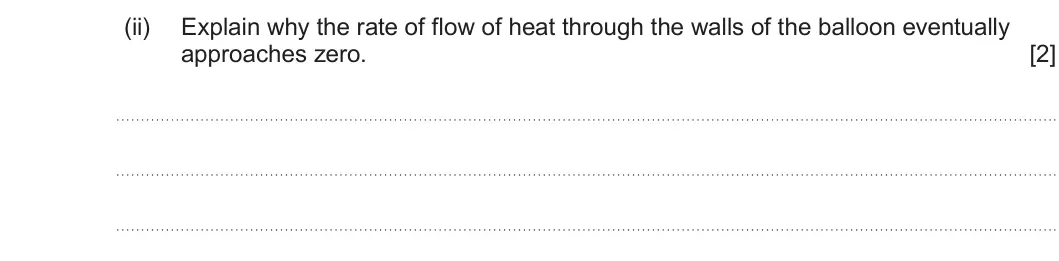
Q8(f)(i)
The whole paper ↗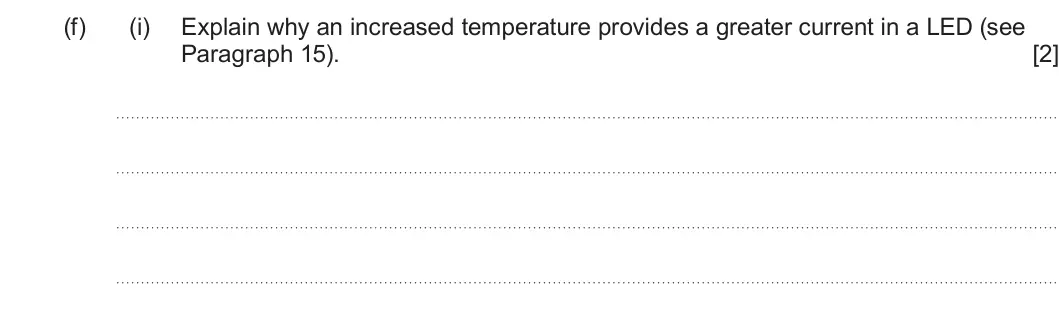
Q1(a)
The whole paper ↗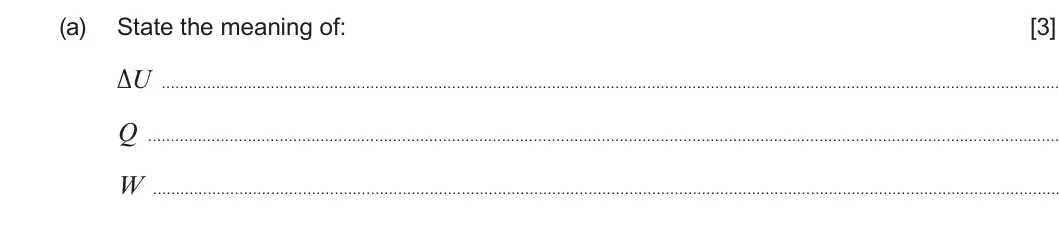
Q1(b)
The whole paper ↗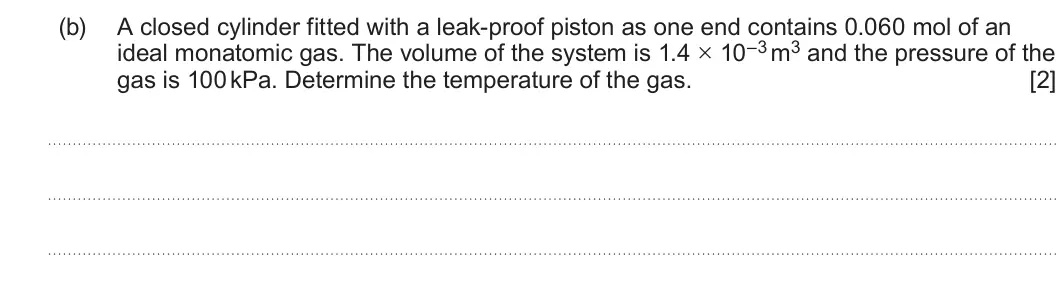
Q1(c)(i)
The whole paper ↗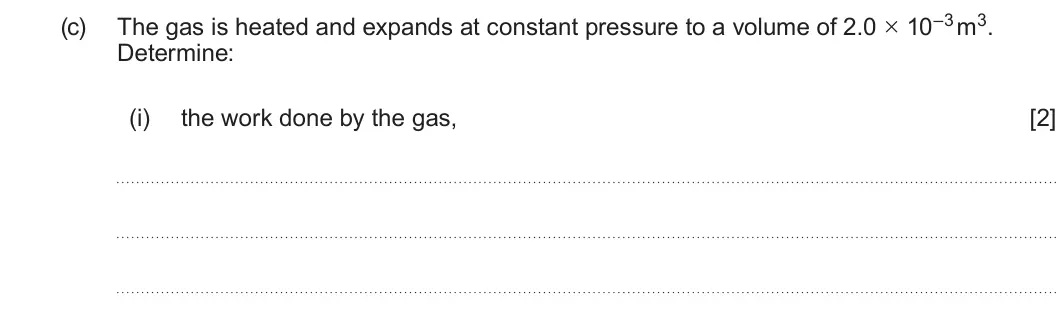
Q1(c)(ii)
The whole paper ↗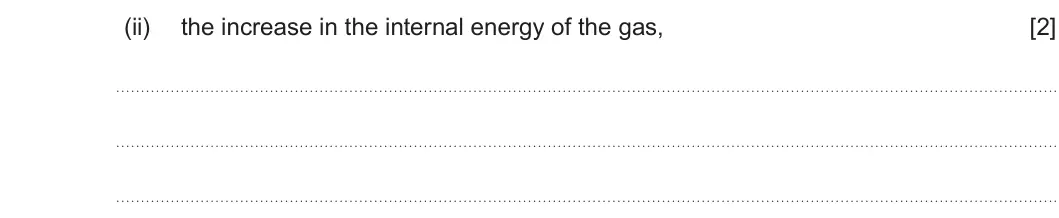
Q1(c)(iii)
The whole paper ↗
Q4(a)
The whole paper ↗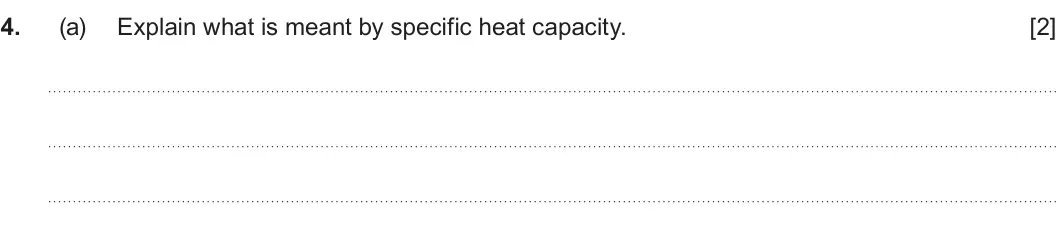
Q4(b)(i)
The whole paper ↗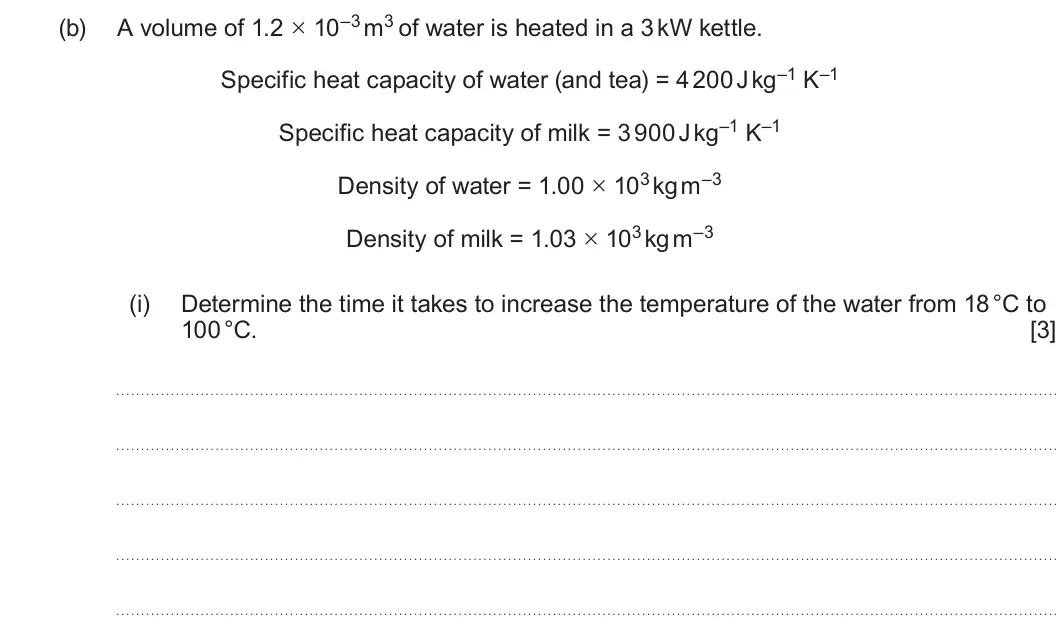
Q4(b)(ii)
The whole paper ↗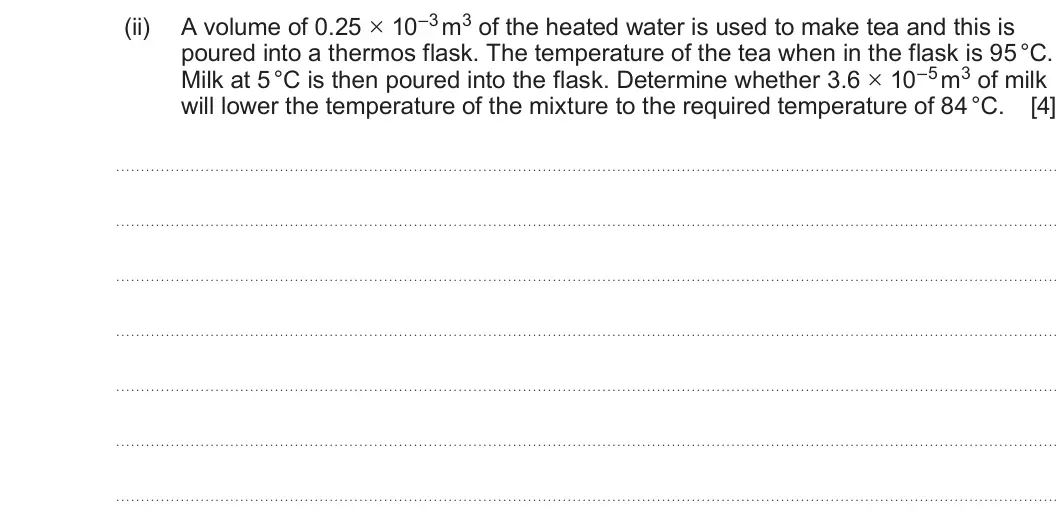
Q2(b)(iii)
The whole paper ↗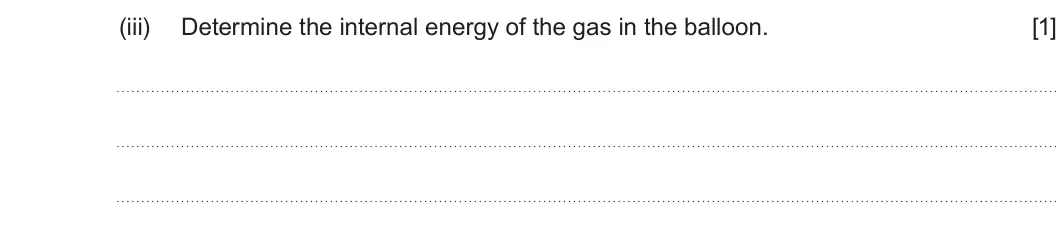
Q2(c)(i)
The whole paper ↗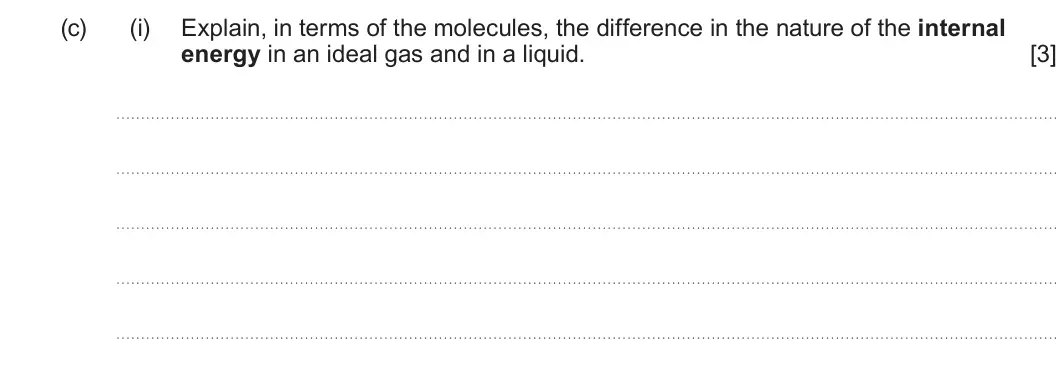
Q2(c)(ii)
The whole paper ↗
Q6(a)
The whole paper ↗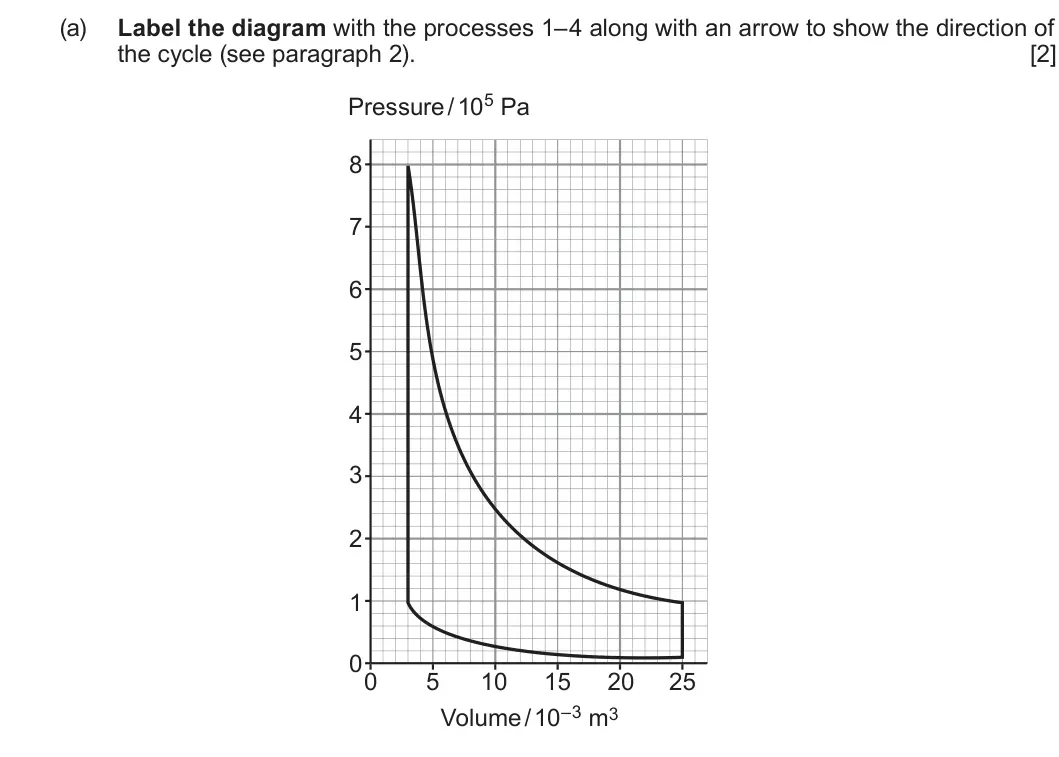
Q6(b)
The whole paper ↗
All 37 questions on Thermal physics, as a list
- Summer 2025, Unit 3, Q1(a) (3 marks): The first law of thermodynamics may be expressed as: ΔU = Q − W State what is represented by: [3] ΔU Q W
- Summer 2025, Unit 3, Q1(b)(ii) (2 marks): Determine the approximate amount of work done in the expansion AB. [2]
- Summer 2025, Unit 3, Q1(b)(iii) (4 marks): Hence or otherwise, calculate the net heat flow over the whole cycle ABCA. [4]
- Summer 2025, Unit 3, Q2(b)(i) (1 mark): Explain what is meant by ‘heat’. [1]
- Summer 2025, Unit 3, Q2(b)(ii) (2 marks): Explain why the rate of flow of heat through the walls of the balloon eventually approaches zero. [2]
- Summer 2024, Unit 3, Q8(f)(i) (2 marks): Paragraph 8 Read through the following article carefully. Some Interesting Aspects of Quantum Physics The whole idea of quantum physics usually starts with the
- Summer 2023, Unit 3, Q1(a) (3 marks): State the meaning of: [3] ∆U Q W
- Summer 2023, Unit 3, Q1(b) (2 marks): A closed cylinder fitted with a leak-proof piston as one end contains 0.060 mol of an ideal monatomic gas. The volume of the system is 1.4 × 10⁻³ m3 and the pre
- Summer 2023, Unit 3, Q1(c)(i) (2 marks): the work done by the gas, [2]
- Summer 2023, Unit 3, Q1(c)(ii) (2 marks): the increase in the internal energy of the gas, [2]
- Summer 2023, Unit 3, Q1(c)(iii) (1 mark): the heat transferred to the gas. [1]
- Summer 2023, Unit 3, Q4(a) (2 marks): Explain what is meant by specific heat capacity. [2]
- Summer 2023, Unit 3, Q4(b)(i) (3 marks): Determine the time it takes to increase the temperature of the water from 18 °C to 100 °C. [3]
- Summer 2023, Unit 3, Q4(b)(ii) (4 marks): poured into a thermos flask. The temperature of the tea when in the flask is 95 °C. Milk at 5 °C is then poured into the flask. Determine whether 3.6 × 10⁻⁵ m3
- Summer 2022, Unit 3, Q2(b)(iii) (1 mark): Determine the internal energy of the gas in the balloon. [1]
- Summer 2022, Unit 3, Q2(c)(i) (3 marks): Explain, in terms of the molecules, the difference in the nature of the internal energy in an ideal gas and in a liquid. [3]
- Summer 2022, Unit 3, Q2(c)(ii) (1 mark): State the temperature of a system for its internal energy to be a minimum. [1]
- Summer 2022, Unit 3, Q6(i) (2 marks): Read through the following article carefully. How do you produce really low temperatures and can you then do some cool stuff with it? Paragraph Pressure / 105 P
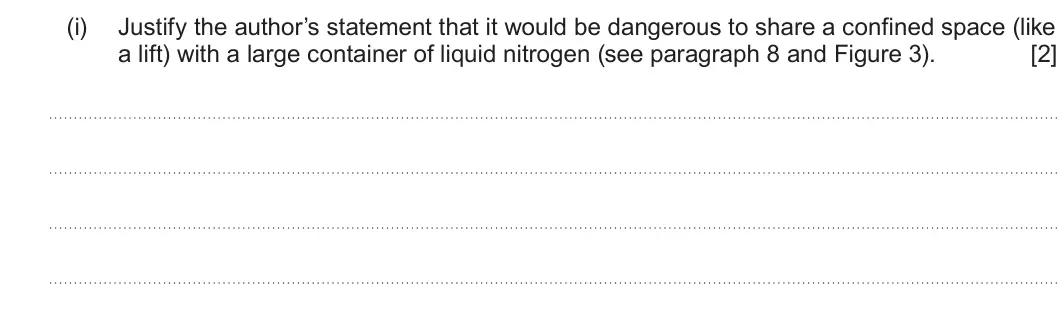
- Summer 2022, Unit 3, Q6(a) (2 marks): Read through the following article carefully. How do you produce really low temperatures and can you then do some cool stuff with it? Paragraph Pressure / 105 P
- Summer 2022, Unit 3, Q6(b) (2 marks): Read through the following article carefully. How do you produce really low temperatures and can you then do some cool stuff with it? Paragraph Pressure / 105 P
- Summer 2022, Unit 3, Q6(c) (3 marks): Read through the following article carefully. How do you produce really low temperatures and can you then do some cool stuff with it? Paragraph Pressure / 105 P
- Summer 2022, Unit 3, Q6(d) (2 marks): Read through the following article carefully. How do you produce really low temperatures and can you then do some cool stuff with it? Paragraph Pressure / 105 P
- Summer 2022, Unit 3, Q6(e) (4 marks): Read through the following article carefully. How do you produce really low temperatures and can you then do some cool stuff with it? Paragraph Pressure / 105 P
- Summer 2022, Unit 3, Q6(f) (1 mark): Read through the following article carefully. How do you produce really low temperatures and can you then do some cool stuff with it? Paragraph Pressure / 105 P
- Summer 2019, Unit 3, Q1(d) (1 mark): State what happens to the behaviour of the gas molecules as the temperature approaches absolute zero. [1]
- Summer 2019, Unit 3, Q5(b)(ii) (2 marks): During the process the gas does 773 J of work. Determine the heat flowing into the gas, explaining your reasoning. [2]
- Summer 2019, Unit 3, Q5(b)(iii) (4 marks): Following the expansion the gas is returned to its initial state by a two-stage process: – a decrease in volume at constant pressure; – an increase in pressure
- Summer 2018, Unit 3, Q2(d) (3 marks): An ideal monatomic gas, initially at a pressure of 115 kPa and temperature of 294 K, expands at constant pressure from a volume of 2.20 × 10⁻³ m3 to 2.60 × 10⁻³
- Summer 2018, Unit 3, Q3(a) (1 mark): Give the definition of the specific heat capacity of a material. [1]
- Summer 2018, Unit 3, Q3(b)(i) (3 marks): Determine the final temperature of the water in the flask. [3]
- Summer 2018, Unit 3, Q3(b)(ii) (3 marks): Calculate the heat lost by the boiling water. [3]
- Summer 2018, Unit 3, Q3(b)(iii) (1 mark): Justify the statement that no work is done on/by the boiling water as it cools. No further calculations are needed. [1]
- Summer 2018, Unit 4, Q5(c) (5 marks): Iestyn claims that changing the shape of the coat hanger from Shape 1 to Shape 2 in 16 ms in the magnetic field will increase its temperature by less than 1 °C.
- Summer 2017, Unit 3, Q3(a) (3 marks): The first law of thermodynamics is given by: ∆U = Q – W State what is represented by: [3] ∆U Q W
- Summer 2017, Unit 3, Q3(b)(i) (5 marks): Complete the table by describing each process in terms of pressure and volume. The description for process A → B is already inserted. For each process state if
- Summer 2017, Unit 3, Q3(b)(ii) (2 marks): Determine the net work done on the gas during the entire cycle. [2]
- Summer 2017, Unit 3, Q3(c)(ii) (2 marks): Estimate the difference in the net work done in the two cycles. [2]
Questions, mark schemes and examiner’s reports are © WJEC CBAC Ltd, from their published past papers. Plumi isn’t affiliated with any exam board. Want whole papers? Every WJEC A-Level Physics paper.
Rather write your answers by hand on iPad? Plumi marks them against the same mark schemes.