 plumi
Nuclear decay: WJEC A‑Level Physics questions
Every WJEC A-Level Physics exam question on 3.5 Nuclear decay, 2016–2025, with its mark scheme and examiner’s report.
Find questions1,173
Calculations
Q3(a)
The whole paper ↗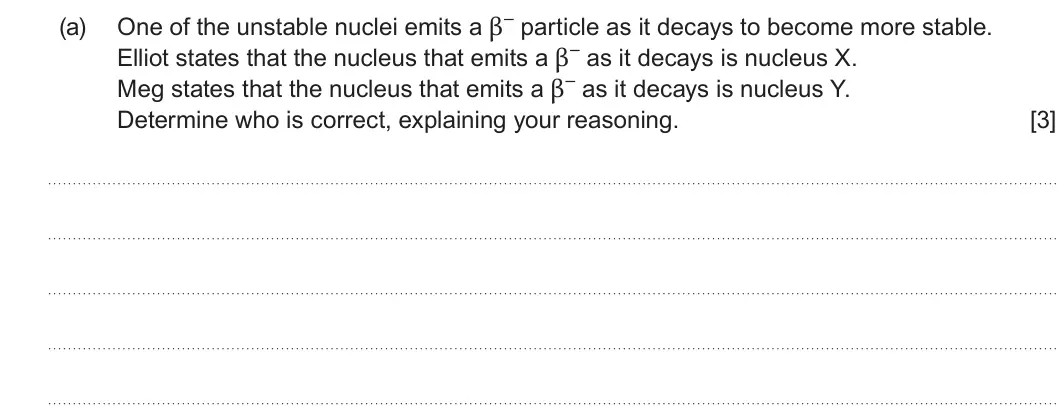
Q3(b)
The whole paper ↗
Q3(c)
The whole paper ↗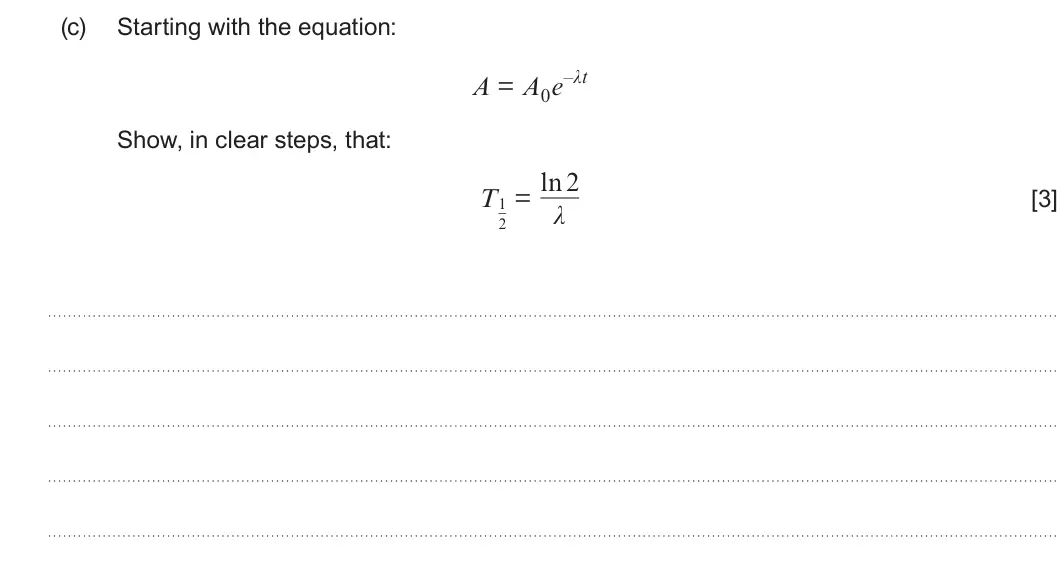
Q3(d)
The whole paper ↗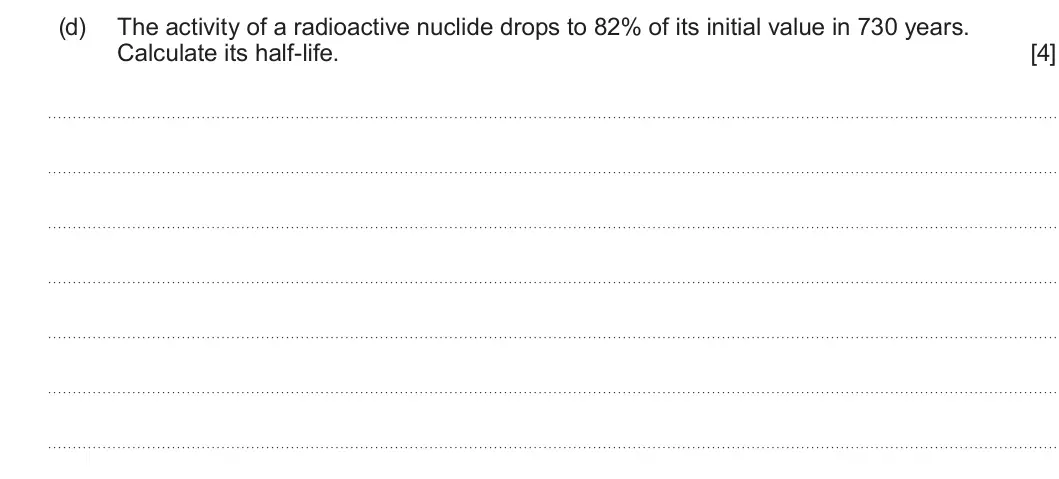
Q3(e)
The whole paper ↗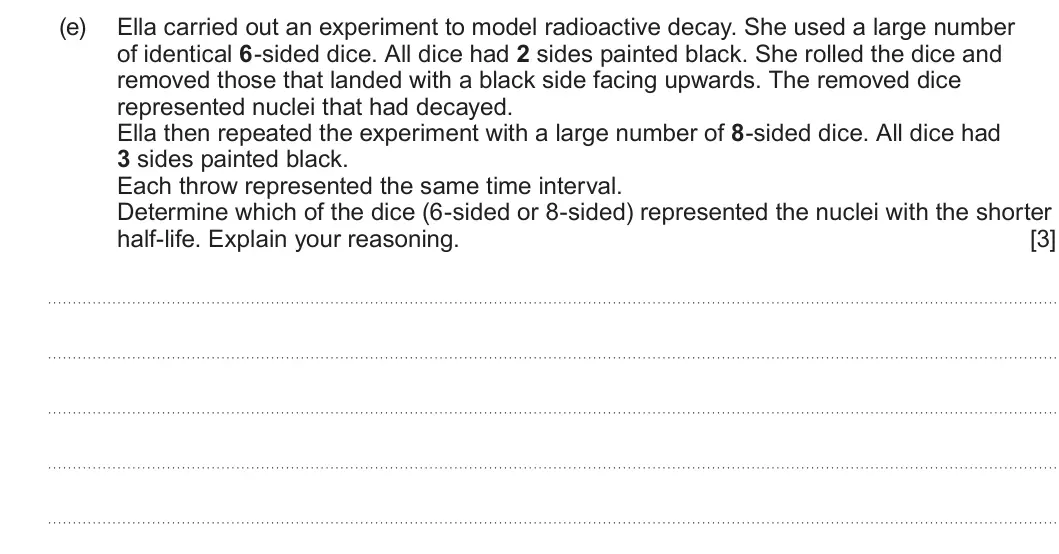
Q3(a)
The whole paper ↗
Q6(a)
The whole paper ↗
Q6(b)
The whole paper ↗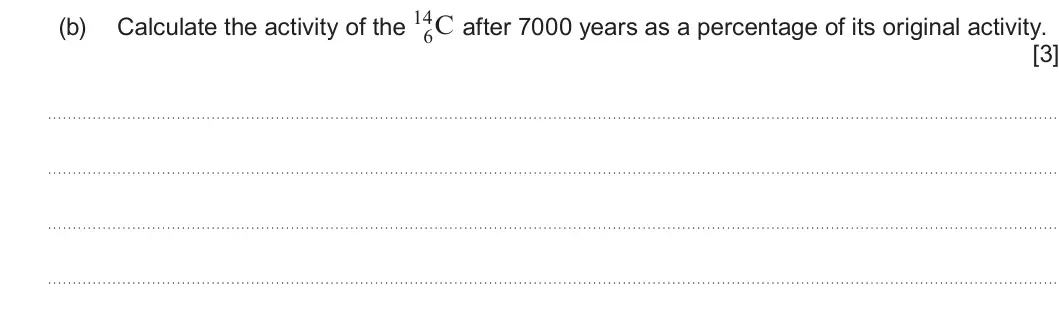
Q3(a)
The whole paper ↗
Q3(b)
The whole paper ↗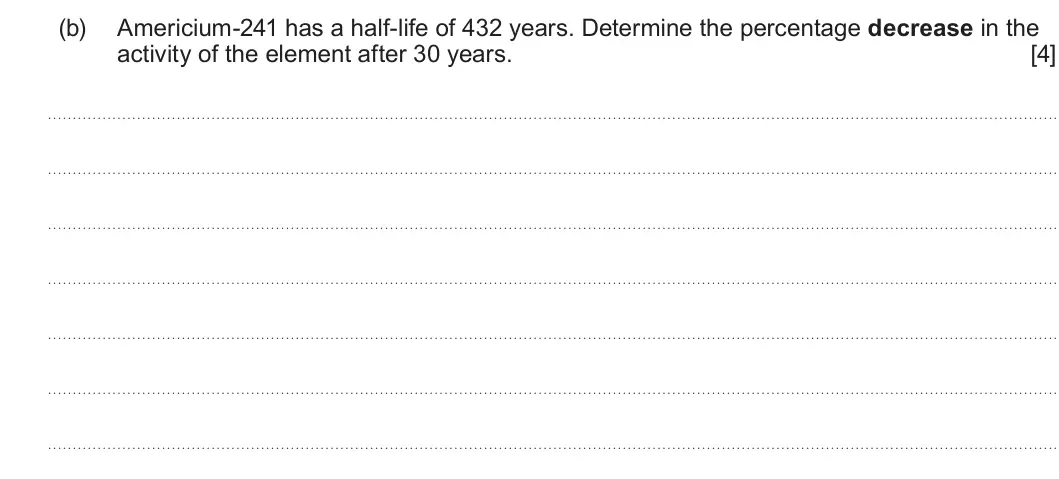
Q3(c)
The whole paper ↗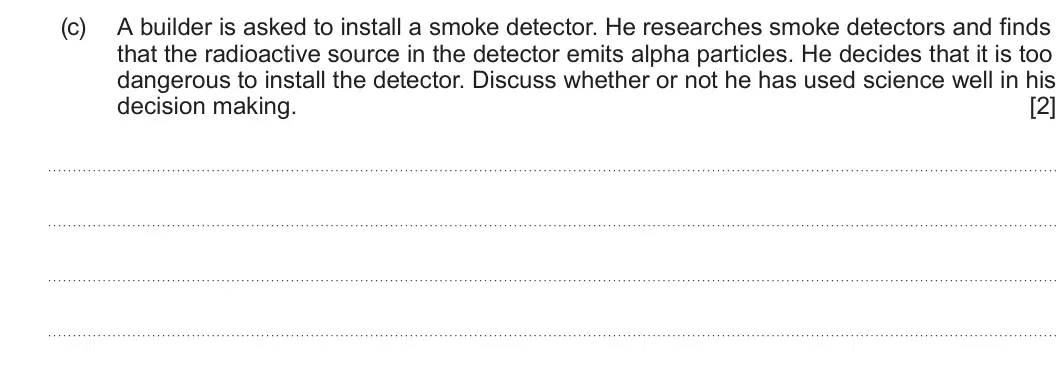
Q3(d)
The whole paper ↗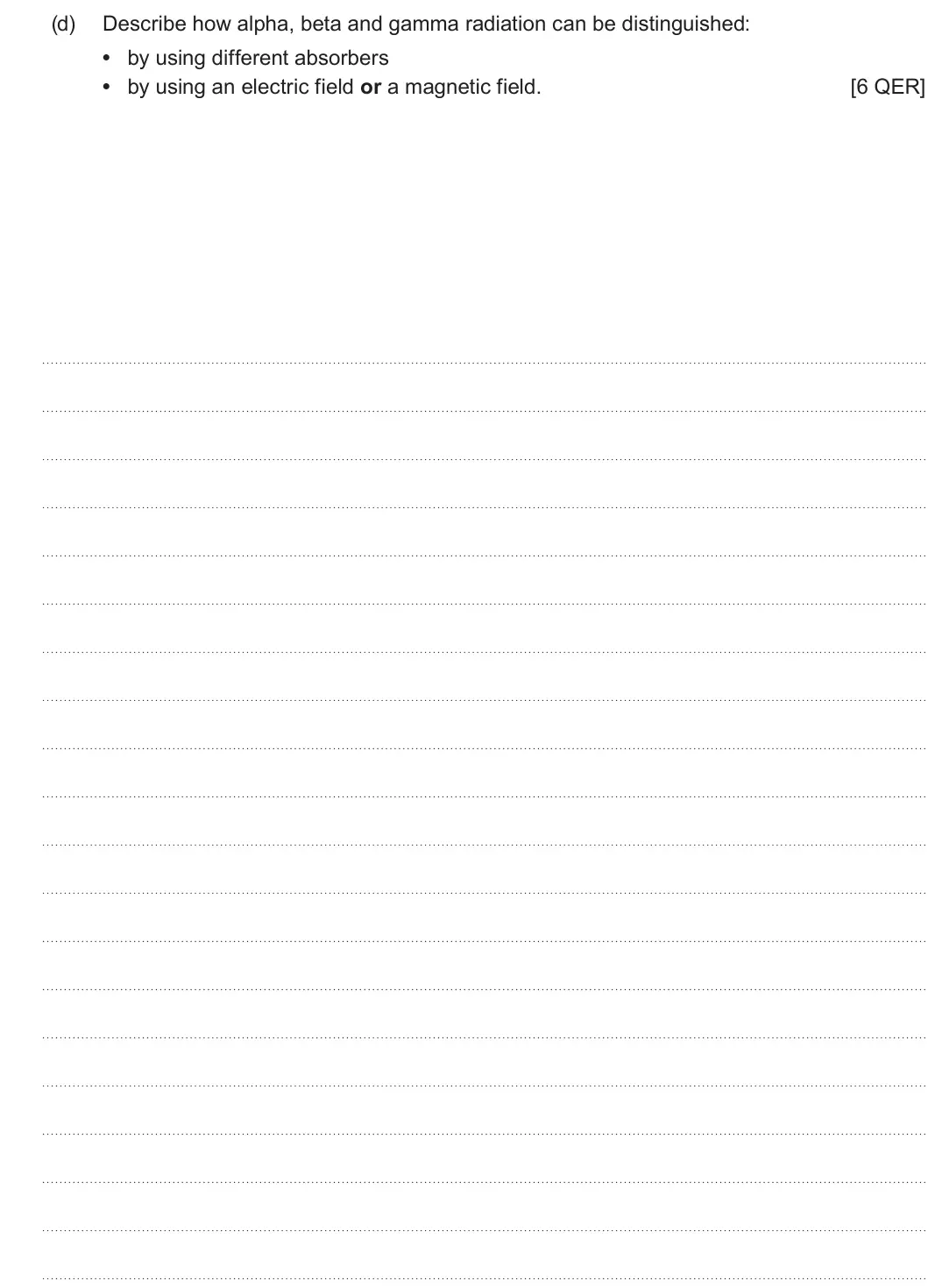
Q1(a)(i)
The whole paper ↗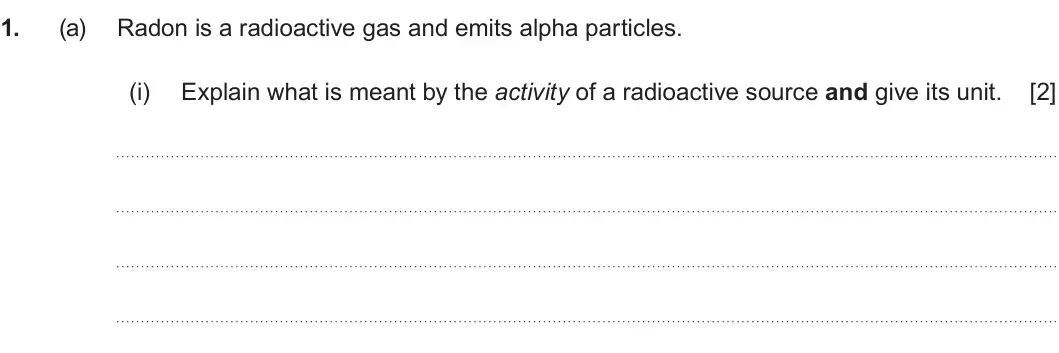
Q1(a)(ii)
The whole paper ↗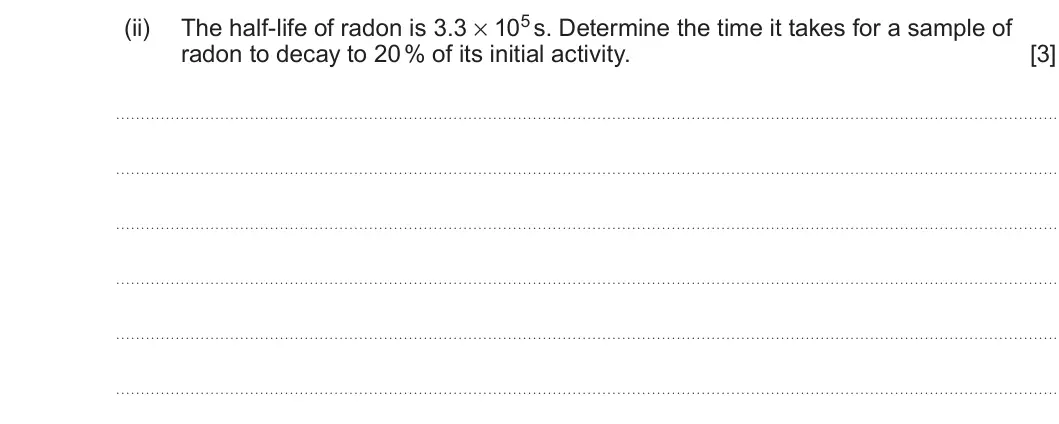
Q1(a)(iii)
The whole paper ↗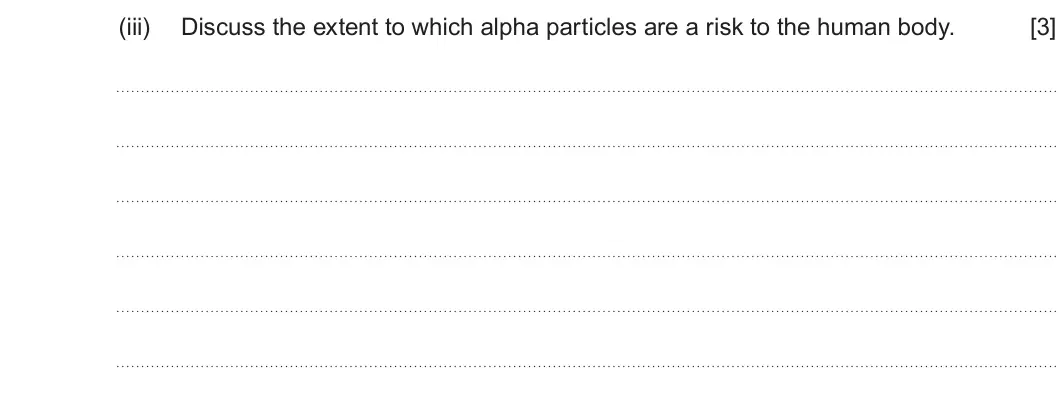
Q5(a)(i)
The whole paper ↗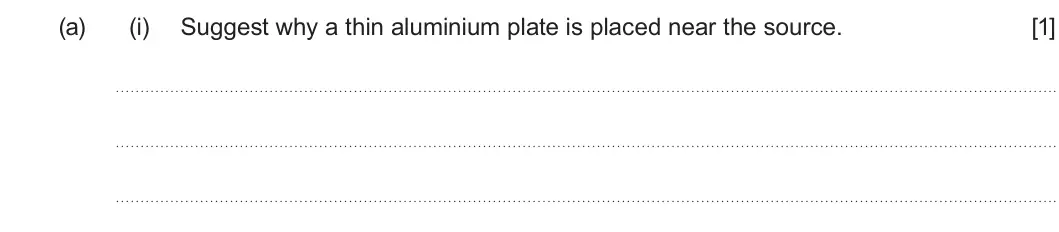
Q5(a)(ii)
The whole paper ↗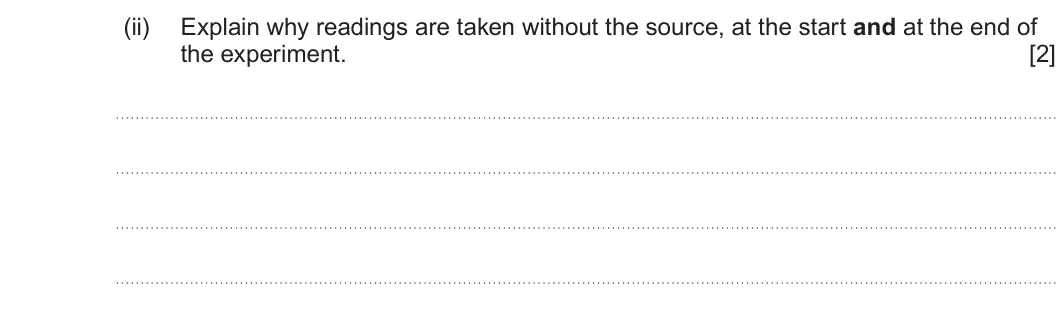
Q5(b)
The whole paper ↗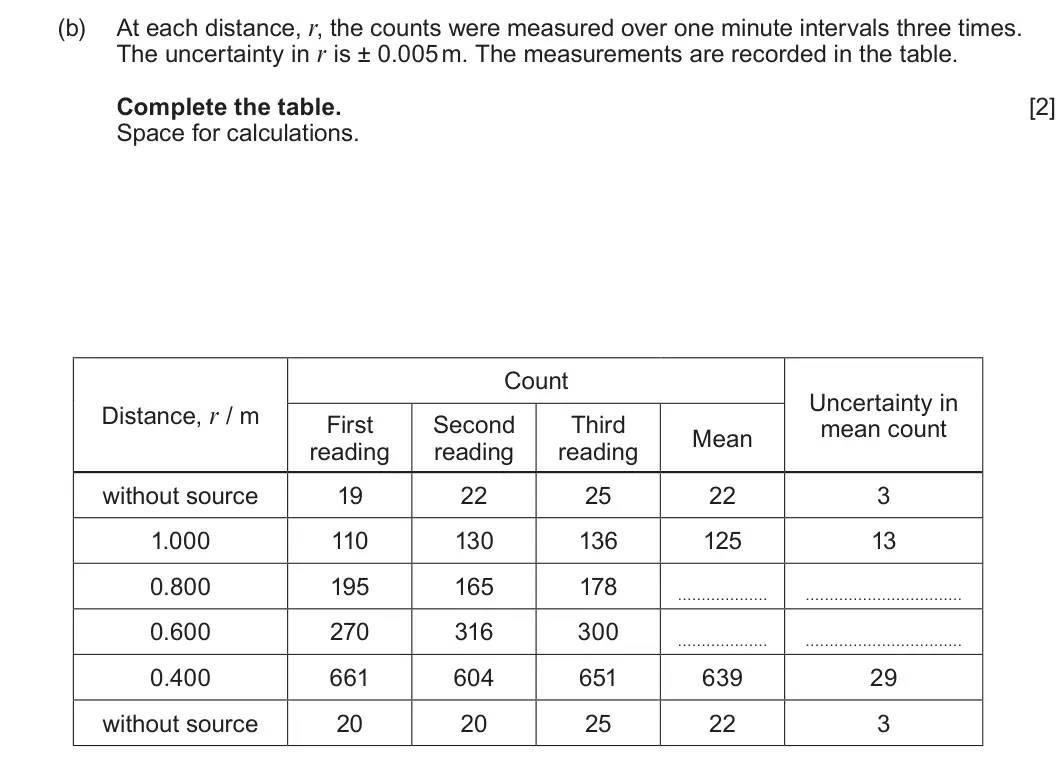
Q5(c)(i)
The whole paper ↗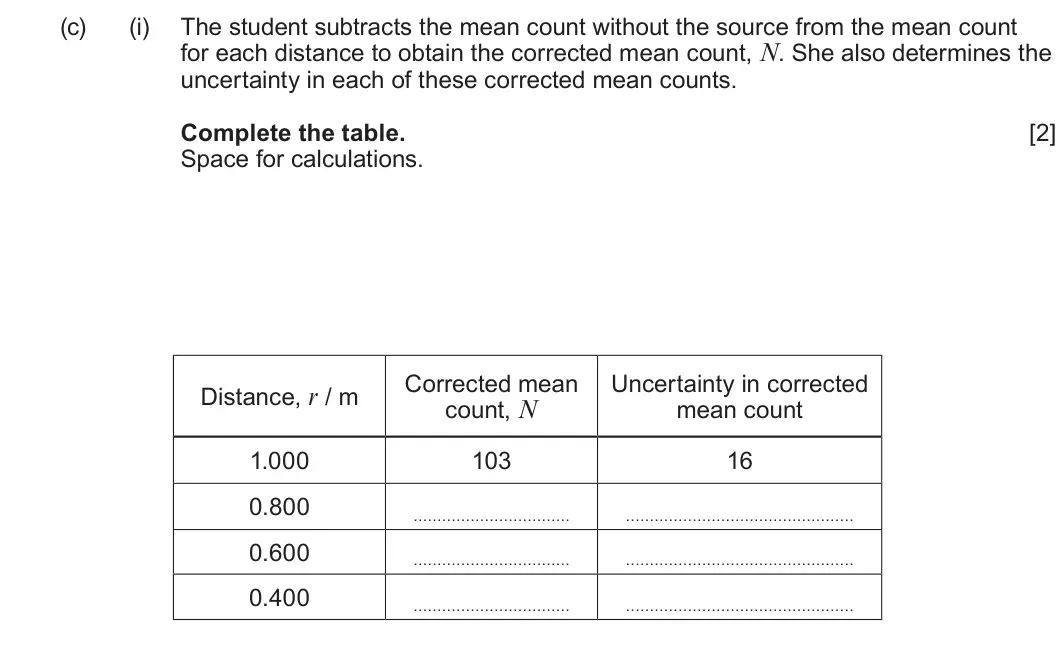
Q5(c)(ii)
The whole paper ↗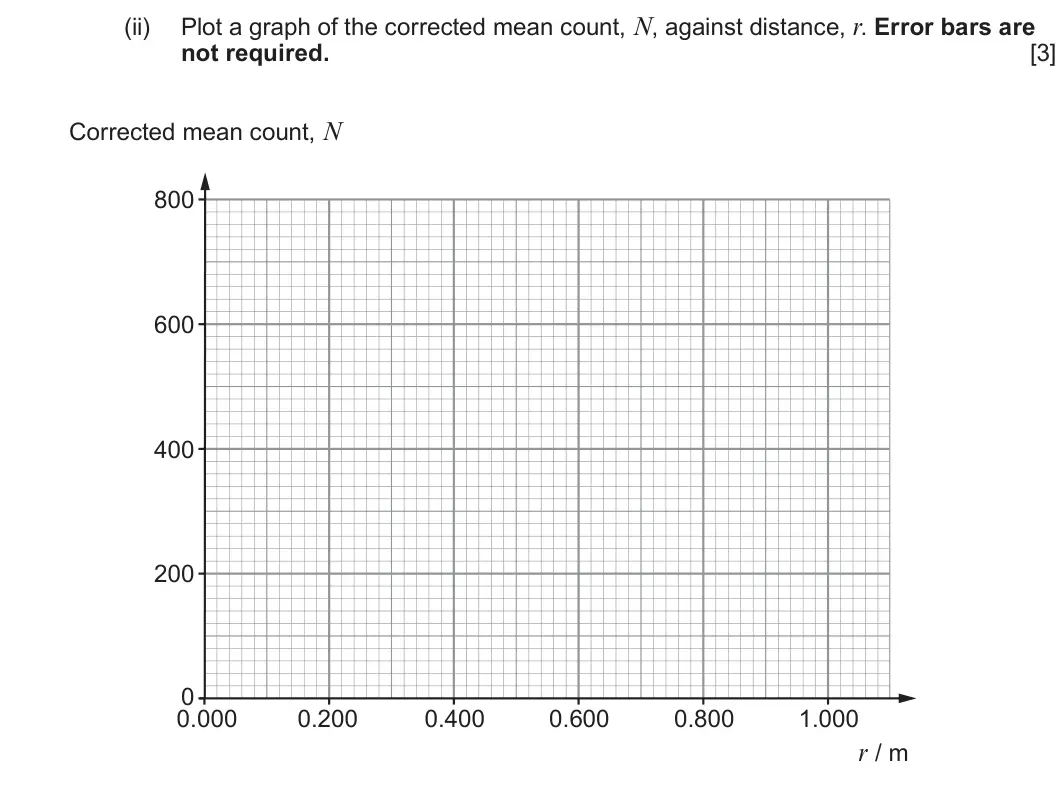
All 33 questions on Nuclear decay, as a list
- Summer 2025, Unit 3, Q3(a) (3 marks): Elliot states that the nucleus that emits a β– as it decays is nucleus X. Meg states that the nucleus that emits a β– as it decays is nucleus Y. Determine who i
- Summer 2025, Unit 3, Q3(b) (1 mark): Define the half-life, T1 , of a radioactive substance. [1] 2
- Summer 2025, Unit 3, Q3(c) (3 marks): Starting with the equation: A = A0e–λt Show, in clear steps, that: = ln 2 T1 λ [3] 2
- Summer 2025, Unit 3, Q3(d) (4 marks): The activity of a radioactive nuclide drops to 82% of its initial value in 730 years. Calculate its half-life. [4]
- Summer 2025, Unit 3, Q3(e) (3 marks): Ella carried out an experiment to model radioactive decay. She used a large number of identical 6-sided dice. All dice had 2 sides painted black. She rolled the
- Summer 2024, Unit 3, Q3(a) (6 marks): Describe an experiment to investigate the variation of intensity of gamma radiation with the distance from a source. Consider the experimental set-up, data coll
- Summer 2024, Unit 3, Q6(a) (4 marks): Estimate the age of the boat. [4]
- Summer 2024, Unit 3, Q6(b) (3 marks): Calculate the activity of the after 7000 years as a percentage of its original activity. 6 [3]
- Summer 2023, Unit 3, Q3(a) (2 marks): State what is meant by alpha emission. [2]
- Summer 2023, Unit 3, Q3(b) (4 marks): Americium-241 has a half-life of 432 years. Determine the percentage decrease in the activity of the element after 30 years. [4]
- Summer 2023, Unit 3, Q3(c) (2 marks): A builder is asked to install a smoke detector. He researches smoke detectors and finds that the radioactive source in the detector emits alpha particles. He de
- Summer 2023, Unit 3, Q3(d) (6 marks): Describe how alpha, beta and gamma radiation can be distinguished: • by using different absorbers • by using an electric field or a magnetic field. [6 QER]
- Summer 2022, Unit 3, Q1(a)(i) (2 marks): Explain what is meant by the activity of a radioactive source and give its unit. [2]
- Summer 2022, Unit 3, Q1(a)(ii) (3 marks): radon to decay to 20 % of its initial activity. [3]
- Summer 2022, Unit 3, Q1(a)(iii) (3 marks): Discuss the extent to which alpha particles are a risk to the human body. [3]
- Summer 2022, Unit 3, Q5(a)(i) (1 mark): Suggest why a thin aluminium plate is placed near the source. [1]
- Summer 2022, Unit 3, Q5(a)(ii) (2 marks): Explain why readings are taken without the source, at the start and at the end of the experiment. [2]
- Summer 2022, Unit 3, Q5(b) (2 marks): At each distance, r, the counts were measured over one minute intervals three times. The uncertainty in r is ± 0.005 m. The measurements are recorded in the tab
- Summer 2022, Unit 3, Q5(c)(i) (2 marks): The student subtracts the mean count without the source from the mean count for each distance to obtain the corrected mean count, N. She also determines the unc
- Summer 2022, Unit 3, Q5(c)(ii) (3 marks): Plot a graph of the corrected mean count, N, against distance, r. Error bars are not required. [3] Corrected mean count, N 800 600 400 200 0 0.000 0.200 0.400 0
- Summer 2022, Unit 3, Q5(c)(iii) (1 mark): The student claims that error bars may be shown on the graph for the corrected mean count, but not the distance. Justify her claim. Calculations are not require
- Summer 2022, Unit 3, Q5(d) (3 marks): Her friend suggests using a logarithmic graph. She calculates the logarithmic values in the table below. ln r ln N Distance, r / m 1.000 0.00 4.63 0.800 –0.22 5
- Summer 2022, Unit 3, Q5(e)(i) (3 marks): Starting with intensity: justify how the logarithmic graph can be used to rn determine n. [3]
- Summer 2022, Unit 3, Q5(e)(ii) (4 marks): Use the maximum and minimum gradients to determine n and the absolute uncertainty in its value. [4] SECTION B Answer all questions.
- Summer 2019, Unit 3, Q6(a)(i) (1 mark): Complete the following decay equations.
- Summer 2019, Unit 3, Q6(a)(ii) (1 mark): [1] 38
- Summer 2019, Unit 3, Q6(c)(i) (1 mark): If the student throws one of the dice, what is the probability of the tetrahedron landing on the black face? [1]
- Summer 2019, Unit 3, Q6(c)(ii) (6 marks): The student then throws all dice and counts and discards those that landed on the black face. The remaining dice are thrown again and the process is repeated mu
- Summer 2018, Unit 3, Q5 (8 marks): (a) Radon gas decays by emitting α-particles. It has a half-life of 3.8 days. Calculate the 5 percentage reduction in the activity of a sample of radon after 12
- Summer 2017, Unit 3, Q1(a) (4 marks): Describe an experiment that uses various absorbers to identify the type(s) of radiations emitted by a radioactive sample. Justify all steps in the experiment. [
- Summer 2017, Unit 3, Q1(b)(i) (2 marks): the decay constant; [2]
- Summer 2017, Unit 3, Q1(b)(ii) (2 marks): the activity of the sample after 57.0 days in terms of A0; [2]
- Summer 2017, Unit 3, Q1(b)(iii) (3 marks): the percentage decrease in the number of nuclei in the sample after 57.0 days. [3]
Questions, mark schemes and examiner’s reports are © WJEC CBAC Ltd, from their published past papers. Plumi isn’t affiliated with any exam board. Want whole papers? Every WJEC A-Level Physics paper.
Rather write your answers by hand on iPad? Plumi marks them against the same mark schemes.