 plumi
Electric potential and equipotentials: OCR A‑Level Physics B questions
OCR A-Level Physics B past-paper questions on 6.1.2.3 Electric potential and equipotentials, 2016–2025, with mark schemes and examiner’s reports where available.
Paper
All papers
Exam
All years
Calculations
- Your answer
Q2(b)(i)
The whole paper ↗
Q2(b)(ii)
The whole paper ↗- Your answer
Q35(a)
The whole paper ↗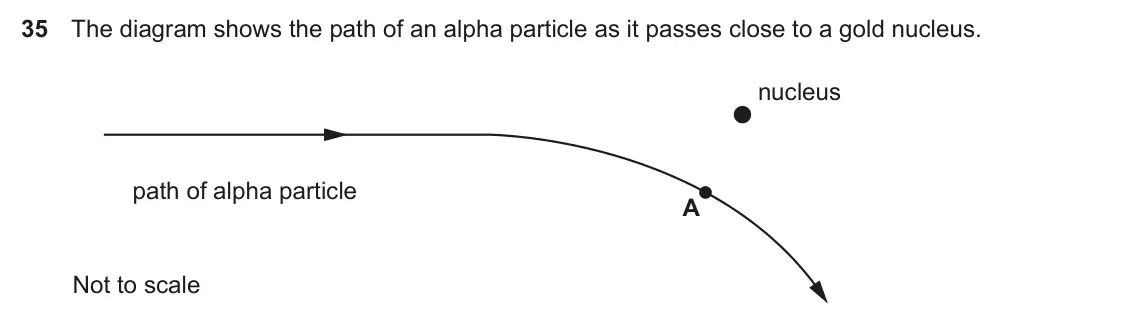
Q4(c)(iii)
The whole paper ↗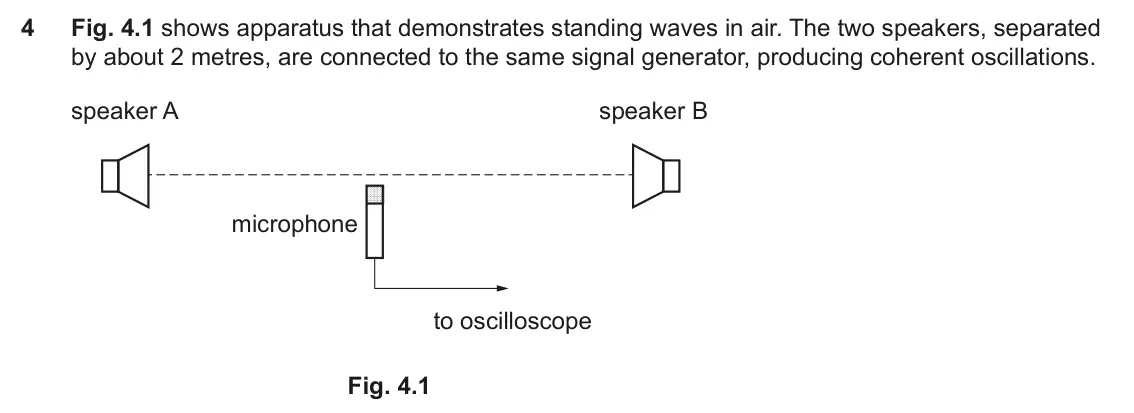
- Your answer
- Your answer
Q35(b)
The whole paper ↗
Q38(a)(iii)
The whole paper ↗Q38(b)(ii)
The whole paper ↗Q38(b)(iv)
The whole paper ↗Q1(a)(iii)
The whole paper ↗Q33(c)(ii)
The whole paper ↗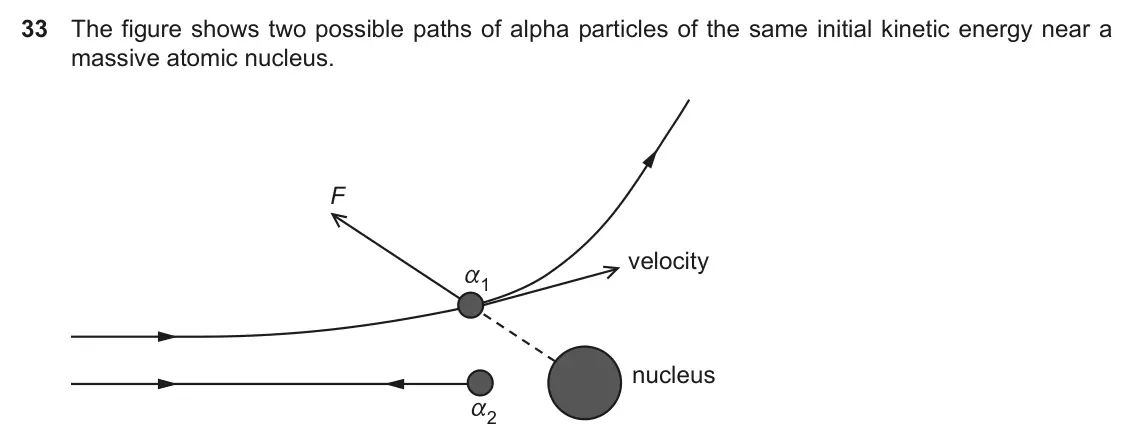
Q42(a)(i)
The whole paper ↗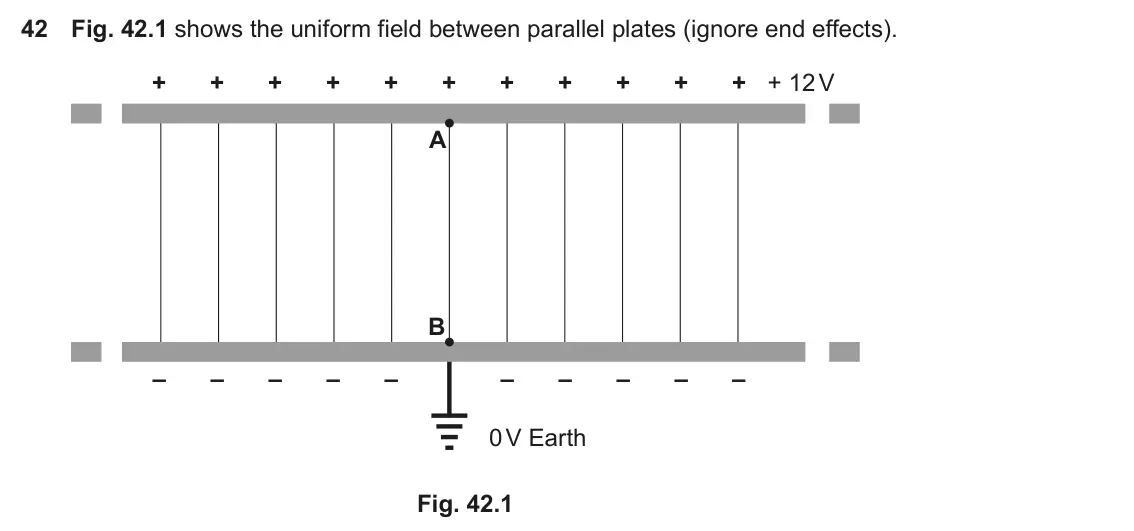
Q42(a)(ii)
The whole paper ↗- Your answer
Q37(b)(i)
The whole paper ↗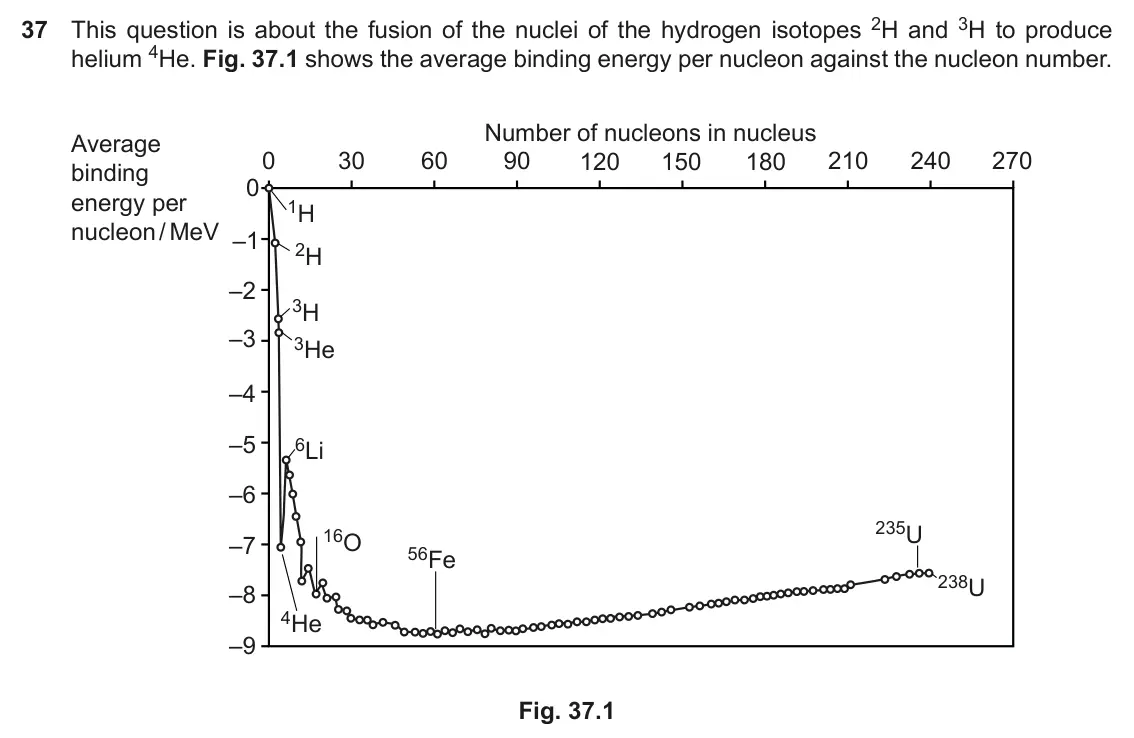
Q37(b)(ii)
The whole paper ↗
All 26 questions on Electric potential and equipotentials, as a list
- June 2025, Paper 1, Q23 (1 mark): Which quantity gives the strength of an electric field around an isolated charge? A The area under a graph of electric field versus distance B The area under a
- June 2025, Paper 2, Q2(b)(i) (2 marks): Draw field lines linking the points on the bottom of the cloud marked A to E to points of zero potential. [2]
- June 2025, Paper 2, Q2(b)(ii) (2 marks): State and explain where the force on free electrons will be the greatest in the region between the zero potential surface and the lower edge of the cloud. [2]
- June 2023, Paper 1, Q29 (1 mark): An electron is at a distance of 2.0 × 10⁻¹⁰ m from a proton. Point X is separated from each particle by 1.0 × 10⁻¹⁰ m. 1.0 × 10⁻¹⁰ m 1.0 × 10⁻¹⁰ m X proton elec
- June 2023, Paper 1, Q35(a) (2 marks): The kinetic energy of the particle when it is far from the nucleus is 8.0 × 10⁻¹³ J. At point A, the point of closest approach to the nucleus, the kinetic energ
- June 2023, Paper 2, Q4(c)(iii) (2 marks): Calculate the potential energy of an electron at a distance of 1.2 × 10⁻¹⁰ m from a proton. potential energy = J [2]
- June 2022, Paper 1, Q19 (1 mark): Which feature represents the magnitude of electrical field strength at a point? Your answer [1]
- June 2022, Paper 1, Q20 (1 mark): Which feature represents a change in electrical potential between two points? Your answer [1]
- June 2022, Paper 1, Q35(b) (2 marks): Explain why the electric potential due to the charged sphere decreases more gradually with distance from the sphere than the decrease of electric field strength
- June 2022, Paper 2, Q9 (6 marks): 9* This question is about the slow rate of fusion in the Sun (lines 33 – 47). The temperature of the core of the Sun is 1.5 × 10⁷ K. Assuming that two protons n
- November 2021, Paper 1, Q38(a)(iii) (2 marks): State what the area under the graph between two r values represents and make an estimate of its value between the marked r values 52 and 160 pm. Area represents
- November 2021, Paper 1, Q38(b)(ii) (2 marks): Fig. 38.3 shows the variation of kinetic energy and potential energy of the electron with the radius of its orbit r. 20 energy / eV 10 kinetic energy 0 potentia
- November 2021, Paper 1, Q38(b)(iv) (2 marks): In Bohr’s quantised model the radius of orbit for the ground state of the electron (lowest total energy) is given by the equation: ε 0h 2 r = π m e 2 where m an
- November 2021, Paper 2, Q1(a)(iii) (1 mark): Explain why electrical potential can be positive or negative. [1]
- November 2020, Paper 1, Q33(c)(ii) (2 marks): A 7.7 MeV alpha particle makes a head-on collision with an aluminium nucleus 2 7 3 Al . 1 Calculate the distance of closest approach between the centres of the
- November 2020, Paper 1, Q42(a)(i) (1 mark): Draw on Fig. 42.1 above the equipotential line at + 8.0 V. [1] potential / V 12 0 A B displacement Fig. 42.2
- November 2020, Paper 1, Q42(a)(ii) (1 mark): Draw on Fig. 42.2 a line which shows how the potential varies along the field line AB. [1]
- June 2019, Paper 1, Q12 (1 mark): A positive and a negative charge of equal magnitude are placed near each other. Which diagram best represents the electric field of the two charges? A B – – + +
- June 2019, Paper 1, Q37(b)(i) (2 marks): To estimate the temperature at which 2H and 3H nuclei will fuse, a student writes down the formula: e2 4πε0R ≈ k T Explain what the two sides of the approximati
- June 2019, Paper 1, Q37(b)(ii) (1 mark): Use the equation in (b)(i) to estimate this temperature when R ≈ 2 × 10⁻¹⁴ m. temperature = K [1]
- June 2018, Paper 1, Q29 (1 mark): The electric potential at a distance r from a positive point charge Q is 450 V. The potential increases to 500 V when the distance from the point charge decreas
- June 2018, Paper 1, Q41(a)(ii) (2 marks): Calculate the electric potential at X. potential = V [2] Question 41 continues on page 35
- June 2018, Paper 2, Q5(a)(ii) (3 marks): We can assume that the alpha particles come to rest for an instant at the point where the electrical potential energy of the particle is equal to the kinetic en
- June 2017, Paper 1, Q41(a) (2 marks): On the appropriate figure(s) mark a point • N where the electric field is zero and a point • V [2] where the electric potential is zero.
- June 2017, Paper 1, Q41(b) (2 marks): On each of Fig. 41.1 and 41.2 draw three complete equipotential lines. [2]
- June 2017, Paper 1, Q41(d) (6 marks): Fig. 41.1 shows the electric field pattern near two protons and Fig. 41.2 the electric field pattern near a proton and an electron. Fig. 41.1 Fig. 41.2 (d)* Fig
Questions, mark schemes and examiner’s reports are © OCR, from their published past papers. Plumi isn’t affiliated with any exam board. Want whole papers? OCR A-Level Physics B past papers.
The Plumi iPad app also offers exam-style questions with AI feedback on your handwritten working.