Skip to content
Try on iPad

Style

Get started
Whole past papers

Eduqas GCSE Computer Science questions by topic

Getting your paper ready…

Eduqas GCSE Computer Science312 questions

Topics Pick as many as you like. Open one to choose its sub-topics.

By area

Paper
All papers
Exam
All years
Calculations
Difficulty
More filters
Exam boards
Eduqas

Loading the full question list…

312 questions

More options
  1. Q1(a)(i)June 2025 · Component 11 markWarm-up

    1
    Setup for original question 1(a)(i)

    Loading the question setup…

    Original question 1(a)(i): Control unit (CU) [1]

    Loading the question…

    The whole paper ↗
  2. Q1(a)(ii)June 2025 · Component 11 markWarm-up

    2
    Original question 1(a)(ii): Program counter (PC) [1]

    Loading the question…

    The whole paper ↗
  3. Q1(a)(iii)June 2025 · Component 11 markWarm-up

    3
    Original question 1(a)(iii): Accumulator (ACC) [1]

    Loading the question…

    The whole paper ↗
  4. Q1(b)(i)June 2025 · Component 14 marksChallenge

    4
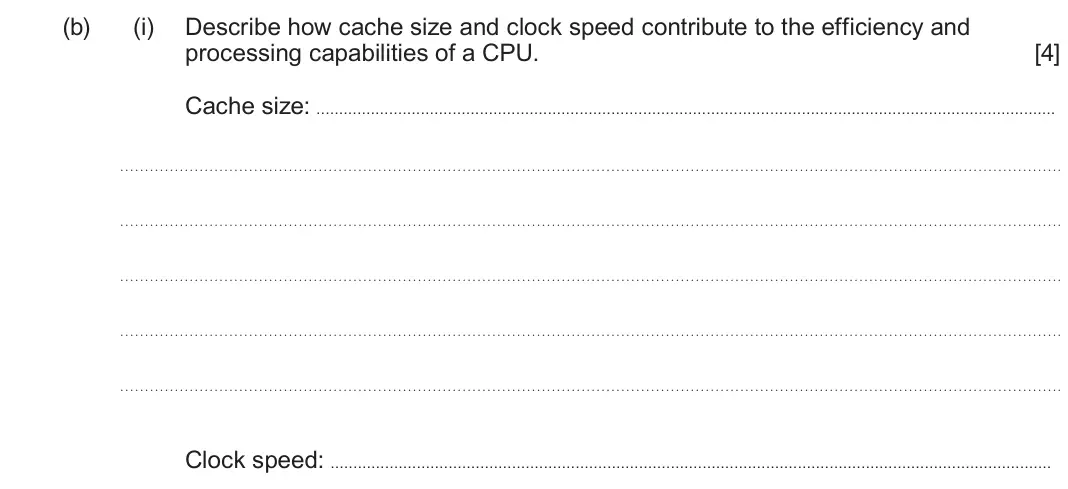
    Original question 1(b)(i): Describe how cache size and clock speed contribute to the efficiency and processing capabilities of a CPU. [4] Cache size: Clock speed:

    Loading the question…

    The whole paper ↗
  5. Q1(b)(ii)June 2025 · Component 12 marksCore

    5
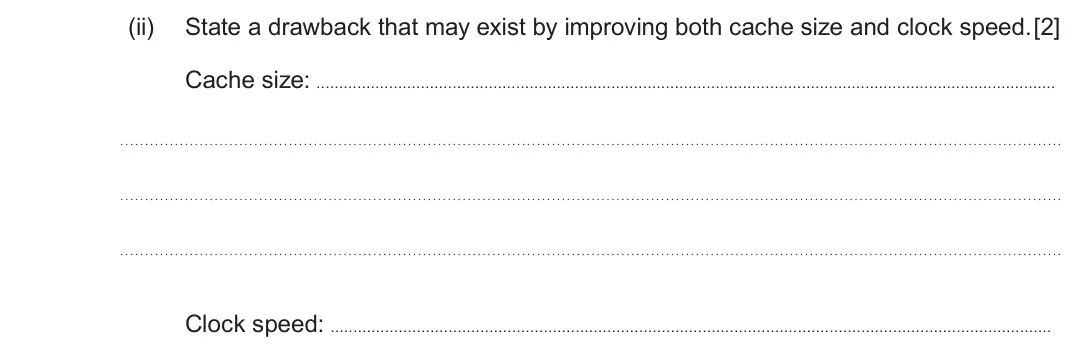
    Original question 1(b)(ii): State a drawback that may exist by improving both cache size and clock speed. [2] Cache size: Clock speed:

    Loading the question…

    The whole paper ↗
  6. Q2(a)June 2025 · Component 13 marksCore

    6
    Setup for original question 2(a)

    Loading the question setup…

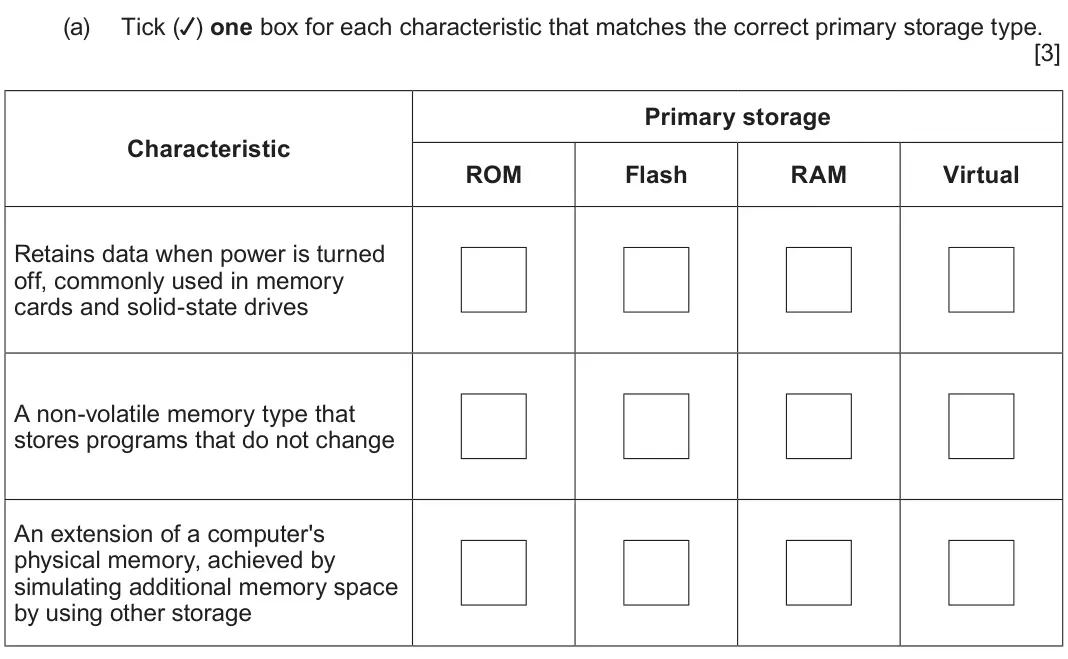
    Original question 2(a): Tick (√) one box for each characteristic that matches the correct primary storage type. [3] Primary storage Characteristic ROM Flash RAM Virtual Retains data wh

    Loading the question…

    The whole paper ↗
  7. Q2(b)June 2025 · Component 13 marksStretch

    7
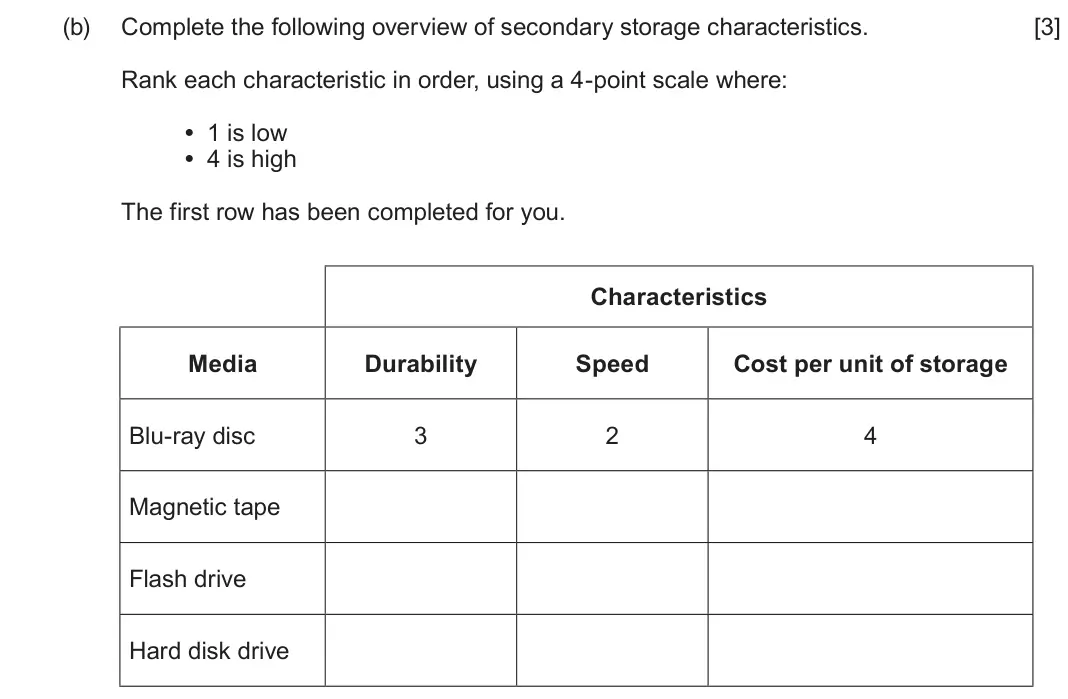
    Original question 2(b): Complete the following overview of secondary storage characteristics. [3] Rank each characteristic in order, using a 4-point scale where: • 1 is low • 4 is high

    Loading the question…

    The whole paper ↗
  8. Q3(a)June 2025 · Component 15 marksChallenge

    8
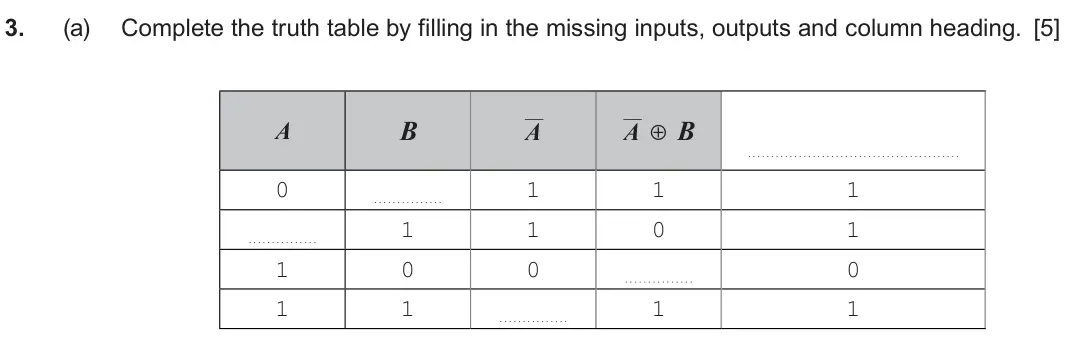
    Original question 3(a): Complete the truth table by filling in the missing inputs, outputs and column heading. [5] ―A ―A ⊕ B A B 0 1 1 1 1 1 0 1 1 0 0 0 1 1 1 1

    Loading the question…

    The whole paper ↗
  9. Q3(b)June 2025 · Component 16 marksChallenge

    9
    Original question 3(b): Simplify the following Boolean expression using Boolean identities and rules. Clearly show each step. [6] Do not use truth tables to simplify the expression. Y.

    Loading the question…

    The whole paper ↗
  10. Q4(a)June 2025 · Component 13 marksCore

    10
    Setup for original question 4(a)

    Loading the question setup…

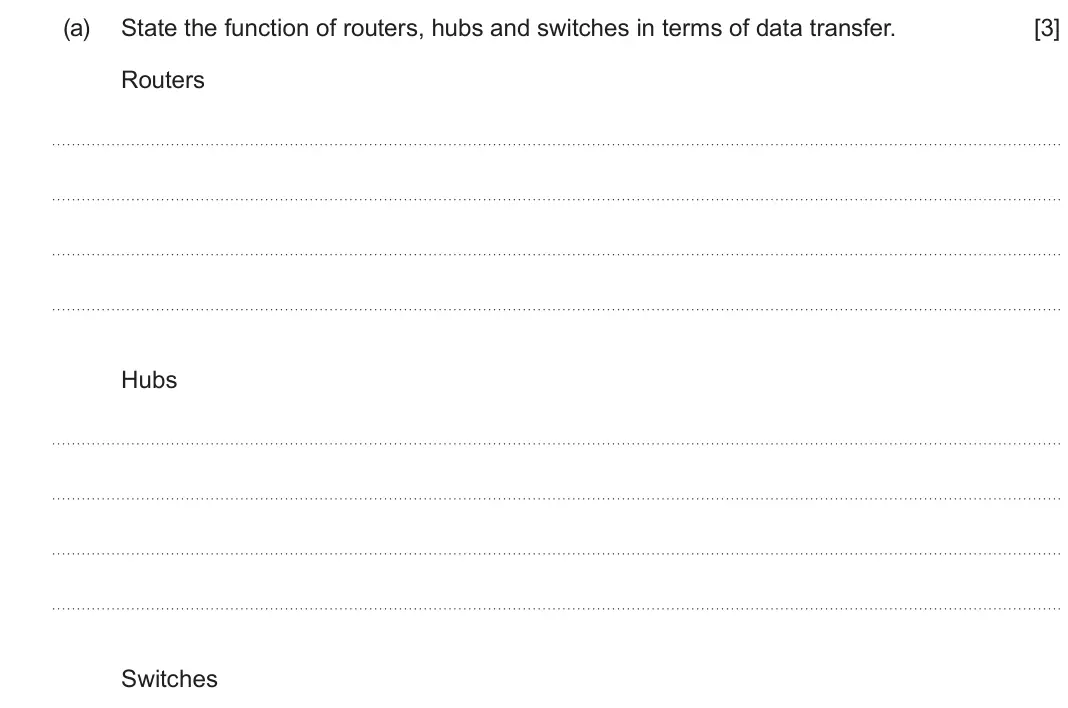
    Original question 4(a): State the function of routers, hubs and switches in terms of data transfer. [3] Routers Hubs Switches

    Loading the question…

    The whole paper ↗
  11. Q4(b)June 2025 · Component 14 marksChallenge

    11
    Original question 4(b): Outline the Open Systems Interconnection (OSI) model. [4]

    Loading the question…

    The whole paper ↗
  12. Q5(a)June 2025 · Component 14 marksChallenge

    12
    Setup for original question 5(a)

    Loading the question setup…

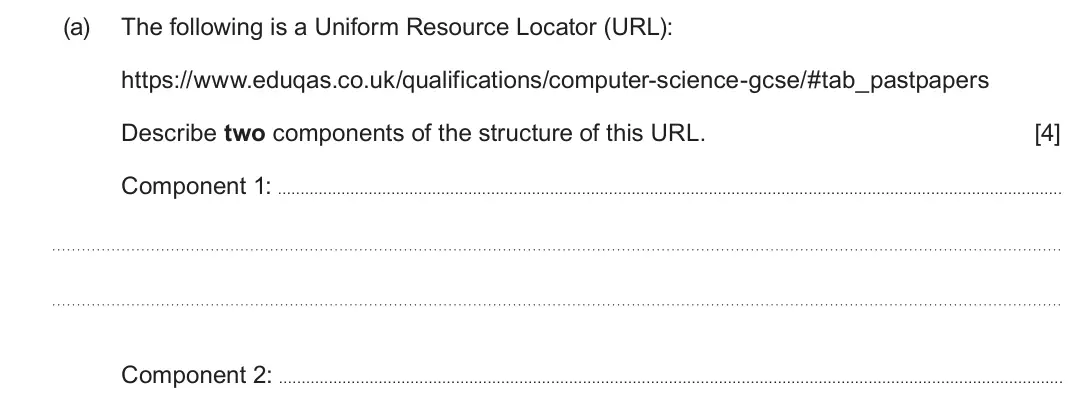
    Original question 5(a): The following is a Uniform Resource Locator (URL): https://www.eduqas.co.uk/qualifications/computer-science-gcse/#tab_pastpapers Describe two components of the

    Loading the question…

    The whole paper ↗
  13. Q5(b)June 2025 · Component 16 marksChallenge

    13
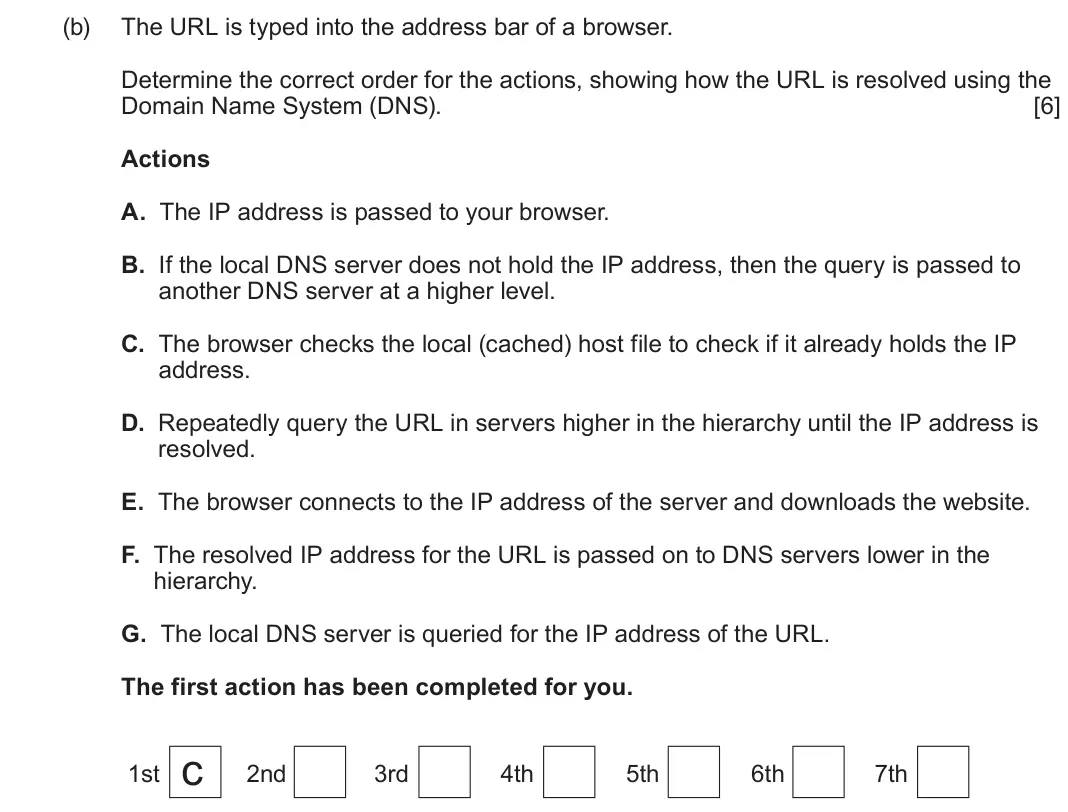
    Original question 5(b): The URL is typed into the address bar of a browser. Determine the correct order for the actions, showing how the URL is resolved using the Domain Name System (D

    Loading the question…

    The whole paper ↗
  14. Q6(a)(i)June 2025 · Component 11 markWarm-up

    14
    Original question 6(a)(i): The smallest denary value that can be represented by a single digit hexadecimal number. [1]

    Loading the question…

    The whole paper ↗
  15. Q6(a)(ii)June 2025 · Component 12 marksCore

    15
    Original question 6(a)(ii): The largest unsigned binary value that can be stored in a 4-bit register. Convert the value into denary. [2]

    Loading the question…

    The whole paper ↗
  16. Q6(b)June 2025 · Component 12 marksCore

    16
    Original question 6(b): Carry out binary addition on the following 8-bit binary numbers: • 01101010 • 10000111 [2]

    Loading the question…

    The whole paper ↗
  17. Q6(c)June 2025 · Component 13 marksStretch

    17
    Original question 6(c): Demonstrate how an arithmetic shift right is carried out on the following 4-bit binary number. Describe the impact of the shift. [3] 0001

    Loading the question…

    The whole paper ↗
  18. Q7(a)June 2025 · Component 11 markWarm-up

    18
    Setup for original question 7(a)

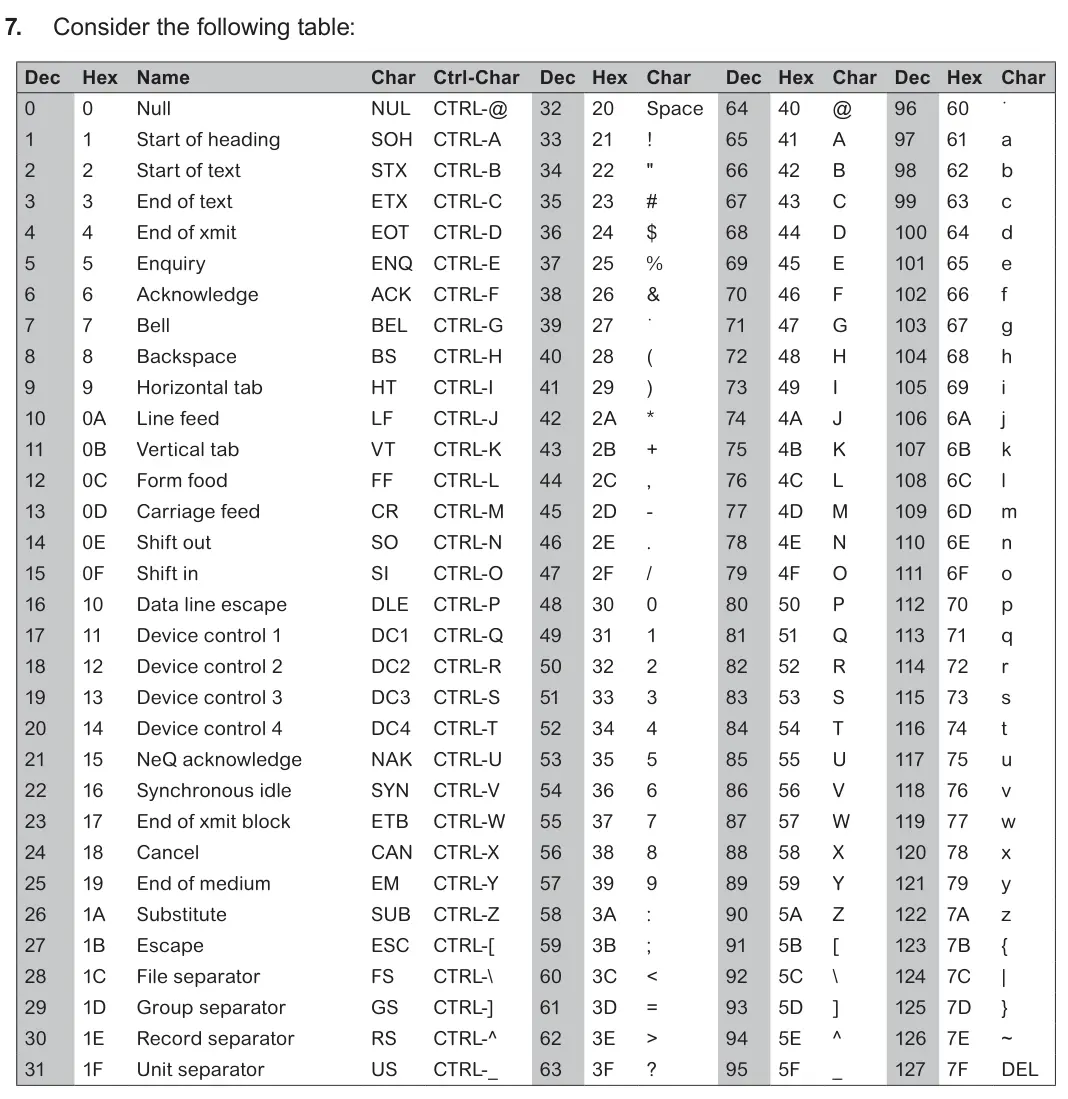
    Loading the question setup…

    Original question 7(a): 7. Consider the following table: Dec Hex Name Char Ctrl-Char Dec Hex Char Dec Hex Char Dec Hex Char 0 0 Null NUL CTRL-@ 32 20 Space 64 40 @ 96 60 ˙ 1 1 Start of

    Loading the question…

    The whole paper ↗
  19. Q7(b)June 2025 · Component 12 marksCore

    19
    Original question 7(b): 7. Consider the following table: Dec Hex Name Char Ctrl-Char Dec Hex Char Dec Hex Char Dec Hex Char 0 0 Null NUL CTRL-@ 32 20 Space 64 40 @ 96 60 ˙ 1 1 Start of

    Loading the question…

    The whole paper ↗
  20. Q7(c)June 2025 · Component 13 marksStretch

    20
    Original question 7(c): 7. Consider the following table: Dec Hex Name Char Ctrl-Char Dec Hex Char Dec Hex Char Dec Hex Char 0 0 Null NUL CTRL-@ 32 20 Space 64 40 @ 96 60 ˙ 1 1 Start of

    Loading the question…

    The whole paper ↗
Browse all topics

Questions, mark schemes and examiner’s reports are © WJEC Eduqas, from their published past papers. Plumi isn’t affiliated with any exam board. Want whole papers? Eduqas GCSE Computer Science past papers.

The Plumi iPad app also offers exam-style questions with AI feedback on your handwritten working.