 plumi
Levels of computer language: Eduqas GCSE Computer Science questions
Eduqas GCSE Computer Science past-paper questions on 7.1 Levels of computer language, 2018–2025, with mark schemes and examiner’s reports where available.
Getting your paper ready…
Eduqas GCSE Computer ScienceLevels of computer language312 questions
Paper
All papers
Exam
All years
Calculations
Difficulty
More filters
Exam boards
Eduqas
Loading the full question list…



All 5 questions on Levels of computer language, as a list
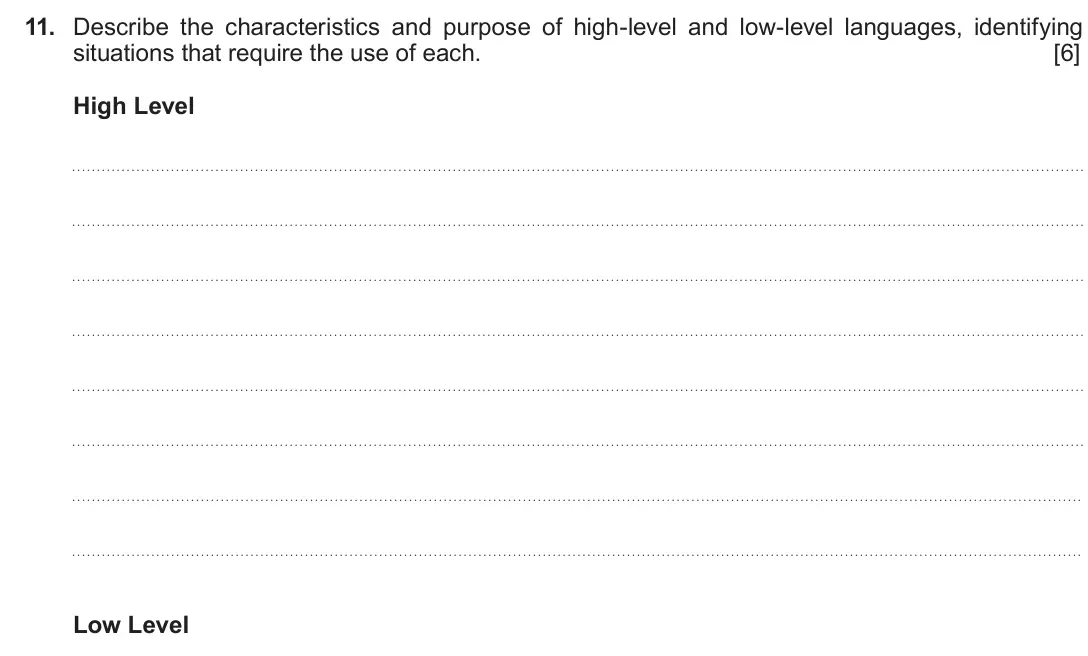
- Autumn 2020, Component 1, Q11 (6 marks): 11. Describe the characteristics and purpose of high-level and low-level languages, identifying situations that require the use of each. [6] High Level Low Leve
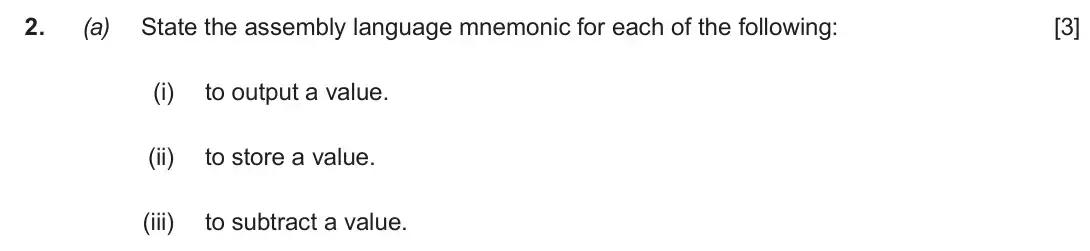
- Autumn 2020, Component 2, Q2(a) (3 marks): State the assembly language mnemonic for each of the following: [3] (i) to output a value. (ii) to store a value. (iii) to subtract a value.
- June 2019, Component 2, Q3 (9 marks): 3. An assembly language program is required which can subtract one number from another. Write a program in assembly language to allow the user to input two numb
- June 2018, Component 1, Q6(a) (4 marks): Describe why high-level programming languages are preferred for many programming tasks. [4]
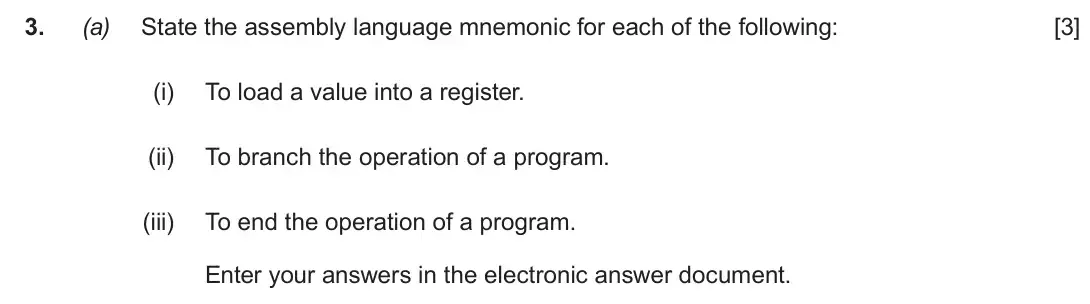
- June 2018, Component 2, Q3(a) (3 marks): State the assembly language mnemonic for each of the following: [3] (i) To load a value into a register. (ii) To branch the operation of a program. (iii) To end
Questions, mark schemes and examiner’s reports are © WJEC Eduqas, from their published past papers. Plumi isn’t affiliated with any exam board. Want whole papers? Eduqas GCSE Computer Science past papers.
The Plumi iPad app also offers exam-style questions with AI feedback on your handwritten working.