 plumi
Electric potential: uniform and radial fields: Edexcel International A Level Physics questions
Edexcel International A Level Physics past-paper questions on 4.4.1.3 Electric potential: uniform and radial fields, 2019–2025, with mark schemes and examiner’s reports where available.
Paper
All papers
Exam
All years
Calculations
- Your answer
Q12(a)
The whole paper ↗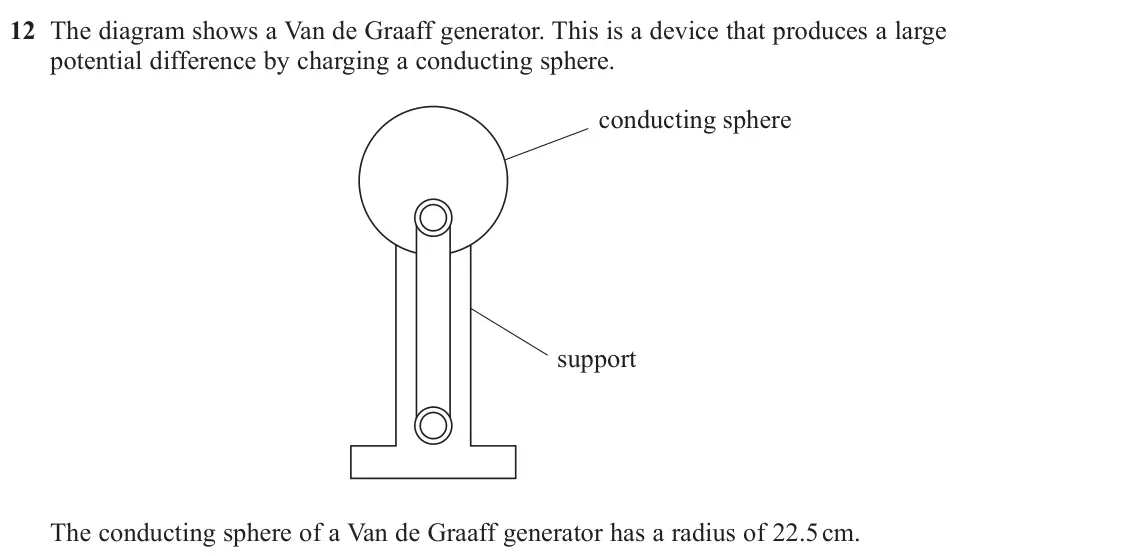
Q16(b)
The whole paper ↗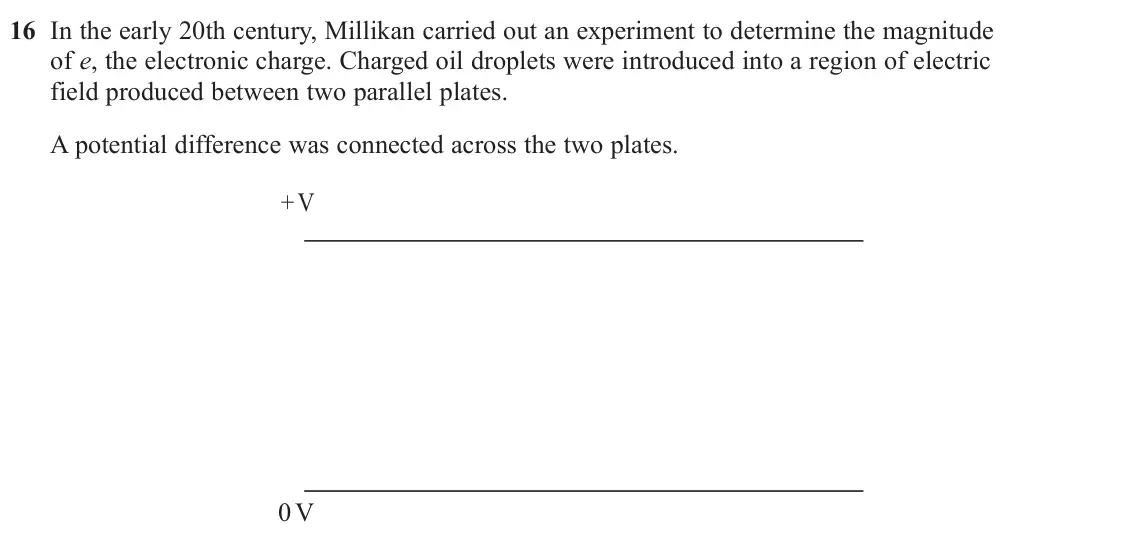
Q16(a)(ii)
The whole paper ↗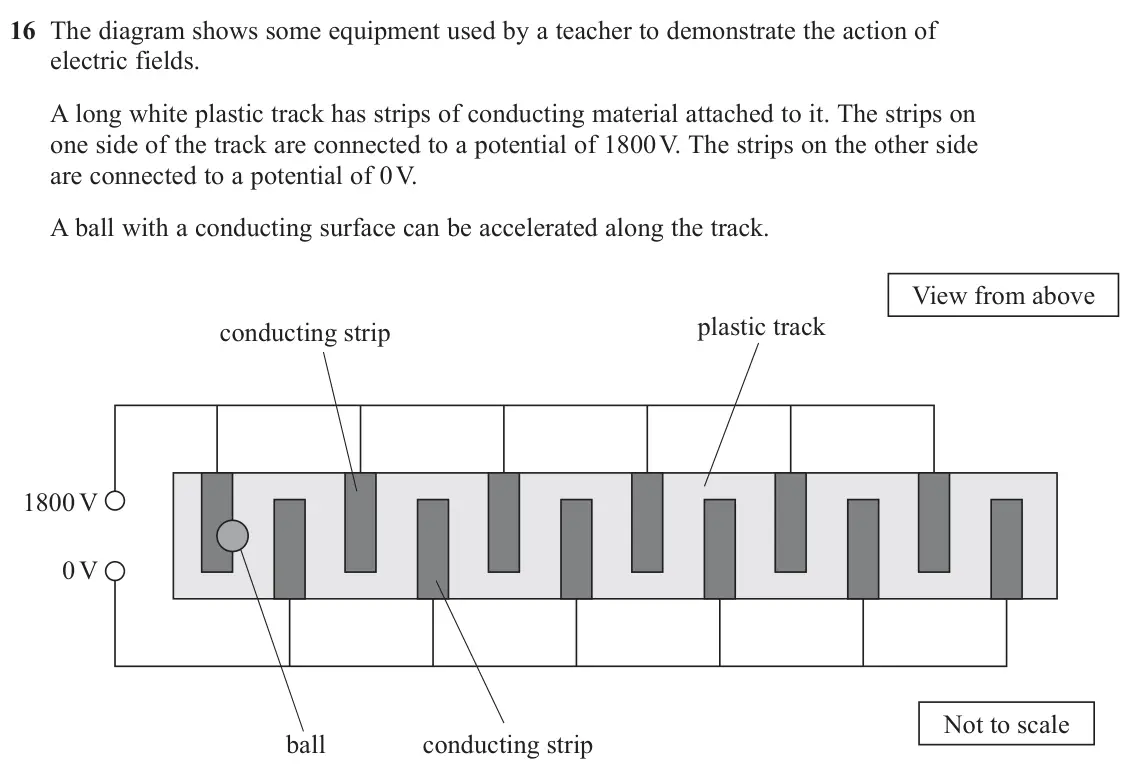
Q16(a)(iii)
The whole paper ↗Q17(b)(i)
The whole paper ↗
Q18(b)
The whole paper ↗
Q15(a)
The whole paper ↗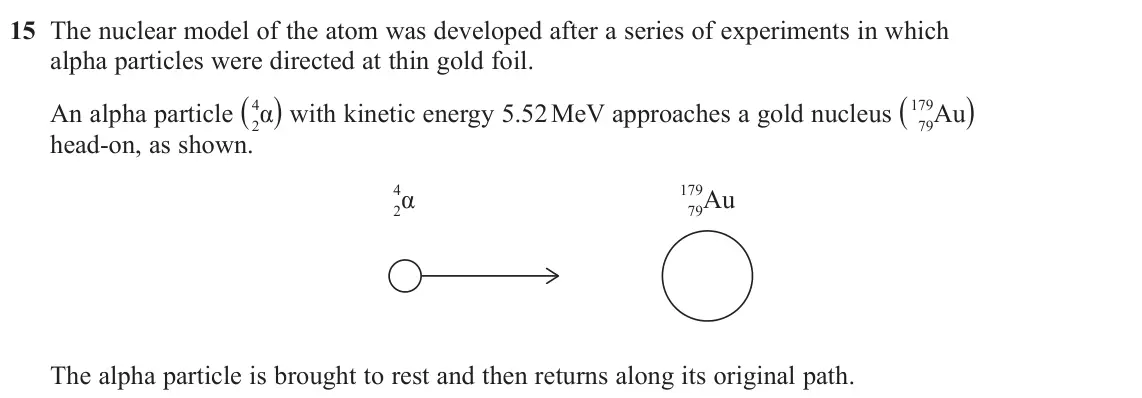
Q20(a)
The whole paper ↗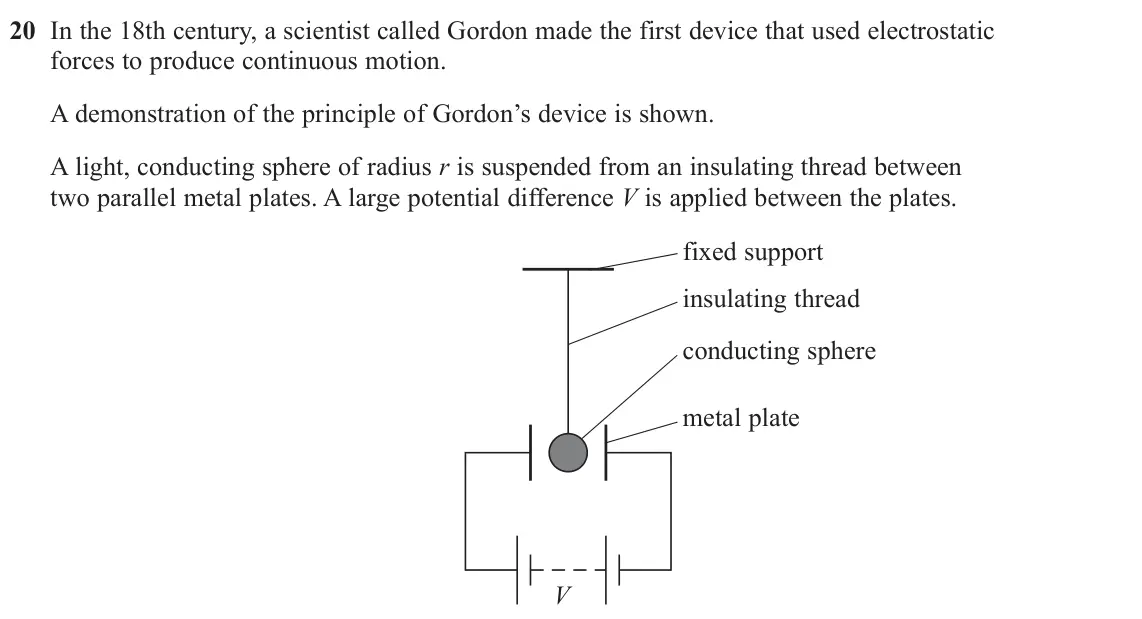
Q22(b)(i)
The whole paper ↗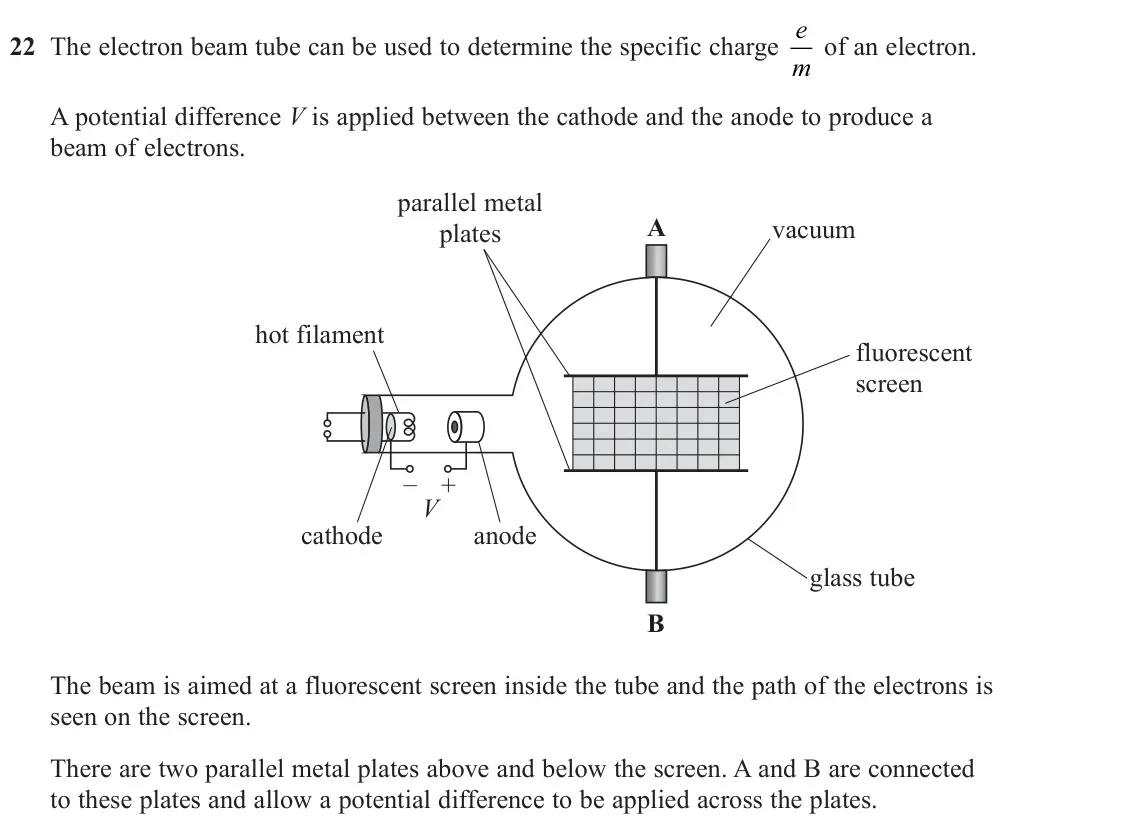
Q17(b)(i)
The whole paper ↗
Q17(b)(ii)
The whole paper ↗Q12(c)
The whole paper ↗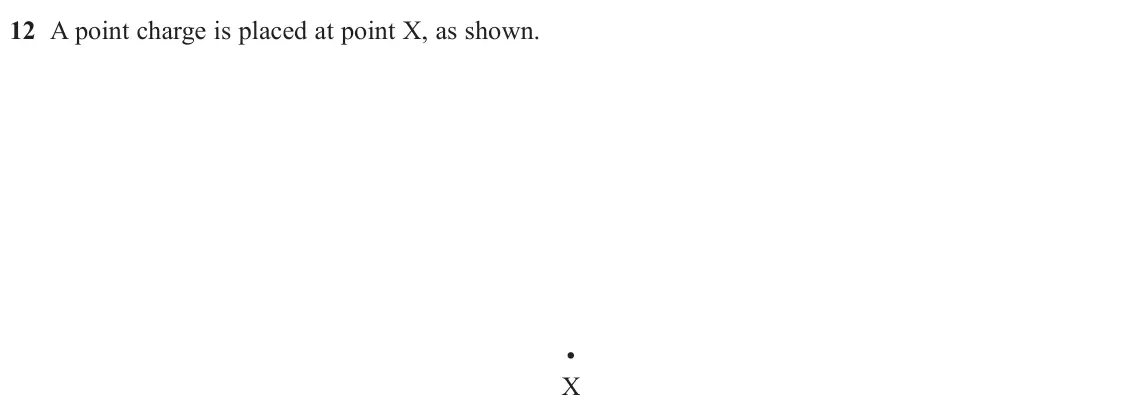
Q17(a)(ii)
The whole paper ↗Q15(b)(ii)
The whole paper ↗
Q15(b)(iii)
The whole paper ↗Q18(a)(i)
The whole paper ↗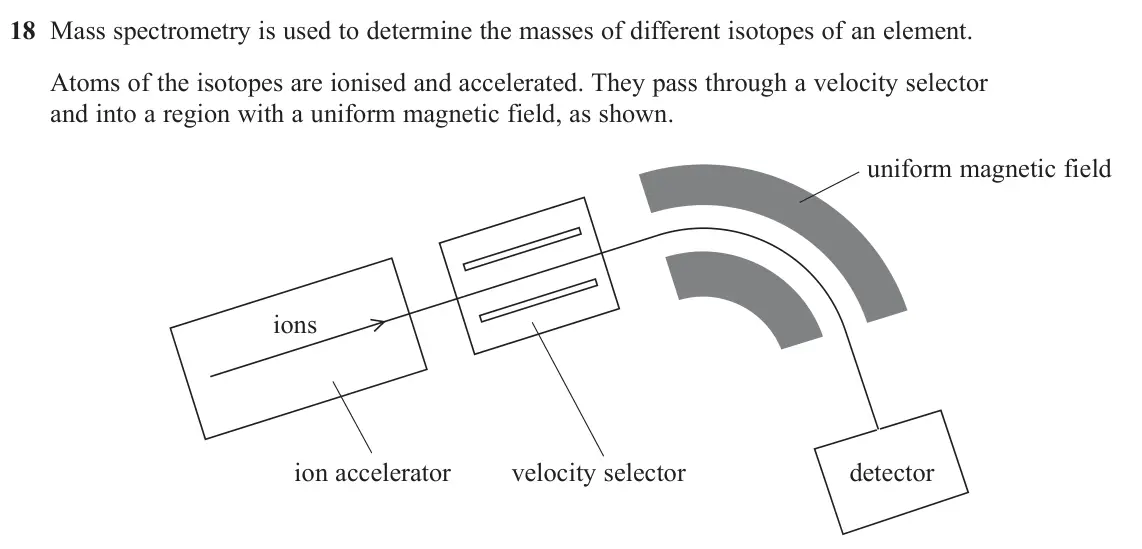
Q18(a)(ii)
The whole paper ↗Q18(b)(ii)
The whole paper ↗
All 33 questions on Electric potential: uniform and radial fields, as a list
- January 2025, Unit 4, Q9 (1 mark): The graph shows how electric field strength varies with distance from a charged conducting sphere. Electric field strength, E 0 0.5 Distance / m Which of the fo
- January 2025, Unit 4, Q12(a) (2 marks): The electric potential produced at the surface of the conducting sphere is 4 V. 1.75 × 10 −7 C. Show that the charge on the sphere is about 4.4 × 10 (2)
- January 2025, Unit 4, Q16(b) (5 marks): A charged oil drop entered the region of electric field between the plates. The plates were 1.5 cm apart. A potential difference of 85 V was applied between the
- October 2024, Unit 4, Q16(a)(ii) (2 marks): When placed on the first strip, the ball is charged to a potential of 1800 V. Show that the charge on the ball is about 2 × 10⁻⁹ C. radius of ball = 0.95 cm (2)
- October 2024, Unit 4, Q16(a)(iii) (4 marks): There is a force on the ball due to the uniform electric field between the strips. Deduce whether this is the only force acting to accelerate the ball at about
- June 2024, Unit 4, Q17(b)(i) (3 marks): Calculate the minimum energy, in joules, required for an electron leaving the surface of the spacecraft to reach the surface of the satellite. Assume that the c
- June 2024, Unit 4, Q18(b) (5 marks): The distance across the gap in the spark plug is 0.75 mm. Calculate the electric field strength in the gap when the switch is opened. Assume the electric field
- January 2024, Unit 4, Q5 (1 mark): A potential difference is applied across two parallel metal plates. Which of the following graphs shows how the electric field strength E varies with distance d
- October 2023, Unit 4, Q15(a) (4 marks): Calculate the minimum distance between the alpha particle and the gold nucleus. (4) Minimum distance =
- October 2023, Unit 4, Q20(a) (5 marks): There is an electrostatic force on the sphere when the sphere is charged. The capacitance C of the sphere is given by C = 4πε0r where r is the radius of the con
- October 2023, Unit 4, Q22(b)(i) (3 marks): Show that the maximum speed of the electrons as they emerge from the anode is about 1.7 × 10 7 m s –1. (3)
- June 2023, Unit 4, Q17(b)(i) (2 marks): Show that the charge on the sphere is about 10 nC. potential at surface of sphere = 5000 V radius of sphere = 20 mm (2)
- June 2023, Unit 4, Q17(b)(ii) (3 marks): The sphere moves away from the positive plate and comes to rest at an angle θ to the vertical. insulating thread θ +5000 V 0 V –4 N. Show that the horizontal fo
- January 2023, Unit 4, Q12(c) (3 marks): The –4.5 nC charge is moved from a distance of 4.0 cm from X to a distance of 9.0 cm from X. Calculate the work done on the –4.5 nC charge. (3) Work done =
- January 2023, Unit 4, Q17(a)(ii) (2 marks): An experiment was carried out using similar apparatus. Show that v was about 3 × 10 7 m s −1 . d = 1.5 cm B = 5.5 × 10 −4 T V = 231 V (2)
- October 2022, Unit 4, Q15(b)(ii) (3 marks): The 40 V line is drawn to scale correctly. Deduce whether the 10 V equipotential line is in the correct scaled position. (3)
- October 2022, Unit 4, Q15(b)(iii) (3 marks): An alpha particle moves from the +10 V potential to the +40 V potential. Calculate the increase in the potential energy of the alpha particle in eV. (3) Increas
- October 2022, Unit 4, Q18(a)(i) (2 marks): The electric field strength between the anode and cathode is 7.5 × 10 Calculate the potential difference between the anode and cathode. (2) Potential difference
- October 2022, Unit 4, Q18(a)(ii) (4 marks): A stationary oxygen ion is formed half-way between the anode and cathode with a charge of +1.6 × 10 –19 C. Show that the velocity of the ion as it passes throug
- October 2022, Unit 4, Q18(b)(ii) (3 marks): The velocity selector is used to produce a beam of oxygen ions travelling in a straight line with a speed of 5.0 × 10 5 m s –1. Calculate the magnetic flux dens
- June 2022, Unit 4, Q16(b)(i) (4 marks): Show that the closest distance these alpha particles can get to a gold nucleus is about 5 × 10⁻¹⁴ m. (4)
- January 2022, Unit 4, Q6 (1 mark): When a potential difference is applied across the parallel metal plates, the electrons are deflected. Which of the following changes would decrease the deflecti
- January 2022, Unit 4, Q13(b) (2 marks): One balloon is removed and the remaining balloon returns to its original position. Calculate the electric potential at a distance of 0.30 m from the centre of t
- October 2021, Unit 4, Q6 (1 mark): The electric potential V varies with the distance r from a charged object as shown. V 0 D r A B C At which distance, A, B, C or D, does the electric field stren
- October 2021, Unit 4, Q11(a) (3 marks): Calculate the electric potential at a distance 26.6 × 10⁻¹² m from a helium 4 2He nucleus. (3) Electric potential =
- October 2021, Unit 4, Q11(b) (1 mark): State one assumption made for this calculation. (1)
- October 2021, Unit 4, Q16(b)(i) (3 marks): Show that the force on an ionised atom due to the electric field is about 2.6 × 10⁻¹³ N. charge on ionised atom = 1.60 × 10⁻¹⁹ C distance between plates = 6.40
- June 2021, Unit 4, Q16(c) (4 marks): The charges at X and Y are replaced by charges of twice the magnitude. 8.0 cm 2.5 cm 2.5 cm C D X Y C and D are points between the charges. Determine the magnit
- January 2021, Unit 4, Q18(a) (5 marks): The diagram represents an alpha particle reflected back through 180° as it approached the nucleus of a gold atom. path of alpha particle nucleus of gold atom Ca
- January 2021, Unit 4, Q18(b) (4 marks): The diagram represents the path of an alpha particle with the same initial speed as in (a) that is deflected through a smaller angle. path of alpha particle nuc
- October 2020, Unit 4, Q14(c) (3 marks): We now know that the nucleus is positively charged. An alpha particle with kinetic energy of 6.29 MeV approaches a platinum nucleus and is repelled. The proton
- October 2020, Unit 4, Q18(b)(i) (3 marks): Calculate the energy of the electron as it emerges. potential difference between adjacent drift tubes = 80 kV (3) Energy of the electron =
- January 2020, Unit 4, Q2 (1 mark): At distance d from a point charge of magnitude q the potential is V. Which of the following is the potential at a distance 4d from a point charge of magnitude 2
Questions, mark schemes and examiner’s reports are © Pearson Edexcel, from their published past papers. Plumi isn’t affiliated with any exam board. Want whole papers? Edexcel International A Level Physics past papers.
The Plumi iPad app also offers exam-style questions with AI feedback on your handwritten working.