 plumi
Reactions of acyl chlorides: Edexcel International A Level Chemistry questions
Edexcel International A Level Chemistry past-paper questions on 15.D.2 Reactions of acyl chlorides, 2019–2025, with mark schemes and examiner’s reports where available.
Paper
All papers
Exam
All years
Calculations
- Your answer
Q23(b)(iii)
The whole paper ↗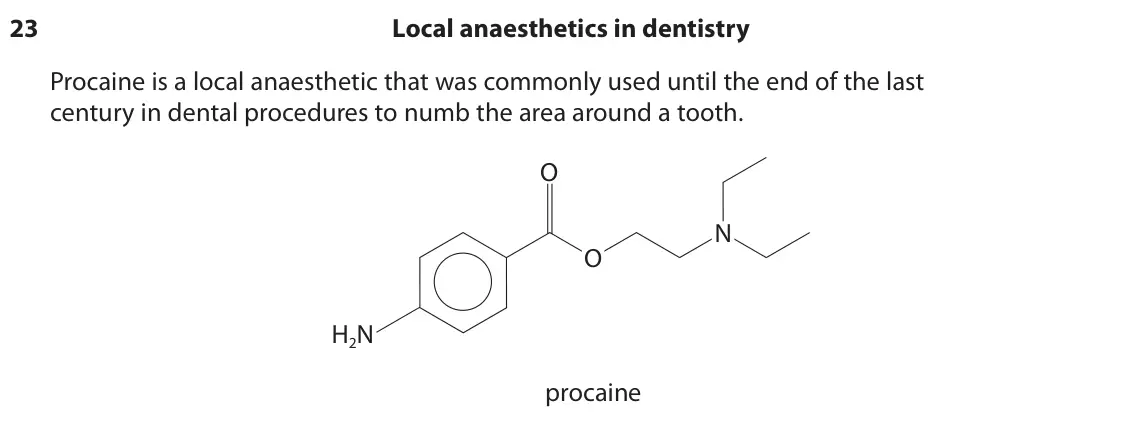
- Your answer
- Your answer
Q16(a)
The whole paper ↗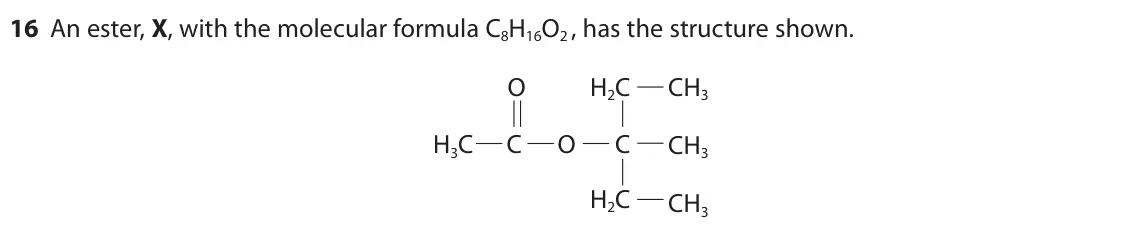
Q15(c)
The whole paper ↗
- Your answer
Q13(a)
The whole paper ↗ Your answer
Q14(c)
The whole paper ↗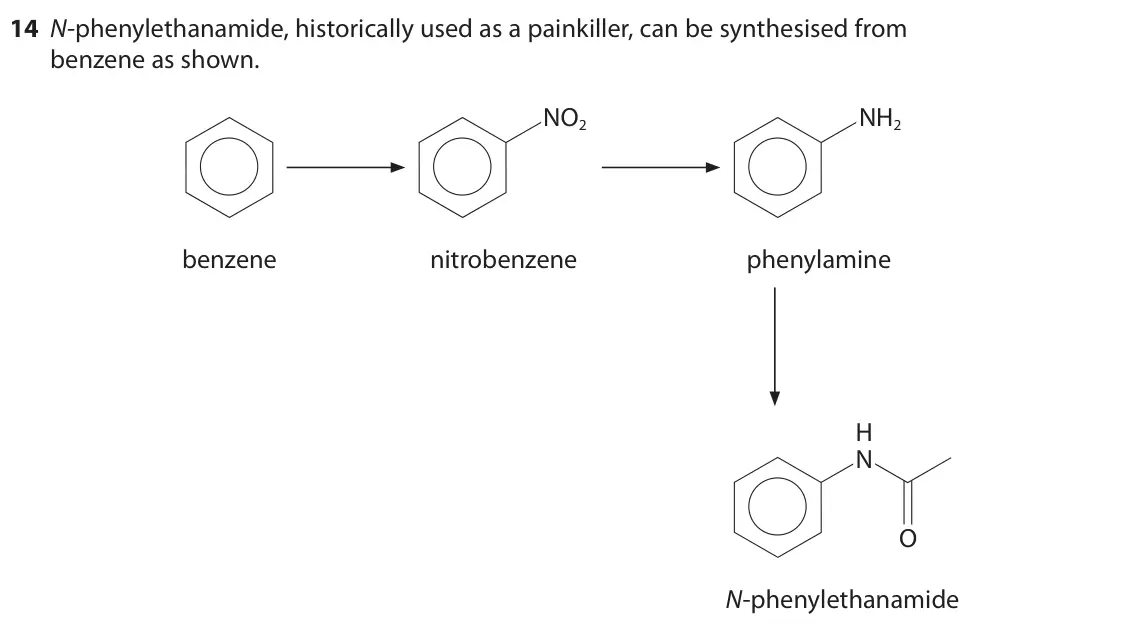
Q10(d)
The whole paper ↗ Your answer
Q21(b)(ii)
The whole paper ↗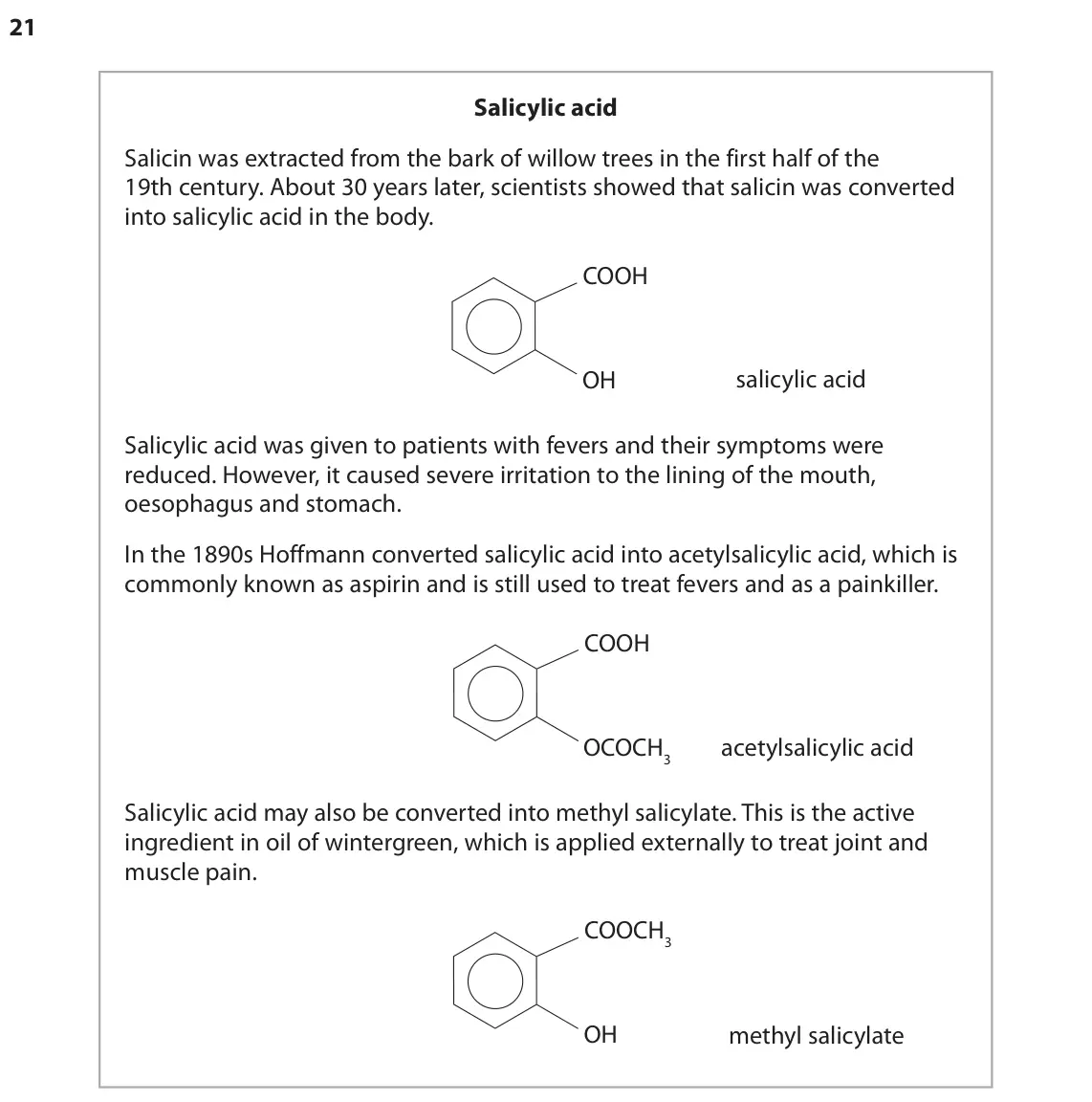
Q9(a)
The whole paper ↗ Your answer
Q9(b)
The whole paper ↗Your answerQ25(d)(iv)
The whole paper ↗
Q2(a)(i)
The whole paper ↗
Q2(d)(i)
The whole paper ↗Q2(e)
The whole paper ↗- Your answer
Q4(b)
The whole paper ↗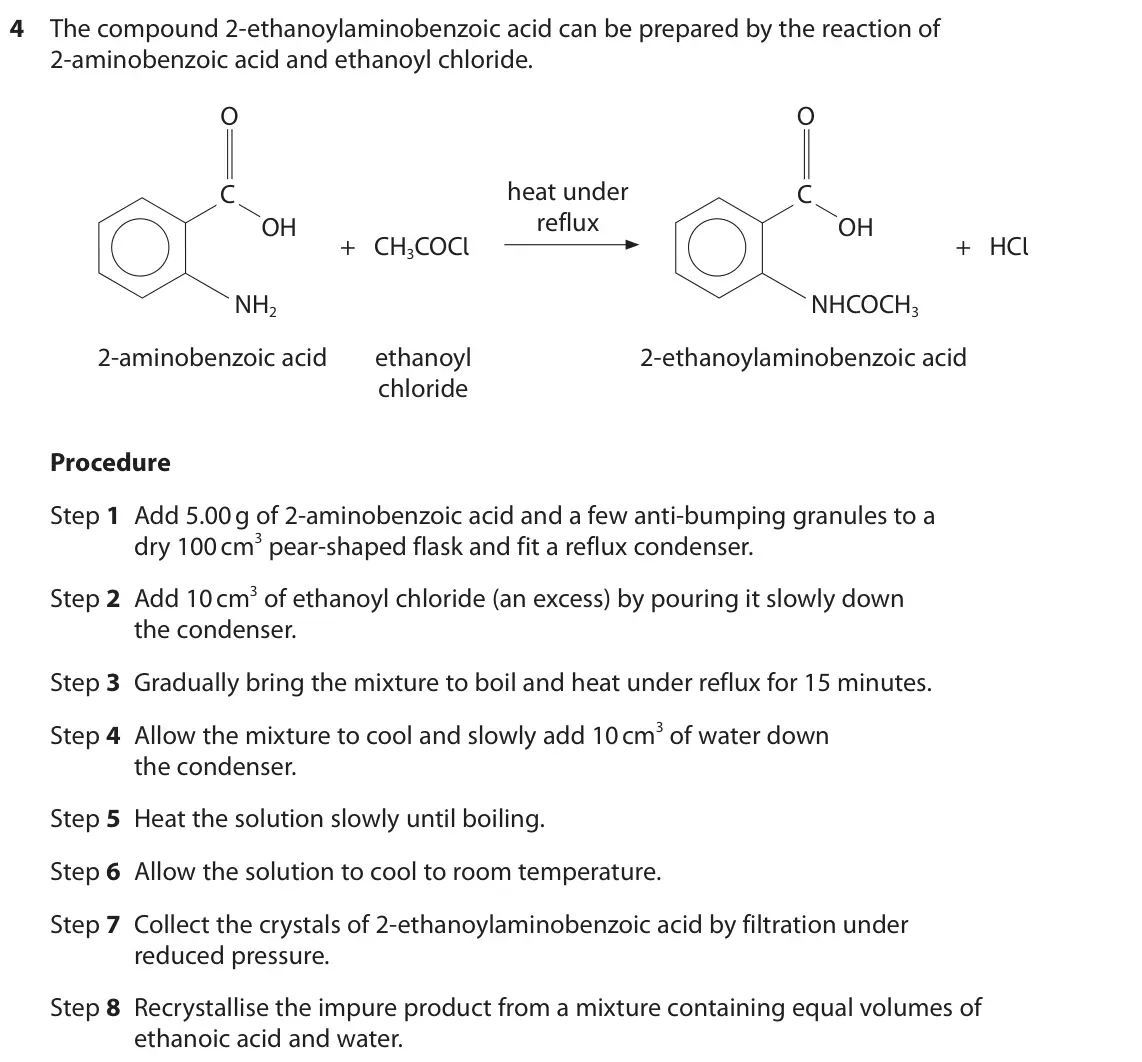
Q17(c)(i)
The whole paper ↗
All 36 questions on Reactions of acyl chlorides, as a list
- June 2025, Unit 4, Q2 (1 mark): Which of these statements about the reaction of ethanoyl chloride with ammonia is not correct? A an amide is formed B the reaction is exothermic C misty fumes a
- January 2025, Unit 5, Q23(b)(iii) (2 marks): For Step 5, name the type of reaction taking place and draw the skeletal formula of the reagent needed to carry out this reaction. (2) Type of reaction Skeletal
- October 2024, Unit 4, Q1 (1 mark): An ester has the structure shown. O O Which pair of reactants would form this ester, under suitable conditions? A butanoic acid and propan‑2‑ol B butanoyl chlor
- October 2024, Unit 4, Q13 (1 mark): Ethanoyl chloride reacts with ammonia, forming ethanamide. CH3COCl + NH3 → CH3CONH2 + HCl The first step of the mechanism forms the intermediate shown. :O– Cl H
- October 2024, Unit 4, Q16(a) (1 mark): Deduce the name of the alcohol used to synthesise X in a reaction with ethanoyl chloride. (1)
- October 2024, Unit 5, Q15(c) (2 marks): Butylamine reacts with ethanoyl chloride to form N-butylethanamide. Write an equation for this reaction using displayed formulae. (2)
- June 2024, Unit 4, Q11 (1 mark): Which statement(s) is/are correct? CH3CH2COCl reacts with 1 CH3NH2 to form CH3CH2CONHCH3 2 (CH3)2NH to form CH3CH2CON(CH3)2 3 (CH3)3N to form CH3CH2CON(CH3)3 A
- June 2024, Unit 5, Q13(a) (1 mark): What is the structure of the amide formed? (1) H O N A H O N B O N C O N D
- January 2024, Unit 5, Q14(c) (6 marks): In the final step of the synthesis, phenylamine reacts with either ethanoyl chloride or ethanoic anhydride. → N‑phenylethanamide + hydrogen chloride phenylamine
- October 2023, Unit 4, Q10(d) (1 mark): Reactions 3 and 4 produce the same ester. Which is an advantage of using Reaction 4 to produce this ester in the laboratory? (1) A it can be carried out at room
- October 2023, Unit 5, Q21(b)(ii) (1 mark): Write the equation for the reaction of salicylic acid and ethanoic anhydride. (1)
- June 2023, Unit 4, Q9(a) (1 mark): How many curly arrows are needed to complete the mechanism? (1) A 4 B 5 C 6 D 8
- June 2023, Unit 4, Q9(b) (1 mark): What is the IUPAC name for the organic product? (1) A amino ethanone B ethanamide C ethanoyl amine D methanamide Use this space for any rough working. Anything
- June 2023, Unit 5, Q25(d)(iv) (1 mark): Deduce the skeletal formula of the reagent for Step 3. (1)
- June 2023, Unit 6, Q2(a)(i) (3 marks): Deduce the functional group in X. Justify your answer by referring to the observations. (3)
- June 2023, Unit 6, Q2(d)(i) (1 mark): Name the compound that would react with both X and Y to form ethyl esters. (1)
- June 2023, Unit 6, Q2(e) (2 marks): Both X and Y react with concentrated ammonia but form different products. Identify these products, by name or formula. (2) Product with X Product with Y
- January 2023, Unit 4, Q14 (1 mark): The structure of an ester is shown. O O Which two compounds react to form this ester? A butanoyl chloride and 2‑methylbutan‑2‑ol B butanoyl chloride and 3‑methy
- January 2023, Unit 6, Q4(b) (2 marks): Explain why, in Step 4, water is added slowly to the cooled solution. (2)
- October 2022, Unit 4, Q17(c)(i) (1 mark): Identify Reagent P, by name or formula. (1)
- October 2022, Unit 4, Q17(c)(ii) (2 marks): Write a balanced equation for Reaction Q. State symbols are not required. (2)
- October 2022, Unit 4, Q17(c)(iii) (1 mark): Suggest the structural formula of Reagent R. (1)
- October 2022, Unit 4, Q17(c)(iv) (1 mark): Draw the skeletal formula of Reagent S. (1)
- October 2022, Unit 4, Q17(d) (6 marks): Sodium ethanoate, CH3COONa , reacts with 2-methylpropanoyl chloride, (CH3)2CHCOCl , to form organic compound Z and sodium chloride, NaCl . The molecular ion pea
- June 2022, Unit 4, Q18 (6 marks): *18 Compare and contrast the reactions of ethanoyl chloride with water, with ethanol and with ammonia. Refer to the structural features of the molecules that de
- June 2022, Unit 5, Q12(e) (3 marks): Explain how the structures of ethanoyl chloride, CH3COCl, and compound A enable them to react forming 2‑ethanoylaminobenzoic acid in Step 5. (3)
- January 2022, Unit 4, Q21(b)(ii) (4 marks): Explain one advantage and one disadvantage of using Reaction 2 rather than Reaction 1. (4)
- October 2021, Unit 5, Q21(f)(ii) (1 mark): Condensation with ethanoyl chloride. (1)
- June 2021, Unit 4, Q10 (1 mark): Which reagent reacts at room temperature with methylamine, CH3NH2, to form the compound N-methylethanamide? A CH3COCH3 B CH3COOH C CH3COOCH3 D CH3COCl
- June 2021, Unit 4, Q17(b)(ii) (1 mark): Draw the structures of two organic compounds that would react together to form Y. (1)
- June 2021, Unit 5, Q19(b)(i) (1 mark): Identify the steamy fumes, by name or formula. (1)
- June 2021, Unit 5, Q19(b)(ii) (1 mark): Suggest the functional group present in Y. (1)
- January 2021, Unit 4, Q17(b) (3 marks): A reaction scheme involving butanoic acid is shown. O O acidified K2Cr2O7 reagent Y alcohol X Cl OH heat under reflux butanoic acid CH3NH2 compound Z Identify X
- October 2020, Unit 4, Q12 (1 mark): Which of the following could not be formed when methylamine is added to ethanoyl chloride? A HCl B CH3NH3 +Cl− C CH3CONH2 D CH3CONHCH3
- January 2020, Unit 4, Q1(a) (1 mark): Which of these, when mixed with water, produces the solution with the lowest pH? (1) A compound 1 B compound 2 C compound 3 D compound 4
- January 2020, Unit 4, Q1(b) (1 mark): Which of these reacts with ethylamine, CH3CH2NH2, to form an N-substituted amide? (1) A compound 1 B compound 2 C compound 3 D compound 4
Questions, mark schemes and examiner’s reports are © Pearson Edexcel, from their published past papers. Plumi isn’t affiliated with any exam board. Want whole papers? Edexcel International A Level Chemistry past papers.
The Plumi iPad app also offers exam-style questions with AI feedback on your handwritten working.