 plumi
Mass spectra of organic compounds: Edexcel International A Level Chemistry questions
Edexcel International A Level Chemistry past-paper questions on 10.D.1 Mass spectra of organic compounds, 2019–2025, with mark schemes and examiner’s reports where available.
Paper
All papers
Exam
All years
Calculations
Q12(a)
The whole paper ↗ Your answer
Q1(c)
The whole paper ↗
Q1(d)
The whole paper ↗Q14(b)
The whole paper ↗ Your answer
Q20(a)(ii)
The whole paper ↗
Q15(d)(i)
The whole paper ↗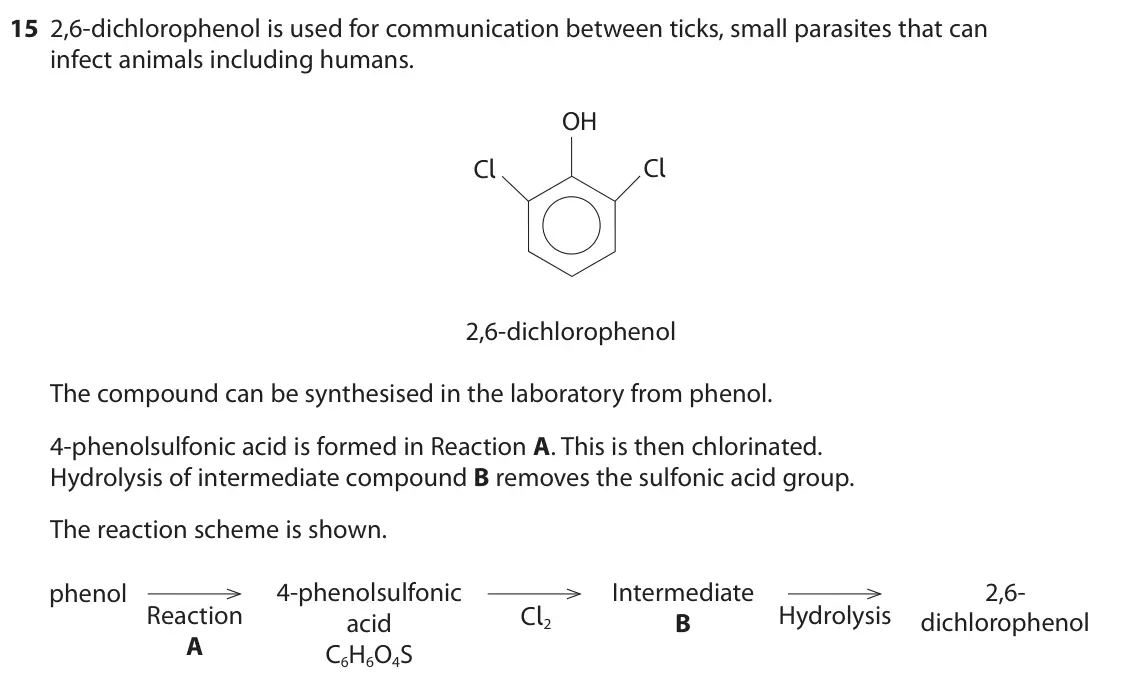
Q15(d)(ii)
The whole paper ↗Q20(b)(iii)
The whole paper ↗
- Your answer
Q1(c)(i)
The whole paper ↗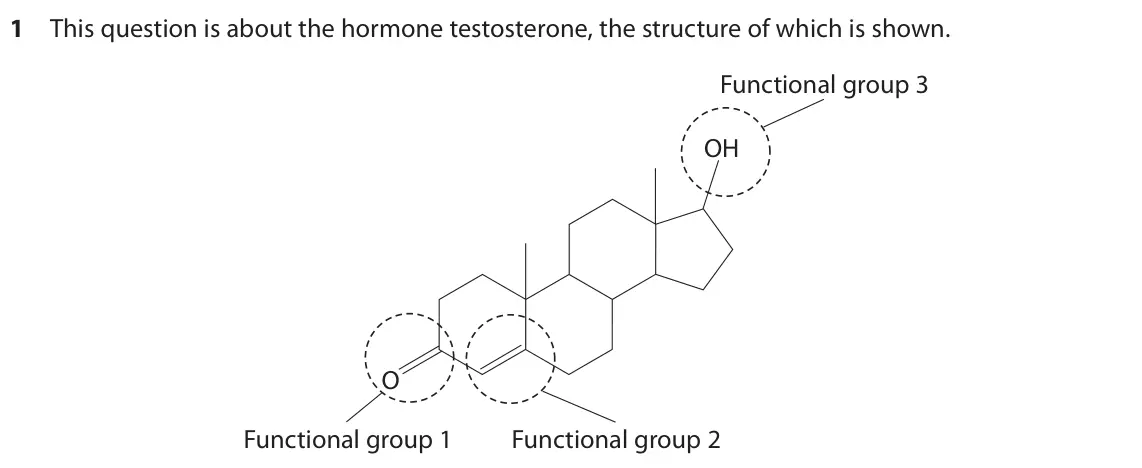
Q1(c)(ii)
The whole paper ↗Q15(a)
The whole paper ↗Your answerQ21(a)(ii)
The whole paper ↗
Q21(a)(iv)
The whole paper ↗Q2(d)(iii)
The whole paper ↗
Q2(c)(i)
The whole paper ↗
- Your answer
Q2(e)(i)
The whole paper ↗
All 37 questions on Mass spectra of organic compounds, as a list
- June 2025, AS Unit 2, Q12(a) (1 mark): Which compound has peaks in its mass spectrum at m/z 74 and 45? (1) A butanone B butanal C butan-2-ol D methylpropan-2-ol
- June 2025, AS Unit 3, Q1(c) (3 marks): Mass spectra of P and Q show a molecular ion peak at m / z = 60. The mass spectrum of P has its most intense peak at m / z = 31 and this peak is not present in
- June 2025, AS Unit 3, Q1(d) (2 marks): Deduce the structural formulae of P and Q. (2) P Q
- June 2025, Unit 4, Q16 (6 marks): *16 Proton NMR spectroscopy and mass spectrometry give detailed information about the structure of organic compounds. Discuss the similarities and differences i
- January 2025, AS Unit 2, Q20 (6 marks): *20 A bottle has lost its label. The content of the bottle is thought to be one of 1-hydroxypropanone, propenoic acid or butan-1-ol. O O OH OH OH 1-hydroxypropa
- October 2024, AS Unit 2, Q14(b) (1 mark): Which compound could give peaks at m / z = 31 and m / z = 60 in its mass spectrum? (1) A propan-1-ol B propan-2-ol C propanal D propanone Use this space for any
- June 2024, AS Unit 2, Q20(a)(ii) (2 marks): The peaks with the highest intensity in the mass spectrum of isoprene are at m / z = 68 and m / z = 53. Identify the species responsible for these two peaks. (2
- June 2024, Unit 5, Q15(d)(i) (2 marks): Explain the relative intensities of the peaks at m / z values of 162, 164 and 166. (2)
- June 2024, Unit 5, Q15(d)(ii) (1 mark): Suggest why there is a corresponding set of peaks at m / z values of 163, 165 and 167. (1)
- June 2024 (R), AS Unit 2, Q20(b)(iii) (3 marks): Part of the mass spectrum of acetoin is shown. 100 80 60 Relative intensity 40 20 0.0 15 30 45 60 75 90 m / z Determine a possible structure of acetoin using yo
- January 2024, AS Unit 2, Q20 (1 mark): Which compound gives this mass spectrum? 100 80 60 Relative intensity 40 20 0 10 15 20 25 30 35 40 45 50 55 60 m / z A CH3COOH B CH3COCH3 C CH3CH2CHO D CH3CH2CH
- January 2024, AS Unit 3, Q1(c)(i) (1 mark): Deduce the m/z ratio of the fragment shown by the unshaded area, assuming it forms a singly charged ion. (1)
- January 2024, AS Unit 3, Q1(c)(ii) (1 mark): When molecular ions fragment, they form a smaller ion and another type of particle. State the other type of particle formed. (1)
- January 2024, Unit 4, Q15(a) (1 mark): The mass spectrum of compound X shows a large peak at m/z = 59. This peak is due to the fragmentation of the molecular ion. Which compound is most likely to be
- October 2023, AS Unit 2, Q21(a)(ii) (2 marks): The mass spectrum of X is shown. 100 80 60 Percentage relative 40 abundance 20 0.0 30 40 50 60 70 80 90 m / z Deduce the molecular formula of X, using the mass
- October 2023, AS Unit 2, Q21(a)(iv) (2 marks): Using your answer to (a)(iii) and the mass spectrum, complete Table 2. (2) Table 2 Peak in mass spectrum Formula of ion m / z = 41 m / z = 45
- June 2023, AS Unit 3, Q2(d)(iii) (2 marks): A student suggested that the structure of D could be identified using mass spectrometry because only one of the possible structures of D would have a peak at m
- June 2023, Unit 6, Q2(c)(i) (1 mark): Bubbles are observed when aqueous sodium hydrogencarbonate is added to Y. Deduce the formula of the ion responsible for the peak at m / z = 45. (1)
- January 2023, AS Unit 2, Q15 (1 mark): Which compound is least likely to have a prominent peak at m / z = 43 in its mass spectrum? A CH3COCH2CH3 B CH3CH2NHCH3 C CH3CH(CH3)2 D CH3CH2CH2CH3
- January 2022, AS Unit 3, Q2(e)(i) (1 mark): Show that the mass spectrum is consistent with Y having the molecular formula C3H4O3 . (1)
- January 2022, AS Unit 3, Q2(e)(ii) (1 mark): Suggest the structure of the ion causing the peak at m / z = 43 in the mass spectrum of Y. (1)
- October 2021, AS Unit 2, Q4 (1 mark): In a mass spectrum, the molecular ion is the ion which always has the A greatest abundance B greatest stability C highest charge D highest mass/charge ratio
- October 2021, AS Unit 2, Q5 (1 mark): Butan-1-ol and butan-2-ol are isomers. Which m / z value would be expected to have a significant peak in the mass spectrum of butan-1-ol but not that of butan-2
- October 2021, Unit 6, Q2(b)(i) (1 mark): Give the formula of one of the ions responsible for the peak at m / z = 29. (1)
- October 2021, Unit 6, Q2(b)(ii) (1 mark): A contains one functional group. Give the m / z value of the molecular ion and the structure of A. (1) m / z value of the molecular ion structure of A
- June 2021, AS Unit 2, Q13 (1 mark): The mass spectrum of propanone is shown. 100 80 60 Relative intensity 40 20 0 10 15 20 25 30 35 40 45 50 55 60 m / z Which fragment is most likely to produce th
- June 2021, AS Unit 2, Q22(c)(ii) (1 mark): Suggest an identity for the peak at m / z = 63. (1)
- June 2021, AS Unit 3, Q2(d)(iii) (1 mark): Give a reason why there is a peak at m / z = 100 in the mass spectra of all three compounds. (1)
- June 2021, AS Unit 3, Q2(d)(iv) (2 marks): Fragmentation of 1-methylcyclopentanol results in a significant peak at m / z = 85. Suggest the structures of the two species formed when one bond in 1-methylcy
- June 2021, Unit 6, Q3(d)(iii) (1 mark): The mass spectrum of the compound is shown. 100 80 60 Relative intensity 40 20 0 0 10 20 30 40 50 60 70 80 90 m / z Deduce the relative molecular mass of the co
- June 2021, Unit 6, Q3(d)(v) (2 marks): Determine the identity of the compound, using your answer to (d)(iv) and the fragmentation pattern of the mass spectrum. Justify your answer. (2) O O OH OH O B
- January 2021, Unit 5, Q20(a)(i) (2 marks): Give the structures of the species responsible for these two peaks. (2)
- January 2021, Unit 5, Q20(a)(ii) (1 mark): Give the structure of one other species that you would expect to produce a peak at a different m / z value in the mass spectrum of butanone. (1)
- October 2020, Unit 6, Q2(a) (4 marks): Compound P is a colourless liquid with a sweet fruity smell. When a sample of P was heated with sodium hydroxide, a volatile product was formed which had a mole
- January 2020, AS Unit 2, Q14(a) (1 mark): Which m / z peak would not be expected in the mass spectrum of propanone? (1) A 15 B 29 C 43 D 58
- June 2019, AS Unit 2, Q18 (1 mark): Which of these carboxylic acids would be expected to have a major peak at m / z = 57 in its mass spectrum? A CH3CH2CH2COOH B CH3COOH C (CH3)2CHCOOH D CH3CH2COOH
- June 2019, AS Unit 3, Q2(d)(ii) (3 marks): The mass spectrum of C4H8Br2 had a pair of peaks at m / z = 107 and m / z = 109 and also peaks at m / z = 79 and m / z = 81 due to the isotopes of bromine. One
Questions, mark schemes and examiner’s reports are © Pearson Edexcel, from their published past papers. Plumi isn’t affiliated with any exam board. Want whole papers? Edexcel International A Level Chemistry past papers.
The Plumi iPad app also offers exam-style questions with AI feedback on your handwritten working.