 plumi
Fertilisation in flowering plants: Edexcel International A Level Biology questions
Edexcel International A Level Biology past-paper questions on 3.3.4 Fertilisation in flowering plants, 2019–2025, with mark schemes and examiner’s reports where available.
Paper
All papers
Exam
All years
Calculations
Q3(a)
The whole paper ↗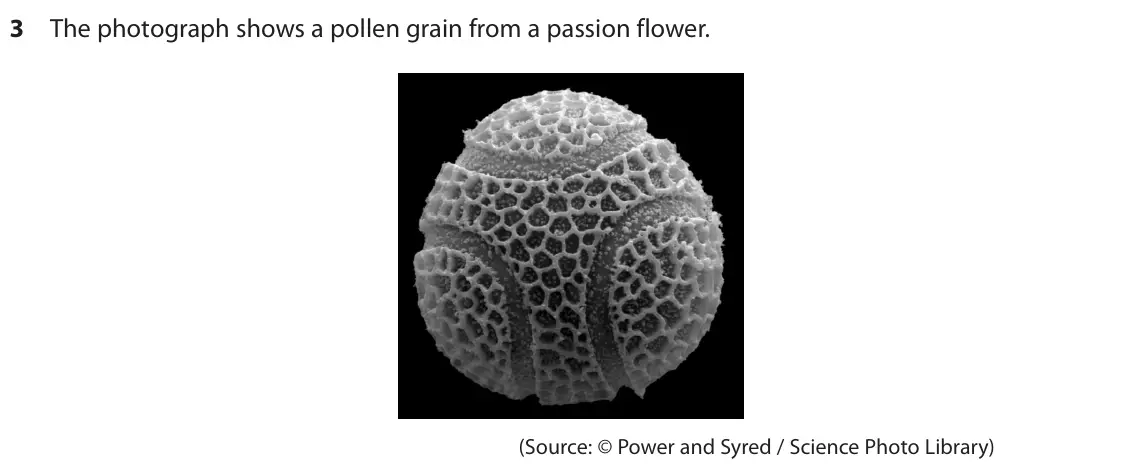 Your answer
Q5(c)
The whole paper ↗
Q2(a)
The whole paper ↗
Q2(b)(ii)
The whole paper ↗Q2(b)(iii)
The whole paper ↗Q3(c)
The whole paper ↗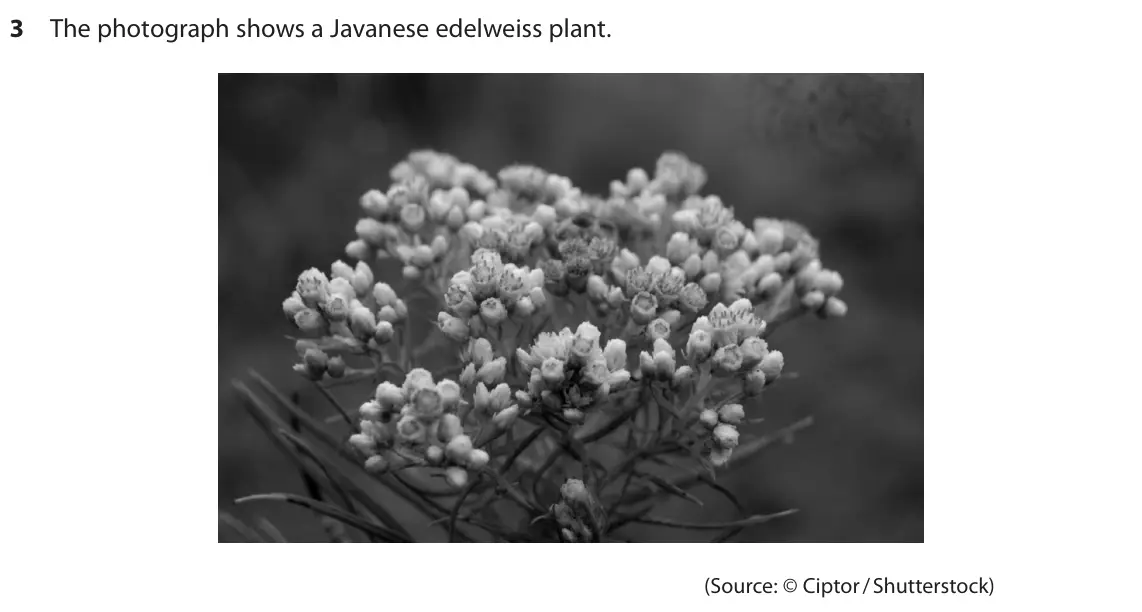
Q4(a)(i)
The whole paper ↗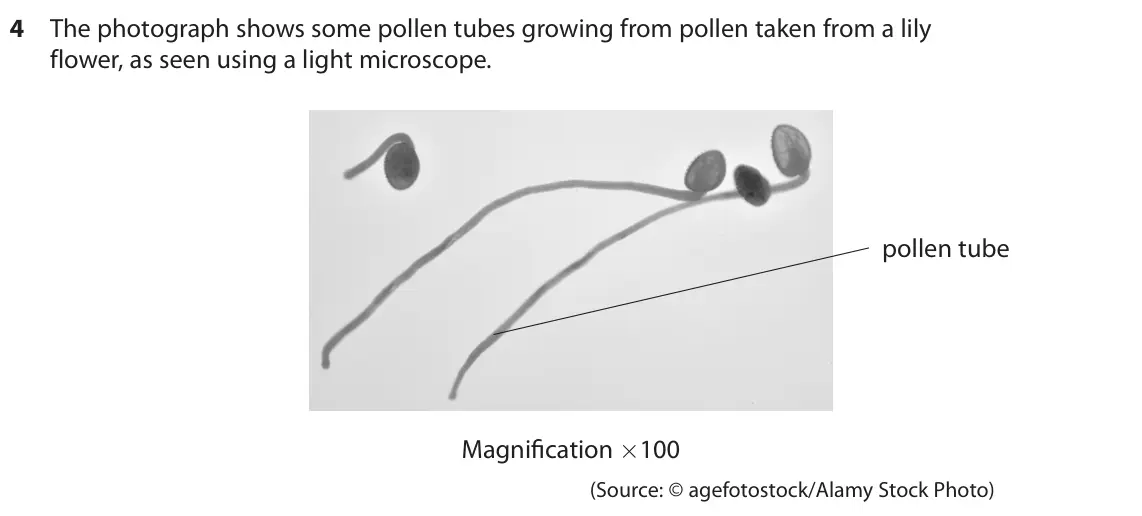 Your answer
Q4(b)
The whole paper ↗Q2(b)
The whole paper ↗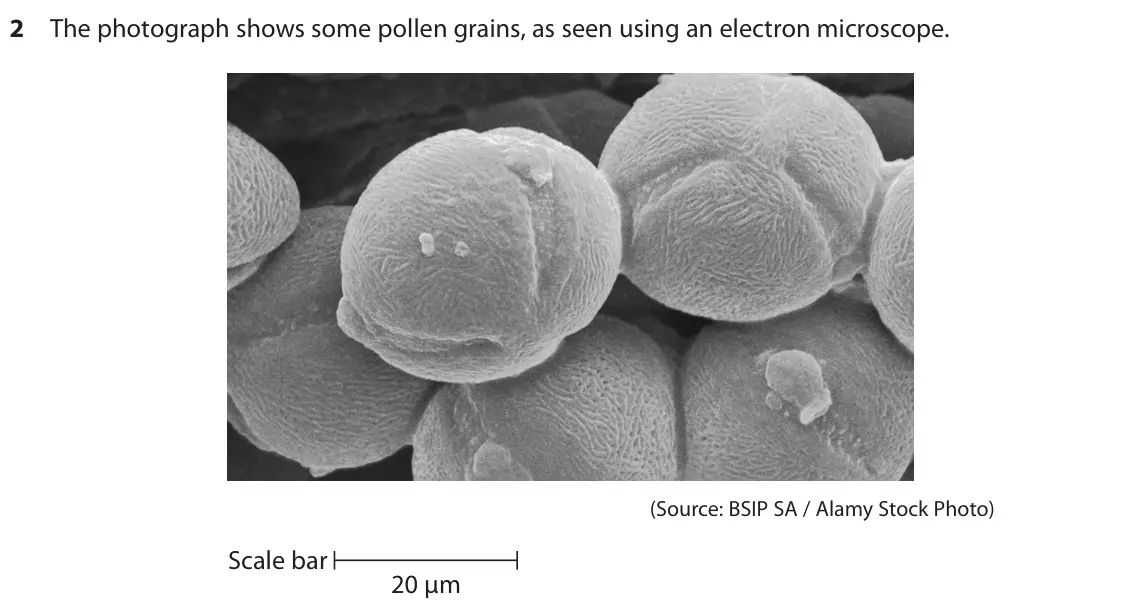
Q6(c)
The whole paper ↗
Q2(a)
The whole paper ↗
Q2(b)
The whole paper ↗Q2(c)(i)
The whole paper ↗Q2(d)(i)
The whole paper ↗Q2(d)(ii)
The whole paper ↗Q2(b)(i)
The whole paper ↗ Your answer
Q2(b)(ii)
The whole paper ↗Your answerQ2(b)(iii)
The whole paper ↗Your answerQ2(b)(iv)
The whole paper ↗Your answerQ2(b)(v)
The whole paper ↗
All 35 questions on Fertilisation in flowering plants, as a list
- June 2025, AS Unit 2, Q3(a) (1 mark): Pollen grains contain a generative nucleus. The generative nucleus divides to form two male nuclei. Which statement is correct? (1) A one male nucleus is involv
- January 2025, AS Unit 2, Q5(c) (5 marks): The photograph shows a bee on a peony flower. leaf of peony plant peony flower bee (Source: © Boris Zhitkov / Alamy Stock Photo) Pollen grains from the leg of th
- January 2025, AS Unit 3, Q2(a) (2 marks): Describe the role of the pollen tube in plant reproduction. (2)
- January 2025, AS Unit 3, Q2(b)(ii) (6 marks): Describe how the data in the table could be obtained. (6)
- January 2025, AS Unit 3, Q2(b)(iii) (3 marks): Comment on the results of this investigation. (3)
- October 2024, AS Unit 2, Q3(c) (4 marks): The diagram shows a germinating pollen grain. generative nucleus tube nucleus Describe the roles of the tube nucleus and the generative nucleus. (4) Tube nucleu
- January 2024, AS Unit 2, Q4(a)(i) (1 mark): The pollen tube growth rate is 0.2 µm s–1. How long would it take the pollen tube to grow 15 mm? (1) A 75 seconds B 125 minutes C 1 250 minutes D 7 500 seconds
- January 2024, AS Unit 2, Q4(b) (4 marks): The diagram shows a pollen tube that has grown to reach an ovule. pollen tube polar nuclei female gamete Fertilisation of the female polar nuclei results in the
- October 2023, AS Unit 2, Q2(b) (3 marks): A pollen grain can produce a pollen tube that contains a generative nucleus. Plant fertilisation results in the production of an embryo and endosperm tissue. Th
- June 2023, AS Unit 2, Q6(c) (6 marks): Plants can produce seeds from either cross‑fertilisation or self‑fertilisation. Self‑fertilisation occurs when male nuclei from a flower fertilises an egg cell
- June 2023, AS Unit 3, Q2(a) (2 marks): The diagram shows a germinating pollen grain. A B Give a function for each of the structures labelled A and B. (2) A . B
- June 2023, AS Unit 3, Q2(b) (5 marks): The percentage germination of the pollen grains was used to determine the viability of the pollen. Describe a procedure to compare the percentage germination of
- June 2023, AS Unit 3, Q2(c)(i) (4 marks): The effect of temperature on percentage germination of pollen collected by both methods was investigated. The results are shown in the graph. 70 60 50 Percentag
- June 2023, AS Unit 3, Q2(d)(i) (3 marks): Calculate the percentage difference in pollen tube length between the optimum pH for hand collected pollen and the optimum pH for bee collected pollen. Give you
- June 2023, AS Unit 3, Q2(d)(ii) (1 mark): Suggest one reason for the differences in tube growth of the pollen collected by these two methods. (1)
- January 2023, AS Unit 2, Q2(b)(i) (1 mark): Which letter labels an ovule? (1) A P B Q C S D T
- January 2023, AS Unit 2, Q2(b)(ii) (1 mark): Which letter labels an egg cell (female gamete)? (1) A P B S C T D U
- January 2023, AS Unit 2, Q2(b)(iii) (1 mark): Which letter labels a male nucleus? (1) A R B S C T D U
- January 2023, AS Unit 2, Q2(b)(iv) (1 mark): Which letter labels a polar nucleus? (1) A R B S C T D U
- January 2023, AS Unit 2, Q2(b)(v) (2 marks): Describe the function of the tube nucleus. (2)
- June 2022, AS Unit 2, Q7(a)(i) (1 mark): How many of the following statements about a pollen grain are correct? • contains a tube nucleus and a generative nucleus • the generative nucleus divides by mi
- June 2022, AS Unit 3, Q1(a)(i) (3 marks): Explain the role of the pollen tube in plant reproduction. (3)
- June 2022, AS Unit 3, Q1(a)(ii) (2 marks): Explain why pollen tubes grow in the same direction from the stigma, after pollination. (2)
- June 2022, AS Unit 3, Q1(d)(ii) (3 marks): Comment on the conclusion that both percentage germination and mean pollen tube growth have the same optimum sucrose concentration. (3)
- June 2021, AS Unit 3, Q3(c)(ii) (2 marks): Describe the effect of boric acid concentration on pollen grain germination at 4 hours. (2)
- June 2021, AS Unit 3, Q3(d)(i) (2 marks): During the first two hours, the rate of pollen tube growth at a boric acid concentration of 100 mg dm–3 is 130.5 µm hour–1. Calculate the percentage increase in
- June 2021, AS Unit 3, Q3(d)(ii) (4 marks): Describe how the results shown in the graph could have been obtained. You are provided with a 500 mg dm–3 boric acid solution. (4)
- June 2021, AS Unit 3, Q3(e) (2 marks): Compare and contrast the effect of boric acid concentration on pollen grain germination with its effect on pollen tube growth. Use the information given in this
- January 2021, AS Unit 2, Q3(a) (5 marks): Double fertilisation takes place in the ovules. Describe the events that occur from the time a pollen grain lands on the stigma to the production of a triploid
- January 2021, AS Unit 2, Q3(b) (4 marks): The photograph shows flowers from a silver trumpet tree in Thailand. (Source: © Picture/Shutterstock) Flowering plants such as the silver trumpet tree contain s
- January 2021, Unit 6, Q1(a) (6 marks): Describe an experiment to investigate the effect of this extract on the rate of pollen tube growth. (6)
- October 2020, AS Unit 2, Q4(c) (3 marks): The endosperm of a grain of wheat develops from the endosperm nucleus, formed during fertilisation. Explain the role of the pollen tube and nuclei in the format
- June 2019, AS Unit 3, Q1(a)(iii) (3 marks): Explain why the results might have been affected if the variable you named in (a)(ii) had not been controlled. (3)
- June 2019, AS Unit 3, Q1(c)(i) (2 marks): Calculate the percentage increase in pollen tube length at 100 ppm compared with that at 25 ppm. (2) Answer %
- June 2019, AS Unit 3, Q1(c)(ii) (5 marks): You are provided with a solution containing 500 g dm–3 of sucrose . Devise a procedure to investigate the effect of different concentrations of sucrose on the r
Questions, mark schemes and examiner’s reports are © Pearson Edexcel, from their published past papers. Plumi isn’t affiliated with any exam board. Want whole papers? Edexcel International A Level Biology past papers.
The Plumi iPad app also offers exam-style questions with AI feedback on your handwritten working.