 plumi
Antioxidants and vitamin C: Edexcel International A Level Biology questions
Edexcel International A Level Biology past-paper questions on 1.3.4 Antioxidants and vitamin C, 2019–2025, with mark schemes and examiner’s reports where available.
Paper
All papers
Exam
All years
Calculations
Q3(a)(i)
The whole paper ↗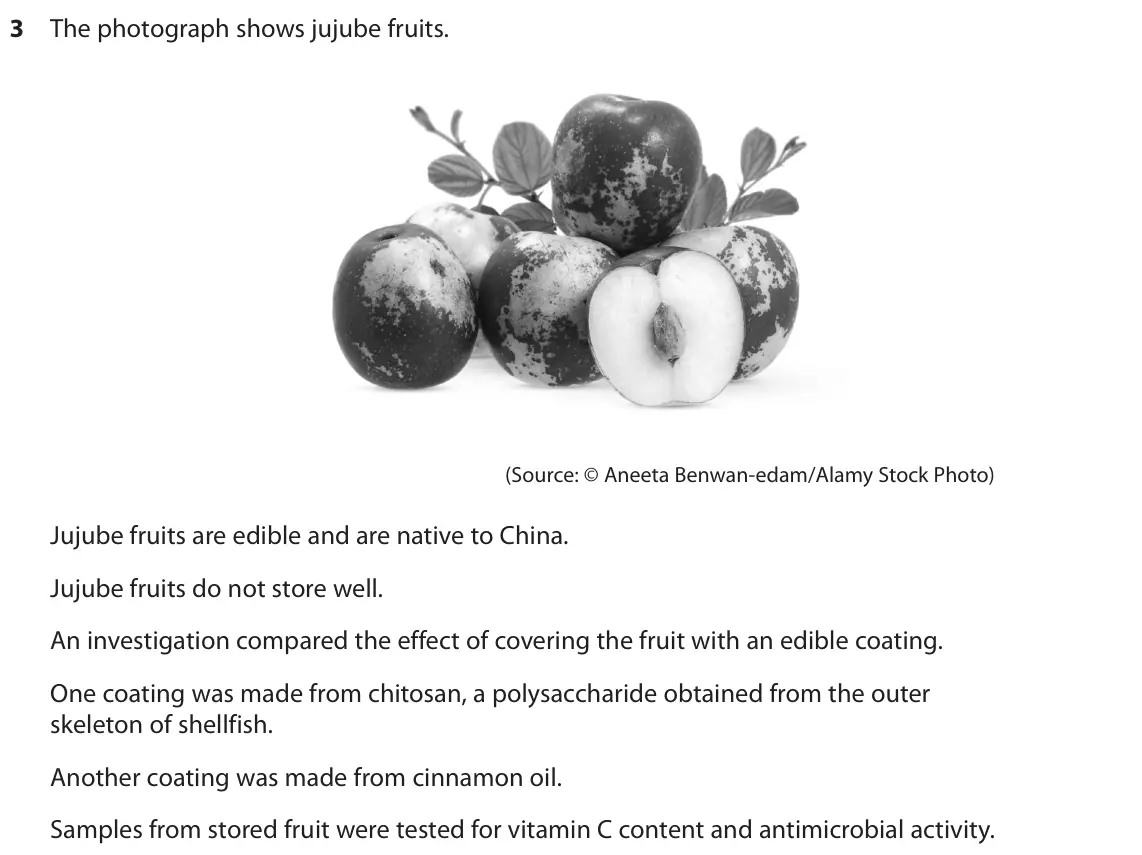
Q3(a)(iv)
The whole paper ↗Q1(a)
The whole paper ↗
Q1(b)
The whole paper ↗Q8(b)(i)
The whole paper ↗
Q1(a)
The whole paper ↗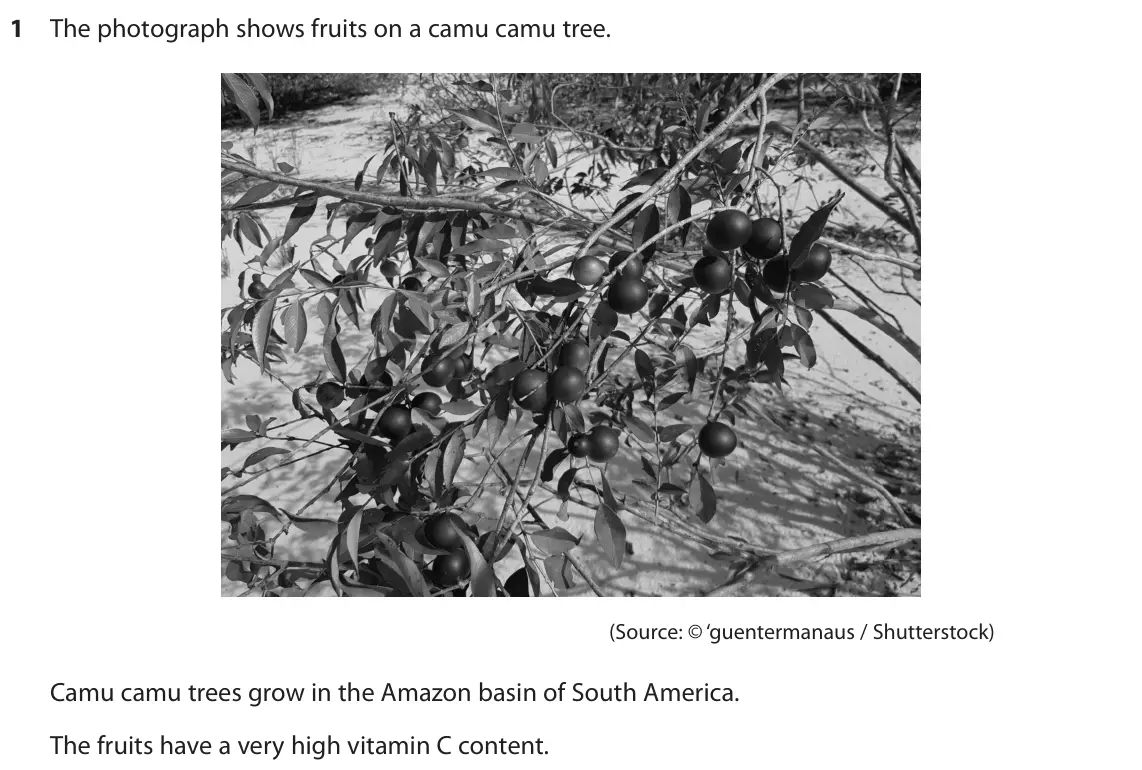
Q1(b)
The whole paper ↗Q6(d)
The whole paper ↗
Q6(e)(i)
The whole paper ↗Q6(e)(ii)
The whole paper ↗Q6(e)(iii)
The whole paper ↗Q1(a)
The whole paper ↗
Q1(b)(i)
The whole paper ↗Q1(c)(i)
The whole paper ↗Q1(c)(ii)
The whole paper ↗Q2(a)
The whole paper ↗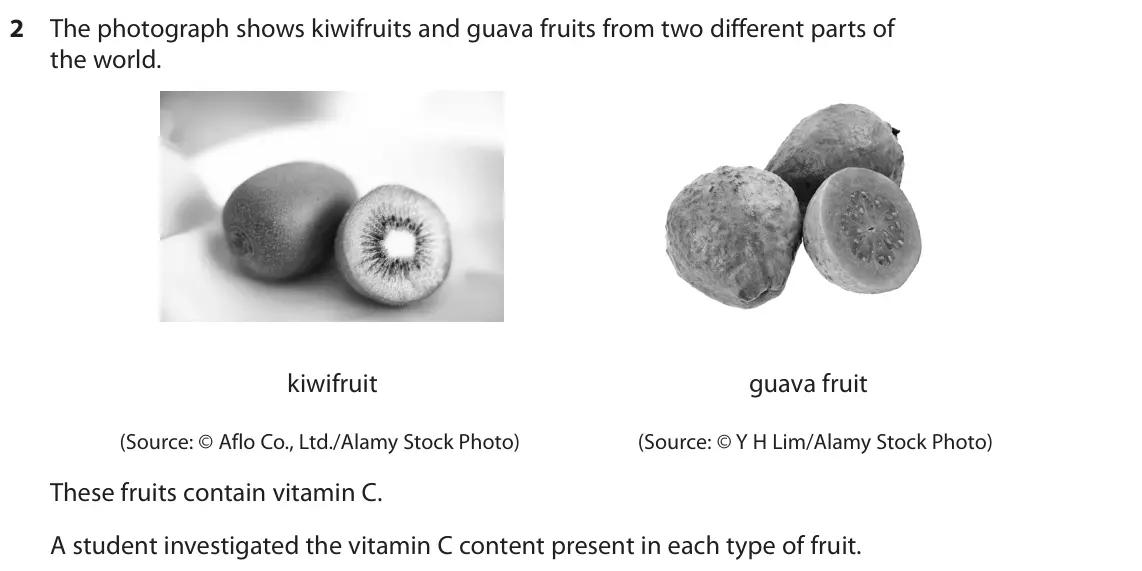
Q2(b)
The whole paper ↗Q7(b)(i)
The whole paper ↗
Q7(b)(ii)
The whole paper ↗
Q7(c)(i)
The whole paper ↗
All 28 questions on Antioxidants and vitamin C, as a list
- June 2024, AS Unit 3, Q3(a)(i) (2 marks): The percentage decrease in the vitamin C content of the fruit with no coating, over the 60-day period, was 43.75%. Calculate the difference in the percentage de
- June 2024, AS Unit 3, Q3(a)(iv) (3 marks): A coating made from a combination of chitosan and cinnamon oil was also tested. Describe an investigation to determine if this coating is more effective than th
- January 2024, AS Unit 3, Q1(a) (3 marks): Explain the link between dietary antioxidants and the risk of cardiovascular disease (CVD). (3)
- January 2024, AS Unit 3, Q1(b) (5 marks): The vitamin C content of the leaves from spinach plants was investigated. Describe how comparative measurements of the vitamin C content of the leaves from two
- October 2023, AS Unit 1, Q8(b)(i) (3 marks): Explain why eating these rhizomes may help to prevent CVD. (3)
- October 2023, Unit 6, Q1(a) (1 mark): A student found the vitamin C content of camu camu fruits changed with the length of time in storage. Freshly picked fruits had a mean vitamin C content of 2 40
- October 2023, Unit 6, Q1(b) (6 marks): The student read that ‘the vitamin C content of these fruits decreases the most during the first 14 days of storage.’ Describe an experiment to investigate the
- June 2023, AS Unit 1, Q6(d) (4 marks): Explain why dietary antioxidants are important. (4)
- June 2023, AS Unit 1, Q6(e)(i) (1 mark): The antioxidant activity of orange juice is 0.80 a.u. per 100 g. Calculate how many times more antioxidant activity there is in 100 g of grasshopper extract. Gi
- June 2023, AS Unit 1, Q6(e)(ii) (1 mark): Calculate the percentage difference between the antioxidant activity in black scorpions and crickets. (1) Answer %
- June 2023, AS Unit 1, Q6(e)(iii) (3 marks): Comment on the results of this investigation. Use the information in the table and the graph to support your answer. (3)
- October 2022, AS Unit 3, Q1(a) (3 marks): Explain how increasing the quantity of plant foods that contain vitamin C in the diet may protect against heart disease. (3)
- October 2022, AS Unit 3, Q1(b)(i) (5 marks): Describe a method to allow a quantitative comparison of the vitamin C content of two of these foods. (5)
- October 2022, AS Unit 3, Q1(c)(i) (2 marks): Calculate the rate of change of vitamin C content in oranges for the first 3 weeks of storage at 4 °C. Give your answer to 2 significant figures. (2) Answer g d
- October 2022, AS Unit 3, Q1(c)(ii) (4 marks): Comment on the effects of storage time and temperature on the vitamin C content of these juices. (4)
- June 2022, Unit 6, Q2(a) (6 marks): Describe an experiment to measure the vitamin C content of each type of fruit. (6)
- June 2022, Unit 6, Q2(b) (2 marks): The student found the vitamin C content of the fruits to be: kiwifruit 92.7 mg 100 g–1 guava fruit 223.3 mg 100 g–1 Calculate the percentage difference in vitam
- January 2022, AS Unit 1, Q7(b)(i) (3 marks): Explain why antioxidants in the diet reduce the risk of CVD. (3)
- October 2021, AS Unit 1, Q7(b)(ii) (3 marks): The antioxidant properties of altered HDL are reduced. Explain the effect that this has on reducing the risk of heart disease. (3)
- January 2021, AS Unit 1, Q7(c)(i) (3 marks): Explain how dietary antioxidants reduce the risk of CVD. (3)
- January 2020, AS Unit 3, Q1(a) (2 marks): Explain what is meant by this statement. (2)
- January 2020, AS Unit 3, Q1(b)(i) (2 marks): Explain what happens to DCPIP in the presence of vitamin C. (2)
- January 2020, AS Unit 3, Q1(b)(ii) (2 marks): In an investigation, a student compared the vitamin C concentration of freshly squeezed fruit juice and fruit juice stored in a carton. The table shows the resu
- January 2020, AS Unit 3, Q1(b)(iii) (2 marks): Calculate the concentration of vitamin C in lime juice from a carton as a percentage of fresh lime juice. (2) Answer %
- January 2020, AS Unit 3, Q1(b)(v) (3 marks): Comment on the vitamin C content of fresh juice compared with juice from a carton. (3)
- June 2019, AS Unit 1, Q6(a) (3 marks): Explain how dietary antioxidants reduce the risk of CVD. (3)
- June 2019, AS Unit 1, Q6(b)(i) (4 marks): Explain whether eating dark chocolate is likely to reduce the risk of CVD more than eating milk chocolate. Use the information in the table to support your answ
- June 2019, AS Unit 1, Q6(b)(ii) (1 mark): The table gives some information about ingredients in three different brands of milk chocolate and dark chocolate. Percentage of ingredient in Percentage of ing
Questions, mark schemes and examiner’s reports are © Pearson Edexcel, from their published past papers. Plumi isn’t affiliated with any exam board. Want whole papers? Edexcel International A Level Biology past papers.
The Plumi iPad app also offers exam-style questions with AI feedback on your handwritten working.