 plumi
Generators, dynamos and microphones: Edexcel GCSE Physics questions
Every Edexcel GCSE Physics exam question on Generators, dynamos and microphones (specification points 13.1–13.4), 2018–2025, with its mark scheme and examiner’s report.
Find questions1,554
Exam
All years
Calculations
Q10(a)(i)
The whole paper ↗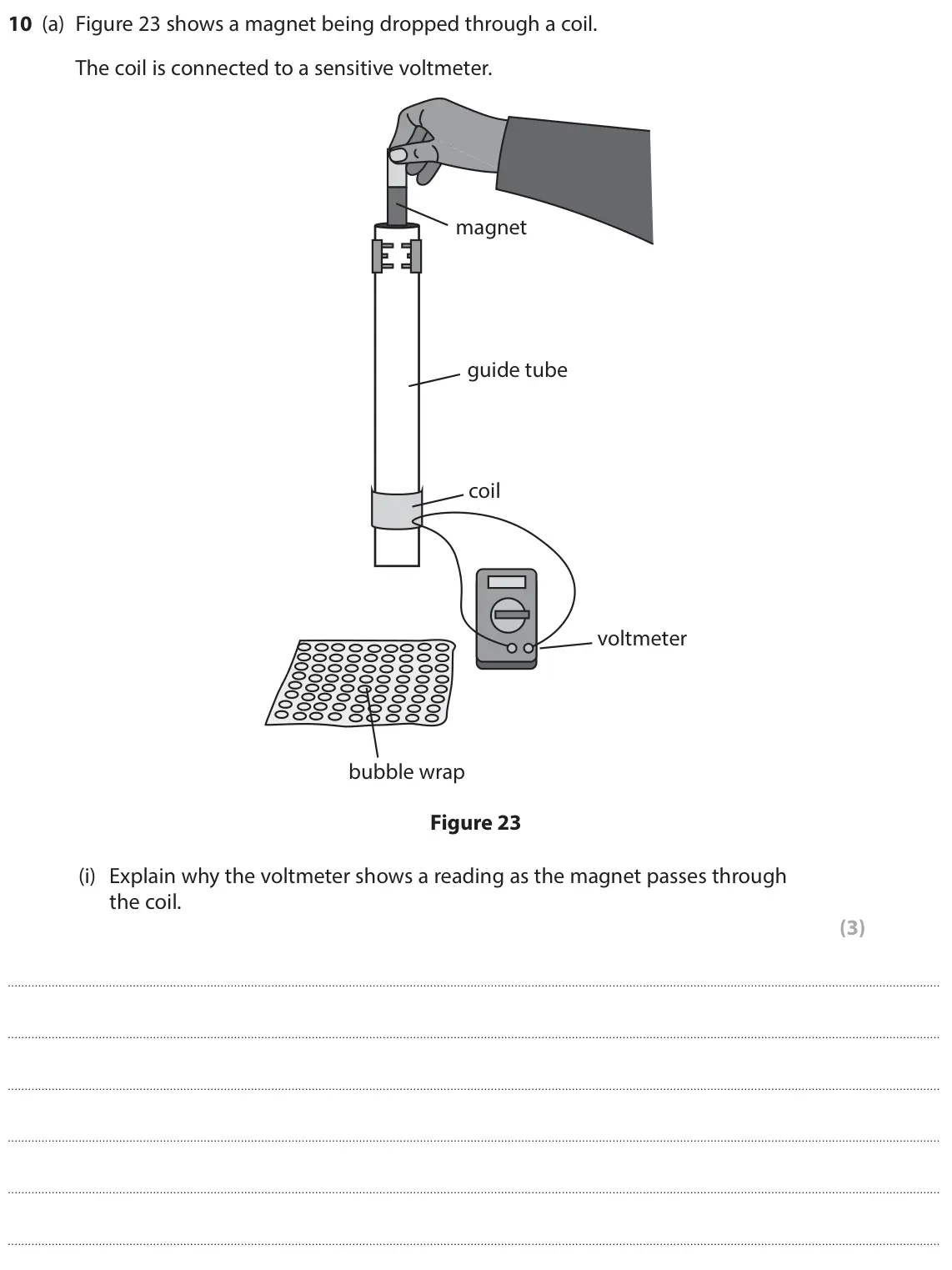
Q10(a)(ii)
The whole paper ↗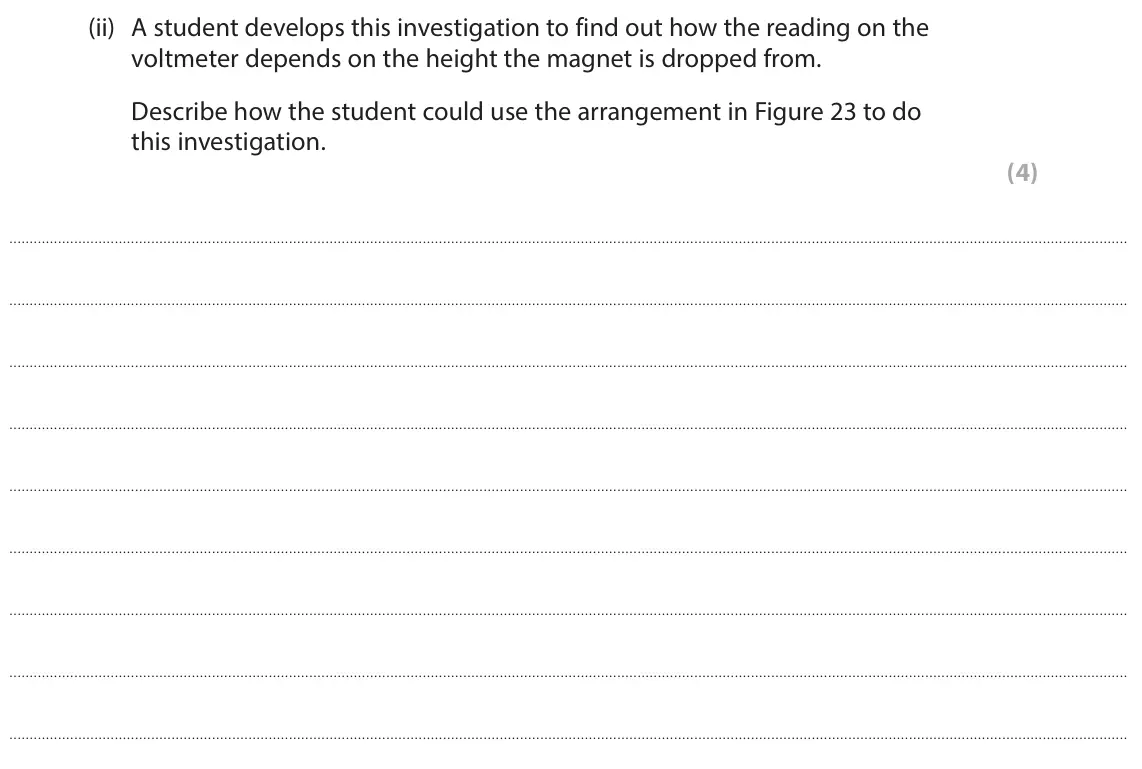
Q8(a)(iii)
The whole paper ↗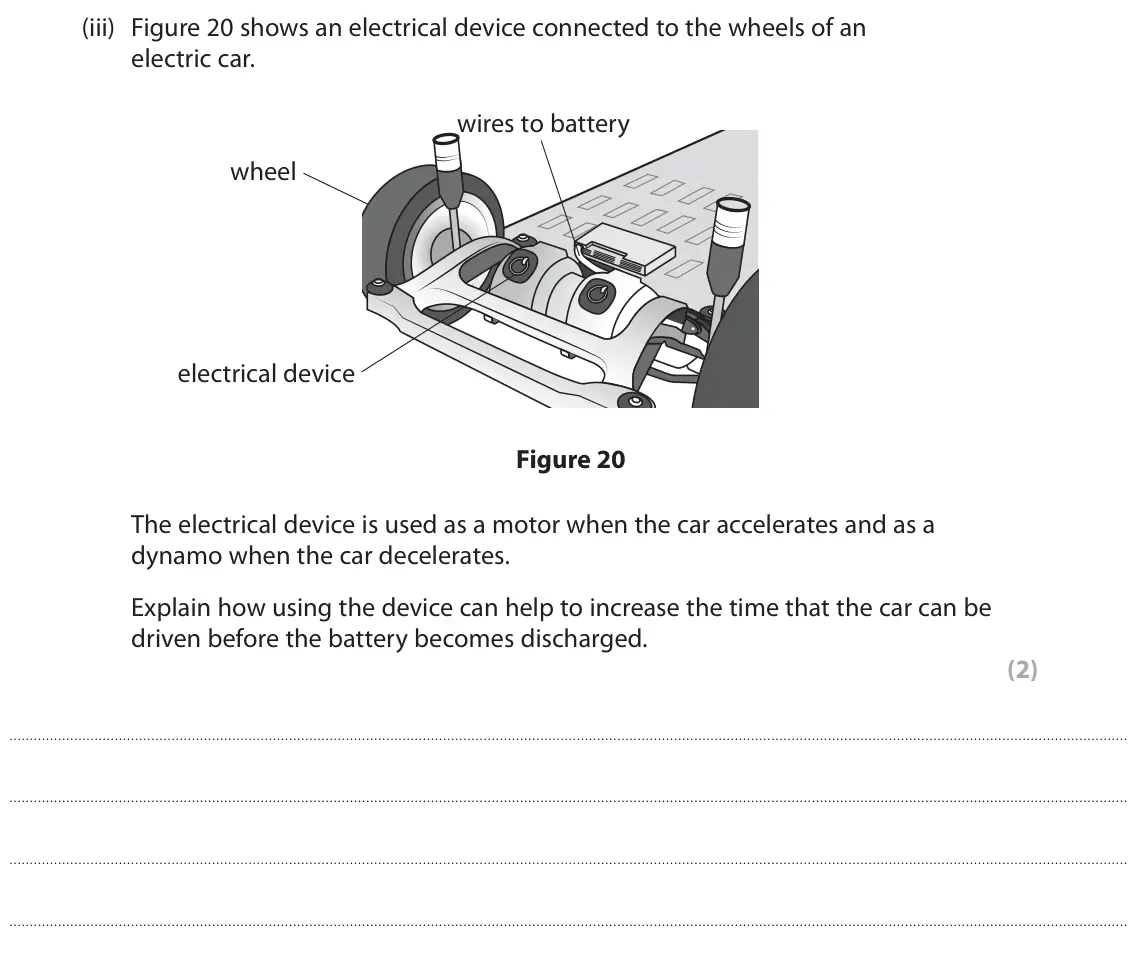
Q10(a)(i)
The whole paper ↗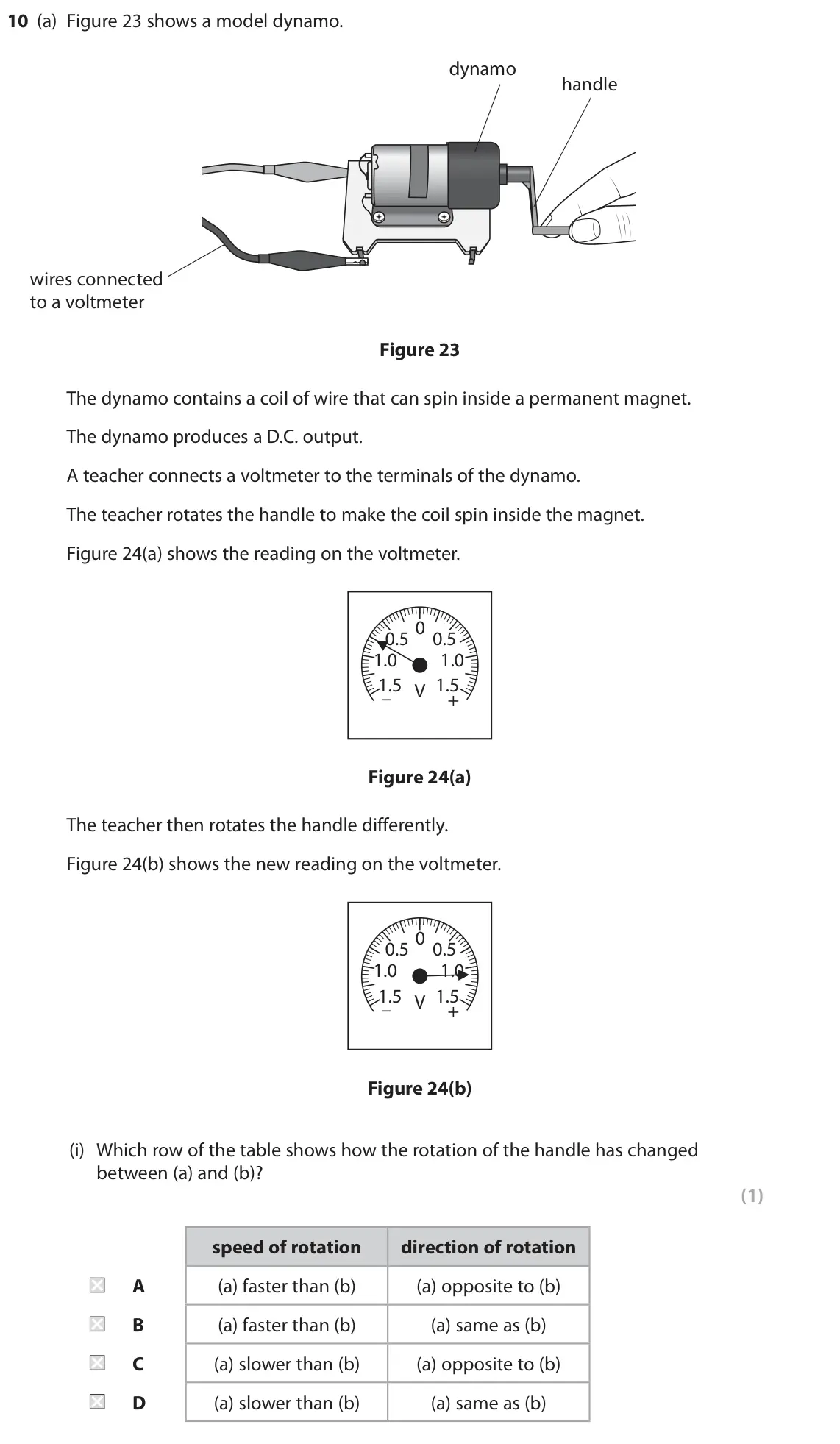
Q10(a)(ii)
The whole paper ↗
Q10(c)
The whole paper ↗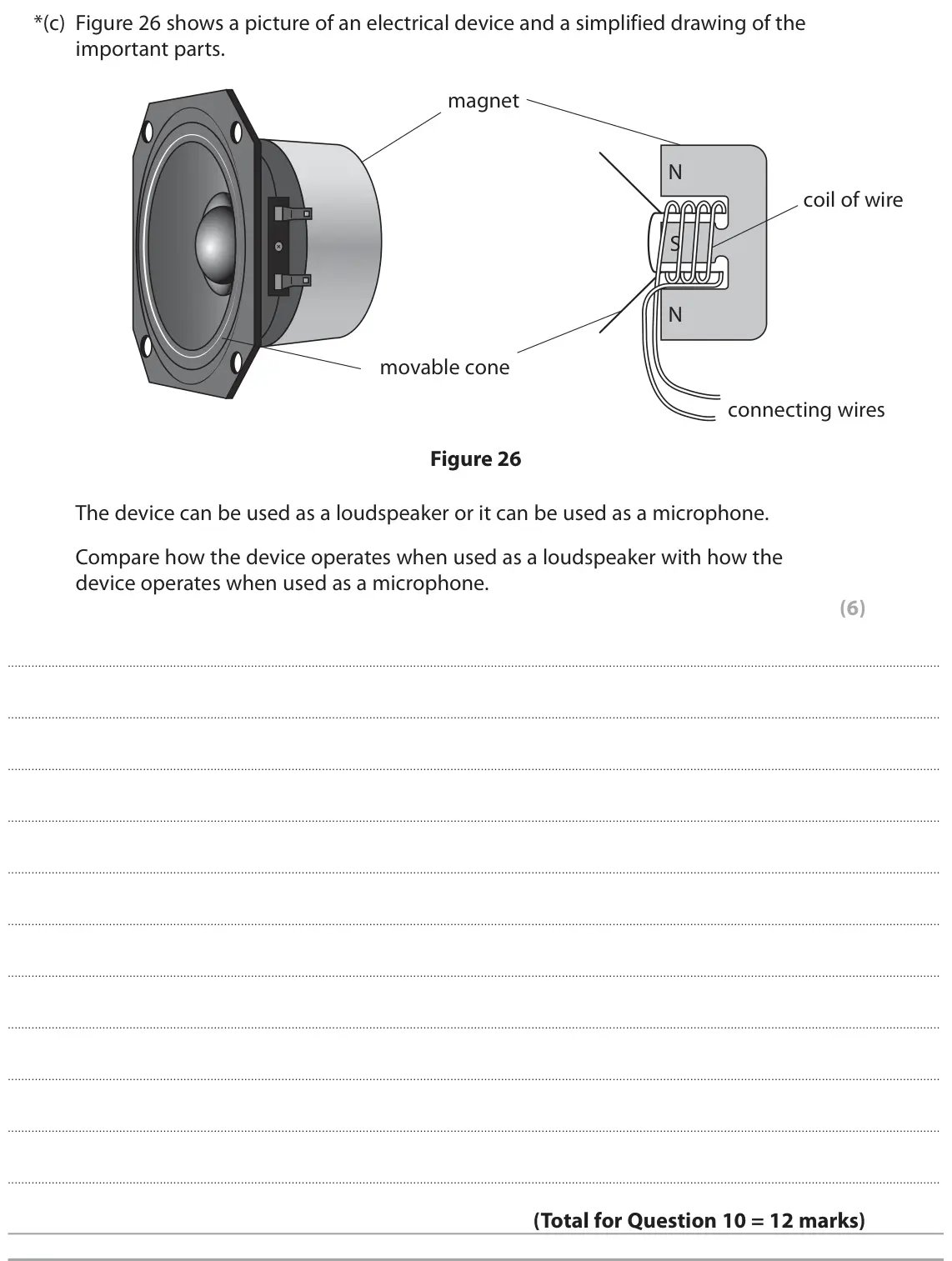
Q10(a)
The whole paper ↗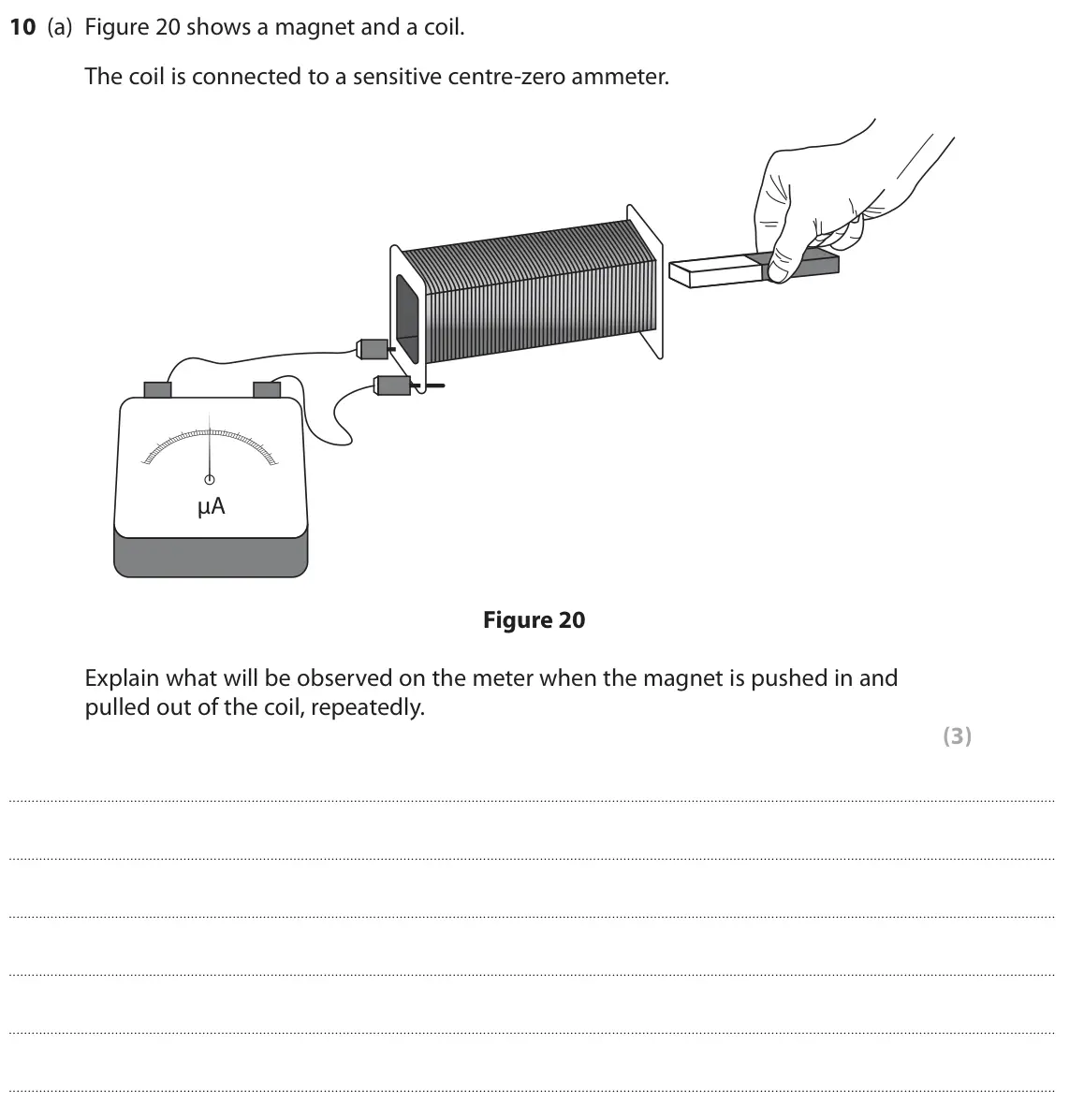
Q9(c)
The whole paper ↗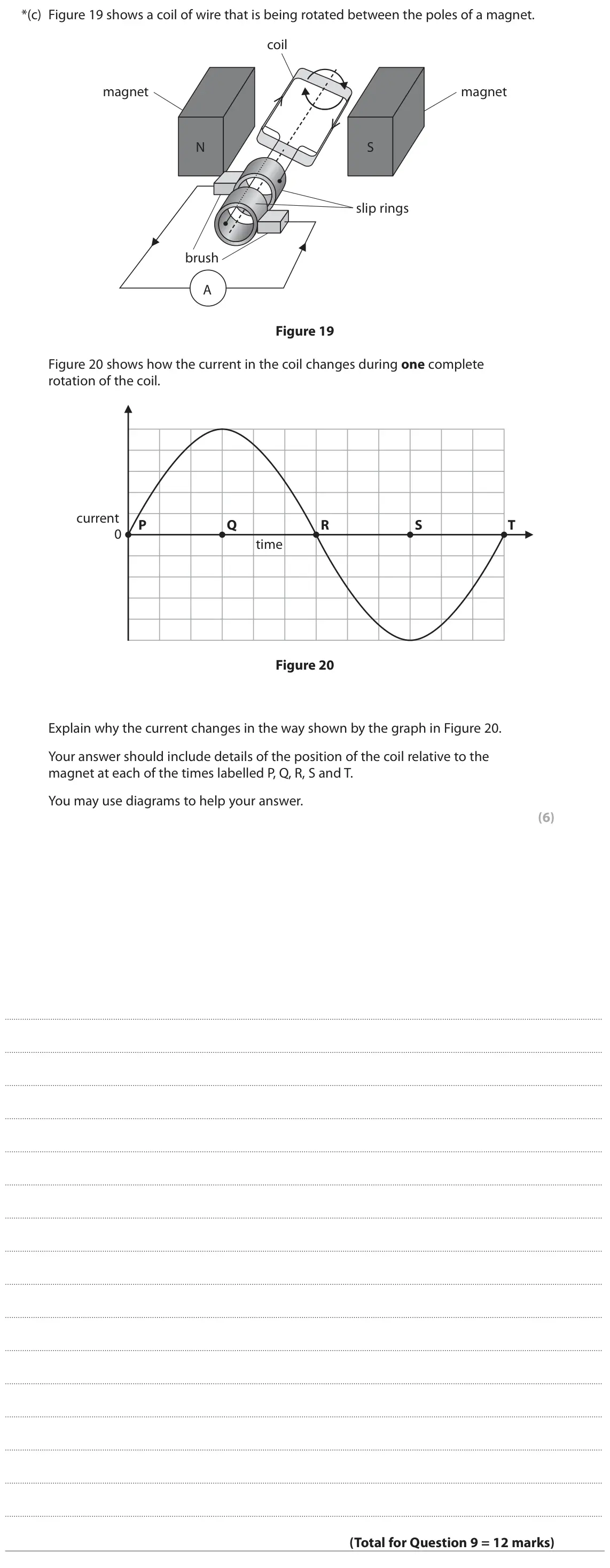
Q7(a)(i)
The whole paper ↗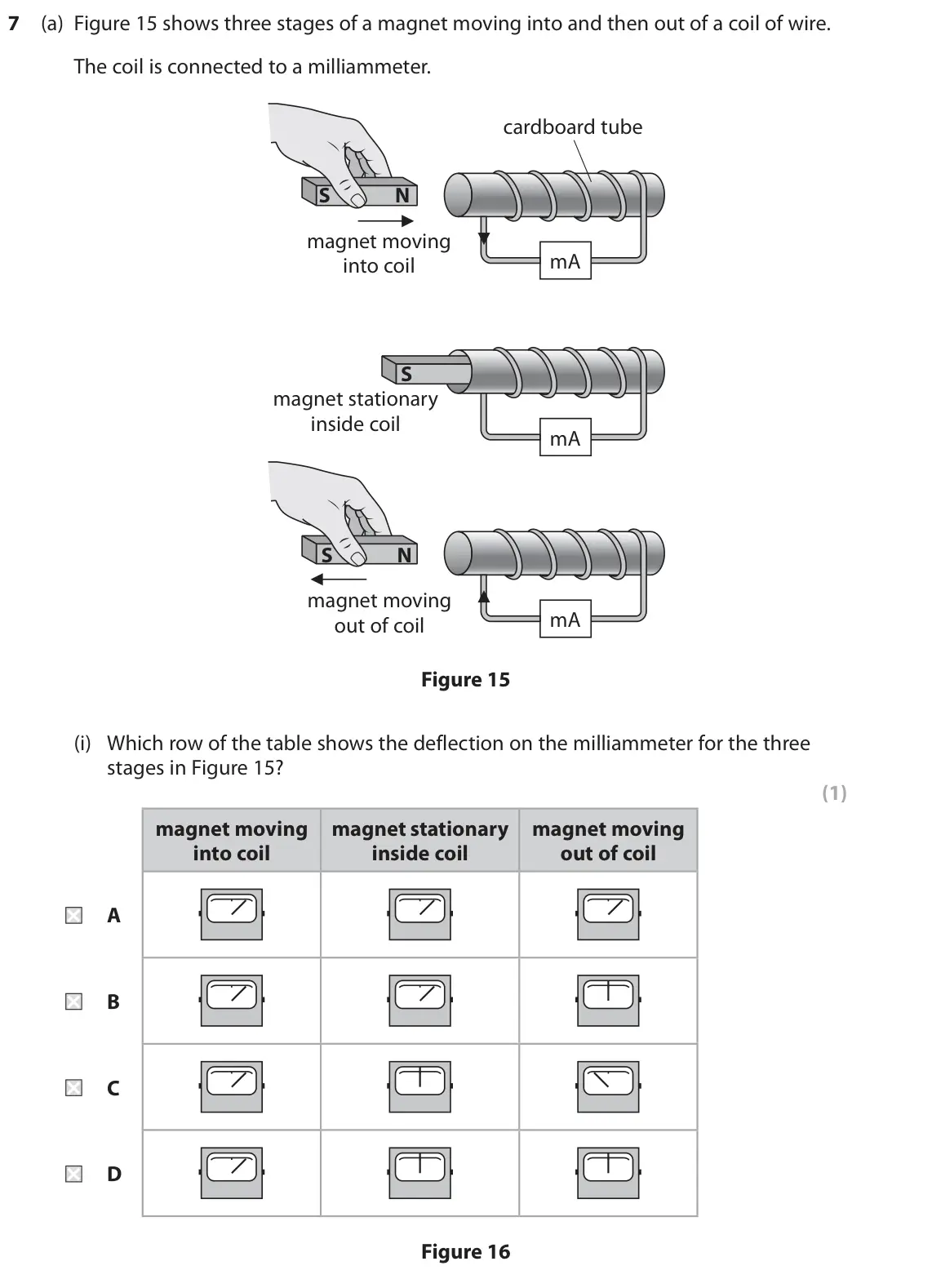
Q7(a)(ii)
The whole paper ↗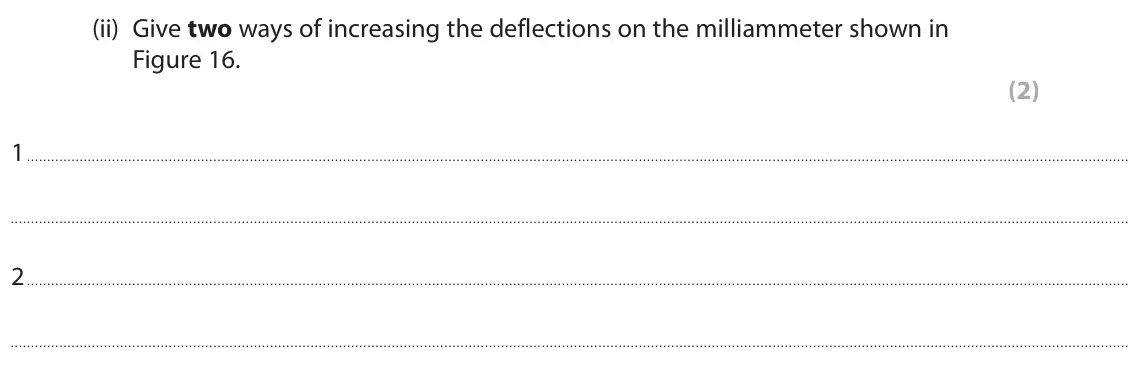
Q6(a)(i)
The whole paper ↗
Q6(a)(ii)
The whole paper ↗
Q9(a)
The whole paper ↗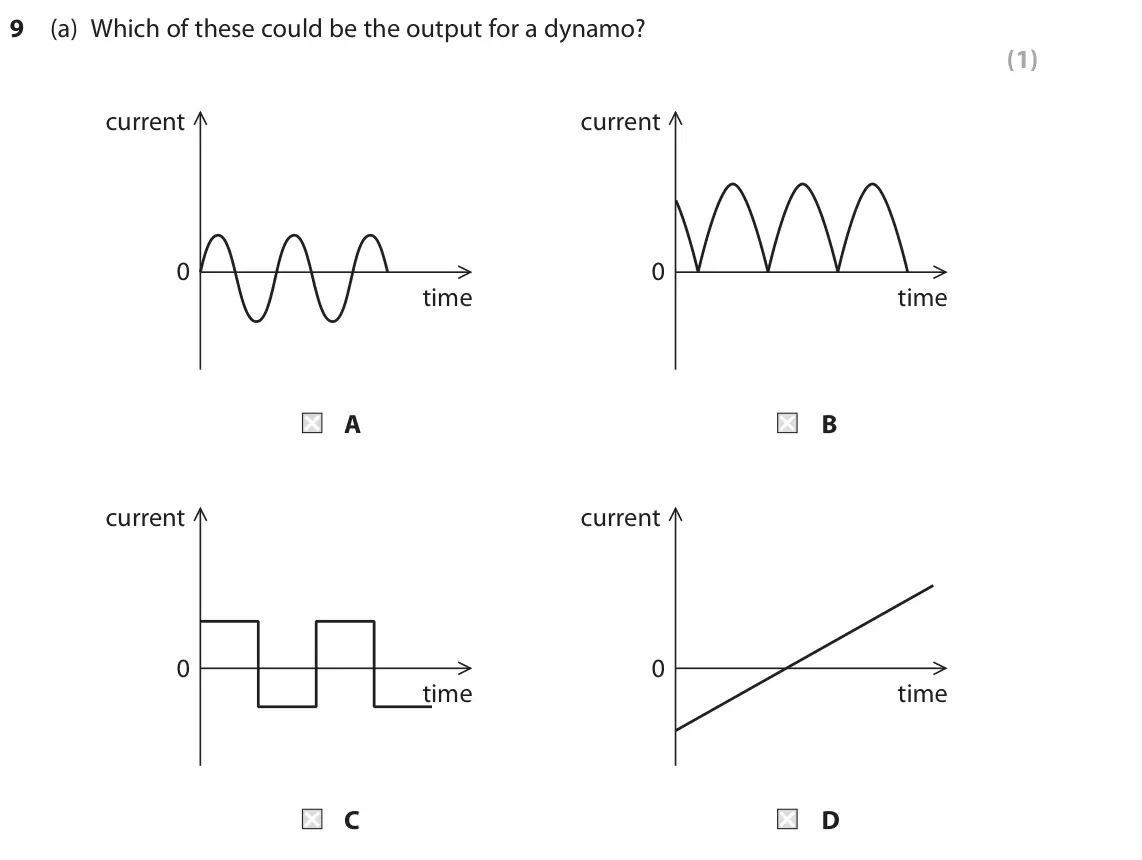
All 13 questions on Generators, dynamos and microphones, as a list
- June 2024, Paper 2 Higher, Q10(a)(i) (3 marks): Explain why the voltmeter shows a reading as the magnet passes through the coil. (3)
- June 2024, Paper 2 Higher, Q10(a)(ii) (4 marks): A student develops this investigation to find out how the reading on the voltmeter depends on the height the magnet is dropped from. Describe how the student co
- June 2023, Paper 2 Higher, Q8(a)(iii) (2 marks): Figure 20 shows an electrical device connected to the wheels of an electric car. wires to battery wheel electrical device Figure 20 The electrical device is use
- June 2023, Paper 2 Higher, Q10(a)(i) (1 mark): Which row of the table shows how the rotation of the handle has changed between (a) and (b)? (1) speed of rotation direction of rotation A (a) faster than (b) (
- June 2023, Paper 2 Higher, Q10(a)(ii) (2 marks): The teacher connects the dynamo to a lamp. It is now more difficult for the teacher to rotate the handle. Explain why it is more difficult to turn the dynamo wh
- June 2023, Paper 2 Higher, Q10(c) (6 marks): Figure 26 shows a picture of an electrical device and a simplified drawing of the important parts. magnet N coil of wire S N movable cone connecting wires Figur
- June 2022, Paper 2 Higher, Q10(a) (3 marks): Figure 20 shows a magnet and a coil. The coil is connected to a sensitive centre-zero ammeter. µA Figure 20 Explain what will be observed on the meter when the
- November 2021, Paper 2 Higher, Q9(c) (6 marks): Figure 19 shows a coil of wire that is being rotated between the poles of a magnet. coil magnet magnet N S slip rings brush A Figure 19 Figure 20 shows how the
- November 2020, Paper 2 Higher, Q7(a)(i) (1 mark): Which row of the table shows the deflection on the milliammeter for the three stages in Figure 15? (1) magnet moving magnet stationary magnet moving into coil i
- November 2020, Paper 2 Higher, Q7(a)(ii) (2 marks): Give two ways of increasing the deflections on the milliammeter shown in Figure 16. (2) 1 2
- June 2019, Paper 2 Higher, Q6(a)(i) (1 mark): Draw a diagram to show how the teacher should arrange the apparatus. (1)
- June 2019, Paper 2 Higher, Q6(a)(ii) (4 marks): Explain how the teacher could use this apparatus to demonstrate the factors affecting the size and direction of the induced potential difference. (4)
- June 2018, Paper 2 Higher, Q9(a) (1 mark): Which of these could be the output for a dynamo? (1) current current 0 0 time time A B current current 0 0 time time C D
Questions, mark schemes and examiner’s reports are © Pearson Edexcel, from their published past papers. Plumi isn’t affiliated with any exam board. Want whole papers? Every Edexcel GCSE Physics paper.
Rather write your answers by hand on iPad? Plumi marks them against the same mark schemes.