 plumi
Reversible reactions and equilibrium: Edexcel GCSE Chemistry questions
Every Edexcel GCSE Chemistry exam question on Reversible reactions and equilibrium (specification points 4.13–4.17), 2018–2025, with its mark scheme and examiner’s report.
Find questions1,880
Exam
All years
Calculations
Q9(b)(i)
The whole paper ↗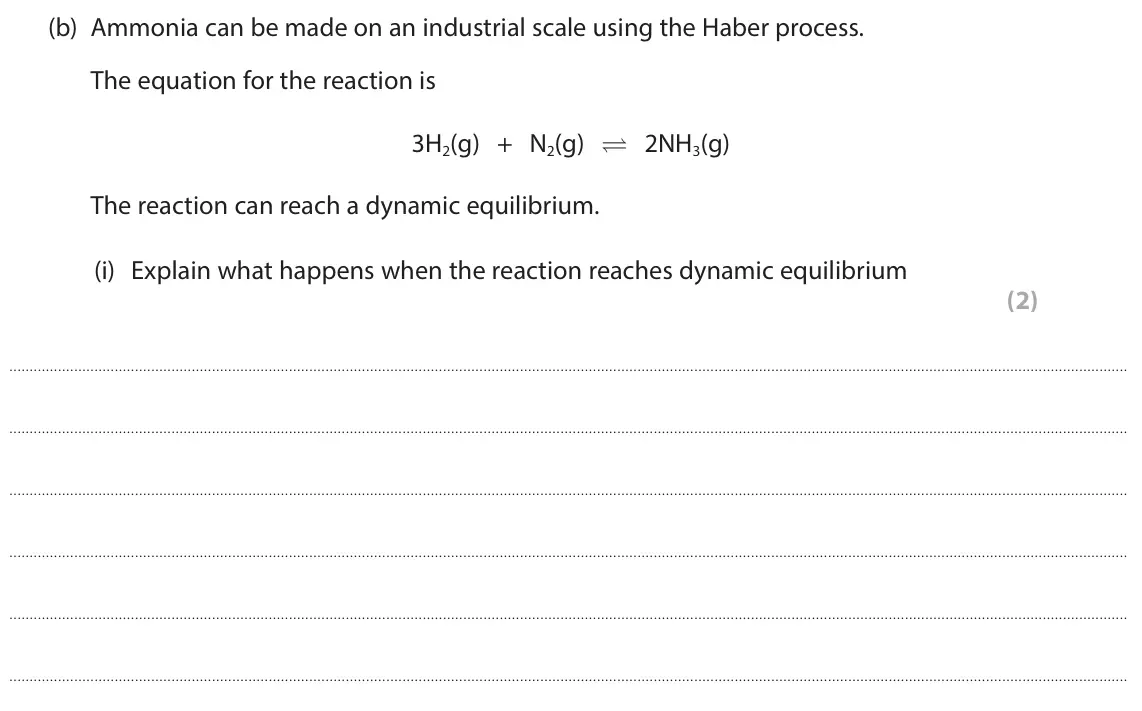
Q9(c)
The whole paper ↗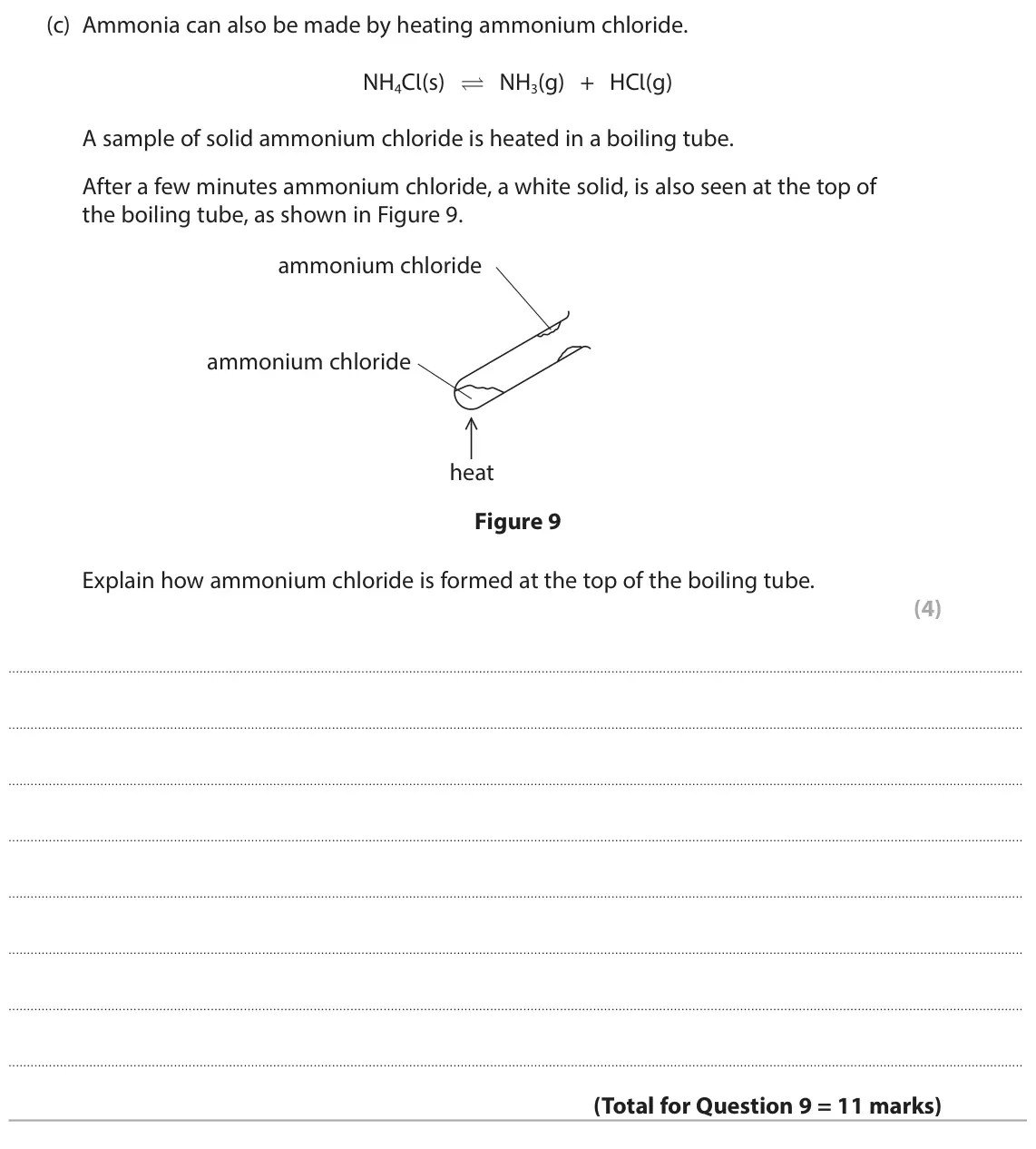
Q2(a)(i)
The whole paper ↗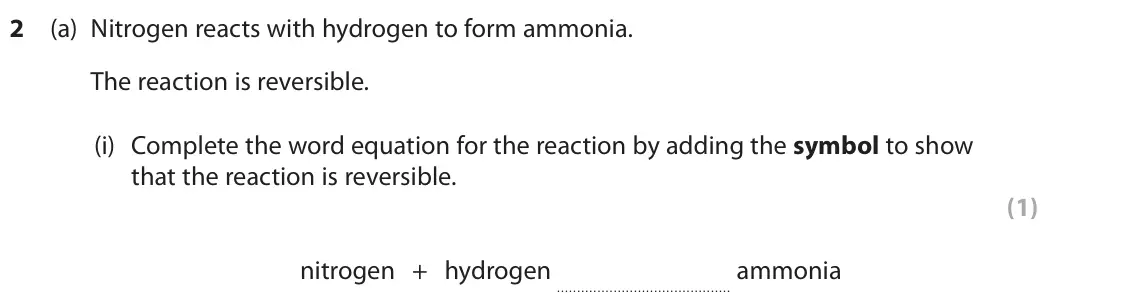
Q5(a)(iv)
The whole paper ↗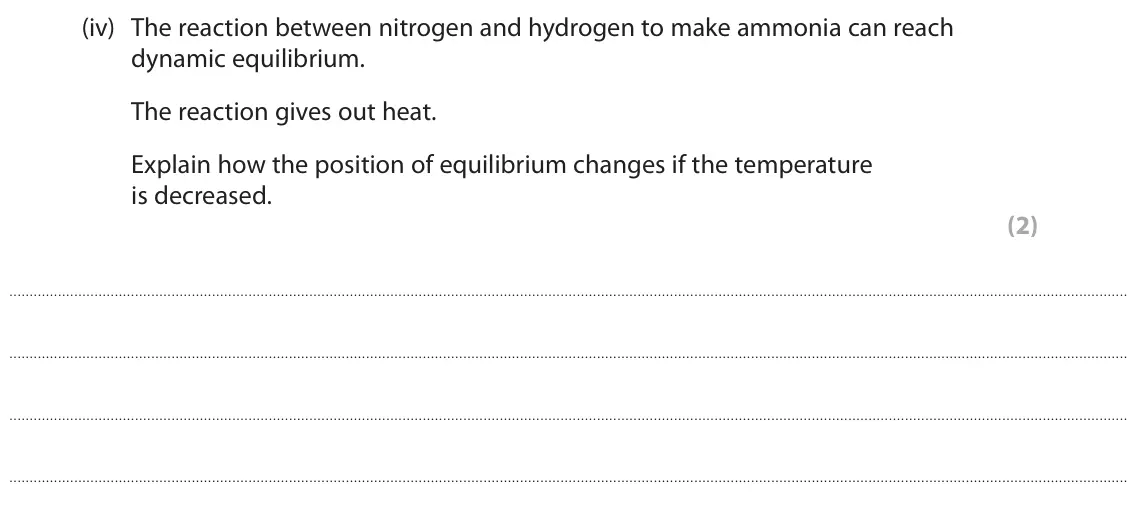
Q5(b)
The whole paper ↗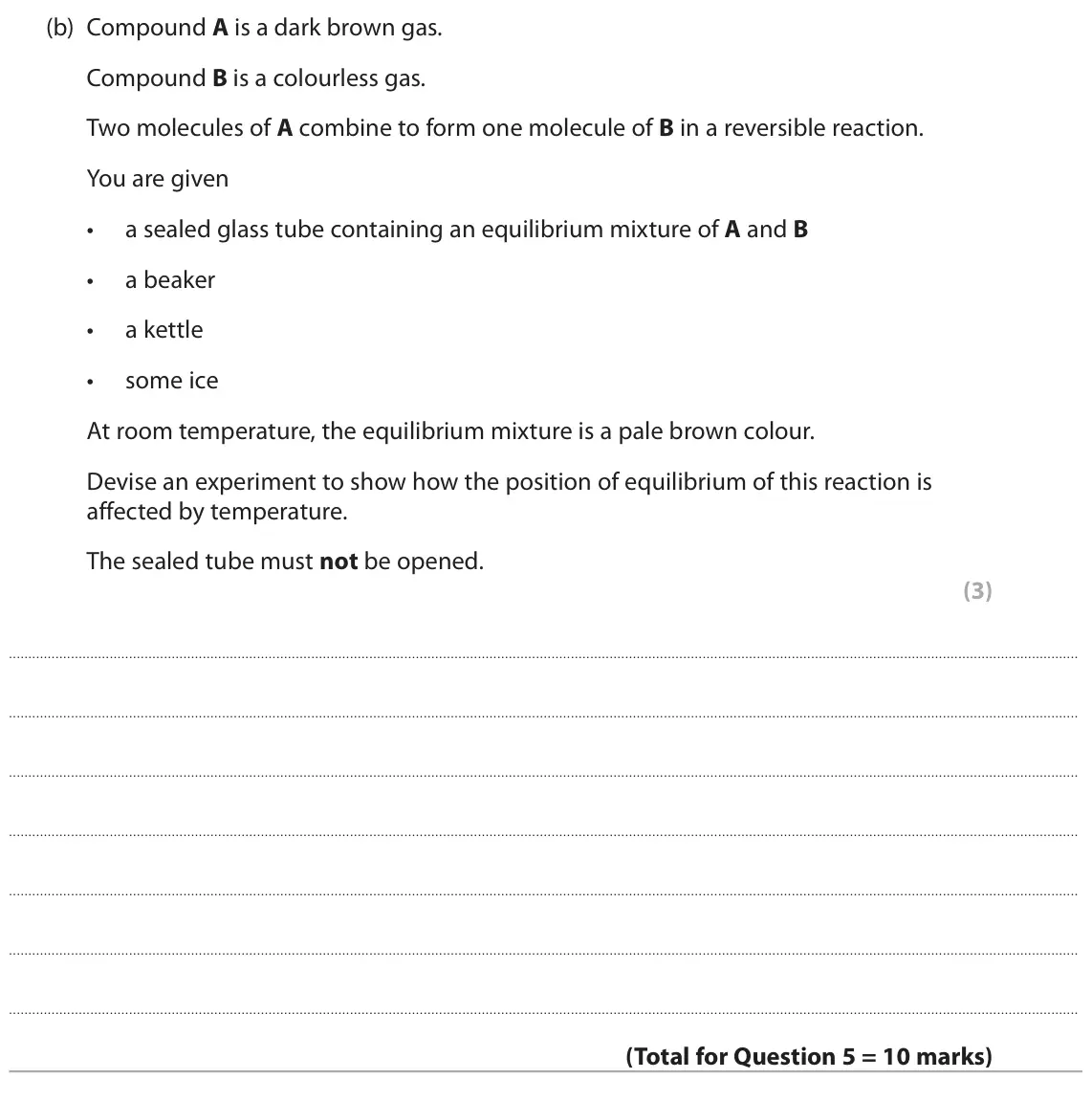
Q10(a)(i)
The whole paper ↗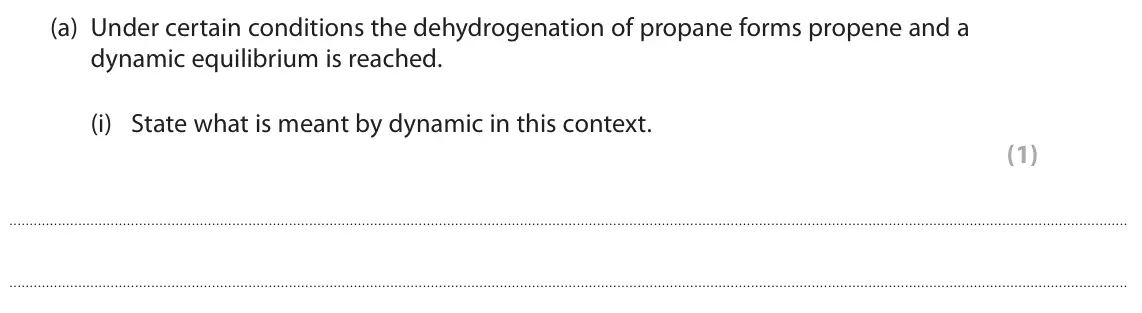
Q10(a)(ii)
The whole paper ↗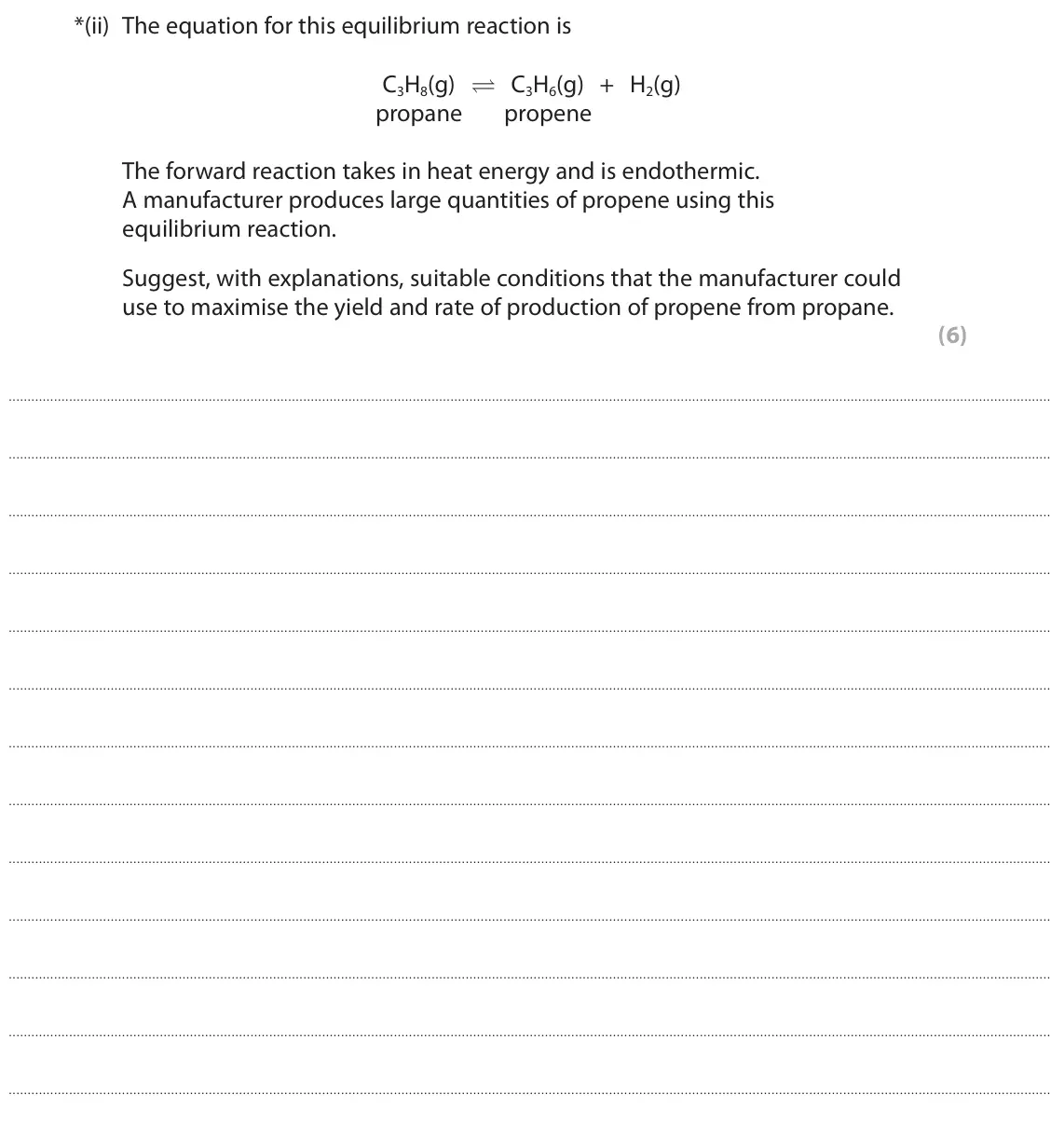
Q1(b)(ii)
The whole paper ↗
Q2(c)(i)
The whole paper ↗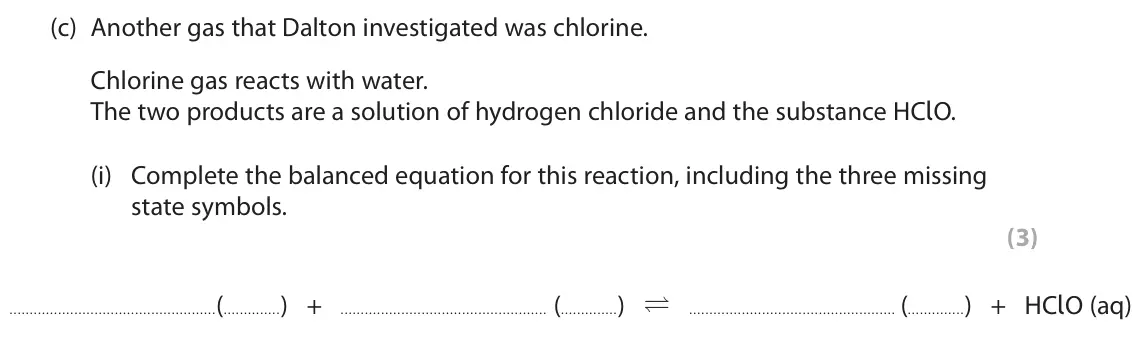
Q6(c)
The whole paper ↗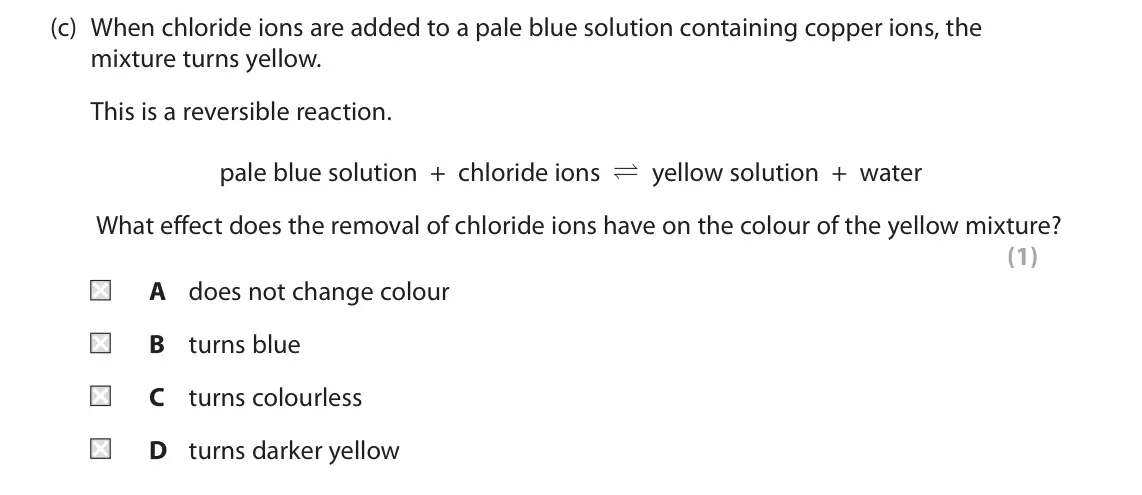
Q5(b)
The whole paper ↗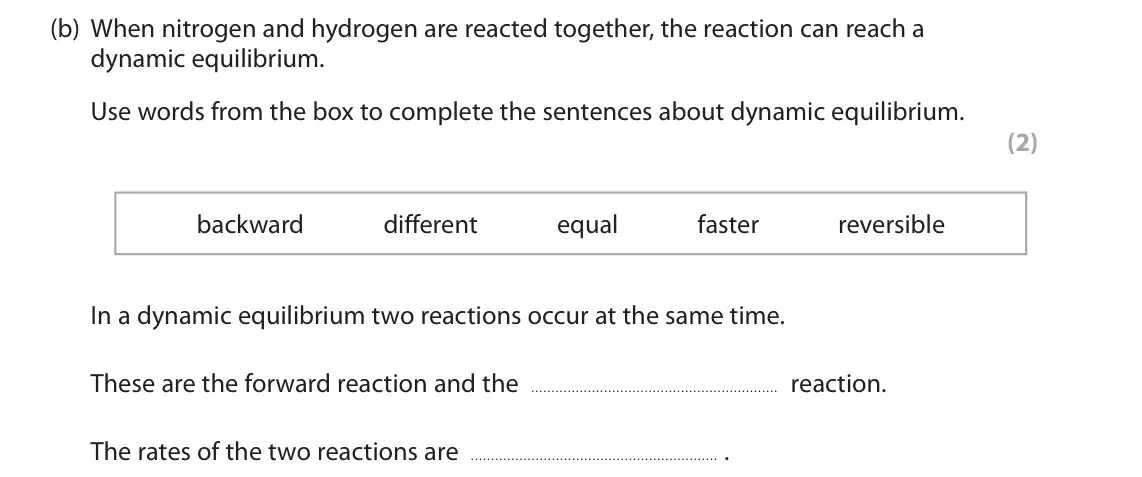
Q5(d)(i)
The whole paper ↗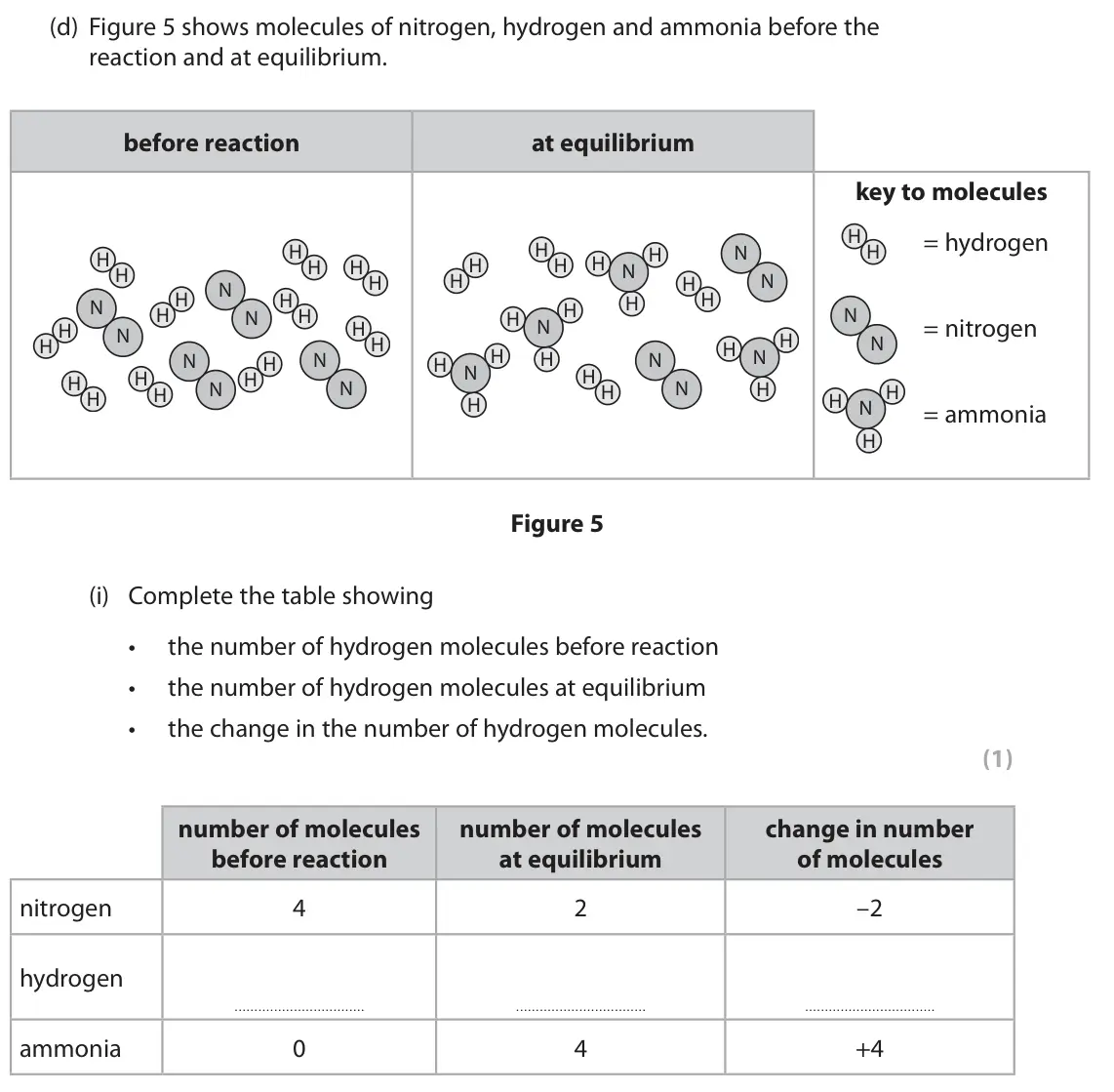
Q5(d)(ii)
The whole paper ↗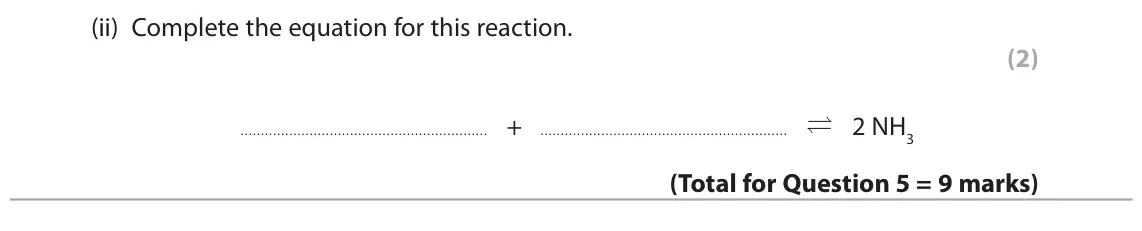
Q8(c)(i)
The whole paper ↗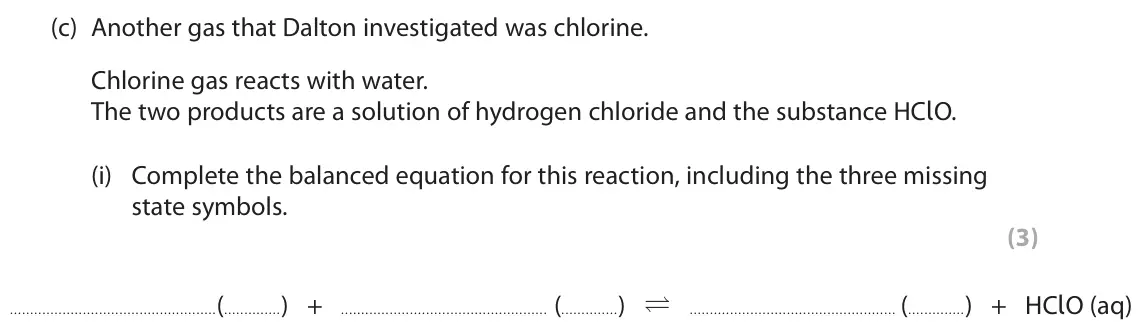
Q7(a)(i)
The whole paper ↗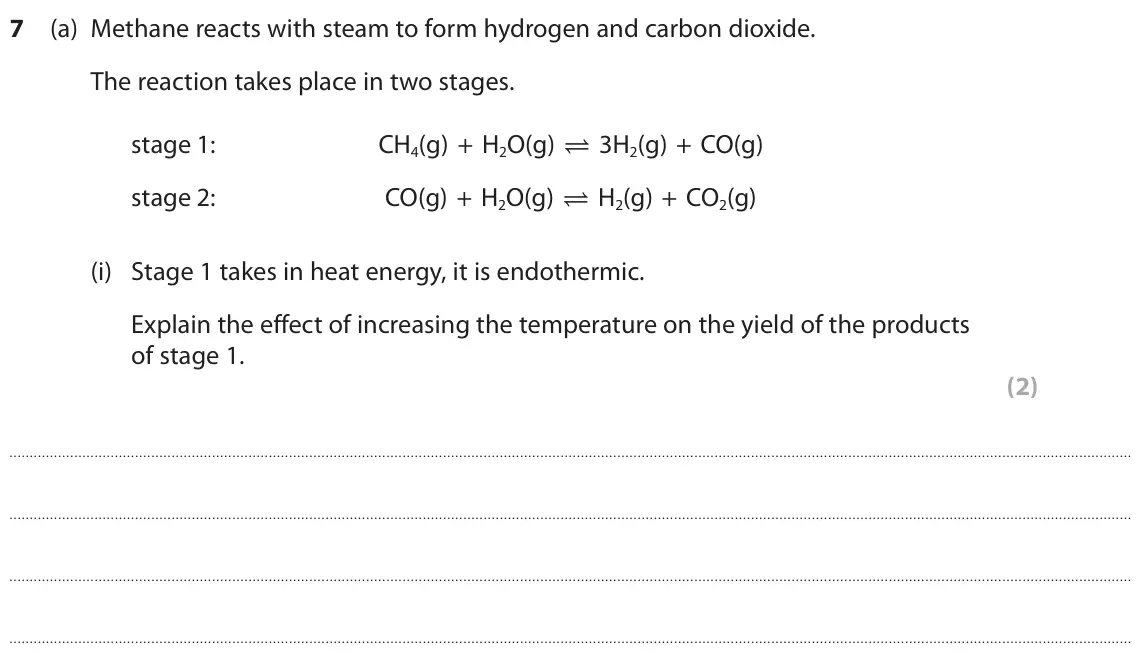
Q10(a)(ii)
The whole paper ↗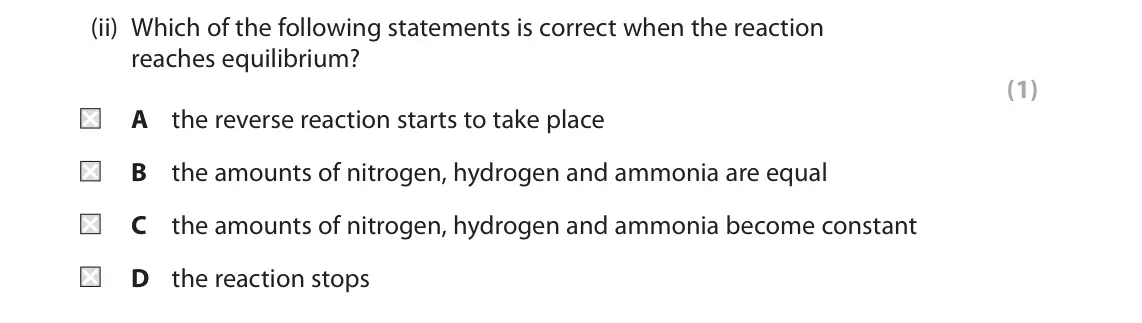
Q3(a)(ii)
The whole paper ↗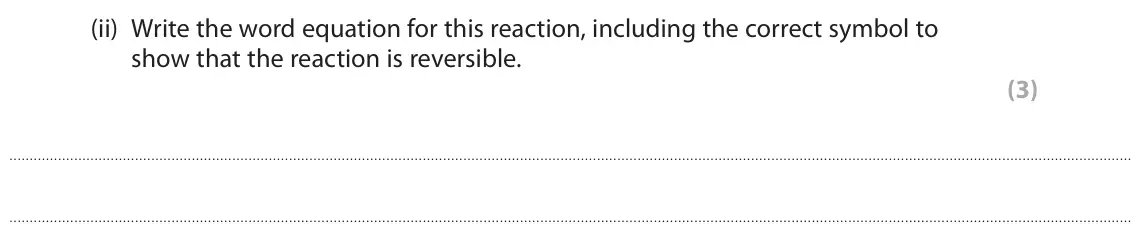
Q6(a)
The whole paper ↗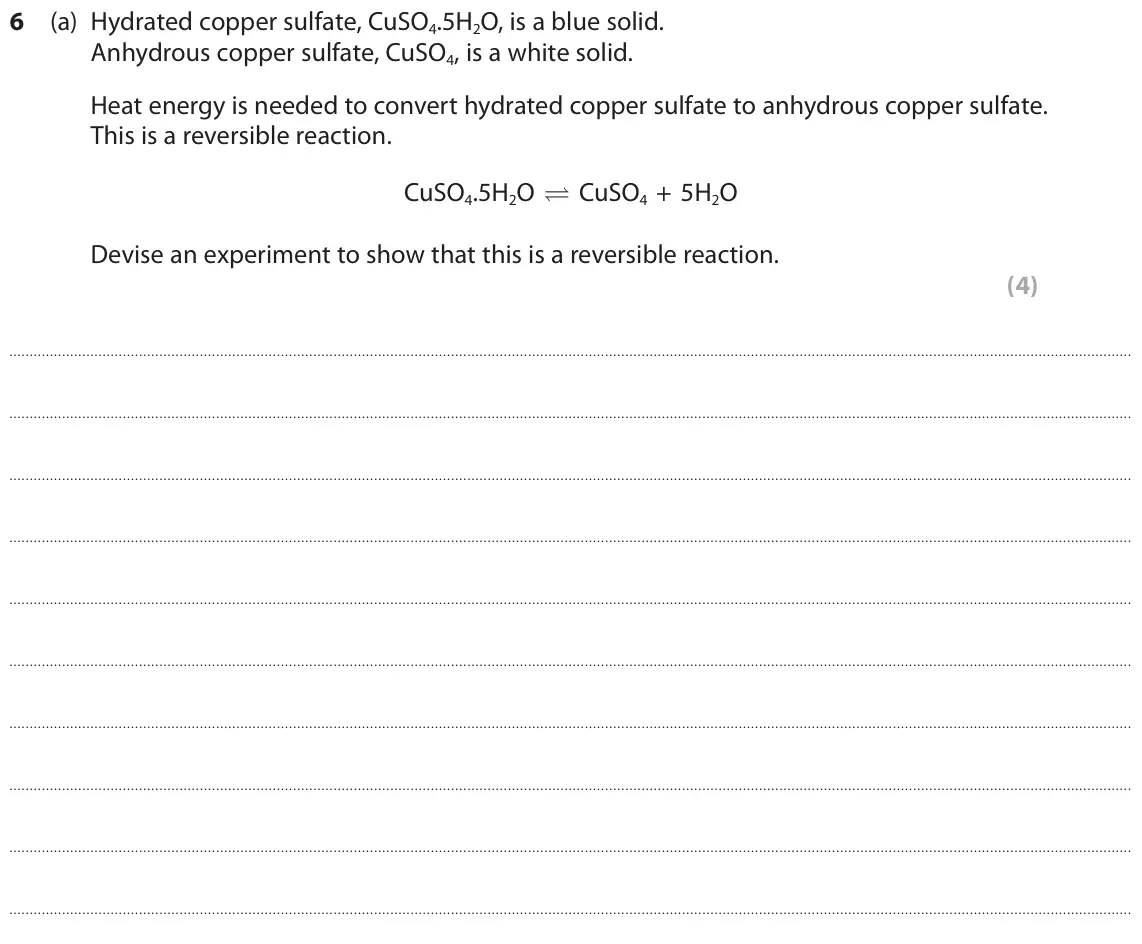
Q6(b)
The whole paper ↗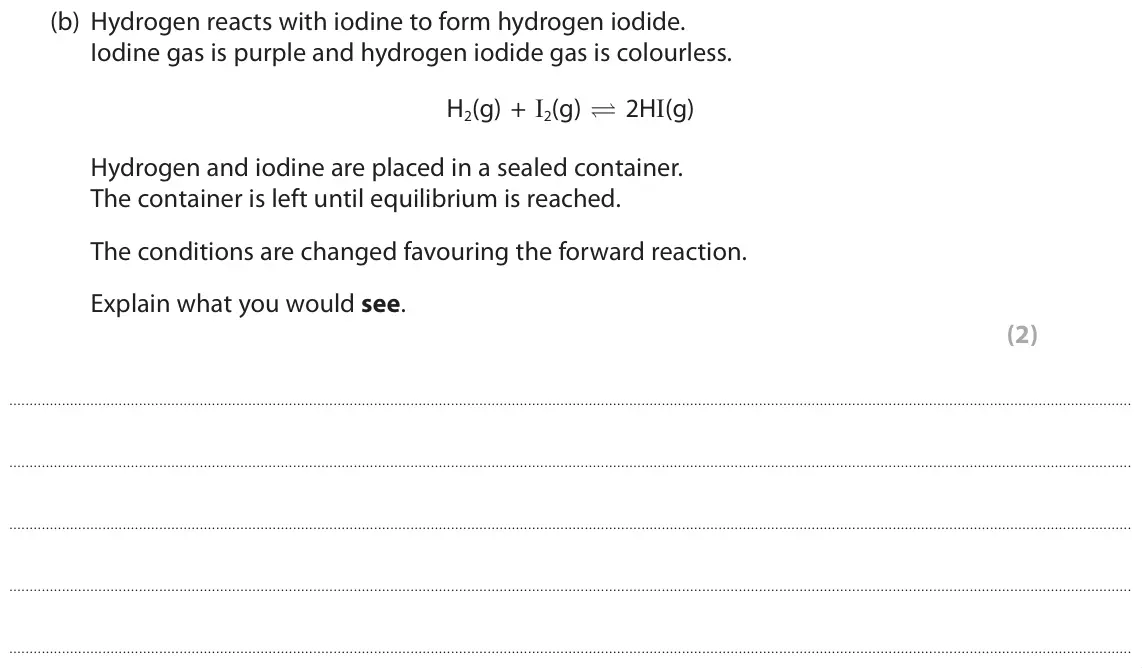
Q7(b)(i)
The whole paper ↗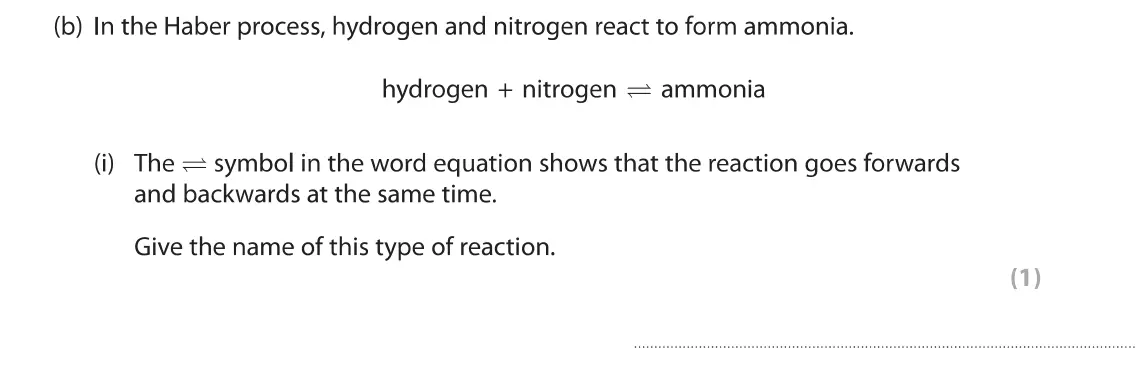
All 23 questions on Reversible reactions and equilibrium, as a list
- June 2025, Paper 1 Higher, Q9(b)(i) (2 marks): Explain what happens when the reaction reaches dynamic equilibrium (2)
- June 2025, Paper 1 Higher, Q9(c) (4 marks): Ammonia can also be made by heating ammonium chloride. NH4Cl(s) NH3(g) + HCl(g) A sample of solid ammonium chloride is heated in a boiling tube. After a few m
- June 2024, Paper 1 Foundation, Q2(a)(i) (1 mark): Complete the word equation for the reaction by adding the symbol to show that the reaction is reversible. (1) nitrogen + hydrogen ammonia
- June 2023, Paper 1 Higher, Q5(a)(iv) (2 marks): The reaction between nitrogen and hydrogen to make ammonia can reach dynamic equilibrium. The reaction gives out heat. Explain how the position of equilibrium c
- June 2023, Paper 1 Higher, Q5(b) (3 marks): Compound A is a dark brown gas. Compound B is a colourless gas. Two molecules of A combine to form one molecule of B in a reversible reaction. You are given a s
- June 2022, Paper 1 Higher, Q10(a)(i) (1 mark): State what is meant by dynamic in this context. (1)
- June 2022, Paper 1 Higher, Q10(a)(ii) (6 marks): The equation for this equilibrium reaction is C3H8(g) C3H6(g) + H2(g) propane propene The forward reaction takes in heat energy and is endothermic. A manufact
- June 2022, Paper 1 Foundation, Q1(b)(ii) (1 mark): State the meaning of the symbol in the equation. (1)
- November 2021, Paper 1 Higher, Q2(c)(i) (3 marks): Complete the balanced equation for this reaction, including the three missing state symbols. (3) ( ) + HClO (aq) ( ) + ( )
- November 2021, Paper 1 Higher, Q6(c) (1 mark): When chloride ions are added to a pale blue solution containing copper ions, the mixture turns yellow. This is a reversible reaction. yellow solution + water
- November 2021, Paper 1 Foundation, Q5(b) (2 marks): When nitrogen and hydrogen are reacted together, the reaction can reach a dynamic equilibrium. Use words from the box to complete the sentences about dynamic eq
- November 2021, Paper 1 Foundation, Q5(d)(i) (1 mark): Complete the table showing • the number of hydrogen molecules before reaction • the number of hydrogen molecules at equilibrium • the change in the number of hy
- November 2021, Paper 1 Foundation, Q5(d)(ii) (2 marks): Complete the equation for this reaction. (2) 2 NH3 +
- November 2021, Paper 1 Foundation, Q8(c)(i) (3 marks): Complete the balanced equation for this reaction, including the three missing state symbols. (3) ( ) + HClO (aq) ( ) + ( )
- November 2020, Paper 1 Higher, Q7(a)(i) (2 marks): Stage 1 takes in heat energy, it is endothermic. Explain the effect of increasing the temperature on the yield of the products of stage 1. (2)
- November 2020, Paper 1 Higher, Q10(a)(ii) (1 mark): Which of the following statements is correct when the reaction reaches equilibrium? (1) A the reverse reaction starts to take place B the amounts of nitrogen, h
- November 2020, Paper 1 Foundation, Q3(a)(ii) (3 marks): Write the word equation for this reaction, including the correct symbol to show that the reaction is reversible. (3)
- June 2019, Paper 1 Higher, Q6(a) (4 marks): Hydrated copper sulfate, CuSO4.5H2O, is a blue solid. Anhydrous copper sulfate, CuSO4, is a white solid. Heat energy is needed to convert hydrated copper sulfat
- June 2019, Paper 1 Higher, Q6(b) (2 marks): Hydrogen reacts with iodine to form hydrogen iodide. Iodine gas is purple and hydrogen iodide gas is colourless. H2(g) + I2(g) U 2HI(g) Hydrogen and iodine are
- June 2019, Paper 1 Foundation, Q7(b)(i) (1 mark): The = symbol in the word equation shows that the reaction goes forwards and backwards at the same time. Give the name of this type of reaction. (1)
- June 2018, Paper 1 Foundation, Q1(b)(i) (1 mark): Ammonia can be manufactured by the Haber process. The word equation for the reaction is nitrogen + hydrogen U ammonia State the meaning of the symbol. (1)
- June 2018, Paper 1 Foundation, Q1(b)(ii) (1 mark): In the Haber process, the percentage yield of ammonia at equilibrium changes with temperature. Figure 2 shows how the percentage yield of ammonia at equilibrium
- June 2018, Paper 1 Foundation, Q1(b)(iii) (1 mark): Use the graph to find the percentage yield of ammonia at equilibrium at 450°C. (1) percentage yield of ammonia at equilibrium =
Questions, mark schemes and examiner’s reports are © Pearson Edexcel, from their published past papers. Plumi isn’t affiliated with any exam board. Want whole papers? Every Edexcel GCSE Chemistry paper.
Rather write your answers by hand on iPad? Plumi marks them against the same mark schemes.