 plumi
Selective breeding and tissue culture: Edexcel GCSE Biology questions
Every Edexcel GCSE Biology exam question on Selective breeding and tissue culture (specification points 4.8–4.9), 2018–2025, with its mark scheme and examiner’s report.
Find questions1,834
Exam
All years
Calculations
Q10(d)
The whole paper ↗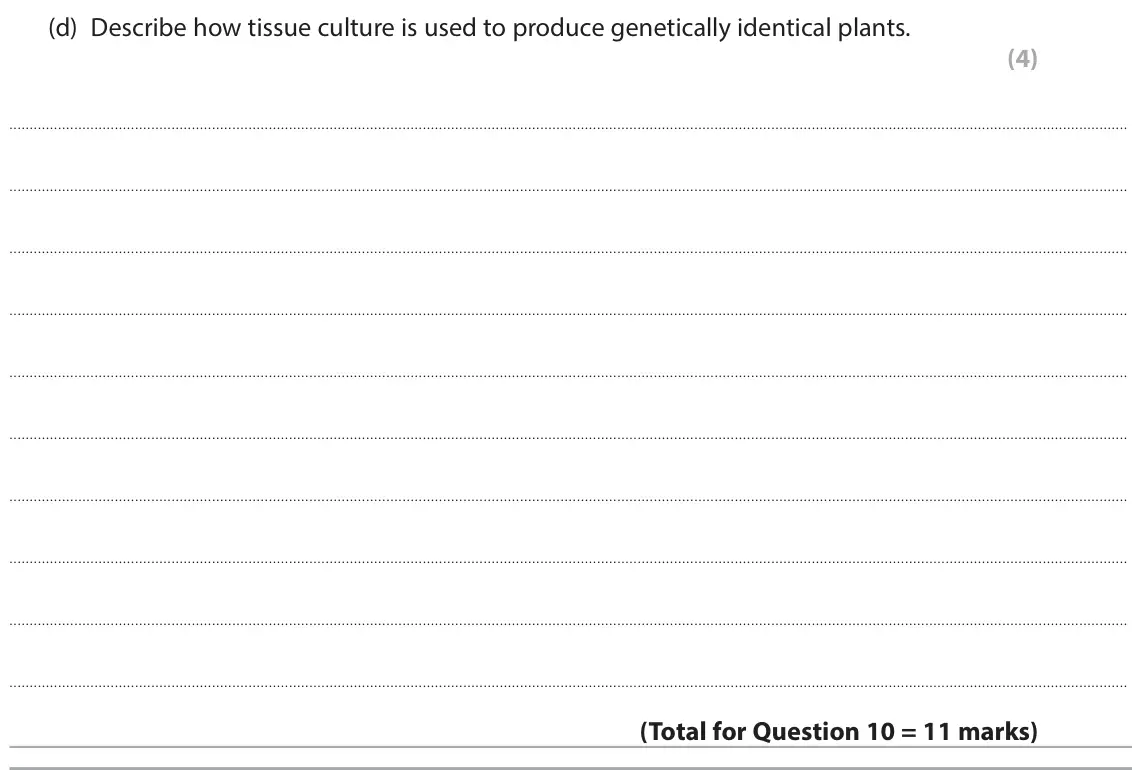
Q4(b)(i)
The whole paper ↗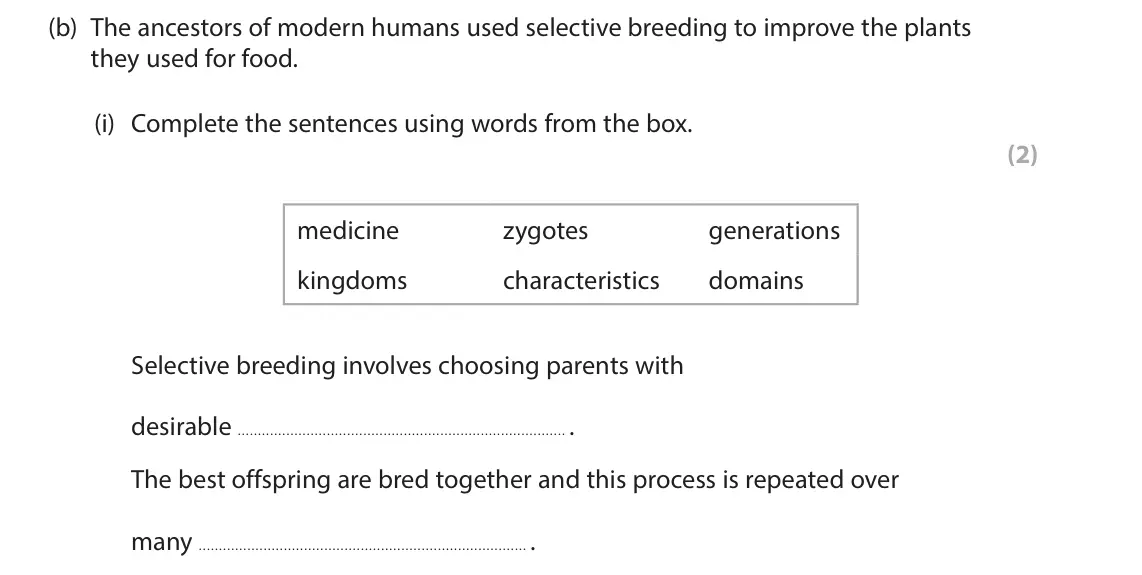
Q4(b)(ii)
The whole paper ↗
Q4(a)
The whole paper ↗
Q7(a)(ii)
The whole paper ↗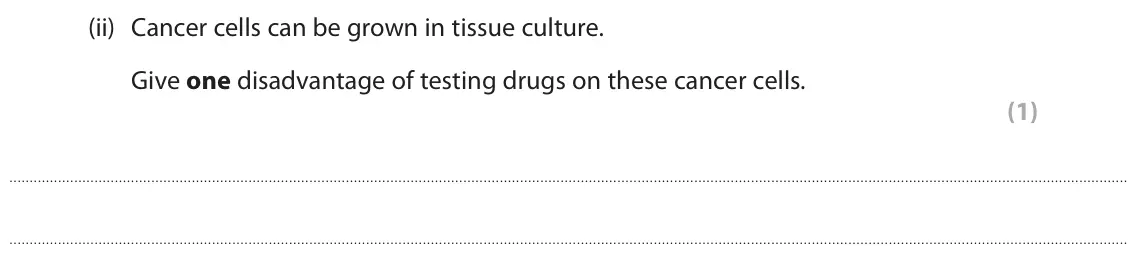
Q7(b)(iii)
The whole paper ↗
Q6(b)
The whole paper ↗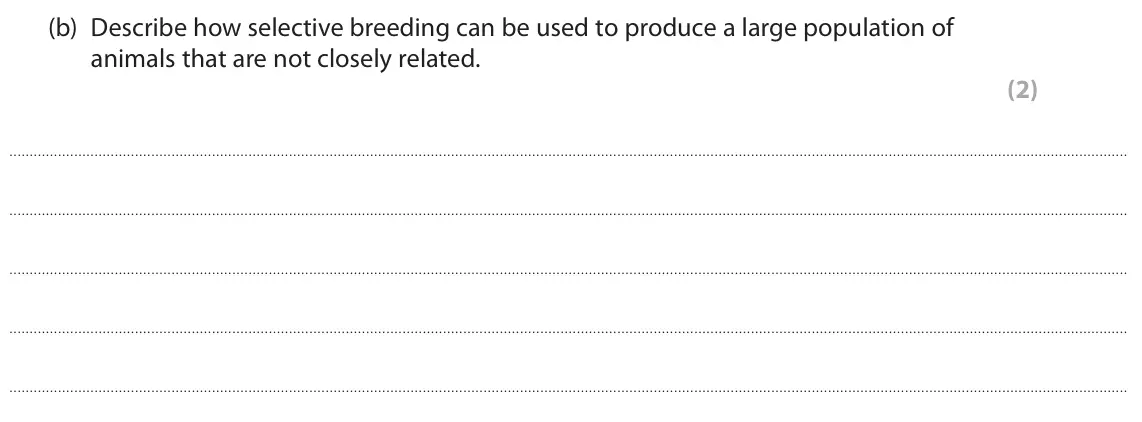
Q2(b)(i)
The whole paper ↗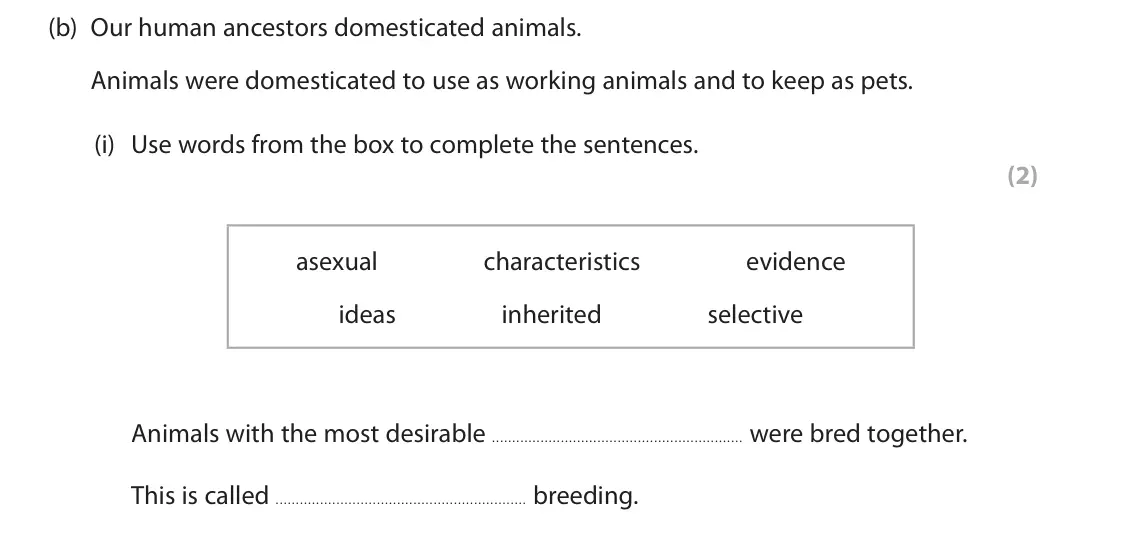
Q2(b)(iii)
The whole paper ↗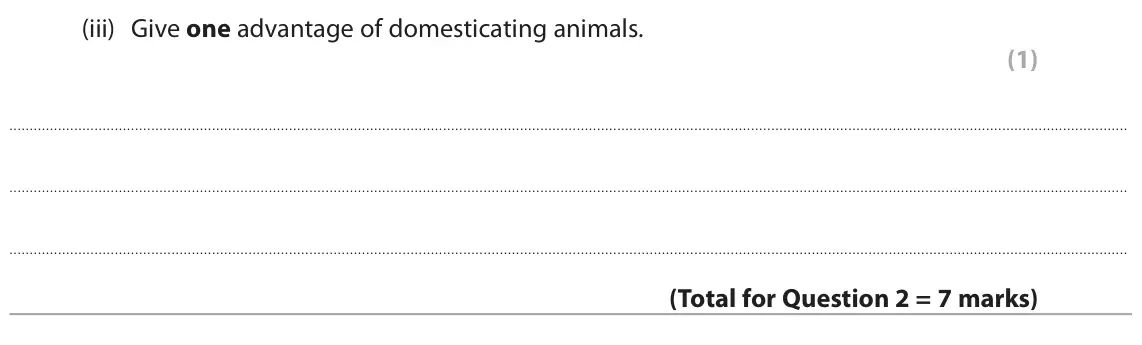
Q5(d)
The whole paper ↗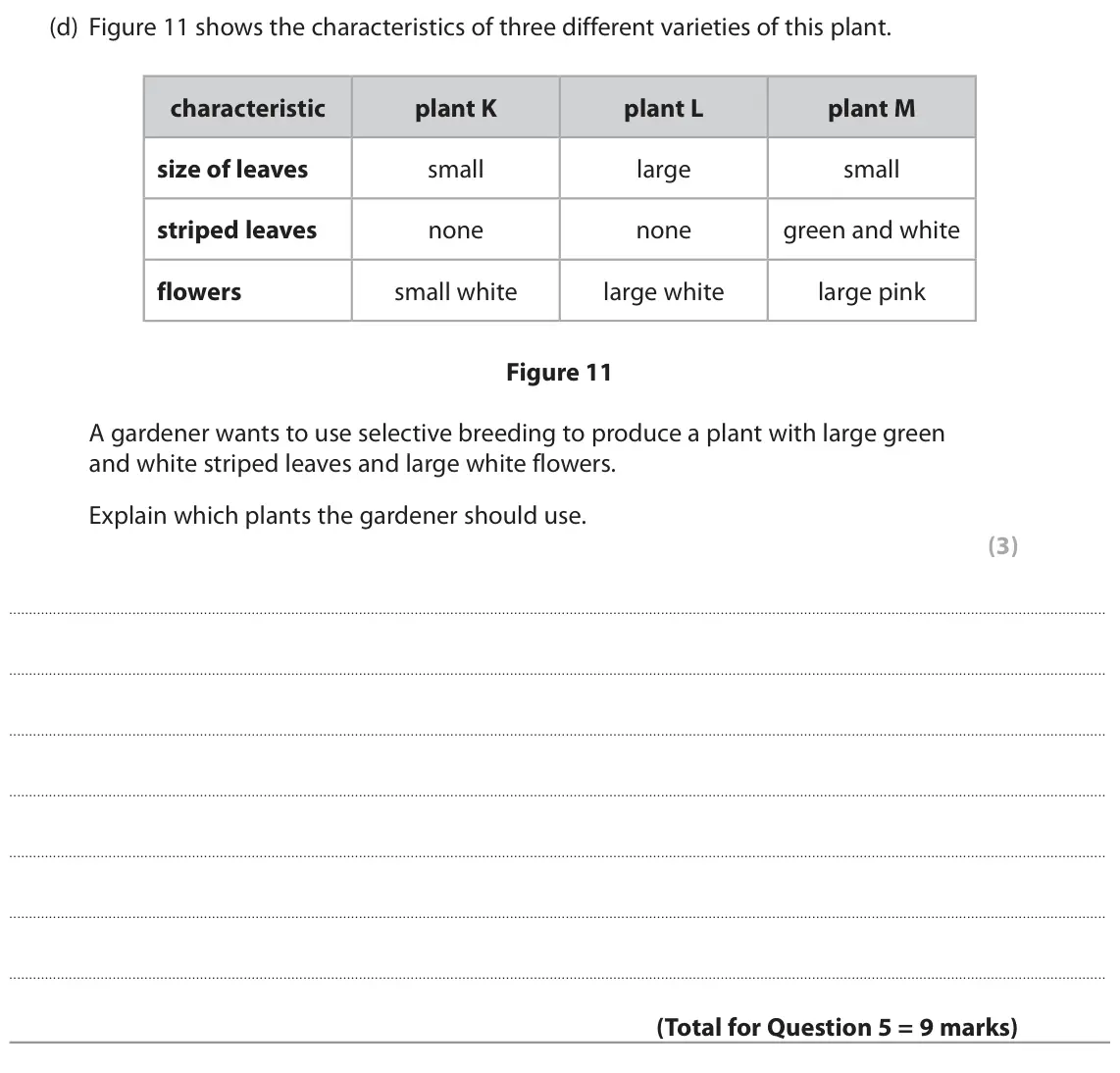
Q7(b)
The whole paper ↗
Q3(b)
The whole paper ↗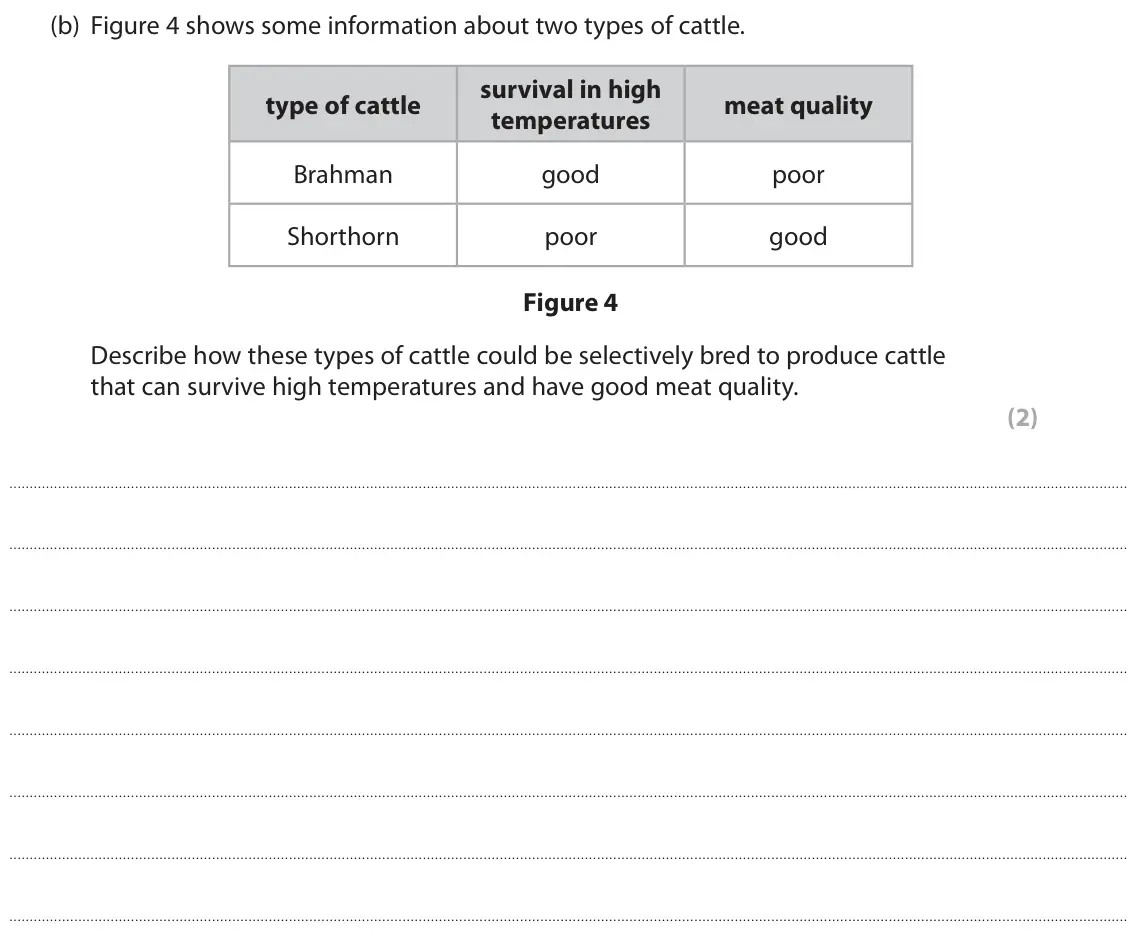
Q3(c)
The whole paper ↗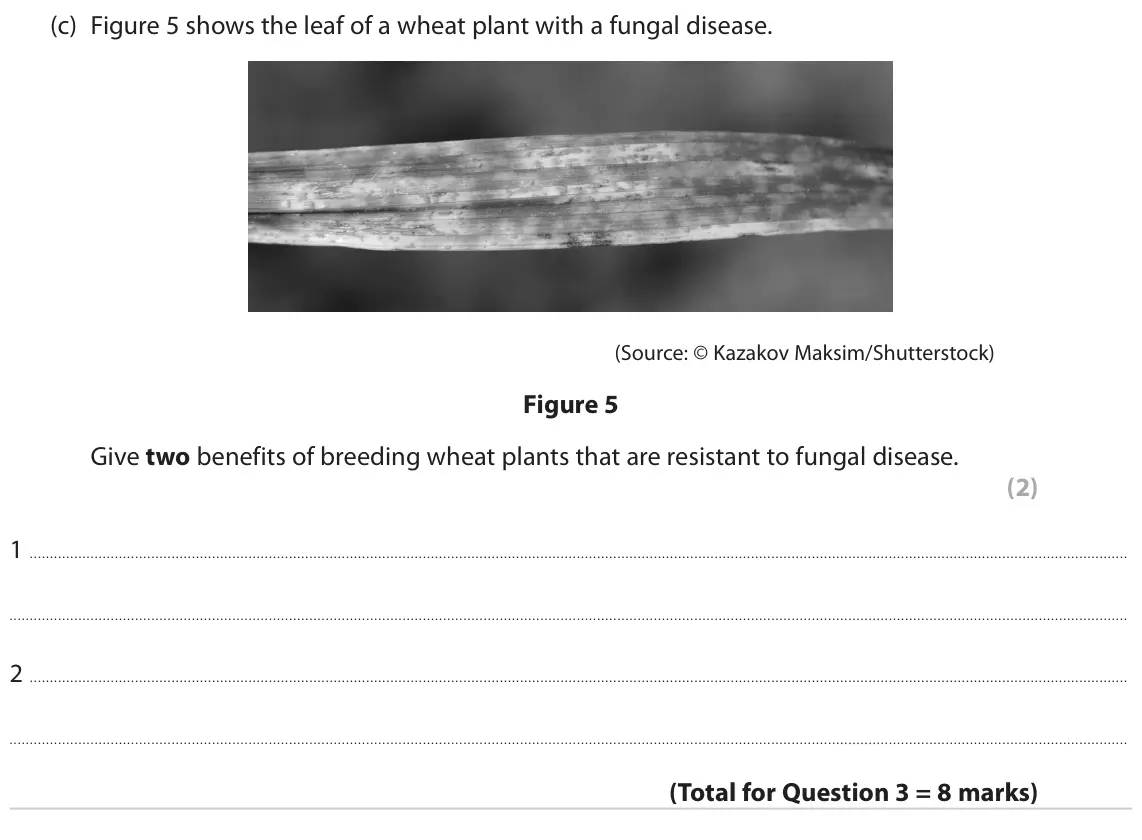
Q5(a)(i)
The whole paper ↗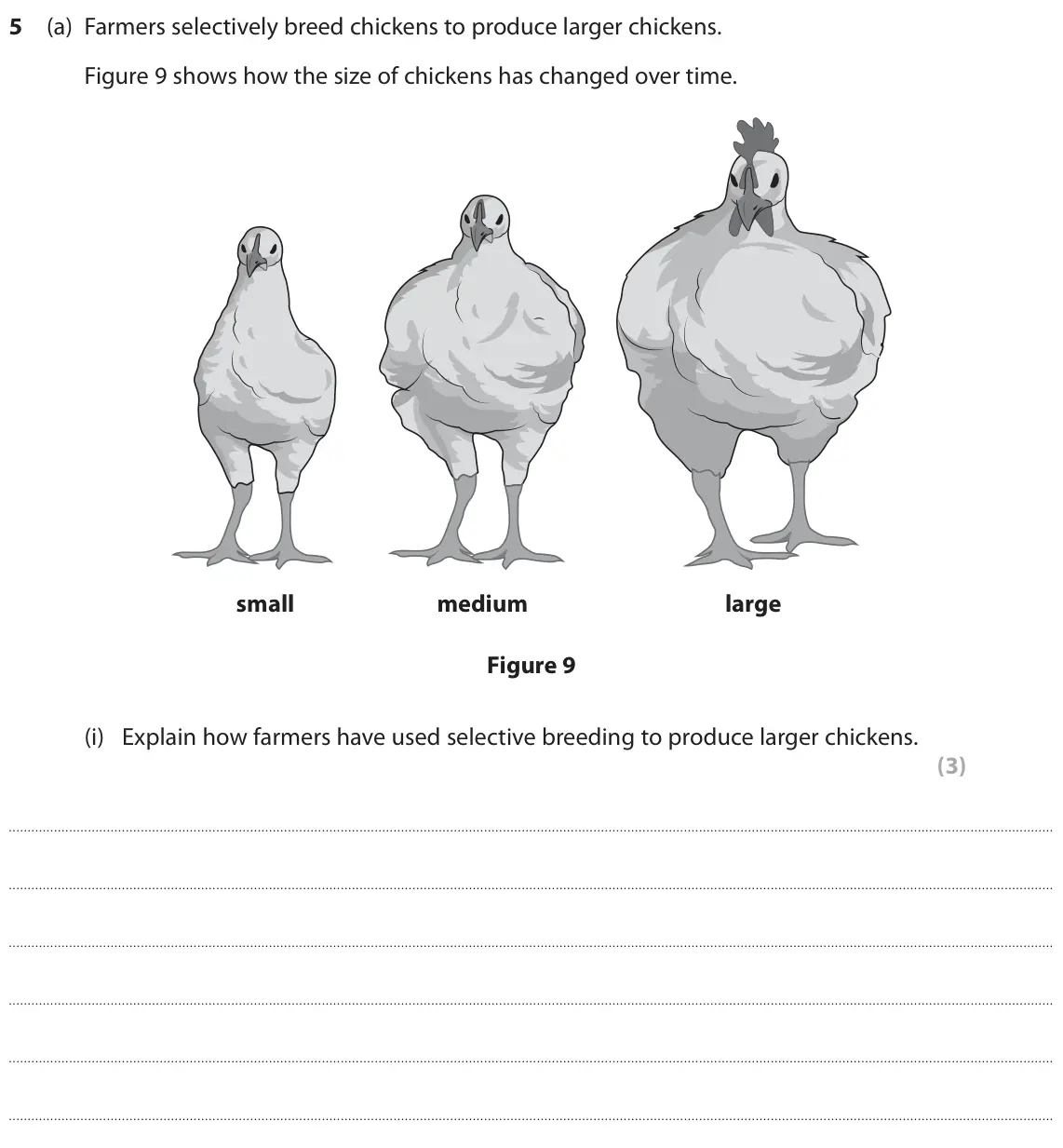
Q5(a)(ii)
The whole paper ↗
Q4(a)(i)
The whole paper ↗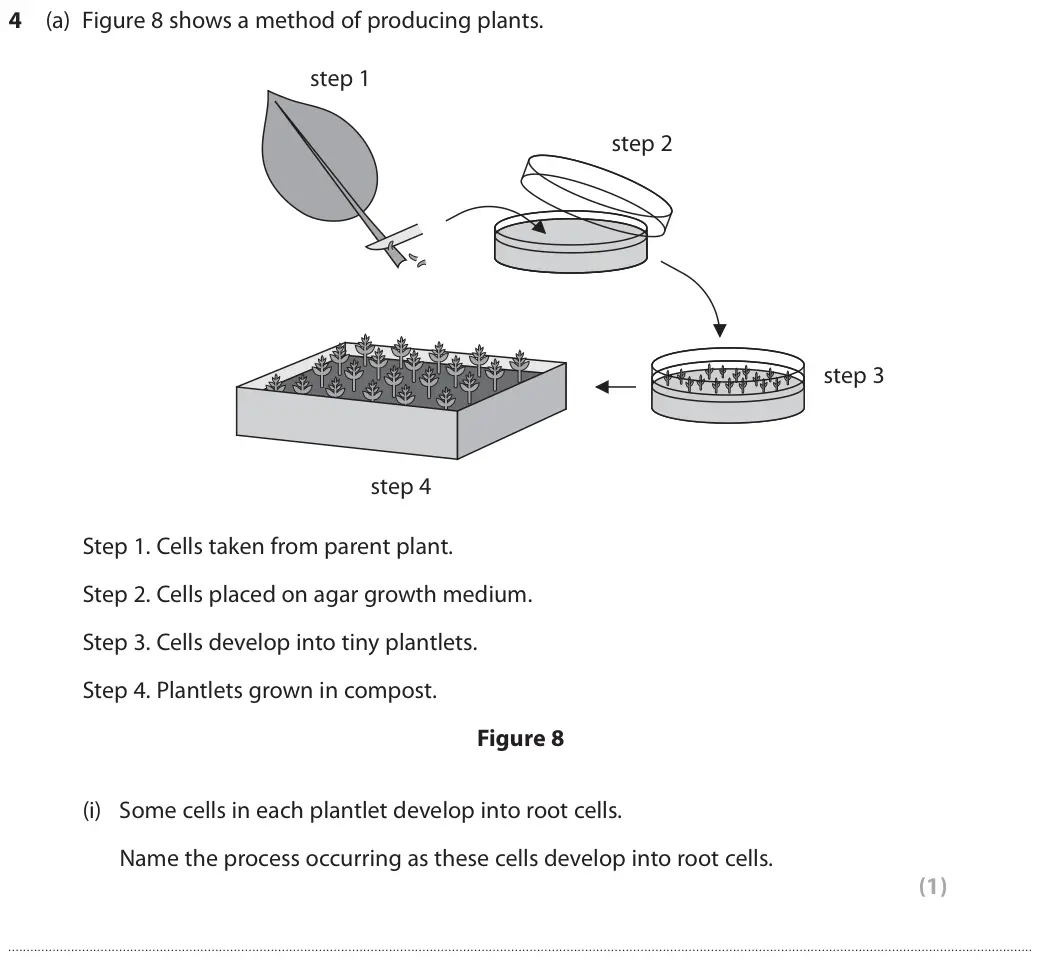
Q4(a)(ii)
The whole paper ↗
Q9(b)
The whole paper ↗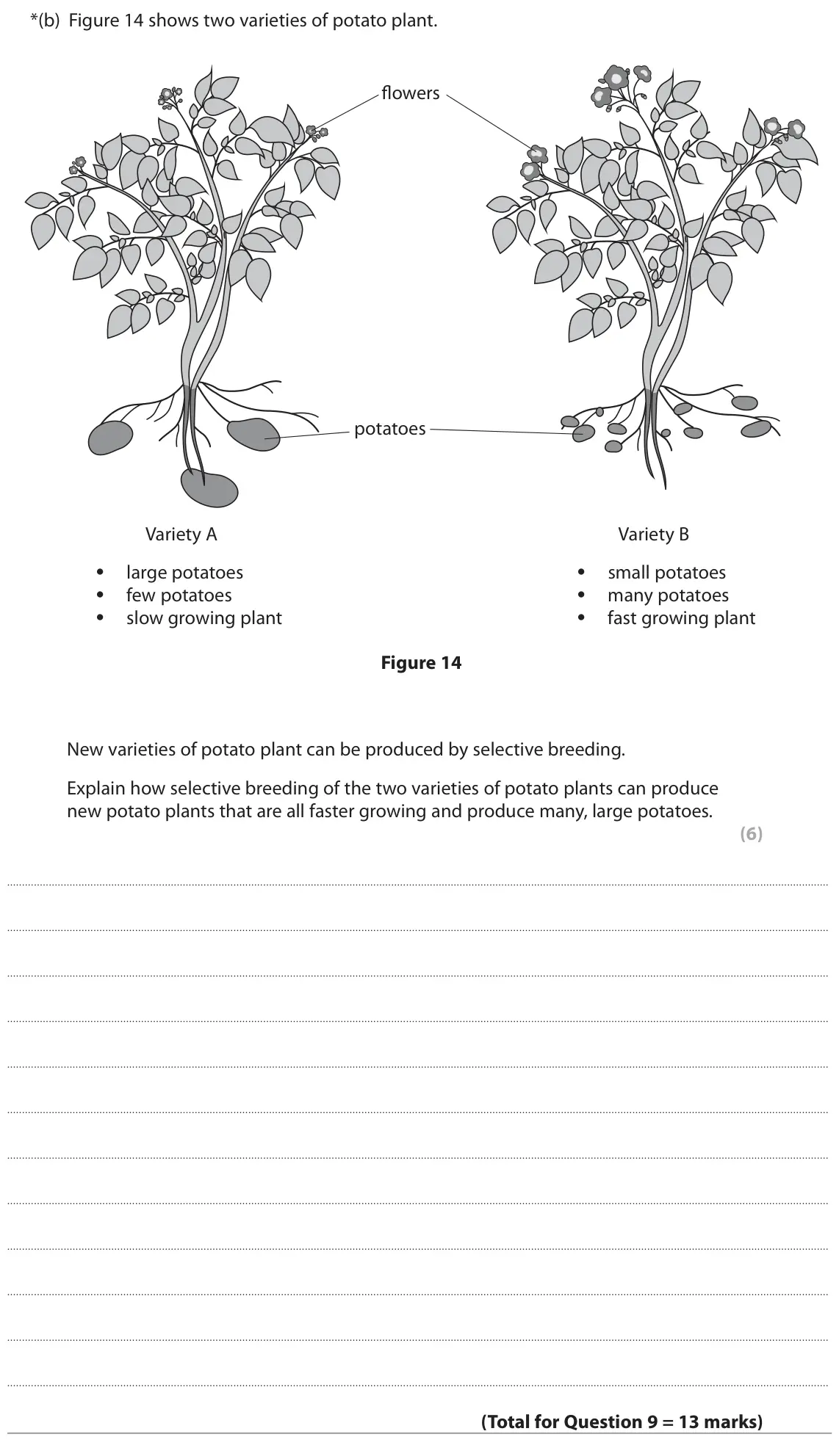
Q10(a)(i)
The whole paper ↗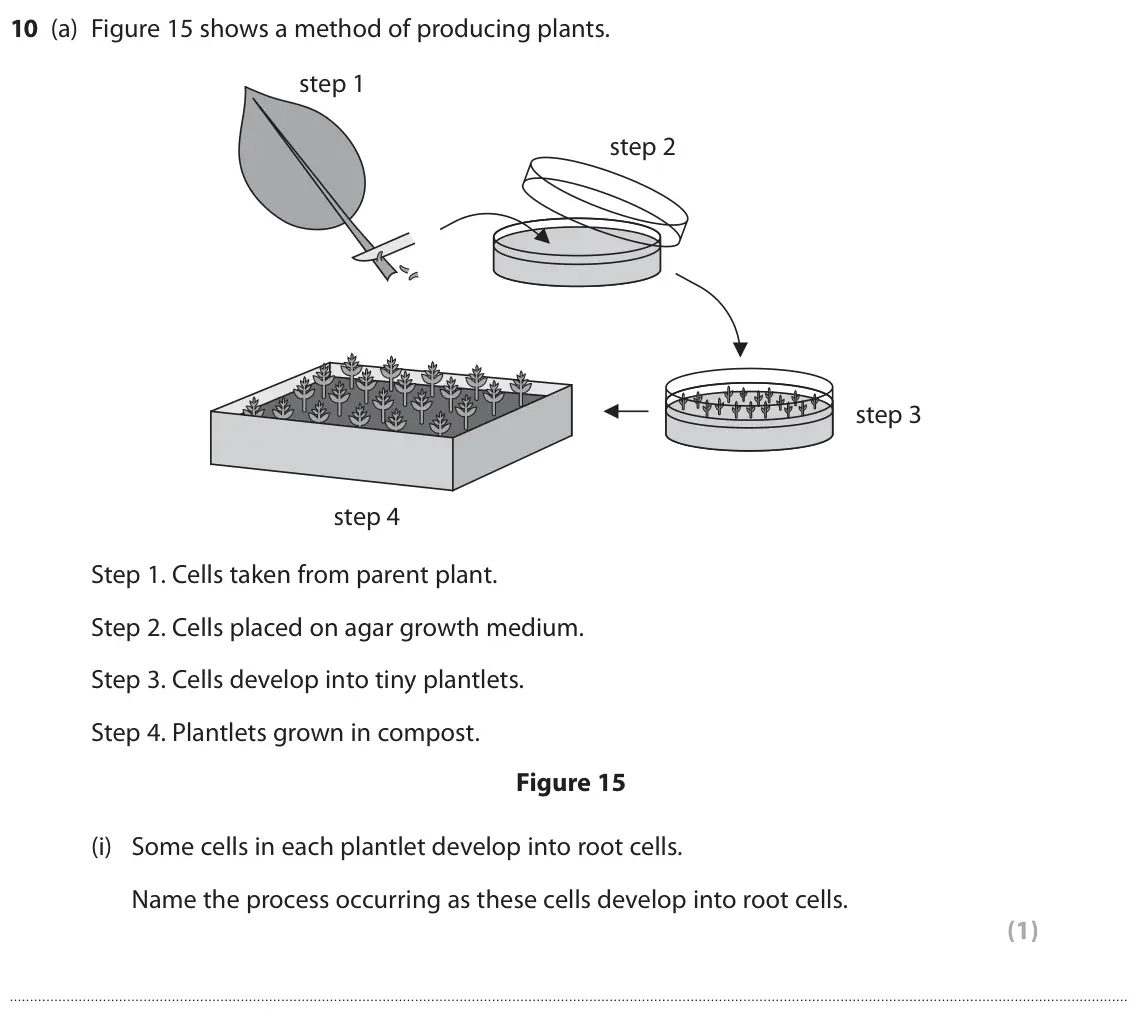
Q10(a)(ii)
The whole paper ↗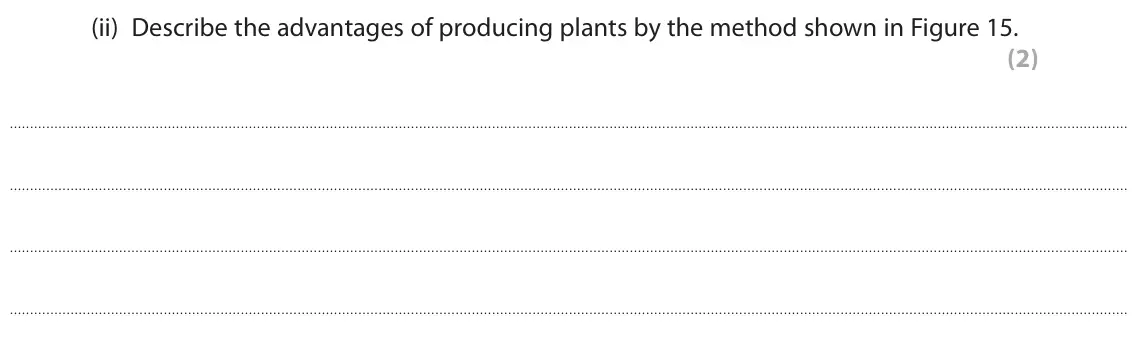
All 22 questions on Selective breeding and tissue culture, as a list
- June 2025, Paper 1 Higher, Q10(d) (4 marks): Describe how tissue culture is used to produce genetically identical plants. (4)
- June 2025, Paper 1 Foundation, Q4(b)(i) (2 marks): Complete the sentences using words from the box. (2) medicine zygotes generations kingdoms characteristics domains Selective breeding involves choosing parents
- June 2025, Paper 1 Foundation, Q4(b)(ii) (1 mark): Suggest one feature of a banana that could be improved by selective breeding. (1)
- June 2024, Paper 1 Foundation, Q4(a) (3 marks): Describe how selective breeding has produced chickens that lay large numbers of eggs. (3)
- June 2024, Paper 1 Foundation, Q7(a)(ii) (1 mark): Cancer cells can be grown in tissue culture. Give one disadvantage of testing drugs on these cancer cells. (1)
- June 2024, Paper 1 Foundation, Q7(b)(iii) (1 mark): Suggest one advantage of using tissue culture to conserve rare plants. (1)
- June 2023, Paper 1 Higher, Q6(b) (2 marks): Describe how selective breeding can be used to produce a large population of animals that are not closely related. (2)
- June 2023, Paper 1 Foundation, Q2(b)(i) (2 marks): Use words from the box to complete the sentences. (2) asexual characteristics evidence ideas inherited selective Animals with the most desirable were bred toget
- June 2023, Paper 1 Foundation, Q2(b)(iii) (1 mark): Give one advantage of domesticating animals. (1)
- June 2022, Paper 1 Foundation, Q5(d) (3 marks): Figure 11 shows the characteristics of three different varieties of this plant. characteristic plant K plant L plant M size of leaves small large small striped
- November 2021, Paper 1 Higher, Q7(b) (3 marks): Describe how racehorses alive today have been selectively bred to run faster. (3)
- November 2021, Paper 1 Foundation, Q3(b) (2 marks): Figure 4 shows some information about two types of cattle. survival in high type of cattle meat quality temperatures Brahman good poor Shorthorn poor good Figur
- November 2021, Paper 1 Foundation, Q3(c) (2 marks): Figure 5 shows the leaf of a wheat plant with a fungal disease. (Source: © Kazakov Maksim/Shutterstock) Figure 5 Give two benefits of breeding wheat plants that
- November 2020, Paper 1 Foundation, Q5(a)(i) (3 marks): Explain how farmers have used selective breeding to produce larger chickens. (3)
- November 2020, Paper 1 Foundation, Q5(a)(ii) (2 marks): Describe one benefit and one risk of selectively breeding chickens. (2) benefit risk
- June 2018, Paper 1 Higher, Q4(a)(i) (1 mark): Some cells in each plantlet develop into root cells. Name the process occurring as these cells develop into root cells. (1)
- June 2018, Paper 1 Higher, Q4(a)(ii) (2 marks): Describe the advantages of producing plants by the method shown in Figure 8. (2)
- June 2018, Paper 1 Foundation, Q9(b) (6 marks): Figure 14 shows two varieties of potato plant. flowers potatoes Variety A Variety B • large potatoes • small potatoes • few potatoes • many potatoes • slow grow
- June 2018, Paper 1 Foundation, Q10(a)(i) (1 mark): Some cells in each plantlet develop into root cells. Name the process occurring as these cells develop into root cells. (1)
- June 2018, Paper 1 Foundation, Q10(a)(ii) (2 marks): Describe the advantages of producing plants by the method shown in Figure 15. (2)
- Specimen, Paper 1 Higher, Q1(b) (3 marks): The population of humans on Earth has increased significantly leading to food shortages. The growth of drought-resistant crop plants could lead to an increase i
- Specimen, Paper 1 Foundation, Q7(b) (3 marks): The population of humans on Earth has increased significantly, leading to food shortages. The growth of drought-resistant crop plants could lead to an increase
Questions, mark schemes and examiner’s reports are © Pearson Edexcel, from their published past papers. Plumi isn’t affiliated with any exam board. Want whole papers? Every Edexcel GCSE Biology paper.
Rather write your answers by hand on iPad? Plumi marks them against the same mark schemes.