 plumi
Genetic engineering: Edexcel GCSE Biology questions
Every Edexcel GCSE Biology exam question on Genetic engineering (specification points 4.10–4.14), 2018–2025, with its mark scheme and examiner’s report.
Find questions1,834
Exam
All years
Calculations
Q7(d)
The whole paper ↗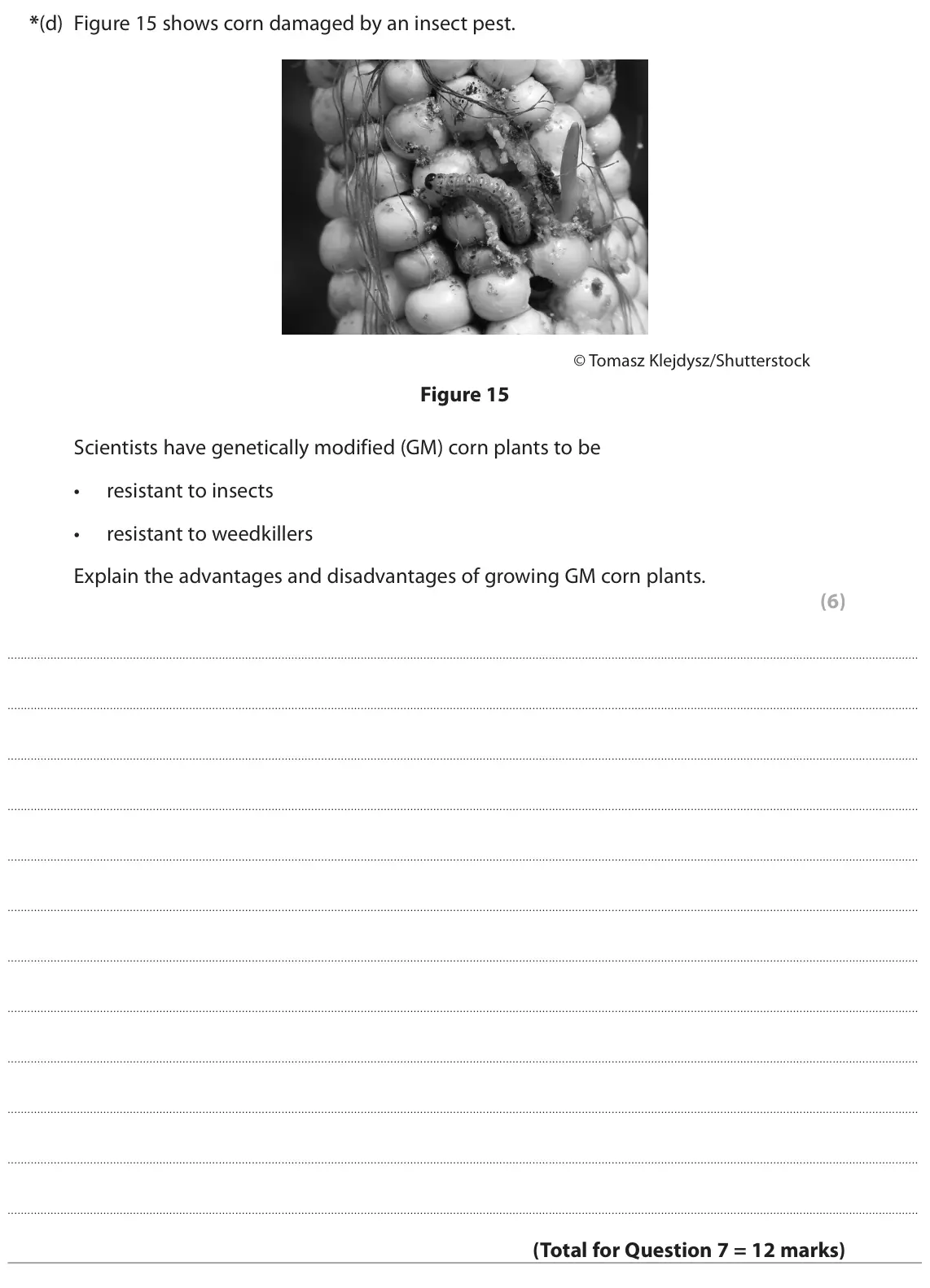
Q9(a)(i)
The whole paper ↗
Q9(b)(i)
The whole paper ↗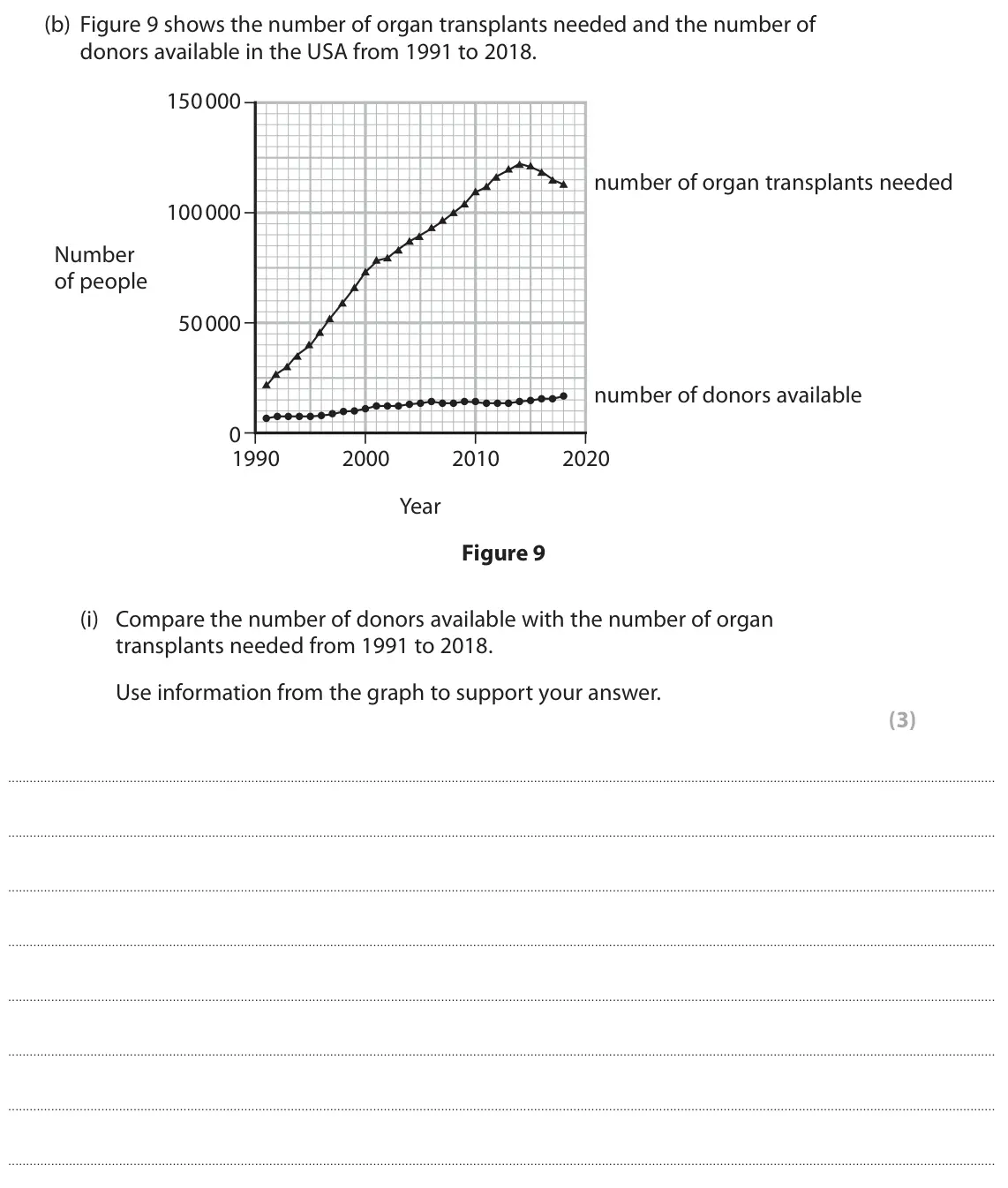
Q9(b)(ii)
The whole paper ↗
Q9(c)
The whole paper ↗
Q8(b)
The whole paper ↗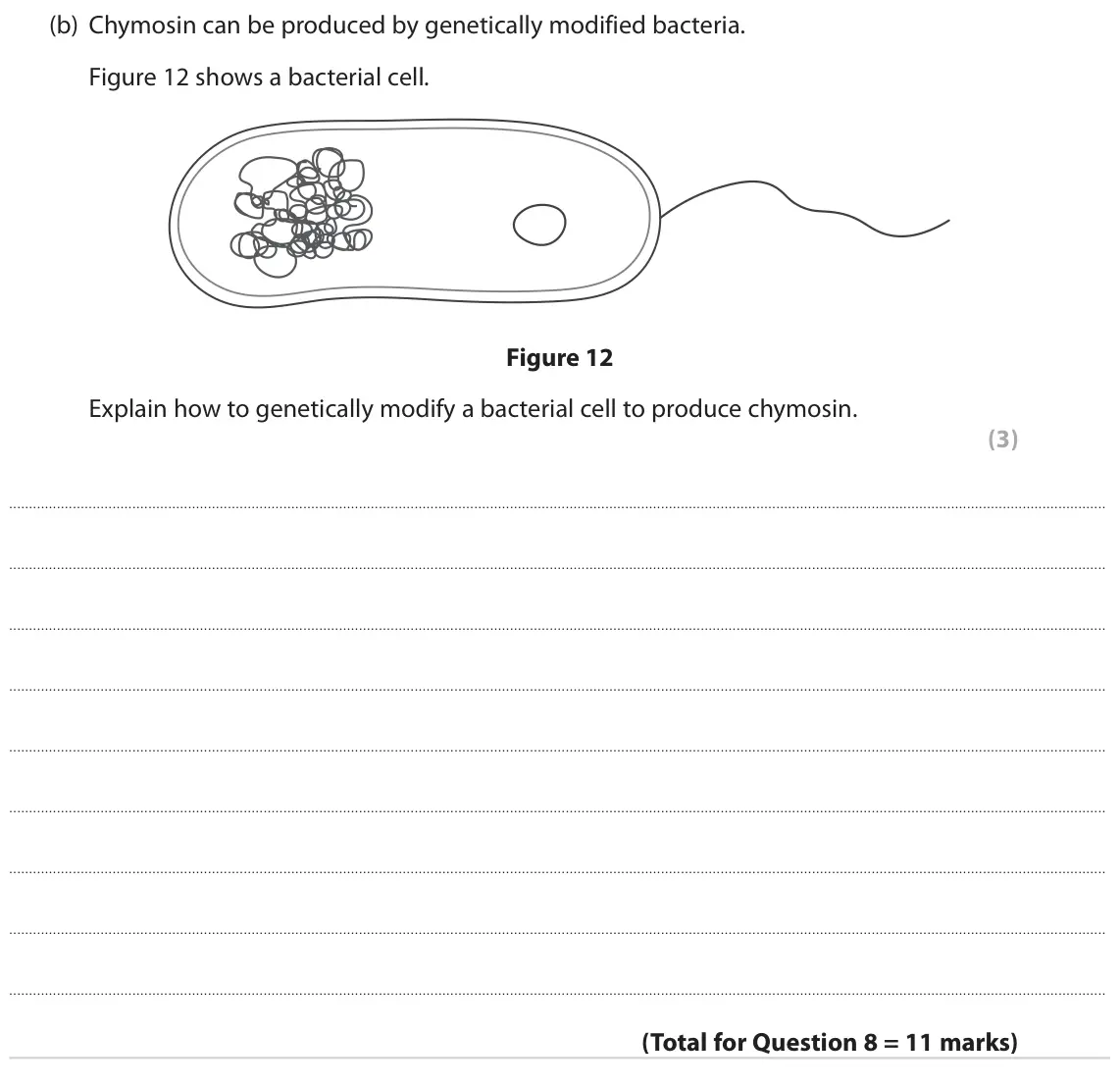
Q7(c)
The whole paper ↗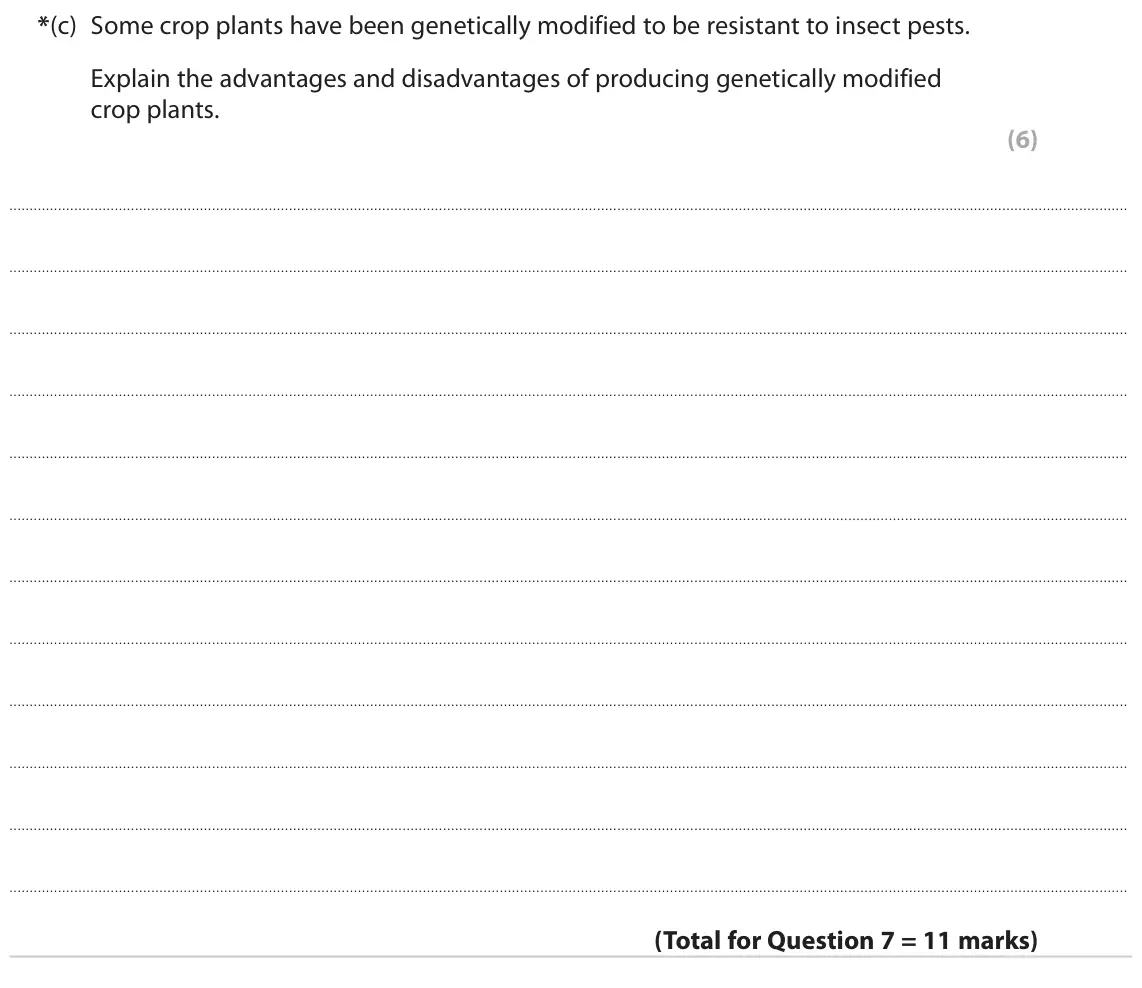
Q7(b)(i)
The whole paper ↗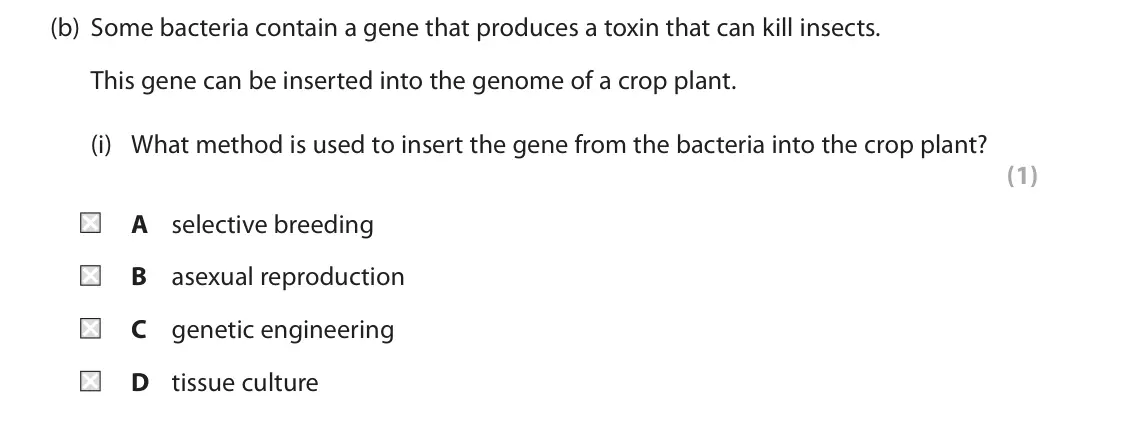
Q7(b)(ii)
The whole paper ↗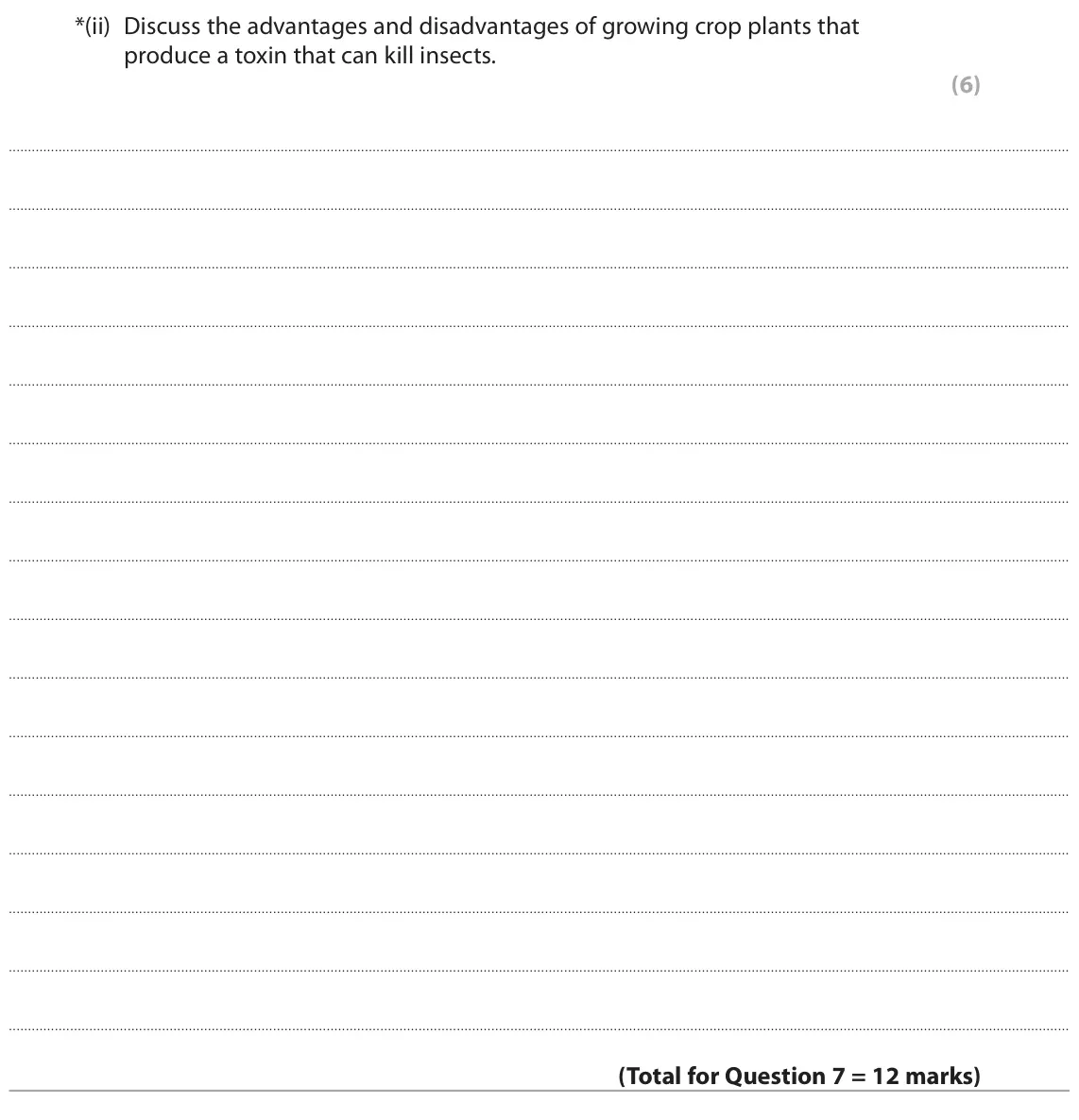
Q3(a)(i)
The whole paper ↗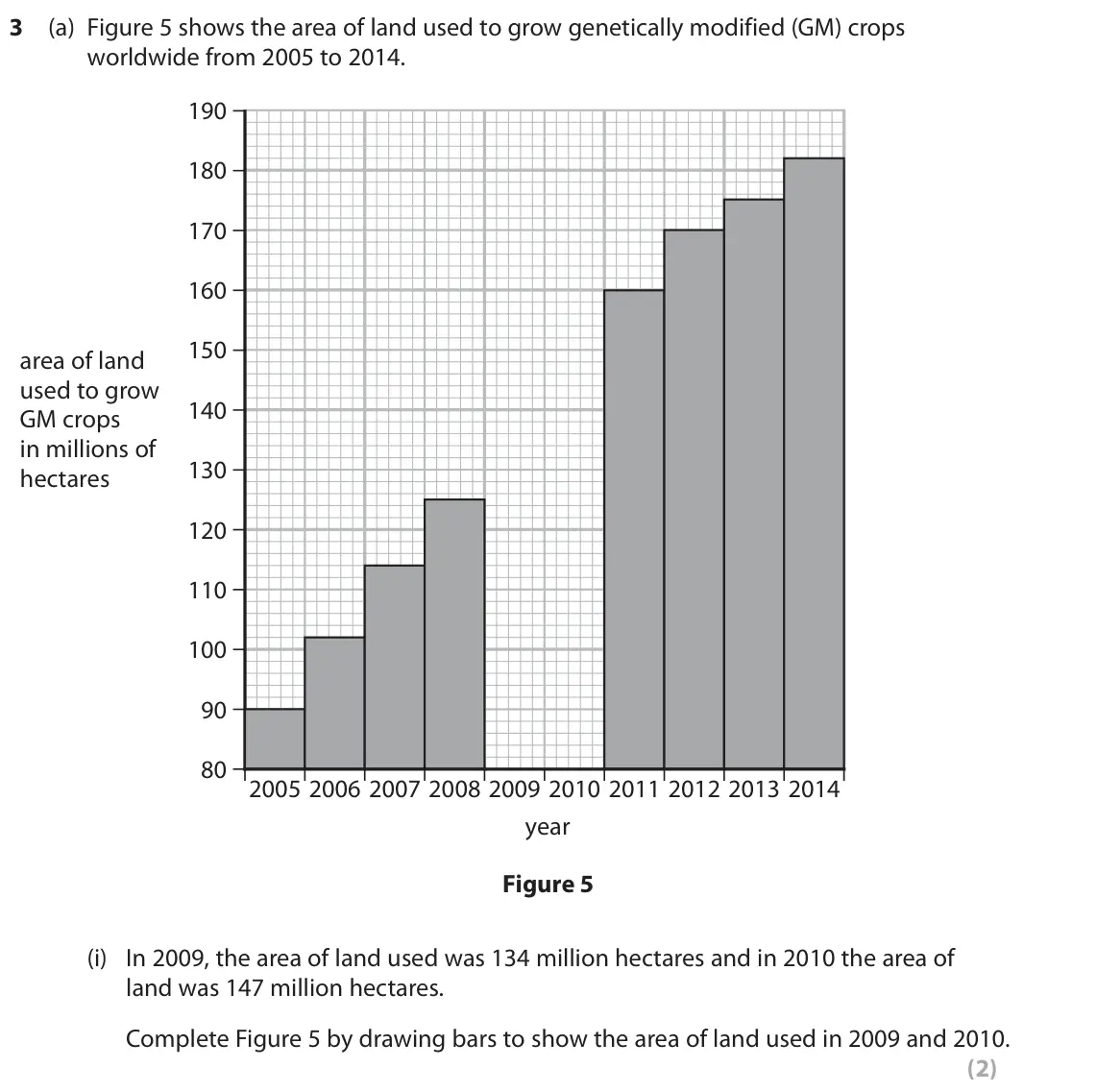
Q3(a)(ii)
The whole paper ↗
Q3(b)
The whole paper ↗
Q3(d)
The whole paper ↗
Q5(c)
The whole paper ↗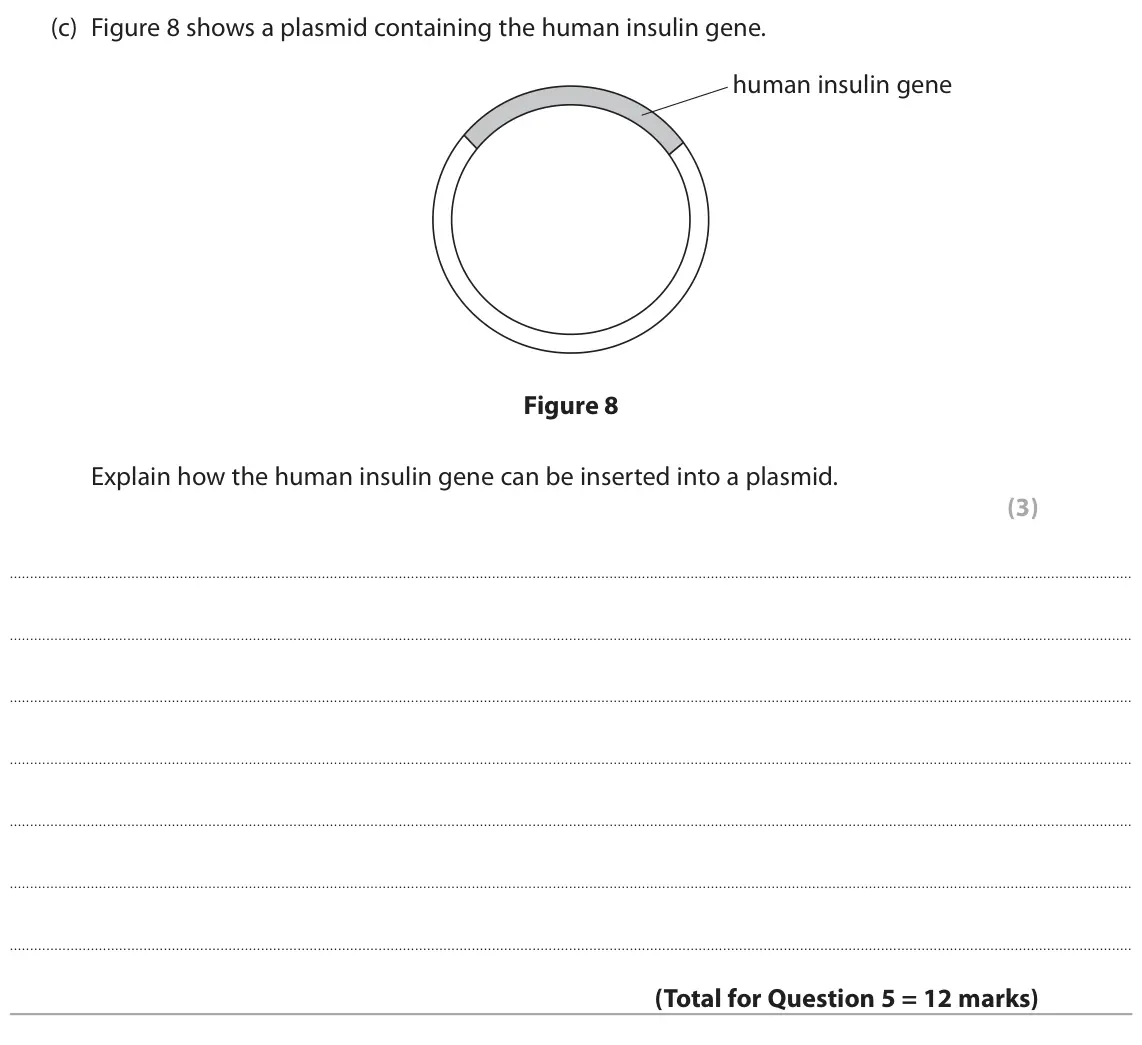
Q4(d)
The whole paper ↗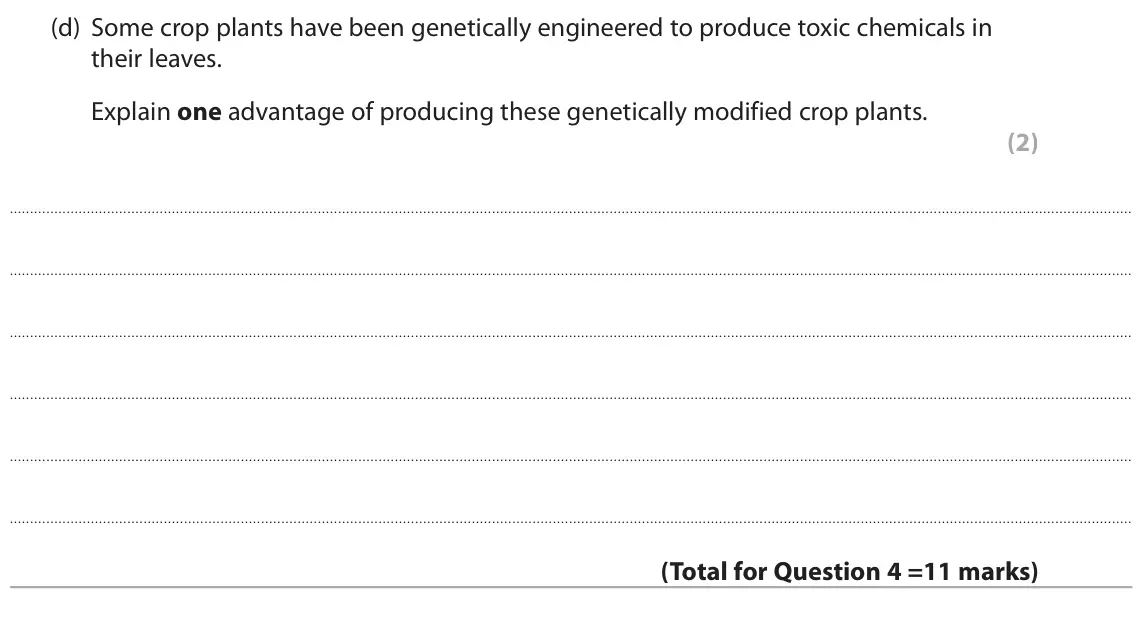
Q9(a)(i)
The whole paper ↗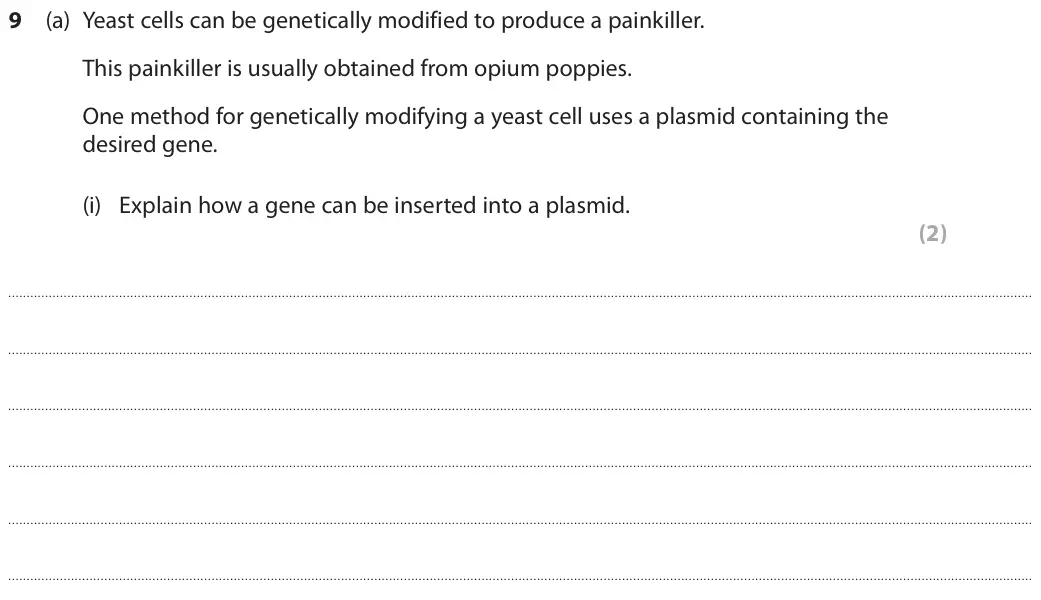
Q9(a)(ii)
The whole paper ↗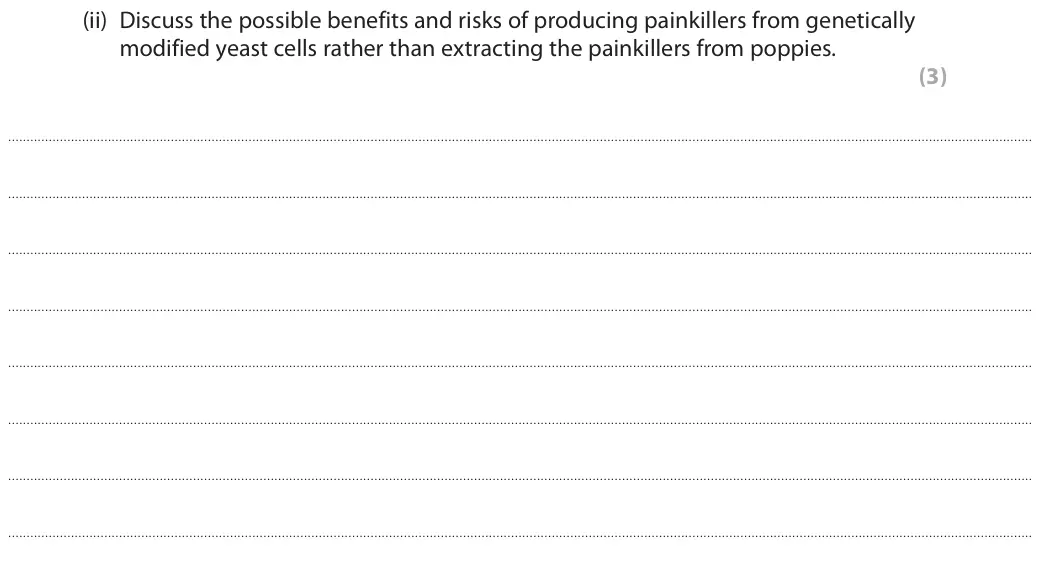
Q9(b)
The whole paper ↗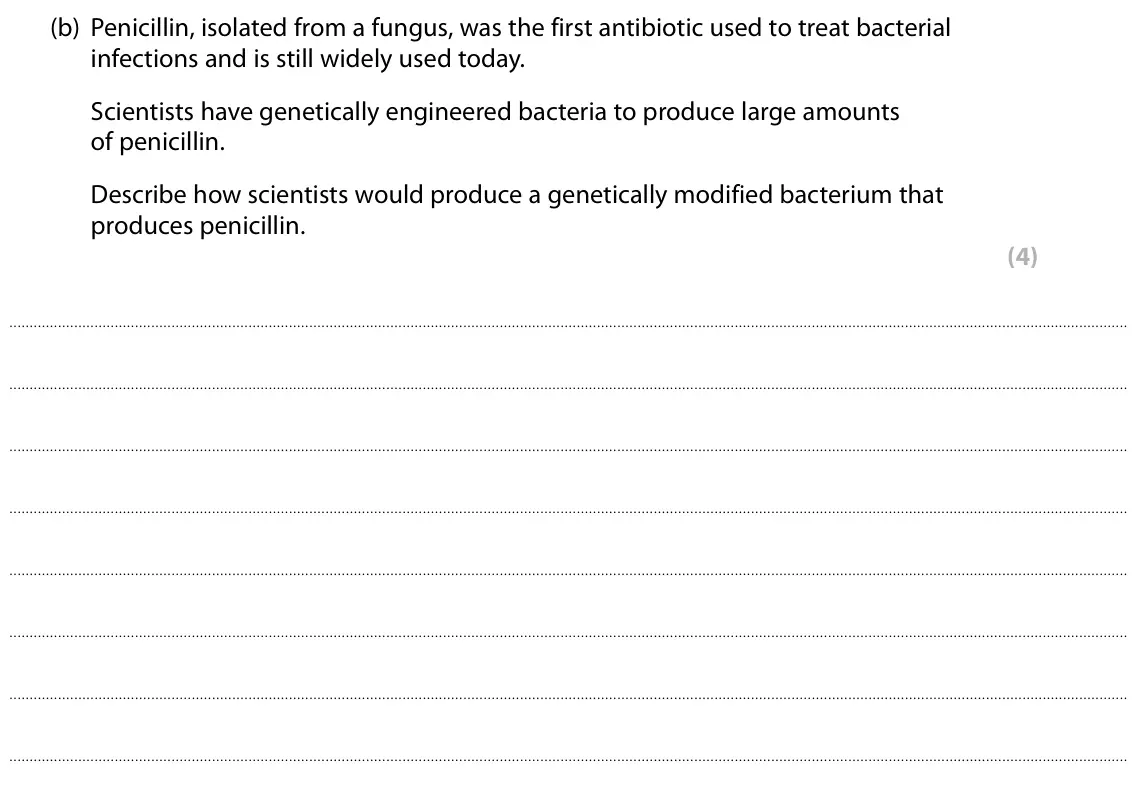
All 18 questions on Genetic engineering, as a list
- June 2023, Paper 1 Foundation, Q7(d) (6 marks): Figure 15 shows corn damaged by an insect pest. © Tomasz Klejdysz/Shutterstock Figure 15 Scientists have genetically modified (GM) corn plants to be • resistant
- June 2022, Paper 1 Higher, Q9(a)(i) (1 mark): State why the embryo of the pig must be engineered so it does not grow pig kidneys. (1)
- June 2022, Paper 1 Higher, Q9(b)(i) (3 marks): Compare the number of donors available with the number of organ transplants needed from 1991 to 2018. Use information from the graph to support your answer. (3)
- June 2022, Paper 1 Higher, Q9(b)(ii) (1 mark): State why scientists are genetically engineering animals for organ transplants. (1)
- June 2022, Paper 1 Higher, Q9(c) (6 marks): Bacteria have been genetically engineered to produce human insulin since 1978. Explain how bacteria can be genetically engineered to produce human insulin. (6)
- November 2021, Paper 1 Higher, Q8(b) (3 marks): Chymosin can be produced by genetically modified bacteria. Figure 12 shows a bacterial cell. Figure 12 Explain how to genetically modify a bacterial cell to pro
- November 2021, Paper 1 Foundation, Q7(c) (6 marks): Some crop plants have been genetically modified to be resistant to insect pests. Explain the advantages and disadvantages of producing genetically modified crop
- November 2020, Paper 1 Higher, Q7(b)(i) (1 mark): What method is used to insert the gene from the bacteria into the crop plant? (1) A selective breeding B asexual reproduction C genetic engineering D tissue cul
- November 2020, Paper 1 Higher, Q7(b)(ii) (6 marks): Discuss the advantages and disadvantages of growing crop plants that produce a toxin that can kill insects. (6)
- November 2020, Paper 1 Foundation, Q3(a)(i) (2 marks): In 2009, the area of land used was 134 million hectares and in 2010 the area of land was 147 million hectares. Complete Figure 5 by drawing bars to show the are
- November 2020, Paper 1 Foundation, Q3(a)(ii) (2 marks): Describe the trend shown by the data in Figure 5. (2)
- November 2020, Paper 1 Foundation, Q3(b) (1 mark): GM crops often produce a larger yield than non-GM crops. Give one reason why this could reduce the destruction of forests. (1)
- November 2020, Paper 1 Foundation, Q3(d) (1 mark): Some crop plants are genetically modified to make them resistant to attack by insect pests. State one disadvantage of genetically modified crop plants. (1)
- June 2019, Paper 1 Higher, Q5(c) (3 marks): Figure 8 shows a plasmid containing the human insulin gene. human insulin gene Figure 8 Explain how the human insulin gene can be inserted into a plasmid. (3)
- June 2019, Paper 1 Foundation, Q4(d) (2 marks): Some crop plants have been genetically engineered to produce toxic chemicals in their leaves. Explain one advantage of producing these genetically modified crop
- June 2018, Paper 1 Higher, Q9(a)(i) (2 marks): Explain how a gene can be inserted into a plasmid. (2)
- June 2018, Paper 1 Higher, Q9(a)(ii) (3 marks): Discuss the possible benefits and risks of producing painkillers from genetically modified yeast cells rather than extracting the painkillers from poppies. (3)
- Specimen, Paper 1 Higher, Q9(b) (4 marks): Penicillin, isolated from a fungus, was the first antibiotic used to treat bacterial infections and is still widely used today. Scientists have genetically engi
Questions, mark schemes and examiner’s reports are © Pearson Edexcel, from their published past papers. Plumi isn’t affiliated with any exam board. Want whole papers? Every Edexcel GCSE Biology paper.
Rather write your answers by hand on iPad? Plumi marks them against the same mark schemes.