 plumi
Evidence for human evolution: Edexcel GCSE Biology questions
Every Edexcel GCSE Biology exam question on Evidence for human evolution (specification points 4.4–4.6), 2018–2025, with its mark scheme and examiner’s report.
Find questions1,834
Exam
All years
Calculations
Q5(a)(i)
The whole paper ↗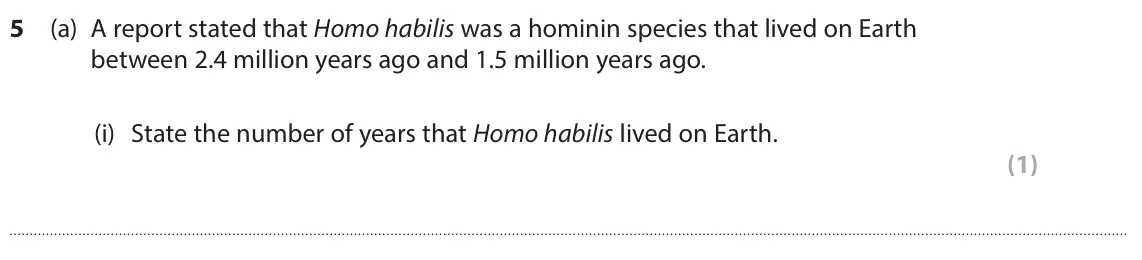
Q5(a)(ii)
The whole paper ↗
Q5(a)(iii)
The whole paper ↗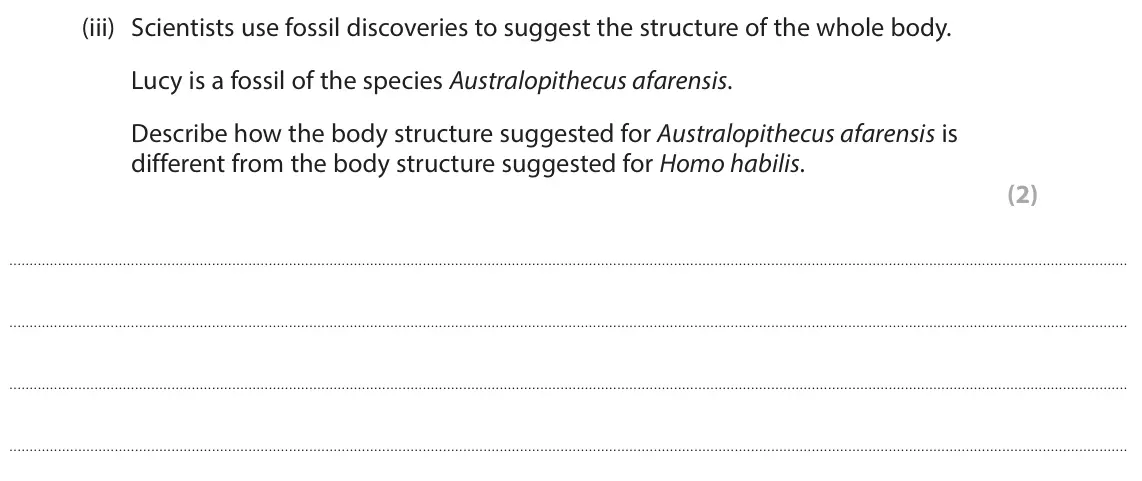
Q4(a)(ii)
The whole paper ↗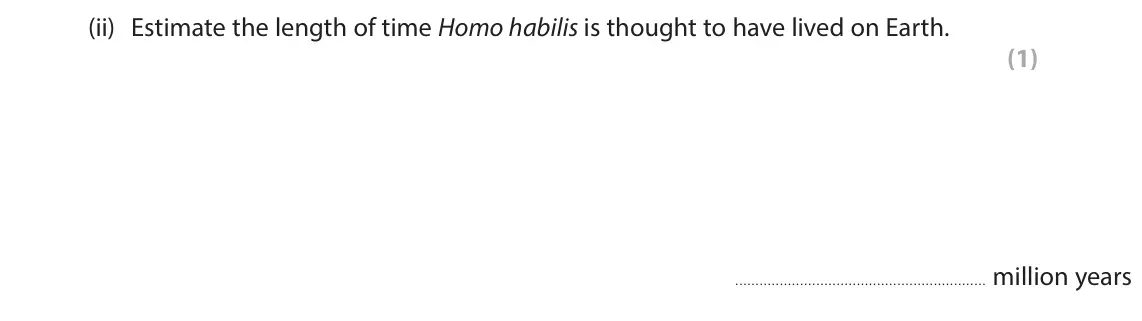
Q4(a)(iii)
The whole paper ↗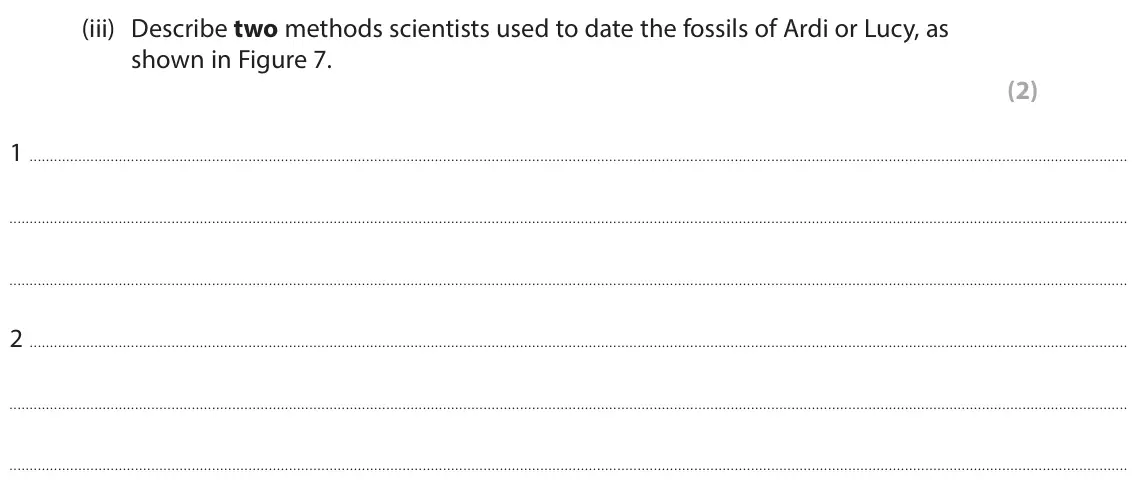
Q6(a)(i)
The whole paper ↗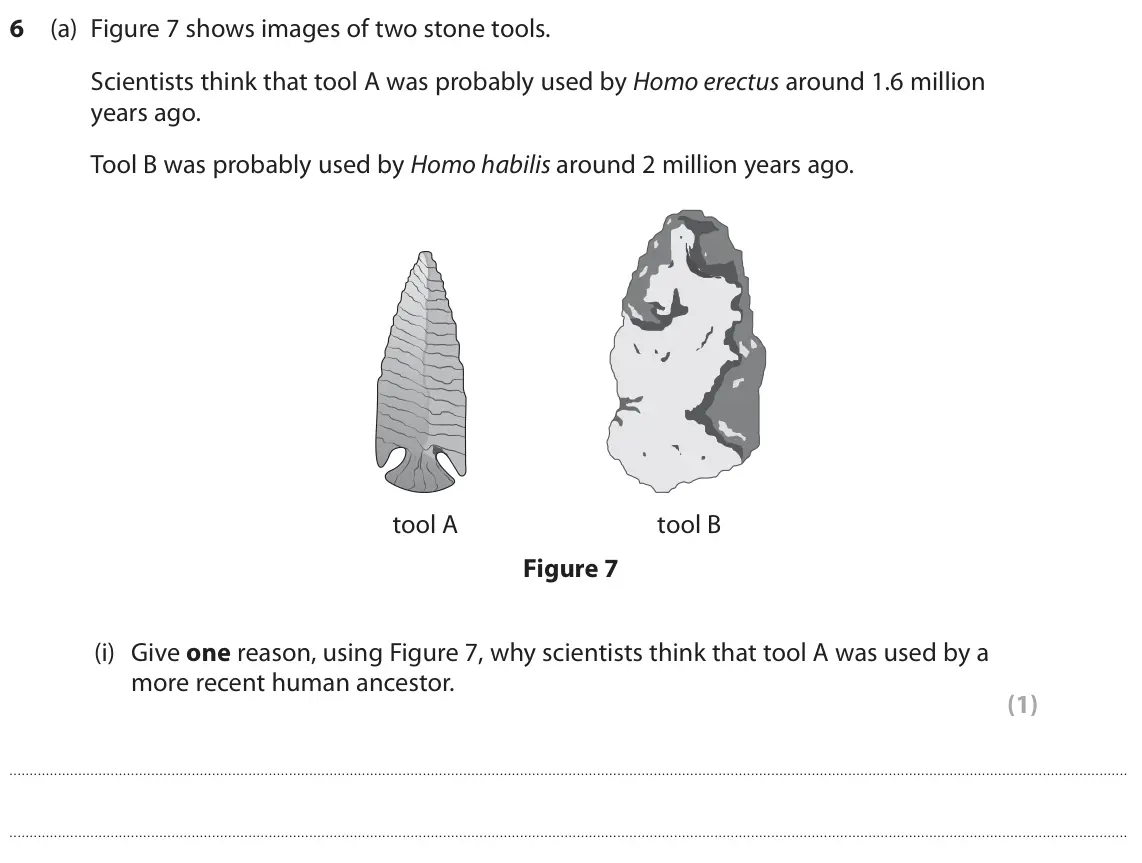
Q6(a)(ii)
The whole paper ↗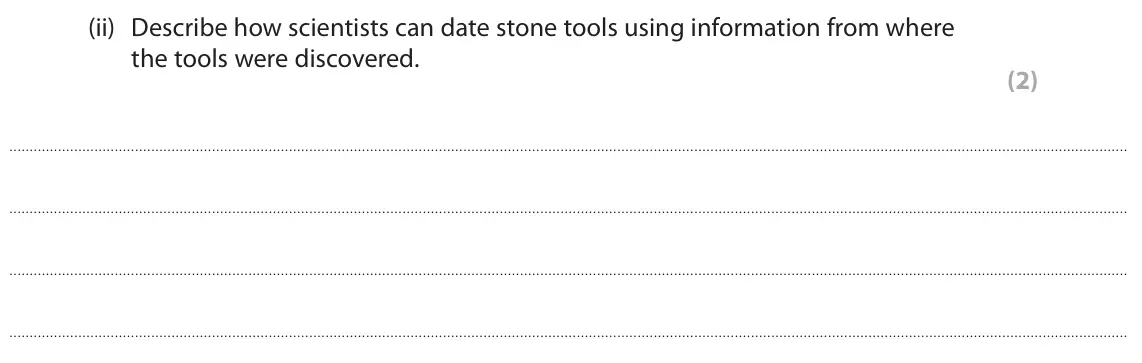
Q6(b)
The whole paper ↗
Q6(c)
The whole paper ↗
Q6(d)(i)
The whole paper ↗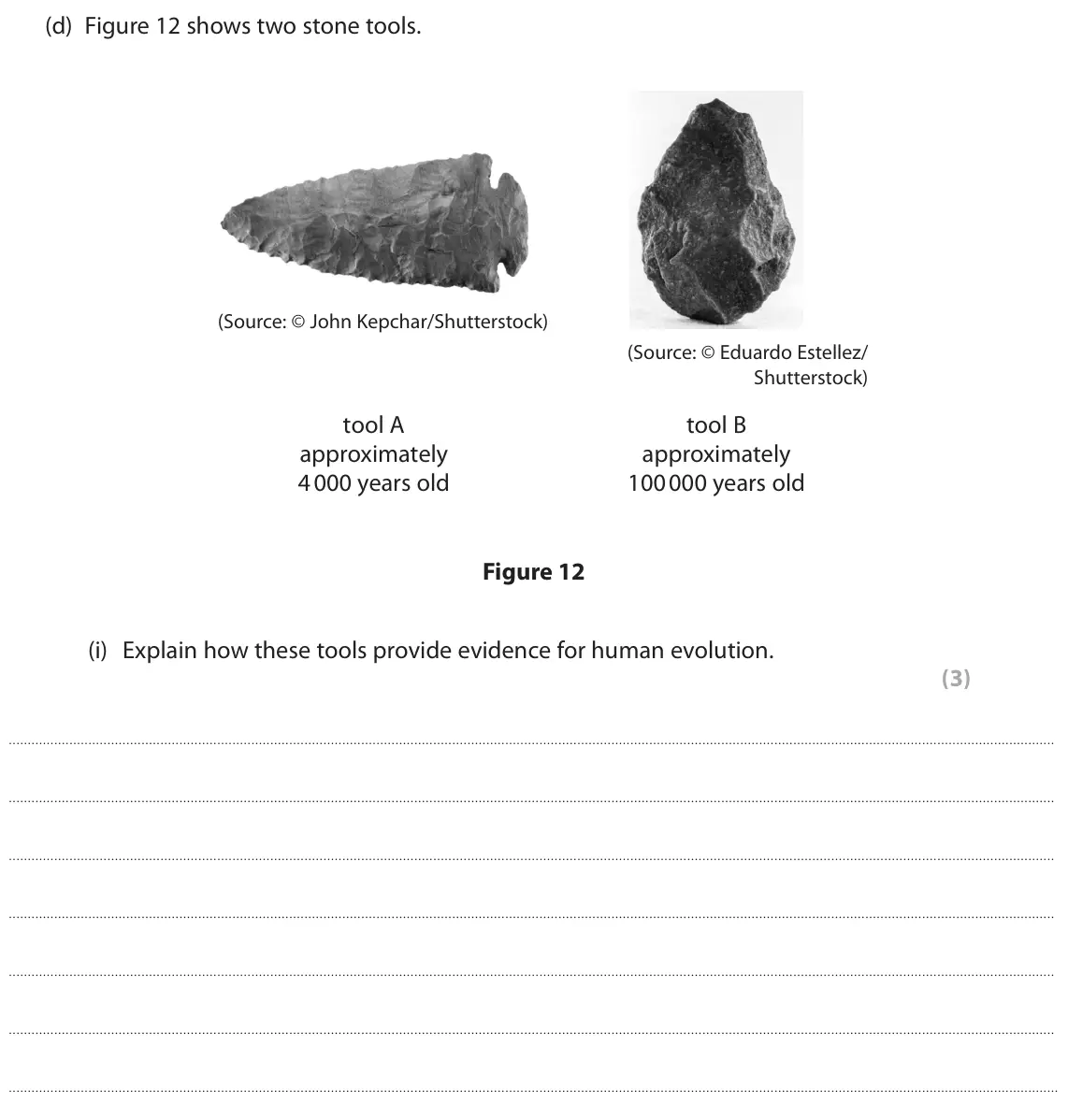
Q6(d)(ii)
The whole paper ↗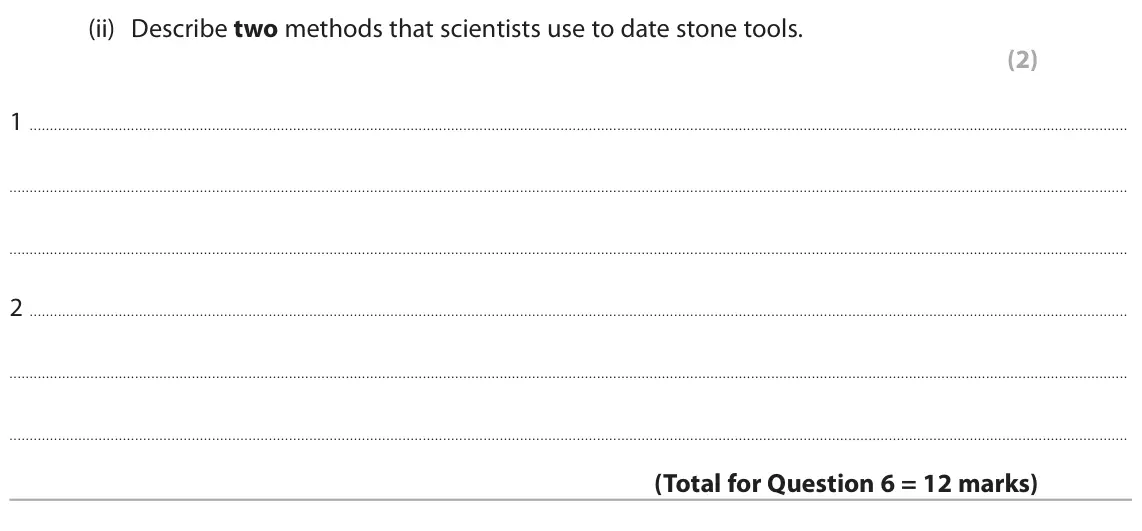
Q2(a)(i)
The whole paper ↗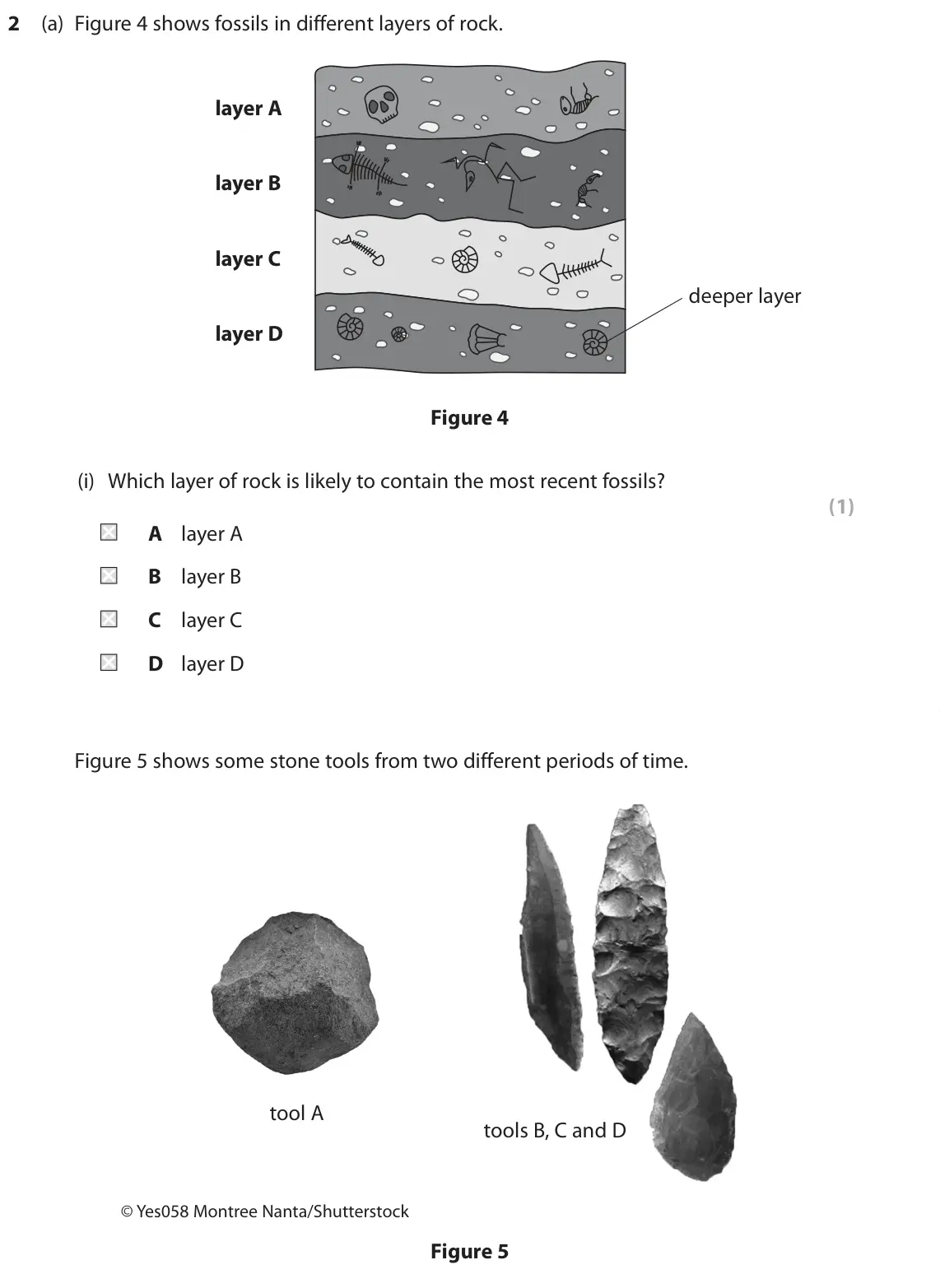
Q2(a)(ii)
The whole paper ↗
Q2(a)(i)
The whole paper ↗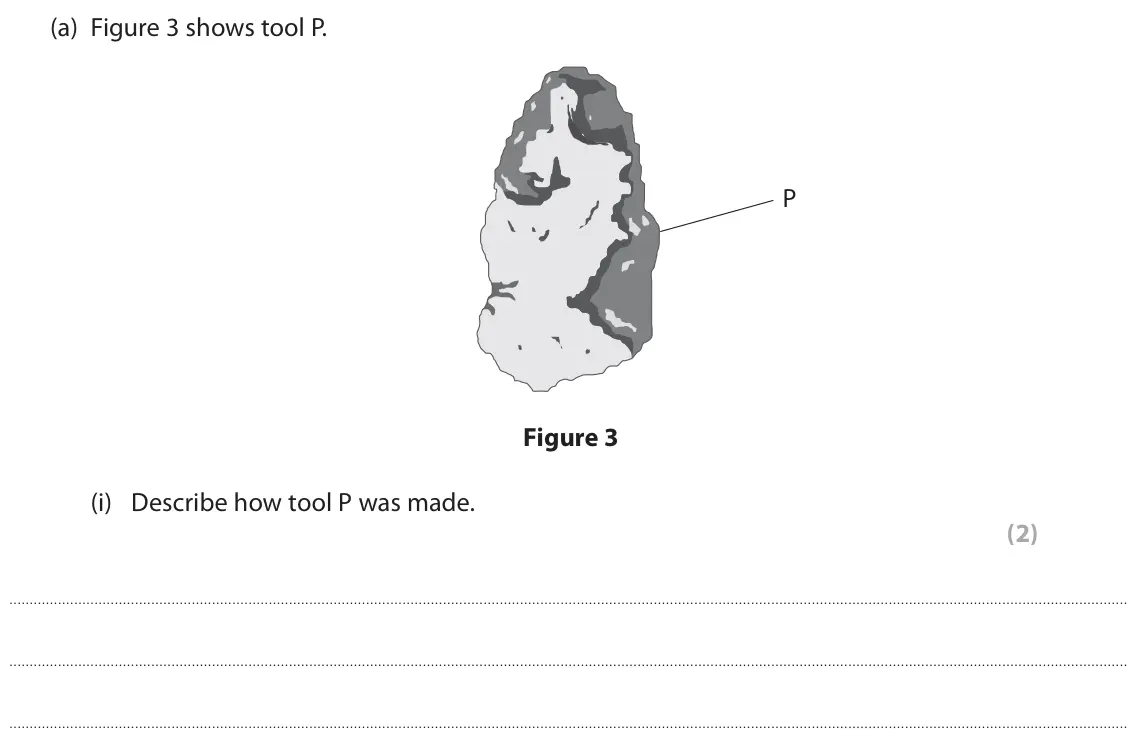
Q2(a)(ii)
The whole paper ↗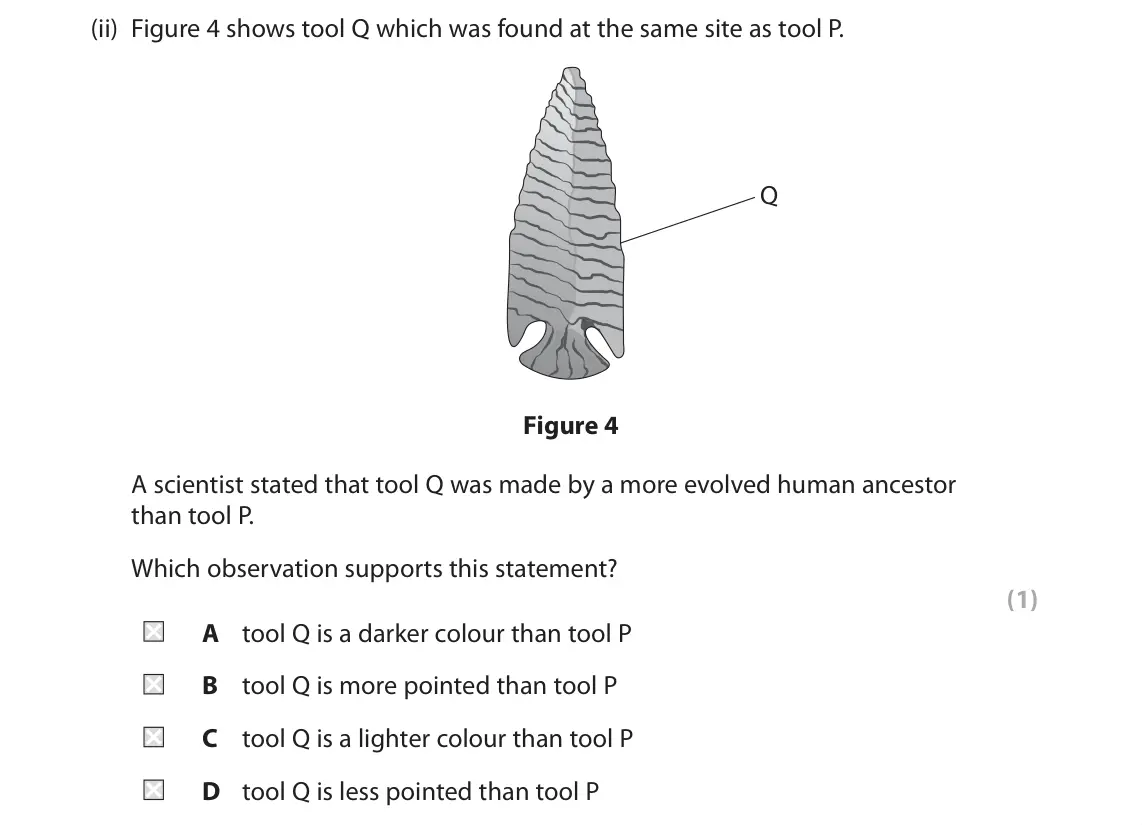
Q2(a)(iii)
The whole paper ↗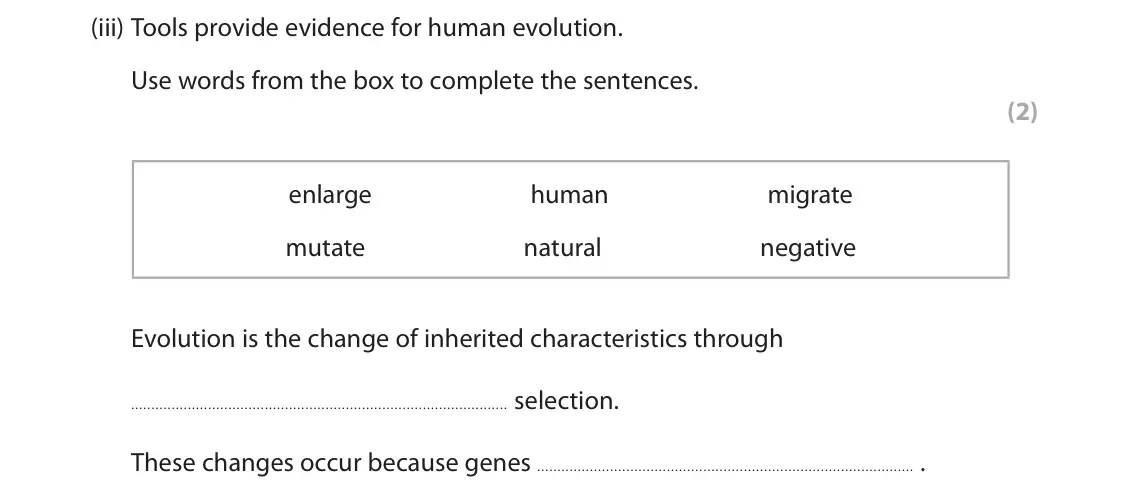
Q2(b)
The whole paper ↗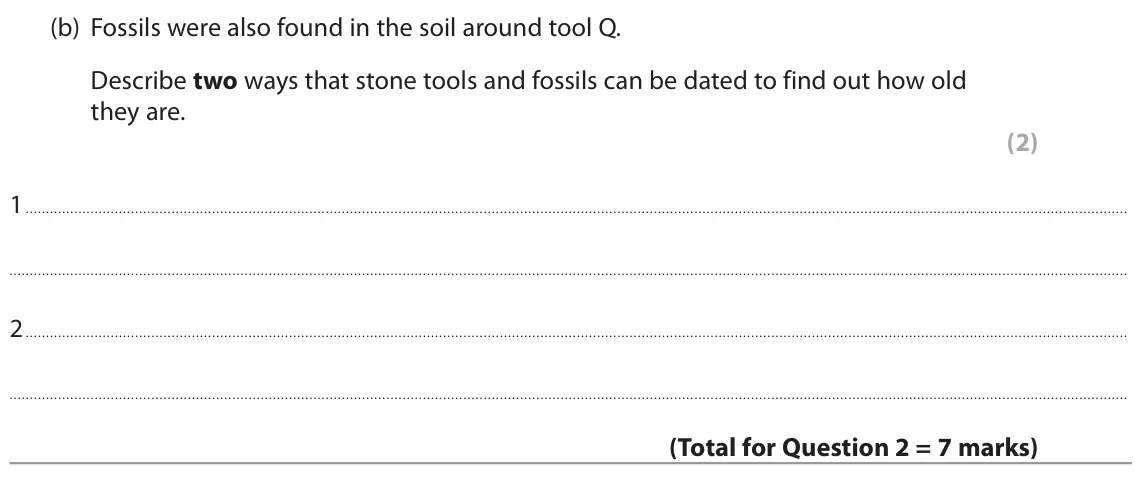
Q7(a)(i)
The whole paper ↗
Q7(a)(ii)
The whole paper ↗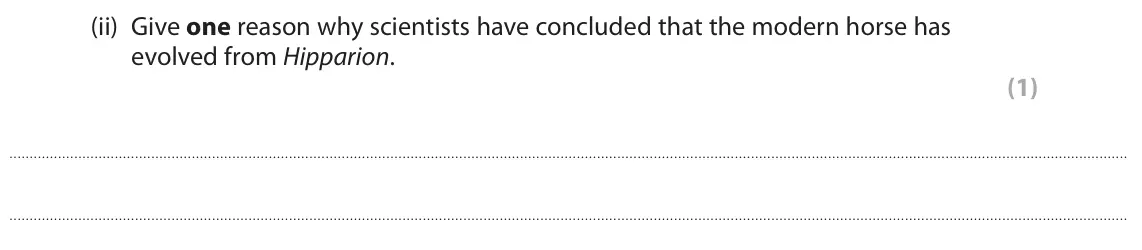
Q9(c)
The whole paper ↗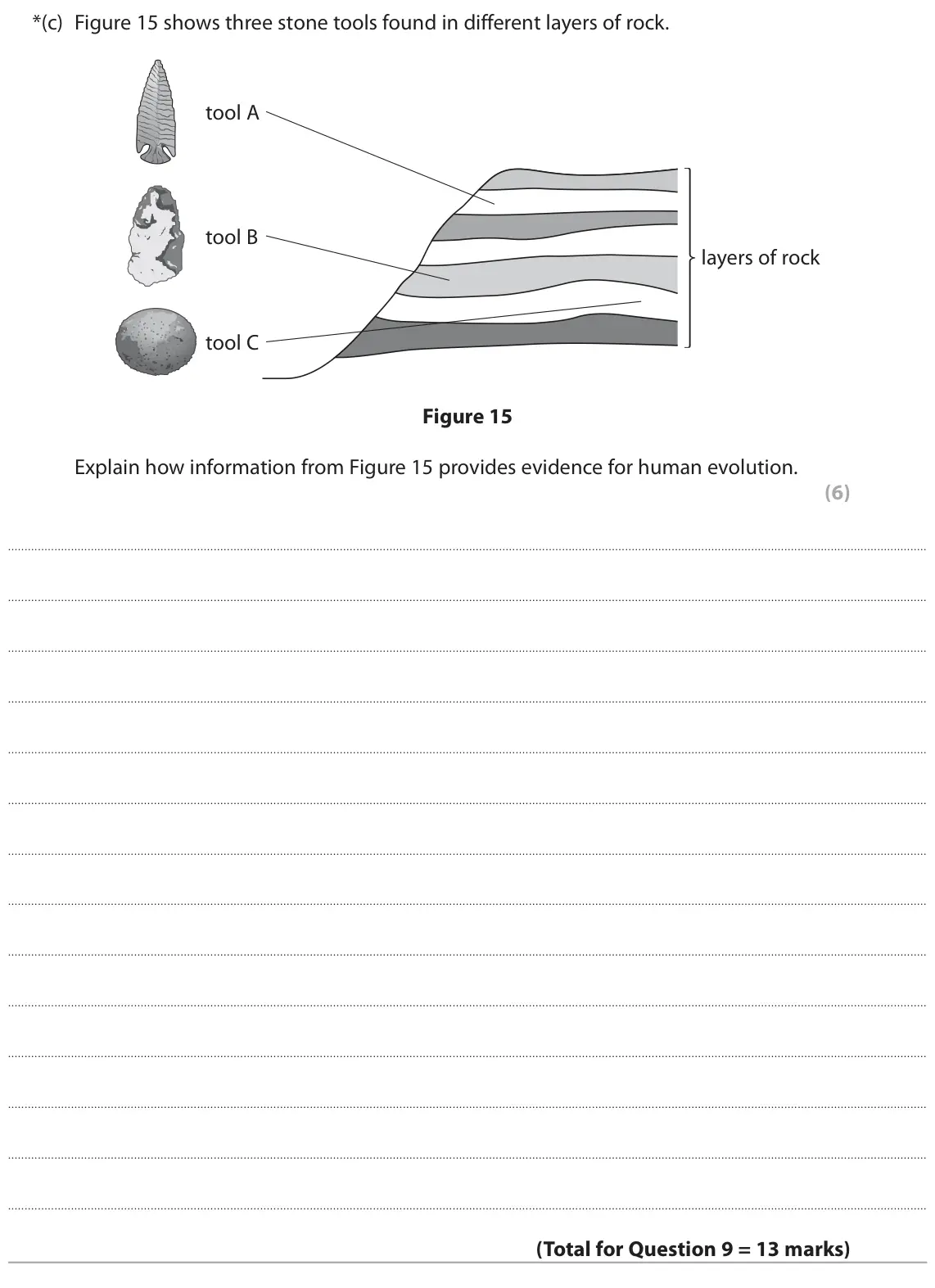
All 26 questions on Evidence for human evolution, as a list
- June 2025, Paper 1 Higher, Q5(a)(i) (1 mark): State the number of years that Homo habilis lived on Earth. (1)
- June 2025, Paper 1 Higher, Q5(a)(ii) (1 mark): Fossil evidence suggests that Homo habilis used tools. State one use of these tools. (1)
- June 2025, Paper 1 Higher, Q5(a)(iii) (2 marks): Scientists use fossil discoveries to suggest the structure of the whole body. Lucy is a fossil of the species Australopithecus afarensis. Describe how the body
- June 2025, Paper 1 Foundation, Q4(a)(ii) (1 mark): Estimate the length of time Homo habilis is thought to have lived on Earth. (1) million years
- June 2025, Paper 1 Foundation, Q4(a)(iii) (2 marks): Describe two methods scientists used to date the fossils of Ardi or Lucy, as shown in Figure 7. (2) 1 2
- June 2024, Paper 1 Higher, Q6(a)(i) (1 mark): Give one reason, using Figure 7, why scientists think that tool A was used by a more recent human ancestor. (1)
- June 2024, Paper 1 Higher, Q6(a)(ii) (2 marks): Describe how scientists can date stone tools using information from where the tools were discovered. (2)
- June 2024, Paper 1 Higher, Q6(b) (2 marks): Differences in fossilised bones indicate structural changes that have occurred during the evolution of humans. Describe two structural changes that have occurre
- June 2024, Paper 1 Foundation, Q6(c) (1 mark): One source of evidence for human evolution is from stone tools. Give one other source of evidence for human evolution. (1)
- June 2024, Paper 1 Foundation, Q6(d)(i) (3 marks): Explain how these tools provide evidence for human evolution. (3)
- June 2024, Paper 1 Foundation, Q6(d)(ii) (2 marks): Describe two methods that scientists use to date stone tools. (2) 1 2
- June 2023, Paper 1 Foundation, Q2(a)(i) (1 mark): Which layer of rock is likely to contain the most recent fossils? (1) A layer A B layer B C layer C D layer D Figure 5 shows some stone tools from two different
- June 2023, Paper 1 Foundation, Q2(a)(ii) (2 marks): Explain one difference between tool A and tools B, C and D. (2)
- June 2022, Paper 1 Foundation, Q2(a)(i) (2 marks): Describe how tool P was made. (2)
- June 2022, Paper 1 Foundation, Q2(a)(ii) (1 mark): Figure 4 shows tool Q which was found at the same site as tool P. Q Figure 4 A scientist stated that tool Q was made by a more evolved human ancestor than tool
- June 2022, Paper 1 Foundation, Q2(a)(iii) (2 marks): Tools provide evidence for human evolution. Use words from the box to complete the sentences. (2) enlarge human migrate mutate natural negative Evolution is the
- June 2022, Paper 1 Foundation, Q2(b) (2 marks): Fossils were also found in the soil around tool Q. Describe two ways that stone tools and fossils can be dated to find out how old they are. (2) 1 2
- November 2021, Paper 1 Higher, Q7(a)(i) (1 mark): Give one method that can be used to date a fossil of a Hipparion. (1)
- November 2021, Paper 1 Higher, Q7(a)(ii) (1 mark): Give one reason why scientists have concluded that the modern horse has evolved from Hipparion. (1)
- June 2019, Paper 1 Foundation, Q9(c) (6 marks): Figure 15 shows three stone tools found in different layers of rock. tool A tool B layers of rock tool C Figure 15 Explain how information from Figure 15 provid
- Specimen, Paper 1 Higher, Q1(a)(i) (2 marks): Describe the evidence that scientists might have used to show that Ardipithecus ramidus inhabited the Earth earlier than Homo habilis. (2)
- Specimen, Paper 1 Higher, Q1(a)(ii) (2 marks): Suggest an explanation for the extinction of Homo habilis. (2)
- Specimen, Paper 1 Higher, Q1(a)(iii) (2 marks): Figure 2 shows two stone tools, one used by Homo habilis and one used by Homo erectus. A B (Source: Frederic Surmely/look at sciences/Science Photo Library) Fig
- Specimen, Paper 1 Foundation, Q7(a)(i) (2 marks): Calculate the number of years Ardipithecus ramidus is thought to have inhabited the Earth. (2) Answer
- Specimen, Paper 1 Foundation, Q7(a)(ii) (2 marks): Describe the evidence that scientists might have used to show that Ardipithecus ramidus inhabited the Earth earlier than Homo habilis. (2)
- Specimen, Paper 1 Foundation, Q7(a)(iv) (2 marks): Figure 13 shows two stone tools, one used by Homo habilis and one used by Homo erectus. A B (Source: Frederic Surmely/look at sciences/Science Photo Library) Fi
Questions, mark schemes and examiner’s reports are © Pearson Edexcel, from their published past papers. Plumi isn’t affiliated with any exam board. Want whole papers? Every Edexcel GCSE Biology paper.
Rather write your answers by hand on iPad? Plumi marks them against the same mark schemes.