 plumi
Food tests and calorimetry: Edexcel GCSE Biology questions
Every Edexcel GCSE Biology exam question on Food tests and calorimetry (specification points 1.13–1.14), 2018–2025, with its mark scheme and examiner’s report.
Find questions1,834
Exam
All years
Calculations
Q1(b)(i)
The whole paper ↗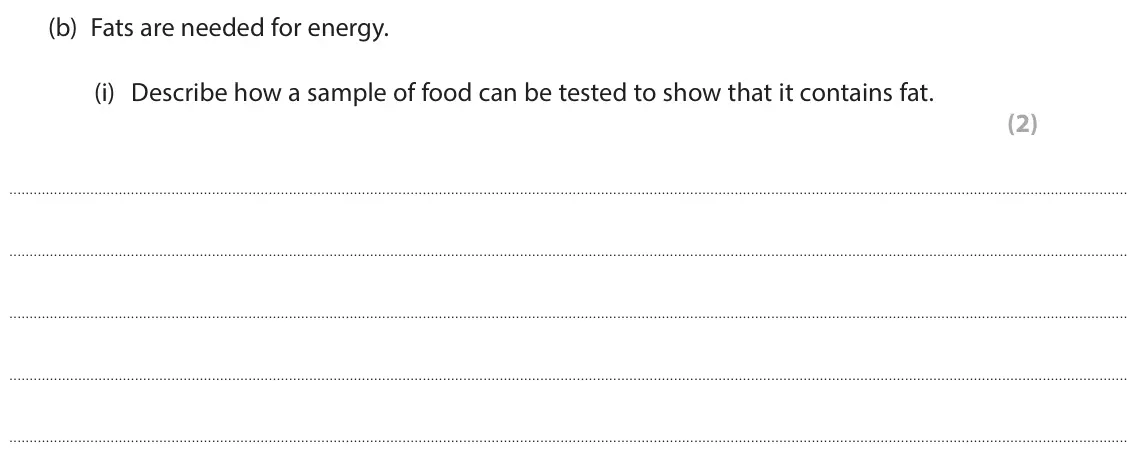
Q1(c)
The whole paper ↗
Q1(a)
The whole paper ↗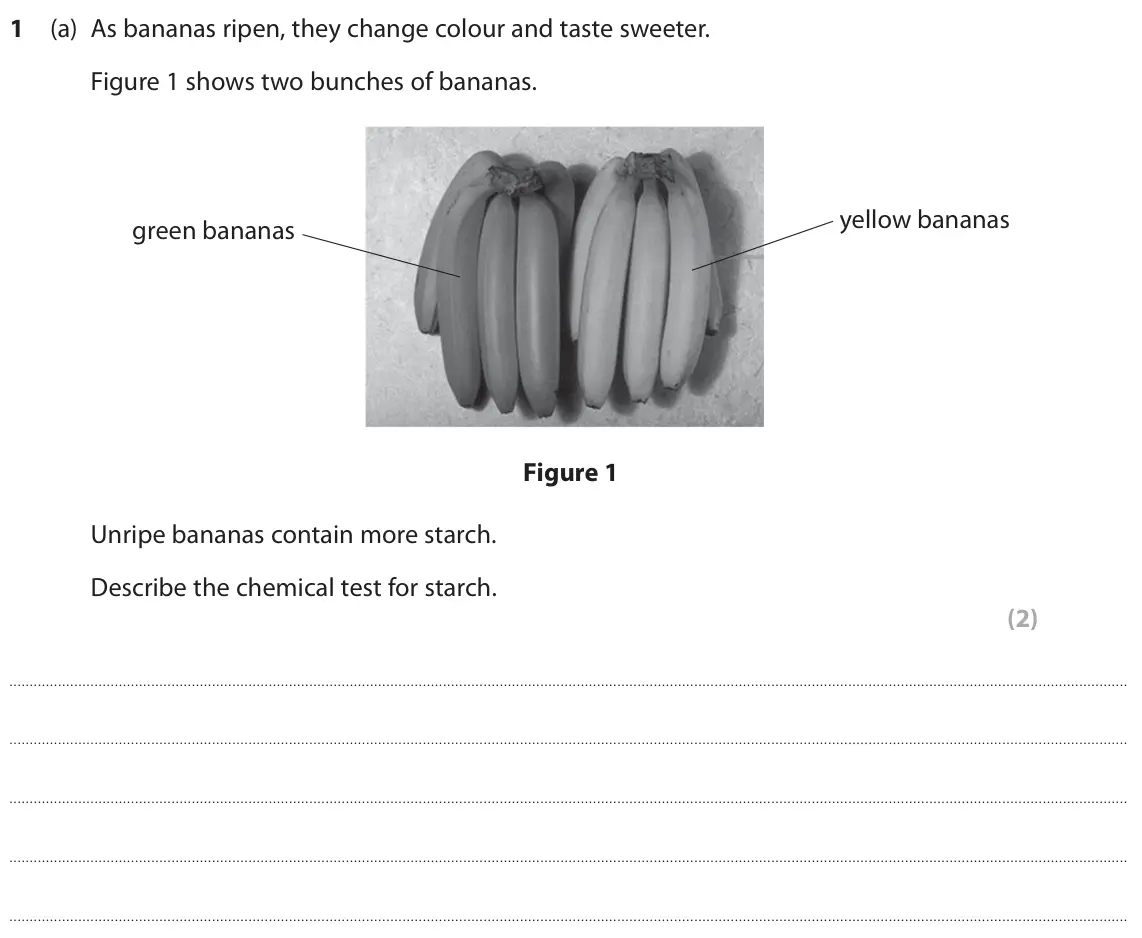
Q1(b)
The whole paper ↗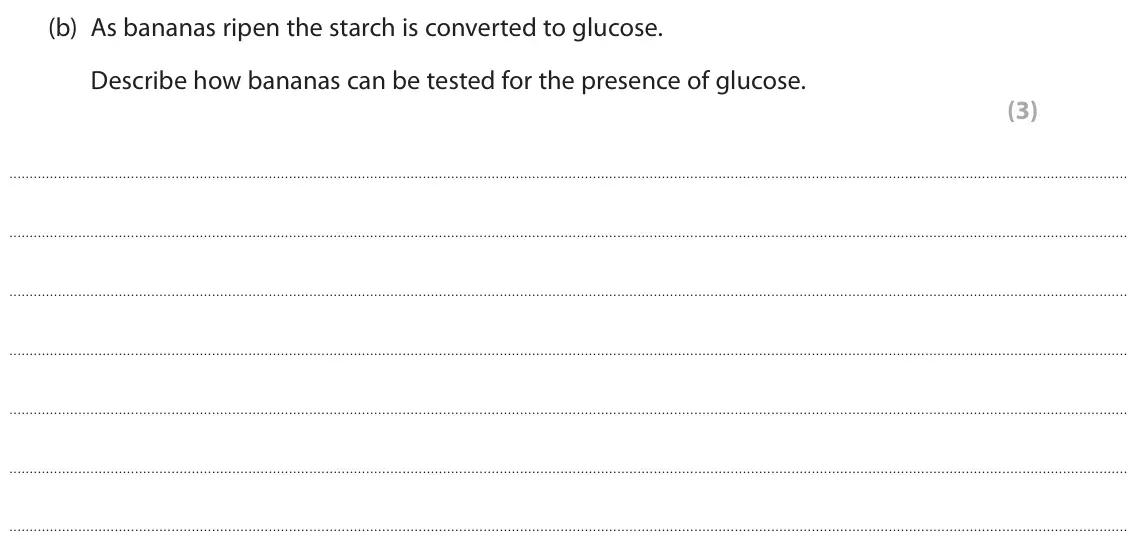
Q5(a)(i)
The whole paper ↗
Q5(a)(ii)
The whole paper ↗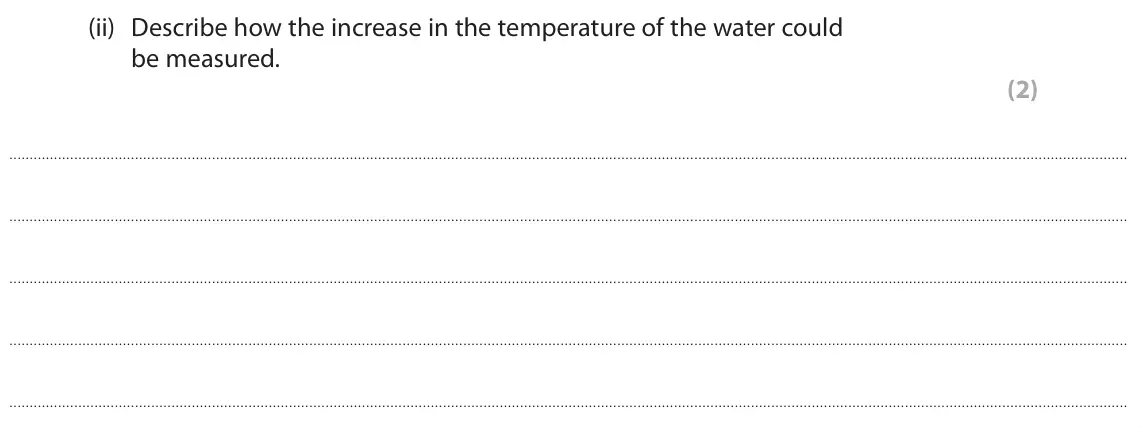
Q5(b)(i)
The whole paper ↗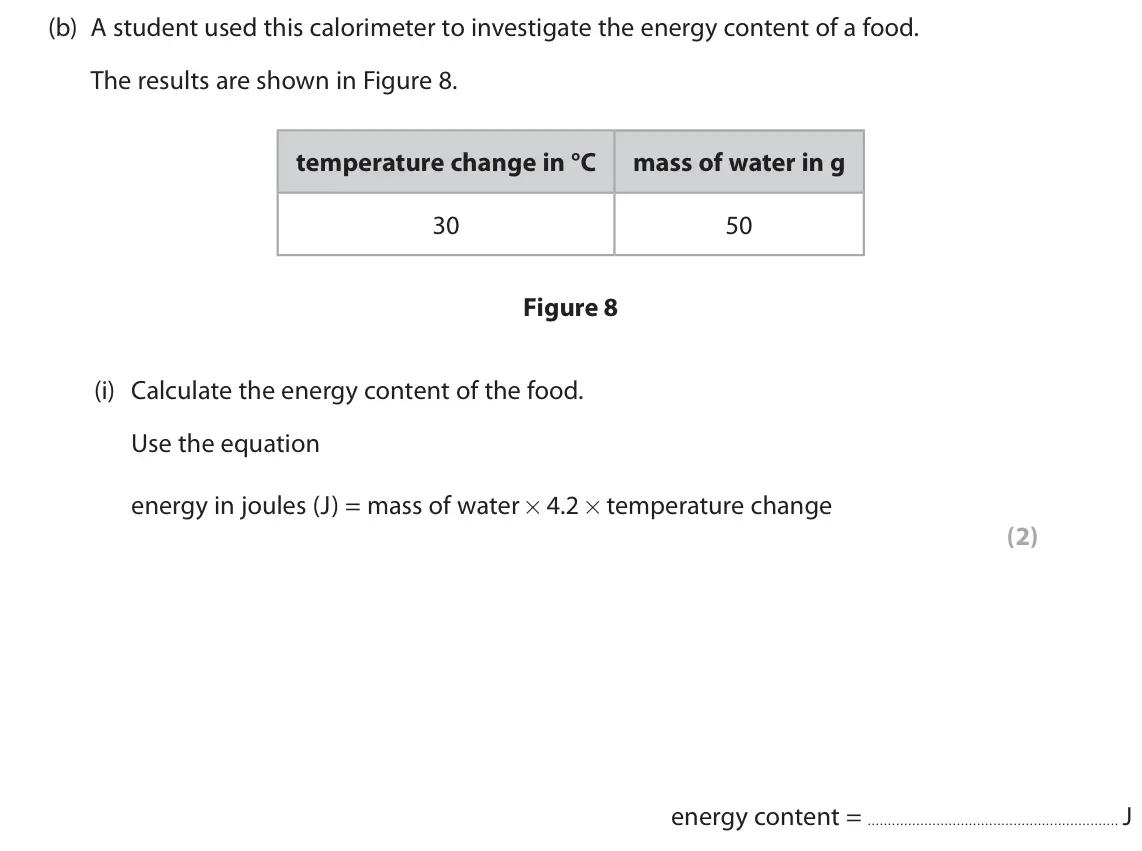
Q5(b)(ii)
The whole paper ↗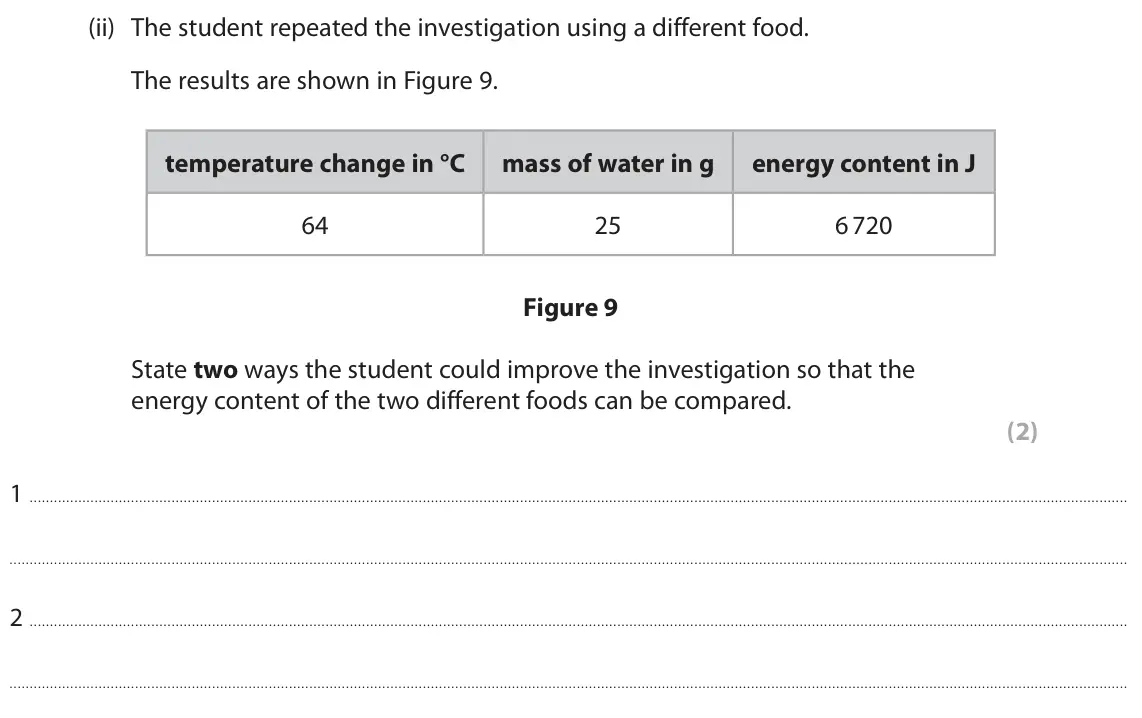
Q5(c)
The whole paper ↗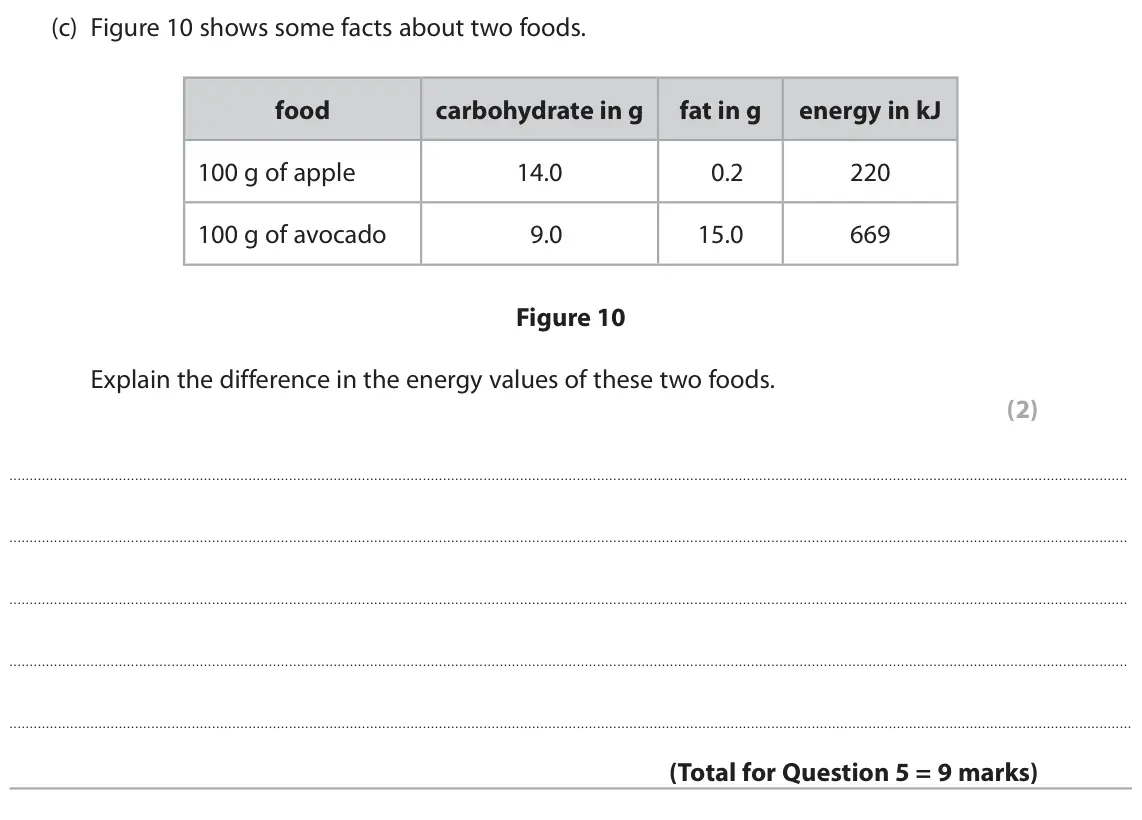
Q1(b)
The whole paper ↗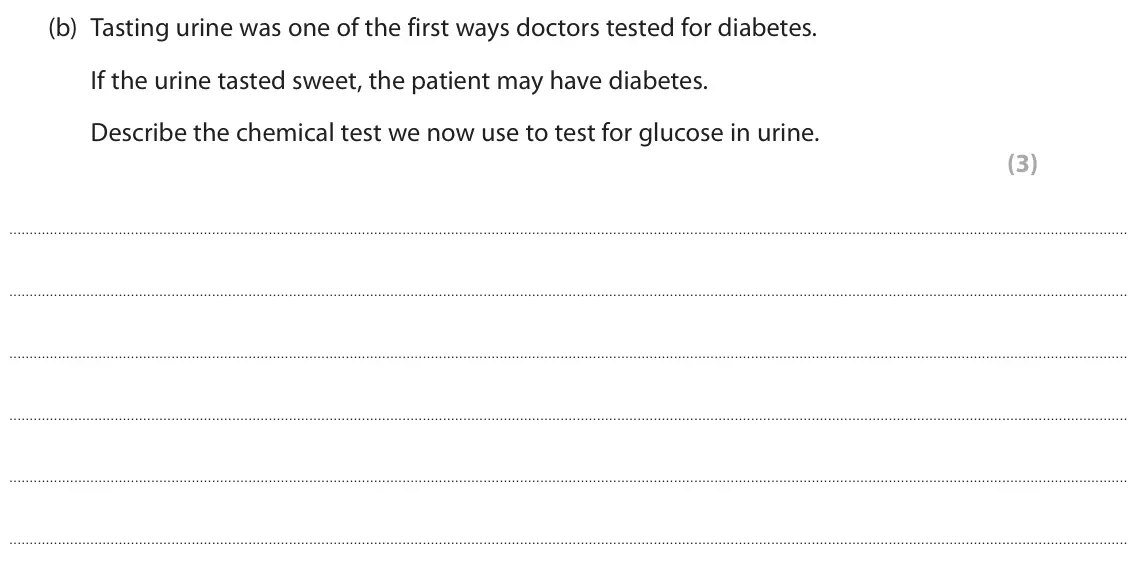
Q1(c)
The whole paper ↗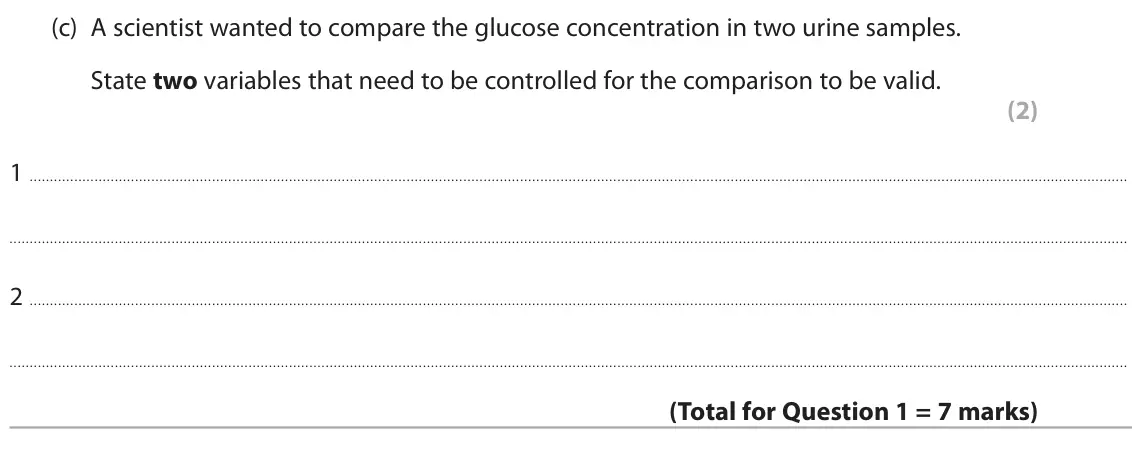
Q1(a)(i)
The whole paper ↗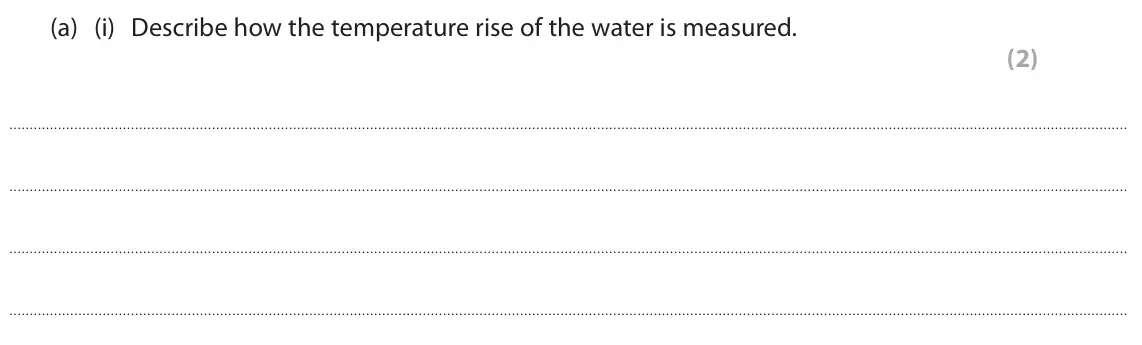
Q1(a)(ii)
The whole paper ↗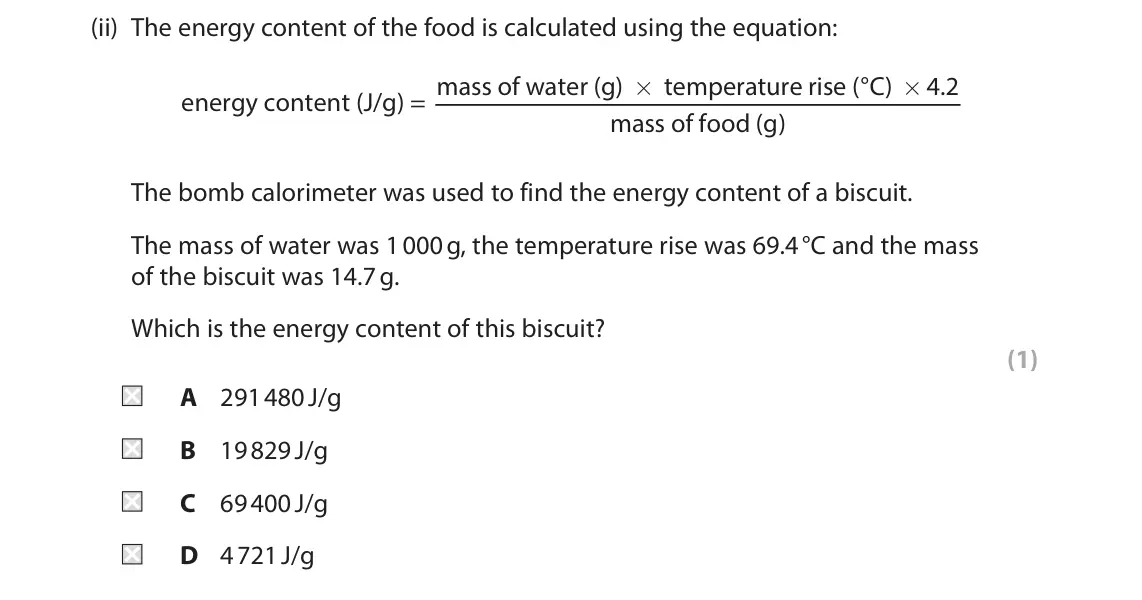
Q1(a)(iii)
The whole paper ↗
Q1(b)
The whole paper ↗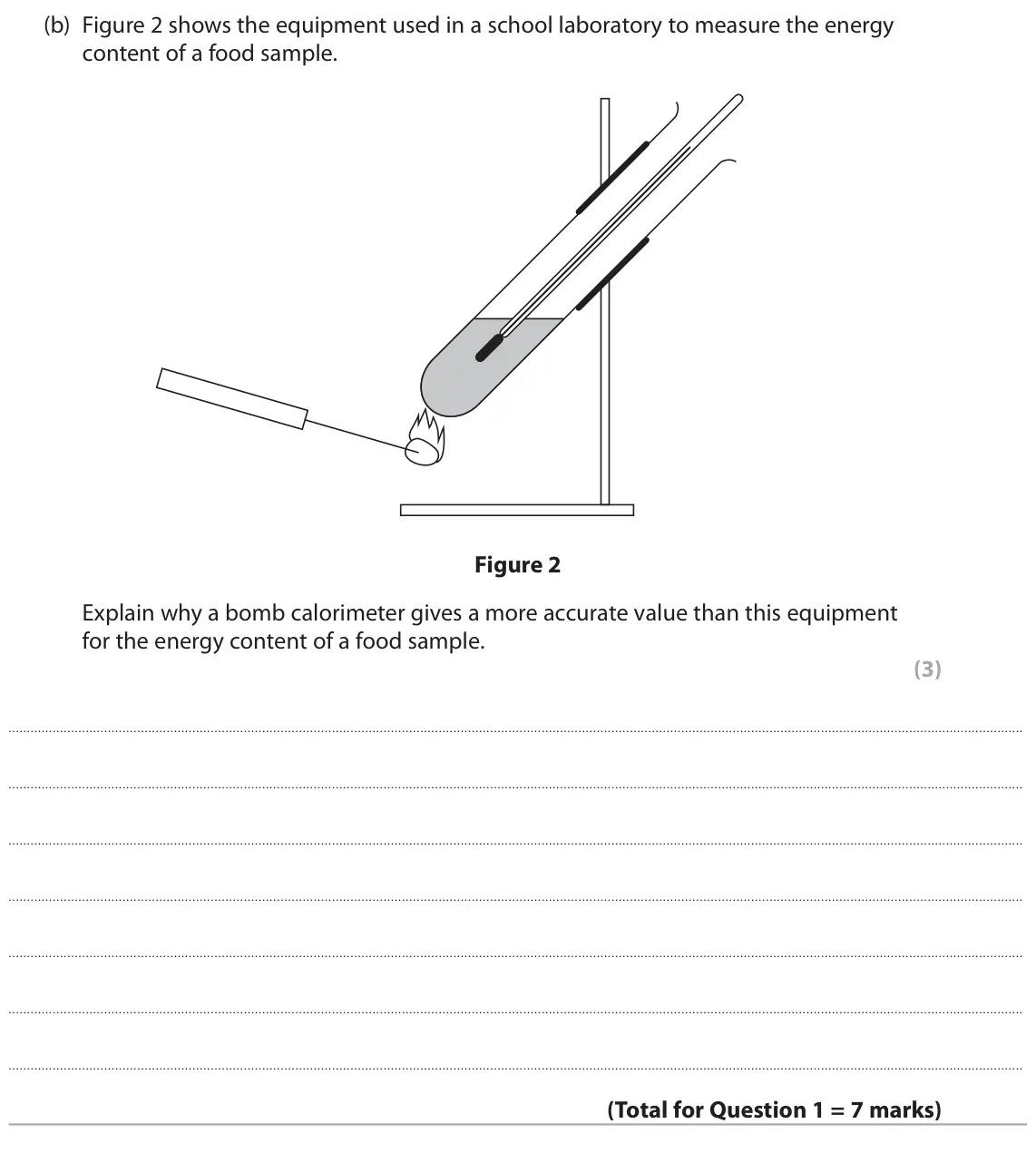
Q5(b)(i)
The whole paper ↗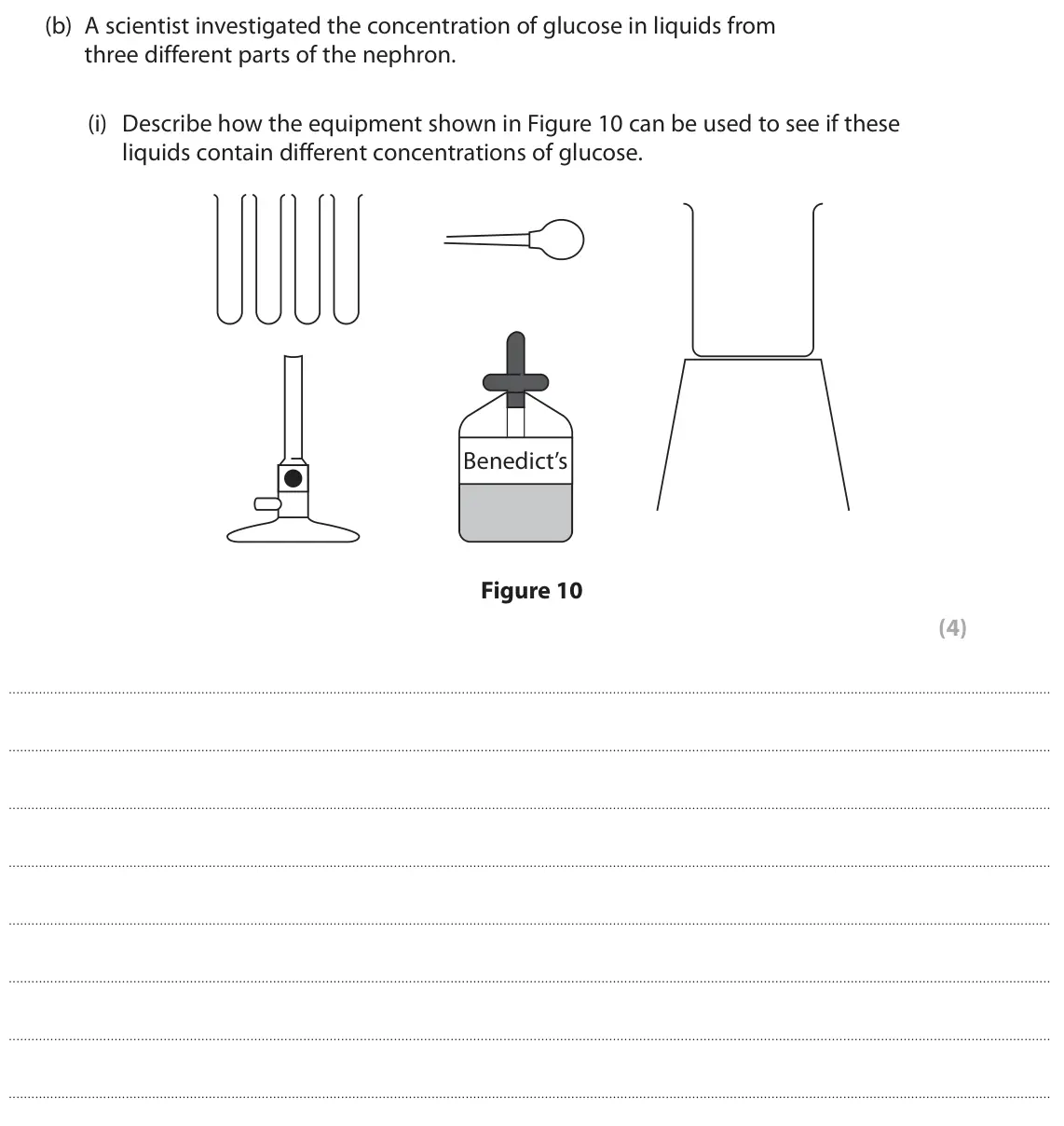
Q6(a)
The whole paper ↗
Q10(b)(i)
The whole paper ↗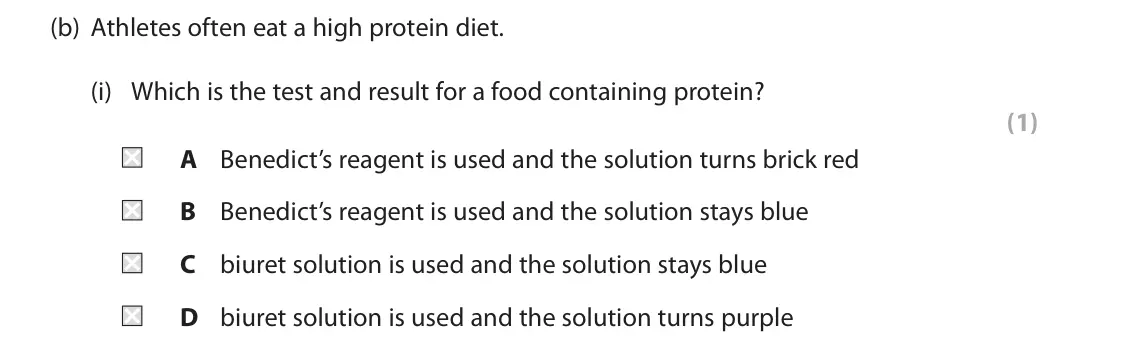
Q1(c)
The whole paper ↗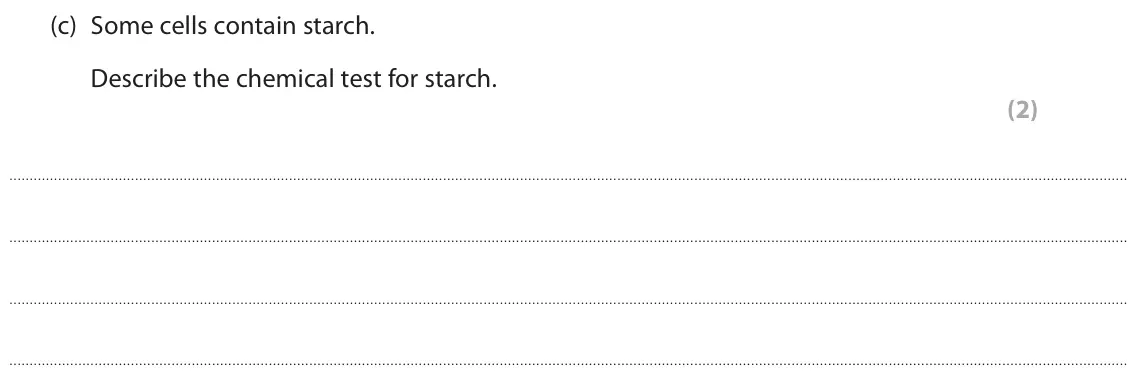
All 55 questions on Food tests and calorimetry, as a list
- June 2025, Paper 1 Higher, Q1(b)(i) (2 marks): Describe how a sample of food can be tested to show that it contains fat. (2)
- June 2025, Paper 1 Higher, Q1(c) (1 mark): State what calorimetry is used to measure. (1)
- June 2025, Paper 2 Higher, Q1(a) (2 marks): As bananas ripen, they change colour and taste sweeter. Figure 1 shows two bunches of bananas. yellow bananas green bananas Figure 1 Unripe bananas contain more
- June 2025, Paper 2 Higher, Q1(b) (3 marks): As bananas ripen the starch is converted to glucose. Describe how bananas can be tested for the presence of glucose. (3)
- June 2024, Paper 1 Foundation, Q5(a)(i) (1 mark): Give one function of the lid. (1)
- June 2024, Paper 1 Foundation, Q5(a)(ii) (2 marks): Describe how the increase in the temperature of the water could be measured. (2)
- June 2024, Paper 1 Foundation, Q5(b)(i) (2 marks): Calculate the energy content of the food. Use the equation energy in joules (J) = mass of water × 4.2 × temperature change (2) energy content = J
- June 2024, Paper 1 Foundation, Q5(b)(ii) (2 marks): The student repeated the investigation using a different food. The results are shown in Figure 9. temperature change in °C mass of water in g energy content in
- June 2024, Paper 1 Foundation, Q5(c) (2 marks): Figure 10 shows some facts about two foods. food carbohydrate in g fat in g energy in kJ 100 g of apple 14.0 0.2 220 100 g of avocado 9.0 15.0 669 Figure 10 Exp
- June 2024, Paper 2 Higher, Q1(b) (3 marks): Tasting urine was one of the first ways doctors tested for diabetes. If the urine tasted sweet, the patient may have diabetes. Describe the chemical test we now
- June 2024, Paper 2 Higher, Q1(c) (2 marks): A scientist wanted to compare the glucose concentration in two urine samples. State two variables that need to be controlled for the comparison to be valid. (2)
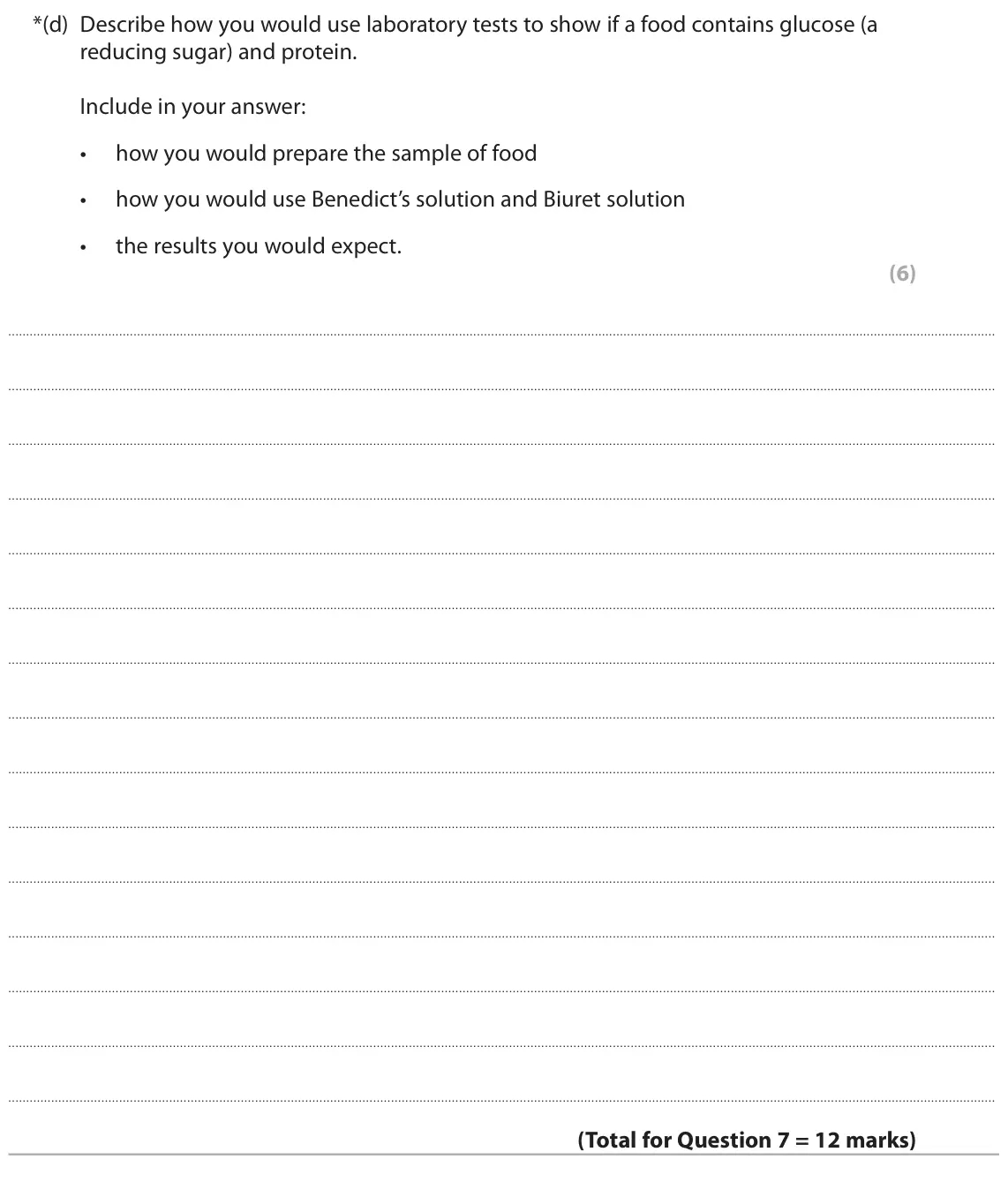
- June 2024, Paper 2 Foundation, Q7(d) (6 marks): Describe how you would use laboratory tests to show if a food contains glucose (a reducing sugar) and protein. Include in your answer: • how you would prepare t
- June 2023, Paper 1 Higher, Q1(a)(i) (2 marks): Describe how the temperature rise of the water is measured. (2)
- June 2023, Paper 1 Higher, Q1(a)(ii) (1 mark): The energy content of the food is calculated using the equation: mass of water (g) × temperature rise (°C) × 4.2 energy content (J/g) = mass of food (g) The bom
- June 2023, Paper 1 Higher, Q1(a)(iii) (1 mark): A different biscuit with the same mass gave a temperature rise of 78.2 °C. Give one reason why this biscuit gave a greater temperature rise. (1)
- June 2023, Paper 1 Higher, Q1(b) (3 marks): Figure 2 shows the equipment used in a school laboratory to measure the energy content of a food sample. Figure 2 Explain why a bomb calorimeter gives a more ac
- June 2023, Paper 2 Foundation, Q5(b)(i) (4 marks): Describe how the equipment shown in Figure 10 can be used to see if these liquids contain different concentrations of glucose. Benedict’s Figure 10 (4)
- June 2022, Paper 1 Higher, Q6(a) (1 mark): The student then placed a drop of milk A into one test tube of water and a drop of milk B into a different test tube of water. The drop of milk A sank to the bo
- June 2022, Paper 2 Higher, Q10(b)(i) (1 mark): Which is the test and result for a food containing protein? (1) A Benedict’s reagent is used and the solution turns brick red B Benedict’s reagent is used and t
- November 2021, Paper 1 Foundation, Q1(c) (2 marks): Some cells contain starch. Describe the chemical test for starch. (2)
- November 2021, Paper 1 Foundation, Q1(d)(i) (1 mark): Give the letter of the food sample that contains fat. (1)
- November 2021, Paper 1 Foundation, Q1(d)(ii) (1 mark): Give the letter of the food sample that contains reducing sugars and protein. (1)
- November 2021, Paper 1 Foundation, Q4(a)(i) (2 marks): Use words from the box to complete the sentences. (2) air clamp food lid thermometer water. The stirrer distributes heat evenly in the . The calorimeter has a t
- November 2021, Paper 1 Foundation, Q4(a)(ii) (2 marks): This calorimeter was used to measure the energy content of a piece of cheese. Figure 7 shows some of the results. mass of water in starting temperature final te
- November 2021, Paper 1 Foundation, Q4(a)(iii) (2 marks): The same method was used to calculate the energy content of a different type of cheese. The results are shown in Figure 8. mass of water starting temperature fi
- November 2021, Paper 2 Higher, Q4(d) (3 marks): Describe how to test for glucose in the dialysis fluid. (3)
- November 2021, Paper 2 Foundation, Q3(a)(i) (2 marks): Use words from the box to complete the sentences. (2) ethanol Biuret fat iodine protein starch The blue liquid was solution. The purple colour showed that the f
- November 2021, Paper 2 Foundation, Q3(a)(ii) (1 mark): The blue solution may be harmful if swallowed. Which procedure is a health and safety precaution needed for this investigation? (1) A use a new test tube B wipe
- November 2021, Paper 2 Foundation, Q10(d) (3 marks): Describe how to test for glucose in the dialysis fluid. (3)
- November 2020, Paper 1 Higher, Q4(c) (2 marks): Peas contain small amounts of fat. Describe a test to identify fat. (2)
- November 2020, Paper 1 Foundation, Q1(a) (1 mark): Some foods contain starch. Which chemical is used to test for starch? (1) A amylase B ethanol C iodine solution D hydrochloric acid
- November 2020, Paper 1 Foundation, Q1(b)(i) (2 marks): Give two safety precautions needed when doing this test. (2) 1 2
- November 2020, Paper 1 Foundation, Q1(b)(ii) (1 mark): Give one reason for placing the test tube in boiling water. (1)
- November 2020, Paper 1 Foundation, Q1(c)(i) (1 mark): Give one variable the student should control. (1) Figure 3 shows the student’s results. colour with type of biscuit Benedict’s solution A green B brick red C or
- November 2020, Paper 1 Foundation, Q1(c)(ii) (2 marks): State two conclusions that can be made from the data in Figure 3. (2) 1 2
- November 2020, Paper 1 Foundation, Q10(c) (2 marks): Peas contain small amounts of fat. Describe a test to identify fat. (2)
- November 2020, Paper 2 Higher, Q4(b) (2 marks): Protein is an important nutrient. Describe the laboratory test for protein. (2)
- November 2020, Paper 2 Higher, Q10(a)(i) (4 marks): Describe the method that would be used to find out what is present in the solution in the beaker, after one hour. (4)
- November 2020, Paper 2 Foundation, Q10(b) (2 marks): Protein is an important nutrient in meat. Describe the laboratory test for protein. (2)
- June 2019, Paper 1 Higher, Q1(a)(i) (1 mark): Which solution contains starch but not protein? (1) A solution W B solution X C solution Y D solution Z
- June 2019, Paper 1 Higher, Q1(a)(ii) (2 marks): Describe how a solution of food can be tested for reducing sugars. (2)
- June 2019, Paper 1 Higher, Q1(b) (3 marks): Figure 2 shows a calorimeter. thermometer 100 cm3 water combustion chamber 10 g of food Figure 2 Describe how this calorimeter can be used to find the energy co
- June 2019, Paper 1 Foundation, Q7(c) (6 marks): The diagram shows equipment that can be used to measure the energy content of different foods. thermometer boiling tube water mounted needle food Figure 12 Devi
- June 2019, Paper 2 Higher, Q6(b) (2 marks): Describe how a student could test a sample of urine for the presence of protein. (2)
- June 2019, Paper 2 Foundation, Q7(c)(i) (1 mark): Name the food group in sample E. (1)
- June 2019, Paper 2 Foundation, Q7(c)(ii) (1 mark): Name the food groups in sample F. (1)
- June 2018, Paper 1 Higher, Q4(b)(i) (2 marks): Describe the test to identify starch. (2)
- June 2018, Paper 1 Higher, Q4(b)(ii) (2 marks): The amount of energy in the sugars extracted from crop plants can be measured using the calorimeter shown in Figure 9. thermometer ignition wires stirrer lid wa
- June 2018, Paper 1 Higher, Q4(b)(iii) (1 mark): State why it is important to stir the water in the calorimeter. (1)
- June 2018, Paper 1 Foundation, Q10(b)(i) (2 marks): Describe the test to identify starch. (2)
- June 2018, Paper 1 Foundation, Q10(b)(ii) (2 marks): The amount of energy in the sugars extracted from crop plants can be measured using the calorimeter shown in Figure 16. thermometer ignition wires stirrer lid w
- June 2018, Paper 1 Foundation, Q10(b)(iii) (1 mark): State why it is important to stir the water in the calorimeter. (1)
- June 2018, Paper 2 Foundation, Q6(c)(i) (1 mark): Glucose is produced in a leaf. Glucose is a (1) A vitamin B protein C lipid D carbohydrate
- June 2018, Paper 2 Foundation, Q6(c)(ii) (2 marks): Describe a test for glucose. (2)
- Specimen, Paper 1 Foundation, Q3(a) (2 marks): Use words from the box to complete the sentences. (2) blue-black iodine brick red Biuret lilac Benedict’s The reagent is added to a tube containing a solution o
Questions, mark schemes and examiner’s reports are © Pearson Edexcel, from their published past papers. Plumi isn’t affiliated with any exam board. Want whole papers? Every Edexcel GCSE Biology paper.
Rather write your answers by hand on iPad? Plumi marks them against the same mark schemes.