 plumi
Enzymes: Edexcel GCSE Biology questions
Every Edexcel GCSE Biology exam question on Enzymes (specification points 1.7–1.12), 2018–2025, with its mark scheme and examiner’s report.
Find questions1,834
Exam
All years
Calculations
Q1(b)(ii)
The whole paper ↗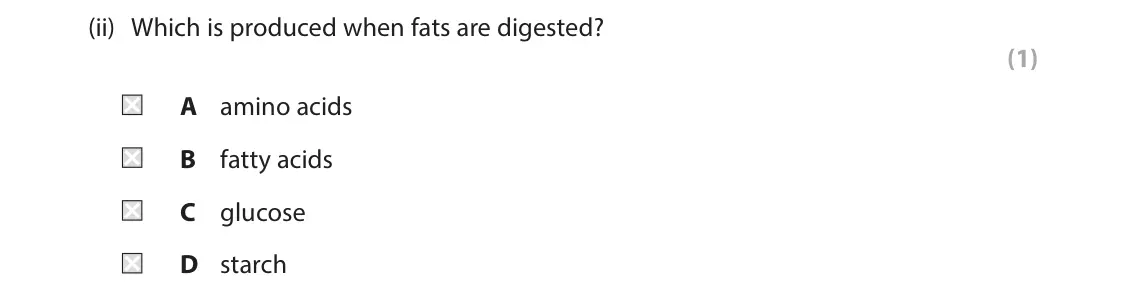
Q9(c)
The whole paper ↗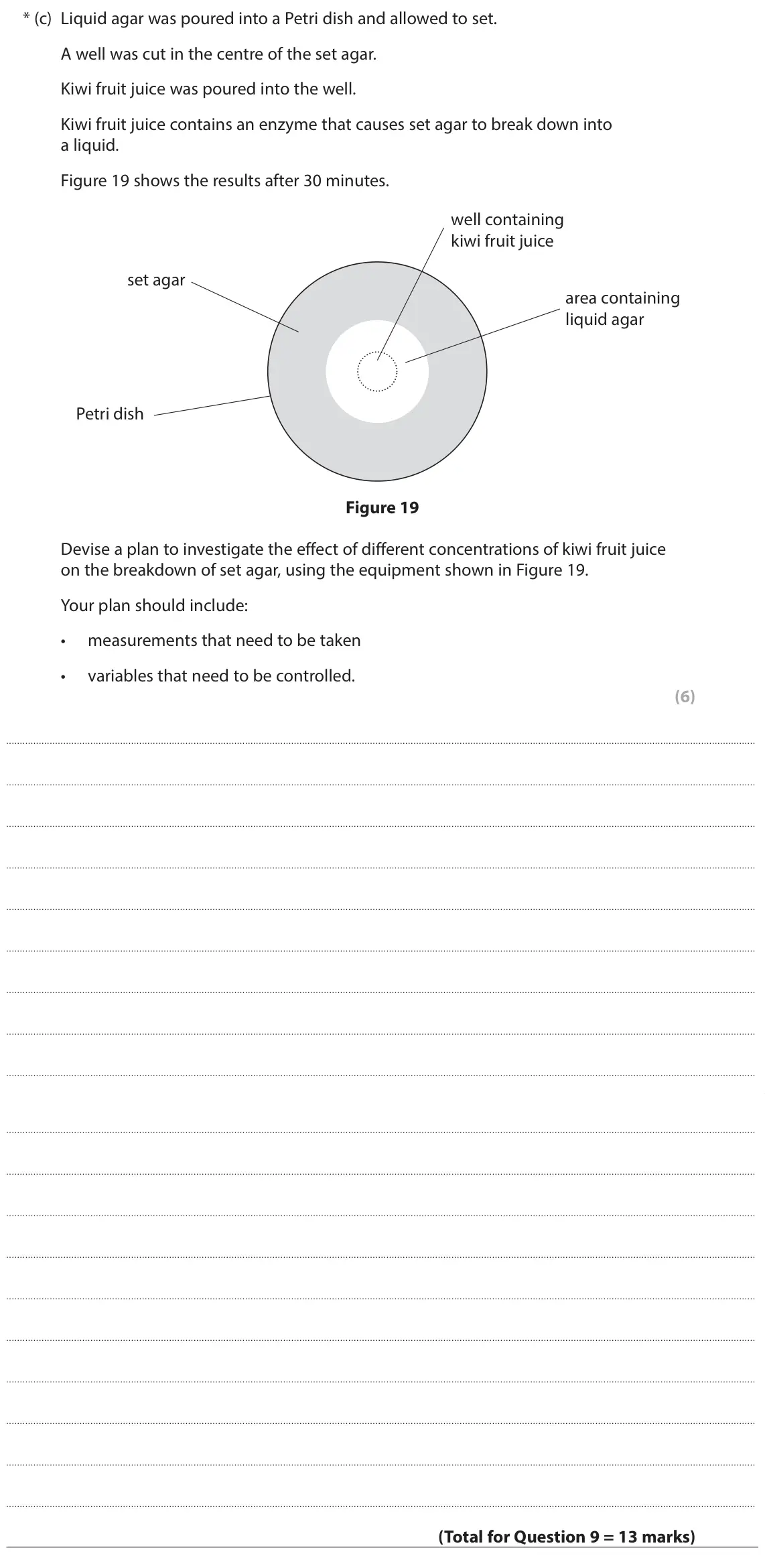
Q1(c)
The whole paper ↗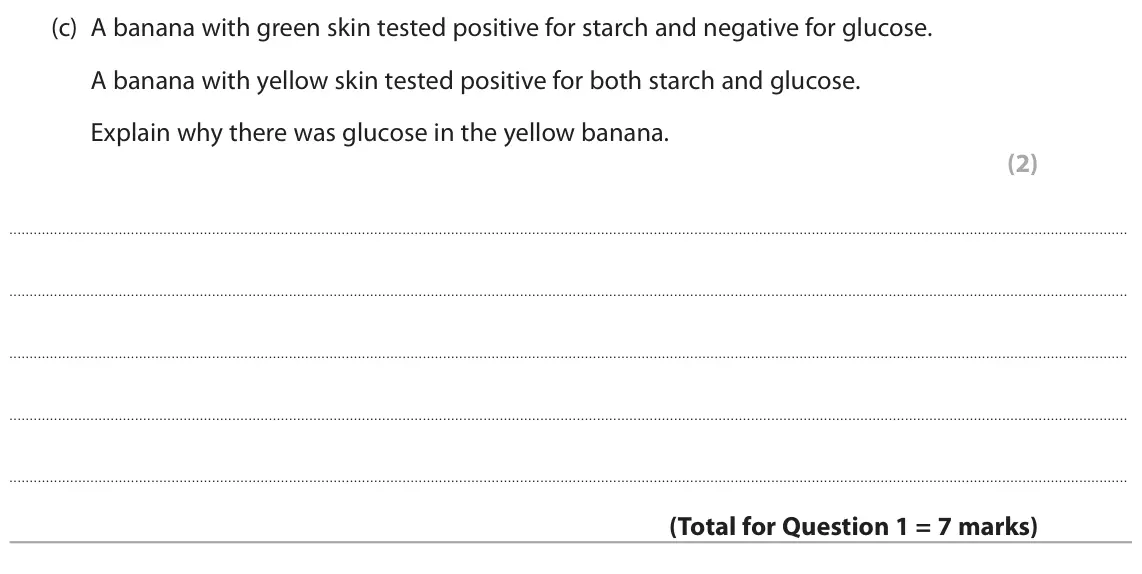
Q2(a)(i)
The whole paper ↗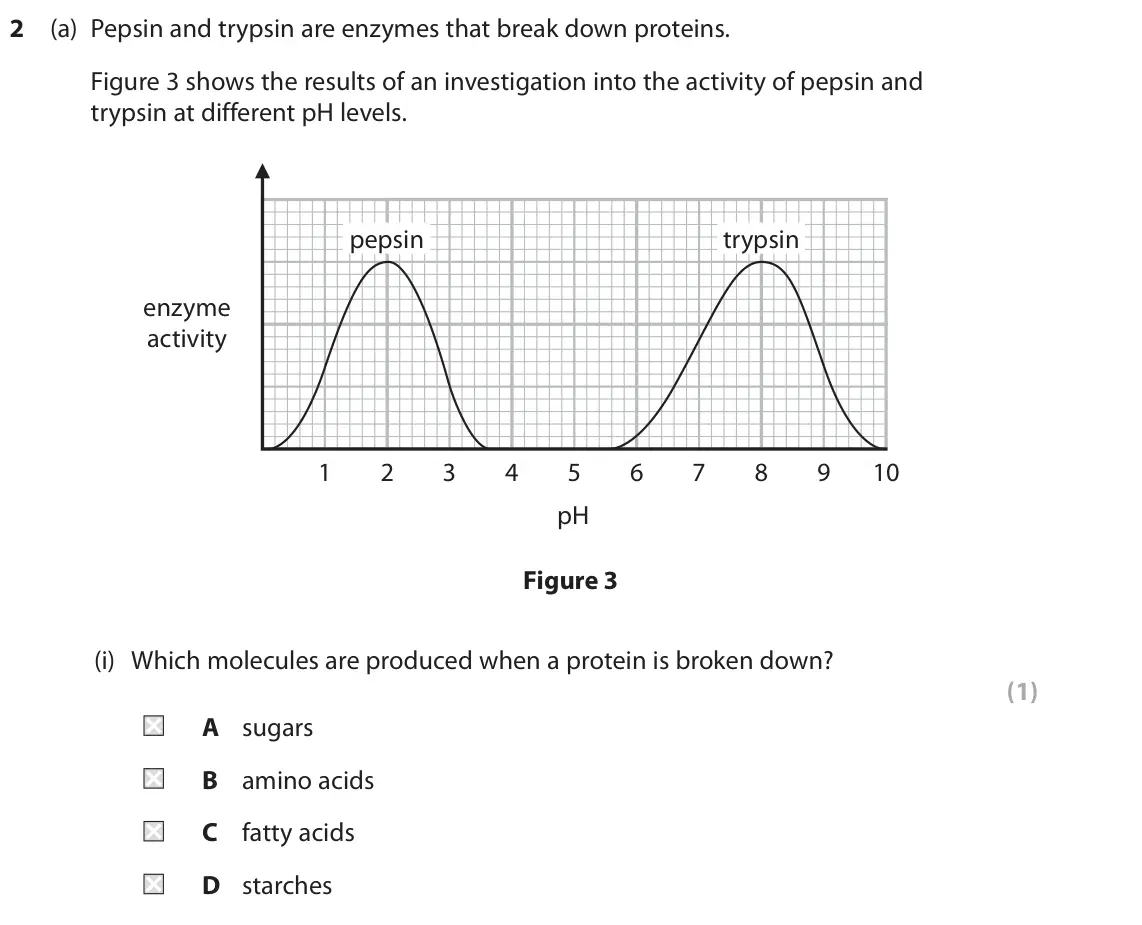
Q2(a)(ii)
The whole paper ↗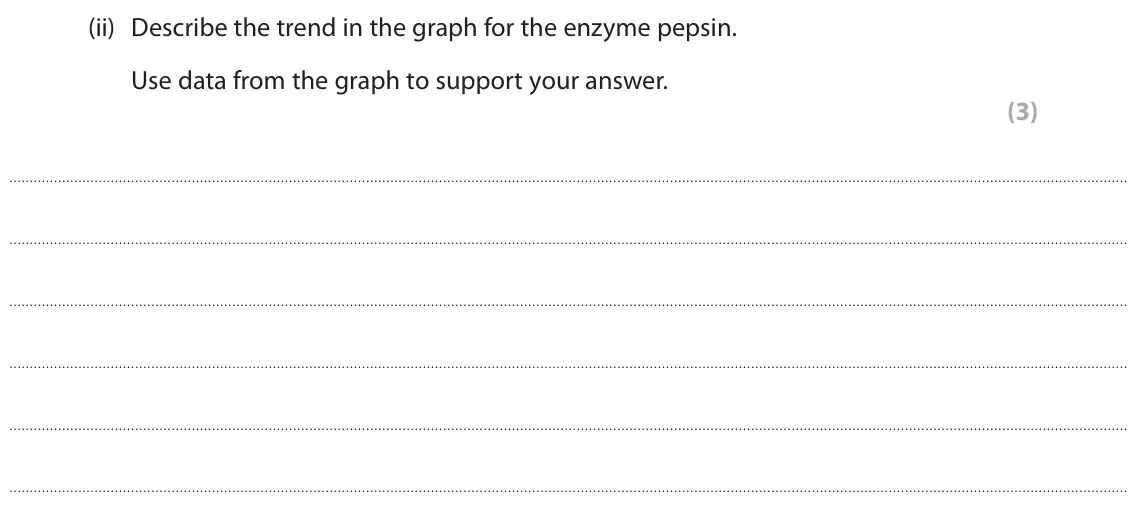
Q2(a)(iii)
The whole paper ↗
Q2(a)(iv)
The whole paper ↗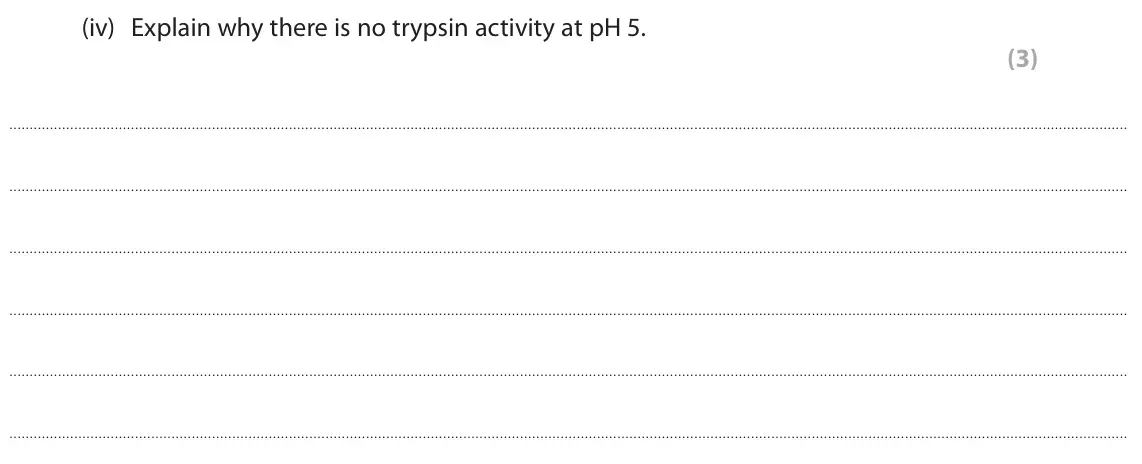
Q2(a)(v)
The whole paper ↗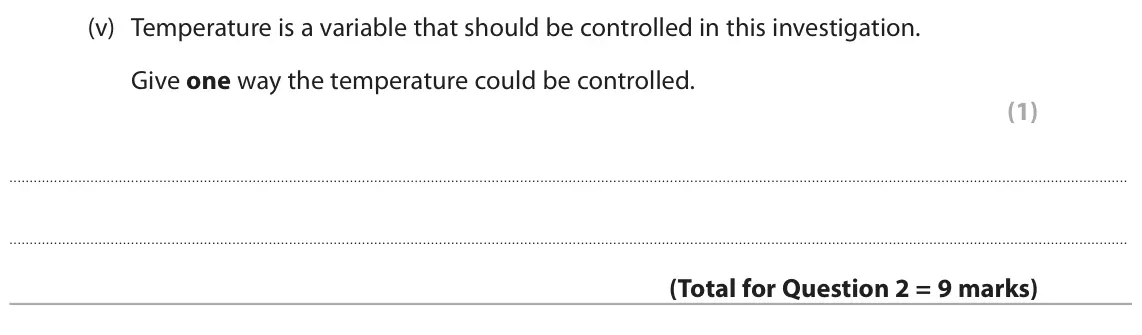
Q8(a)
The whole paper ↗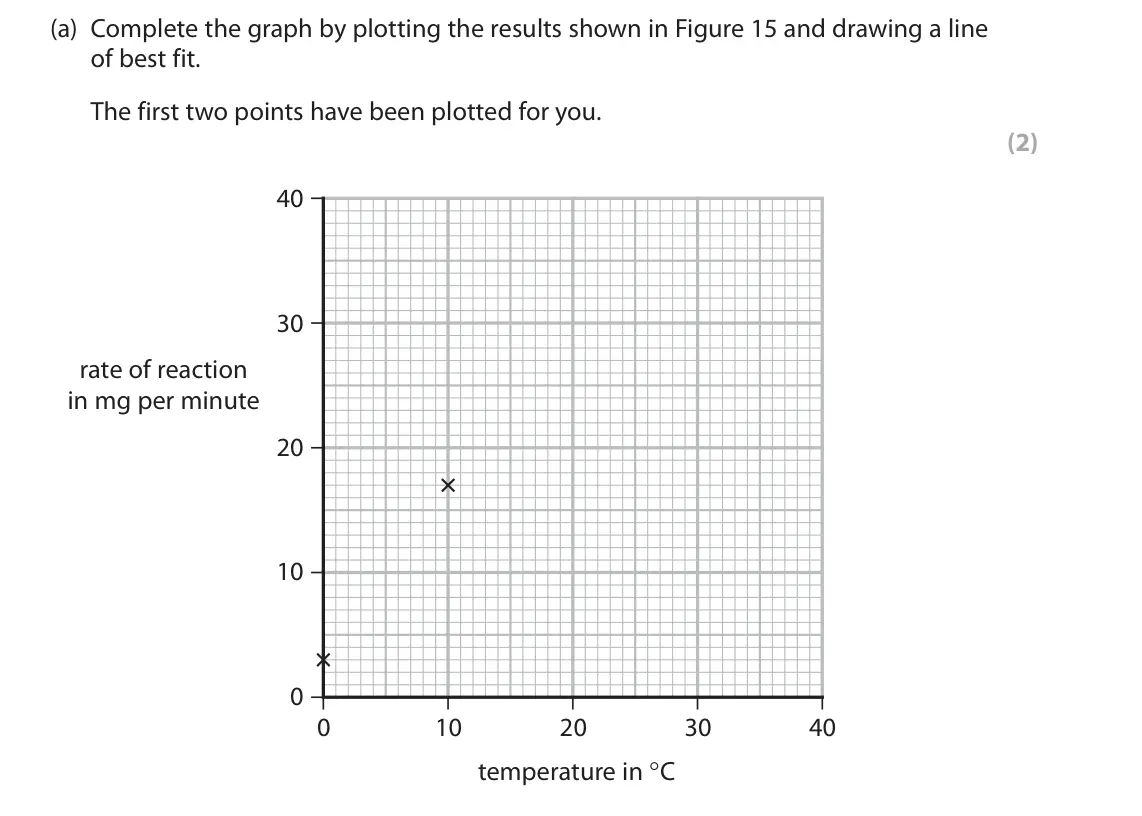
Q8(b)(i)
The whole paper ↗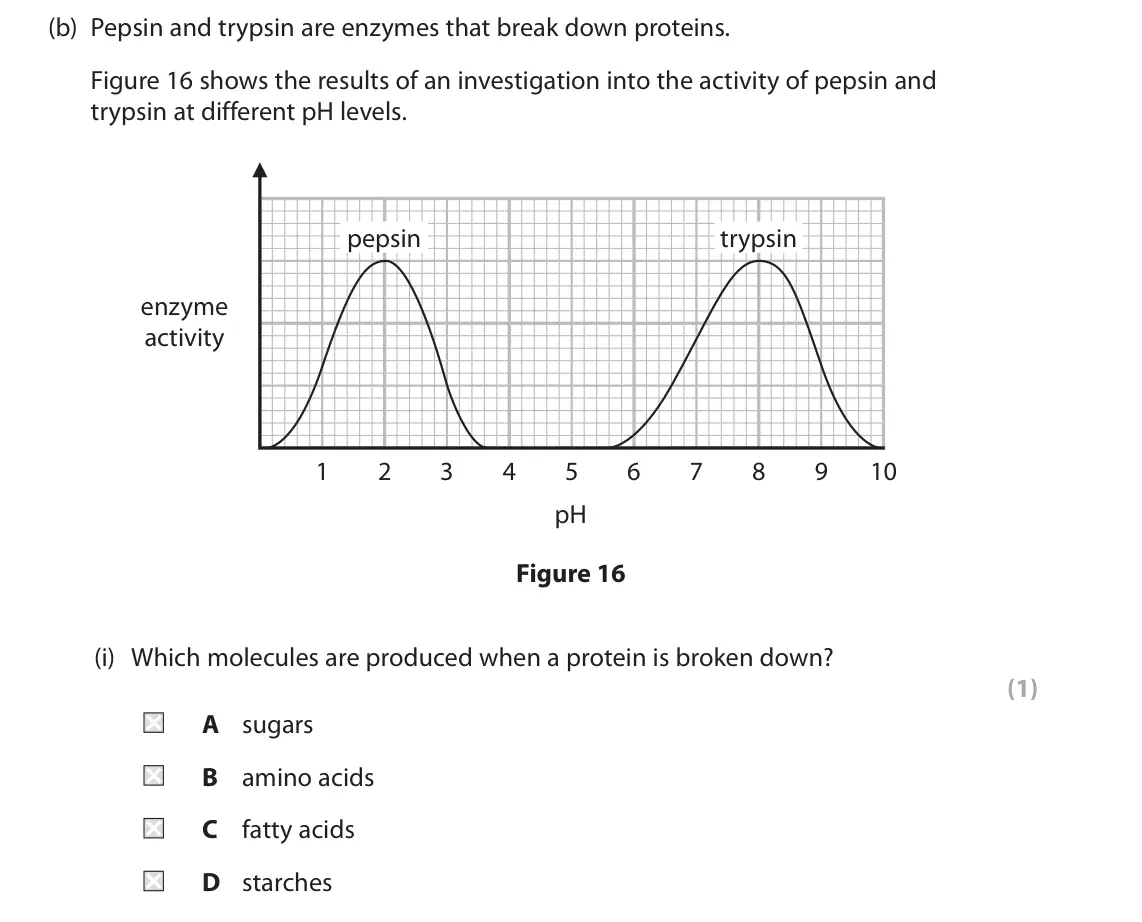
Q8(b)(ii)
The whole paper ↗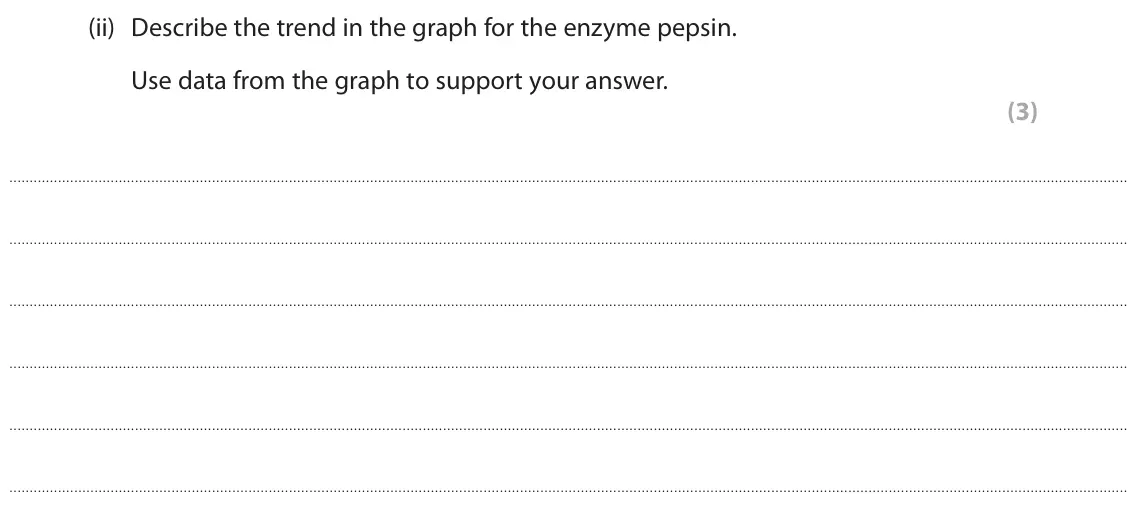
Q8(b)(iii)
The whole paper ↗
Q8(b)(iv)
The whole paper ↗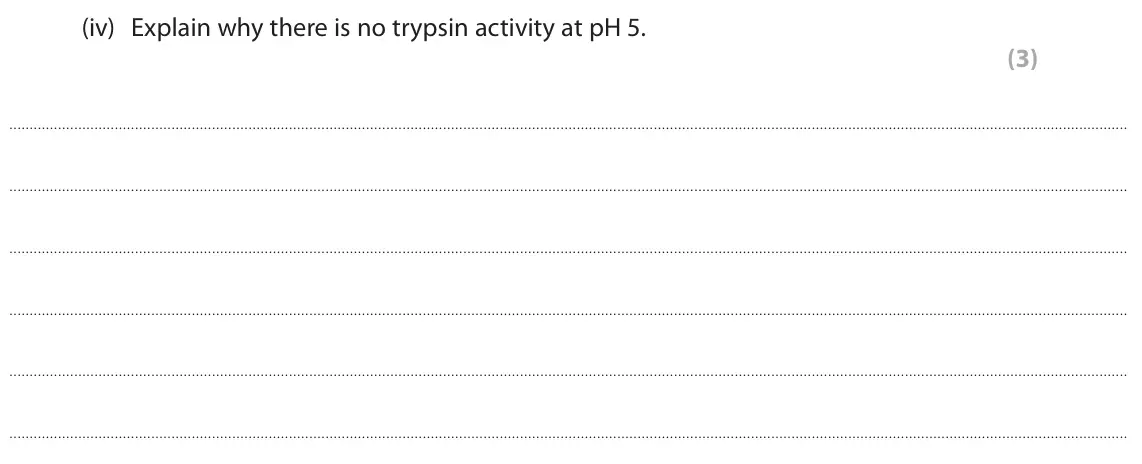
Q8(b)(v)
The whole paper ↗
Q2(c)
The whole paper ↗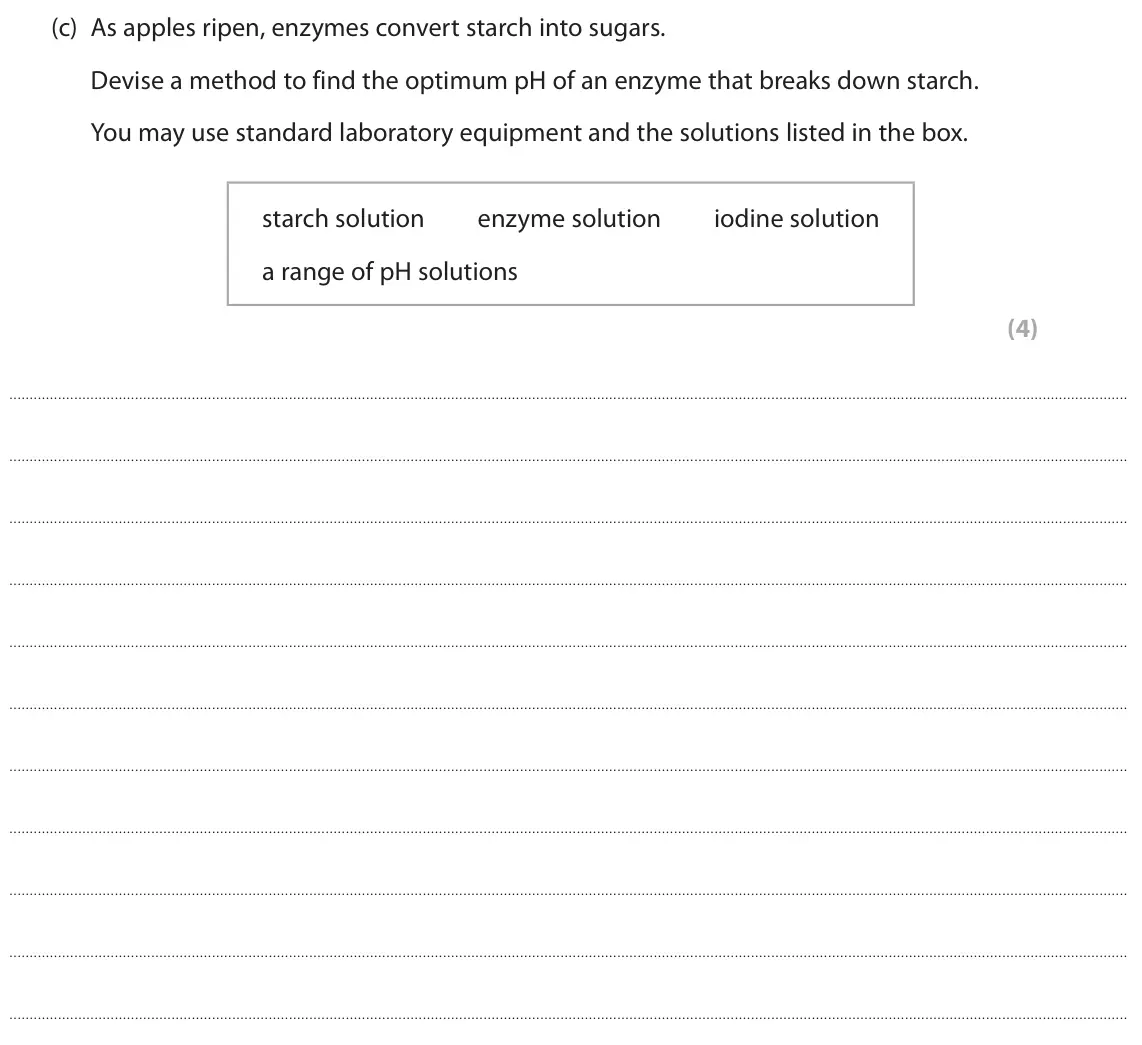
Q2(d)
The whole paper ↗
Q8(d)
The whole paper ↗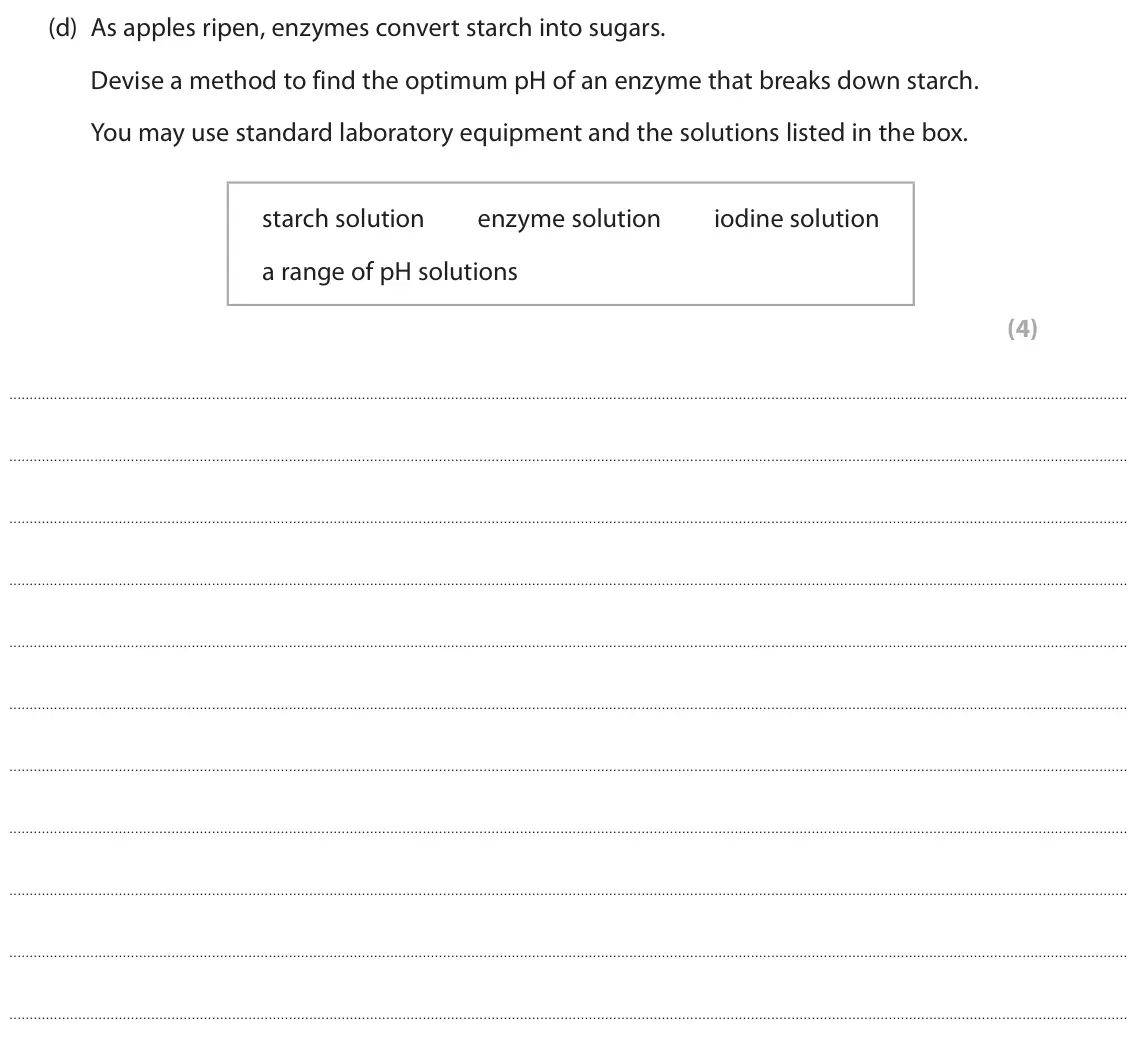
Q8(e)
The whole paper ↗
Q1(b)
The whole paper ↗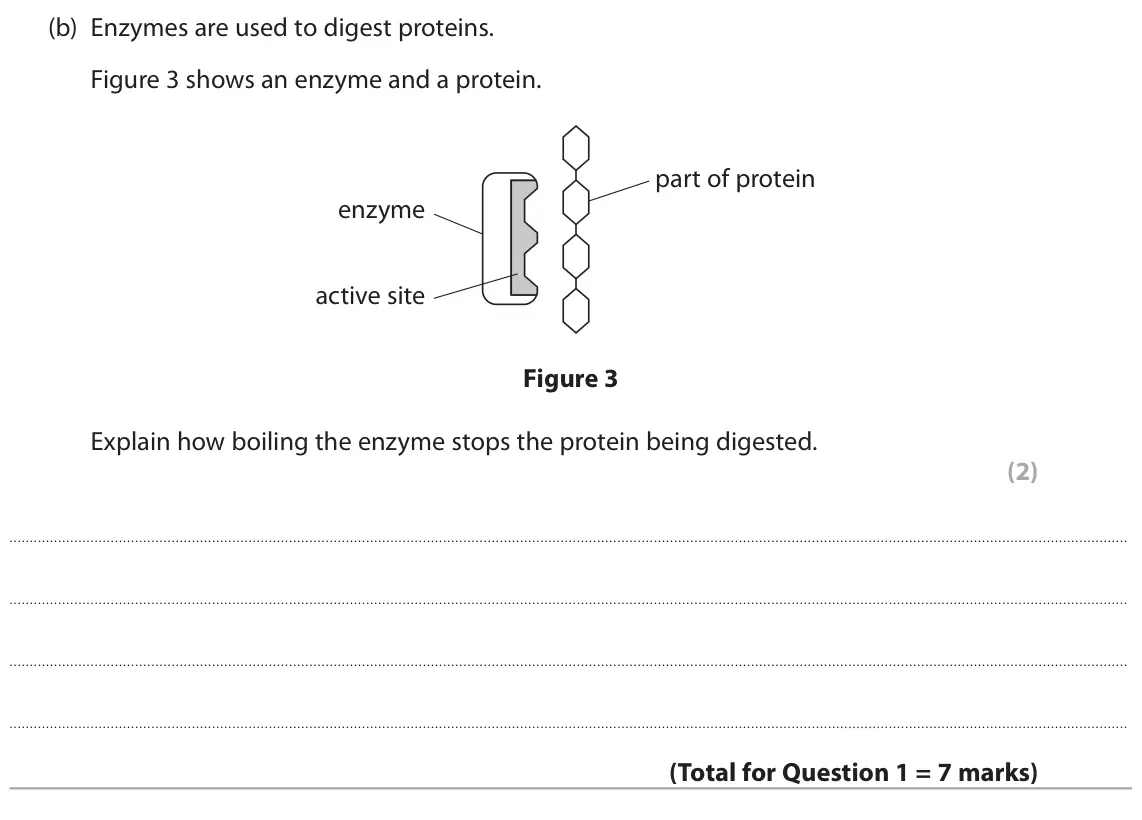
Q6(b)(i)
The whole paper ↗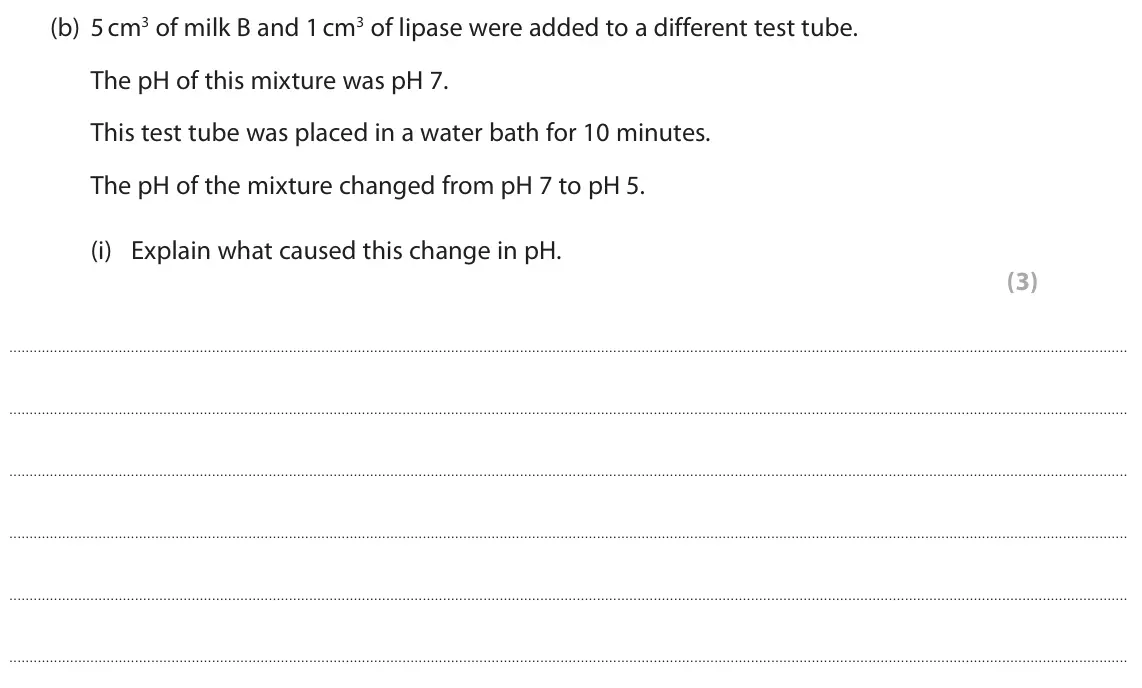
All 88 questions on Enzymes, as a list
- June 2025, Paper 1 Higher, Q1(b)(ii) (1 mark): Which is produced when fats are digested? (1) A amino acids B fatty acids C glucose D starch
- June 2025, Paper 1 Foundation, Q9(c) (6 marks): Liquid agar was poured into a Petri dish and allowed to set. A well was cut in the centre of the set agar. Kiwi fruit juice was poured into the well. Kiwi fruit
- June 2025, Paper 2 Higher, Q1(c) (2 marks): A banana with green skin tested positive for starch and negative for glucose. A banana with yellow skin tested positive for both starch and glucose. Explain why
- June 2024, Paper 1 Higher, Q2(a)(i) (1 mark): Which molecules are produced when a protein is broken down? (1) A sugars B amino acids C fatty acids D starches
- June 2024, Paper 1 Higher, Q2(a)(ii) (3 marks): Describe the trend in the graph for the enzyme pepsin. Use data from the graph to support your answer. (3)
- June 2024, Paper 1 Higher, Q2(a)(iii) (1 mark): State the optimum pH for the enzyme trypsin. (1)
- June 2024, Paper 1 Higher, Q2(a)(iv) (3 marks): Explain why there is no trypsin activity at pH 5. (3)
- June 2024, Paper 1 Higher, Q2(a)(v) (1 mark): Temperature is a variable that should be controlled in this investigation. Give one way the temperature could be controlled. (1)
- June 2024, Paper 1 Foundation, Q8(a) (2 marks): Complete the graph by plotting the results shown in Figure 15 and drawing a line of best fit. The first two points have been plotted for you. (2) 40 30 rate of
- June 2024, Paper 1 Foundation, Q8(b)(i) (1 mark): Which molecules are produced when a protein is broken down? (1) A sugars B amino acids C fatty acids D starches
- June 2024, Paper 1 Foundation, Q8(b)(ii) (3 marks): Describe the trend in the graph for the enzyme pepsin. Use data from the graph to support your answer. (3)
- June 2024, Paper 1 Foundation, Q8(b)(iii) (1 mark): State the optimum pH for the enzyme trypsin. (1)
- June 2024, Paper 1 Foundation, Q8(b)(iv) (3 marks): Explain why there is no trypsin activity at pH 5. (3)
- June 2024, Paper 1 Foundation, Q8(b)(v) (1 mark): Temperature is a variable that should be controlled in this investigation. Give one way the temperature could be controlled. (1)
- June 2023, Paper 1 Higher, Q2(c) (4 marks): As apples ripen, enzymes convert starch into sugars. Devise a method to find the optimum pH of an enzyme that breaks down starch. You may use standard laborator
- June 2023, Paper 1 Higher, Q2(d) (2 marks): The optimum pH of an enzyme is pH 6. Explain why this enzyme would not work at pH 10. (2)
- June 2023, Paper 1 Foundation, Q8(d) (4 marks): As apples ripen, enzymes convert starch into sugars. Devise a method to find the optimum pH of an enzyme that breaks down starch. You may use standard laborator
- June 2023, Paper 1 Foundation, Q8(e) (2 marks): The optimum pH of an enzyme is pH 6. Explain why this enzyme would not work at pH 10. (2)
- June 2023, Paper 2 Foundation, Q1(b) (2 marks): Enzymes are used to digest proteins. Figure 3 shows an enzyme and a protein. part of protein enzyme active site Figure 3 Explain how boiling the enzyme stops th
- June 2022, Paper 1 Higher, Q6(b)(i) (3 marks): Explain what caused this change in pH. (3)
- June 2022, Paper 1 Higher, Q6(b)(ii) (2 marks): This procedure was repeated with milk A. There was no change in the pH of this mixture after 10 minutes. Explain why there was no change in the pH of the mixtur
- June 2022, Paper 1 Higher, Q6(b)(iii) (3 marks): The student repeated this procedure with lipase that had been boiled and left to cool. This was added to another sample of milk B. Describe why the pH did not c
- June 2022, Paper 1 Foundation, Q6(c)(ii) (3 marks): Plant root cells contain an enzyme that joins glucose molecules together to make starch. Devise a plan to investigate the effect of pH on the activity of this e
- November 2021, Paper 1 Higher, Q8(a)(i) (1 mark): Which variables need to be kept constant in this investigation? (1) A the volume of milk and the time B the temperature and the time C the volume of milk and th
- November 2021, Paper 1 Higher, Q8(a)(ii) (2 marks): Explain why the time taken for the milk to curdle decreases from 30°C to 40°C. (2)
- November 2021, Paper 1 Higher, Q8(a)(iii) (2 marks): Explain what the expected result would be if two drops of chymosin were added to the milk at 70°C in the test tube. (2)
- November 2021, Paper 1 Higher, Q8(a)(iv) (1 mark): As part of this investigation, test tubes containing only milk were heated to each temperature and no chymosin solution was added. State why these test tubes co
- November 2021, Paper 1 Higher, Q8(a)(v) (2 marks): Describe two improvements that could be made to the method of this investigation so that the optimum temperature for chymosin can be found. (2) 1 2
- November 2021, Paper 1 Foundation, Q6(a) (1 mark): Why are enzymes called biological catalysts? (1) A because they slow down biological processes B because they speed up biological processes C because they denat
- November 2021, Paper 1 Foundation, Q6(b)(i) (1 mark): State how the scientist could control the temperature of the flask. (1)
- November 2021, Paper 1 Foundation, Q6(b)(ii) (3 marks): Explain why the temperature should be controlled in this investigation. (3)
- November 2021, Paper 1 Foundation, Q6(b)(iii) (2 marks): This investigation used five different concentrations of hydrogen peroxide. Figure 13 shows the results of this investigation. time taken to collect 20 cm3 conc
- November 2021, Paper 1 Foundation, Q6(b)(iv) (3 marks): Describe the trend shown in the graph. Use data from the table in Figure 13 to support your answer. (3)
- November 2021, Paper 2 Higher, Q4(e) (3 marks): Urease is an enzyme that breaks down urea into smaller molecules. Explain why urease will not break down starch into smaller molecules. (3)
- November 2021, Paper 2 Foundation, Q10(e) (3 marks): Urease is an enzyme that breaks down urea into smaller molecules. Explain why urease will not break down starch into smaller molecules. (3)
- November 2020, Paper 1 Higher, Q6(a)(i) (1 mark): Give one reason for the result at 150 seconds. (1)
- November 2020, Paper 1 Higher, Q6(a)(ii) (2 marks): Another student repeated the investigation with the same volumes of solutions and at the same temperature of 25 °C. Give two other variables that would need to
- November 2020, Paper 1 Higher, Q6(a)(iii) (1 mark): Both students also included a tube containing 10 cm3 of starch solution with 5 cm3 of distilled water instead of 5 cm3 of amylase solution. They tested the solu
- November 2020, Paper 1 Higher, Q6(b) (3 marks): Amylase has an optimum pH of 6.8. Devise a method the students could use to confirm the optimum pH for amylase. (3)
- November 2020, Paper 1 Higher, Q6(c) (3 marks): Amylase is produced by salivary glands and the pancreas. Explain why amylase is not produced in the stomach. (3)
- November 2020, Paper 1 Foundation, Q6(a)(i) (2 marks): Describe the trends shown in Figure 10. (2)
- November 2020, Paper 1 Foundation, Q6(a)(ii) (2 marks): Explain the results obtained for temperatures from 40 °C to 60 °C. (2)
- November 2020, Paper 1 Foundation, Q6(b)(i) (2 marks): Draw one straight line from each food group to the products of digestion for that food group. (2) food group products of digestion fatty acids and glycerol amin
- November 2020, Paper 1 Foundation, Q6(b)(ii) (1 mark): Which enzyme breaks down fat? (1) A carbohydrase B amylase C protease D lipase
- November 2020, Paper 1 Foundation, Q6(c) (3 marks): Figure 11 shows an enzyme and two substrates, P and Q. P enzyme Q Figure 11 Explain the reason why no product will be formed if the enzyme is mixed with substra
- November 2020, Paper 2 Higher, Q3(b)(iv) (2 marks): Describe how starch is broken down into glucose. (2)
- November 2020, Paper 2 Higher, Q5(a)(i) (1 mark): Which food group is digested by trypsin? (1) A carbohydrates B lipids C fibre D proteins
- November 2020, Paper 2 Higher, Q5(a)(ii) (2 marks): The food is mashed before the trypsin is added. Explain the advantage of mashing the food before adding the trypsin. (2)
- November 2020, Paper 2 Higher, Q5(b)(i) (1 mark): State one other variable that should be controlled in this investigation. (1)
- November 2020, Paper 2 Higher, Q5(b)(ii) (1 mark): State how this variable could be controlled. (1)
- November 2020, Paper 2 Higher, Q5(c)(i) (2 marks): Describe the trends shown in this data. (2)
- November 2020, Paper 2 Higher, Q5(c)(ii) (2 marks): At pH 4, the trypsin digested 1.5 g of mashed food at a rate of 0.8 g per minute. Calculate the rate of digestion at pH 1. Give your answer to one significant f
- November 2020, Paper 2 Higher, Q5(c)(iii) (2 marks): Explain the difference in the rate of reaction at pH 1 and the rate of reaction at pH 4. (2)
- November 2020, Paper 2 Foundation, Q3(c)(i) (2 marks): Enzymes in the fungus caused decomposition. Explain how boiling stops the enzymes from working. (2)
- June 2019, Paper 1 Higher, Q6(a)(i) (1 mark): What is the rate of reaction for 25 beads? (1) A 0.008 s−1 B 0.04 s−1 C 0.21 s−1 D 4.8 s−1
- June 2019, Paper 1 Higher, Q6(a)(ii) (3 marks): Explain the conclusion that can be made from these results. (3)
- June 2019, Paper 1 Higher, Q6(a)(iii) (2 marks): Explain why the same volume of lactose solution was used for each test. (2)
- June 2019, Paper 1 Higher, Q6(b) (3 marks): Devise a method to find the optimum temperature for the enzyme lactase. (3)
- June 2019, Paper 1 Foundation, Q5(a)(i) (4 marks): Describe the trend in the graph for the enzyme trypsin. Use data from the graph to support your answer. (4)
- June 2019, Paper 1 Foundation, Q5(a)(ii) (1 mark): State the optimum pH for the enzyme pepsin. (1)
- June 2019, Paper 1 Foundation, Q5(a)(iii) (2 marks): Pepsin only works effectively in the stomach. Describe the conditions in the stomach that allow pepsin to work effectively. (2)
- June 2019, Paper 1 Foundation, Q5(b) (1 mark): At high pH values the active site of the enzyme pepsin changes shape. When the active site of the enzyme changes shape, the enzyme is (1) A specific B denatured
- June 2019, Paper 1 Foundation, Q5(c) (1 mark): State what is produced when proteins are digested. (1)
- June 2019, Paper 1 Foundation, Q7(a) (1 mark): Name the enzyme that breaks down starch. (1)
- June 2019, Paper 1 Foundation, Q7(b)(i) (1 mark): Give one reason why the contents of both test tubes were blue-black at the beginning of the investigation. (1)
- June 2019, Paper 1 Foundation, Q7(b)(ii) (3 marks): Explain the results of this investigation after ten minutes. (3)
- June 2019, Paper 2 Foundation, Q7(c)(iii) (2 marks): The emulsion test shows that food sample G contained fat. Describe how fat is digested in the body. (2)
- June 2018, Paper 1 Higher, Q8(a)(i) (1 mark): Which term describes the hydrogen peroxide in this reaction? (1) A product B substrate C active site D control
- June 2018, Paper 1 Higher, Q8(a)(ii) (2 marks): The potato discs all had the same mass. Explain why the student used potato discs with the same mass. (2)
- June 2018, Paper 1 Higher, Q8(a)(iii) (2 marks): State two other factors that need to be kept the same to improve this investigation. (2)
- June 2018, Paper 1 Higher, Q8(b)(i) (4 marks): State and explain a conclusion based on these results. (4)
- June 2018, Paper 1 Higher, Q8(b)(ii) (2 marks): The student repeated the investigation with a 25% hydrogen peroxide solution and recorded a time of 75 seconds. Calculate the rate of reaction for the 25% hydro
- June 2018, Paper 1 Higher, Q8(b)(iii) (1 mark): The student decided that the rate for the 25% hydrogen peroxide solution was not anomalous. Give the reason why the result was not anomalous. (1)
- June 2018, Paper 1 Foundation, Q5(a) (2 marks): Complete the graph by plotting the points and drawing a line to show the trend in the data. The first three points have been plotted for you. (2) 45 40 35 30 ma
- June 2018, Paper 1 Foundation, Q5(b) (2 marks): Describe the effect that enzyme concentration has on the mass of product formed. (2)
- June 2018, Paper 1 Foundation, Q5(c) (2 marks): The ratio of enzyme concentration to the mass of product formed, using an enzyme concentration of 40 arbitrary units, is 1:1. Calculate the ratio of enzyme conc
- June 2018, Paper 1 Foundation, Q5(d)(i) (1 mark): Which statement gives one way to increase the mass of product formed in this investigation? (1) A increase the pH B decrease the temperature C decrease the enzy
- June 2018, Paper 1 Foundation, Q5(d)(ii) (3 marks): Explain why a temperature of 80°C was not used in this investigation. (3)
- June 2018, Paper 2 Foundation, Q5(b)(i) (2 marks): Describe the next two steps that should be in this plan to obtain results for this investigation. (2) Step 2 Step 3
- June 2018, Paper 2 Foundation, Q5(b)(ii) (1 mark): Which procedure would improve the investigation? (1) A change the concentration of the protein solution in each flask B change the volume of the protein solutio
- June 2018, Paper 2 Foundation, Q5(b)(iii) (2 marks): The enzyme luciferase works best at pH 8. Explain why the activity of the enzyme decreases at pH 5. (2)
- June 2018, Paper 2 Foundation, Q6(d) (1 mark): Figure 15 shows an enzyme and three substrates found in plant cells. enzyme chain of glucose molecules chain of amino acids fatty acids and glycerol Figure 15 T
- Specimen, Paper 1 Higher, Q8(a)(i) (2 marks): Explain why phenolphthalein turns colourless when lipase breaks down the lipids in milk. (2)
- Specimen, Paper 1 Higher, Q8(a)(ii) (2 marks): Describe the effect of temperature on the activity of lipase, as shown in Figure 10. (2)
- Specimen, Paper 1 Higher, Q8(a)(iii) (2 marks): Explain why the activity of lipase changes above a temperature of 40°C. (2)
- Specimen, Paper 1 Higher, Q8(b)(i) (3 marks): Calculate the rate of amylase enzyme activity for the 10% starch solution. (3) rate = s–1 The investigation was done at 37°C.
- Specimen, Paper 1 Higher, Q8(b)(ii) (1 mark): State one other variable that the student should have controlled during this investigation. (1)
- Specimen, Paper 1 Higher, Q8(c) (2 marks): Different enzymes catalyse specific reactions. Explain why enzymes can only catalyse specific reactions. (2)
Questions, mark schemes and examiner’s reports are © Pearson Edexcel, from their published past papers. Plumi isn’t affiliated with any exam board. Want whole papers? Every Edexcel GCSE Biology paper.
Rather write your answers by hand on iPad? Plumi marks them against the same mark schemes.