 plumi
Diffusion, osmosis and active transport: Edexcel GCSE Biology questions
Every Edexcel GCSE Biology exam question on Diffusion, osmosis and active transport (specification points 1.15–1.17), 2018–2025, with its mark scheme and examiner’s report.
Find questions1,834
Exam
All years
Calculations
Q3(a)
The whole paper ↗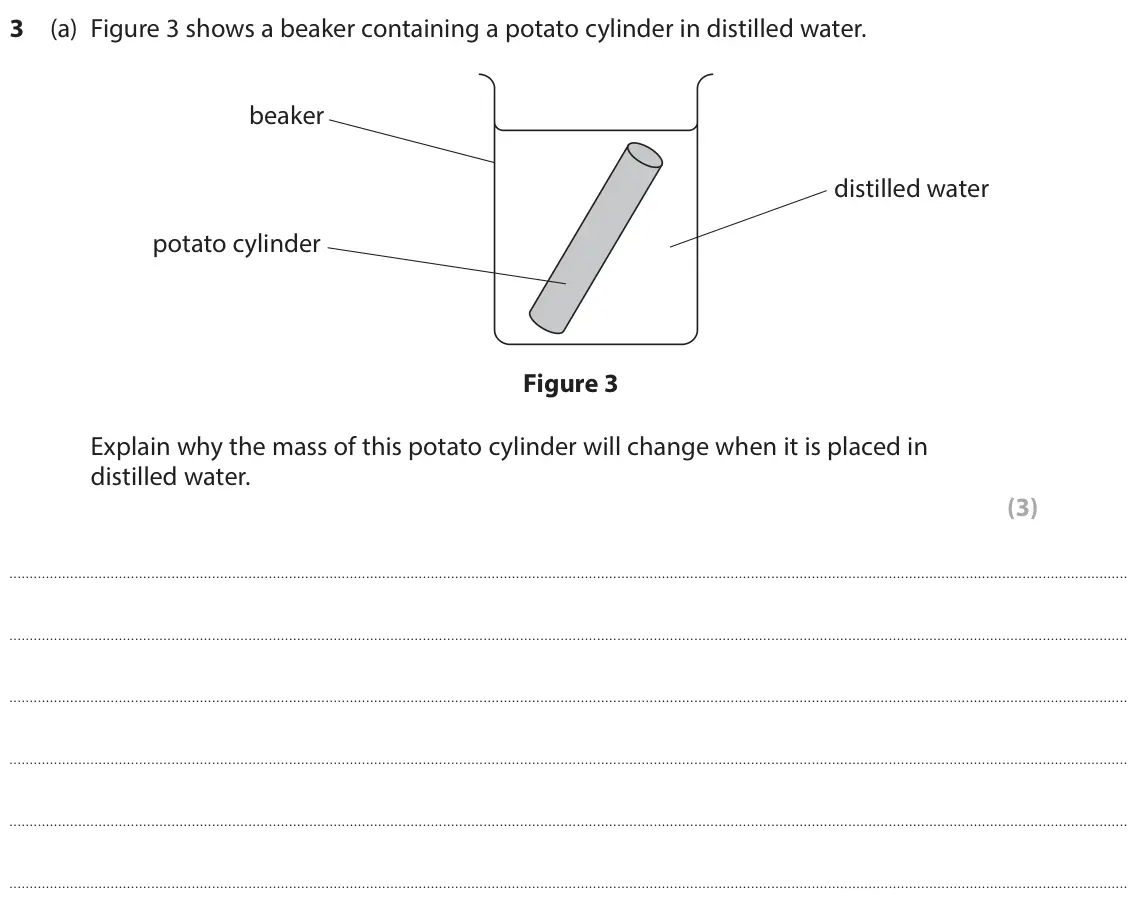
Q3(b)(i)
The whole paper ↗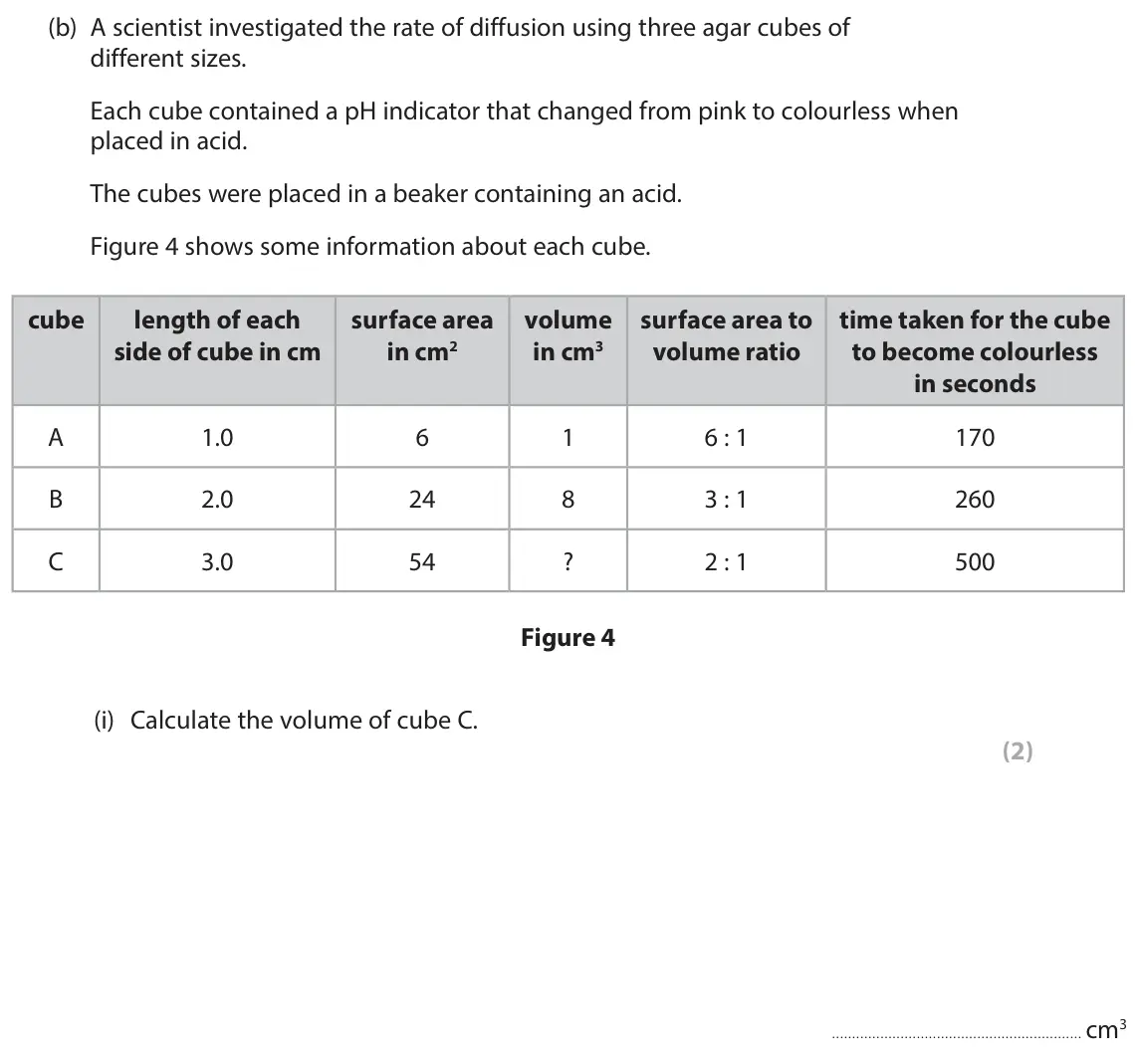
Q3(b)(ii)
The whole paper ↗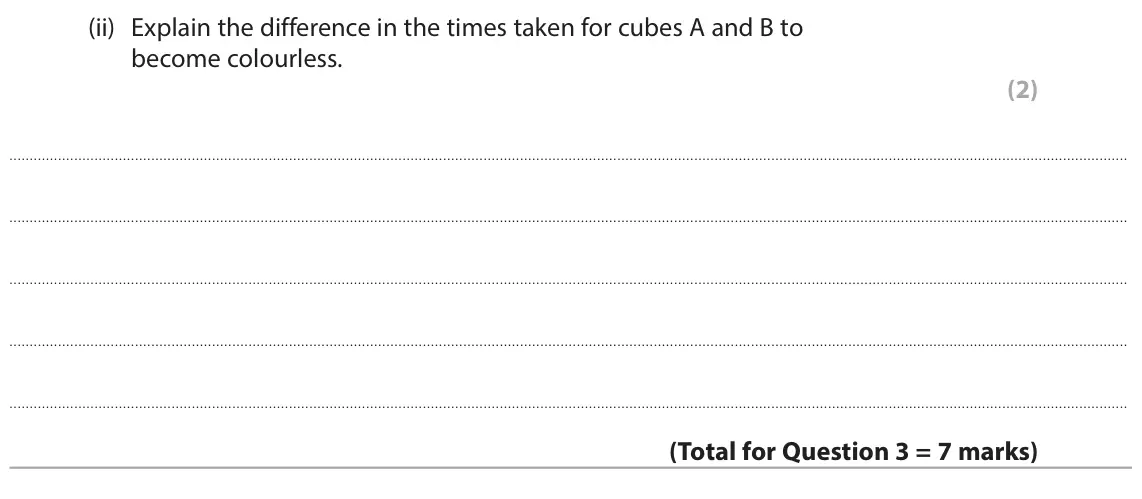
Q9(a)
The whole paper ↗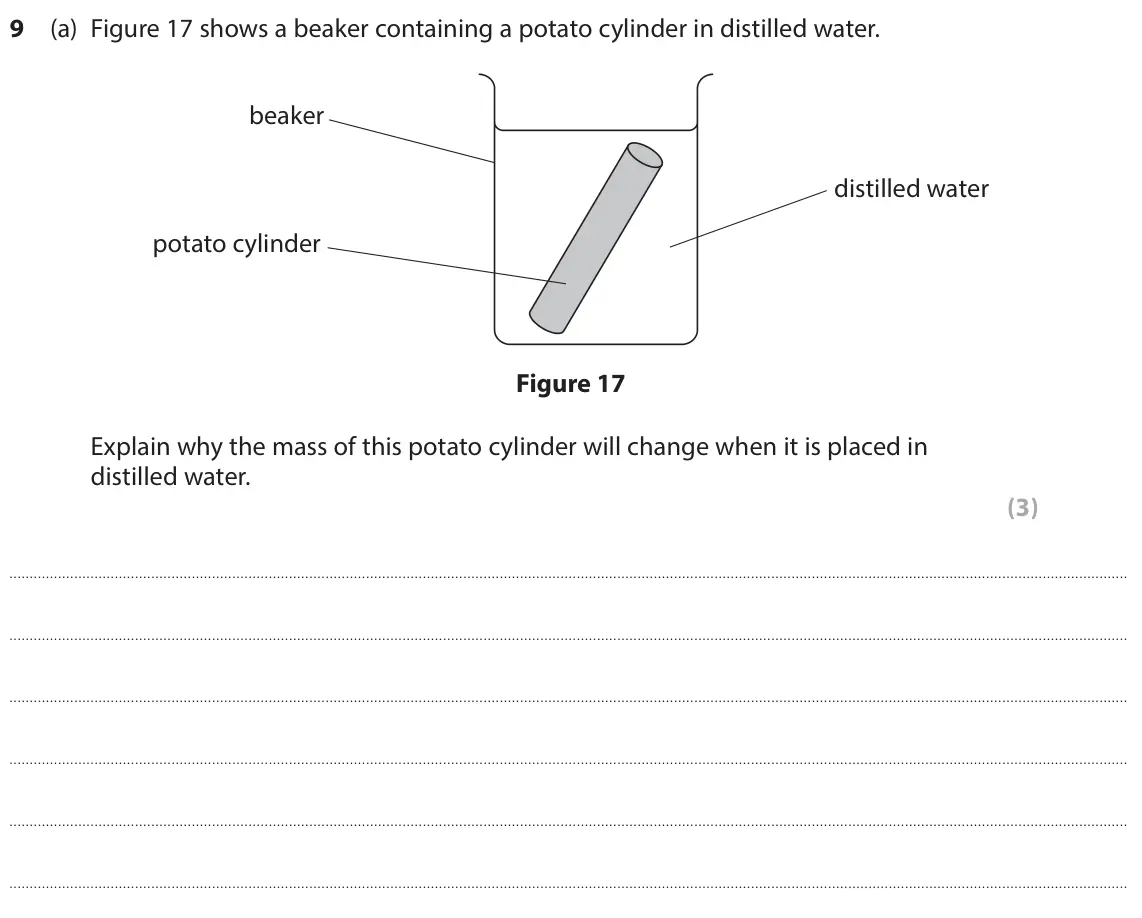
Q9(b)(i)
The whole paper ↗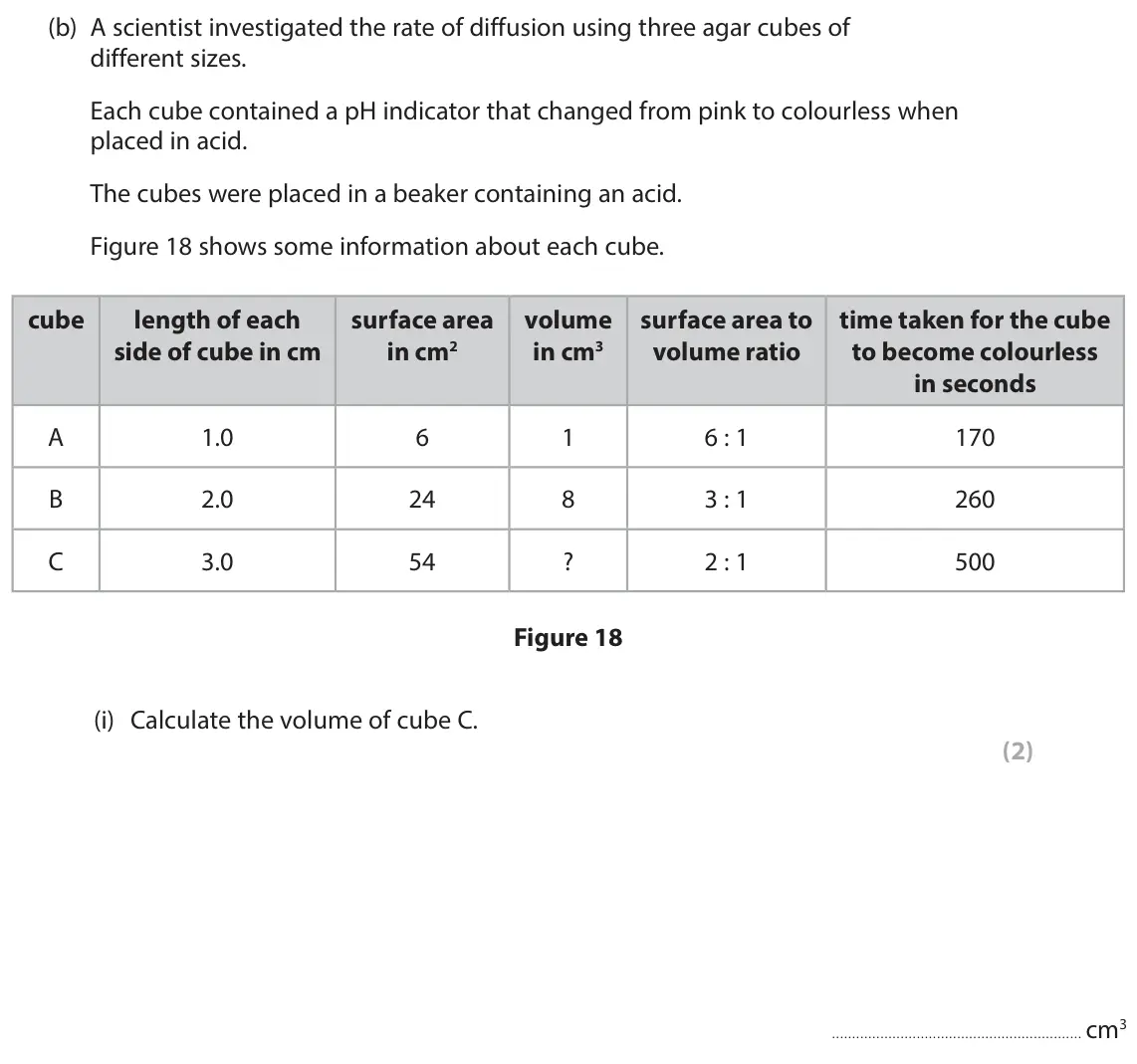
Q9(b)(ii)
The whole paper ↗
Q5(a)(i)
The whole paper ↗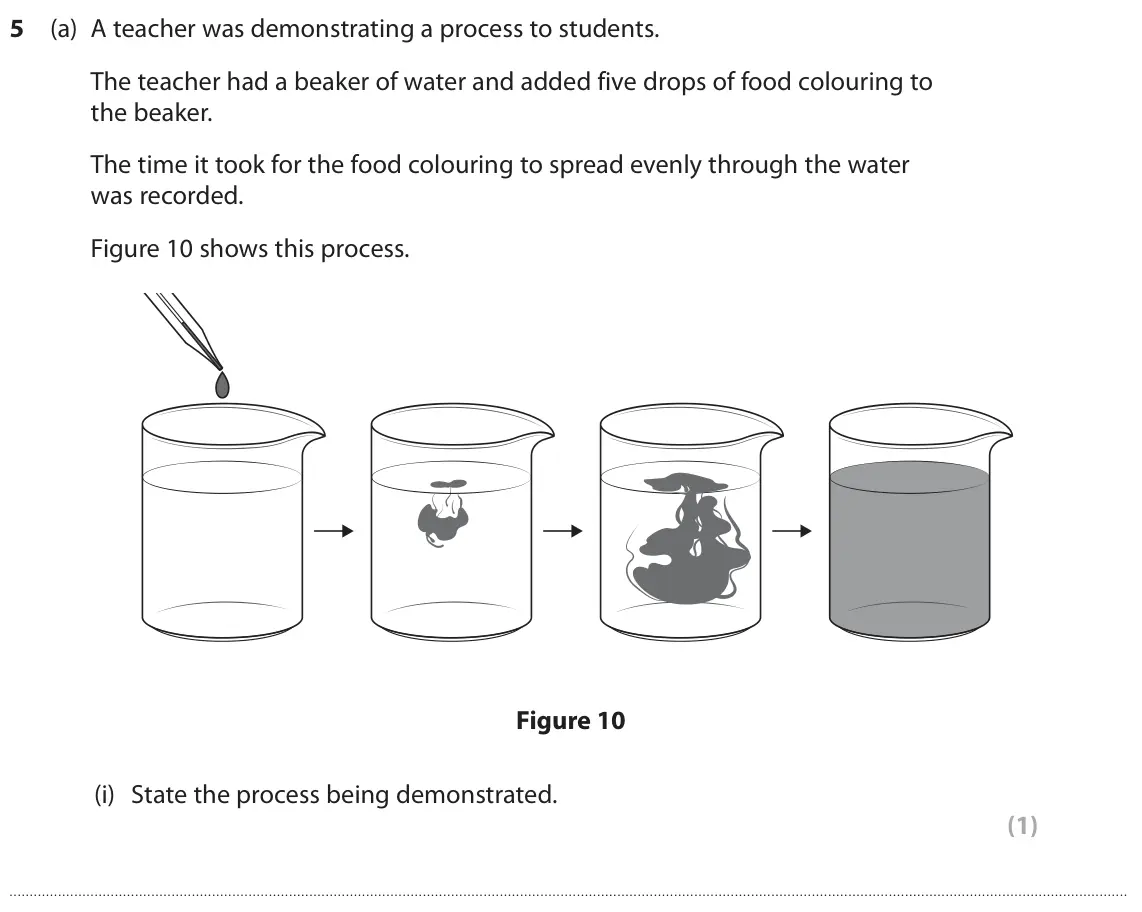
Q5(a)(ii)
The whole paper ↗
Q5(b)(i)
The whole paper ↗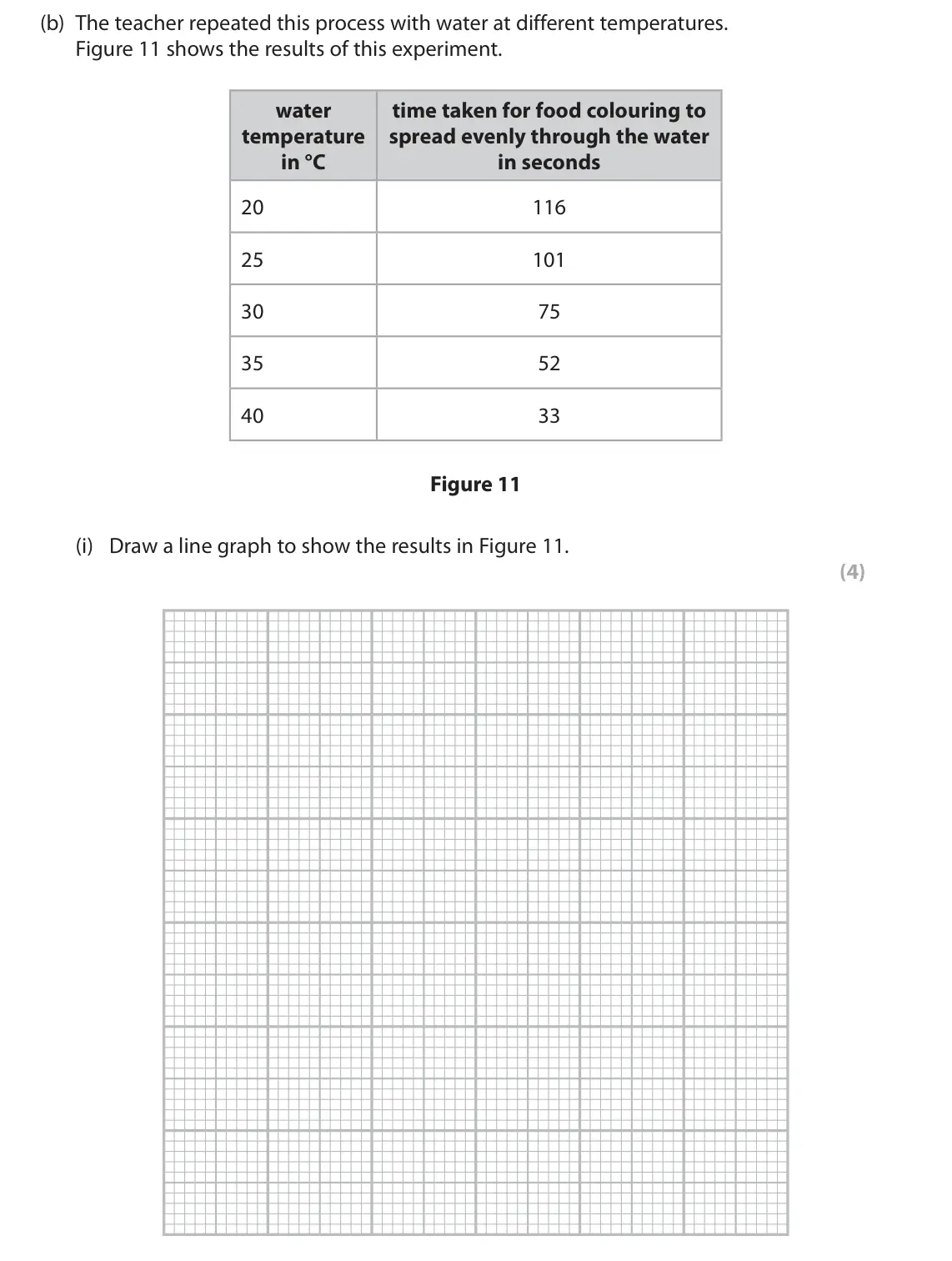
Q5(b)(ii)
The whole paper ↗
Q3(b)(i)
The whole paper ↗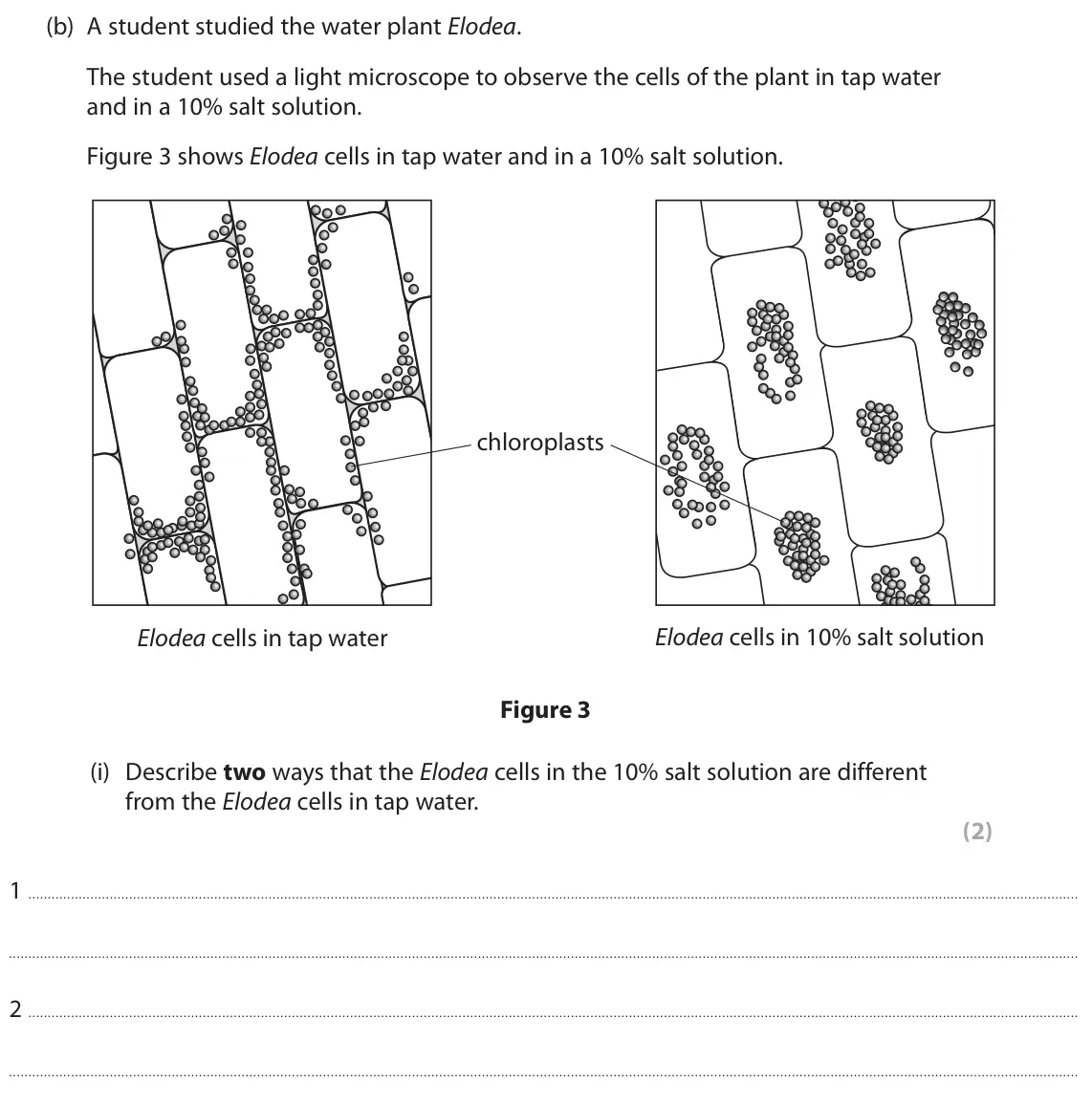
Q3(b)(ii)
The whole paper ↗
Q9(b)
The whole paper ↗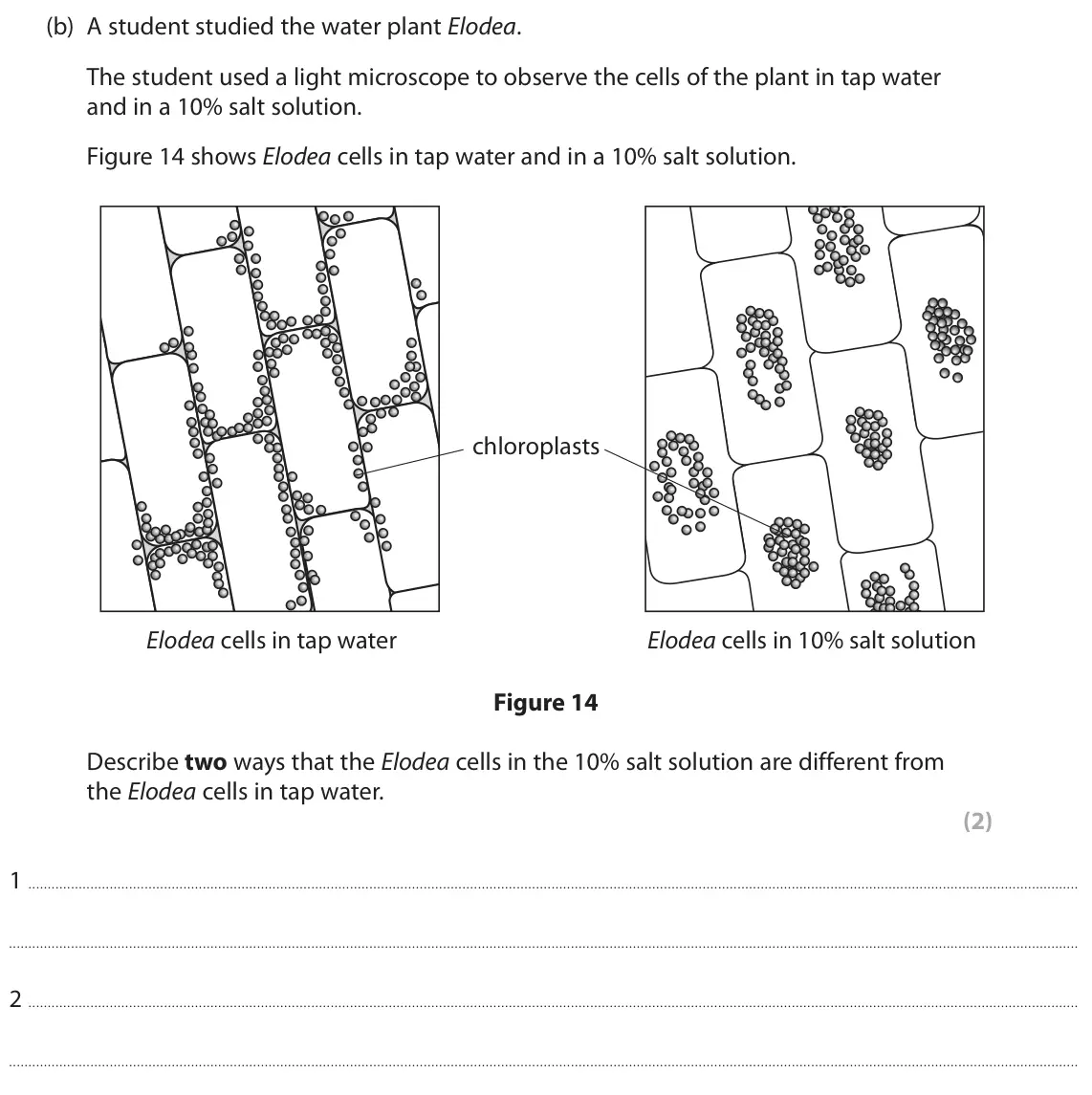
Q8(a)(i)
The whole paper ↗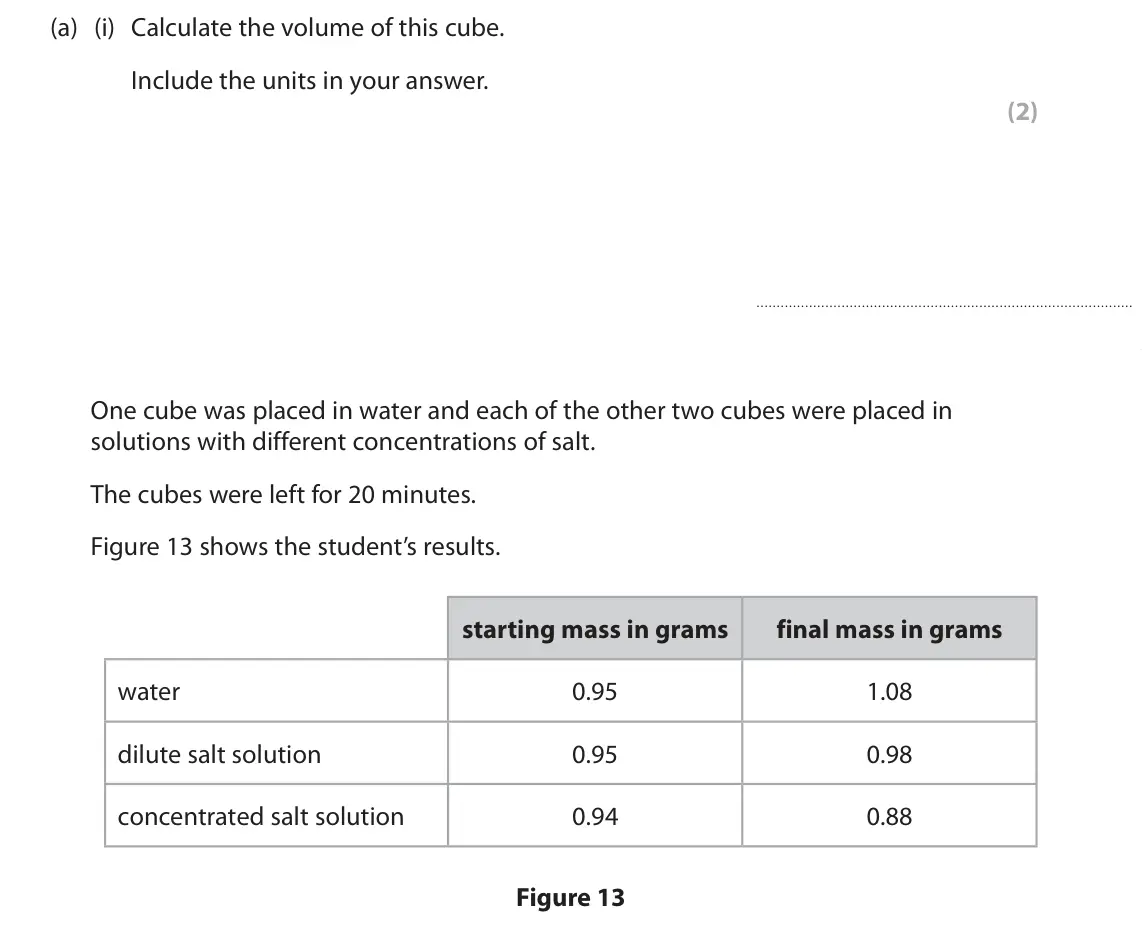
Q8(a)(ii)
The whole paper ↗
Q8(a)(iii)
The whole paper ↗
Q8(a)(iv)
The whole paper ↗
Q8(b)
The whole paper ↗
Q2(a)(ii)
The whole paper ↗
Q8(a)(iii)
The whole paper ↗
All 53 questions on Diffusion, osmosis and active transport, as a list
- June 2025, Paper 1 Higher, Q3(a) (3 marks): Figure 3 shows a beaker containing a potato cylinder in distilled water. beaker distilled water potato cylinder Figure 3 Explain why the mass of this potato cyl
- June 2025, Paper 1 Higher, Q3(b)(i) (2 marks): Calculate the volume of cube C. (2) cm3
- June 2025, Paper 1 Higher, Q3(b)(ii) (2 marks): Explain the difference in the times taken for cubes A and B to become colourless. (2)
- June 2025, Paper 1 Foundation, Q9(a) (3 marks): Figure 17 shows a beaker containing a potato cylinder in distilled water. beaker distilled water potato cylinder Figure 17 Explain why the mass of this potato c
- June 2025, Paper 1 Foundation, Q9(b)(i) (2 marks): Calculate the volume of cube C. (2) cm3
- June 2025, Paper 1 Foundation, Q9(b)(ii) (2 marks): Explain the difference in the times taken for cubes A and B to become colourless. (2)
- June 2025, Paper 2 Higher, Q5(a)(i) (1 mark): State the process being demonstrated. (1)
- June 2025, Paper 2 Higher, Q5(a)(ii) (2 marks): A student asked if different food colourings spread evenly in the same amount of time. Give two variables that would need to be controlled if the investigation
- June 2025, Paper 2 Higher, Q5(b)(i) (4 marks): Draw a line graph to show the results in Figure 11. (4)
- June 2025, Paper 2 Higher, Q5(b)(ii) (2 marks): Explain why the time taken decreased. (2)
- June 2024, Paper 2 Higher, Q3(b)(i) (2 marks): Describe two ways that the Elodea cells in the 10% salt solution are different from the Elodea cells in tap water. (2) 1 2
- June 2024, Paper 2 Higher, Q3(b)(ii) (3 marks): Explain why placing the Elodea cells in the 10% salt solution causes the changes seen in Figure 3. (3)
- June 2024, Paper 2 Foundation, Q9(b) (2 marks): A student studied the water plant Elodea. The student used a light microscope to observe the cells of the plant in tap water and in a 10% salt solution. Figure
- June 2023, Paper 1 Higher, Q8(a)(i) (2 marks): Calculate the volume of this cube. Include the units in your answer. (2) One cube was placed in water and each of the other two cubes were placed in solutions w
- June 2023, Paper 1 Higher, Q8(a)(ii) (1 mark): Give one way the student could ensure the measurement of the mass of the cubes is accurate. (1)
- June 2023, Paper 1 Higher, Q8(a)(iii) (3 marks): Explain the mass change in the cube in the concentrated salt solution. (3)
- June 2023, Paper 1 Higher, Q8(a)(iv) (3 marks): The student wanted to find the concentration of salt solution where the potato cube did not change mass. Describe how the student could modify this investigatio
- June 2023, Paper 1 Higher, Q8(b) (2 marks): Explain why potato cells do not burst when placed in water. (2)
- June 2023, Paper 2 Higher, Q2(a)(ii) (2 marks): Water moved out of the red blood cells of the person with diabetes when the concentration of glucose in the blood was above 15 mmol per dm3. Explain why water m
- June 2023, Paper 2 Foundation, Q8(a)(iii) (2 marks): Water moved out of the red blood cells of the person with diabetes when the concentration of glucose in the blood was above 15 mmol per dm3. Explain why water m
- June 2022, Paper 1 Foundation, Q4(a) (1 mark): Which process moves alcohol from the blood into the liver cells? (1) A diffusion B respiration C osmosis D transpiration
- June 2022, Paper 2 Foundation, Q4(a)(iii) (2 marks): The salt solution outside the cell has a higher concentration than the solution inside the cell. Explain why the cytoplasm shrinks away from the sides of the ce
- June 2022, Paper 2 Foundation, Q4(c) (2 marks): A student investigated the percentage change in mass of potato cylinders placed in sucrose solutions of different concentrations. Figure 7 shows the results of
- November 2021, Paper 1 Higher, Q9(c) (6 marks): A student investigated the movement of water. Hens’ eggs were placed in vinegar for two days to dissolve the shell. This makes the eggs permeable to water. The
- November 2021, Paper 1 Foundation, Q5(b)(i) (1 mark): Give one reason why the student used three carrot sticks instead of just one carrot stick. (1)
- November 2021, Paper 1 Foundation, Q5(b)(ii) (2 marks): Give two ways that this method could be improved. (2) 1 2
- November 2021, Paper 1 Foundation, Q5(b)(iii) (3 marks): Calculate the percentage change in mass of carrot stick Q. (3) Use the equation percentage change = change in mass mass at the start x 100 Give your answer to 2
- November 2021, Paper 1 Foundation, Q5(b)(iv) (2 marks): Explain the change in mass of the carrot sticks. (2)
- November 2021, Paper 2 Higher, Q5(b) (3 marks): Some blood transfusions contain red blood cells. Red blood cells are stored in a solution containing 5.0% glucose and 0.9% salt. Explain why red blood cells can
- November 2021, Paper 2 Foundation, Q6(a)(i) (1 mark): Which row of the table allows the net diffusion of oxygen into Amoeba proteus? (1) concentration of oxygen in concentration of oxygen in water in ppm Amoeba pro
- November 2020, Paper 1 Foundation, Q2(b) (1 mark): Substances move into and out of cells. How does oxygen move into and out of cells? (1) A transpiration B active transport C diffusion D osmosis
- November 2020, Paper 1 Foundation, Q4(a)(i) (2 marks): The distance from the outside of cube B to the pink area was 3 mm. Calculate the distance diffused by hydrochloric acid in one second. (2) mm
- November 2020, Paper 1 Foundation, Q4(a)(ii) (1 mark): The student wanted to confirm their results. Give one improvement the student should make to this investigation to confirm their results. . (1)
- November 2020, Paper 1 Foundation, Q4(b) (3 marks): Devise a method, using cubes of agar jelly, to investigate how temperature affects the rate of diffusion. (3)
- November 2020, Paper 1 Foundation, Q4(c) (1 mark): Some substances move into and out of cells by active transport. Which is the correct description of the movement of a substance by active transport? (1) A again
- November 2020, Paper 2 Foundation, Q3(c)(ii) (1 mark): Cells from a fungus can land on jam. The sugar solution inside the jam is more concentrated than the sugar solution inside the fungus cells. State how osmosis c
- June 2019, Paper 2 Higher, Q9(b) (2 marks): Figure 11 shows the movement of molecules across a membrane. extracellular fluid ⎡ cell membrane ⎣⎢ cytoplasm at start after 2 seconds after 4 seconds Figure 11
- June 2019, Paper 2 Foundation, Q6(c)(i) (1 mark): State why the test tube in the beaker only contains distilled water and three potato chips. (1)
- June 2019, Paper 2 Foundation, Q6(c)(ii) (2 marks): State two variables that need to be controlled in this investigation. (2) 1 2
- June 2019, Paper 2 Foundation, Q6(c)(iii) (3 marks): Explain why the chips in the 0.5 M sodium chloride solution lost mass. (3)
- June 2018, Paper 1 Higher, Q3(a)(i) (2 marks): Calculate the total surface area of potato chip B using the formula, Total surface area = 2XY + 2XZ + 2YZ (2) total surface area = cm2
- June 2018, Paper 1 Higher, Q3(a)(ii) (2 marks): The potato chips were placed in distilled water for 20 minutes. Figure 7 shows the increase in mass of each potato chip. increase in mass potato chip in grams A
- June 2018, Paper 1 Higher, Q3(a)(iii) (3 marks): Potato chip A is transferred from the distilled water into a concentrated salt solution. Explain what will happen to the cells in potato chip A. (3)
- June 2018, Paper 1 Foundation, Q9(a)(i) (2 marks): Calculate the total surface area of potato chip B using the formula, Total surface area = 2XY + 2XZ + 2YZ (2) total surface area = cm2
- June 2018, Paper 1 Foundation, Q9(a)(ii) (2 marks): The potato chips were placed in distilled water for 20 minutes. Figure 13 shows the increase in mass of each potato chip. increase in mass potato chip in grams
- June 2018, Paper 1 Foundation, Q9(a)(iii) (3 marks): Potato chip A is transferred from the distilled water into a concentrated salt solution. Explain what will happen to the cells in potato chip A. (3)
- Specimen, Paper 1 Higher, Q5(a)(i) (1 mark): Name one other variable that needs to be controlled during the student’s investigation. (1)
- Specimen, Paper 1 Higher, Q5(a)(ii) (1 mark): Give a reason why the potato cube must be dried. (1)
- Specimen, Paper 1 Higher, Q5(a)(iii) (2 marks): Explain the conclusion that can be made about point Q on Figure 6. (2)
- Specimen, Paper 1 Higher, Q5(a)(iv) (1 mark): Give one way that the student could obtain more data to increase the accuracy of point Q. (1)
- Specimen, Paper 1 Higher, Q5(b) (1 mark): Osmosis is one method that single-celled organisms, such as bacteria, use to obtain molecules from their environment. Which of the following is a correct descri
- Specimen, Paper 2 Higher, Q3(a)(i) (2 marks): Calculate the percentage change in mass for compost B. (2) %
- Specimen, Paper 2 Foundation, Q5(a)(i) (1 mark): What is the movement of water molecules from an area with a low solute concentration to an area with a high solute concentration called? (1) A active transport
Questions, mark schemes and examiner’s reports are © Pearson Edexcel, from their published past papers. Plumi isn’t affiliated with any exam board. Want whole papers? Every Edexcel GCSE Biology paper.
Rather write your answers by hand on iPad? Plumi marks them against the same mark schemes.