 plumi
How has climate change influenced the formation of glaciated landscapes over time?: Edexcel A‑Level Geography questions
Every Edexcel A-Level Geography exam question on How has climate change influenced the formation of glaciated landscapes over time? (specification points 2A.1–2A.3), 2017–2025, with its mark scheme and examiner’s report.
Find questions868
Calculations
Q2(e)
The whole paper ↗
Q2(b)(i)
The whole paper ↗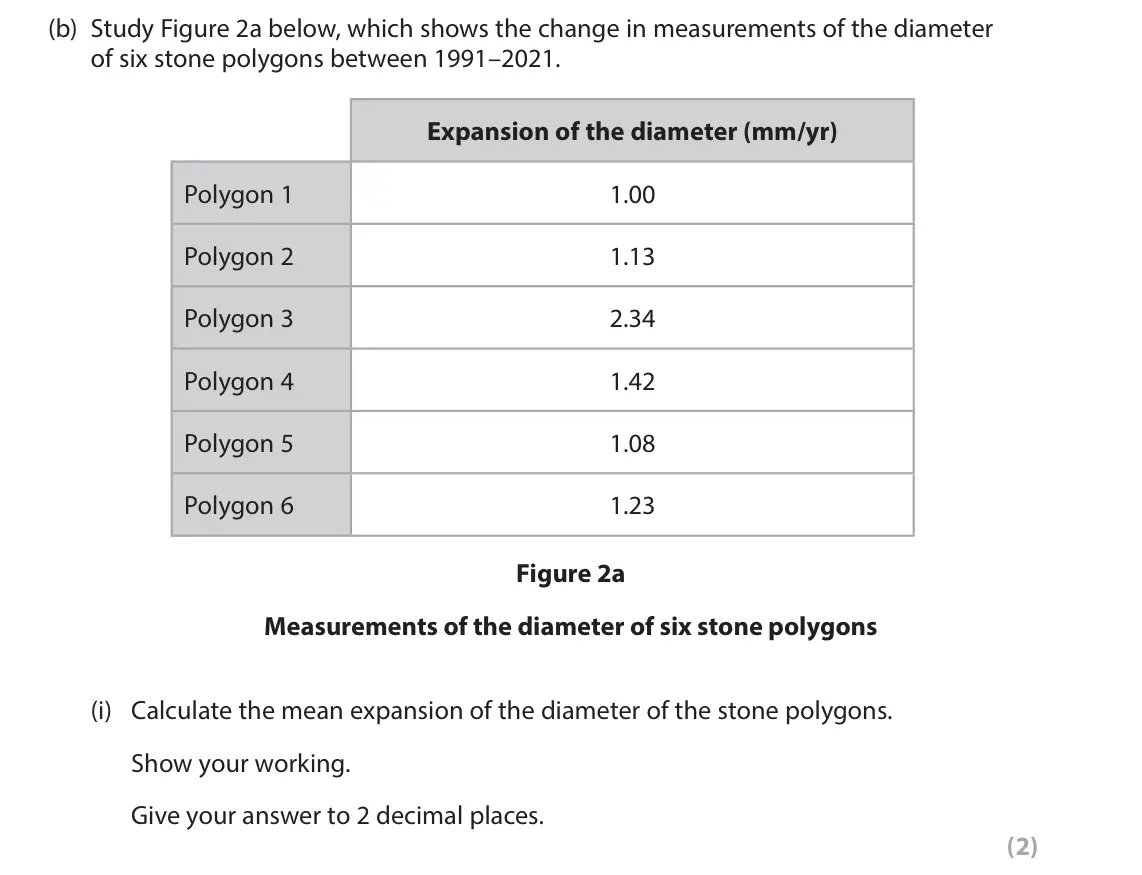
Q2(b)(ii)
The whole paper ↗
Q2(c)
The whole paper ↗
Q2(b)
The whole paper ↗

Q2(c)
The whole paper ↗
Q2(a)
The whole paper ↗
Q2(b)
The whole paper ↗
Q2(a)
The whole paper ↗
Q2(d)
The whole paper ↗
Q3(a)(i)
The whole paper ↗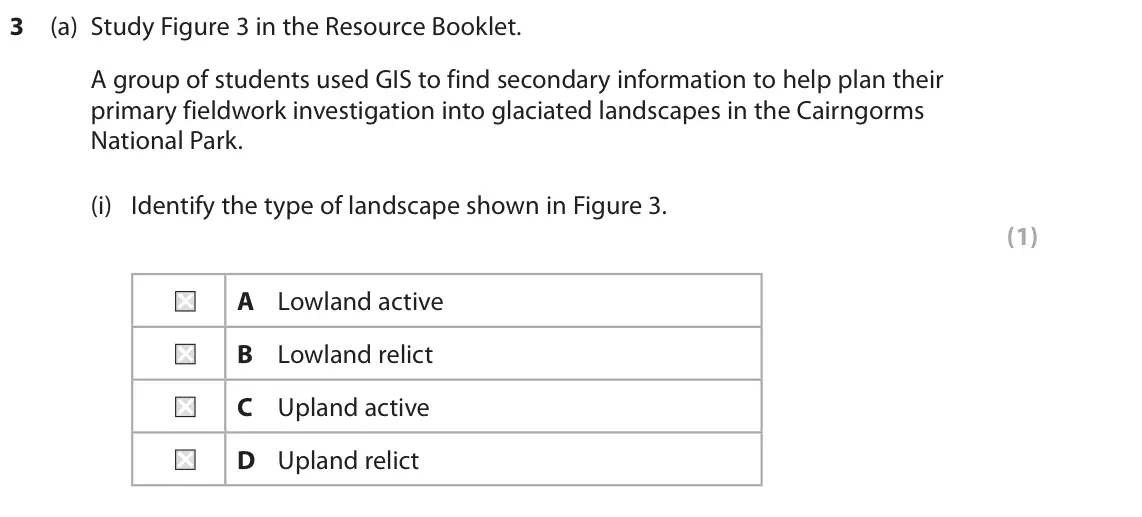
Q2(f)
The whole paper ↗
Q2(a)
The whole paper ↗
Q2(b)(i)
The whole paper ↗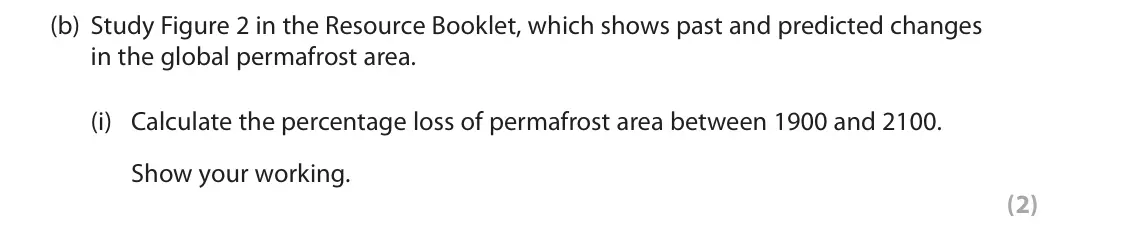
Q2(b)(ii)
The whole paper ↗
Q2(c)
The whole paper ↗
Q2(d)
The whole paper ↗
All 18 questions on How has climate change influenced the formation of glaciated landscapes over time?, as a list
- June 2025, AS Paper 1, Q2(e) (12 marks): Assess whether latitude is the main factor influencing the present-day distribution of ice cover. (12) SECTION B The following resources relate to Questions 2–4
- June 2024, AS Paper 1, Q2(b)(i) (2 marks): Calculate the mean expansion of the diameter of the stone polygons. Show your working. Give your answer to 2 decimal places. (2) SECTION B The following resourc
- June 2024, AS Paper 1, Q2(b)(ii) (3 marks): Study Figure 2b in the Resource Booklet. Suggest one reason for the formation of patterned ground shown. (3) SECTION B The following resources relate to Questio
- June 2023, Paper 1, Q2(c) (8 marks): Explain the role of melting and refreezing cycles in forming distinctive periglacial landforms. (8) 2 Study Figure 2a in the Resource Booklet. SECTION B The fol
- June 2023, AS Paper 1, Q2(b) (4 marks): Explain two natural causes of climate change. (4) SECTION B The following resources relate to Question 2. N A Penllyn station B Summit station 0 1 km Figure 2a
- June 2023, AS Paper 1, Q4 (16 marks): Study Figures 4a, 4b, 4c and 4d in the Resource Booklet. Evaluate the extent to which the distinctive landscape in the St Elias-Wrangell mountain range is cause
- June 2022, AS Paper 1, Q2(c) (4 marks): Explain the formation of two periglacial landforms. (4) SECTION B The following resources relate to Questions 2–3. Figure 2 Aerial photo of Mt Barnard Glacier,
- October 2020, Paper 1, Q2(a) (6 marks): Explain the role of Milankovitch cycles in causing variations in the relative global ice volume. (6) 2 Study Figure 2a in the Resource Booklet. SECTION B The fo
- October 2020, Paper 1, Q2(b) (6 marks): Explain the role of mean annual air temperature in influencing the distribution of permafrost across Canada. (6) 2 Study Figure 2a in the Resource Booklet. SECT
- October 2020, AS Paper 1, Q2(a) (1 mark): Define the term ‘cryosphere’. (1) SECTION B The following resources relate to Questions 2–4. Degrees of freedom 0.20 0.10 0.05 0.02 0.01 0.001 18 1.330 1.734 2.
- October 2020, AS Paper 1, Q2(d) (6 marks): Using a named example, explain how periglacial landforms produce a distinctive landscape. (6) SECTION B The following resources relate to Questions 2–4. Degrees
- October 2020, AS Paper 1, Q3(a)(i) (1 mark): Identify the type of landscape shown in Figure 3. (1) A Lowland active B Lowland relict C Upland active D Upland relict Box A Box A Loch Brandy N 0 1km Key Slop
- June 2019, AS Paper 1, Q2(f) (12 marks): Assess the importance of long-term climate change in explaining the distribution of glacial landscapes. (12) SECTION B The following resources relate to Questio
- June 2018, Paper 1, Q2(a) (6 marks): Explain how changes in the position of the snout of the Mer de Glace may provide evidence for changing climate. (6) 2 Study Figure 2a in the Resource Booklet. S
- June 2018, AS Paper 1, Q2(b)(i) (2 marks): Calculate the percentage loss of permafrost area between 1900 and 2100. Show your working. (2) SECTION B The following resources relate to Questions 2-4. 15 Pas
- June 2018, AS Paper 1, Q2(b)(ii) (3 marks): Suggest one way in which these changes may affect periglacial landscapes. (3) SECTION B The following resources relate to Questions 2-4. 15 Past Predicted 10 5
- June 2018, AS Paper 1, Q2(c) (4 marks): Explain two reasons for the location of present day periglacial landscapes. (4) SECTION B The following resources relate to Questions 2-4. 15 Past Predicted 10
- June 2018, AS Paper 1, Q2(d) (6 marks): Explain the natural causes of long-term climate change. (6) SECTION B The following resources relate to Questions 2-4. 15 Past Predicted 10 5 0 1900 1950 2000 2
Questions, mark schemes and examiner’s reports are © Pearson Edexcel, from their published past papers. Plumi isn’t affiliated with any exam board. Want whole papers? Full past papers.
Rather write your answers by hand on iPad? Plumi marks them against the same mark schemes.