 plumi
Transfer of genetic information: Edexcel A‑Level Biology B questions
Every Edexcel A-Level Biology B exam question on 8.2 Transfer of genetic information, 2016–2025, with its mark scheme and examiner’s report.
Find questions1,826
Calculations
Q4(b)(ii)
The whole paper ↗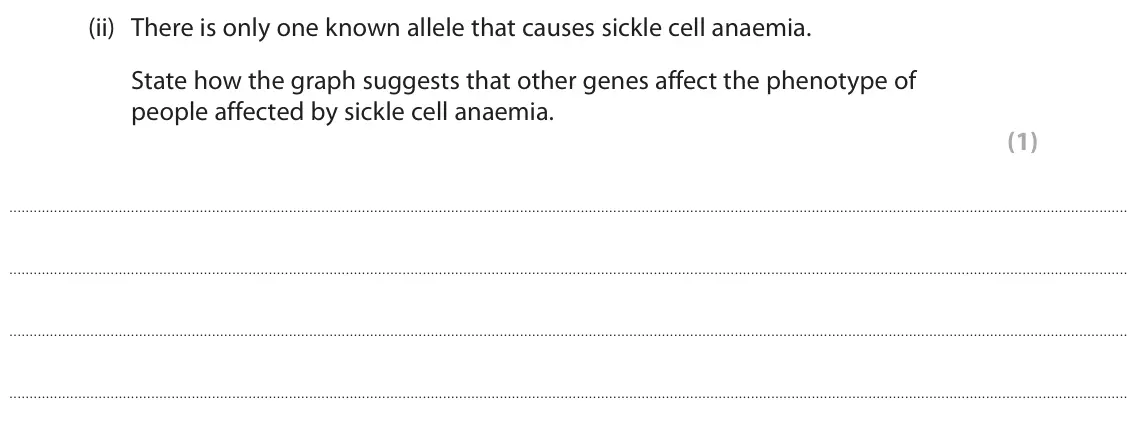
Q4(a)(i)
The whole paper ↗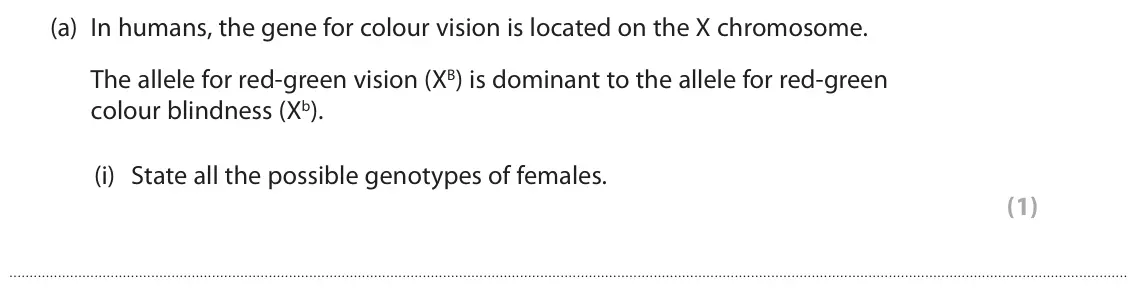
Q4(a)(ii)
The whole paper ↗
Q4(a)(iii)
The whole paper ↗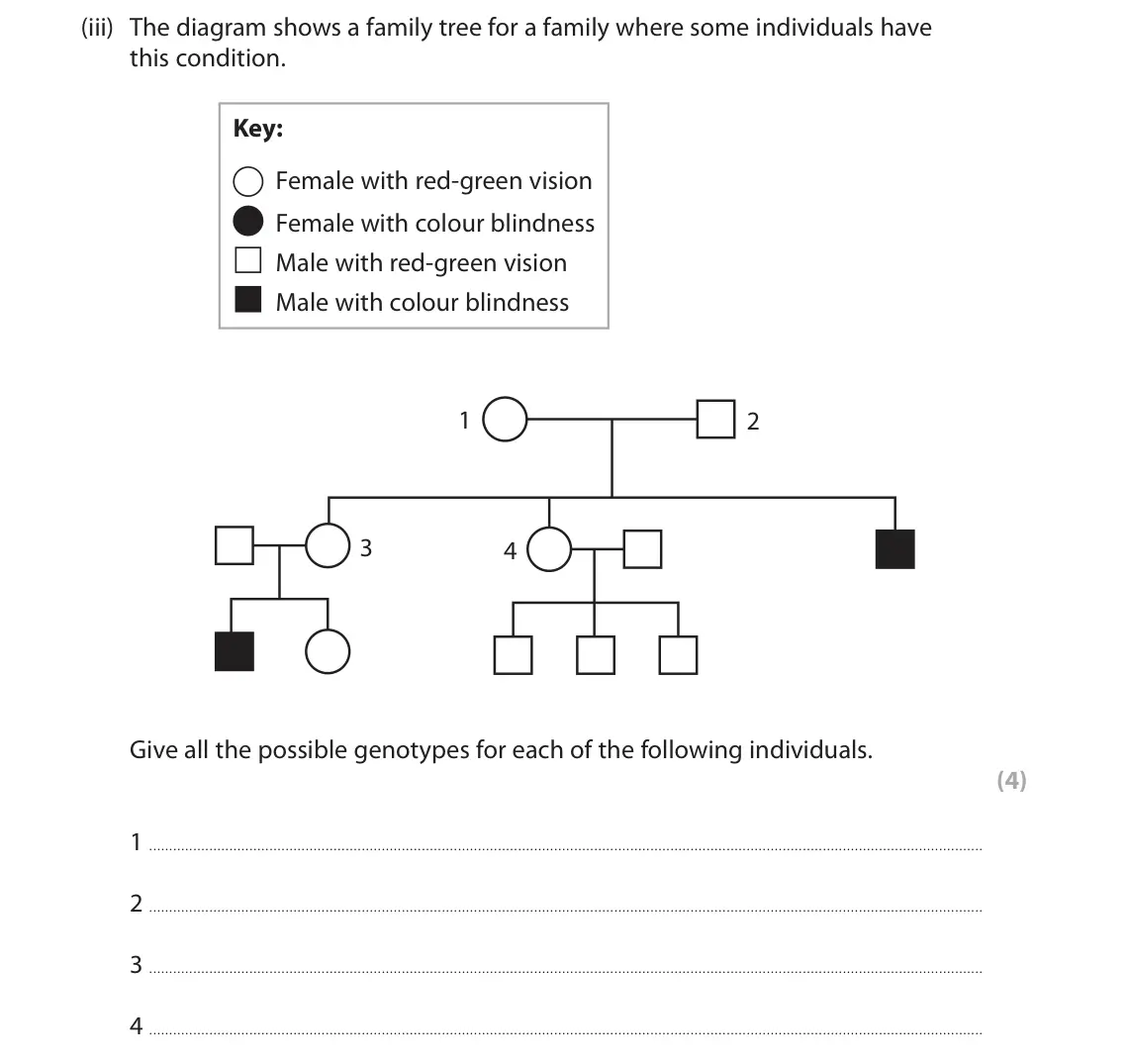
Q4(b)(i)
The whole paper ↗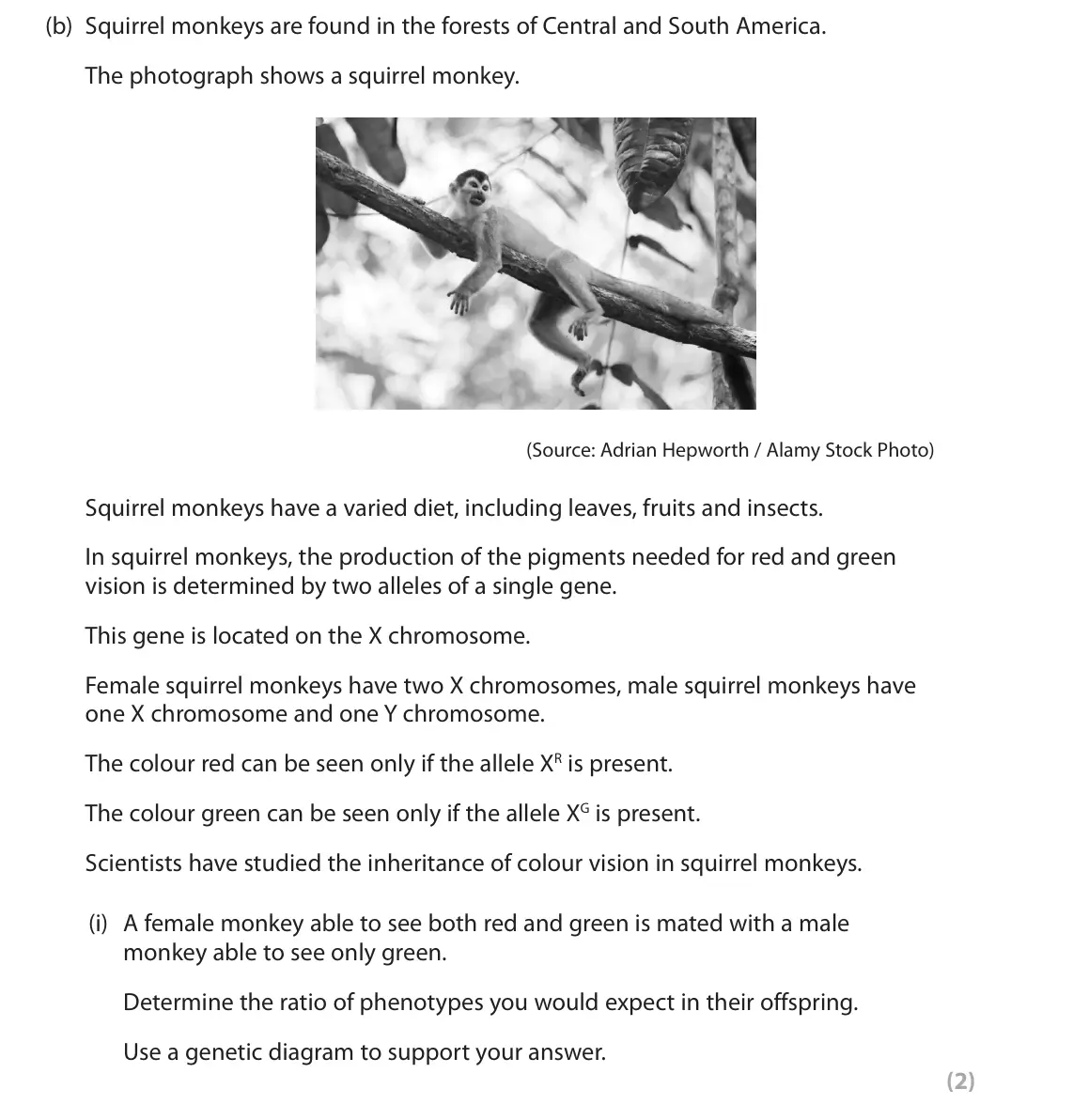
Q4(b)(ii)
The whole paper ↗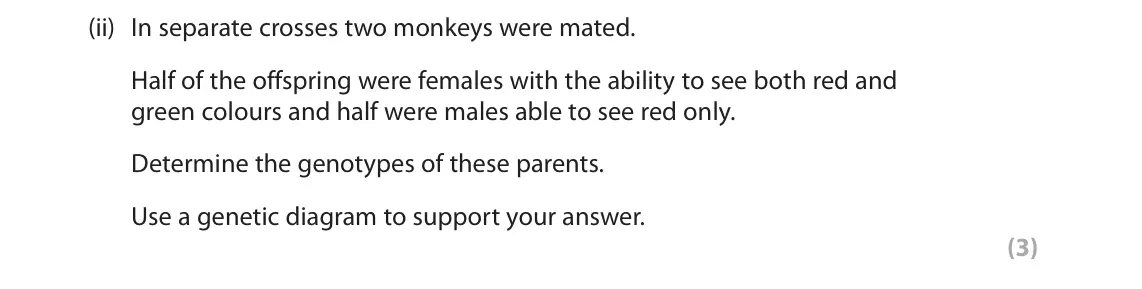
Q2(c)(i)
The whole paper ↗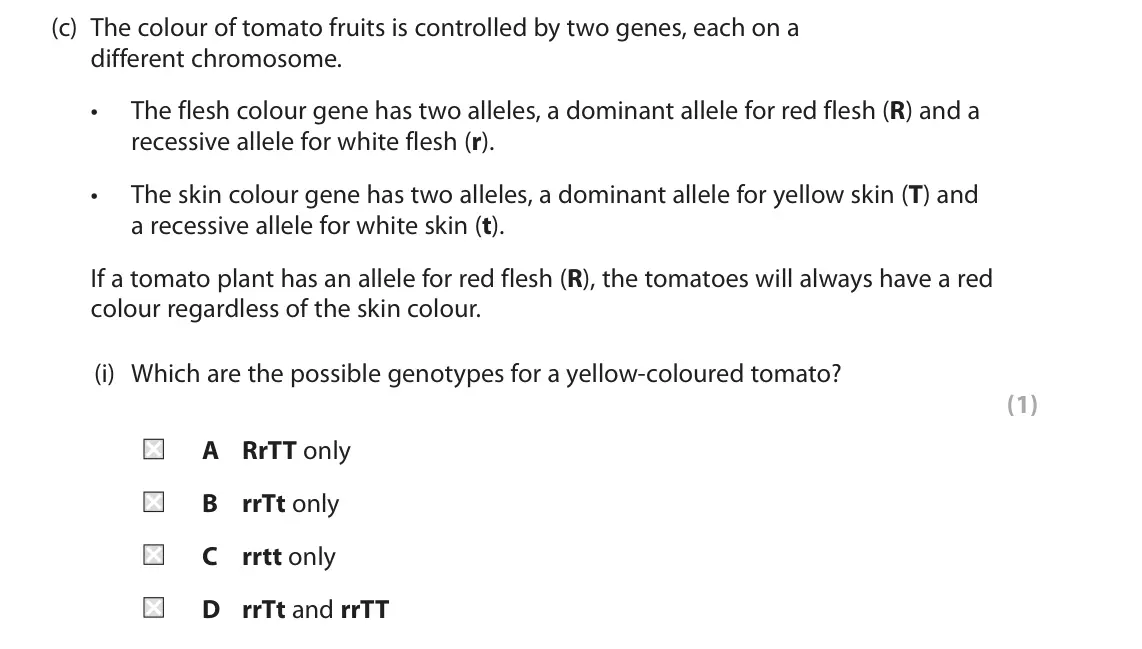
Q2(c)(ii)
The whole paper ↗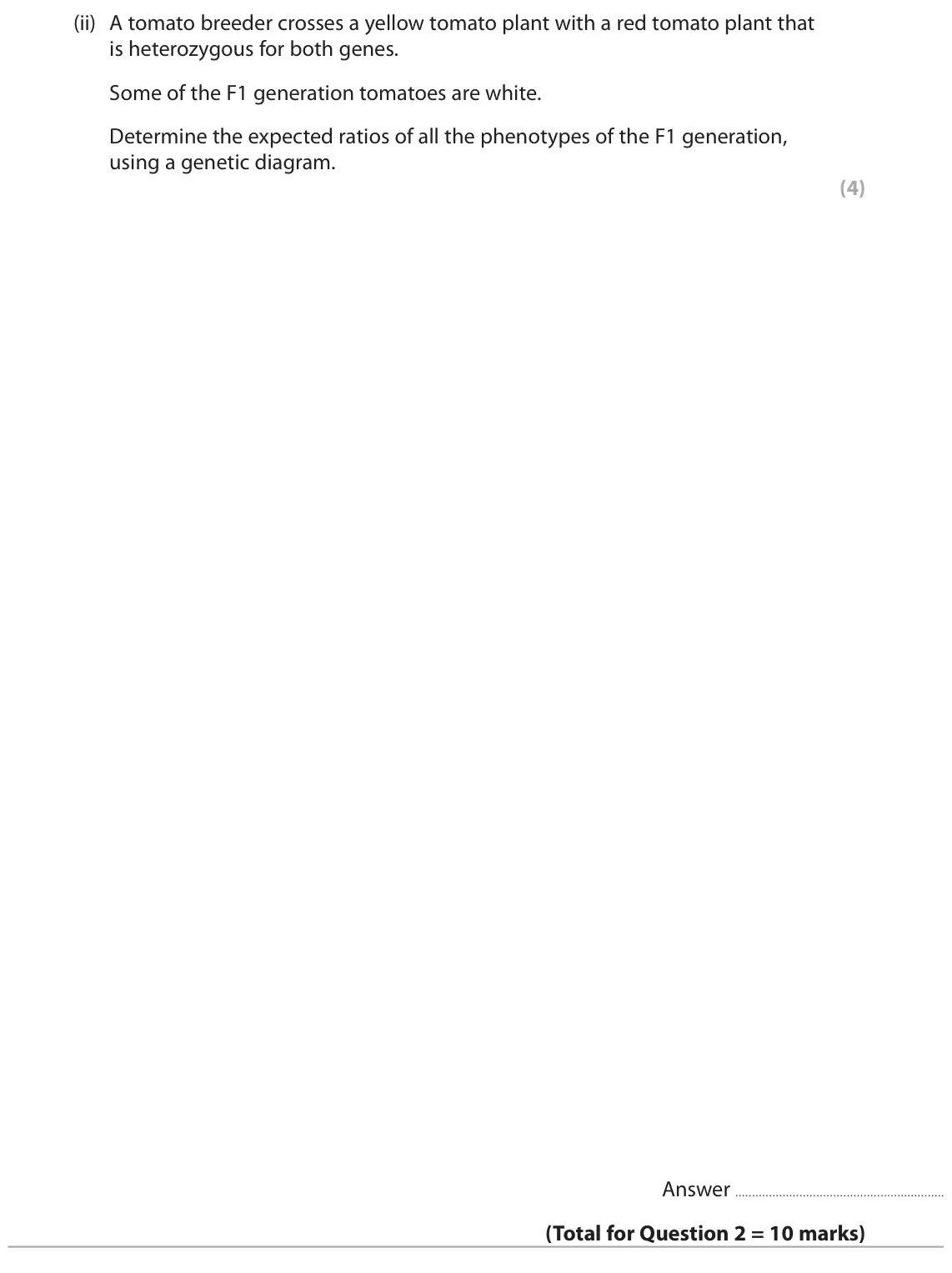
Q5(b)(i)
The whole paper ↗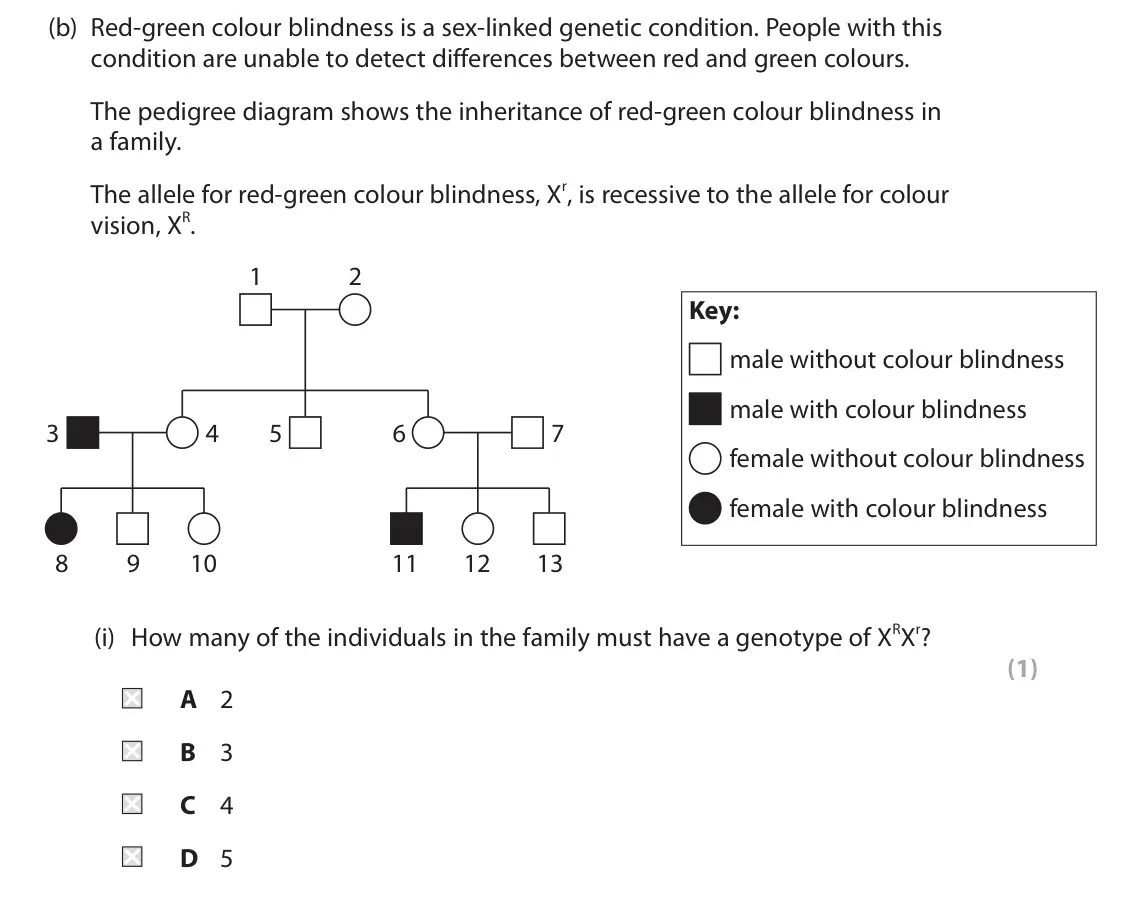
Q5(b)(ii)
The whole paper ↗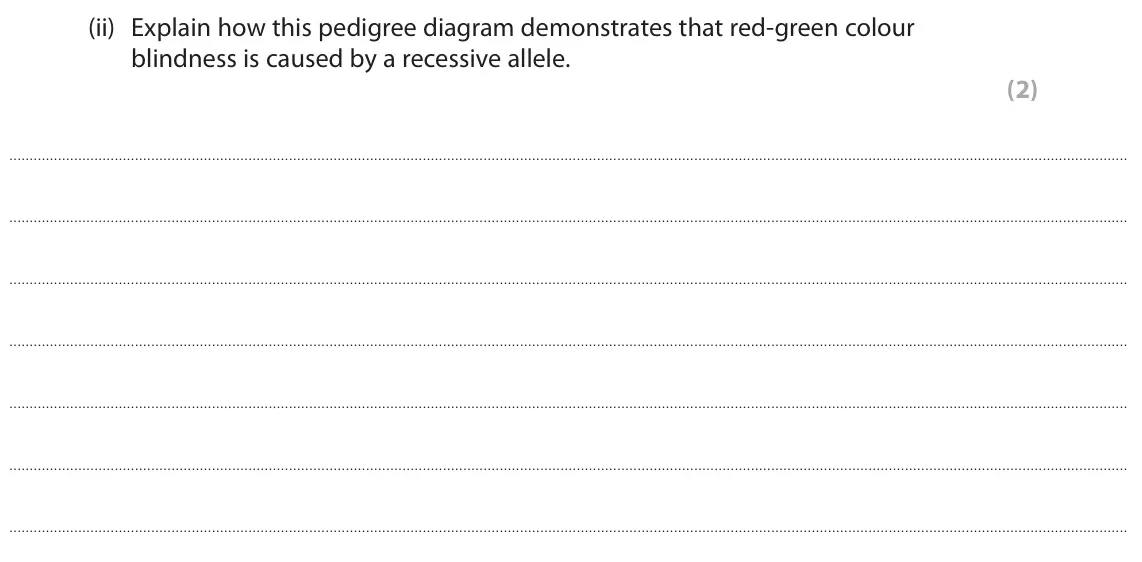
Q5(c)(i)
The whole paper ↗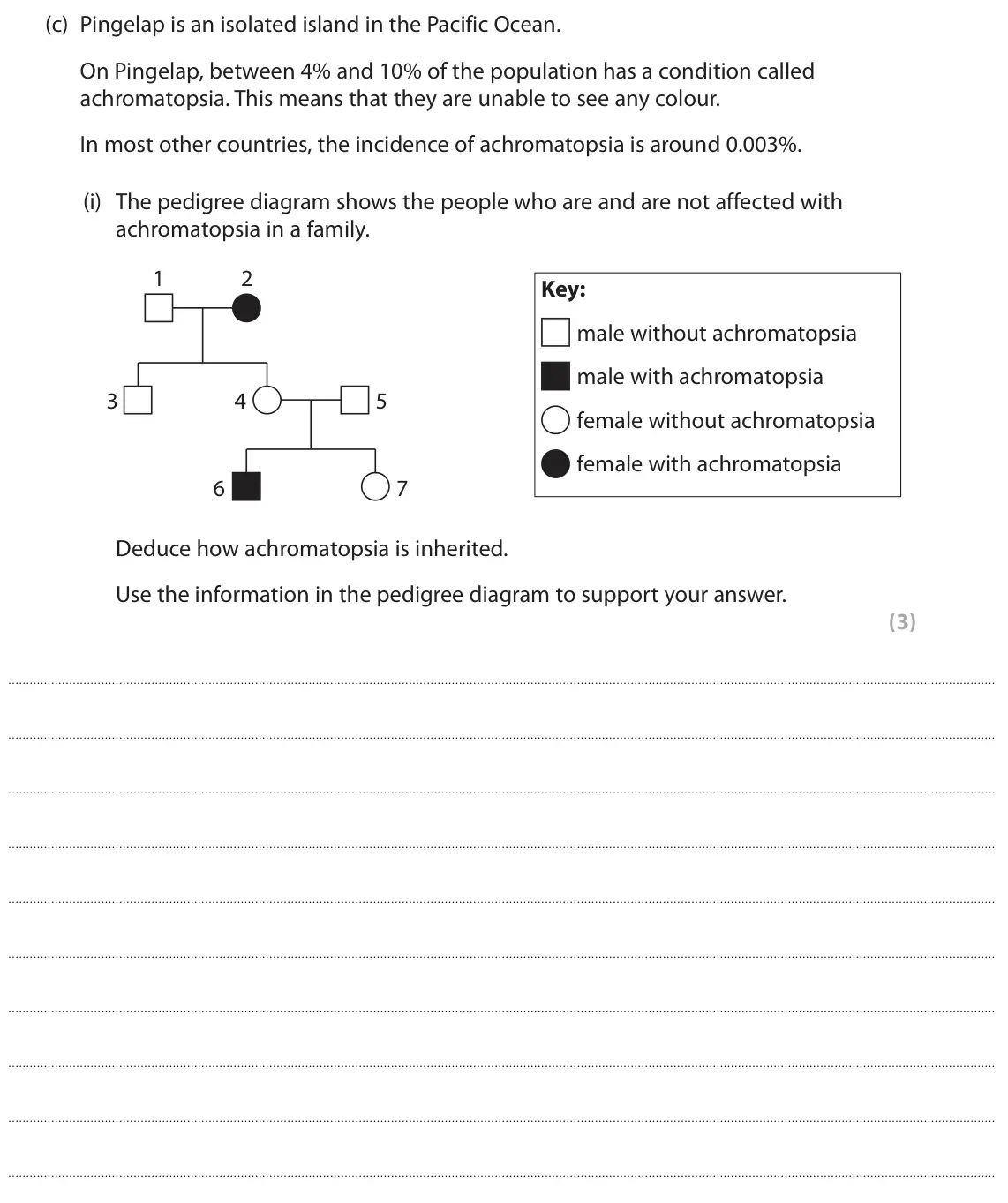
Q8(b)(i)
The whole paper ↗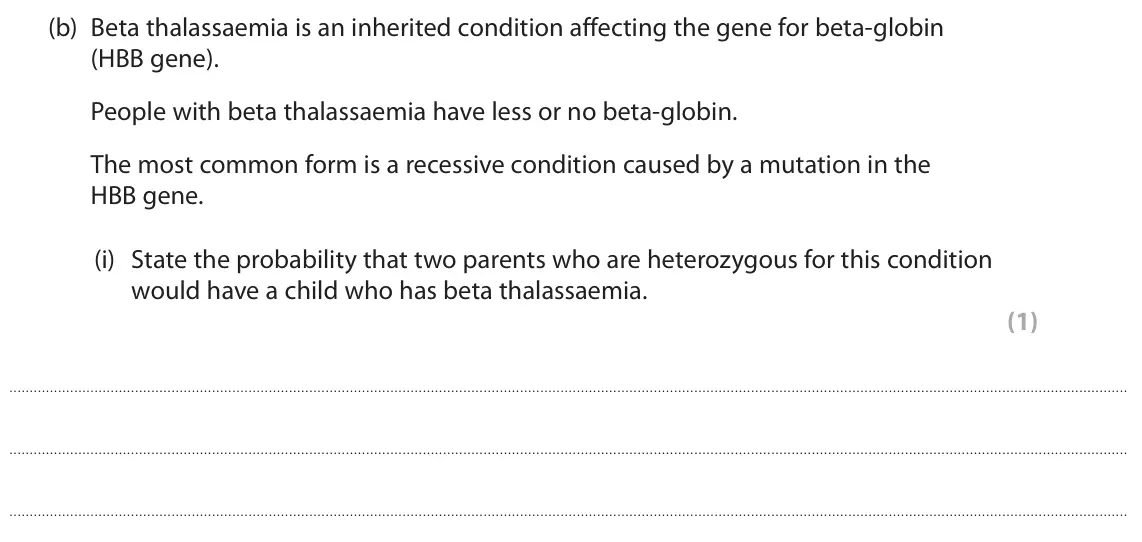
Q8(b)(ii)
The whole paper ↗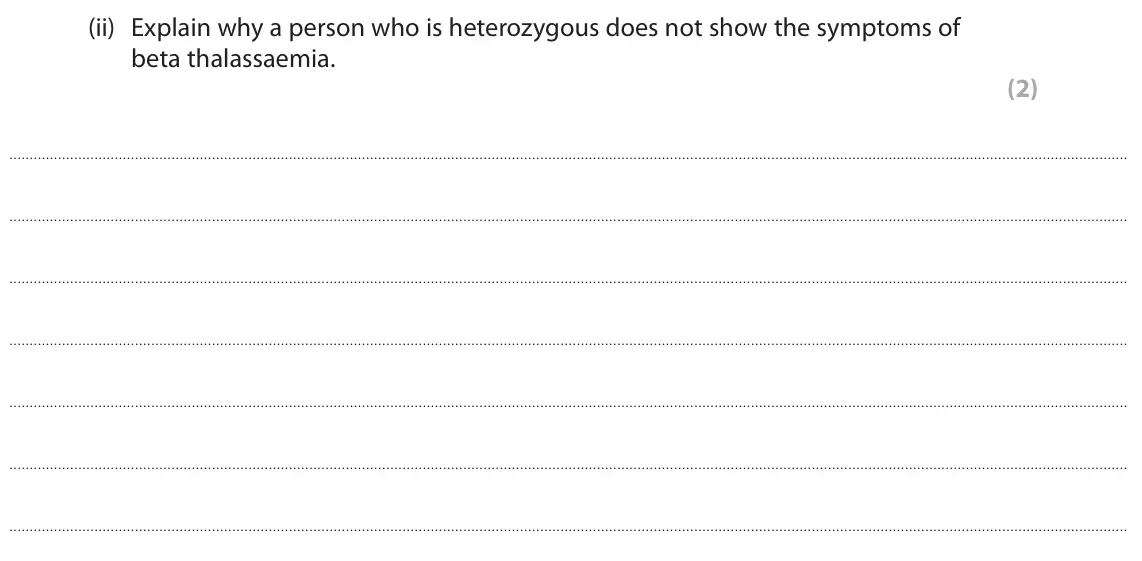
Q7(a)(i)
The whole paper ↗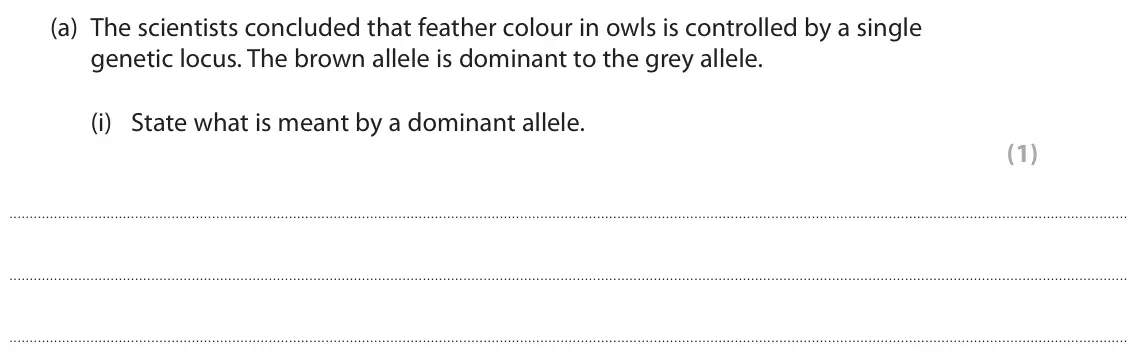
Q7(a)(ii)
The whole paper ↗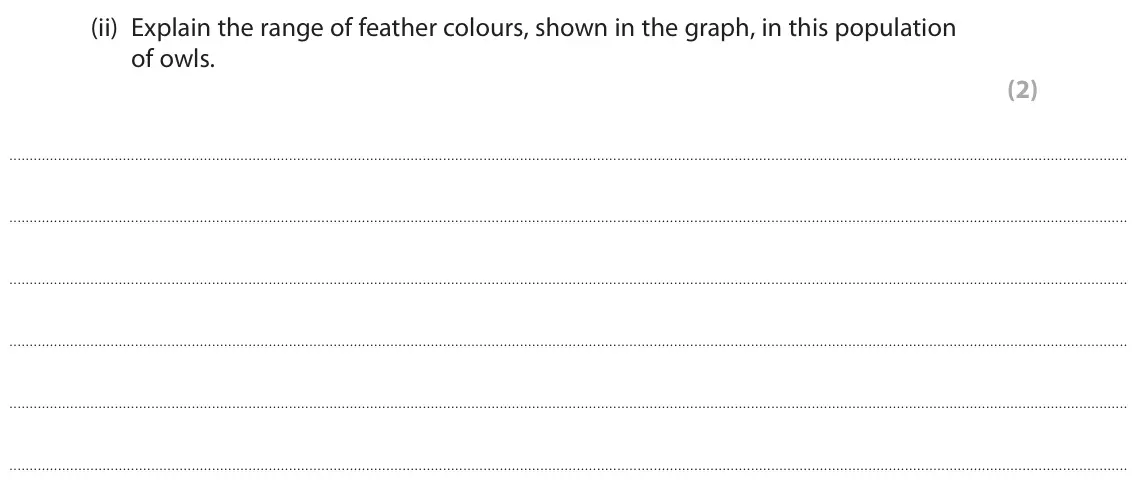
Q4(a)
The whole paper ↗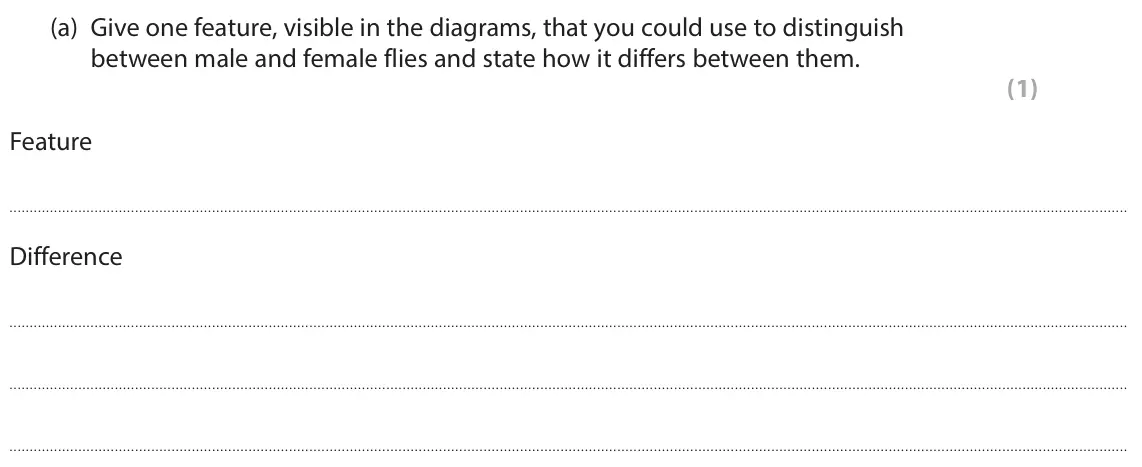
Q4(b)(i)
The whole paper ↗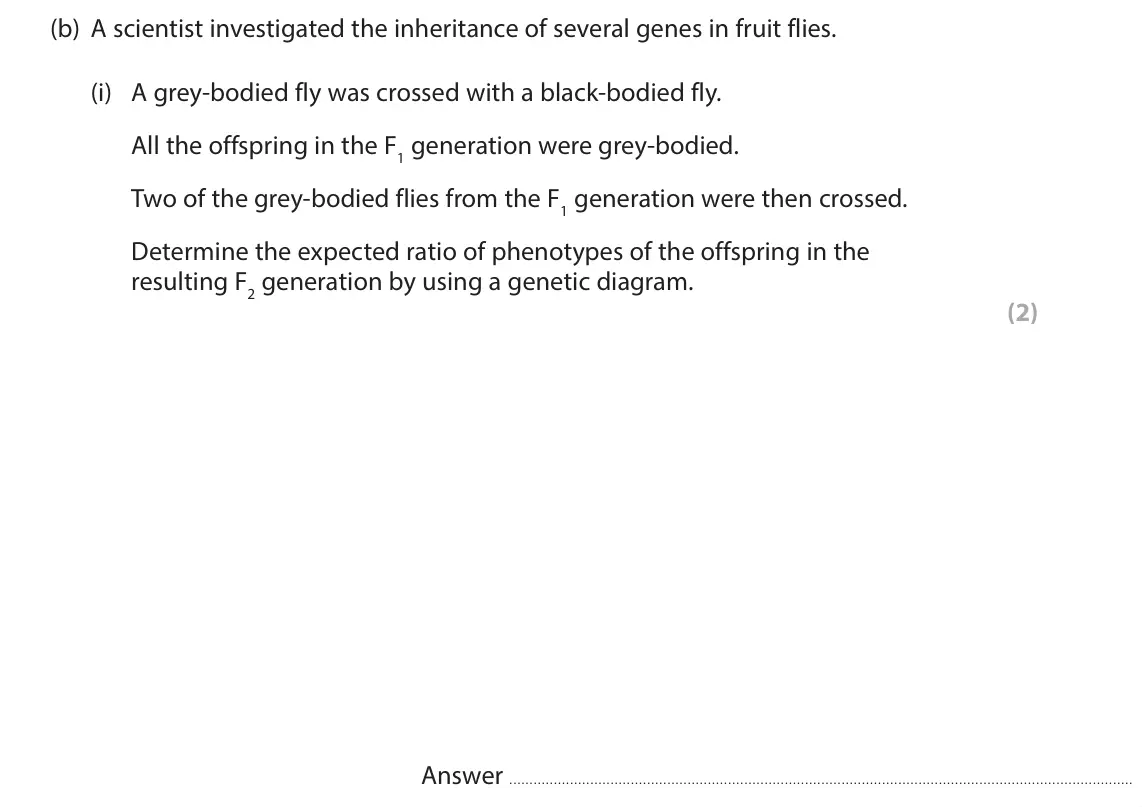
Q4(b)(ii)
The whole paper ↗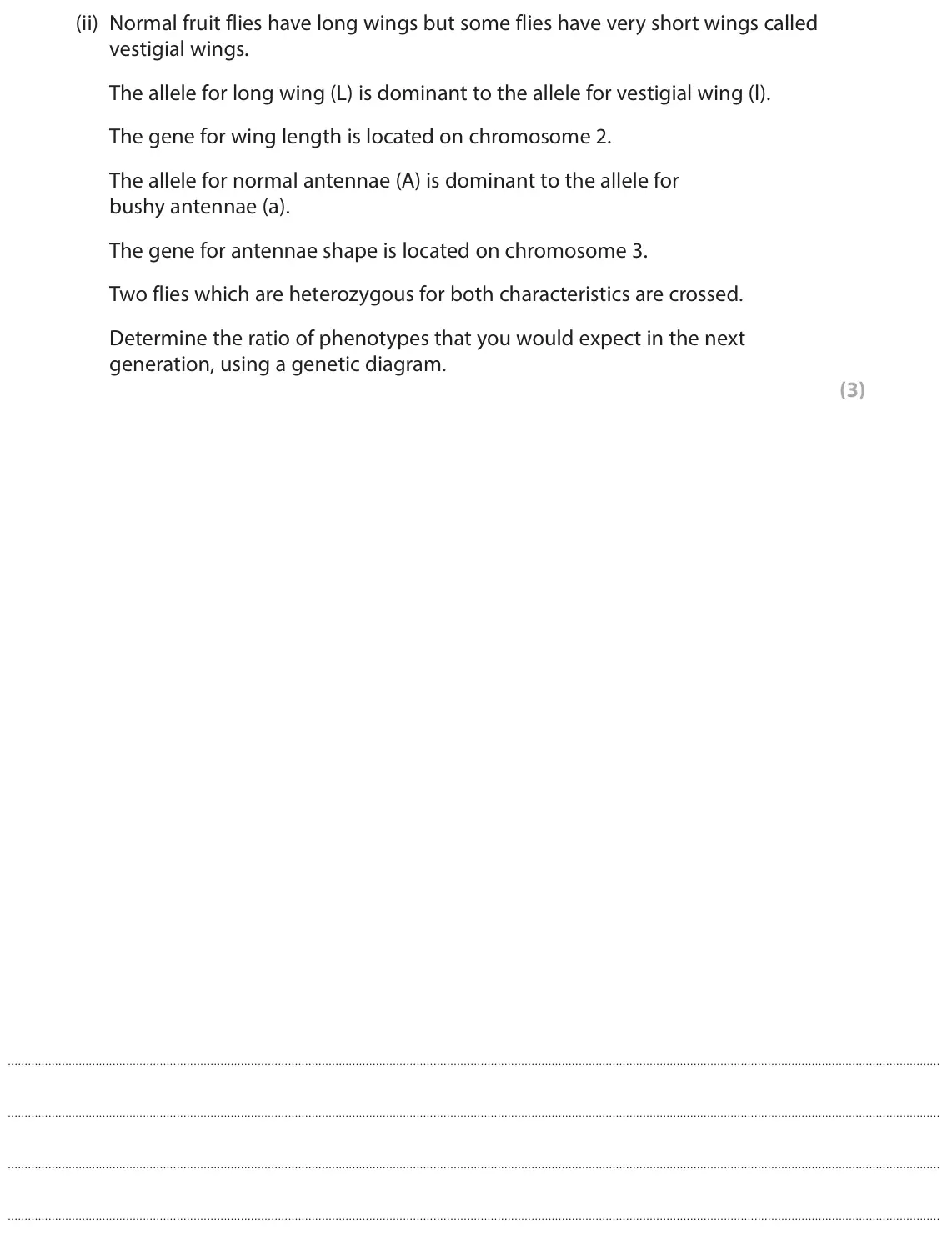
Q4(b)(iii)
The whole paper ↗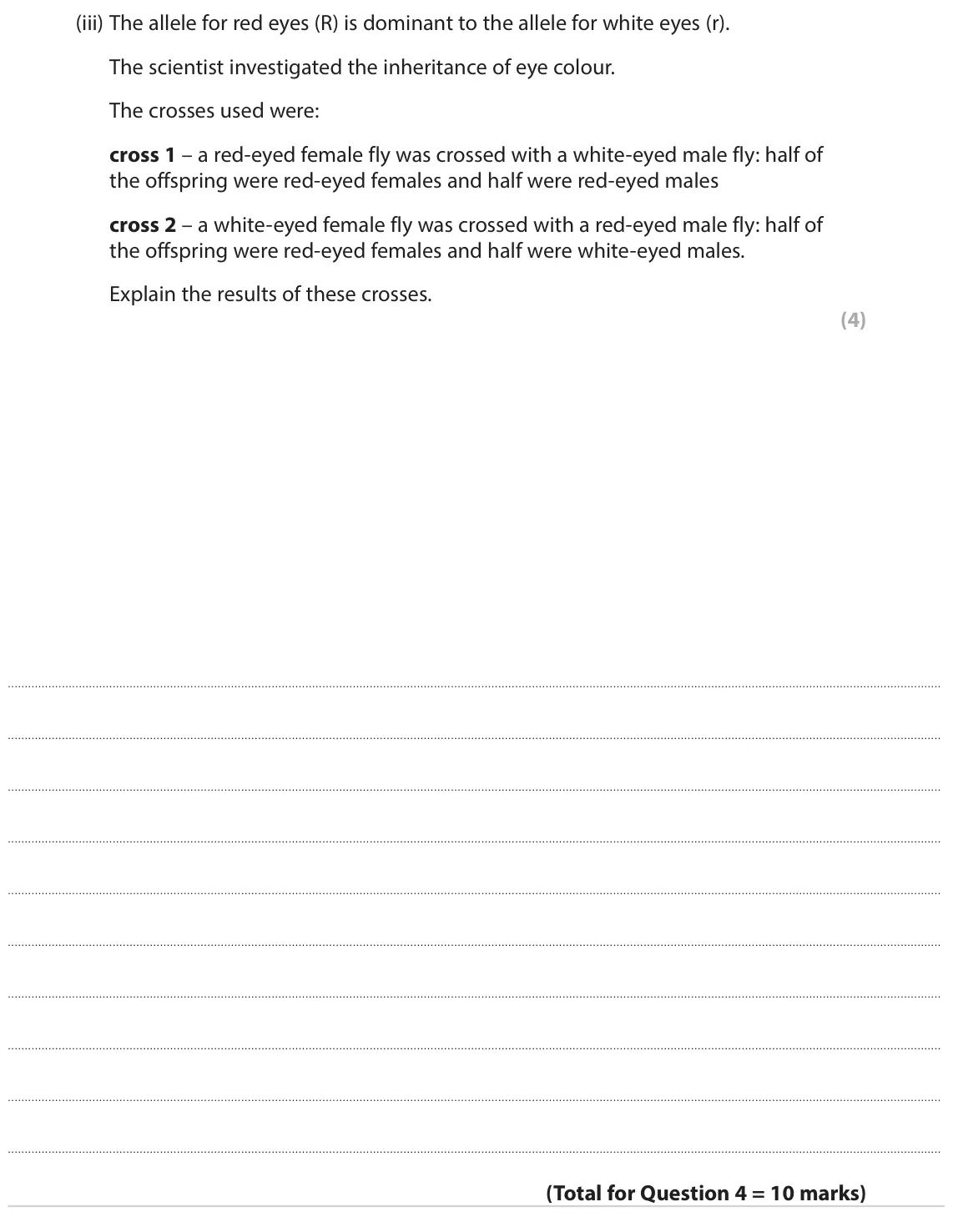
Q8(a)(i)
The whole paper ↗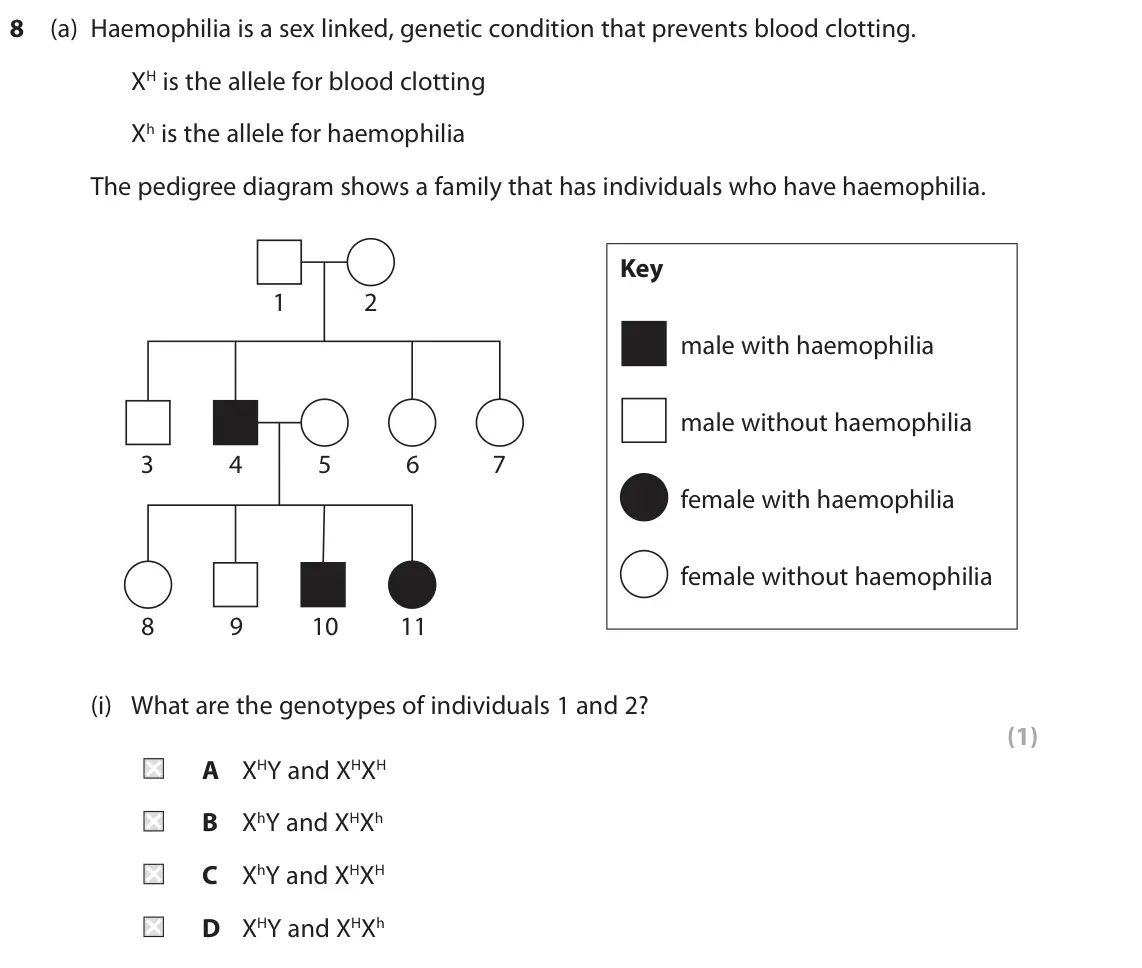
All 45 questions on Transfer of genetic information, as a list
- June 2025, Paper 2, Q4(b)(ii) (1 mark): There is only one known allele that causes sickle cell anaemia. State how the graph suggests that other genes affect the phenotype of people affected by sickle
- June 2025, Paper 3, Q4(a)(i) (1 mark): State all the possible genotypes of females. (1)
- June 2025, Paper 3, Q4(a)(ii) (1 mark): State all the possible genotypes of males. (1)
- June 2025, Paper 3, Q4(a)(iii) (4 marks): The diagram shows a family tree for a family where some individuals have this condition. Key: Female with red-green vision Female with colour blindness Male wit
- June 2025, Paper 3, Q4(b)(i) (2 marks): A female monkey able to see both red and green is mated with a male monkey able to see only green. Determine the ratio of phenotypes you would expect in their o
- June 2025, Paper 3, Q4(b)(ii) (3 marks): In separate crosses two monkeys were mated. Half of the offspring were females with the ability to see both red and green colours and half were males able to se
- June 2024, Paper 2, Q2(c)(i) (1 mark): Which are the possible genotypes for a yellow-coloured tomato? (1) A RrTT only B rrTt only C rrtt only D rrTt and rrTT
- June 2024, Paper 2, Q2(c)(ii) (4 marks): A tomato breeder crosses a yellow tomato plant with a red tomato plant that is heterozygous for both genes. Some of the F1 generation tomatoes are white. Determ
- June 2023, Paper 2, Q5(b)(i) (1 mark): How many of the individuals in the family must have a genotype of XRXr? (1) A 2 B 3 C 4 D 5
- June 2023, Paper 2, Q5(b)(ii) (2 marks): Explain how this pedigree diagram demonstrates that red-green colour blindness is caused by a recessive allele. (2)
- June 2023, Paper 2, Q5(c)(i) (3 marks): The pedigree diagram shows the people who are and are not affected with achromatopsia in a family. 1 2 Key: male without achromatopsia male with achromatopsia 3
- June 2023, Paper 3, Q8(b)(i) (1 mark): State the probability that two parents who are heterozygous for this condition would have a child who has beta thalassaemia. (1)
- June 2023, Paper 3, Q8(b)(ii) (2 marks): Explain why a person who is heterozygous does not show the symptoms of beta thalassaemia. (2)
- June 2022, Paper 2, Q7(a)(i) (1 mark): State what is meant by a dominant allele. (1)
- June 2022, Paper 2, Q7(a)(ii) (2 marks): Explain the range of feather colours, shown in the graph, in this population of owls. (2)
- June 2022, Paper 3, Q4(a) (1 mark): Give one feature, visible in the diagrams, that you could use to distinguish between male and female flies and state how it differs between them. (1) Feature Di
- June 2022, Paper 3, Q4(b)(i) (2 marks): A grey-bodied fly was crossed with a black-bodied fly. All the offspring in the F1 generation were grey-bodied. Two of the grey-bodied flies from the F1 generat
- June 2022, Paper 3, Q4(b)(ii) (3 marks): Normal fruit flies have long wings but some flies have very short wings called vestigial wings. The allele for long wing (L) is dominant to the allele for vesti
- June 2022, Paper 3, Q4(b)(iii) (4 marks): The allele for red eyes (R) is dominant to the allele for white eyes (r). The scientist investigated the inheritance of eye colour. The crosses used were: cross
- November 2021, Paper 2, Q8(a)(i) (1 mark): What are the genotypes of individuals 1 and 2? (1) A XHY and XHXH B XhY and XHXh C XhY and XHXH D XHY and XHXh
- November 2021, Paper 2, Q8(a)(ii) (3 marks): Use a genetic diagram to determine the probability that the next child of individuals 4 and 5 will be a boy without haemophilia. (3) Answer
- November 2021, Paper 3, Q3(c)(i) (1 mark): State the genotype of the F1 generation. (1)
- November 2021, Paper 3, Q3(c)(ii) (2 marks): The F1 generation was then self‑fertilised to produce the F2 generation. The numbers observed (O) in the F2 generation were: 31 white cauliflowers, 52 light pur
- November 2021, Paper 3, Q3(c)(iii) (3 marks): Calculate the value for Chi squared using these results. Use the formula for Chi squared: − 2 ( O E ) = ∑ χ 2 E (3) Answer
- November 2021, Paper 3, Q3(c)(iv) (3 marks): The table shows some critical values for Chi squared. p value Degrees of freedom 0.900 0.500 0.100 0.050 0.010 1 0.016 0.455 2.706 3.841 6.635 2 0.211 1.386 4.6
- October 2020, Paper 2, Q4(a) (2 marks): Explain how one piece of evidence from the diagram shows that the allele for short fur is dominant to the allele for long fur. (2)
- October 2020, Paper 2, Q4(b)(i) (1 mark): Give all the possible genotypes of a male, black cat with short fur. (1)
- October 2020, Paper 2, Q4(b)(ii) (2 marks): Explain why all tortoiseshell cats are female. (2)
- October 2020, Paper 2, Q4(b)(iii) (4 marks): In a genetic cross, a tortoiseshell cat with long fur was mated with an orange male cat, heterozygous for fur length. Deduce the probability of producing a tort
- June 2019, Paper 2, Q4(a) (1 mark): State all the possible genotypes of a smooth, purple grain. (1)
- June 2019, Paper 2, Q4(b) (1 mark): Two maize plants, grown from grains that were both wrinkled and purple, were cross-pollinated. In the F1 generation, some grains were wrinkled and purple and so
- June 2019, Paper 2, Q4(c) (4 marks): A student cross-pollinated a maize plant grown from a smooth, purple grain (heterozygous for both pairs of alleles) with a maize plant grown from a wrinkled, ye
- June 2019, Paper 3, Q10(a)(i) (2 marks): Calculate the Chi squared value using the formula shown. (2) O − 2 ( E ) ∑ χ2 = E Answer
- June 2019, Paper 3, Q10(a)(ii) (4 marks): The table shows some critical values of Chi squared at different degrees of freedom. p value Degrees of freedom 0.900 0.500 0.100 0.050 0.010 1 0.016 0.455 2.70
- June 2019, Paper 3, Q10(b) (3 marks): The method used by the student had limitations. Justify how the student could modify the investigation to address these limitations. (3)
- June 2018, Paper 2, Q10(a)(i) (1 mark): State a null hypothesis for this investigation. (1)
- June 2018, Paper 2, Q10(a)(ii) (1 mark): A Chi squared test was carried out to test this hypothesis. Complete the table. (1) (O − E)2 Expected Observed Expected Phenotype (O − E) (O − E)2 ratio results
- June 2018, Paper 2, Q10(a)(iii) (1 mark): Calculate the value of Chi squared using the formula (1) 2χ Σ − 2 (O E) = E Answer
- June 2018, Paper 2, Q10(a)(iv) (3 marks): The table shows some critical values of Chi squared at different degrees of freedom. p value Degrees of freedom 0.900 0.500 0.100 0.050 0.010 1 0.016 0.455 2.70
- June 2018, Paper 2, Q10(b) (6 marks): In Drosophila, the allele for grey bodies (G) is dominant to the allele for black bodies (g). In a second investigation, students crossed homozygous parent flie
- June 2017, Paper 2, Q4(b)(i) (2 marks): Explain how the diagram shows that red-green colour blindness is caused by a recessive allele. (2)
- June 2017, Paper 2, Q4(b)(ii) (3 marks): Use a genetic diagram to determine the probability that the next child of individuals 6 and 7 is a male who is colour blind. (3) Answer
- June 2017, Paper 2, Q7(a)(ii) (1 mark): State all the possible genotypes of a rabbit with brown fur. (1)
- June 2017, Paper 2, Q7(a)(iii) (3 marks): Two parent rabbits with brown fur were mated. Two of the F1 offspring had chinchilla fur. The F1 rabbit offspring with chinchilla fur were mated. The F2 generat
- June 2017, Paper 3, Q7(b) (4 marks): A woman is a carrier of the cystic fibrosis allele. Her partner does not have cystic fibrosis and is not a carrier. Use a genetic cross to determine the probabi
Questions, mark schemes and examiner’s reports are © Pearson Edexcel, from their published past papers. Plumi isn’t affiliated with any exam board. Want whole papers? Every Edexcel A-Level Biology B paper.
Rather write your answers by hand on iPad? Plumi marks them against the same mark schemes.