 plumi
Gene pools: Edexcel A‑Level Biology B questions
Every Edexcel A-Level Biology B exam question on 8.3 Gene pools, 2016–2025, with its mark scheme and examiner’s report.
Find questions1,826
Calculations
Q6(b)(i)
The whole paper ↗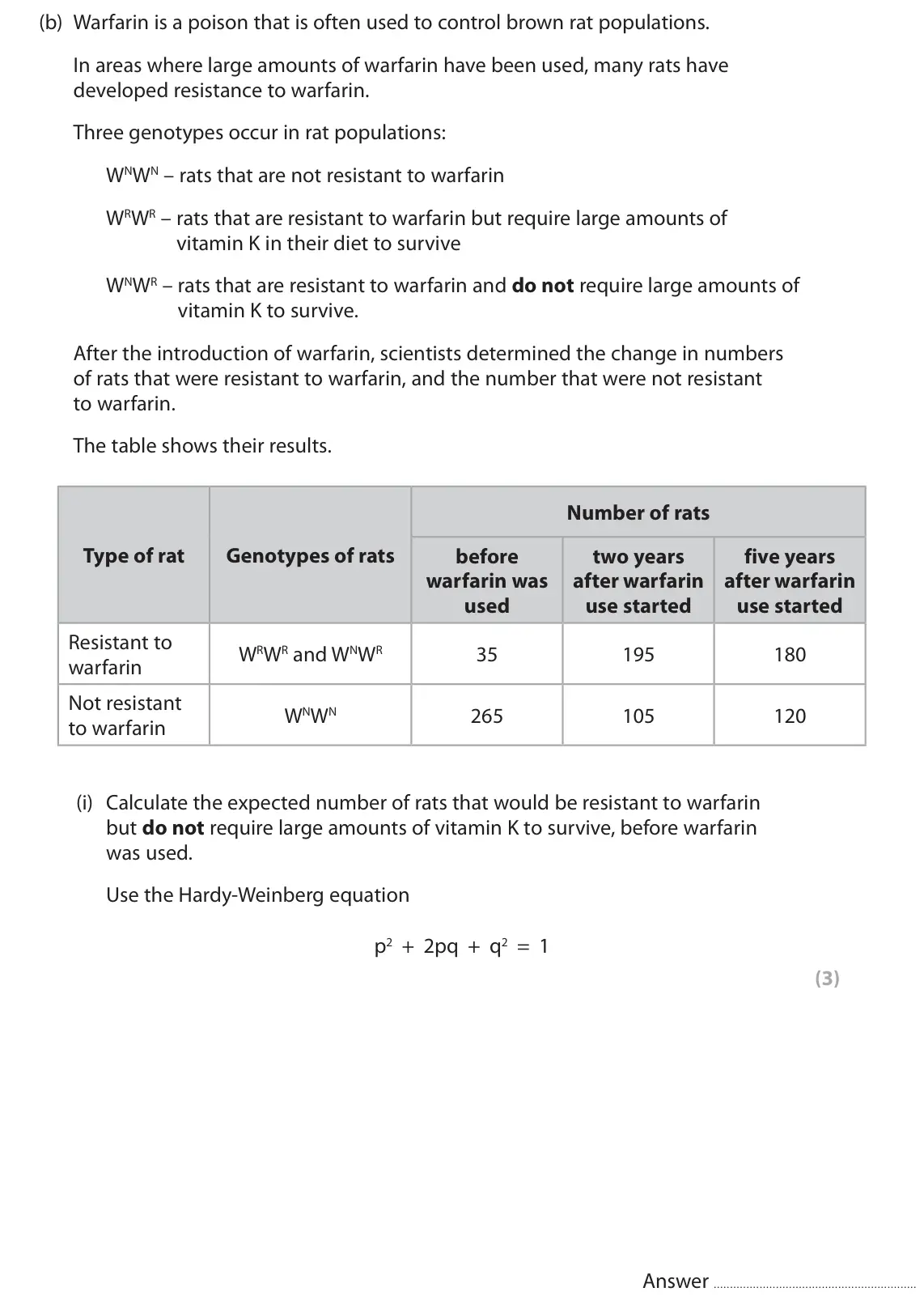
Q6(b)(ii)
The whole paper ↗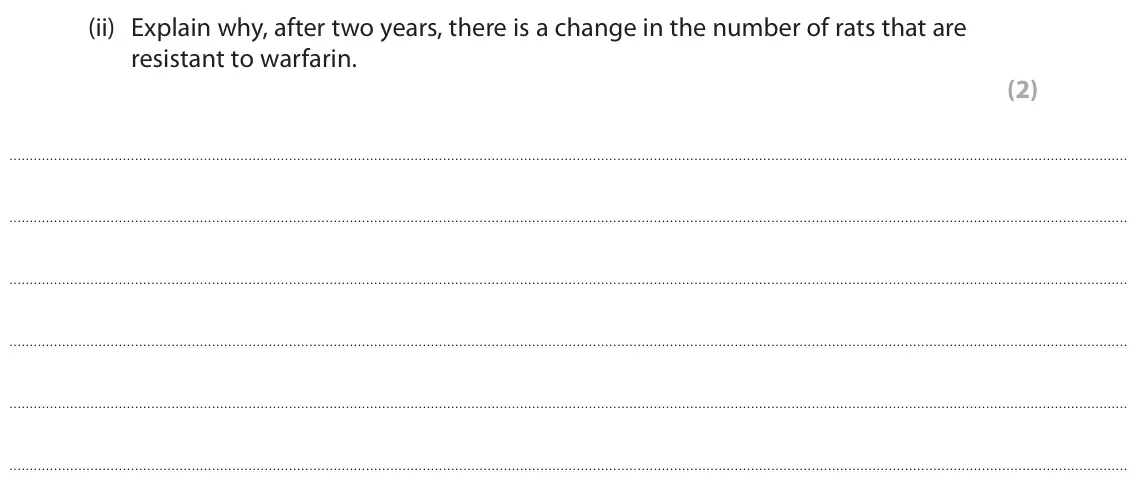
Q6(b)(iii)
The whole paper ↗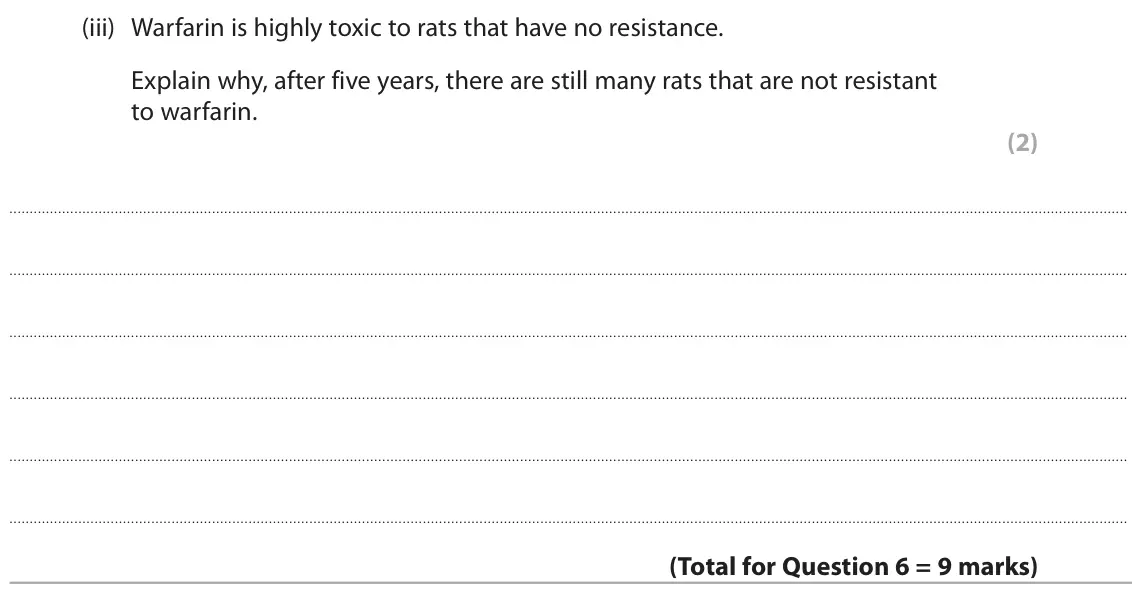
Q9(a)(i)
The whole paper ↗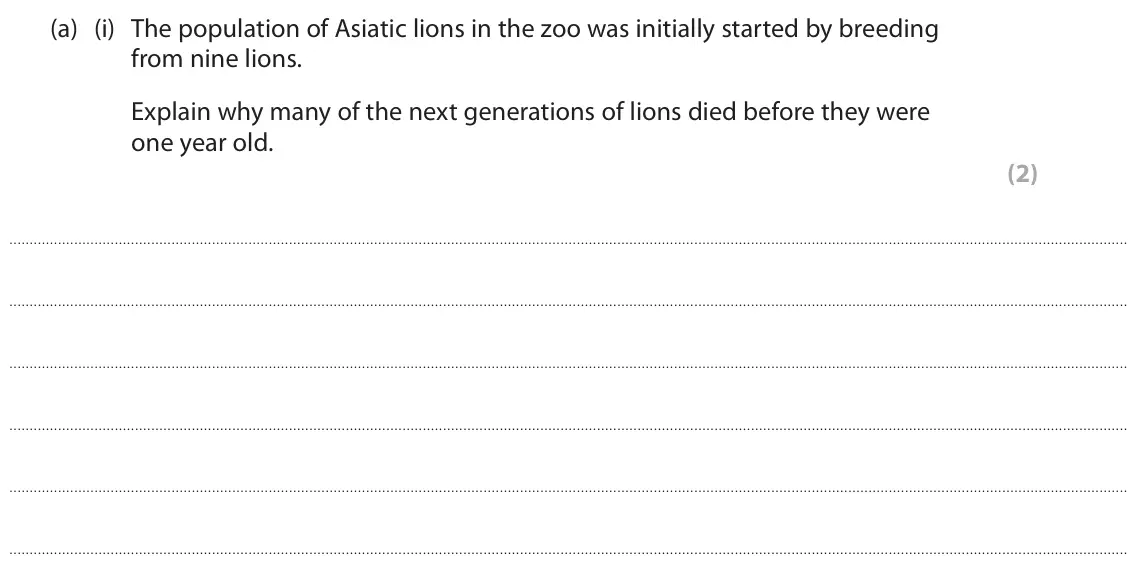
Q9(a)(ii)
The whole paper ↗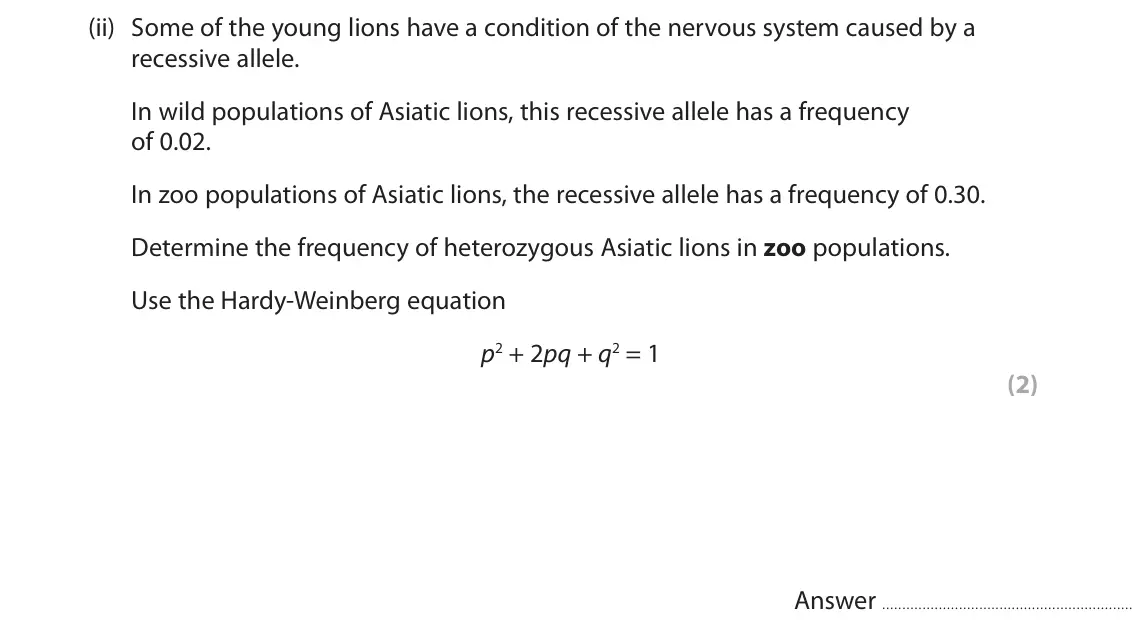
Q9(a)(iii)
The whole paper ↗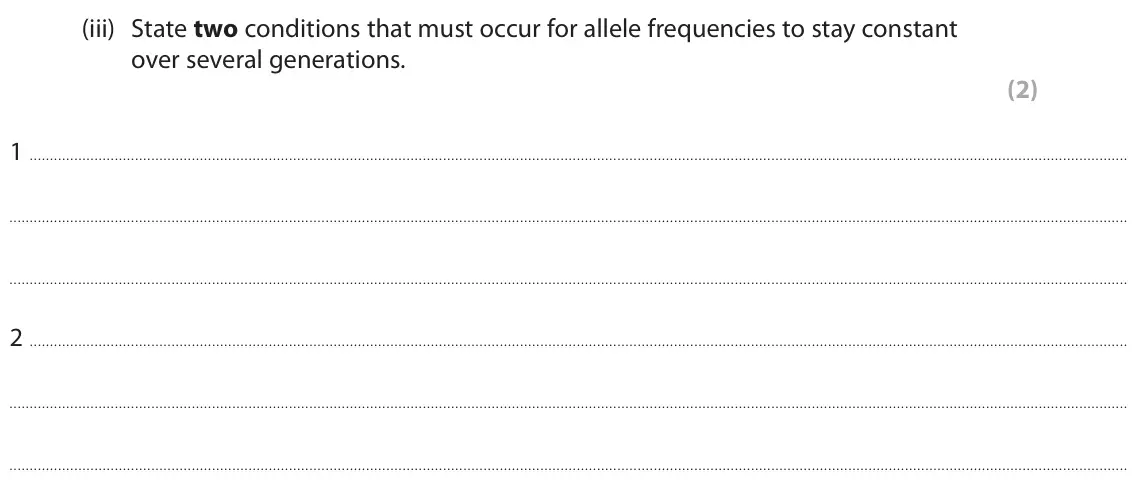
Q5(c)(ii)
The whole paper ↗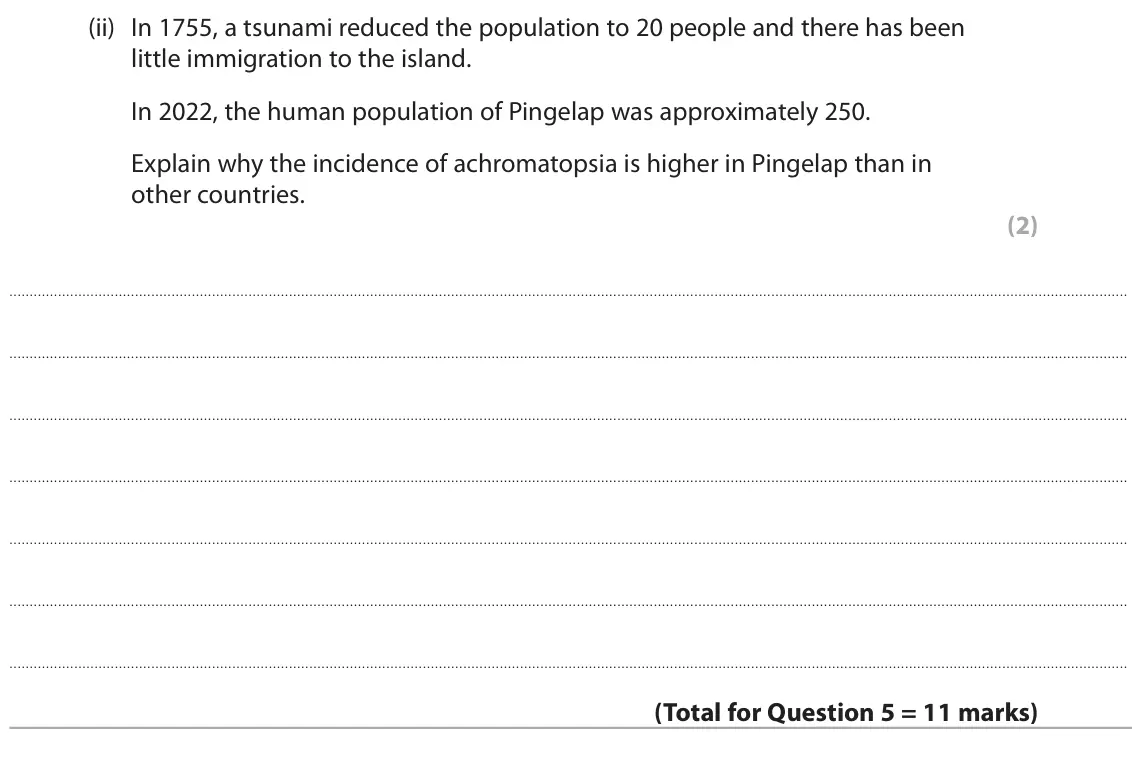
Q8(c)(i)
The whole paper ↗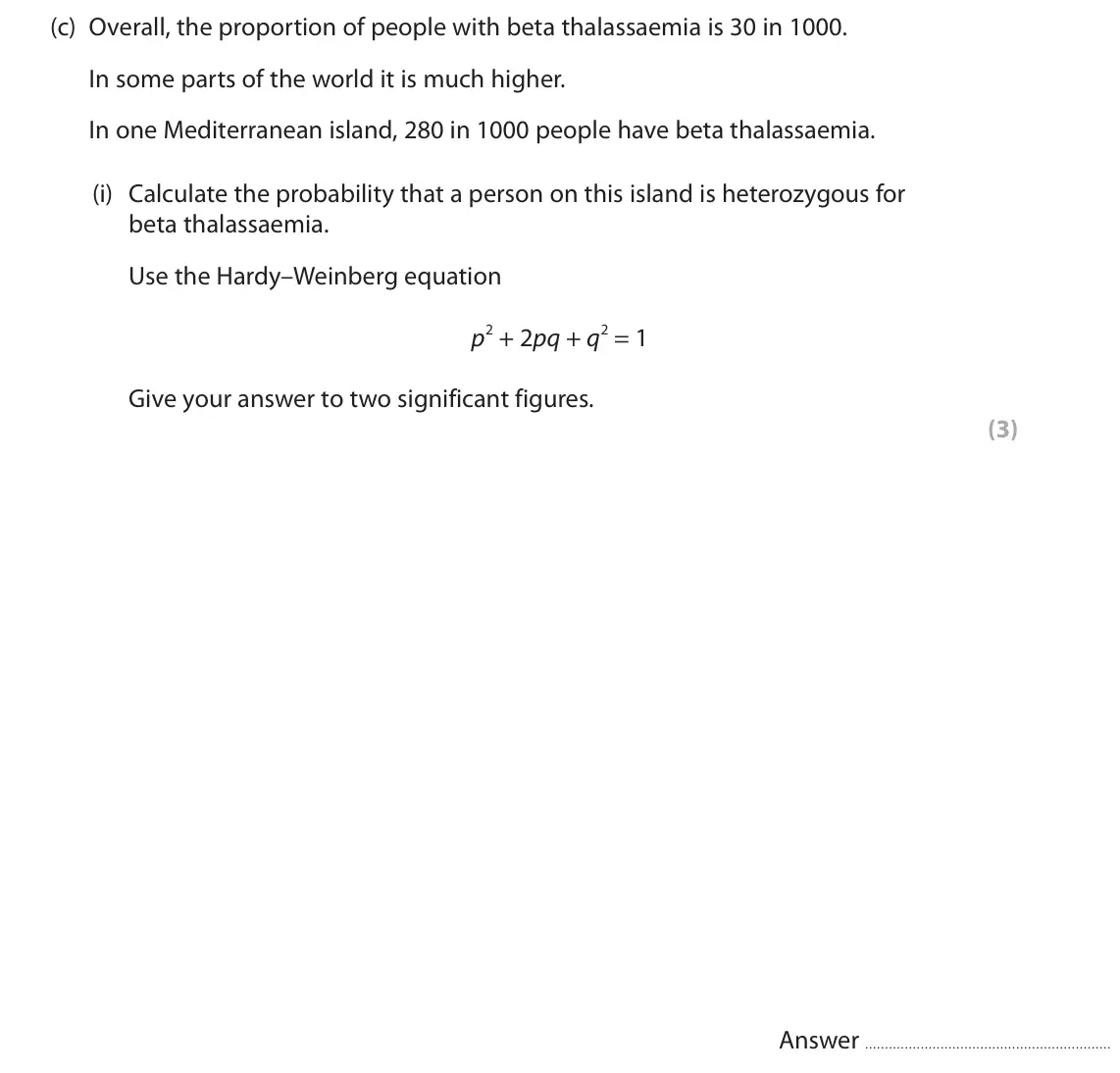
Q8(c)(ii)
The whole paper ↗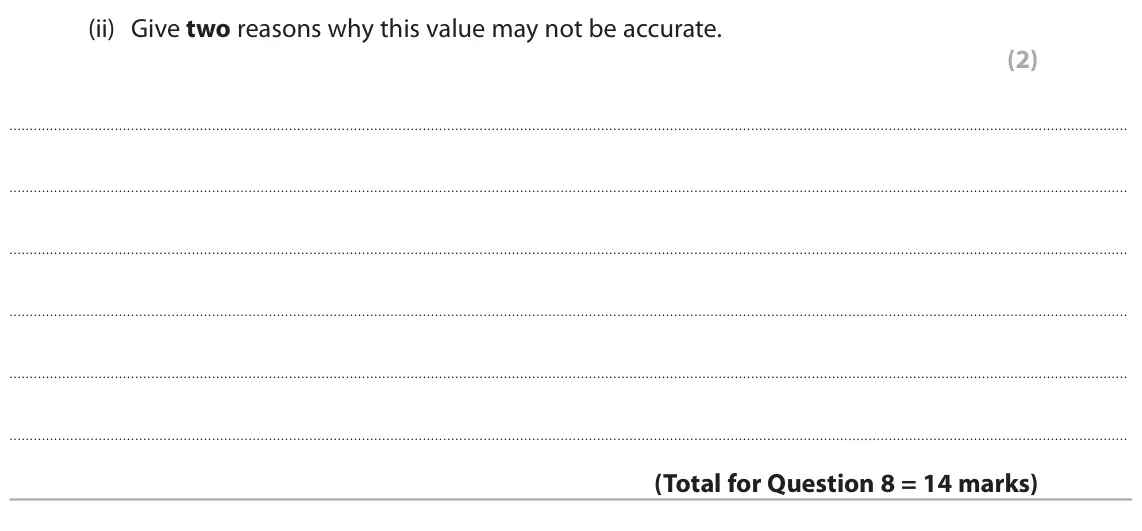
Q7(a)(iii)
The whole paper ↗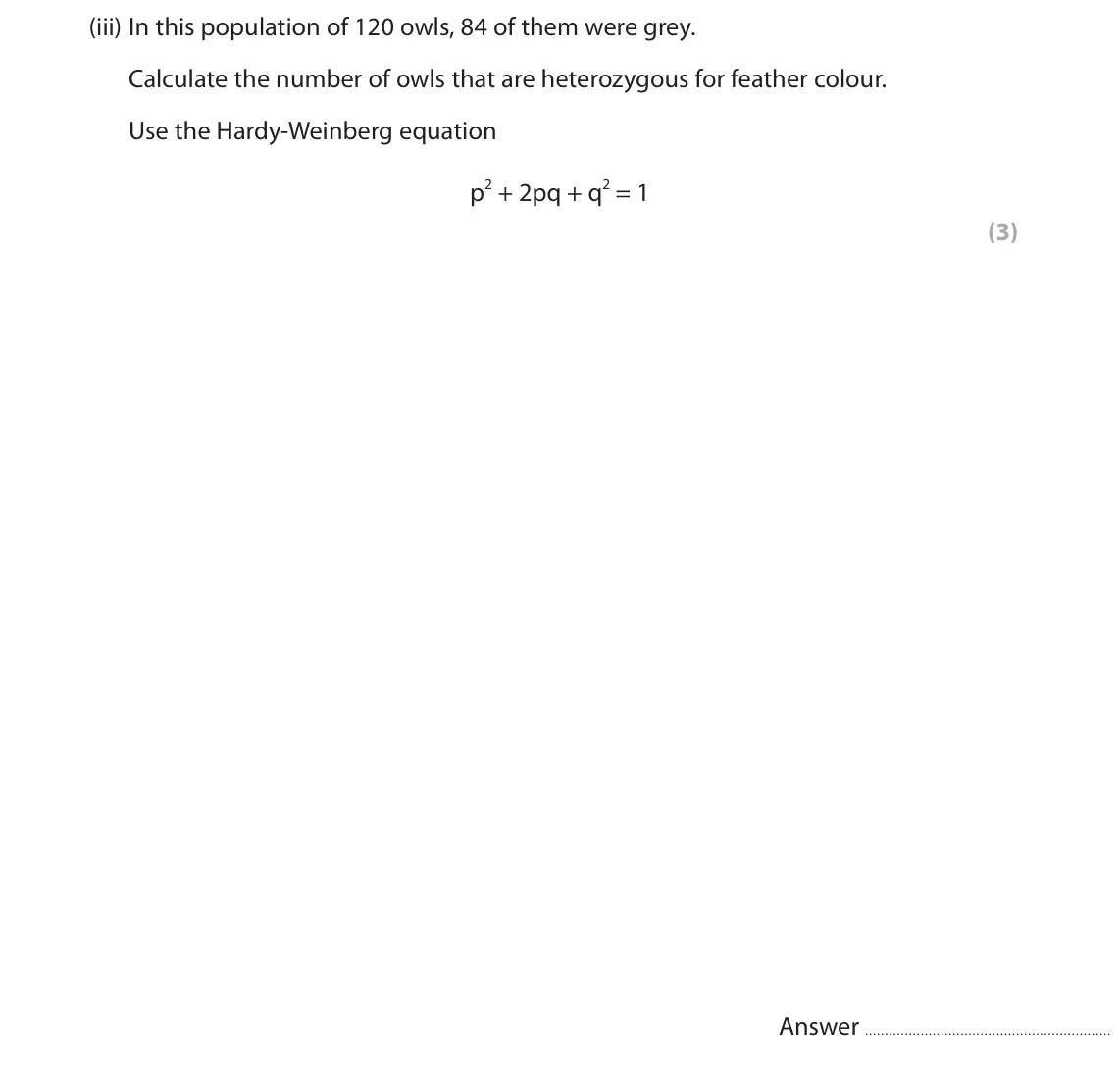
Q7(b)
The whole paper ↗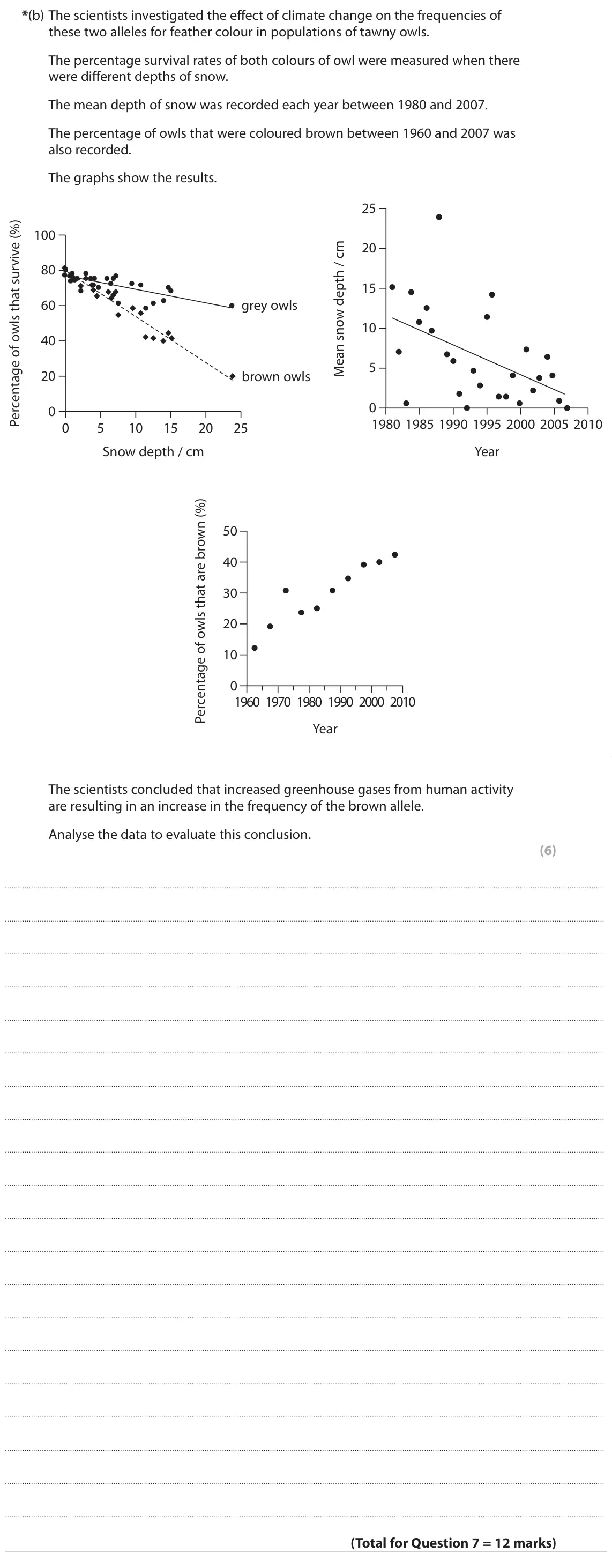
Q4(b)(i)
The whole paper ↗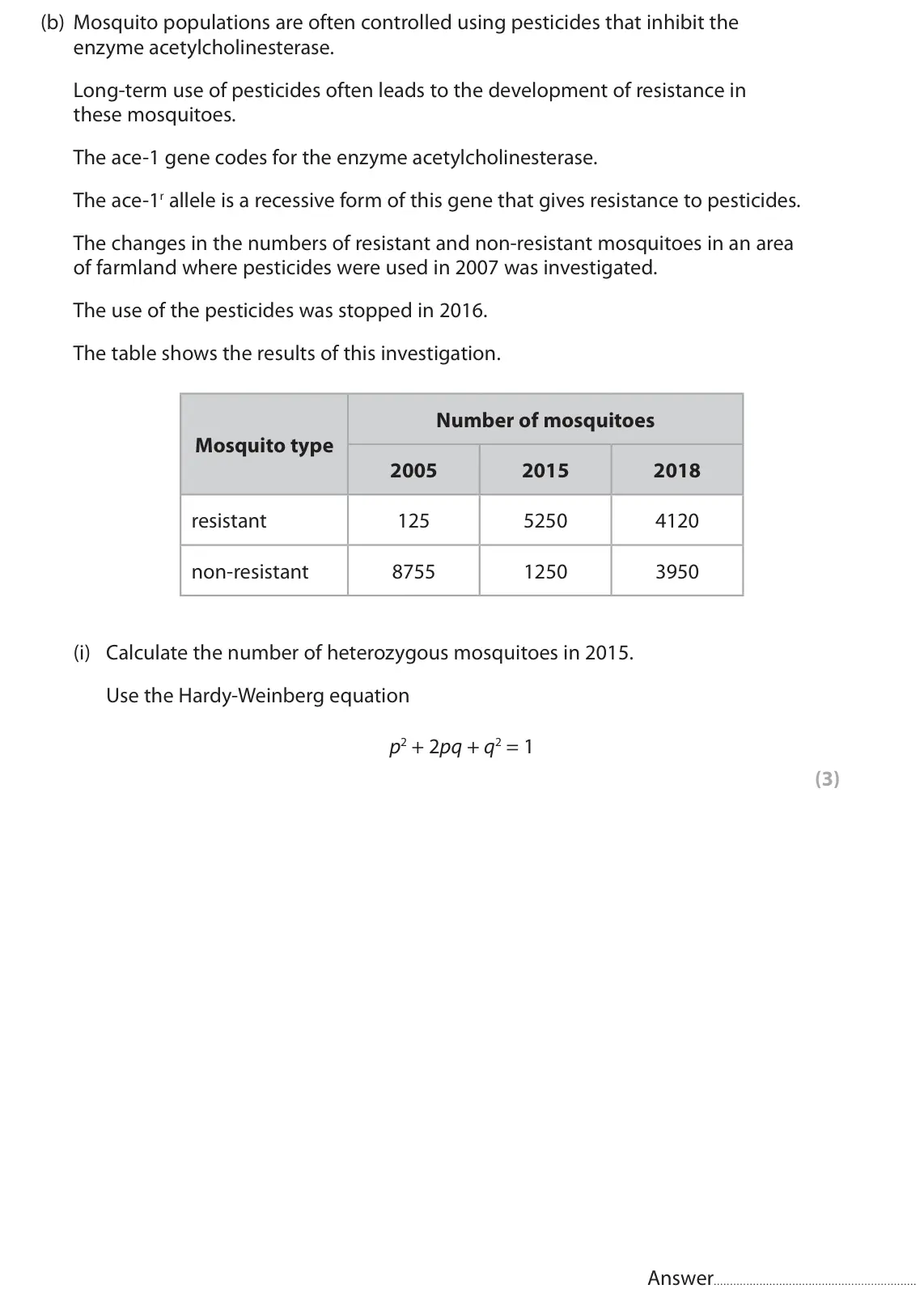
Q4(b)(ii)
The whole paper ↗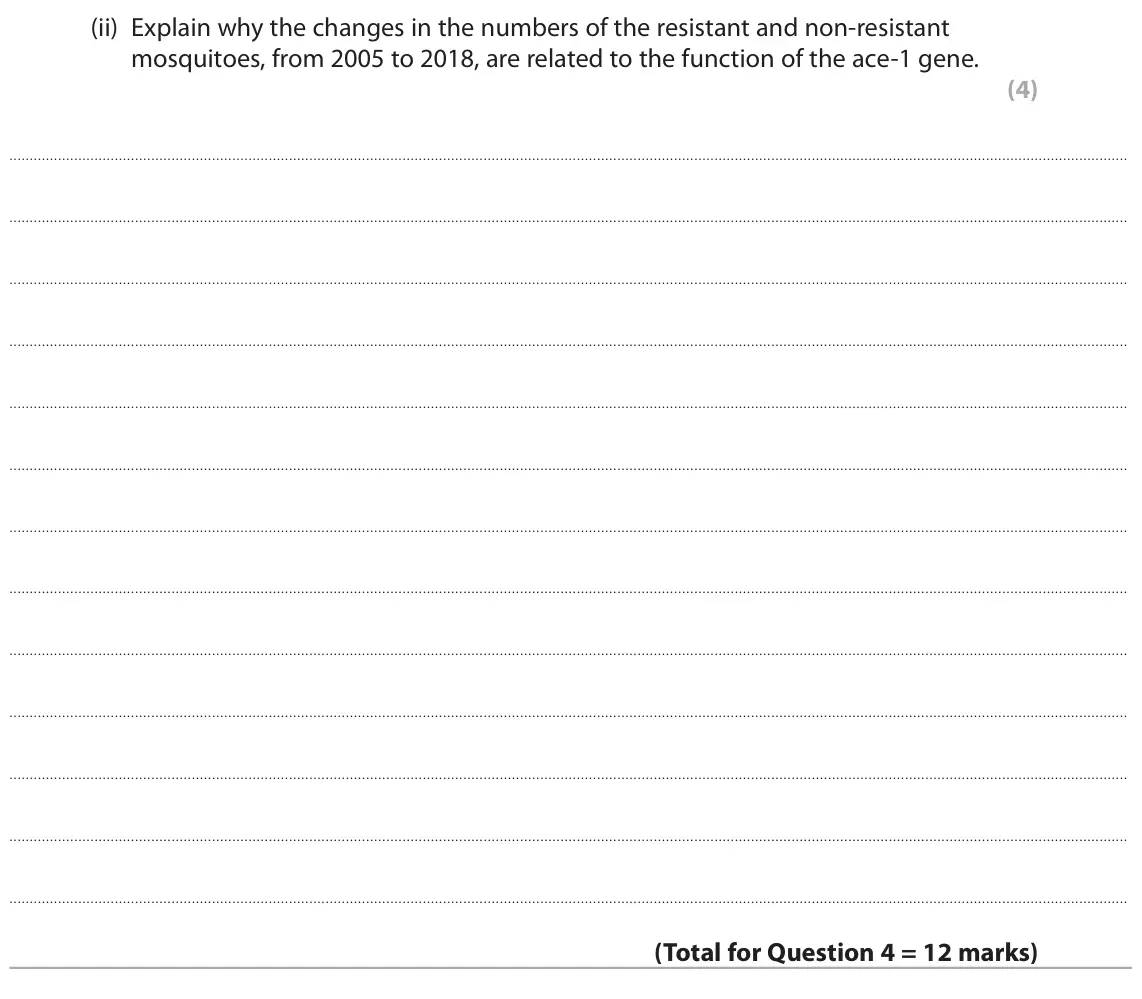
Q9(b)(i)
The whole paper ↗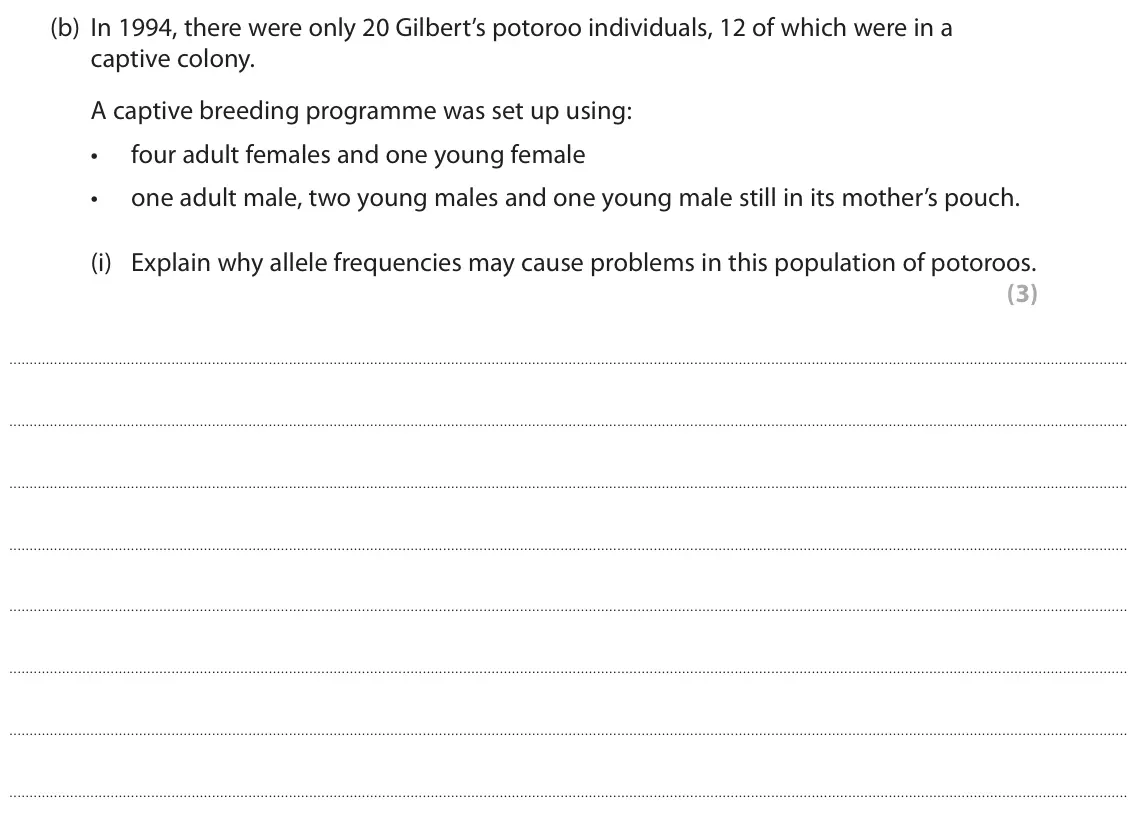
Q5(c)(i)
The whole paper ↗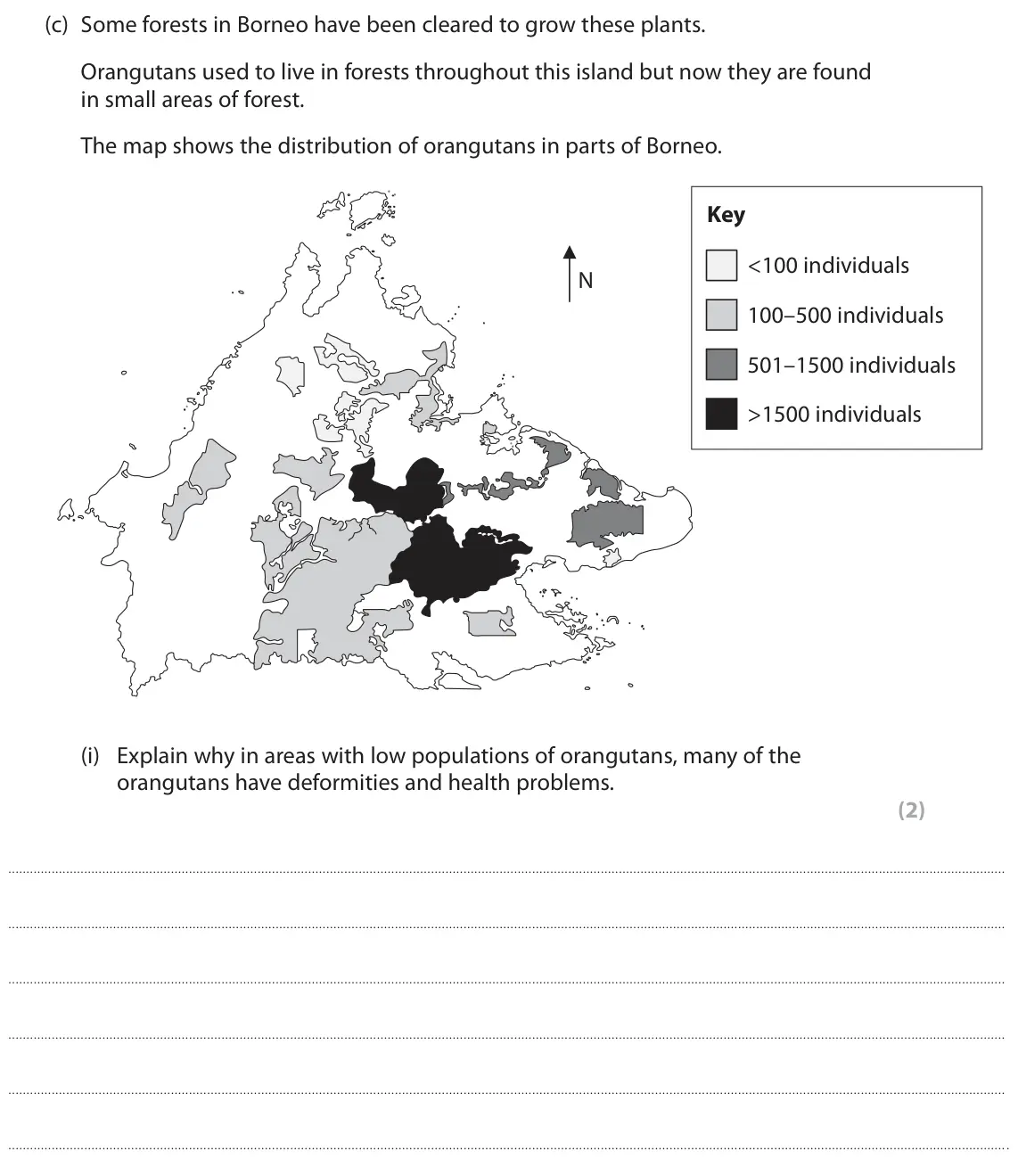
Q8(c)(i)
The whole paper ↗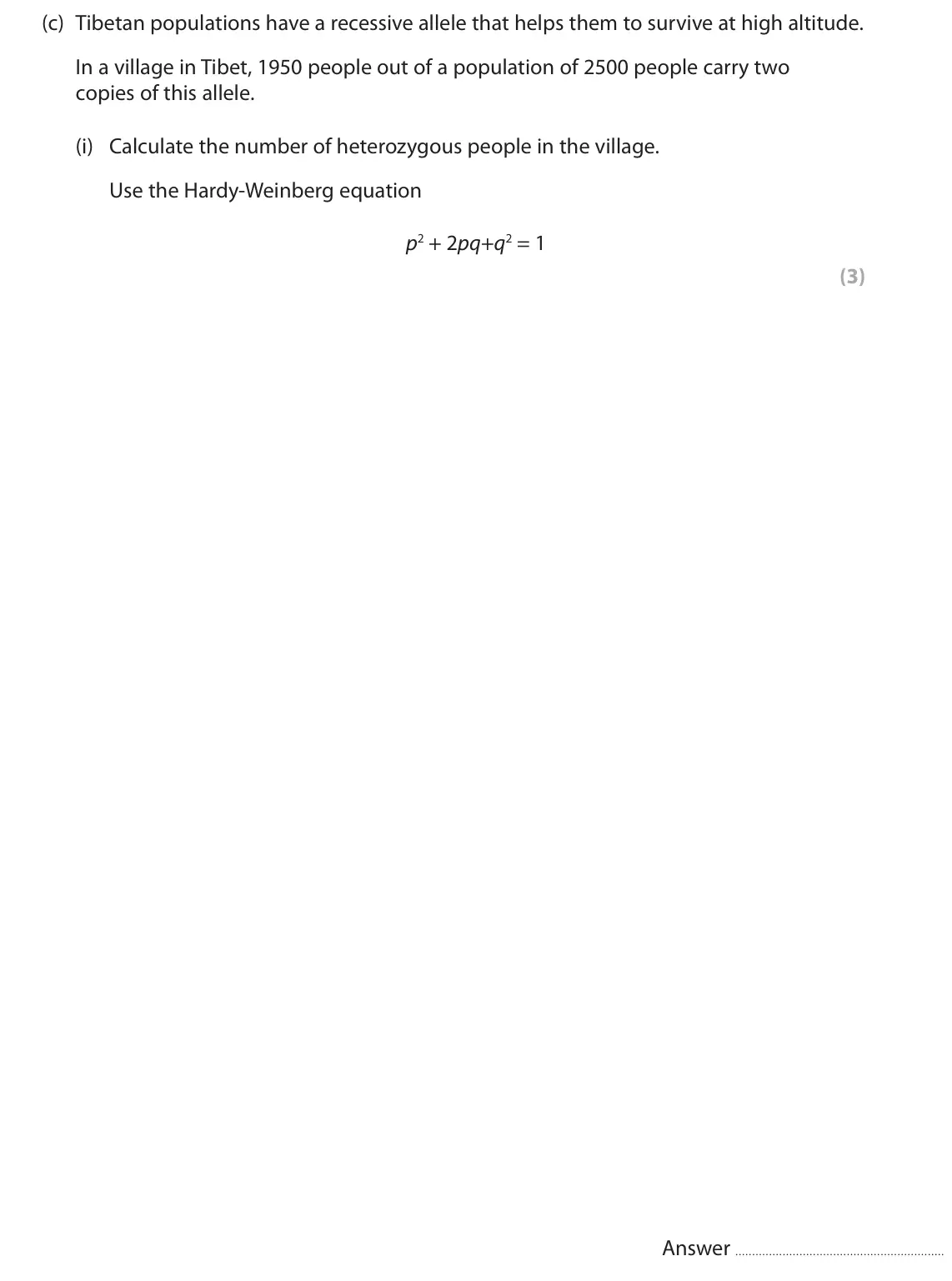
Q7(c)(i)
The whole paper ↗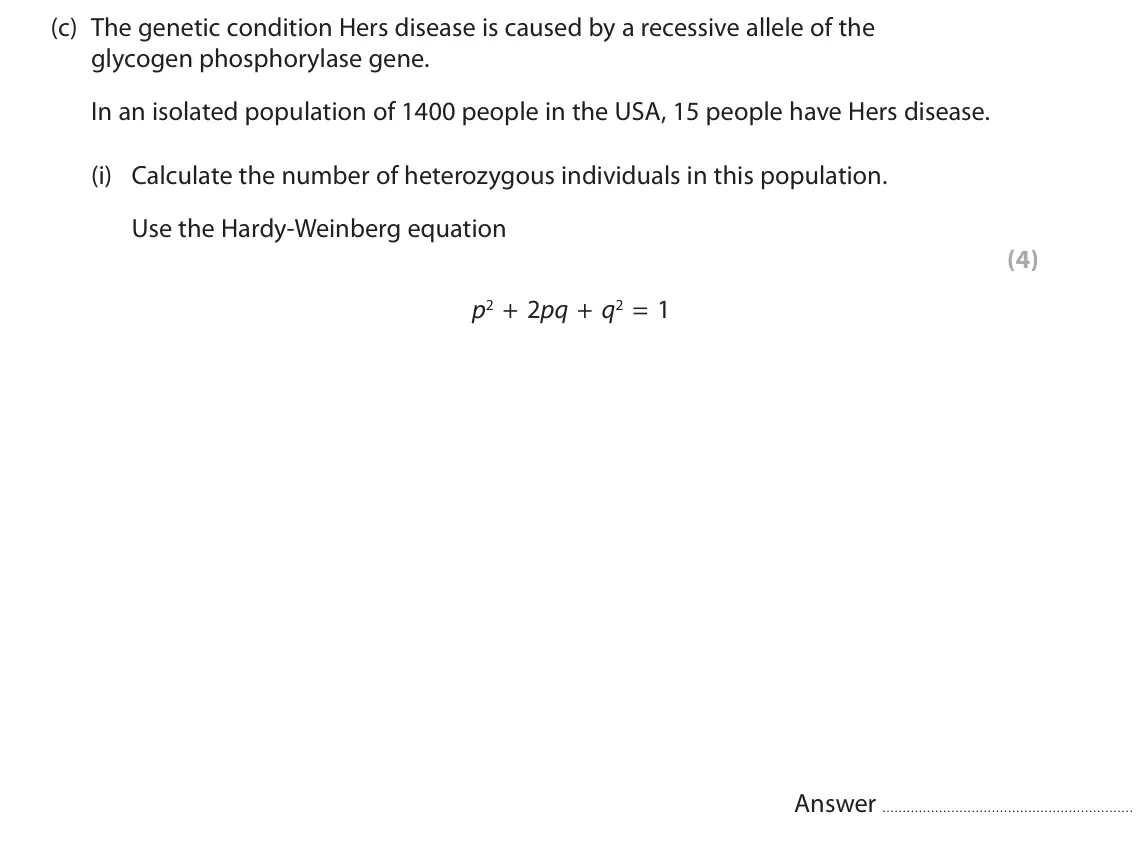
Q7(c)(ii)
The whole paper ↗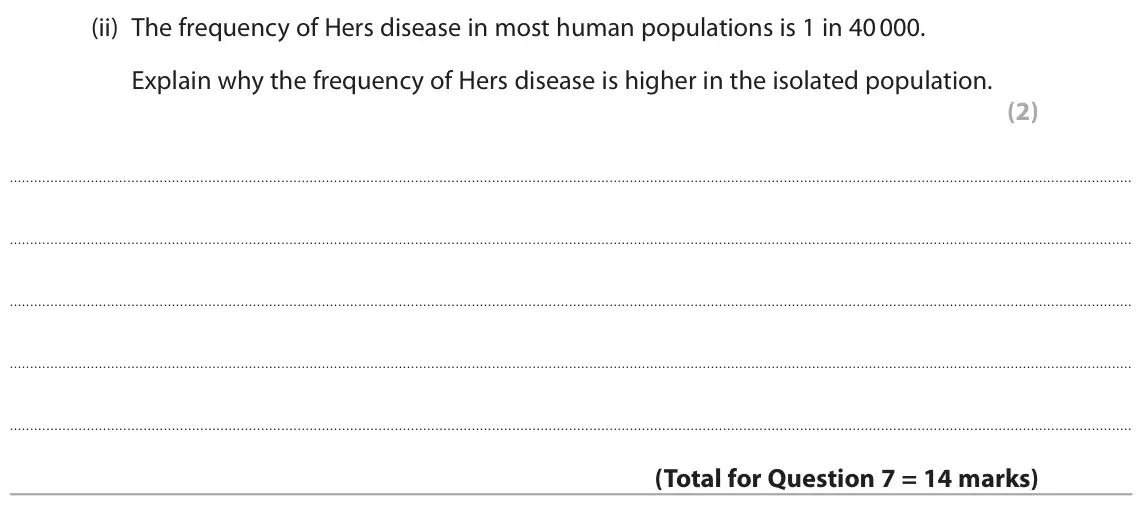
Q7(a)
The whole paper ↗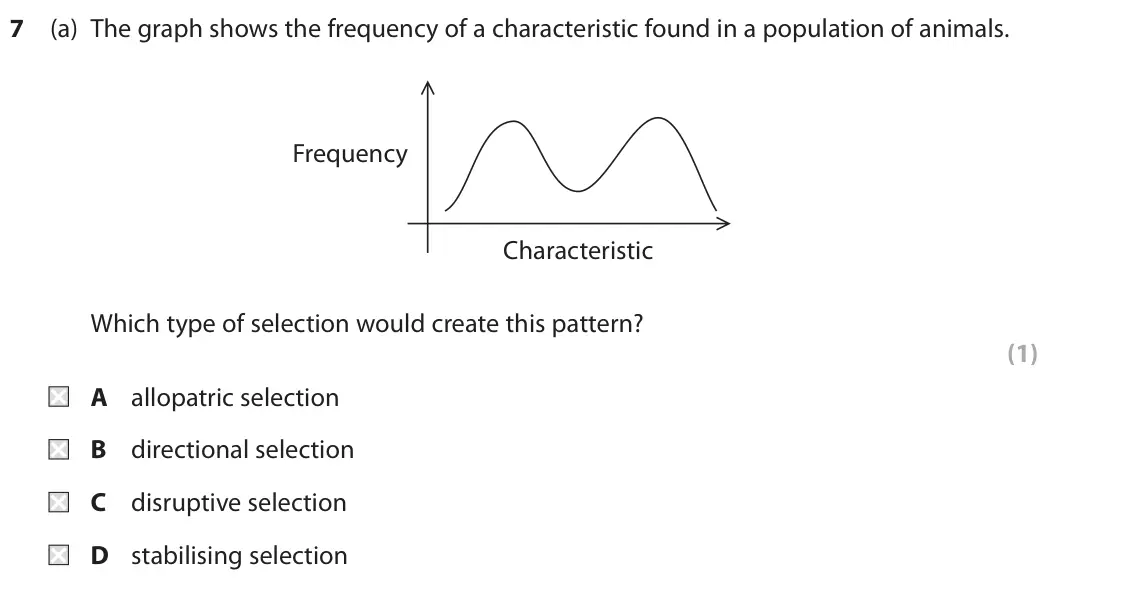
Q7(b)(ii)
The whole paper ↗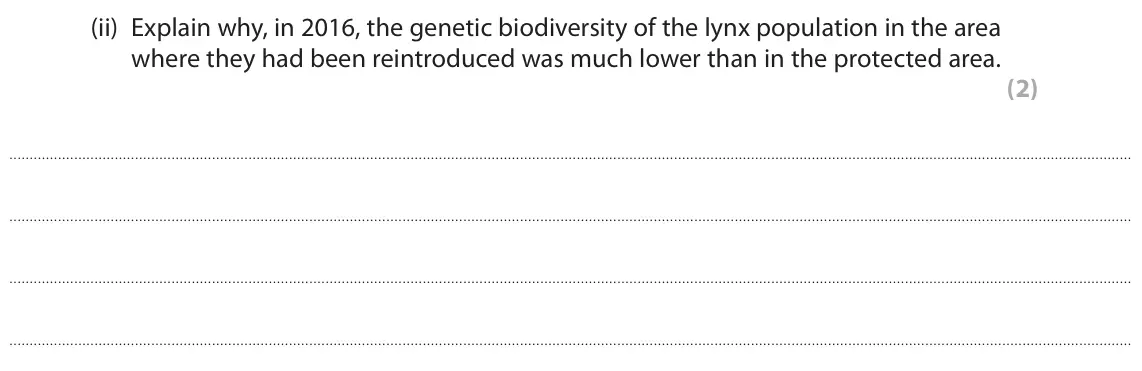
All 24 questions on Gene pools, as a list
- June 2025, Paper 2, Q6(b)(i) (3 marks): Calculate the expected number of rats that would be resistant to warfarin but do not require large amounts of vitamin K to survive, before warfarin was used. Us
- June 2025, Paper 2, Q6(b)(ii) (2 marks): Explain why, after two years, there is a change in the number of rats that are resistant to warfarin. (2)
- June 2025, Paper 2, Q6(b)(iii) (2 marks): Warfarin is highly toxic to rats that have no resistance. Explain why, after five years, there are still many rats that are not resistant to warfarin. (2)
- June 2024, Paper 2, Q9(a)(i) (2 marks): The population of Asiatic lions in the zoo was initially started by breeding from nine lions. Explain why many of the next generations of lions died before they
- June 2024, Paper 2, Q9(a)(ii) (2 marks): Some of the young lions have a condition of the nervous system caused by a recessive allele. In wild populations of Asiatic lions, this recessive allele has a f
- June 2024, Paper 2, Q9(a)(iii) (2 marks): State two conditions that must occur for allele frequencies to stay constant over several generations. (2) 1 2
- June 2023, Paper 2, Q5(c)(ii) (2 marks): In 1755, a tsunami reduced the population to 20 people and there has been little immigration to the island. In 2022, the human population of Pingelap was approx
- June 2023, Paper 3, Q8(c)(i) (3 marks): Calculate the probability that a person on this island is heterozygous for beta thalassaemia. Use the Hardy–Weinberg equation p2 + 2pq + q2 = 1 Give your answer
- June 2023, Paper 3, Q8(c)(ii) (2 marks): Give two reasons why this value may not be accurate. (2)
- June 2022, Paper 2, Q7(a)(iii) (3 marks): In this population of 120 owls, 84 of them were grey. Calculate the number of owls that are heterozygous for feather colour. Use the Hardy-Weinberg equation p2
- June 2022, Paper 2, Q7(b) (6 marks): The scientists investigated the effect of climate change on the frequencies of these two alleles for feather colour in populations of tawny owls. The percentage
- November 2021, Paper 2, Q4(b)(i) (3 marks): Calculate the number of heterozygous mosquitoes in 2015. Use the Hardy-Weinberg equation p2 + 2pq + q2 = 1 (3) Answer
- November 2021, Paper 2, Q4(b)(ii) (4 marks): Explain why the changes in the numbers of the resistant and non-resistant mosquitoes, from 2005 to 2018, are related to the function of the ace-1 gene. (4)
- November 2021, Paper 3, Q9(b)(i) (3 marks): Explain why allele frequencies may cause problems in this population of potoroos. (3)
- October 2020, Paper 2, Q5(c)(i) (2 marks): Explain why in areas with low populations of orangutans, many of the orangutans have deformities and health problems. (2) .
- October 2020, Paper 2, Q8(c)(i) (3 marks): Calculate the number of heterozygous people in the village. Use the Hardy-Weinberg equation p2 + 2pq+q2 = 1 (3) Answer
- June 2019, Paper 2, Q7(c)(i) (4 marks): Calculate the number of heterozygous individuals in this population. Use the Hardy‑Weinberg equation (4) p2 + 2pq + q2 = 1 Answer
- June 2019, Paper 2, Q7(c)(ii) (2 marks): The frequency of Hers disease in most human populations is 1 in 40 000. Explain why the frequency of Hers disease is higher in the isolated population. (2)
- June 2018, Paper 2, Q7(a) (1 mark): The graph shows the frequency of a characteristic found in a population of animals. Frequency Characteristic Which type of selection would create this pattern?
- June 2018, Paper 2, Q7(b)(ii) (2 marks): Explain why, in 2016, the genetic biodiversity of the lynx population in the area where they had been reintroduced was much lower than in the protected area. (2
- June 2018, Paper 3, Q8(b) (9 marks): Some health disorders, such as sickle cell anaemia, have a genetic basis. People who are at risk of these disorders can be identified using genetic tests. Hospi
- June 2017, Paper 2, Q7(b) (3 marks): The fur colour of animals can be affected by natural selection. Compare and contrast stabilising selection with disruptive selection. (3)
- June 2017, Paper 2, Q10(a)(ii) (2 marks): Explain why, although the population of seals has recovered, many of the seals have health problems. (2)
- June 2017, Paper 3, Q7(a) (4 marks): The incidence of babies born with cystic fibrosis in Australia is 1 in 2500. Use the Hardy Weinberg equation, p2 + 2pq + q2 = 1, to calculate the percentage of
Questions, mark schemes and examiner’s reports are © Pearson Edexcel, from their published past papers. Plumi isn’t affiliated with any exam board. Want whole papers? Every Edexcel A-Level Biology B paper.
Rather write your answers by hand on iPad? Plumi marks them against the same mark schemes.