 plumi
Transfer of thermal energy: CAIE IGCSE Physics questions
Every CAIE IGCSE Physics exam question on 2.3 Transfer of thermal energy, June 2024 and the specimen papers, with its mark scheme and examiner’s report.
Find questions355
Calculations
Q6(a)
The whole paper ↗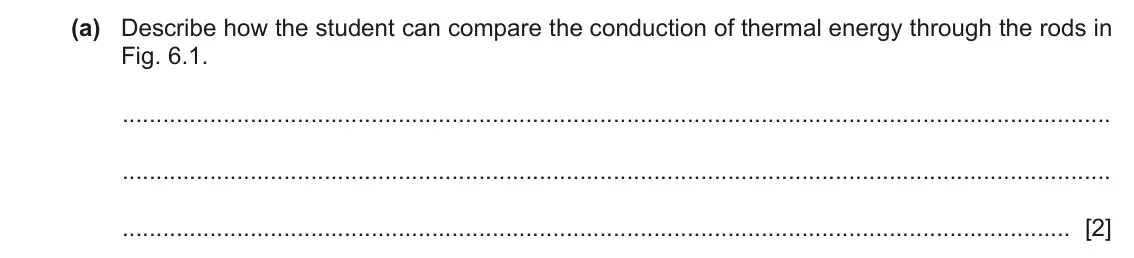
Q3(b)(i)
The whole paper ↗
Q3(b)(iii)
The whole paper ↗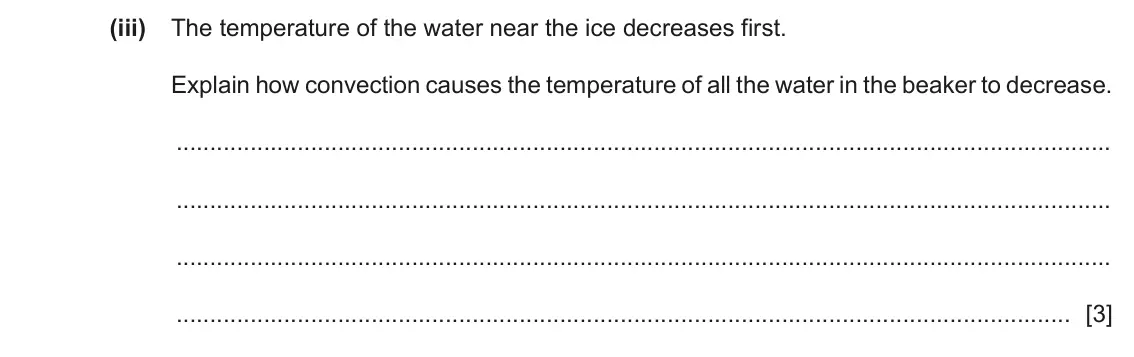
Q6(a)
The whole paper ↗
Q6(b)
The whole paper ↗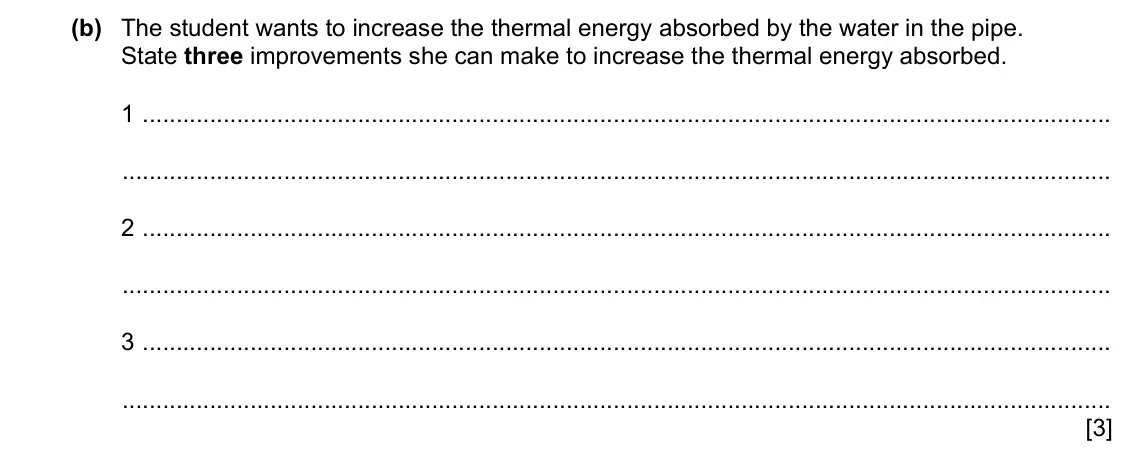
Q6(c)
The whole paper ↗
Q1(a)
The whole paper ↗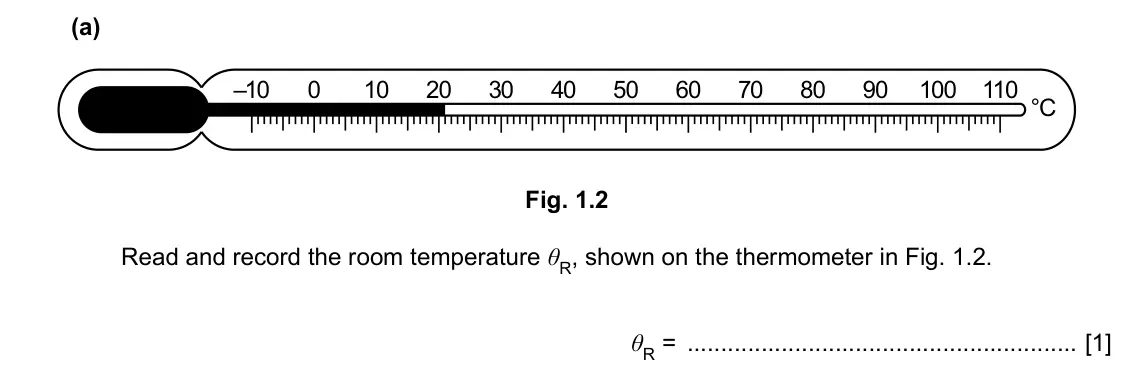
Q1(b)
The whole paper ↗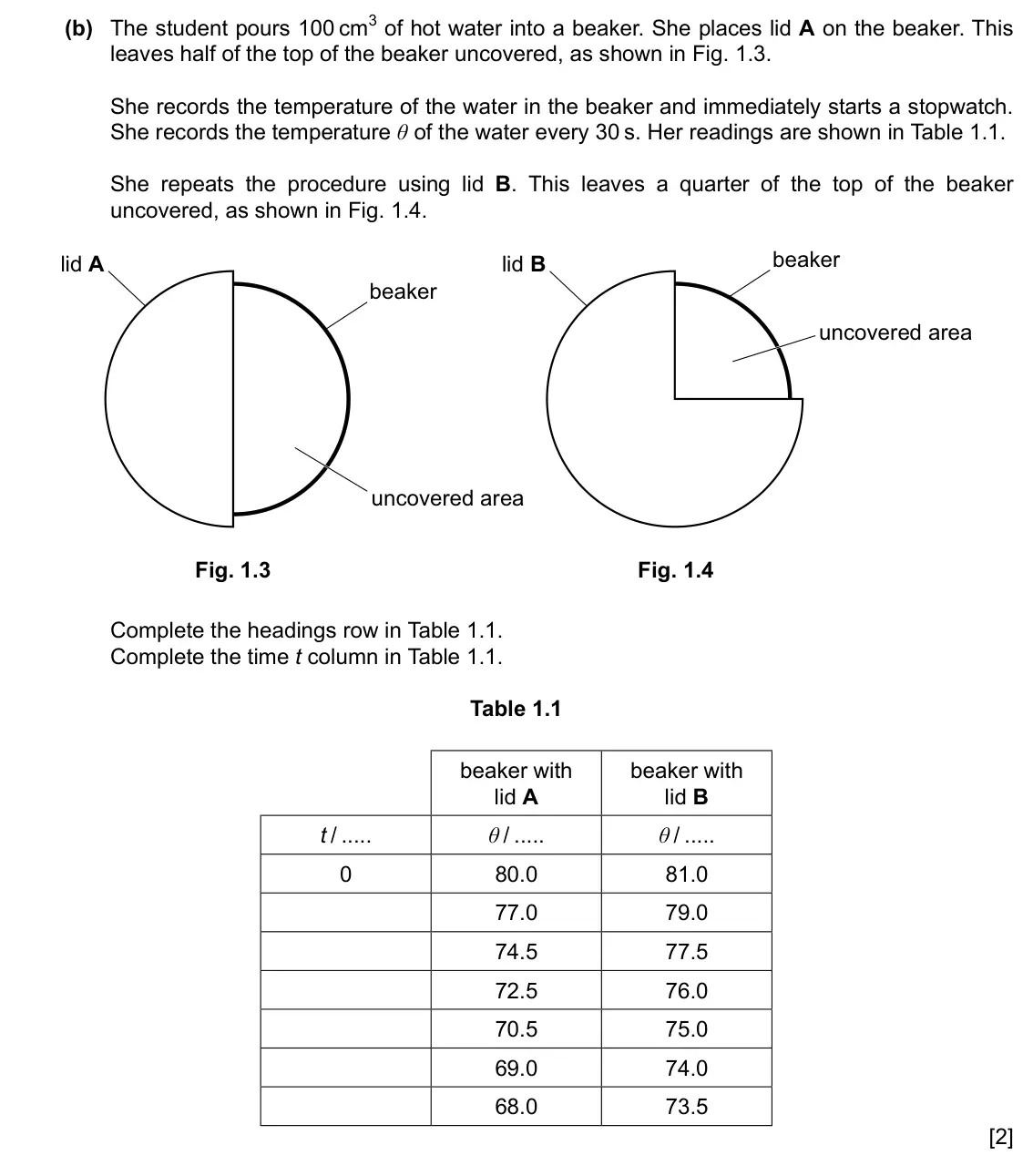
Q1(c)
The whole paper ↗
Q1(d)(i)
The whole paper ↗
Q1(d)(ii)
The whole paper ↗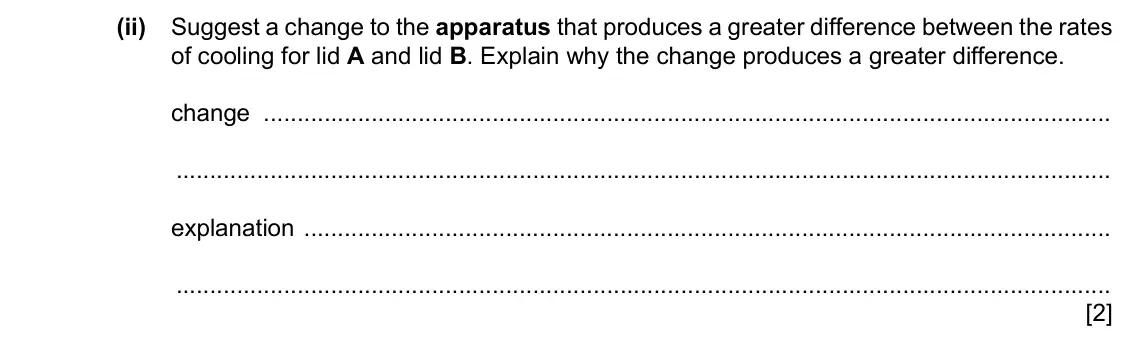
Q1(e)
The whole paper ↗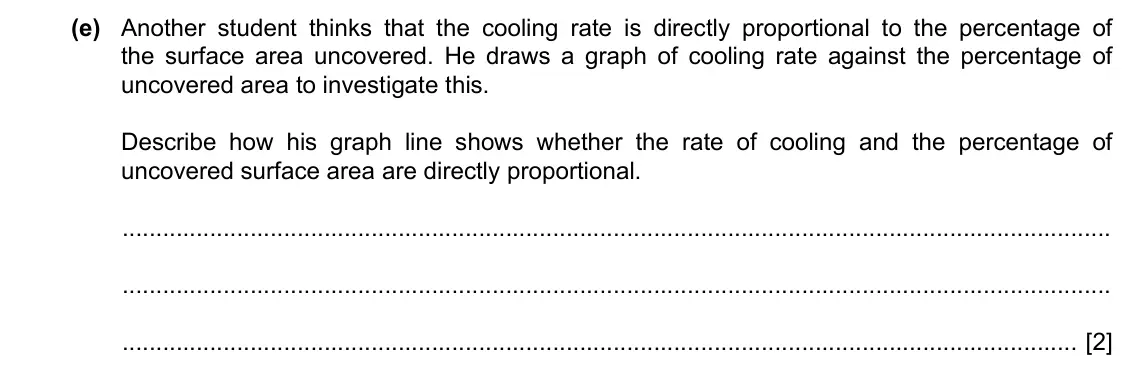
Q1(f)
The whole paper ↗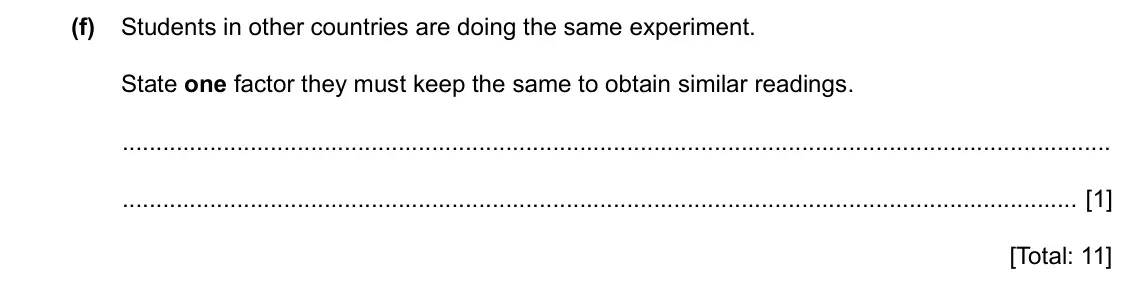
All 18 questions on Transfer of thermal energy, as a list
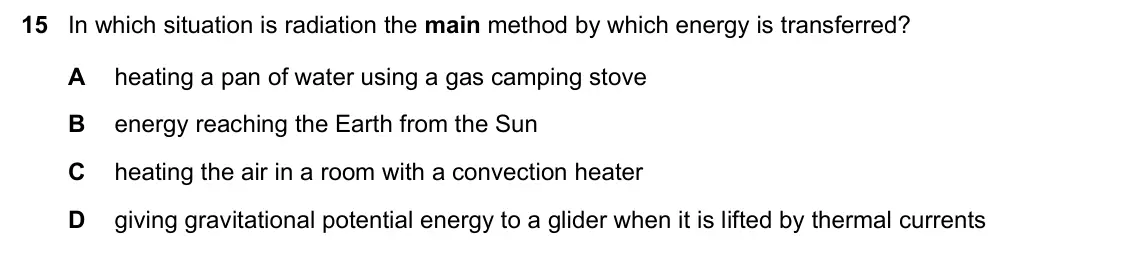
- June 2024, Paper 1, Q15 (1 mark): In which situation is radiation the main method by which energy is transferred? A heating a pan of water using a gas camping stove B energy reaching the Earth f
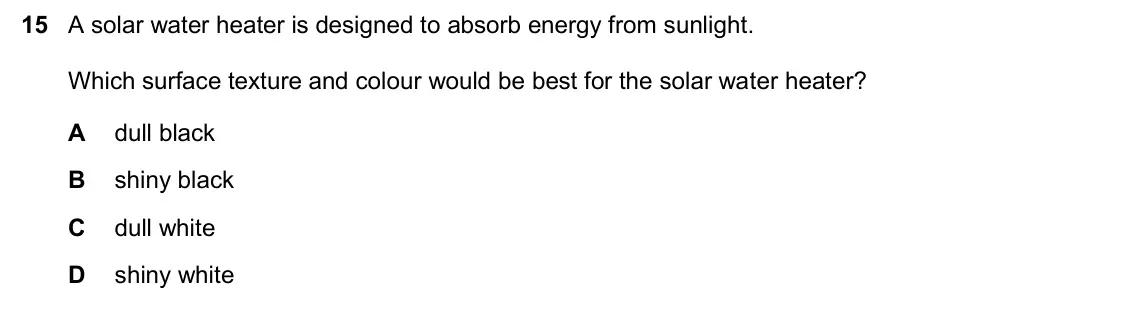
- June 2024, Paper 2, Q15 (1 mark): A solar water heater is designed to absorb energy from sunlight. Which surface texture and colour would be best for the solar water heater? A dull black B shiny
- June 2024, Paper 3, Q6(a) (2 marks): Describe how the student can compare the conduction of thermal energy through the rods in Fig. 6.1. [2]
- June 2024, Paper 4, Q3(b)(i) (1 mark): State the name of the thermal process that transfers energy from the water to the ice. [1]
- June 2024, Paper 4, Q3(b)(iii) (3 marks): The temperature of the water near the ice decreases first. Explain how convection causes the temperature of all the water in the beaker to decrease. [3]
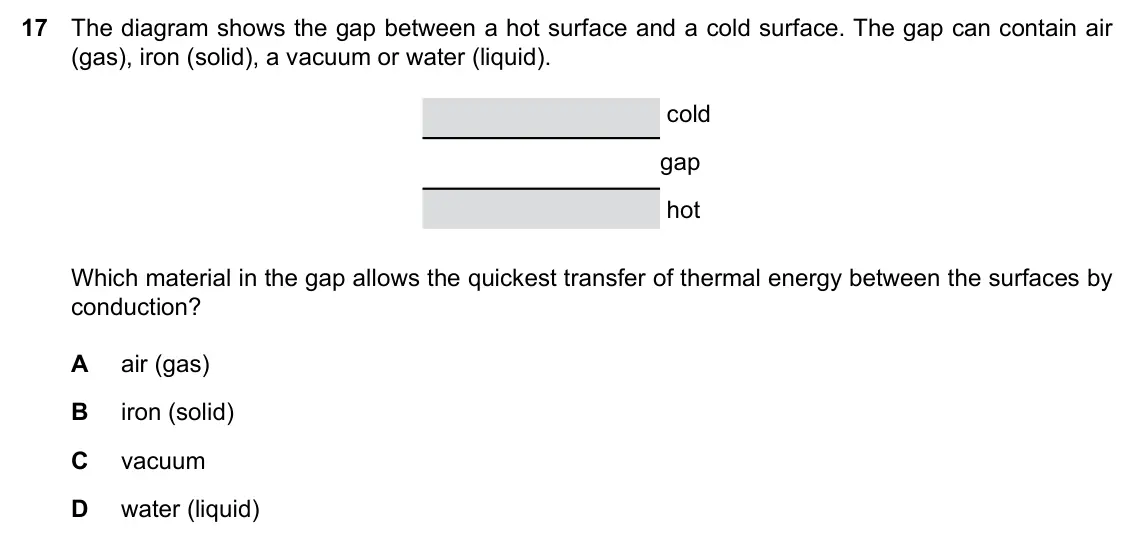
- Specimen, Paper 1, Q17 (1 mark): The diagram shows the gap between a hot surface and a cold surface. The gap can contain air (gas), iron (solid), a vacuum or water (liquid). cold gap hot Which
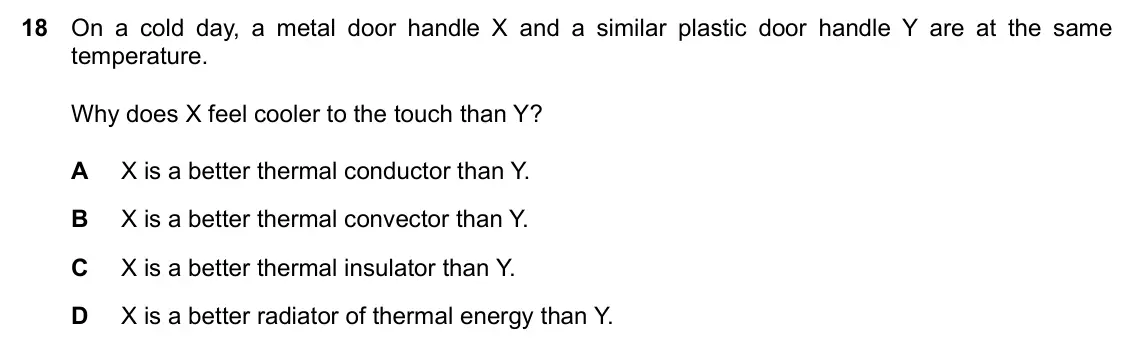
- Specimen, Paper 1, Q18 (1 mark): On a cold day, a metal door handle X and a similar plastic door handle Y are at the same temperature. Why does X feel cooler to the touch than Y? A X is a bette
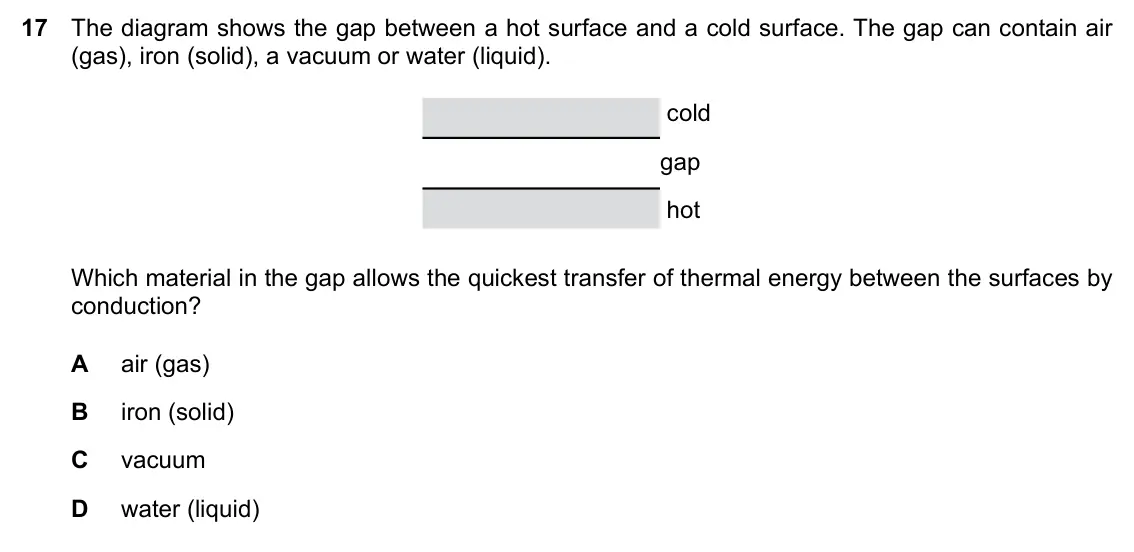
- Specimen, Paper 2, Q17 (1 mark): The diagram shows the gap between a hot surface and a cold surface. The gap can contain air (gas), iron (solid), a vacuum or water (liquid). cold gap hot Which
- Specimen, Paper 3, Q6(a) (1 mark): Determine the rise in temperature of the water as it passes between Tank A and Tank B. temperature rise = °C [1]
- Specimen, Paper 3, Q6(b) (3 marks): The student wants to increase the thermal energy absorbed by the water in the pipe. State three improvements she can make to increase the thermal energy absorbe
- Specimen, Paper 3, Q6(c) (2 marks): Describe the processes that transfer the thermal energy from the Sun to the water inside the pipe. [2] [Total: 6]
- Specimen, Paper 6, Q1(a) (1 mark): –10 0 10 20 30 40 50 60 70 80 90 100 110 °C Fig. 1.2 Read and record the room temperature θR, shown on the thermometer in Fig. 1.2. θR = [1]
- Specimen, Paper 6, Q1(b) (2 marks): The student pours 100 cm3 of hot water into a beaker. She places lid A on the beaker. This leaves half of the top of the beaker uncovered, as shown in Fig. 1.3.
- Specimen, Paper 6, Q1(c) (1 mark): Describe a precaution that should be taken to ensure that the temperature readings are as accurate as possible in the experiment. [1]
- Specimen, Paper 6, Q1(d)(i) (2 marks): Write a conclusion to this experiment, stating for which lid the rate of cooling is greater. Justify your answer with reference to the results. [2]
- Specimen, Paper 6, Q1(d)(ii) (2 marks): Suggest a change to the apparatus that produces a greater difference between the rates of cooling for lid A and lid B. Explain why the change produces a greater
- Specimen, Paper 6, Q1(e) (2 marks): Another student thinks that the cooling rate is directly proportional to the percentage of the surface area uncovered. He draws a graph of cooling rate against
- Specimen, Paper 6, Q1(f) (1 mark): Students in other countries are doing the same experiment. State one factor they must keep the same to obtain similar readings. [1] [Total: 11]
Questions, mark schemes and examiner’s reports are © Cambridge University Press & Assessment, from their published past papers. Plumi isn’t affiliated with any exam board. Want whole papers? Every CAIE IGCSE Physics paper.
Rather write your answers by hand on iPad? Plumi marks them against the same mark schemes.