 plumi
Kinetic particle model of matter: CAIE IGCSE Physics questions
Every CAIE IGCSE Physics exam question on 2.1 Kinetic particle model of matter, June 2024 and the specimen papers, with its mark scheme and examiner’s report.
Find questions355
Calculations
Q5(a)
The whole paper ↗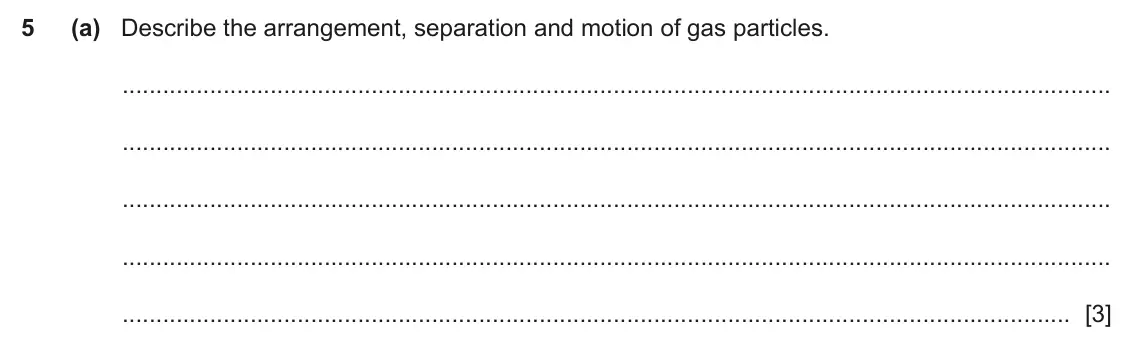
Q5(b)(ii)
The whole paper ↗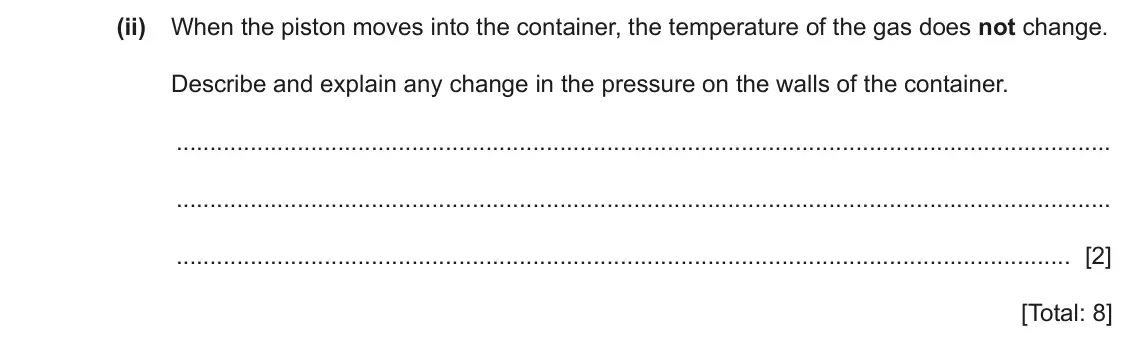
Q3(a)
The whole paper ↗
Q5(a)(i)
The whole paper ↗
Q5(a)(ii)
The whole paper ↗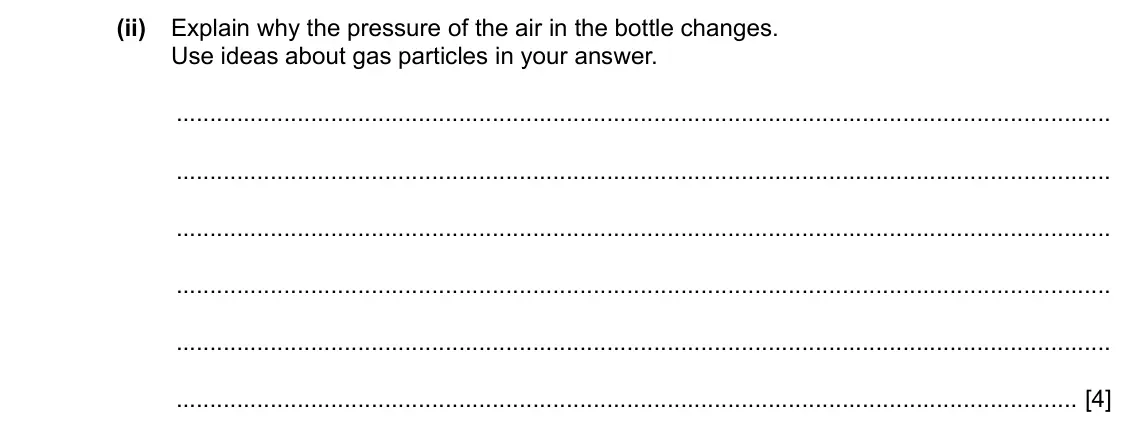
Q4(a)
The whole paper ↗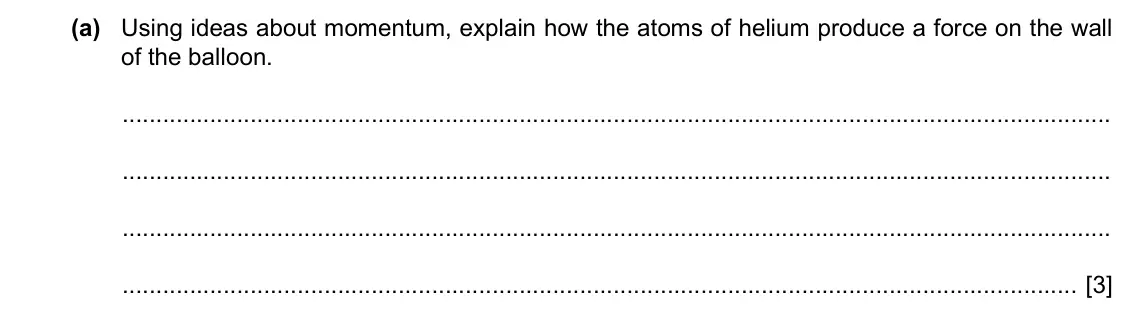
Q4(b)(i)
The whole paper ↗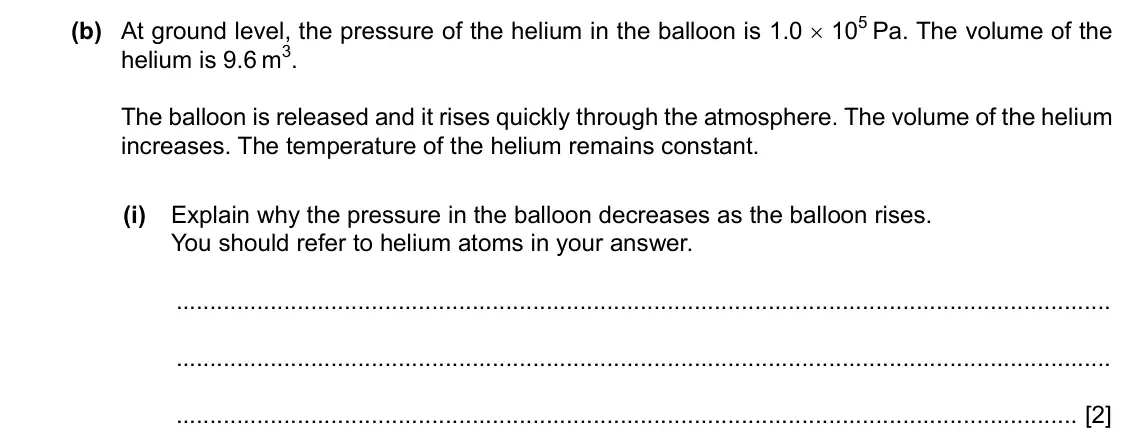
Q4(b)(ii)
The whole paper ↗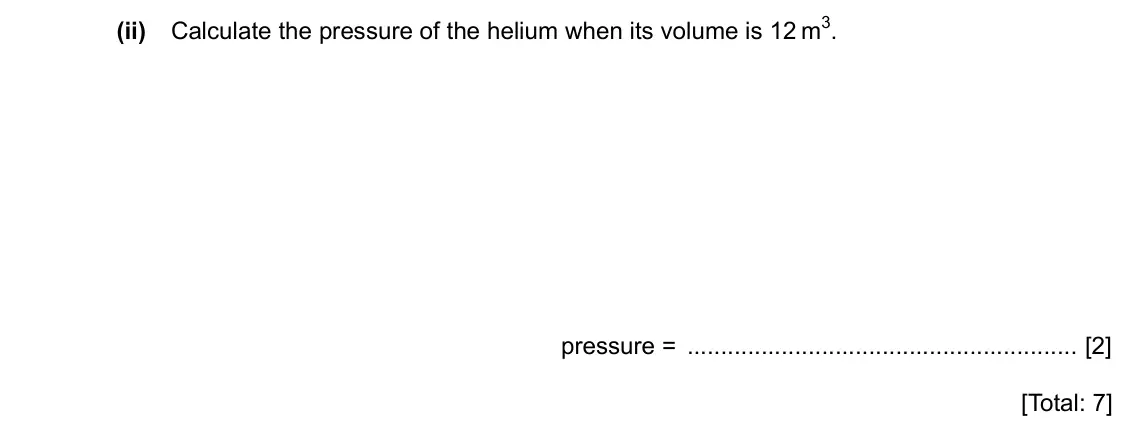
Q5(a)
The whole paper ↗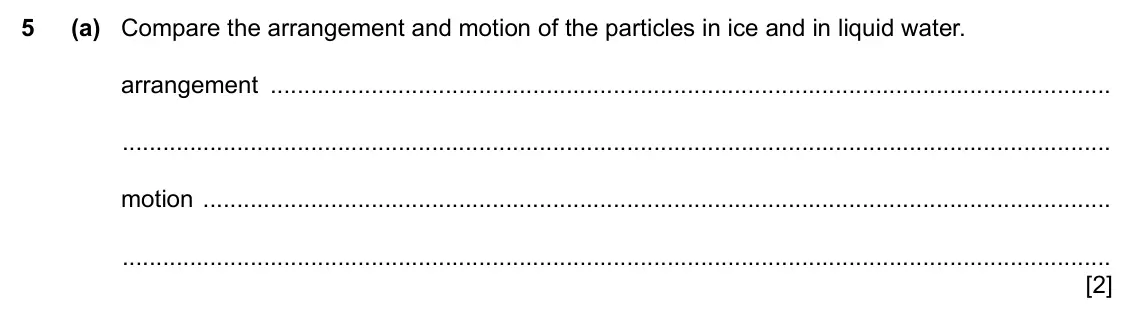
All 19 questions on Kinetic particle model of matter, as a list
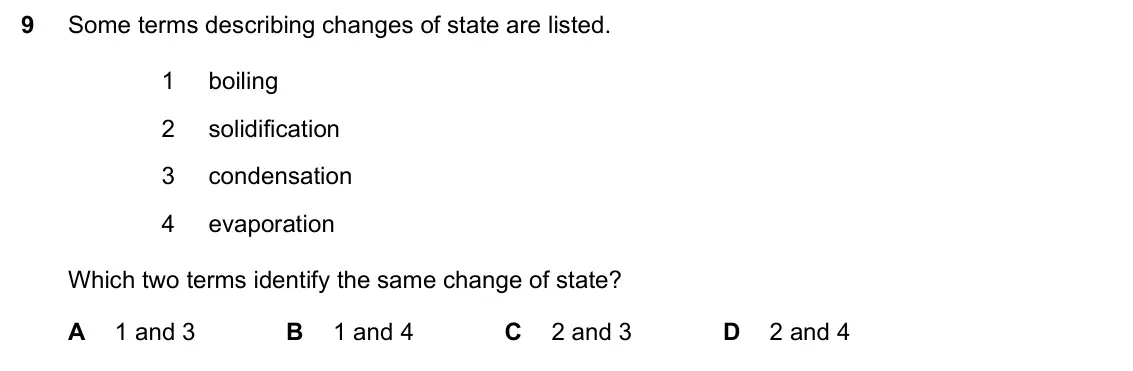
- June 2024, Paper 1, Q9 (1 mark): Some terms describing changes of state are listed. 1 boiling 2 solidification 3 condensation 4 evaporation Which two terms identify the same change of state? A
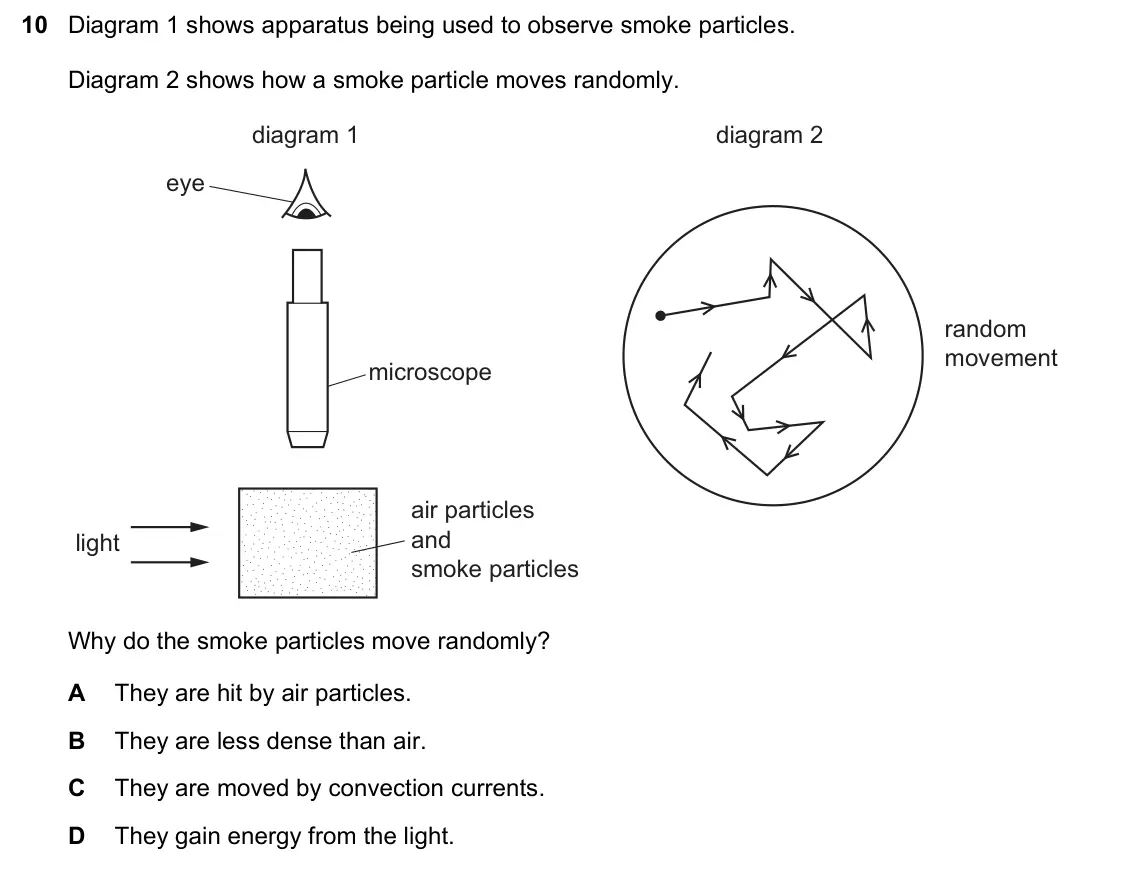
- June 2024, Paper 1, Q10 (1 mark): Diagram 1 shows apparatus being used to observe smoke particles. Diagram 2 shows how a smoke particle moves randomly. diagram 1 diagram 2 eye random movement mi
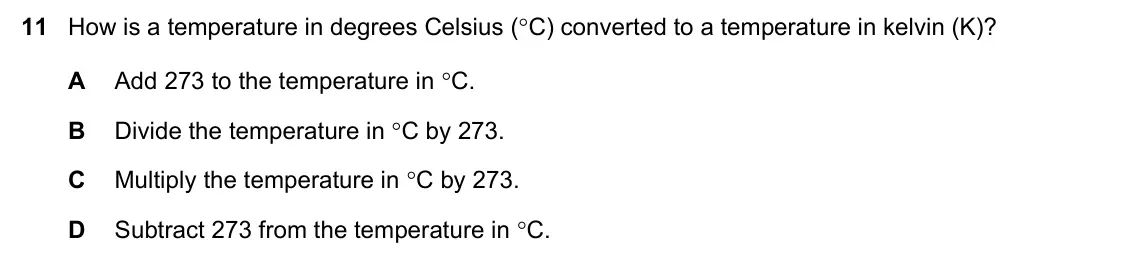
- June 2024, Paper 1, Q11 (1 mark): How is a temperature in degrees Celsius (C) converted to a temperature in kelvin (K)? A Add 273 to the temperature in C. B Divide the temperature in C by 273
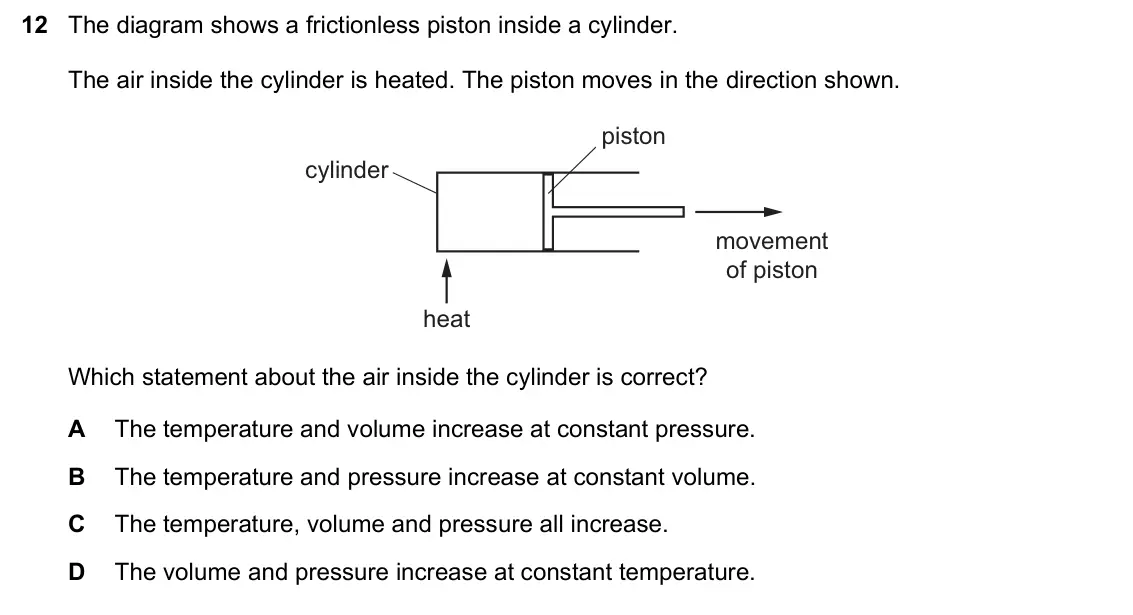
- June 2024, Paper 1, Q12 (1 mark): The diagram shows a frictionless piston inside a cylinder. The air inside the cylinder is heated. The piston moves in the direction shown. piston cylinder movem
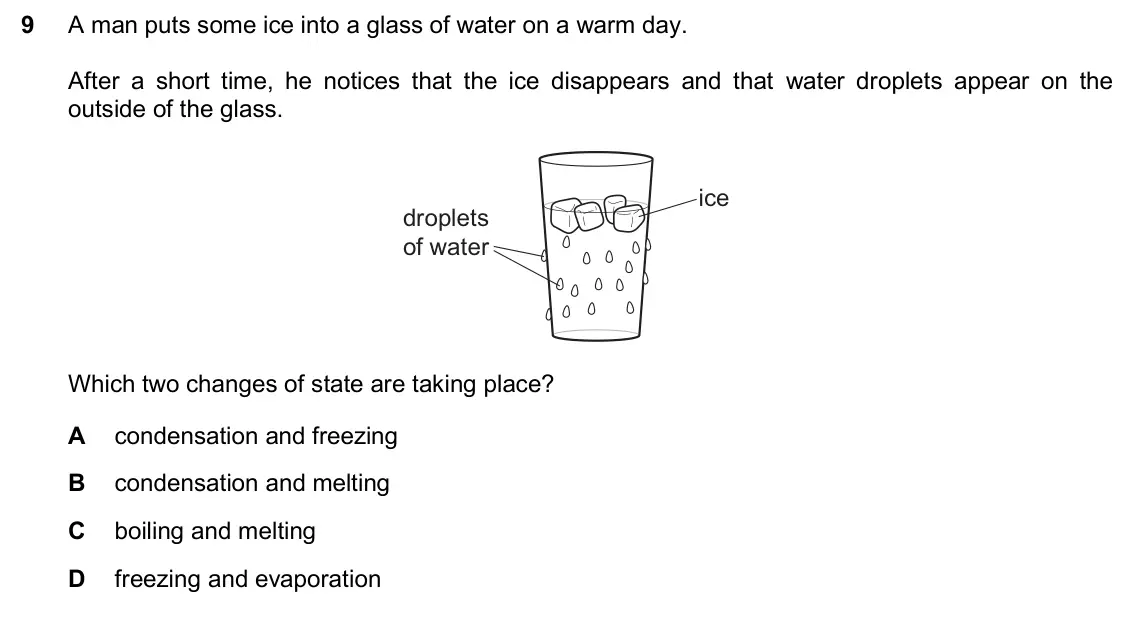
- June 2024, Paper 2, Q9 (1 mark): A man puts some ice into a glass of water on a warm day. After a short time, he notices that the ice disappears and that water droplets appear on the outside of
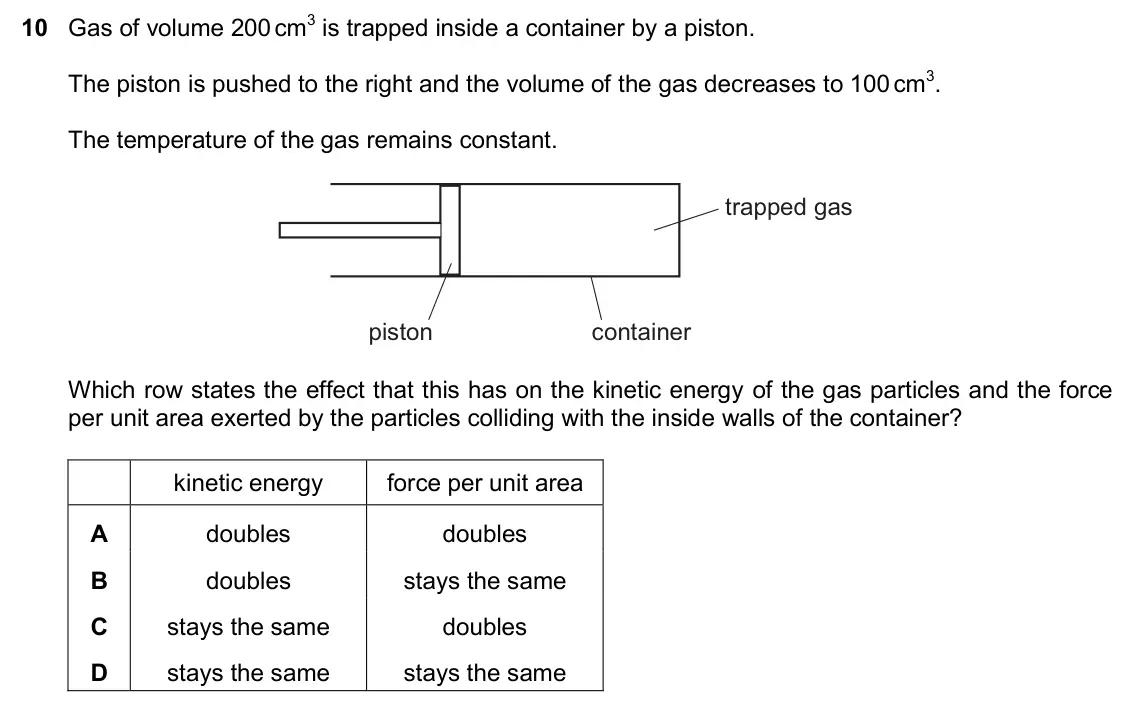
- June 2024, Paper 2, Q10 (1 mark): Gas of volume 200 cm3 is trapped inside a container by a piston. The piston is pushed to the right and the volume of the gas decreases to 100 cm3. The temperatu
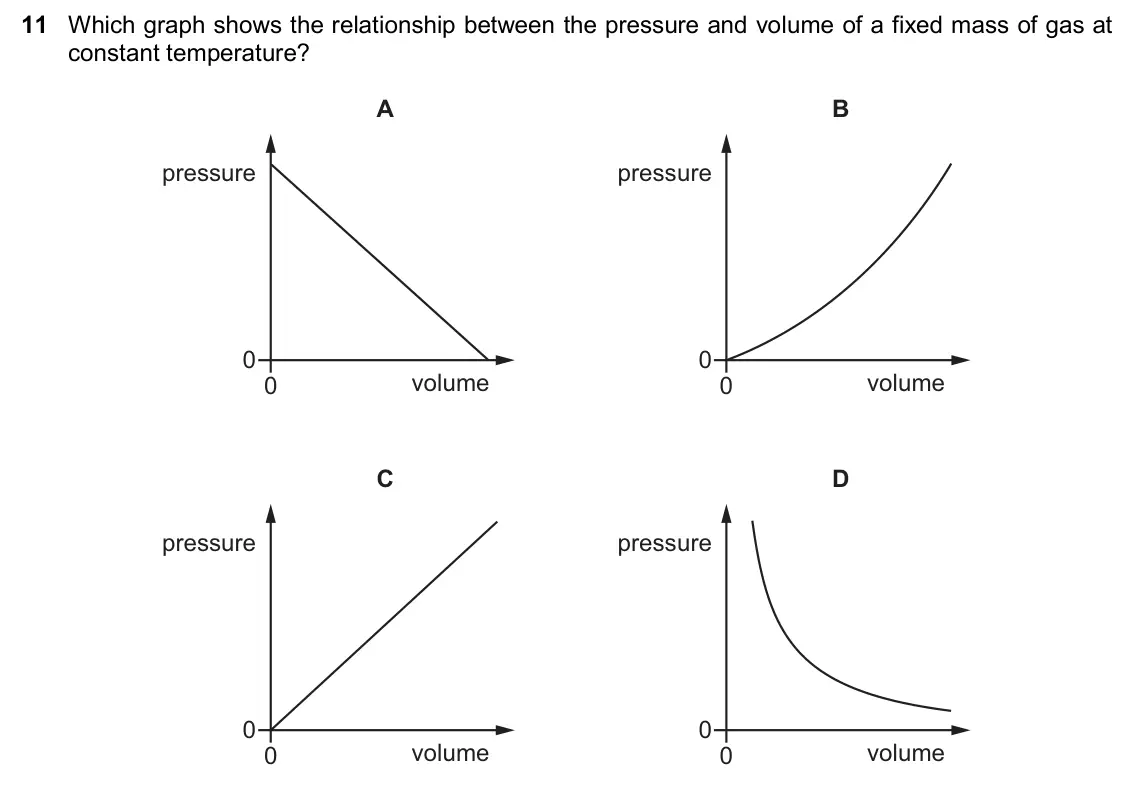
- June 2024, Paper 2, Q11 (1 mark): Which graph shows the relationship between the pressure and volume of a fixed mass of gas at constant temperature? A B pressure pressure 0 0 0 volume 0 volume C
- June 2024, Paper 3, Q5(a) (3 marks): Describe the arrangement, separation and motion of gas particles. [3]
- June 2024, Paper 3, Q5(b)(ii) (2 marks): When the piston moves into the container, the temperature of the gas does not change. Describe and explain any change in the pressure on the walls of the contai
- June 2024, Paper 4, Q3(a) (1 mark): State one way in which the motion of the particles in ice differs from the motion of the particles in water. [1]
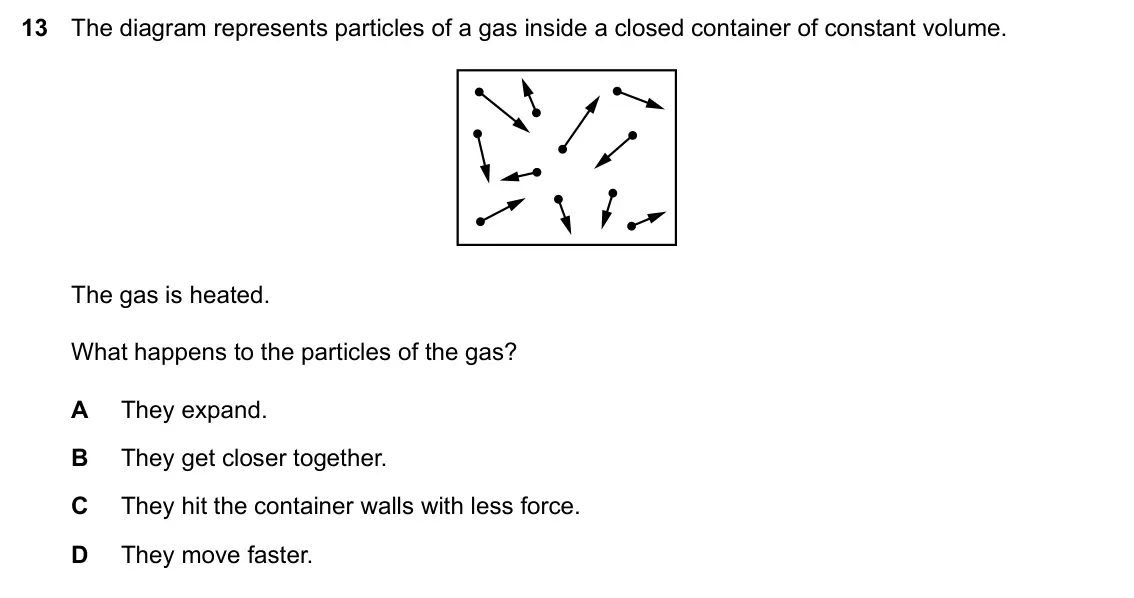
- Specimen, Paper 1, Q13 (1 mark): The diagram represents particles of a gas inside a closed container of constant volume. The gas is heated. What happens to the particles of the gas? A They expa
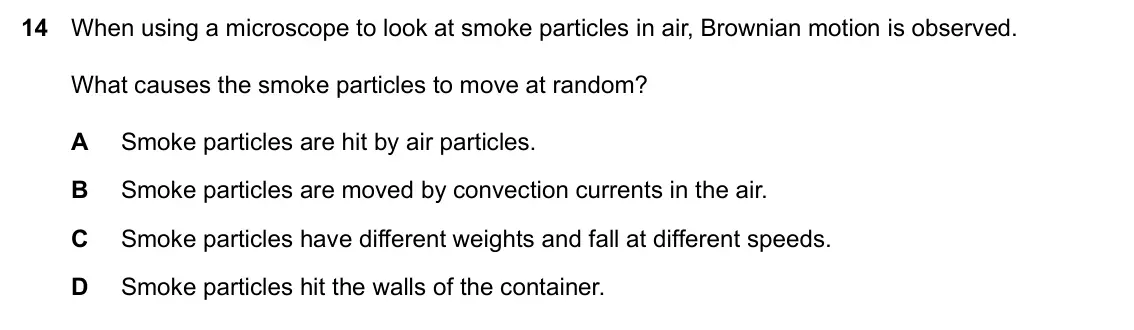
- Specimen, Paper 1, Q14 (1 mark): When using a microscope to look at smoke particles in air, Brownian motion is observed. What causes the smoke particles to move at random? A Smoke particles are
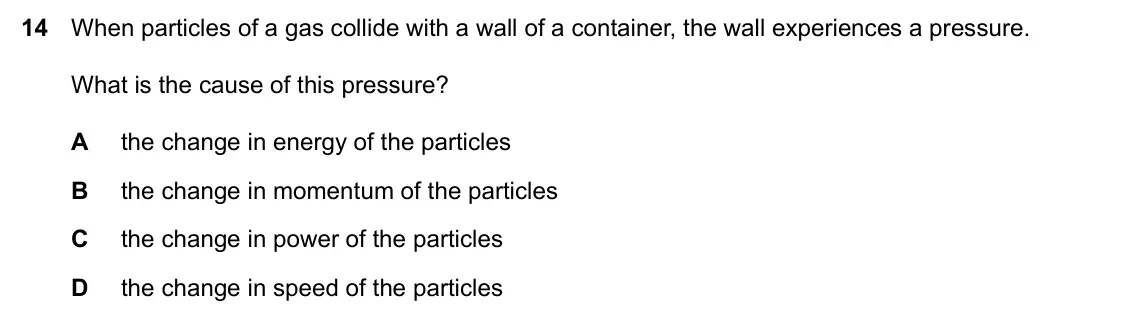
- Specimen, Paper 2, Q14 (1 mark): When particles of a gas collide with a wall of a container, the wall experiences a pressure. What is the cause of this pressure? A the change in energy of the p
- Specimen, Paper 3, Q5(a)(i) (1 mark): State what happens to the pressure of the air in the bottle. [1]
- Specimen, Paper 3, Q5(a)(ii) (4 marks): Explain why the pressure of the air in the bottle changes. Use ideas about gas particles in your answer. [4]
- Specimen, Paper 4, Q4(a) (3 marks): Using ideas about momentum, explain how the atoms of helium produce a force on the wall of the balloon. [3]
- Specimen, Paper 4, Q4(b)(i) (2 marks): Explain why the pressure in the balloon decreases as the balloon rises. You should refer to helium atoms in your answer. [2]
- Specimen, Paper 4, Q4(b)(ii) (2 marks): Calculate the pressure of the helium when its volume is 12 m3. pressure = [2] [Total: 7]
- Specimen, Paper 4, Q5(a) (2 marks): Compare the arrangement and motion of the particles in ice and in liquid water. arrangement motion [2]
Questions, mark schemes and examiner’s reports are © Cambridge University Press & Assessment, from their published past papers. Plumi isn’t affiliated with any exam board. Want whole papers? Every CAIE IGCSE Physics paper.
Rather write your answers by hand on iPad? Plumi marks them against the same mark schemes.