 plumi
Transistors, diodes and sensors: CAIE IGCSE Design and Technology questions
CAIE IGCSE Design and Technology past-paper questions on SC.8 Transistors, diodes and sensors, June 2024 and the 2020 and 2028 specimens, with mark schemes and examiner’s reports where available.
Getting your paper ready…
CAIE IGCSE Design and TechnologyTransistors, diodes and sensors268 questions
All papers
All years
More filters
Loading the full question list…
Q12(a)(iii)3 marksStretch
SC.6 Circuits and electrical calculationsSC.8 Transistors, diodes and sensors
3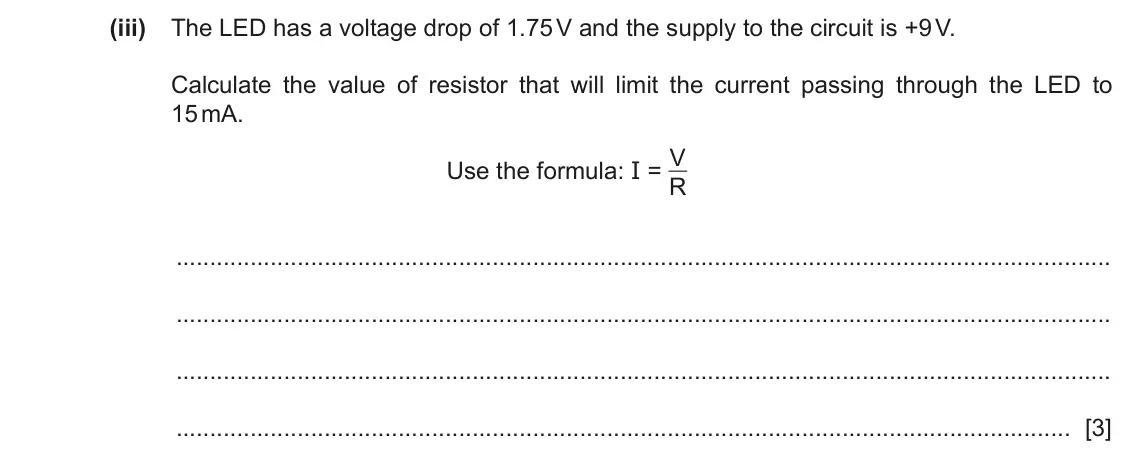
Q12(c)(ii)3 marksStretch
SC.7 Switches and relaysSC.8 Transistors, diodes and sensors
4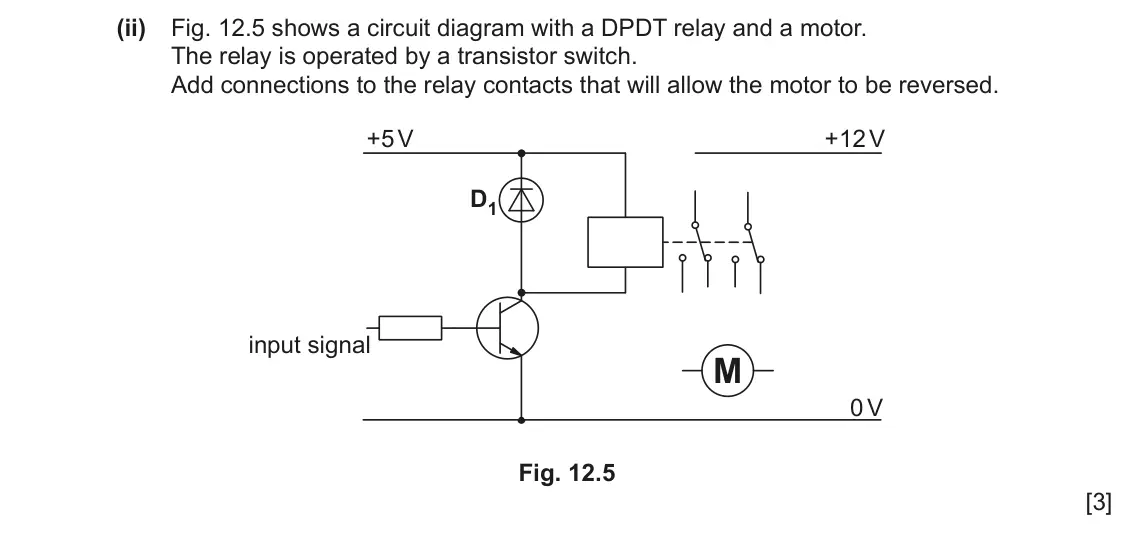
Q12(g)(i)3 marksStretch
SC.6 Circuits and electrical calculationsSC.8 Transistors, diodes and sensors
10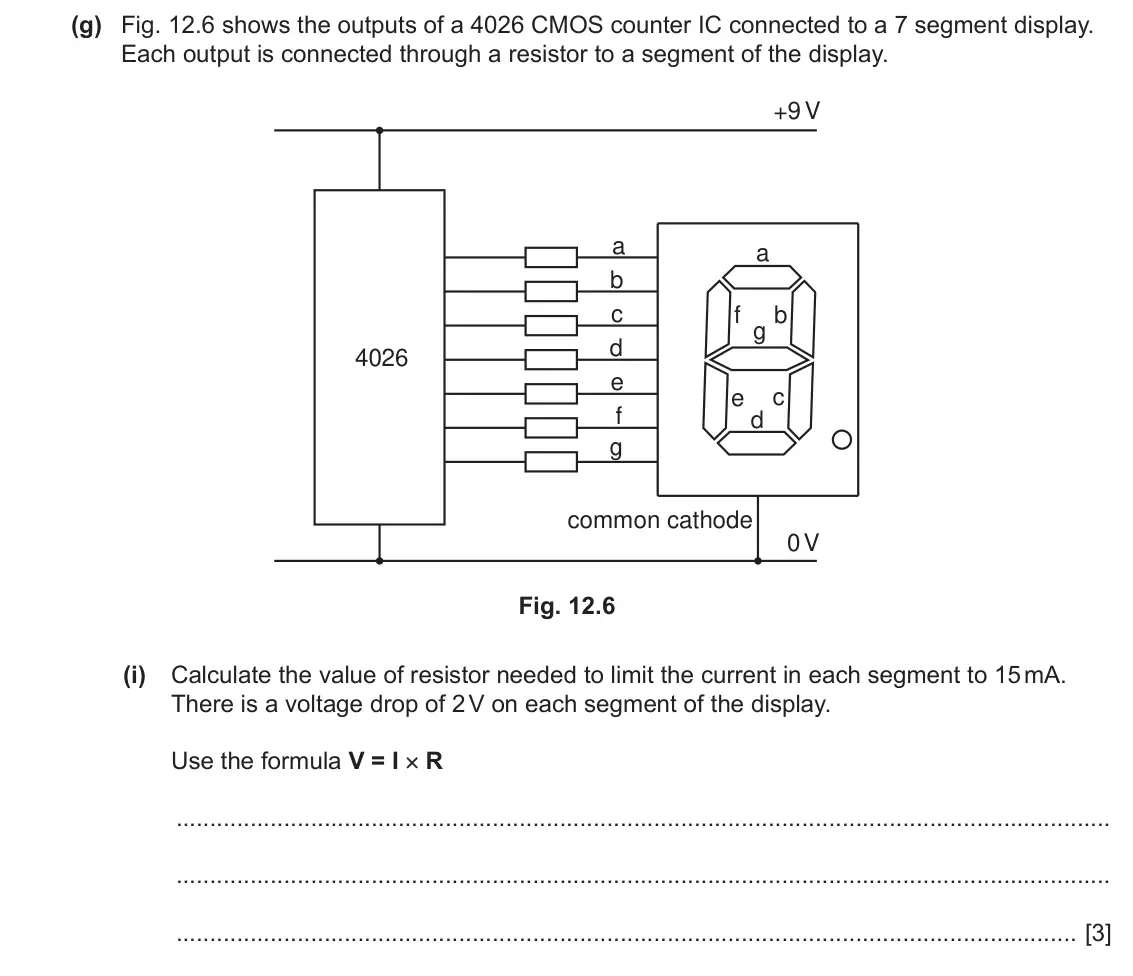

All 10 questions on Transistors, diodes and sensors, as a list
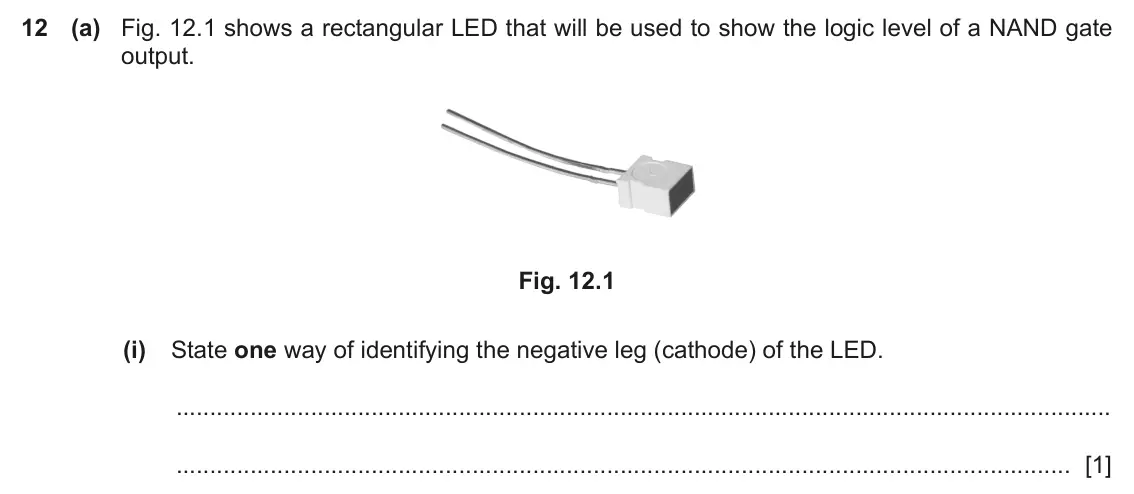
- June 2024, Paper 4, Q12(a)(i) (1 mark): State one way of identifying the negative leg (cathode) of the LED. [1]
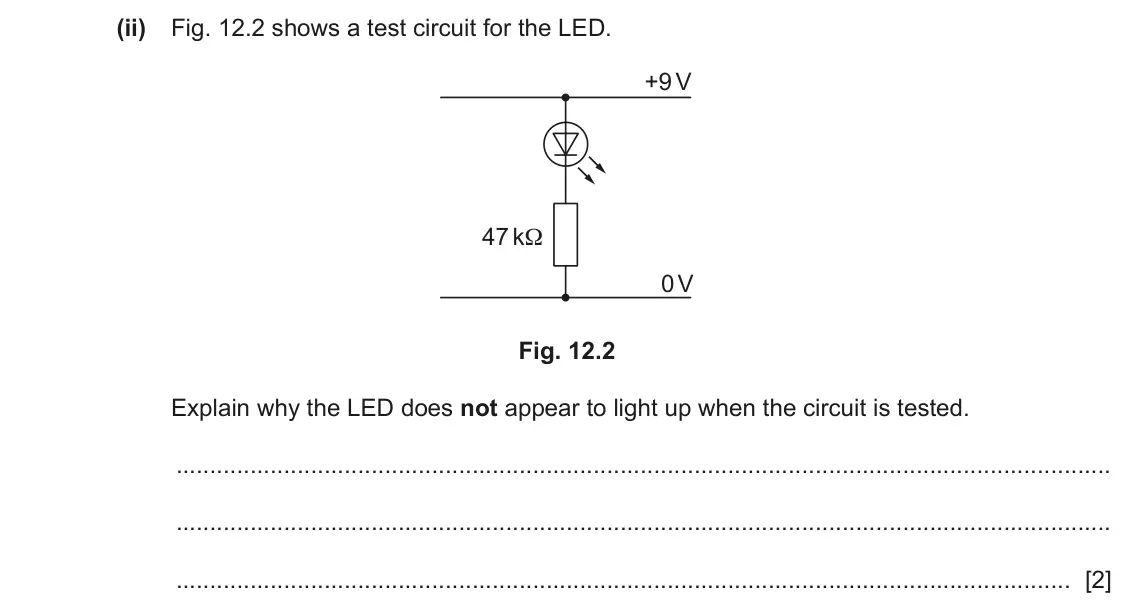
- June 2024, Paper 4, Q12(a)(ii) (2 marks): Fig. 12.2 shows a test circuit for the LED. +9 V 47 kΩ 0 V Fig. 12.2 Explain why the LED does not appear to light up when the circuit is tested. [2]
- June 2024, Paper 4, Q12(a)(iii) (3 marks): The LED has a voltage drop of 1.75 V and the supply to the circuit is +9 V. Calculate the value of resistor that will limit the current passing through the LED
- June 2024, Paper 4, Q12(c)(ii) (3 marks): Fig. 12.5 shows a circuit diagram with a DPDT relay and a motor. The relay is operated by a transistor switch. Add connections to the relay contacts that will a
- June 2024, Paper 4, Q12(c)(iii) (2 marks): Explain why diode D1 is included in the circuit. [2]
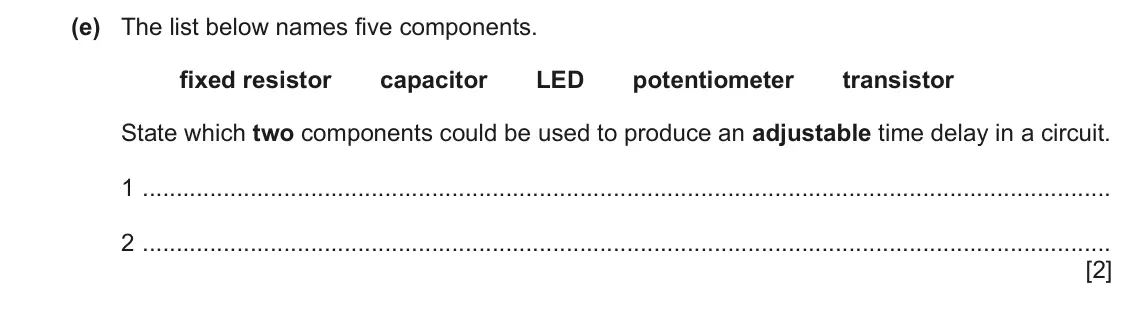
- June 2024, Paper 4, Q12(e) (2 marks): The list below names five components. fixed resistor capacitor LED potentiometer transistor State which two components could be used to produce an adjustable ti
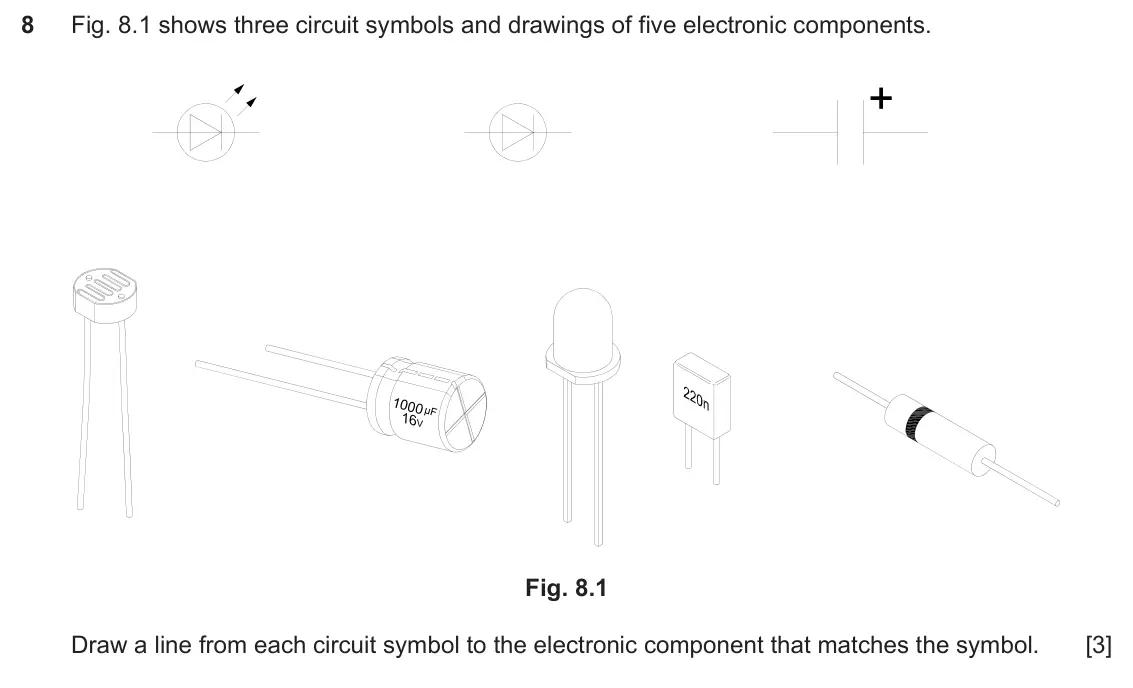
- 2020 specimen, Paper 4, Q8 (3 marks): Fig. 8.1 shows three circuit symbols and drawings of five electronic components. + 1000µF Fig. 8.1 Draw a line from each circuit symbol to the electronic compon
- 2020 specimen, Paper 4, Q12(b) (2 marks): LEDs of different colours are commonly used in electronic circuits. State two other ways in which LEDs can differ. 1 2 [2]
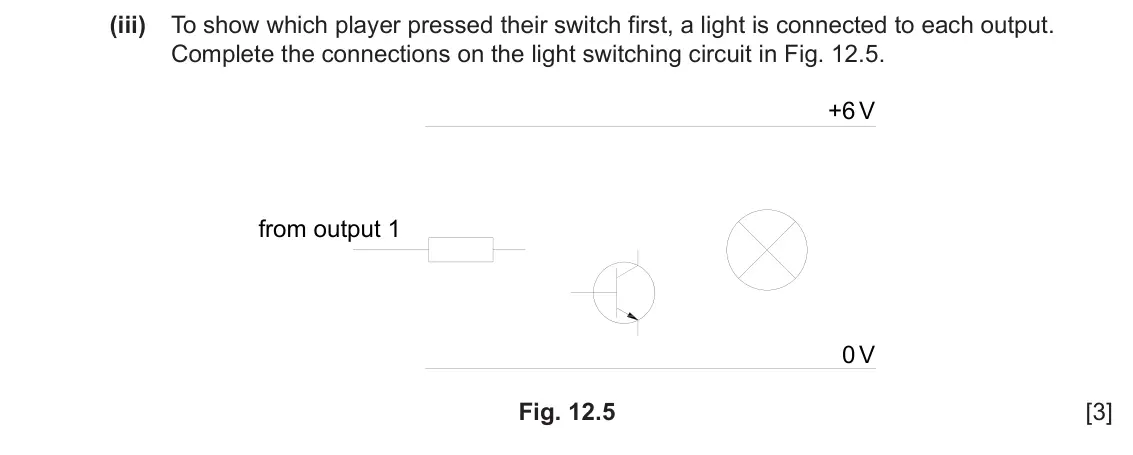
- 2020 specimen, Paper 4, Q12(f)(iii) (3 marks): To show which player pressed their switch first, a light is connected to each output. Complete the connections on the light switching circuit in Fig. 12.5. +6 V
- 2020 specimen, Paper 4, Q12(g)(i) (3 marks): Calculate the value of resistor needed to limit the current in each segment to 15 mA. There is a voltage drop of 2 V on each segment of the display. Use the for
Questions, mark schemes and examiner’s reports are © Cambridge University Press & Assessment, from their published past papers. Plumi isn’t affiliated with any exam board. Want whole papers? CAIE IGCSE Design and Technology past papers.
The Plumi iPad app also offers exam-style questions with AI feedback on your handwritten working.