Skip to content
Try on iPad

Style

Get started

Structures and loads: CAIE IGCSE Design and Technology questions

CAIE IGCSE Design and Technology past-paper questions on SC.1 Structures and loads, June 2024 and the 2020 and 2028 specimens, with mark schemes and examiner’s reports where available.

Getting your paper ready…

CAIE IGCSE Design and TechnologyStructures and loads268 questions

Paper
All papers
Exam
All years
Difficulty
More filters
Exam boards
Cambridge IGCSE

Loading the full question list…

268 questions

More options
  1. Q1(a)June 2024 · Paper 41 markWarm-up

    SC.1 Structures and loads

    1
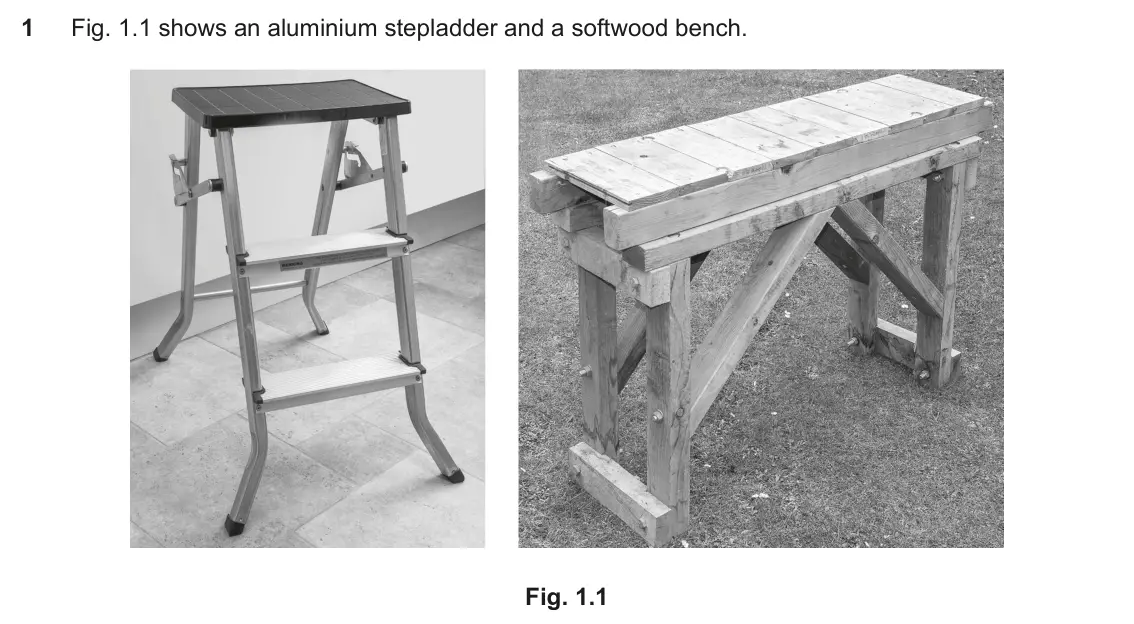
    Setup for original question 1(a)

    Loading the question setup…

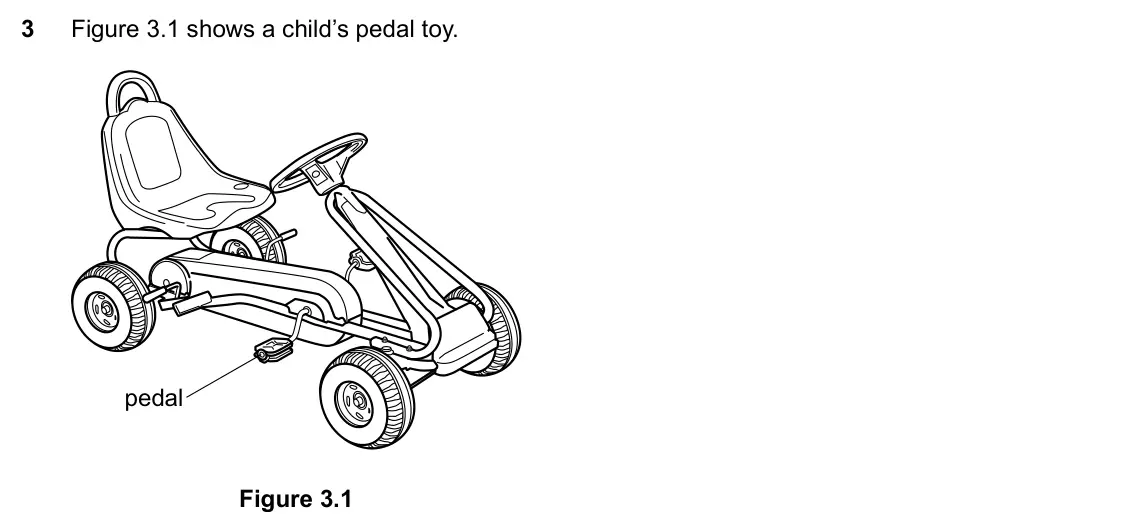
    Original question 1(a): Name the type of structure used in both items. [1]

    Loading the question…

    The whole paper ↗
  2. Q1(b)June 2024 · Paper 41 markWarm-up

    SC.1 Structures and loads

    2
    Original question 1(b): State the method that is used to make the structures rigid. [1]

    Loading the question…

    The whole paper ↗
  3. Q2(a)June 2024 · Paper 44 marksCore

    SC.1 Structures and loads

    3
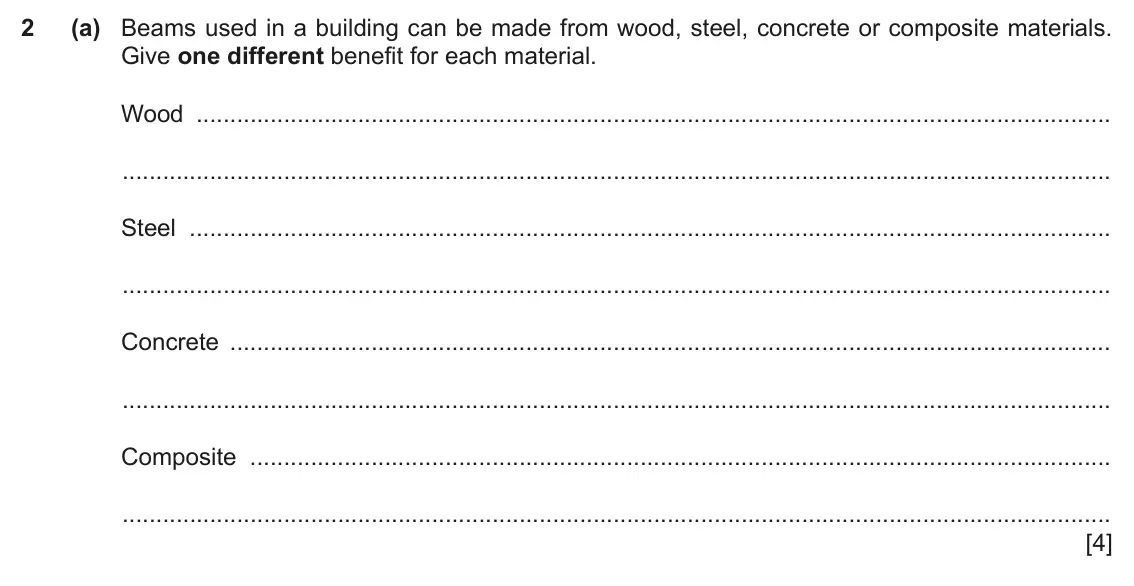
    Original question 2(a): Beams used in a building can be made from wood, steel, concrete or composite materials. Give one different benefit for each material. Wood Steel Concrete Compos

    Loading the question…

    The whole paper ↗
  4. Q2(b)June 2024 · Paper 42 marksCore

    SC.1 Structures and loads

    4
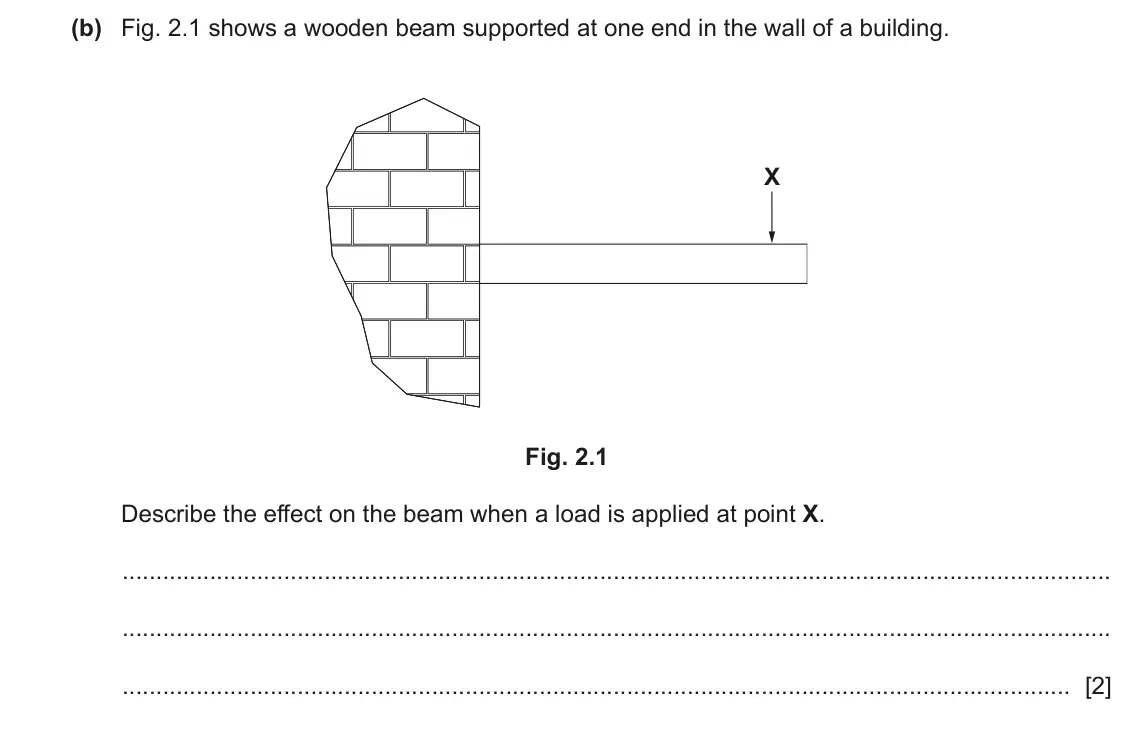
    Original question 2(b): Fig. 2.1 shows a wooden beam supported at one end in the wall of a building. X Fig. 2.1 Describe the effect on the beam when a load is applied at point X. [2]

    Loading the question…

    The whole paper ↗
  5. Q10(a)(i)June 2024 · Paper 43 marksCore

    SC.1 Structures and loads

    5
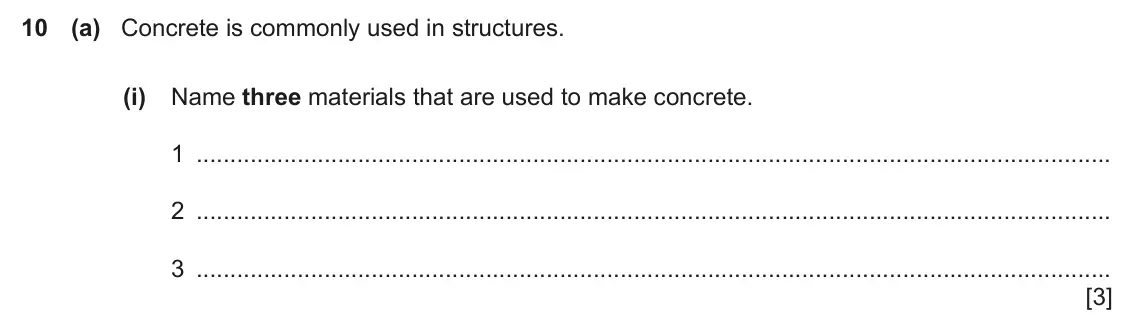
    Original question 10(a)(i): Name three materials that are used to make concrete. 1 2 3 [3]

    Loading the question…

    The whole paper ↗
  6. Q10(a)(ii)June 2024 · Paper 41 markWarm-up

    SC.1 Structures and loads

    6
    Original question 10(a)(ii): State the force that concrete will naturally have most resistance to. [1]

    Loading the question…

    The whole paper ↗
  7. Q10(a)(iii)June 2024 · Paper 42 marksCore

    SC.1 Structures and loads

    7
    Original question 10(a)(iii): Use sketches and notes to show how resistance to other forces can be increased when using concrete. [2]

    Loading the question…

    The whole paper ↗
  8. Q10(b)(iii)June 2024 · Paper 42 marksCore

    RM.2 Woods and manufactured boardsSC.1 Structures and loads

    8
    Original question 10(b)(iii): Give two examples of natural defects that could be present in a wooden beam. 1 2 [2]

    Loading the question…

    The whole paper ↗
  9. Q10(b)(iv)June 2024 · Paper 43 marksStretch

    SC.1 Structures and loads

    9
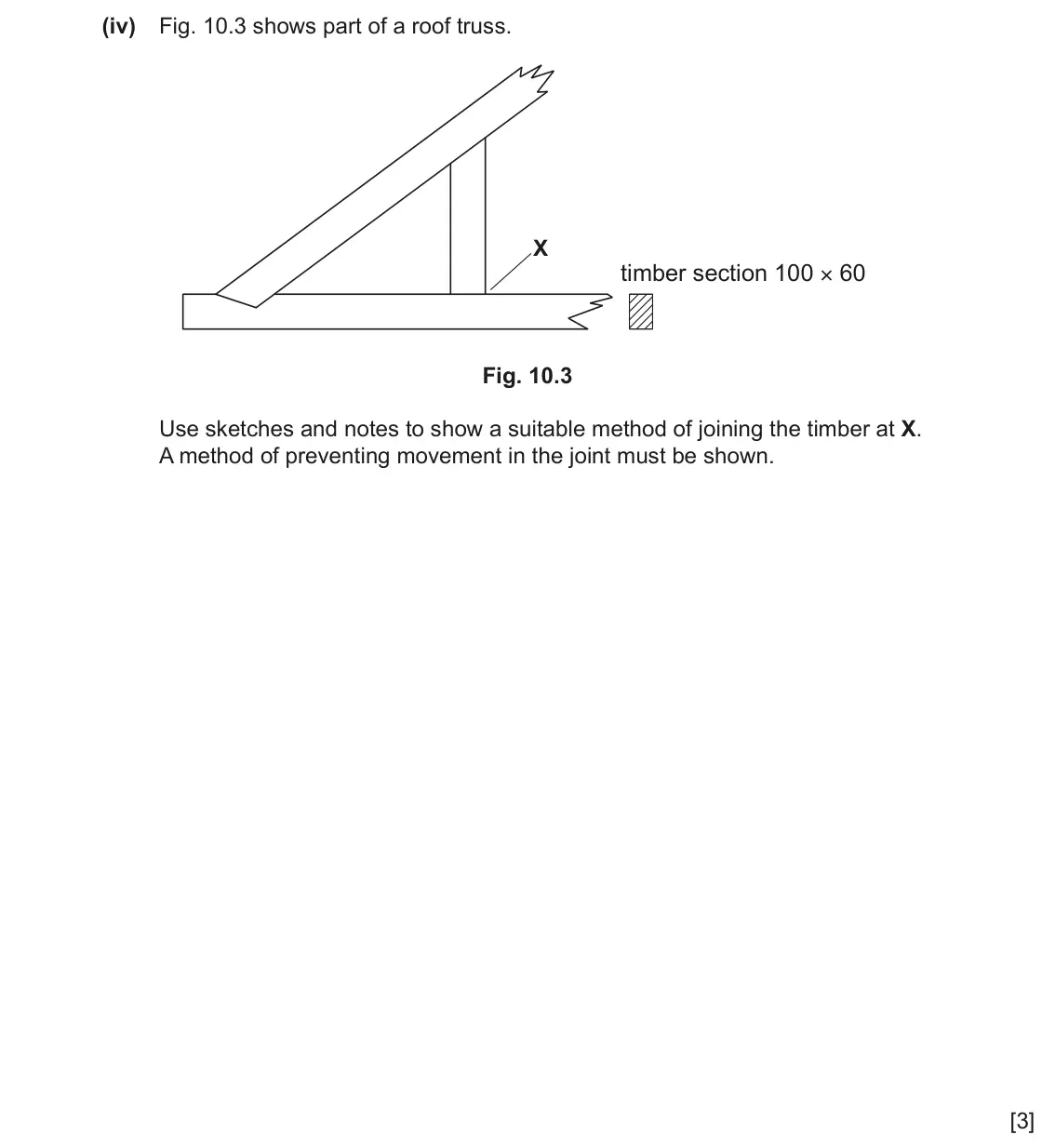
    Original question 10(b)(iv): Fig. 10.3 shows part of a roof truss. X timber section 100 × 60 Fig. 10.3 Use sketches and notes to show a suitable method of joining the timber at X. A method

    Loading the question…

    The whole paper ↗
  10. Q10(d)June 2024 · Paper 43 marksCore

    SC.1 Structures and loads

    10
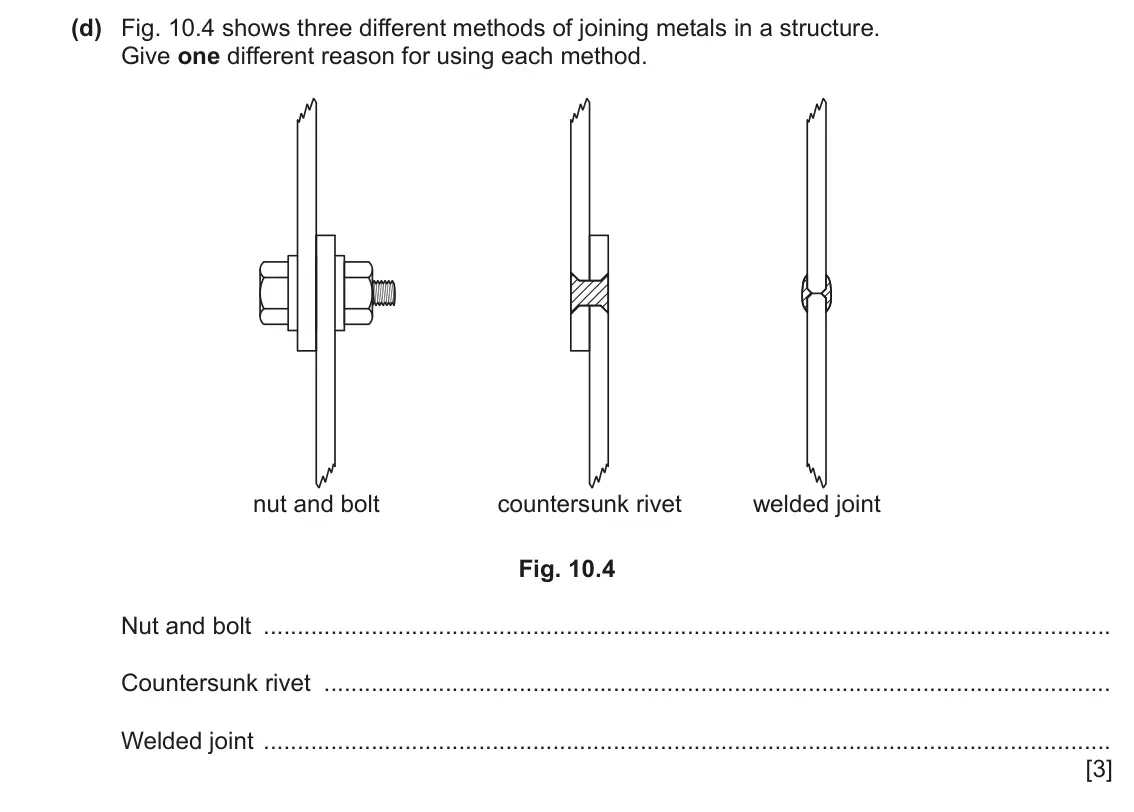
    Original question 10(d): Fig. 10.4 shows three different methods of joining metals in a structure. Give one different reason for using each method. nut and bolt countersunk rivet welded

    Loading the question…

    The whole paper ↗
  11. 11
    Original question 11(e)(iii): State the rotational force that is applied to the body of the bolt when a spanner is used to tighten it. [1]

    Loading the question…

    The whole paper ↗
  12. Q3(a)(i)2028 specimen · Paper 1 (from 2028)2 marksCore

    SC.1 Structures and loads

    12
    Setup for original question 3(a)(i)

    Loading the question setup…

    Original question 3(a)(i): a shell structure [2]

    Loading the question…

    The whole paper ↗
  13. Q3(a)(ii)2028 specimen · Paper 1 (from 2028)2 marksCore

    SC.1 Structures and loads

    13
    Original question 3(a)(ii): a compressive force [2]

    Loading the question…

    The whole paper ↗
  14. Q4(a)2020 specimen · Paper 41 markWarm-up

    SC.1 Structures and loads

    14
    Setup for original question 4(a)

    Loading the question setup…

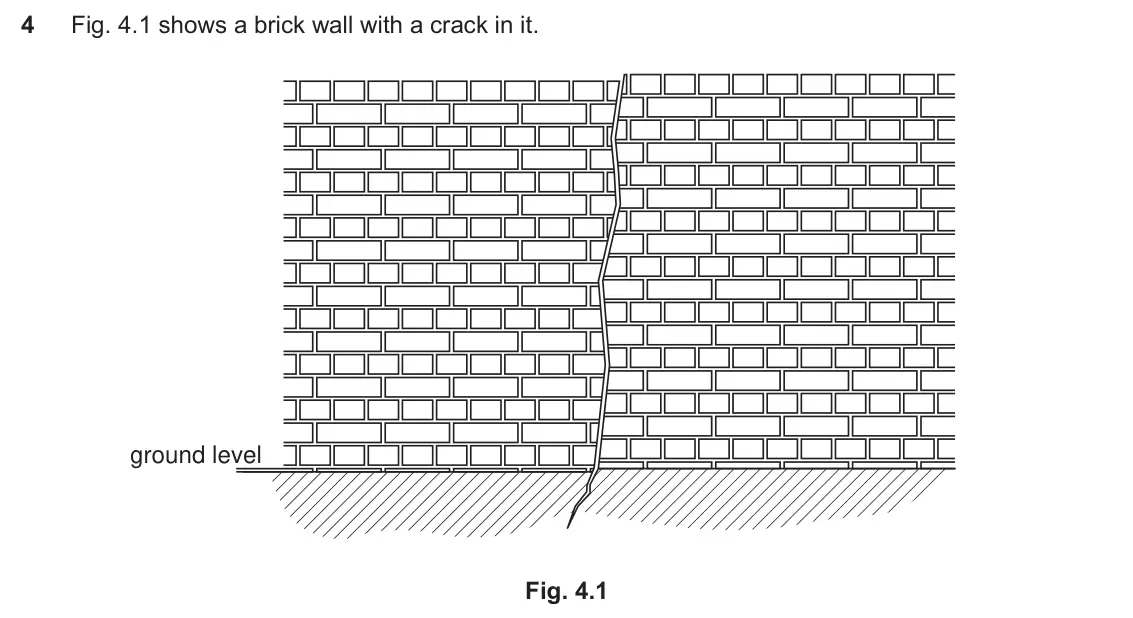
    Original question 4(a): State the force that has caused the crack. [1]

    Loading the question…

    The whole paper ↗
  15. Q4(b)2020 specimen · Paper 41 markWarm-up

    SC.1 Structures and loads

    15
    Original question 4(b): Give one possible reason why the crack has occurred. [1]

    Loading the question…

    The whole paper ↗
  16. Q5(a)2020 specimen · Paper 41 markWarm-up

    SC.1 Structures and loads

    16
    Setup for original question 5(a)

    Loading the question setup…

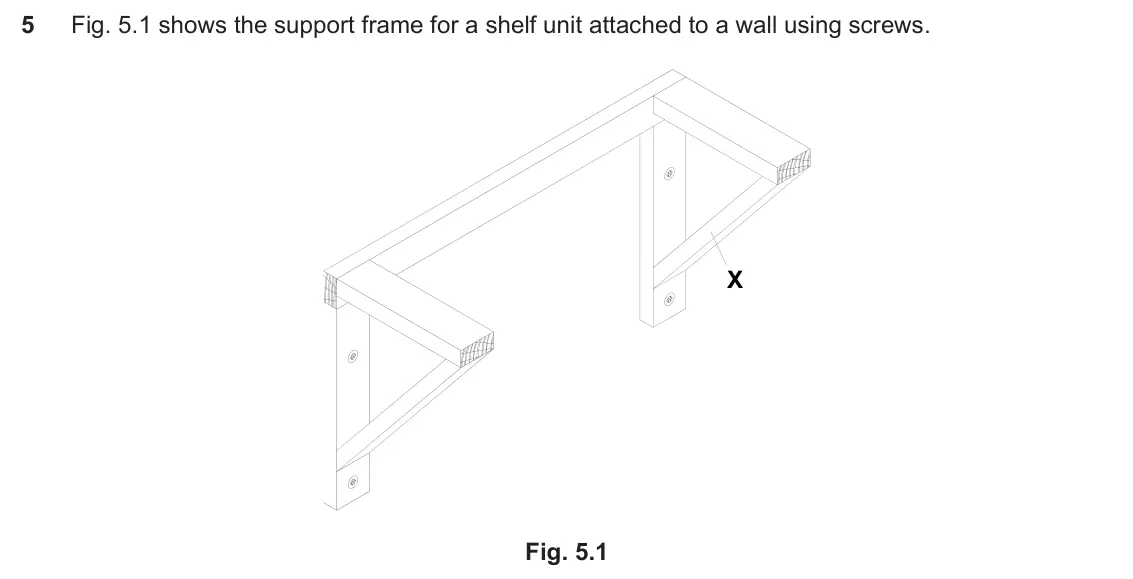
    Original question 5(a): State the force that will act on each screw as it is being inserted with a screwdriver. [1]

    Loading the question…

    The whole paper ↗
  17. Q5(b)2020 specimen · Paper 41 markWarm-up

    SC.1 Structures and loads

    17
    Original question 5(b): State the force that will act on part X when the shelf unit is loaded. [1]

    Loading the question…

    The whole paper ↗
  18. Q5(c)2020 specimen · Paper 42 marksCore

    PD.7 Making and health and safetySC.1 Structures and loads

    18
    Original question 5(c): Explain how the designer is responsible for the safety of the support frame. [2]

    Loading the question…

    The whole paper ↗
  19. Q6(a)2020 specimen · Paper 42 marksCore

    SC.1 Structures and loads

    19
    Setup for original question 6(a)

    Loading the question setup…

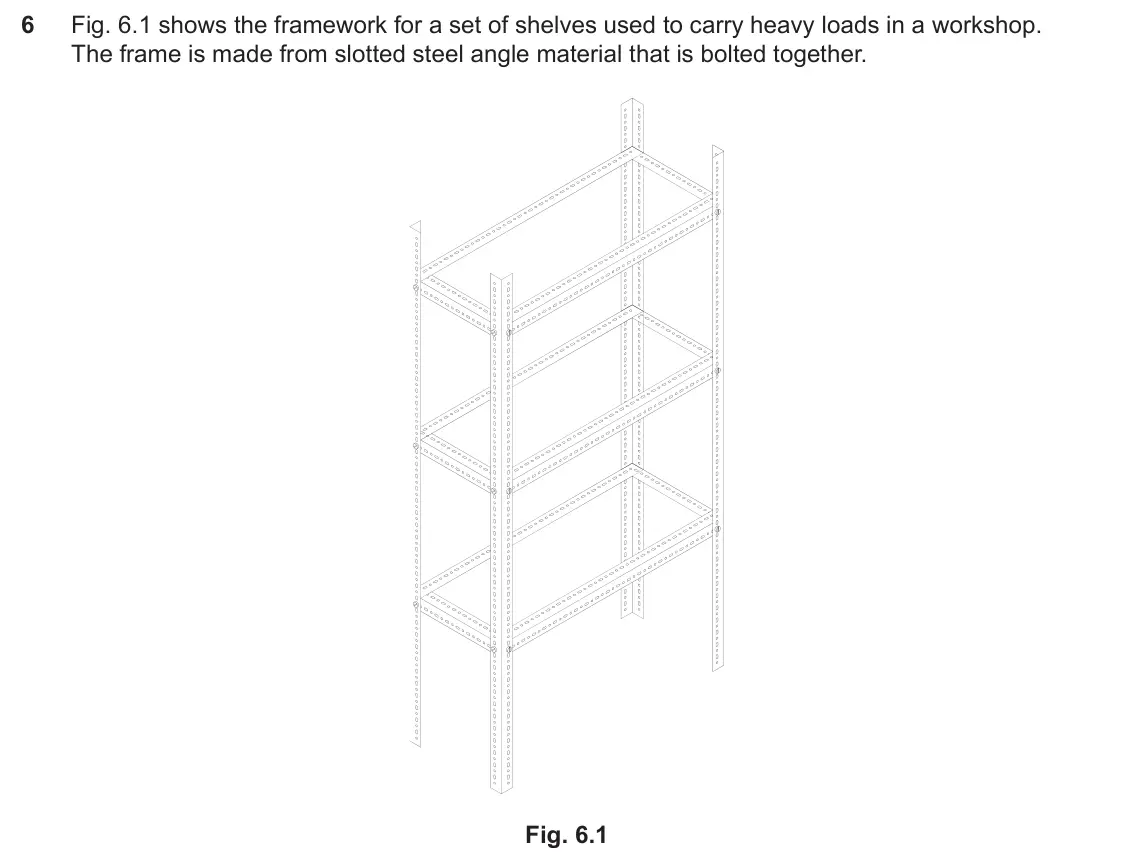
    Original question 6(a): Draw on Fig. 6.1 to show how triangulation can be used to make the framework more rigid when the shelves are loaded. [2]

    Loading the question…

    The whole paper ↗
  20. Q6(b)2020 specimen · Paper 42 marksCore

    SC.1 Structures and loads

    20
    Original question 6(b): Describe what is meant by the static load of the set of shelves. [2]

    Loading the question…

    The whole paper ↗
All 30 questions on Structures and loads, as a list
  1. June 2024, Paper 4, Q1(a) (1 mark): Name the type of structure used in both items. [1]
  2. June 2024, Paper 4, Q1(b) (1 mark): State the method that is used to make the structures rigid. [1]
  3. June 2024, Paper 4, Q2(a) (4 marks): Beams used in a building can be made from wood, steel, concrete or composite materials. Give one different benefit for each material. Wood Steel Concrete Compos
  4. June 2024, Paper 4, Q2(b) (2 marks): Fig. 2.1 shows a wooden beam supported at one end in the wall of a building. X Fig. 2.1 Describe the effect on the beam when a load is applied at point X. [2]
  5. June 2024, Paper 4, Q10(a)(i) (3 marks): Name three materials that are used to make concrete. 1 2 3 [3]
  6. June 2024, Paper 4, Q10(a)(ii) (1 mark): State the force that concrete will naturally have most resistance to. [1]
  7. June 2024, Paper 4, Q10(a)(iii) (2 marks): Use sketches and notes to show how resistance to other forces can be increased when using concrete. [2]
  8. June 2024, Paper 4, Q10(b)(iii) (2 marks): Give two examples of natural defects that could be present in a wooden beam. 1 2 [2]
  9. June 2024, Paper 4, Q10(b)(iv) (3 marks): Fig. 10.3 shows part of a roof truss. X timber section 100 × 60 Fig. 10.3 Use sketches and notes to show a suitable method of joining the timber at X. A method
  10. June 2024, Paper 4, Q10(d) (3 marks): Fig. 10.4 shows three different methods of joining metals in a structure. Give one different reason for using each method. nut and bolt countersunk rivet welded
  11. June 2024, Paper 4, Q11(e)(iii) (1 mark): State the rotational force that is applied to the body of the bolt when a spanner is used to tighten it. [1]
  12. 2028 specimen, Paper 1 (from 2028), Q3(a)(i) (2 marks): a shell structure [2]
  13. 2028 specimen, Paper 1 (from 2028), Q3(a)(ii) (2 marks): a compressive force [2]
  14. 2020 specimen, Paper 4, Q4(a) (1 mark): State the force that has caused the crack. [1]
  15. 2020 specimen, Paper 4, Q4(b) (1 mark): Give one possible reason why the crack has occurred. [1]
  16. 2020 specimen, Paper 4, Q5(a) (1 mark): State the force that will act on each screw as it is being inserted with a screwdriver. [1]
  17. 2020 specimen, Paper 4, Q5(b) (1 mark): State the force that will act on part X when the shelf unit is loaded. [1]
  18. 2020 specimen, Paper 4, Q5(c) (2 marks): Explain how the designer is responsible for the safety of the support frame. [2]
  19. 2020 specimen, Paper 4, Q6(a) (2 marks): Draw on Fig. 6.1 to show how triangulation can be used to make the framework more rigid when the shelves are loaded. [2]
  20. 2020 specimen, Paper 4, Q6(b) (2 marks): Describe what is meant by the static load of the set of shelves. [2]
  21. 2020 specimen, Paper 4, Q10(a) (3 marks): Fig. 10.1 shows two steel tubes that need to be joined end to end to extend the length of the tube. End to end welding cannot be used. Draw on Fig. 10.1 to show
  22. 2020 specimen, Paper 4, Q10(b)(i) (2 marks): Add labels to Fig. 10.2 to identify a strut and a tie. [2]
  23. 2020 specimen, Paper 4, Q10(b)(ii) (1 mark): Name the force resisted by a strut. [1]
  24. 2020 specimen, Paper 4, Q10(b)(iii) (1 mark): Name the force resisted by a tie. [1]
  25. 2020 specimen, Paper 4, Q10(b)(iv) (1 mark): The wings of the biplane are made from ribs and spars as shown in Fig. 10.3. spar rib Fig. 10.3 State the name for this type of structure. [1]
  26. 2020 specimen, Paper 4, Q10(c)(i) (3 marks): Draw a gusset plate on the enlarged view of joint X shown in Fig. 10.4. Show how the gusset plate will be fixed in position. [3]
  27. 2020 specimen, Paper 4, Q10(c)(ii) (2 marks): Describe what is meant by equilibrium in a structure. [2]
  28. 2020 specimen, Paper 4, Q10(d)(i) (2 marks): Explain why floor beams should be placed as shown for beam Y. [2]
  29. 2020 specimen, Paper 4, Q10(d)(iii) (2 marks): Describe two defects in a length of wood that should be avoided when selecting the wood for use in a structure. 1 2 [2]
  30. 2020 specimen, Paper 4, Q10(e)(i) (2 marks): Give two manufacturing advantages of using aluminium rather than wood for the construction of a ladder. 1 2 [2]

Questions, mark schemes and examiner’s reports are © Cambridge University Press & Assessment, from their published past papers. Plumi isn’t affiliated with any exam board. Want whole papers? CAIE IGCSE Design and Technology past papers.

The Plumi iPad app also offers exam-style questions with AI feedback on your handwritten working.