 plumi
Kinematics of uniform circular motion: CAIE A‑Level Physics questions
CAIE A-Level Physics past-paper questions on 12.1 Kinematics of uniform circular motion, 2017 to 2025 and the specimen papers, with mark schemes and examiner’s reports where available.
Past paper difficulty
Paper
All papers
Exam
All years
Calculations
Loading the full question list…
Q1(a)
The whole paper ↗1
Q1(b)(i)
The whole paper ↗2
Q1(c)(i)
The whole paper ↗3
Q1(c)(ii)
The whole paper ↗4
Q1(c)(iii)
The whole paper ↗5
Q1(a)(i)
The whole paper ↗6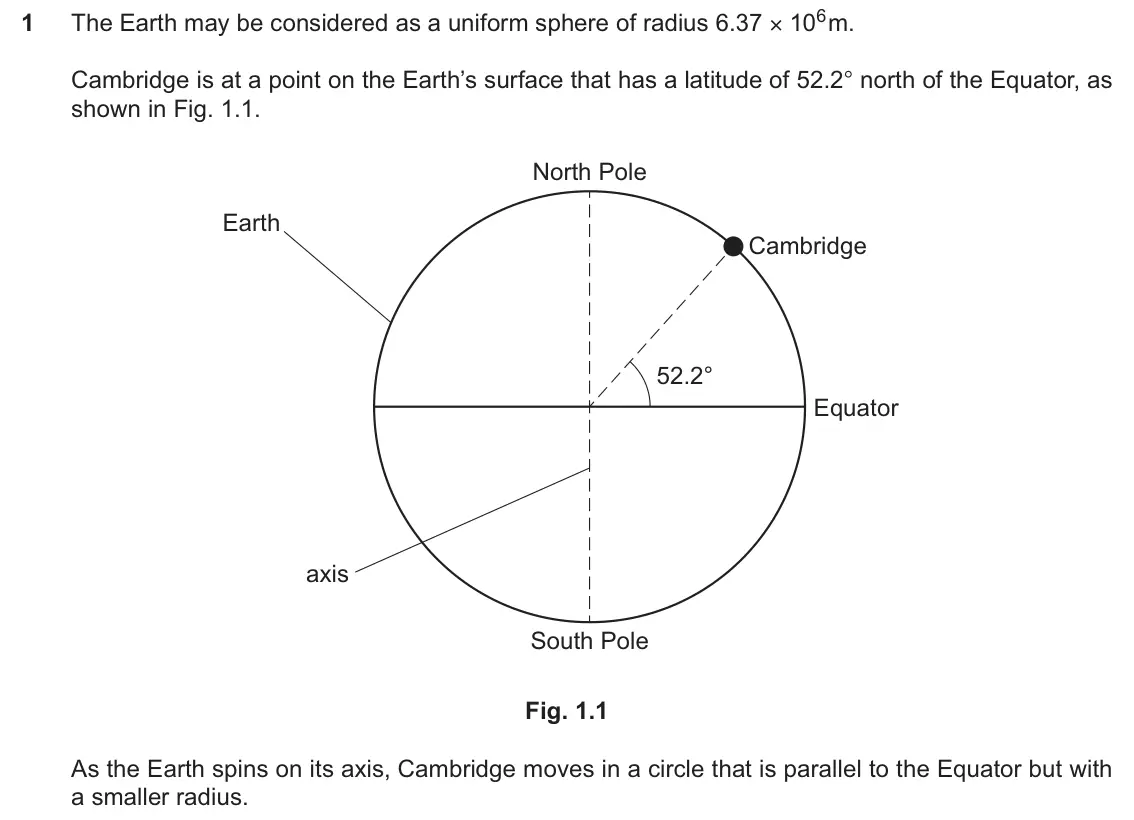

Q1(a)(ii)
The whole paper ↗7
Q1(a)
The whole paper ↗8
Q1(b)(i)
The whole paper ↗9
Q1(c)(i)
The whole paper ↗10
Q1(c)(ii)
The whole paper ↗11
Q1(c)(iii)
The whole paper ↗12
Q1(d)(ii)
The whole paper ↗13
Q2(c)(ii)
The whole paper ↗14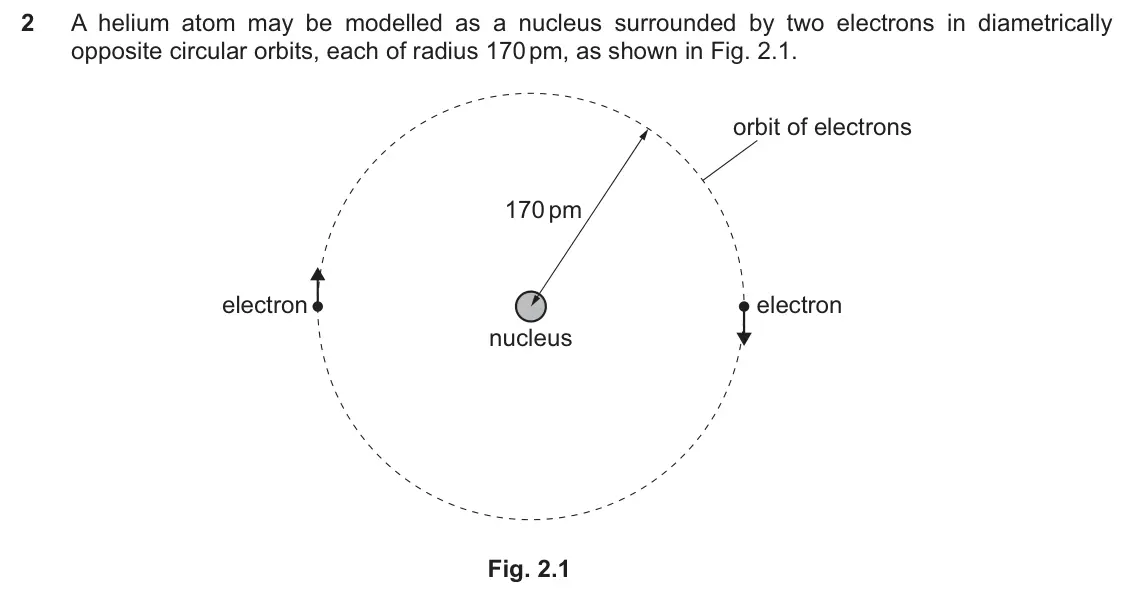

Q1(a)
The whole paper ↗15
Q1(b)(i)
The whole paper ↗16
Q1(b)(ii)
The whole paper ↗17
Q1(b)(iii)
The whole paper ↗18
Q1(b)(iv)
The whole paper ↗19
Q1(c)
The whole paper ↗20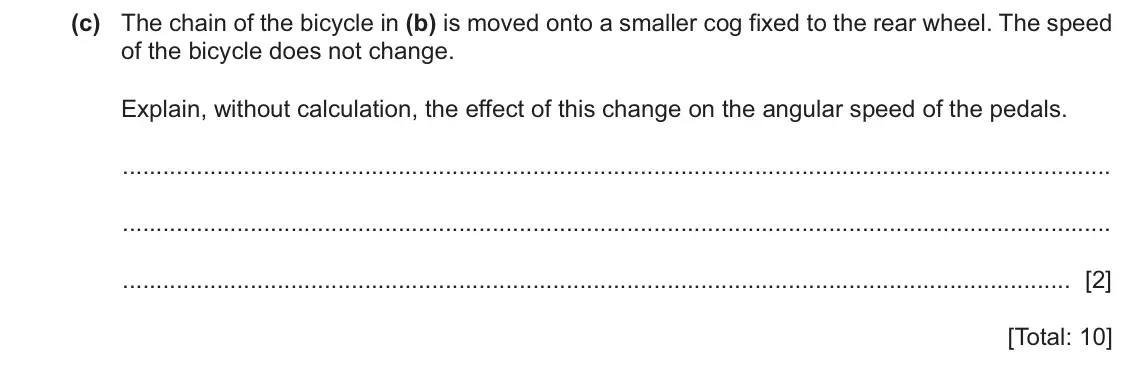
All 46 questions on Kinematics of uniform circular motion, as a list
- November 2025, Paper 4, Q1(a) (2 marks): In terms of velocity and acceleration, describe uniform circular motion of an object. [2]
- November 2025, Paper 4, Q1(b)(i) (1 mark): State an expression, in terms of R and ω, for the speed v of the ball. v = [1]
- November 2025, Paper 4, Q1(c)(i) (1 mark): Determine an expression, in terms of R and θ, for the displacement x of the shadow from P. x = [1]
- November 2025, Paper 4, Q1(c)(ii) (1 mark): The value of θ is zero at time t = 0. State an expression for θ in terms of ω and t. θ = [1]
- November 2025, Paper 4, Q1(c)(iii) (1 mark): Use your answers in (c)(i) and (c)(ii) to show that x is given by x = R sin ω t. [1]
- November 2025 (variant 2), Paper 4, Q1(a)(i) (1 mark): Show that the radius of the circle around which Cambridge moves is 3.90 × 10⁶ m. [1]
- November 2025 (variant 2), Paper 4, Q1(a)(ii) (3 marks): Calculate the speed at which Cambridge moves around the circle. speed = m s–1 [3]
- November 2025 (variant 3), Paper 4, Q1(a) (2 marks): In terms of velocity and acceleration, describe uniform circular motion of an object. [2]
- November 2025 (variant 3), Paper 4, Q1(b)(i) (1 mark): State an expression, in terms of R and ω, for the speed v of the ball. v = [1]
- November 2025 (variant 3), Paper 4, Q1(c)(i) (1 mark): Determine an expression, in terms of R and θ, for the displacement x of the shadow from P. x = [1]
- November 2025 (variant 3), Paper 4, Q1(c)(ii) (1 mark): The value of θ is zero at time t = 0. State an expression for θ in terms of ω and t. θ = [1]
- November 2025 (variant 3), Paper 4, Q1(c)(iii) (1 mark): Use your answers in (c)(i) and (c)(ii) to show that x is given by x = R sin ω t. [1]
- November 2025 (variant 3), Paper 4, Q1(d)(ii) (2 marks): the period period = s [2]
- June 2025, Paper 4, Q2(c)(ii) (2 marks): Calculate the period of the orbit of the electrons. period = s [2]
- June 2025 (variant 2), Paper 4, Q1(a) (1 mark): Define the radian. [1]
- June 2025 (variant 2), Paper 4, Q1(b)(i) (2 marks): Calculate the angular speed of the rear wheel. angular speed = rad s–1 [2]
- June 2025 (variant 2), Paper 4, Q1(b)(ii) (2 marks): Calculate the period of rotation of the small cog. period = s [2]
- June 2025 (variant 2), Paper 4, Q1(b)(iii) (1 mark): Show that the distance moved by point X on the chain during one full rotation of the small cog is 0.24 m. [1]
- June 2025 (variant 2), Paper 4, Q1(b)(iv) (2 marks): Use the information in (b)(iii) to determine the angle through which the large cog rotates during one full rotation of the small cog. angle = rad [2]
- June 2025 (variant 2), Paper 4, Q1(c) (2 marks): The chain of the bicycle in (b) is moved onto a smaller cog fixed to the rear wheel. The speed of the bicycle does not change. Explain, without calculation, the
- June 2025 (variant 3), Paper 4, Q2(c)(ii) (2 marks): Calculate the period of the orbit of the electrons. period = s [2]
- March 2025, Paper 4, Q1(d) (2 marks): Calculate the angular speed ω of the ball. ω = rad s–1 [2]
- March 2025, Paper 4, Q10(b)(i) (3 marks): The Sun rotates with a period of 2.07 × 10⁶ s. Show that the radius of the Sun is 6.93 × 10⁸ m. [3]
- November 2024 (variant 2), Paper 4, Q1(a)(i) (2 marks): the speed speed = m s–1 [2]
- November 2024 (variant 2), Paper 4, Q1(b)(ii) (1 mark): Show that the time taken for point X to complete one revolution is 45 ms. [1]
- June 2024 (variant 2), Paper 4, Q1(a) (1 mark): Define the radian. [1]
- June 2024 (variant 2), Paper 4, Q1(b)(i) (1 mark): an arrow, labelled V, showing the direction of the velocity of the modelling clay [1]
- June 2024 (variant 2), Paper 4, Q1(b)(ii) (1 mark): an arrow, labelled A, showing the direction of the acceleration of the modelling clay. [1]
- June 2024 (variant 2), Paper 4, Q1(c)(i) (2 marks): Calculate the angular speed ω of the disc. ω = rad s–1 [2]
- June 2024 (variant 2), Paper 4, Q1(c)(ii) (2 marks): Calculate the acceleration a of the centre of gravity of the modelling clay. a = m s–2 [2]
- June 2024 (variant 2), Paper 4, Q1(d) (3 marks): A second piece of modelling clay is attached to the disc in the position shown in Fig. 1.2. second piece of modelling clay first piece of modelling clay Fig. 1.
- March 2024, Paper 4, Q5(a) (2 marks): An object travels in a circle at constant speed. State the names of two quantities that vary during the motion of the object. 1 2 [2]
- November 2023 (variant 2), Paper 4, Q1(a) (1 mark): Define the radian. [1]
- November 2023 (variant 2), Paper 4, Q1(b) (2 marks): The minute hand of a clock revolves at constant angular speed around the face of the clock, completing one revolution every hour. A small piece of modelling cla
- November 2023 (variant 2), Paper 4, Q1(c)(i) (1 mark): Calculate the angle through which the minute hand moves in this time interval. angle = rad [1]
- November 2023 (variant 2), Paper 4, Q1(c)(ii) (2 marks): Determine distance L. L = m [2]
- June 2023, Paper 4, Q2(b)(i) (1 mark): Show that the radius r of the circle is 4.9 cm. [1]
- June 2023, Paper 4, Q2(c)(ii) (2 marks): Calculate the period of the circular motion of the sphere. period = s [2] [Total: 12]
- June 2023 (variant 2), Paper 4, Q1(d)(i) (2 marks): Calculate the angular speed of the satellite in this orbit. Give a unit with your answer. angular speed = unit [2]
- June 2023 (variant 3), Paper 4, Q2(c)(ii) (2 marks): Calculate the period of the circular motion of the sphere. period = s [2] [Total: 12]
- November 2021 (variant 3), Paper 4, Q1(a) (2 marks): With reference to velocity and acceleration, describe uniform circular motion. [2]
- June 2020, Paper 4, Q1(b) (1 mark): A binary star system consists of two stars S1 and S2, each in a circular orbit. The orbit of each star in the system has a period of rotation T. Observations of
- June 2020, Paper 4, Q1(c)(i) (2 marks): Calculate the angular velocity ω. ω = rad s–1 [2]
- June 2020 (variant 3), Paper 4, Q1(b) (1 mark): A binary star system consists of two stars S1 and S2, each in a circular orbit. The orbit of each star in the system has a period of rotation T. Observations of
- June 2020 (variant 3), Paper 4, Q1(c)(i) (2 marks): Calculate the angular velocity ω. ω = rad s–1 [2]
- November 2017 (variant 2), Paper 4, Q3(a)(i) (2 marks): Define the radian. [2]
Questions, mark schemes and examiner’s reports are © Cambridge University Press & Assessment, from their published past papers. Plumi isn’t affiliated with any exam board. Want whole papers? CAIE A-Level Physics past papers.
The Plumi iPad app also offers exam-style questions with AI feedback on your handwritten working.