 plumi
Internal energy and energy transfers: AQA GCSE Physics questions
Every AQA GCSE Physics exam question on 4.3.2 Internal energy and energy transfers, 2018–2025, with its mark scheme and examiner’s report.
Find questions1,653
Calculations
Q02.1
The whole paper ↗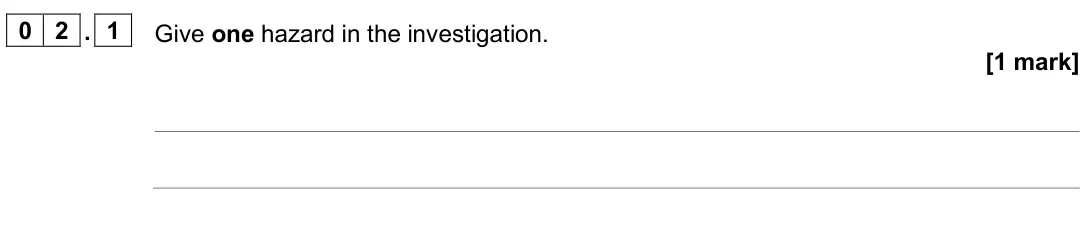
Q02.2
The whole paper ↗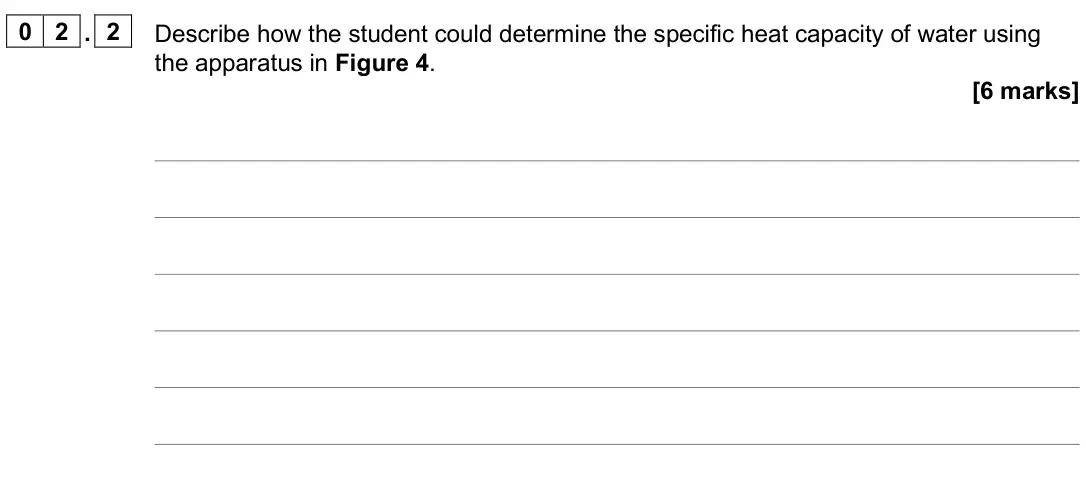
Q02.3
The whole paper ↗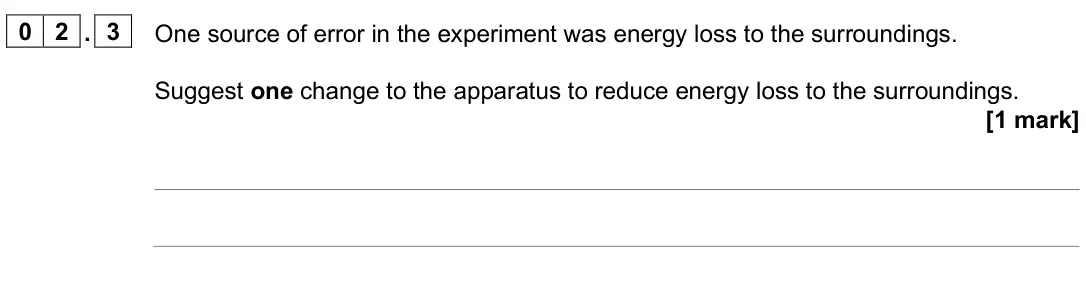
Q02.4
The whole paper ↗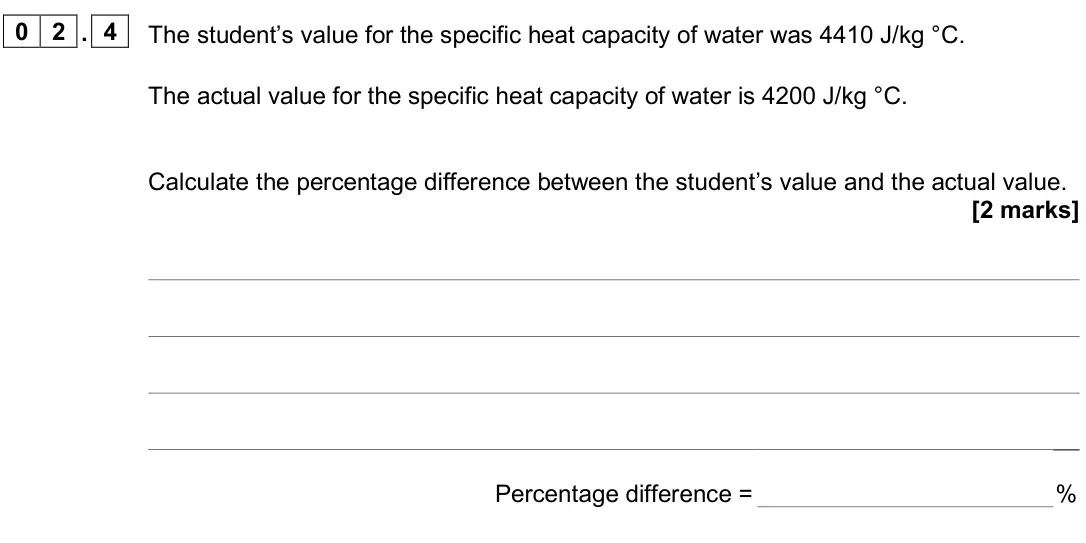
Q05.3
The whole paper ↗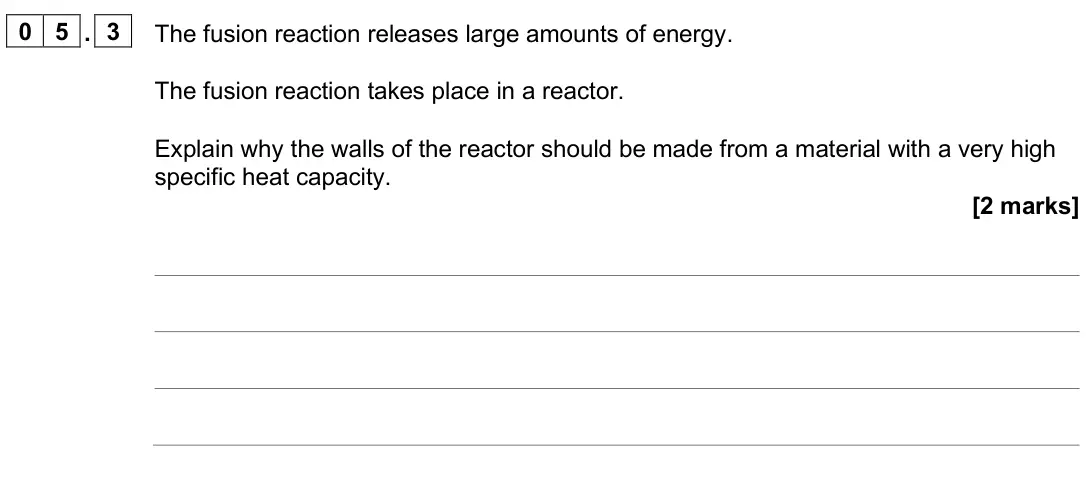
Q06.1
The whole paper ↗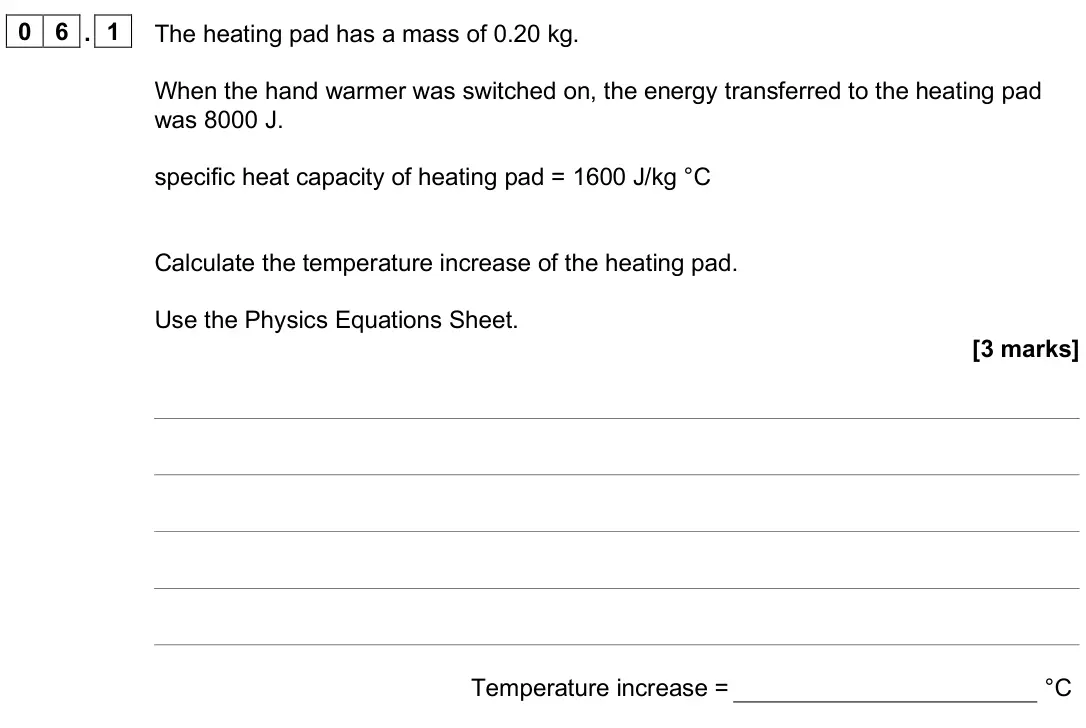
Q08.1
The whole paper ↗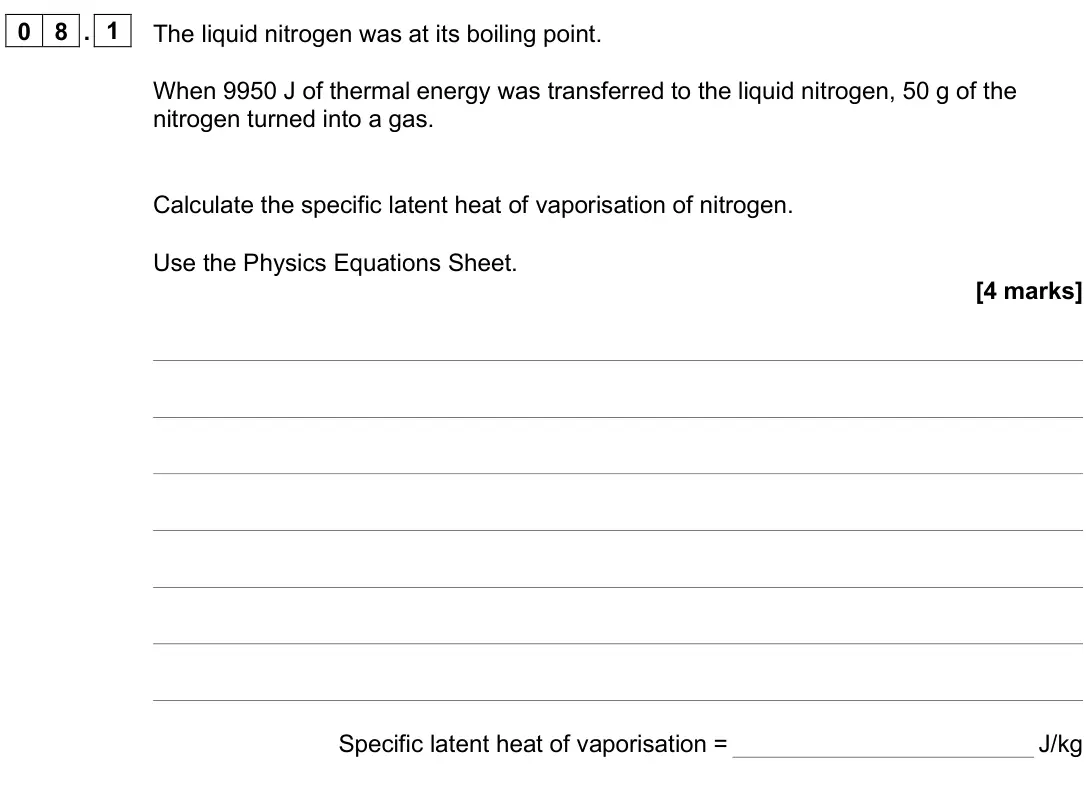
Q08.2
The whole paper ↗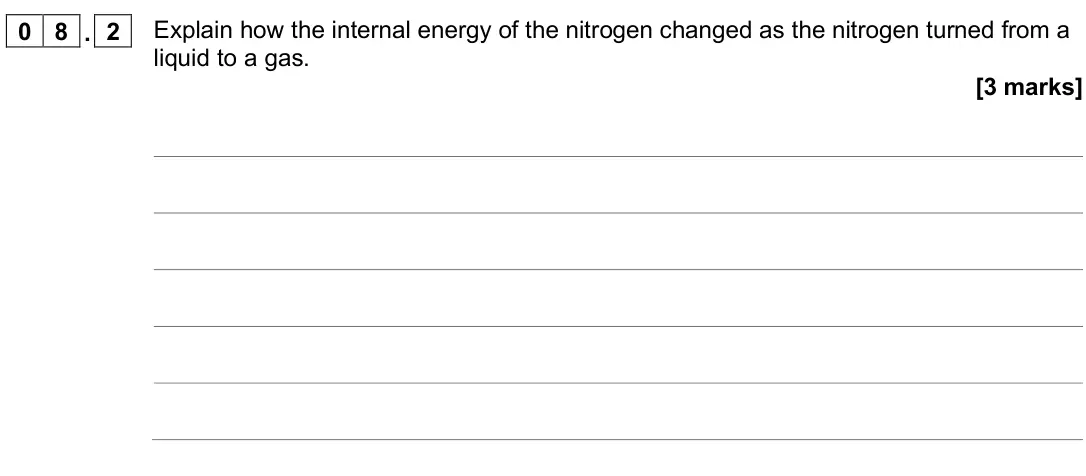
Q02.3
The whole paper ↗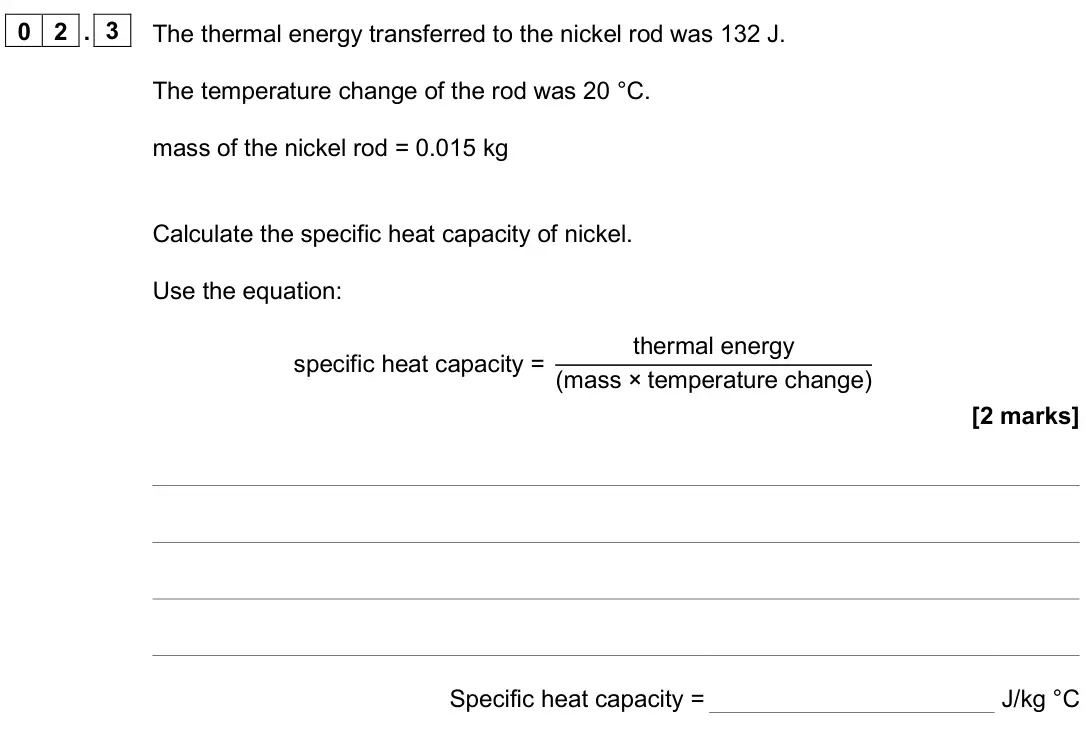
Q04.8
The whole paper ↗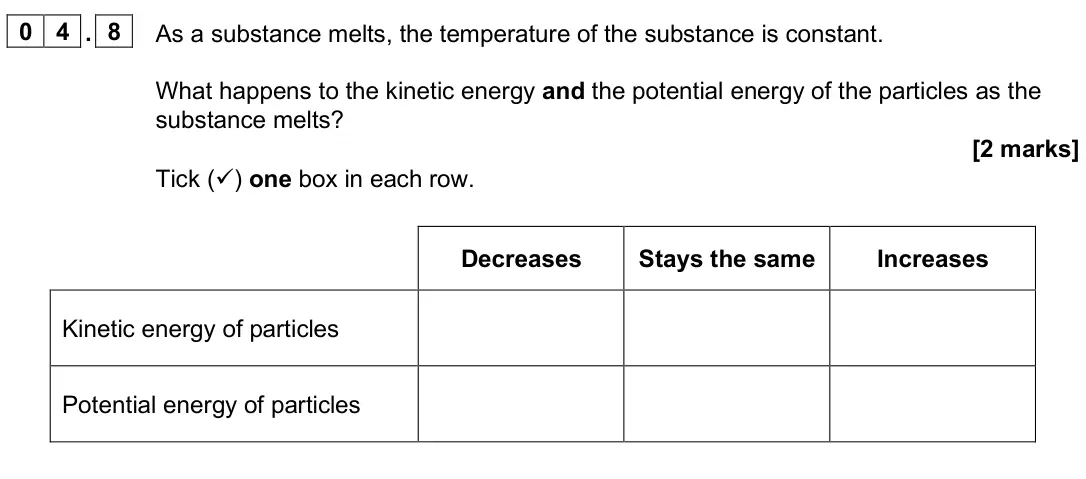
Q09.1
The whole paper ↗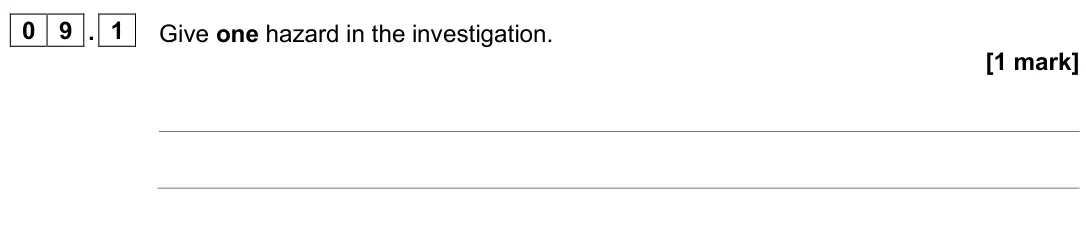
Q09.2
The whole paper ↗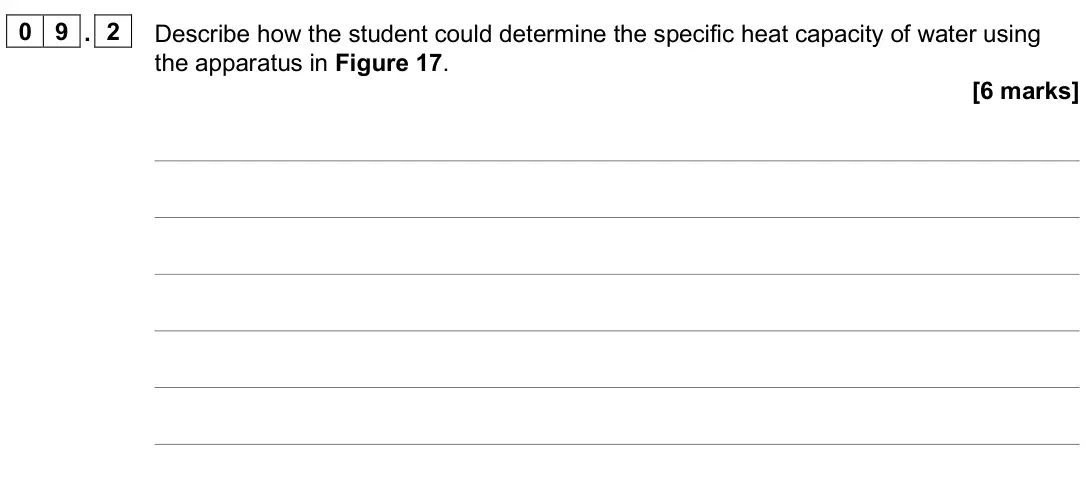
Q09.3
The whole paper ↗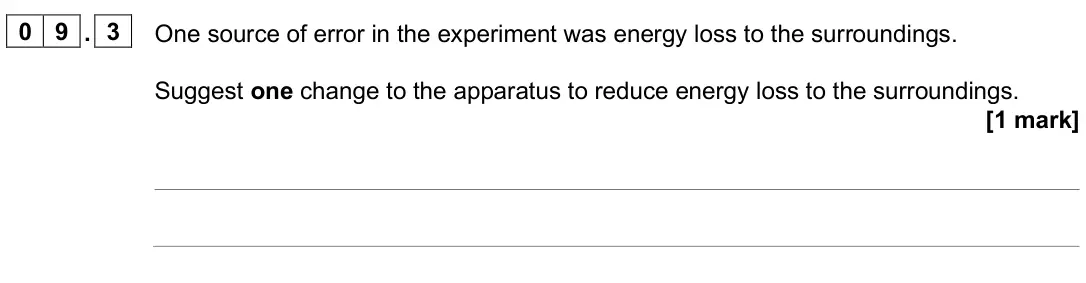
Q09.4
The whole paper ↗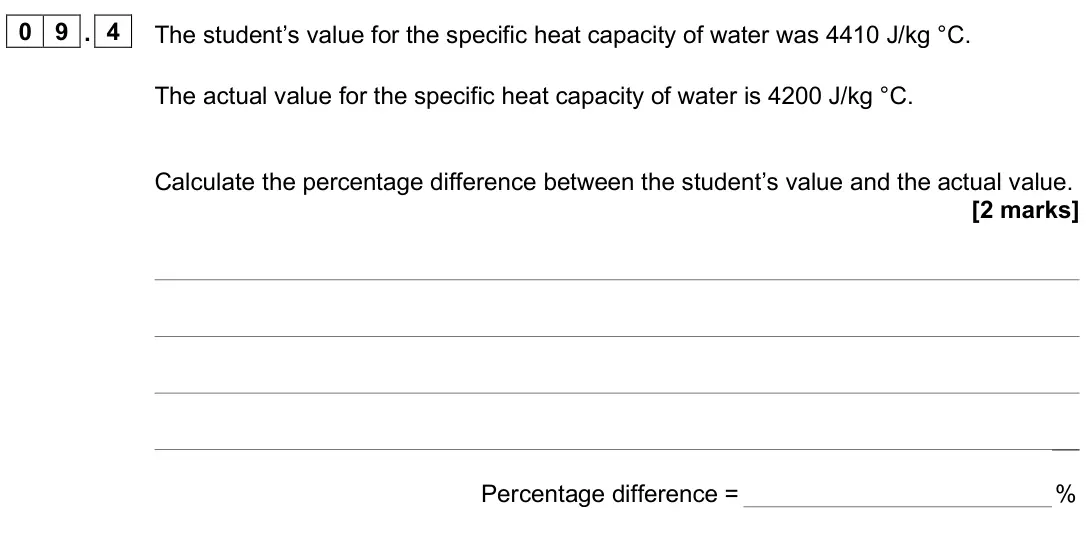
Q01.1
The whole paper ↗
Q01.3
The whole paper ↗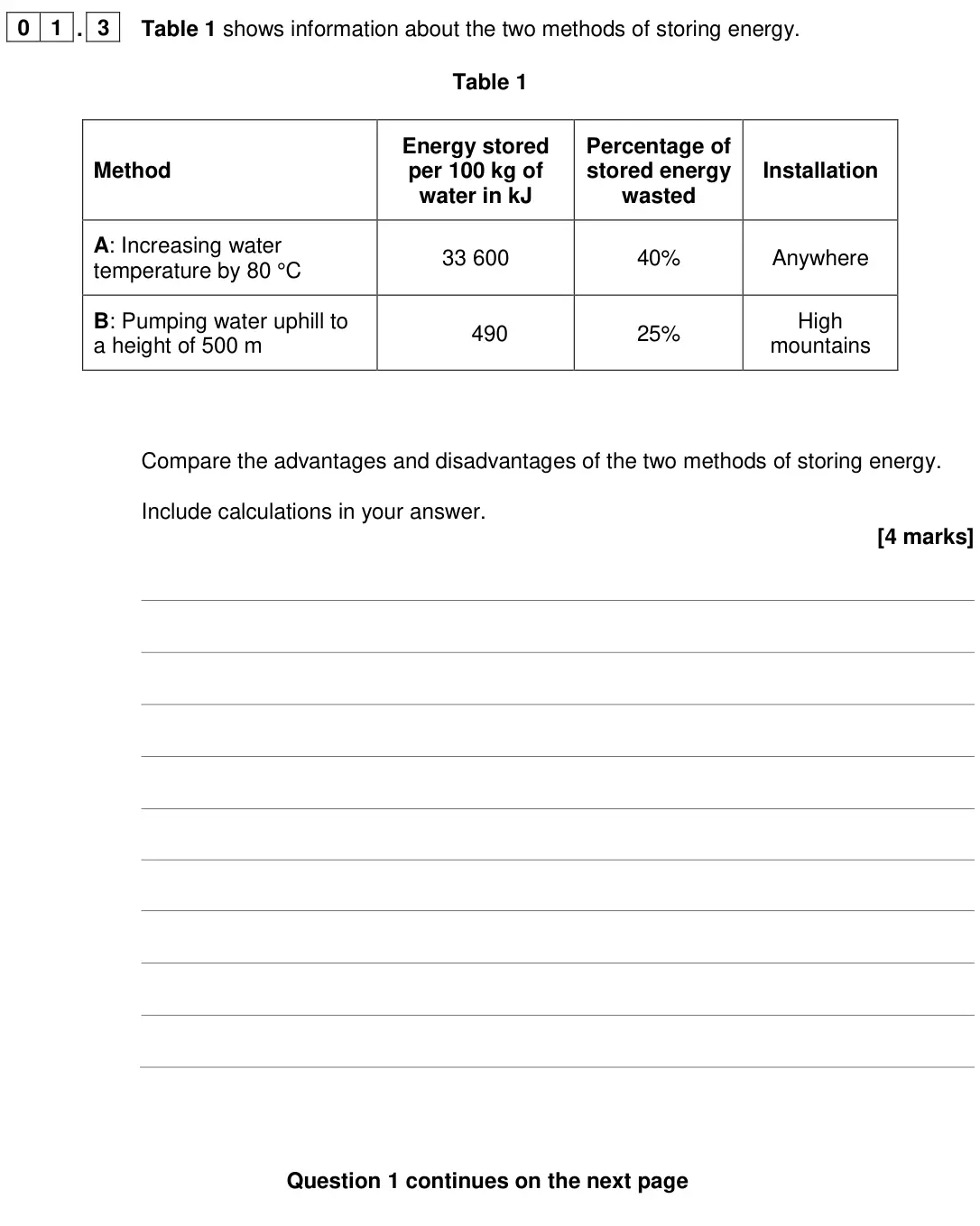
Q08.3
The whole paper ↗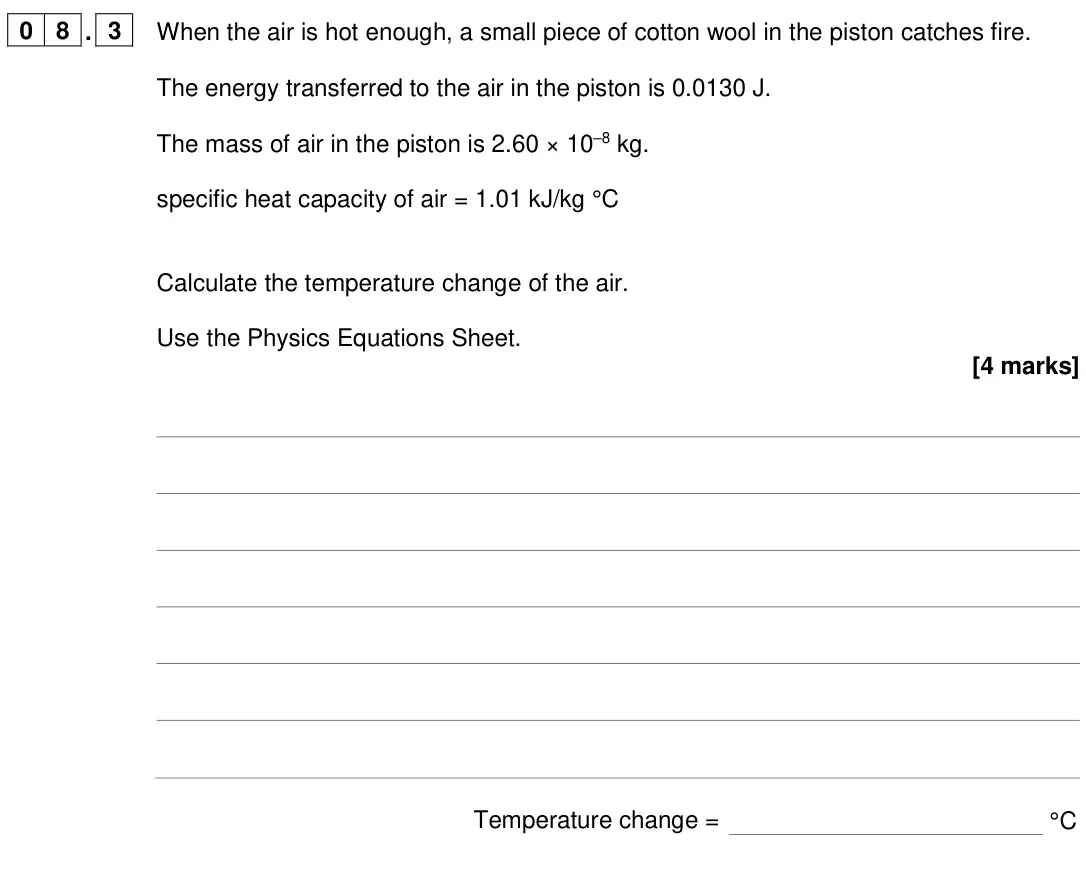
Q10.4
The whole paper ↗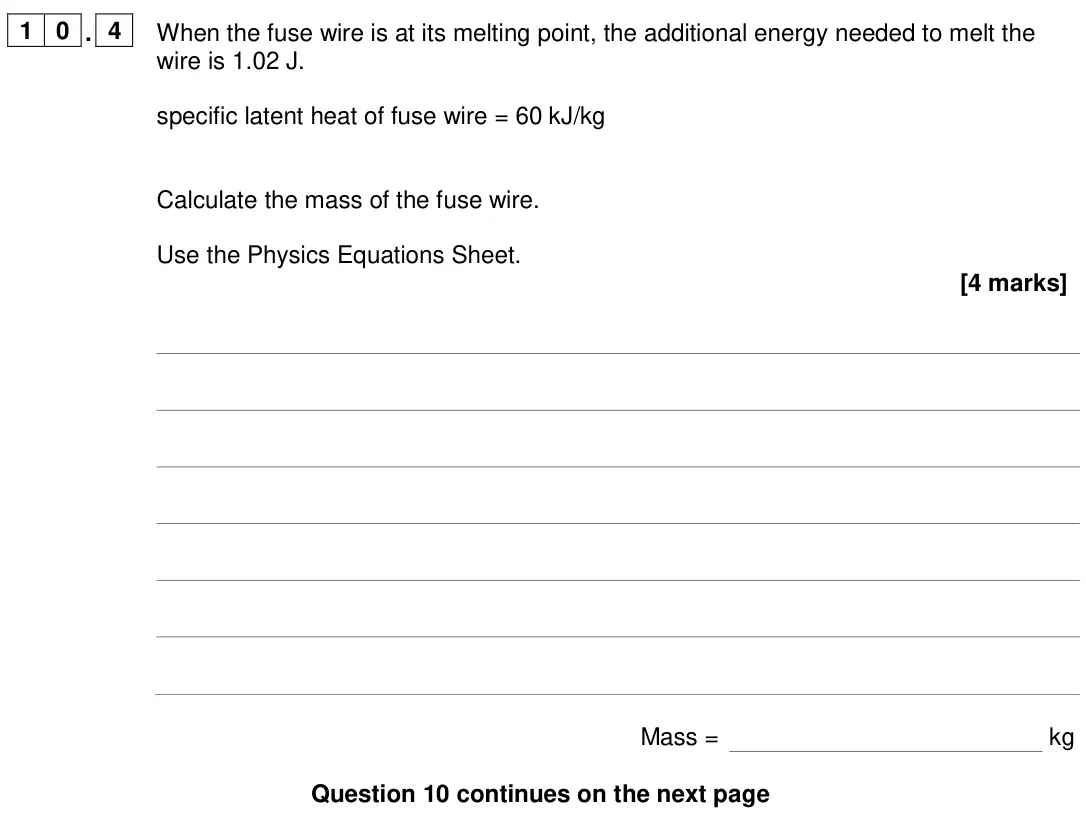
Q10.5
The whole paper ↗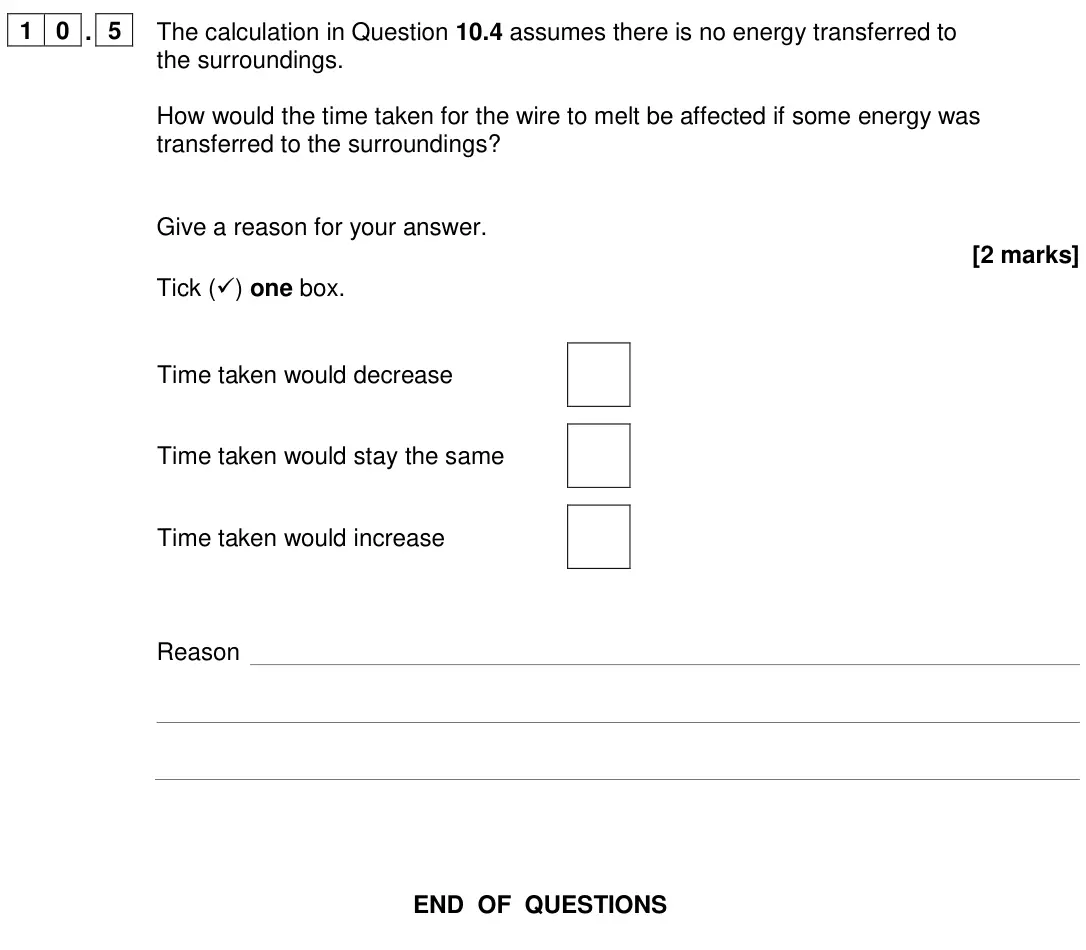
Q05.6
The whole paper ↗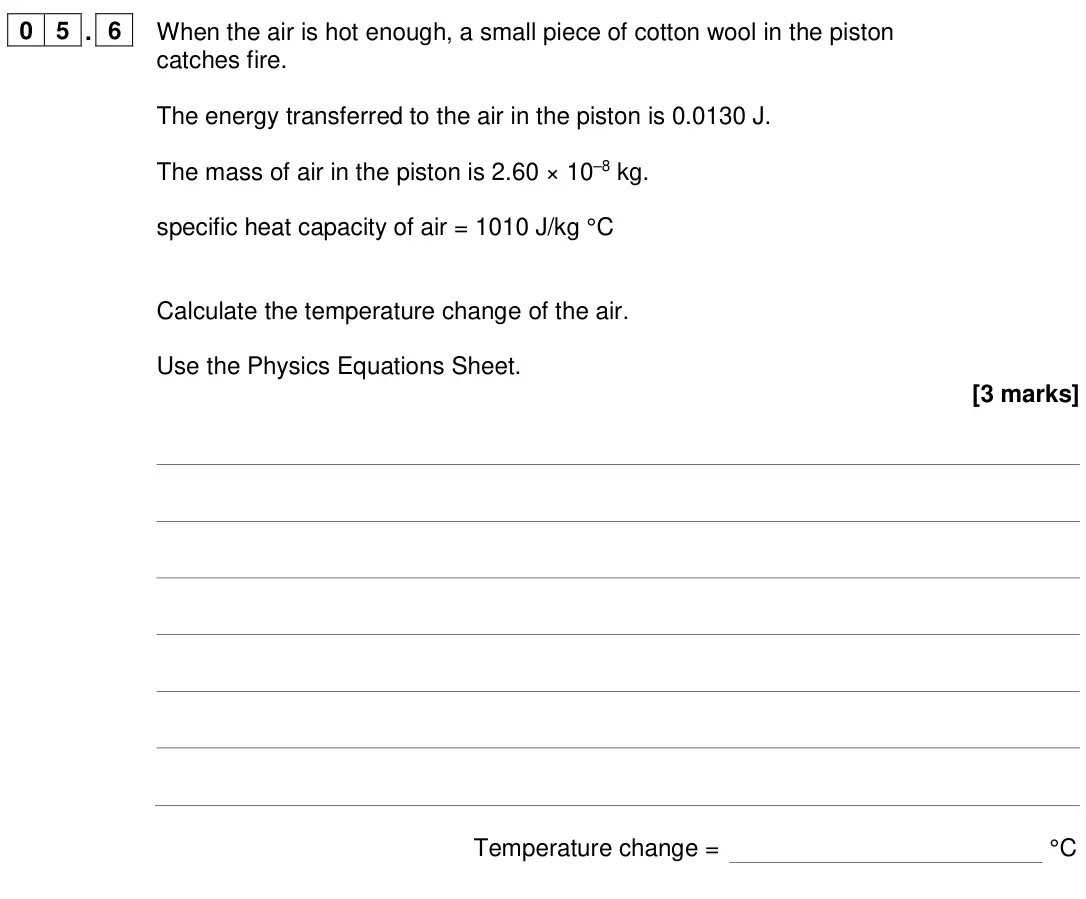
All 58 questions on Internal energy and energy transfers, as a list
- June 2025, Paper 1 Higher, Q02.1 (1 mark): Give one hazard in the investigation. [1 mark]
- June 2025, Paper 1 Higher, Q02.2 (6 marks): Describe how the student could determine the specific heat capacity of water using the apparatus in Figure 4. [6 marks]
- June 2025, Paper 1 Higher, Q02.3 (1 mark): One source of error in the experiment was energy loss to the surroundings. Suggest one change to the apparatus to reduce energy loss to the surroundings. [1 mar
- June 2025, Paper 1 Higher, Q02.4 (2 marks): The student’s value for the specific heat capacity of water was 4410 J/kg °C. The actual value for the specific heat capacity of water is 4200 J/kg °C. Calculat
- June 2025, Paper 1 Higher, Q05.3 (2 marks): The fusion reaction releases large amounts of energy. The fusion reaction takes place in a reactor. Explain why the walls of the reactor should be made from a m
- June 2025, Paper 1 Higher, Q06.1 (3 marks): The heating pad has a mass of 0.20 kg. When the hand warmer was switched on, the energy transferred to the heating pad was 8000 J. specific heat capacity of hea
- June 2025, Paper 1 Higher, Q08.1 (4 marks): The liquid nitrogen was at its boiling point. When 9950 J of thermal energy was transferred to the liquid nitrogen, 50 g of the nitrogen turned into a gas. Calc
- June 2025, Paper 1 Higher, Q08.2 (3 marks): Explain how the internal energy of the nitrogen changed as the nitrogen turned from a liquid to a gas. [3 marks]
- June 2025, Paper 1 Foundation, Q02.3 (2 marks): The thermal energy transferred to the nickel rod was 132 J. The temperature change of the rod was 20 °C. mass of the nickel rod = 0.015 kg Calculate the specifi
- June 2025, Paper 1 Foundation, Q04.8 (2 marks): As a substance melts, the temperature of the substance is constant. What happens to the kinetic energy and the potential energy of the particles as the substanc
- June 2025, Paper 1 Foundation, Q09.1 (1 mark): Give one hazard in the investigation. [1 mark]
- June 2025, Paper 1 Foundation, Q09.2 (6 marks): Describe how the student could determine the specific heat capacity of water using the apparatus in Figure 17. [6 marks]
- June 2025, Paper 1 Foundation, Q09.3 (1 mark): One source of error in the experiment was energy loss to the surroundings. Suggest one change to the apparatus to reduce energy loss to the surroundings. [1 mar
- June 2025, Paper 1 Foundation, Q09.4 (2 marks): The student’s value for the specific heat capacity of water was 4410 J/kg °C. The actual value for the specific heat capacity of water is 4200 J/kg °C. Calculat
- June 2024, Paper 1 Higher, Q01.1 (1 mark): Which energy store increases when water is heated? [1 mark]
- June 2024, Paper 1 Higher, Q01.3 (4 marks): Table 1 shows information about the two methods of storing energy. Table 1 Method Energy stored per 100 kg of water in kJ Percentage of stored energy wasted Ins
- June 2024, Paper 1 Higher, Q08.3 (4 marks): When the air is hot enough, a small piece of cotton wool in the piston catches fire. The energy transferred to the air in the piston is 0.0130 J. The mass of ai
- June 2024, Paper 1 Higher, Q10.4 (4 marks): When the fuse wire is at its melting point, the additional energy needed to melt the wire is 1.02 J. specific latent heat of fuse wire = 60 kJ/kg Calculate the
- June 2024, Paper 1 Higher, Q10.5 (2 marks): The calculation in Question 10.4 assumes there is no energy transferred to the surroundings. How would the time taken for the wire to melt be affected if some e
- June 2024, Paper 1 Foundation, Q05.6 (3 marks): When the air is hot enough, a small piece of cotton wool in the piston catches fire. The energy transferred to the air in the piston is 0.0130 J. The mass of ai
- June 2024, Paper 1 Foundation, Q07.5 (3 marks): The mass of the wire is 0.016 g. specific latent heat of fusion of the wire = 60 000 J/kg Calculate the change in thermal energy needed to melt the wire. Use th
- June 2024, Paper 1 Foundation, Q07.6 (1 mark): The fuse transfers some energy to the surroundings as it melts. How does transferring energy to the surroundings affect the total energy needed to melt the fuse
- June 2024, Paper 1 Foundation, Q09.1 (1 mark): Which energy store increases when water is heated? [1 mark]
- June 2024, Paper 1 Foundation, Q09.3 (4 marks): Table 4 shows information about the two methods of storing energy. Table 4 Method Energy stored per 100 kg of water in kJ Percentage of stored energy wasted Ins
- June 2023, Paper 1 Higher, Q03.4 (3 marks): Ice forms on the windscreen at a temperature of 0 °C. The electrical circuit transfers 5010 J of energy to the ice. A mass of 0.015 kg of ice melts. Calculate t
- June 2023, Paper 1 Higher, Q03.5 (6 marks): The electrical circuit was left switched on while the ice changed from a solid to a liquid and increased in temperature to 5 °C. Explain the changes in the arra
- June 2023, Paper 1 Foundation, Q10.4 (3 marks): Ice forms on the windscreen at a temperature of 0 °C. The electrical circuit transfers 5010 J of energy to the ice. A mass of 0.015 kg of ice melts. Calculate t
- June 2023, Paper 1 Foundation, Q10.5 (6 marks): The electrical circuit was left switched on while the ice changed from a solid to a liquid and increased in temperature to 5 °C. Explain the changes in the arra
- June 2022, Paper 1 Higher, Q08.1 (1 mark): What measuring instrument should be used to measure the volume of water? [1 mark]
- June 2022, Paper 1 Higher, Q08.2 (1 mark): What is a hazard in the student’s investigation? [1 mark] Tick ( ) one box. burns boiling water heatproof gloves safety goggles
- June 2022, Paper 1 Higher, Q08.3 (5 marks): The initial mass of the beaker and water was 0.080 kg. The final mass of the beaker and water was 0.071 kg. The energy transferred by the immersion heater as th
- June 2022, Paper 1 Higher, Q08.4 (2 marks): Some thermal energy was transferred to the surroundings while the water was being heated. Explain how this affected the student’s value for the specific latent
- June 2022, Paper 1 Higher, Q08.5 (2 marks): Some of the water evaporated before its temperature reached 100 °C. Explain how this affected the student’s value for the specific latent heat of vaporisation o
- June 2022, Paper 1 Foundation, Q05.1 (1 mark): The student measured a mass of water and put it into the beaker. What measuring instrument should the student have used to measure the mass of the water? [1 mar
- June 2022, Paper 1 Foundation, Q05.2 (1 mark): The power output of the heater stayed the same throughout the experiment. What type of variable was the power output of the heater? [1 mark] Tick () one box. C
- June 2022, Paper 1 Foundation, Q05.3 (1 mark): The student turned on the heater and heated the water until it reached boiling point. The student continued to heat the water so that it boiled for several minu
- June 2022, Paper 1 Foundation, Q05.5 (1 mark): What was a source of error in the student’s experiment? [1 mark] Tick () one box. The transfer of thermal energy from the heater to the water The transfer of t
- November 2021, Paper 1 Higher, Q02.2 (3 marks): Nuclear fusion of deuterium is difficult to achieve on Earth because of the high temperature needed. Electricity is used to increase the temperature of 4.0 g of
- November 2021, Paper 1 Higher, Q11.1 (2 marks): The specific heat capacity of ice is less than the specific heat capacity of water. Explain how Figure 17 shows this. [2 marks]
- November 2021, Paper 1 Higher, Q11.2 (2 marks): The specific latent heat of fusion of ice is less than the specific latent heat of vaporisation of water. Explain how Figure 17 shows this. [2 marks]
- November 2021, Paper 1 Higher, Q11.3 (2 marks): A second student did the same investigation and recorded the temperature until the water produced boiled. In the second student’s investigation more thermal ene
- November 2021, Paper 1 Higher, Q11.4 (5 marks): When the water was boiling, 0.030 kg of water turned into steam. The energy transferred to the water was 69 kJ. Calculate the specific latent heat of vaporisati
- November 2021, Paper 1 Foundation, Q01.2 (1 mark): Which part of Figure 1 shows when the ice was melting? [1 mark] Tick () one box. A B C D
- November 2021, Paper 1 Foundation, Q01.3 (1 mark): Which part of Figure 1 shows when the water was boiling? [1 mark] Tick () one box. A B C D
- November 2021, Paper 1 Foundation, Q01.4 (1 mark): Which property of the water particles changes as the temperature of the water increases? [1 mark] Tick () one box. The kinetic energy of the particles The mass
- November 2021, Paper 1 Foundation, Q01.5 (2 marks): Calculate the thermal energy needed to melt 0.250 kg of ice at 0 °C. specific latent heat of fusion of water = 334 000 J/kg Use the equation: thermal energy = m
- November 2021, Paper 1 Foundation, Q10.2 (3 marks): Nuclear fusion of deuterium is difficult to achieve on Earth because of the high temperature needed. Electricity is used to increase the temperature of 4.0 g of
- November 2020, Paper 1 Higher, Q07.2 (5 marks): The energy transferred to the water in 100 seconds was 155 000 J. specific heat capacity of water = 4200 J/kg °C Determine the mass of water in the kettle. Use
- November 2020, Paper 1 Higher, Q07.3 (3 marks): The straight section of the line in Figure 10 can be used to calculate the useful power output of the kettle. Explain how. [3 marks]
- November 2020, Paper 1 Foundation, Q07.7 (3 marks): The water in the kettle boiled for a short time before the kettle switched off. During this time 5.0 g of water changed to steam. specific latent heat of vapori
- June 2019, Paper 1 Foundation, Q01.2 (2 marks): What is the name of the process that is taking place between points A and B? Give a reason for your answer. [2 marks] Process Reason
- June 2019, Paper 1 Foundation, Q01.3 (2 marks): A mass of 0.063 kg of water was turned into steam. The specific latent heat of vaporisation of water is 2 260 000 J/kg Calculate the thermal energy transferred
- Specimen, Paper 1 Higher, Q01.2: What name is given to the total kinetic energy and potential energy of all the particles of helium gas in the balloon? [1 mar Tick one box. External energy Inte
- Specimen, Paper 1 Foundation, Q04.3: What was the decrease in temperature between 0 and 160 seconds? [1 mar Tick one box. 8.2 °C 8.4 °C 53.2 °C 55.6 °C
- Specimen, Paper 1 Foundation, Q04.4 (1 mark): Use Figure 5 to determine the time taken for the stearic acid to change from a liquid to a solid. [1 mark] Time = seconds
- Specimen, Paper 1 Foundation, Q04.5 (2 marks): Calculate the energy transferred to the surroundings as 0.40 kg of stearic acid changed state from liquid to solid. The specific latent heat of fusion of steari
- Specimen, Paper 1 Foundation, Q04.6 (2 marks): After 1200 seconds the temperature of the stearic acid continued to decrease. Explain why. [2 marks]
- Specimen, Paper 1 Foundation, Q09.2: What name is given to the total kinetic energy and potential energy of all the particles of helium gas in the balloon? [1 mar Tick one box. External energy Inte
Questions, mark schemes and examiner’s reports are © AQA, from their published past papers. Plumi isn’t affiliated with any exam board. Want whole papers? Every AQA GCSE Physics paper.
Rather write your answers by hand on iPad? Plumi marks them against the same mark schemes.