 plumi
Changes of state and the particle model: AQA GCSE Physics questions
Every AQA GCSE Physics exam question on 4.3.1 Changes of state and the particle model, 2018–2025, with its mark scheme and examiner’s report.
Find questions1,653
Calculations
Q01.2
The whole paper ↗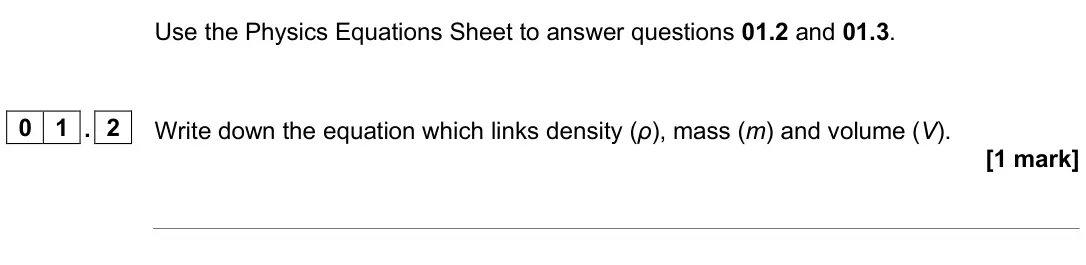
Q01.3
The whole paper ↗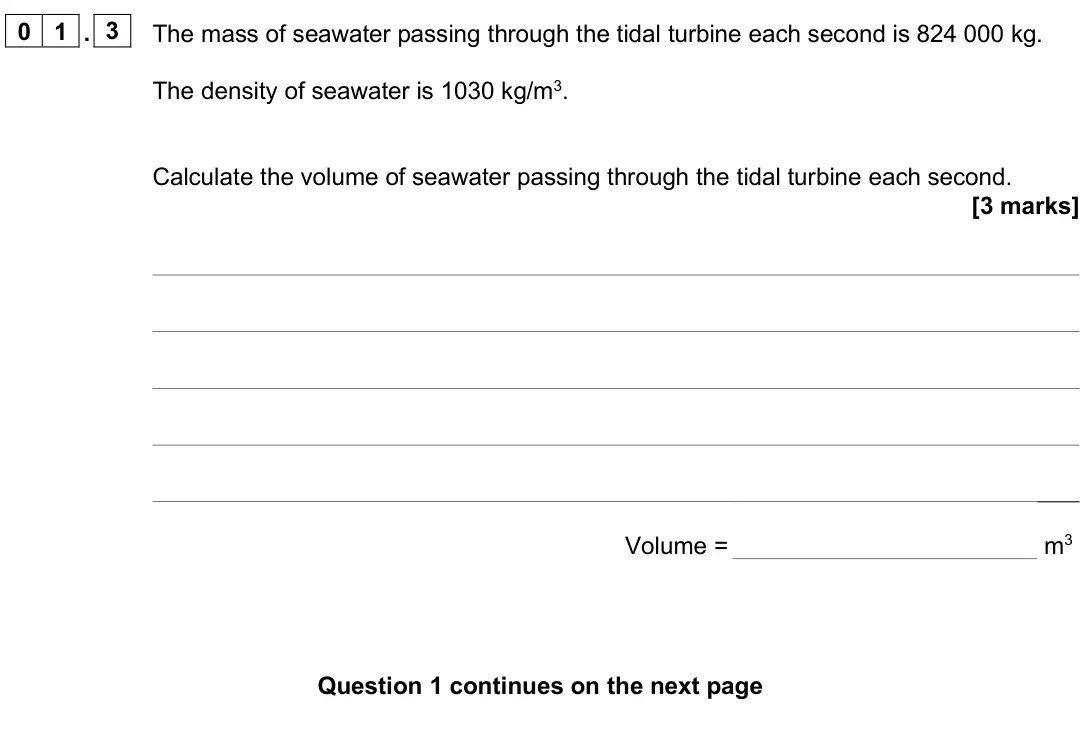
Q04.5
The whole paper ↗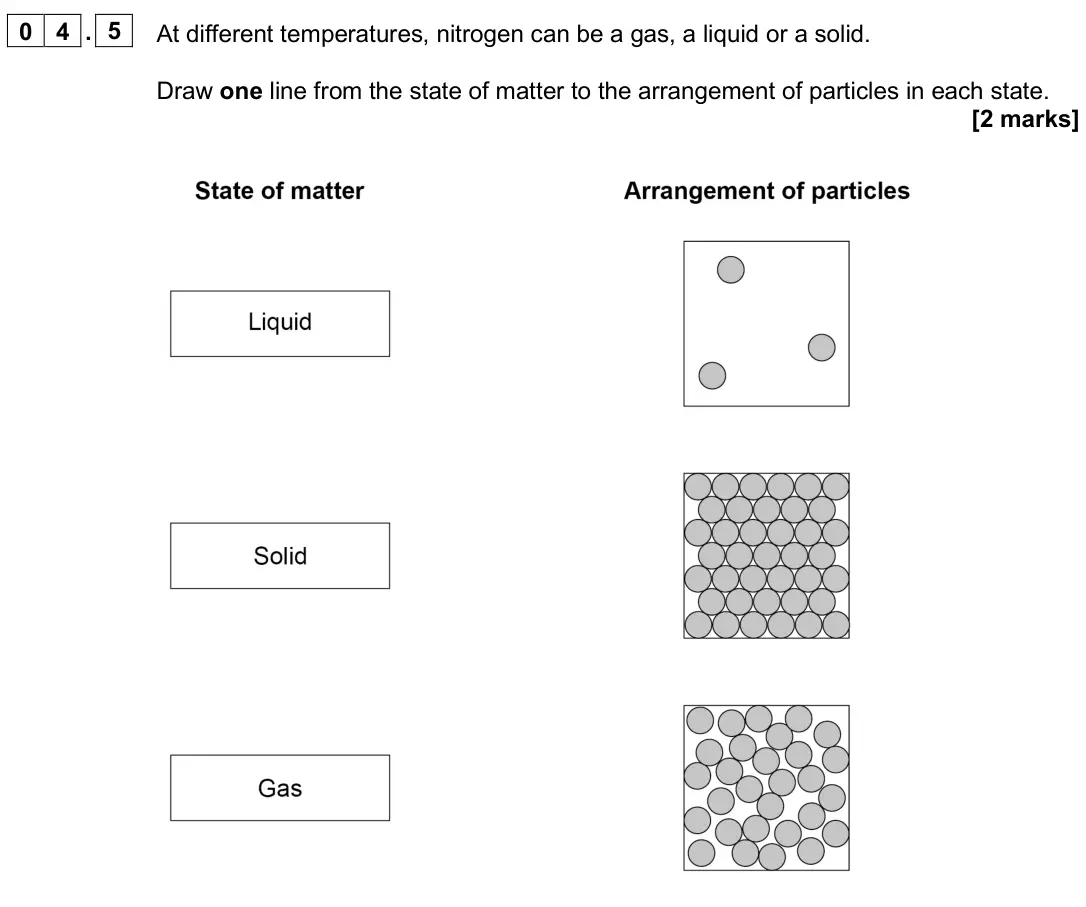
Q04.6
The whole paper ↗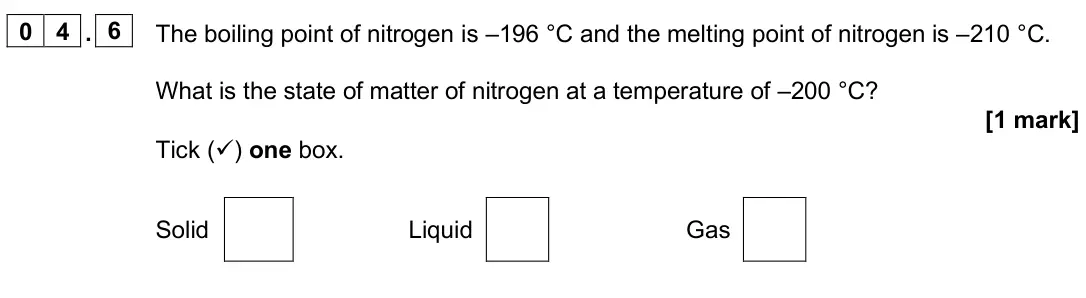
Q04.7
The whole paper ↗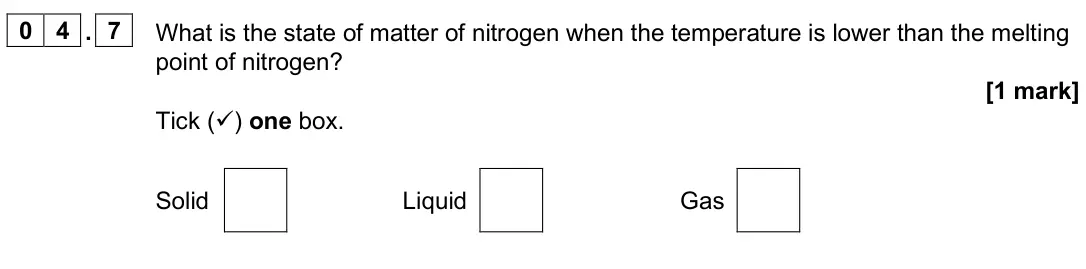
Q08.2
The whole paper ↗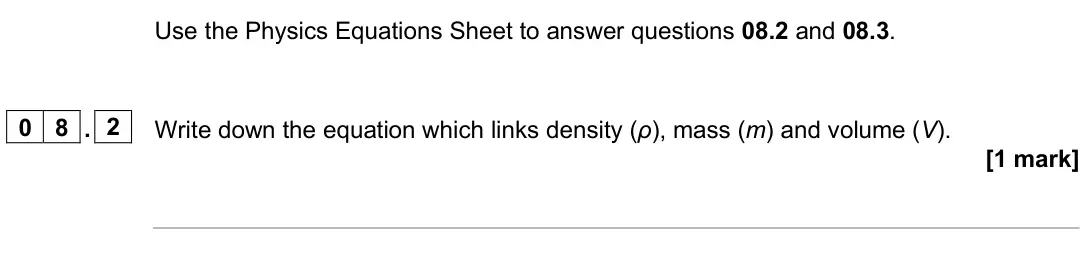
Q08.3
The whole paper ↗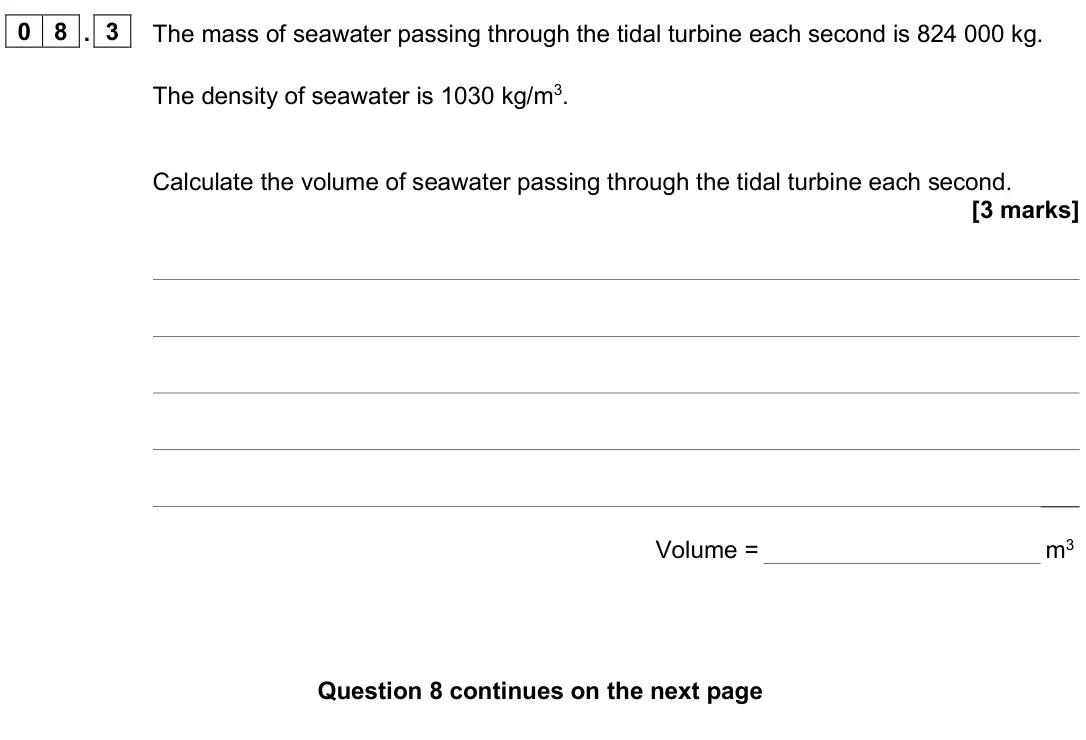
Q07.1
The whole paper ↗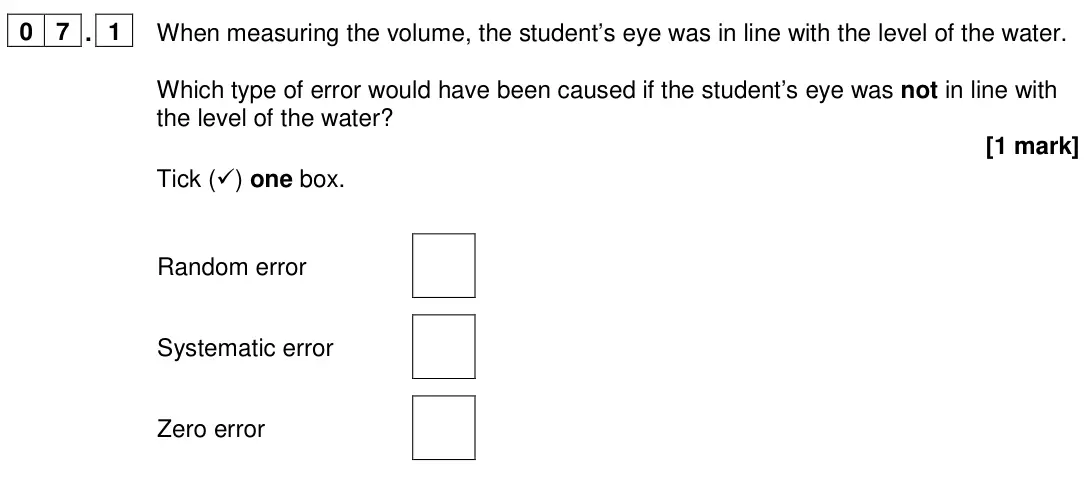
Q07.2
The whole paper ↗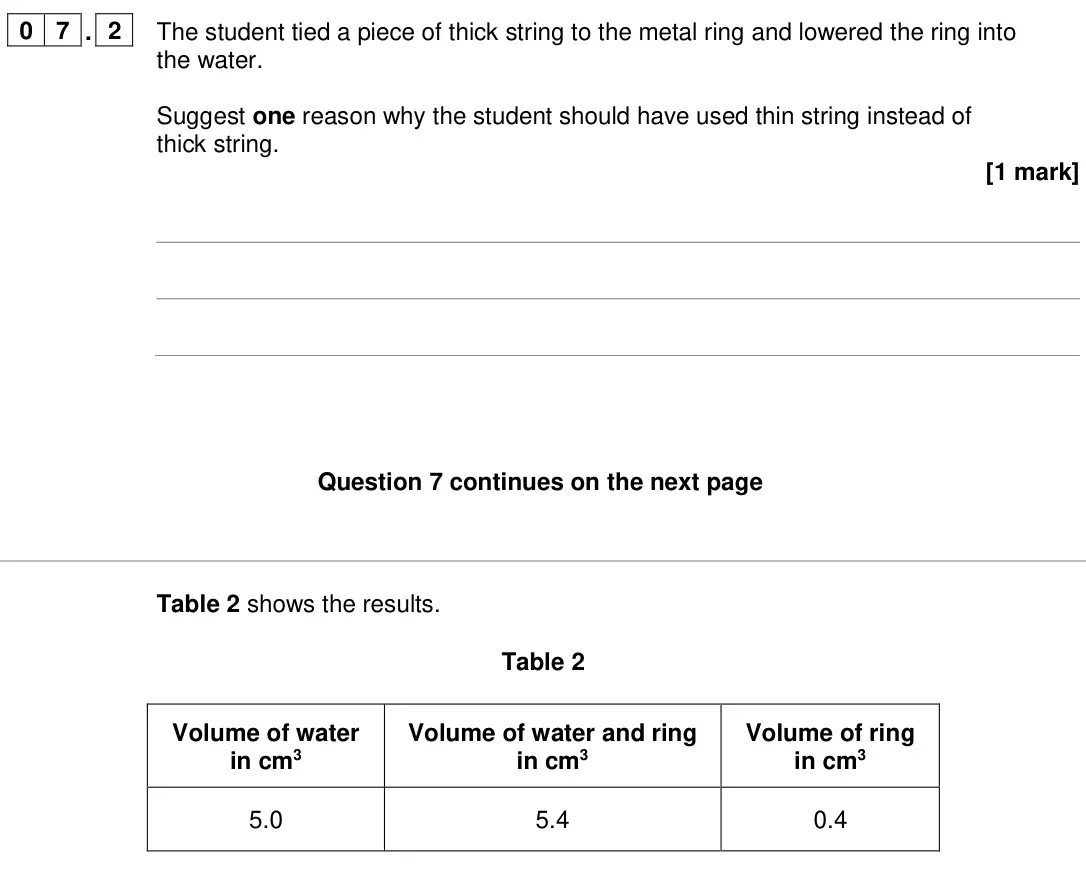
Q07.3
The whole paper ↗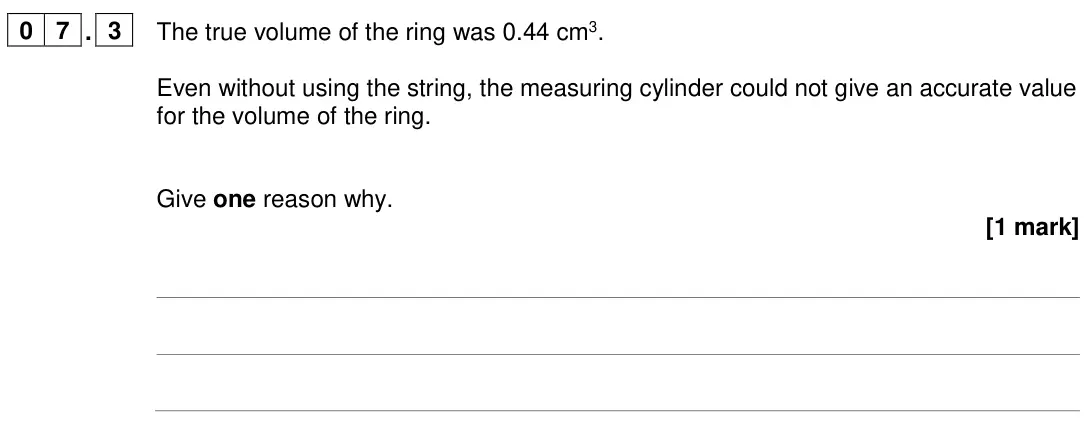
Q07.4
The whole paper ↗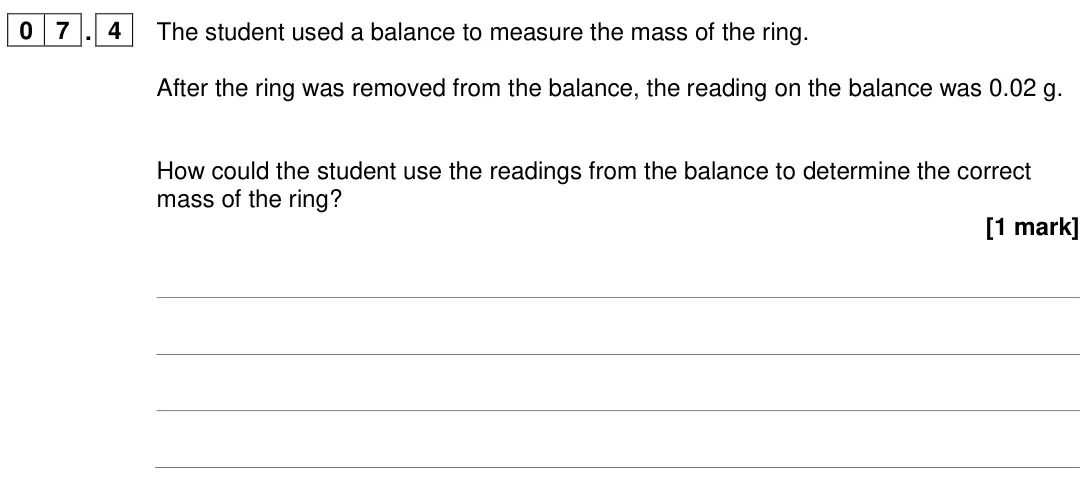
Q07.5
The whole paper ↗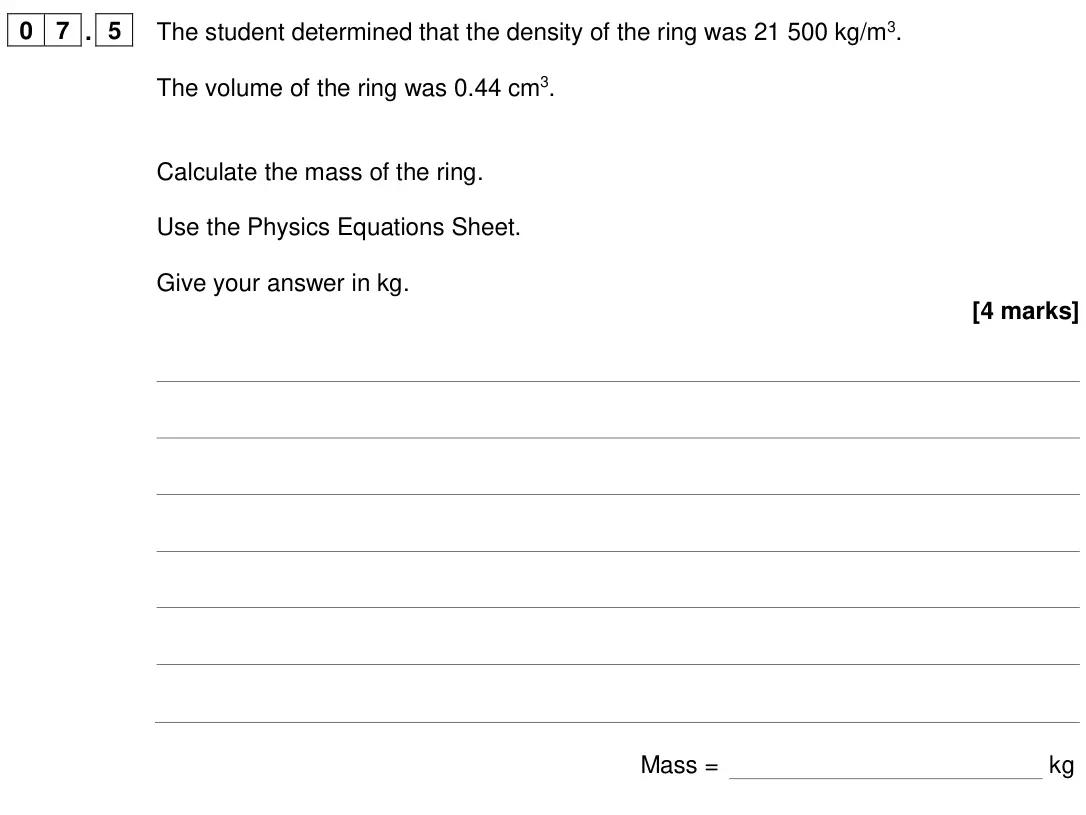
Q04.1
The whole paper ↗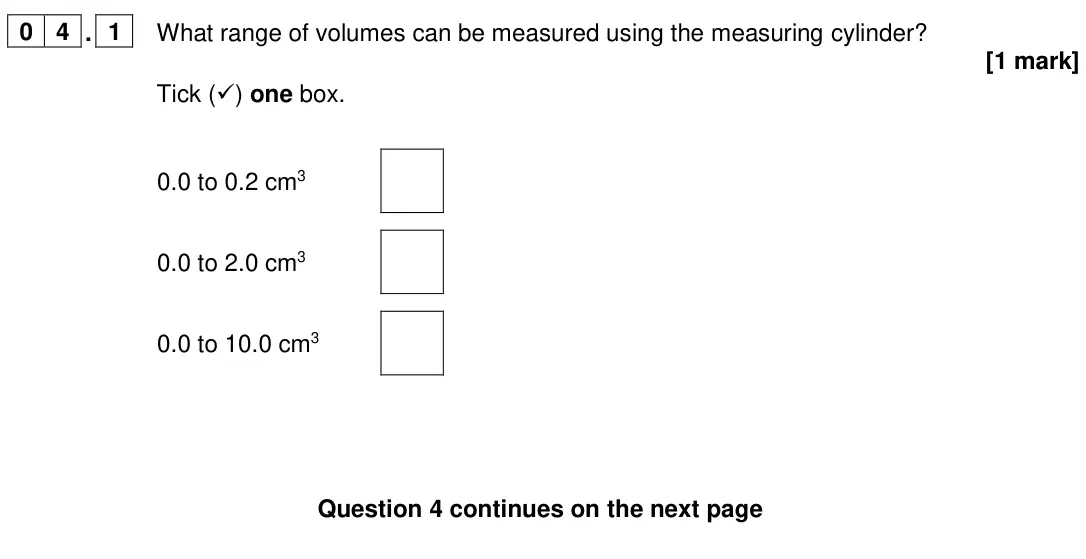
Q04.2
The whole paper ↗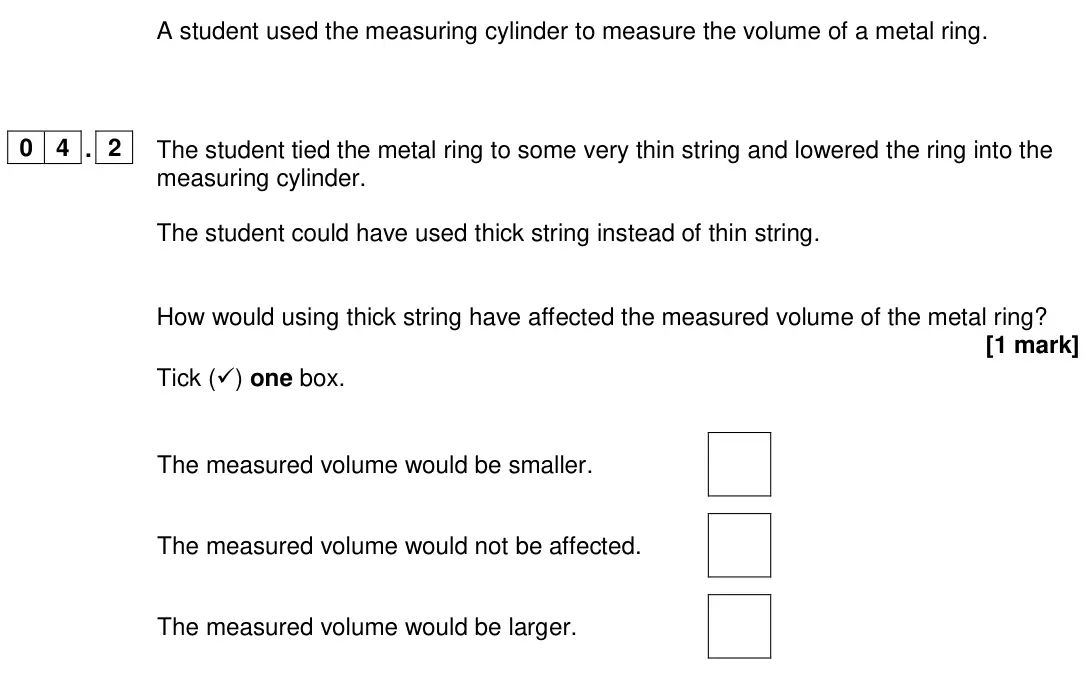
Q04.3
The whole paper ↗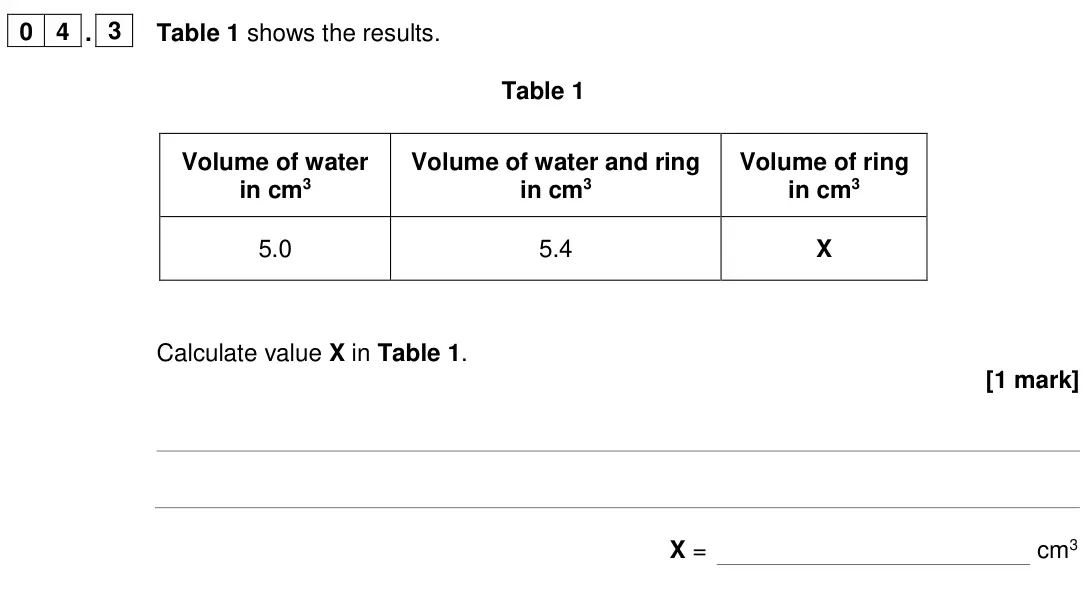
Q04.4
The whole paper ↗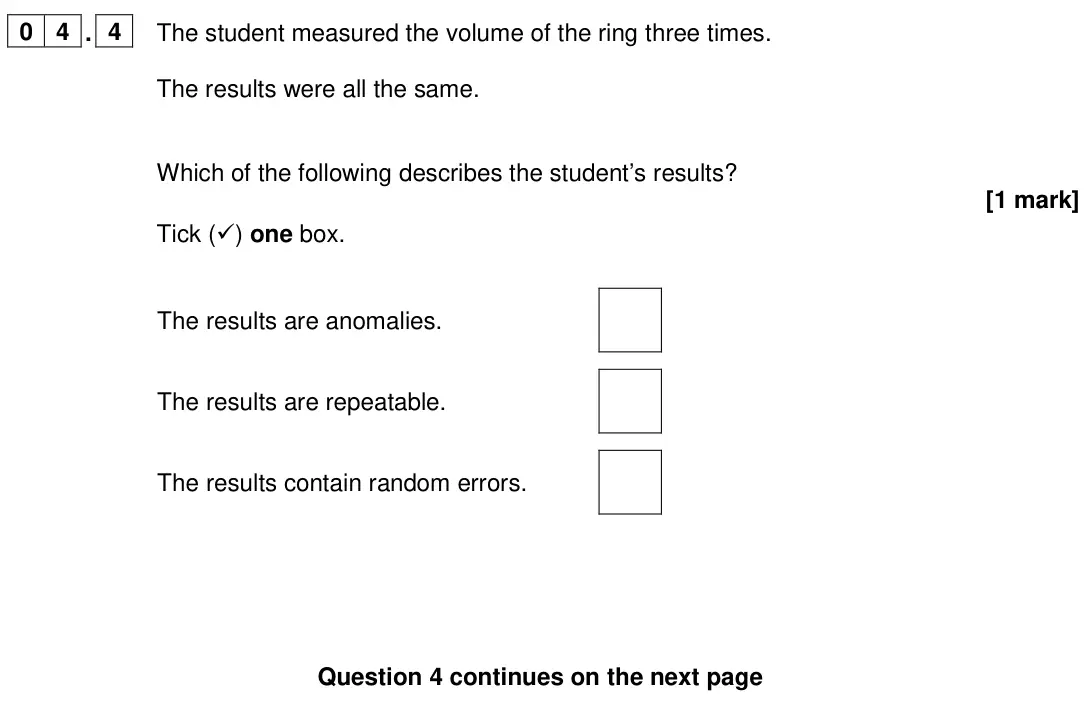
Q04.5
The whole paper ↗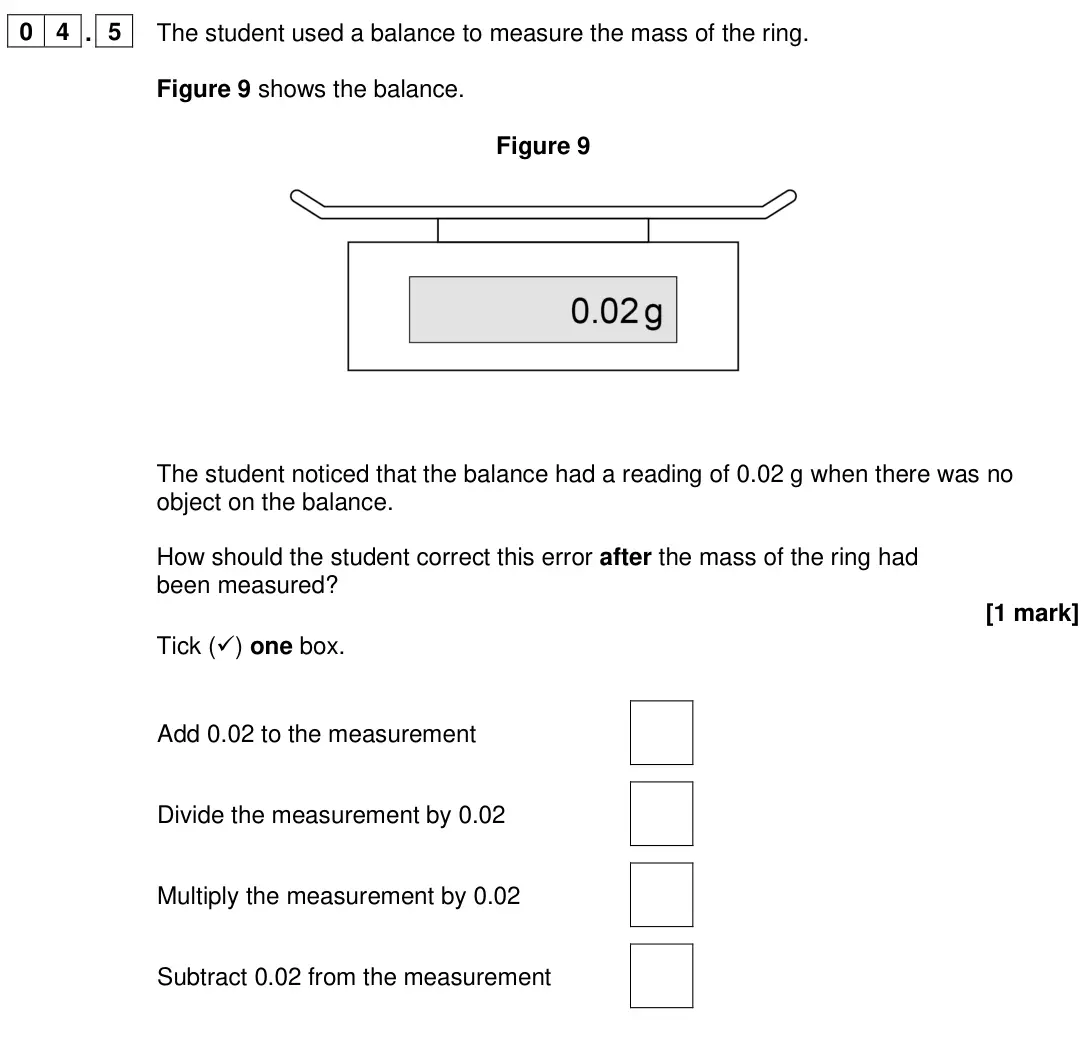
Q04.6
The whole paper ↗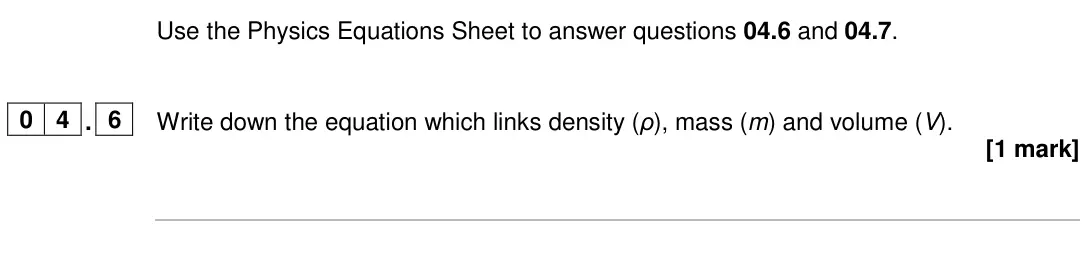
Q04.7
The whole paper ↗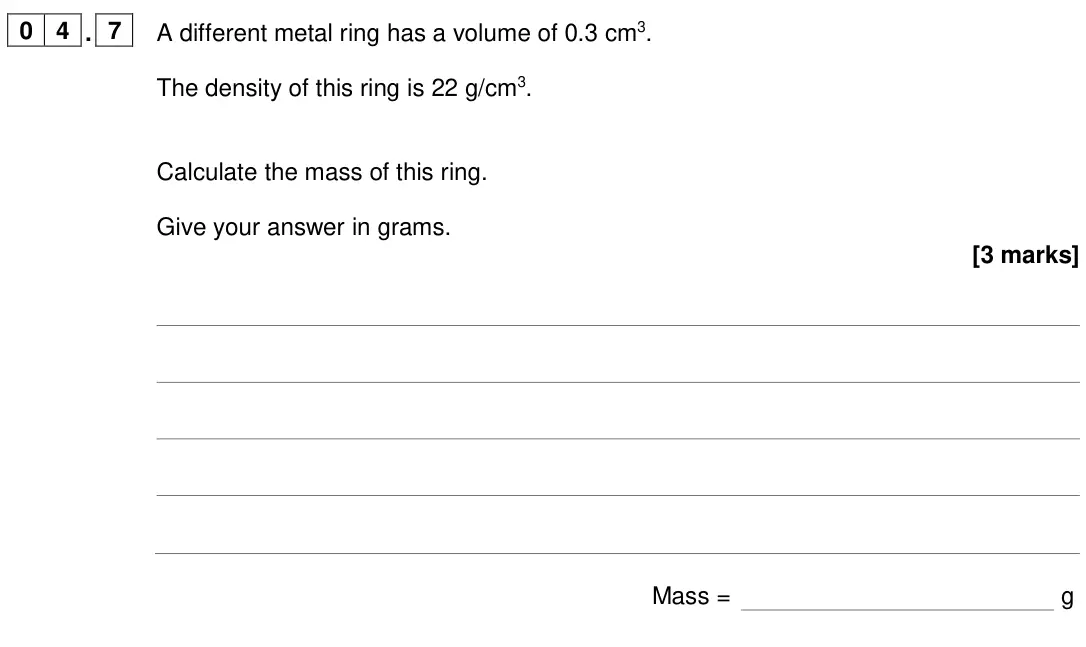
Q03.5
The whole paper ↗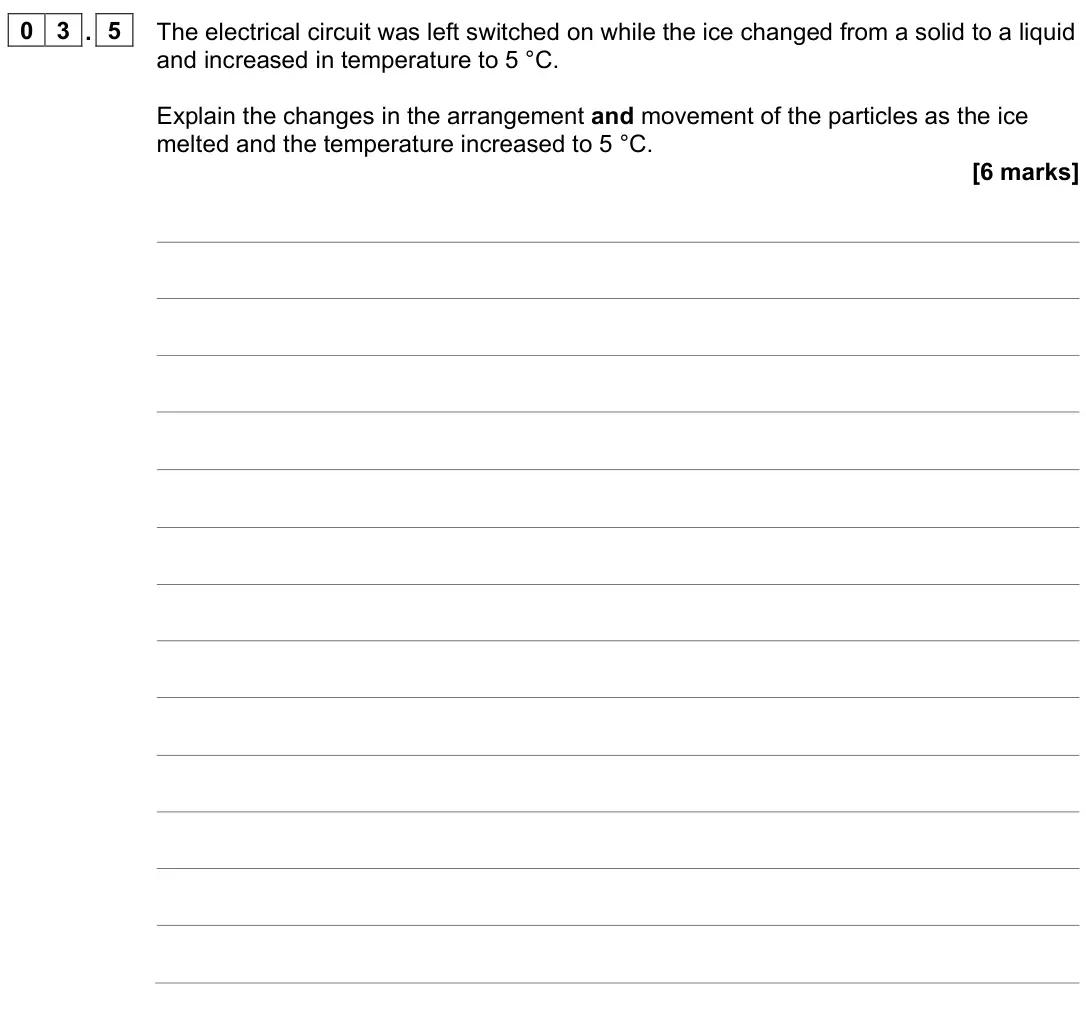
All 52 questions on Changes of state and the particle model, as a list
- June 2025, Paper 1 Higher, Q01.2 (1 mark): and 01.3. 0 1 . 2 Write down the equation which links density (ρ), mass (m) and volume (V). [1 mark]
- June 2025, Paper 1 Higher, Q01.3 (3 marks): The mass of seawater passing through the tidal turbine each second is 824 000 kg. The density of seawater is 1030 kg/m3. Calculate the volume of seawater passin
- June 2025, Paper 1 Foundation, Q04.5 (2 marks): At different temperatures, nitrogen can be a gas, a liquid or a solid. Draw one line from the state of matter to the arrangement of particles in each state. [2
- June 2025, Paper 1 Foundation, Q04.6 (1 mark): The boiling point of nitrogen is –196 °C and the melting point of nitrogen is –210 °C. What is the state of matter of nitrogen at a temperature of –200 °C? [1 m
- June 2025, Paper 1 Foundation, Q04.7 (1 mark): What is the state of matter of nitrogen when the temperature is lower than the melting point of nitrogen? [1 mark] Tick () one box. Solid Liquid Gas
- June 2025, Paper 1 Foundation, Q08.2 (1 mark): and 08.3. 0 8 . 2 Write down the equation which links density (ρ), mass (m) and volume (V). [1 mark]
- June 2025, Paper 1 Foundation, Q08.3 (3 marks): The mass of seawater passing through the tidal turbine each second is 824 000 kg. The density of seawater is 1030 kg/m3. Calculate the volume of seawater passin
- June 2024, Paper 1 Higher, Q07.1 (1 mark): When measuring the volume, the student’s eye was in line with the level of the water. Which type of error would have been caused if the student’s eye was not in
- June 2024, Paper 1 Higher, Q07.2 (1 mark): The student tied a piece of thick string to the metal ring and lowered the ring into the water. Suggest one reason why the student should have used thin string
- June 2024, Paper 1 Higher, Q07.3 (1 mark): The true volume of the ring was 0.44 cm3. Even without using the string, the measuring cylinder could not give an accurate value for the volume of the ring. Giv
- June 2024, Paper 1 Higher, Q07.4 (1 mark): The student used a balance to measure the mass of the ring. After the ring was removed from the balance, the reading on the balance was 0.02 g. How could the st
- June 2024, Paper 1 Higher, Q07.5 (4 marks): The student determined that the density of the ring was 21 500 kg/m3. The volume of the ring was 0.44 cm3. Calculate the mass of the ring. Use the Physics Equat
- June 2024, Paper 1 Foundation, Q04.1 (1 mark): What range of volumes can be measured using the measuring cylinder? [1 mark] Tick () one box. 0.0 to 0.2 cm3 0.0 to 2.0 cm3 0.0 to 10.0 cm3
- June 2024, Paper 1 Foundation, Q04.2 (1 mark): The student tied the metal ring to some very thin string and lowered the ring into the measuring cylinder. The student could have used thick string instead of t
- June 2024, Paper 1 Foundation, Q04.3 (1 mark): Table 1 shows the results. Table 1 Volume of water in cm3 Volume of water and ring in cm3 Volume of ring in cm3 5.0 5.4 X Calculate value X in Table 1. [1 mark]
- June 2024, Paper 1 Foundation, Q04.4 (1 mark): The student measured the volume of the ring three times. The results were all the same. Which of the following describes the student’s results? [1 mark] Tick (
- June 2024, Paper 1 Foundation, Q04.5 (1 mark): The student used a balance to measure the mass of the ring. Figure 9 shows the balance. Figure 9 The student noticed that the balance had a reading of 0.02 g wh
- June 2024, Paper 1 Foundation, Q04.6 (1 mark): and 04.7. 0 4 . 6 Write down the equation which links density (ρ), mass (m) and volume (V). [1 mark]
- June 2024, Paper 1 Foundation, Q04.7 (3 marks): A different metal ring has a volume of 0.3 cm3. The density of this ring is 22 g/cm3. Calculate the mass of this ring. Give your answer in grams. [3 marks] Mass
- June 2023, Paper 1 Higher, Q03.5 (6 marks): The electrical circuit was left switched on while the ice changed from a solid to a liquid and increased in temperature to 5 °C. Explain the changes in the arra
- June 2023, Paper 1 Foundation, Q10.5 (6 marks): The electrical circuit was left switched on while the ice changed from a solid to a liquid and increased in temperature to 5 °C. Explain the changes in the arra
- June 2022, Paper 1 Higher, Q02.1 (6 marks): Describe a method the student could use to determine the density of the rock. [6 marks]
- June 2022, Paper 1 Higher, Q02.2 (1 mark): What are the maximum and minimum values for the density of the rock? [1 mark] Maximum density = g/cm3 Minimum density = g/cm3
- June 2022, Paper 1 Higher, Q02.3 (1 mark): Table 1 gives the density of five different types of rock. Table 1 Type of rock Density in g/cm3 Basalt 2.90 ± 0.10 Chalk 2.35 ± 0.15 Flint 2.60 ± 0.10 Sandston
- June 2022, Paper 1 Higher, Q02.4 (2 marks): The student only took one set of measurements to determine the density of the rock. Explain why taking the measurements more than once may improve the accuracy
- June 2022, Paper 1 Foundation, Q10.1 (6 marks): Describe a method the student could use to determine the density of the rock. [6 marks]
- June 2022, Paper 1 Foundation, Q10.2 (1 mark): What are the maximum and minimum values for the density of the rock? [1 mark] Maximum density = g/cm3 Minimum density = g/cm3
- June 2022, Paper 1 Foundation, Q10.3 (1 mark): Table 3 gives the density of five different types of rock. Table 3 Type of rock Density in g/cm3 Basalt 2.90 ± 0.10 Chalk 2.35 ± 0.15 Flint 2.60 ± 0.10 Sandston
- June 2022, Paper 1 Foundation, Q10.4 (2 marks): The student only took one set of measurements to determine the density of the rock. Explain why taking the measurements more than once may improve the accuracy
- November 2021, Paper 1 Higher, Q04.1 (1 mark): The student determined the volume of each fruit using a displacement can and a measuring cylinder. What other piece of equipment would the student need to deter
- November 2021, Paper 1 Higher, Q04.2 (1 mark): Write down the equation which links density (ρ), mass (m) and volume (V). [1 mark]
- November 2021, Paper 1 Higher, Q04.3 (3 marks): The mass of the apple was 85 g. The density of the apple was 0.68 g/cm3. Calculate the volume of the apple. Give your answer in cm3. [3 marks] Volume = cm3
- November 2021, Paper 1 Higher, Q04.4 (1 mark): The student only measured the volume of each fruit once. The volume measurements cannot be used to show that the method to measure volume gives precise readings
- November 2021, Paper 1 Foundation, Q01.1 (2 marks): A student investigated the three states of matter. The arrangement of particles in the three states of matter are different. Draw one line from each particle ar
- November 2021, Paper 1 Foundation, Q01.6 (1 mark): Complete the sentence. Choose the answer from the box. [1 mark] condenses evaporates ionises sublimates
- November 2021, Paper 1 Foundation, Q03.1 (4 marks): Describe a method the student could have used to measure the volume of the lime. [4 marks]
- November 2021, Paper 1 Foundation, Q03.2 (2 marks): The student measured the volume of each fruit three times and then calculated a mean value. The three measurements for a grape were 2.1 cm3 2.1 cm3 2.4 cm3 Calc
- November 2021, Paper 1 Foundation, Q03.3 (2 marks): What are the advantages of taking three measurements and calculating a mean value? [2 marks] Tick () two boxes. Allows anomalous results to be identified and i
- November 2021, Paper 1 Foundation, Q03.4 (2 marks): The mass of an apple was 84.0 g. The volume of the apple was 120 cm3. Calculate the density of the apple. Give your answer in g/cm3. Use the equation: density =
- November 2020, Paper 1 Higher, Q03.1 (1 mark): Write down the equation which links density (ρ), mass (m) and volume (V). [1 mark]
- November 2020, Paper 1 Higher, Q03.2 (4 marks): The reservoir stores 6 500 000 m3 of water. The density of the water is 998 kg/m3. Calculate the mass of water in the reservoir. Give your answer in standard fo
- November 2020, Paper 1 Foundation, Q10.1 (1 mark): Write down the equation which links density (ρ), mass (m) and volume (V). [1 mark]
- November 2020, Paper 1 Foundation, Q10.2 (4 marks): The reservoir stores 6 500 000 m3 of water. The density of the water is 998 kg/m3. Calculate the mass of water in the reservoir. Give your answer in standard fo
- June 2019, Paper 1 Foundation, Q01.1 (2 marks): Complete the sentences. Choose answers from the box. Each answer may be used once, more than once or not at all. [2 marks] greater than less than the same as Th
- June 2019, Paper 1 Foundation, Q01.4 (3 marks): The mass of the steam was 0.063 kg The volume of the steam was 0.105 m3 Calculate the density of steam. Use the equation: density = mass volume Choose the unit
- Specimen, Paper 1 Higher, Q01.3 (1 mark): Write down the equation which links density, mass and volume. [1 mark]
- Specimen, Paper 1 Higher, Q01.4 (3 marks): The helium in the balloon has a mass of 0.00254 kg. The balloon has a volume of 0.0141 m3. Calculate the density of helium. Choose the correct unit from the box
- Specimen, Paper 1 Higher, Q12 (6 marks): A student wants to calculate the density of the two objects shown in Figure 18. Figure 18 Metal cube Small statue Describe the methods that the student should u
- Specimen, Paper 1 Foundation, Q04.1 (2 marks): Choose two advantages of using student A’s apparatus. [2 mark Tick two boxes. Student A’s apparatus made sure the test was fair. Student B’s apparatus only meas
- Specimen, Paper 1 Foundation, Q04.2 (1 mark): Student B removed the thermometer from the liquid each time he took a temperature reading. What type of error would this cause? [1 mark] Tick one box. A systema
- Specimen, Paper 1 Foundation, Q09.3 (1 mark): Write down the equation which links density, mass and volume. [1 mark]
- Specimen, Paper 1 Foundation, Q09.4 (3 marks): The helium in the balloon has a mass of 0.00254 kg. The balloon has a volume of 0.0141 m3. Calculate the density of helium. Choose the correct unit from the box
Questions, mark schemes and examiner’s reports are © AQA, from their published past papers. Plumi isn’t affiliated with any exam board. Want whole papers? Every AQA GCSE Physics paper.
Rather write your answers by hand on iPad? Plumi marks them against the same mark schemes.