 plumi
The Young modulus: AQA A‑Level Physics questions
AQA A-Level Physics past-paper questions on 3.4.2.2 The Young modulus, 2008–2025, with mark schemes and examiner’s reports where available.
Paper
All papers
Exam
All years
Calculations
Q04.1
The whole paper ↗Q04.4
The whole paper ↗Q05.1
The whole paper ↗
Q06.5
The whole paper ↗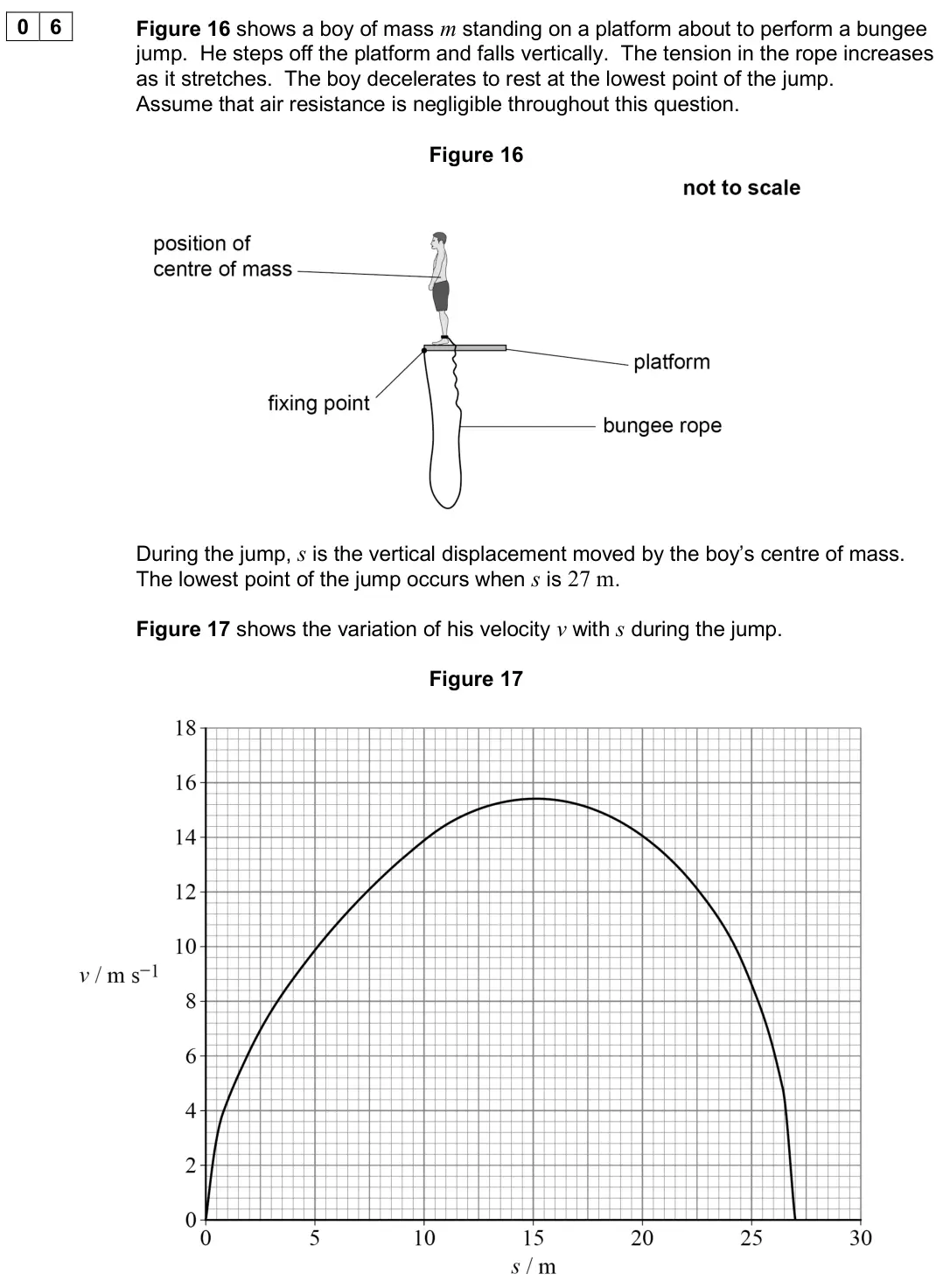
Q05.1
The whole paper ↗
Q05.3
The whole paper ↗Q05.4
The whole paper ↗Q02.1
The whole paper ↗
Q02.2
The whole paper ↗Q06.3
The whole paper ↗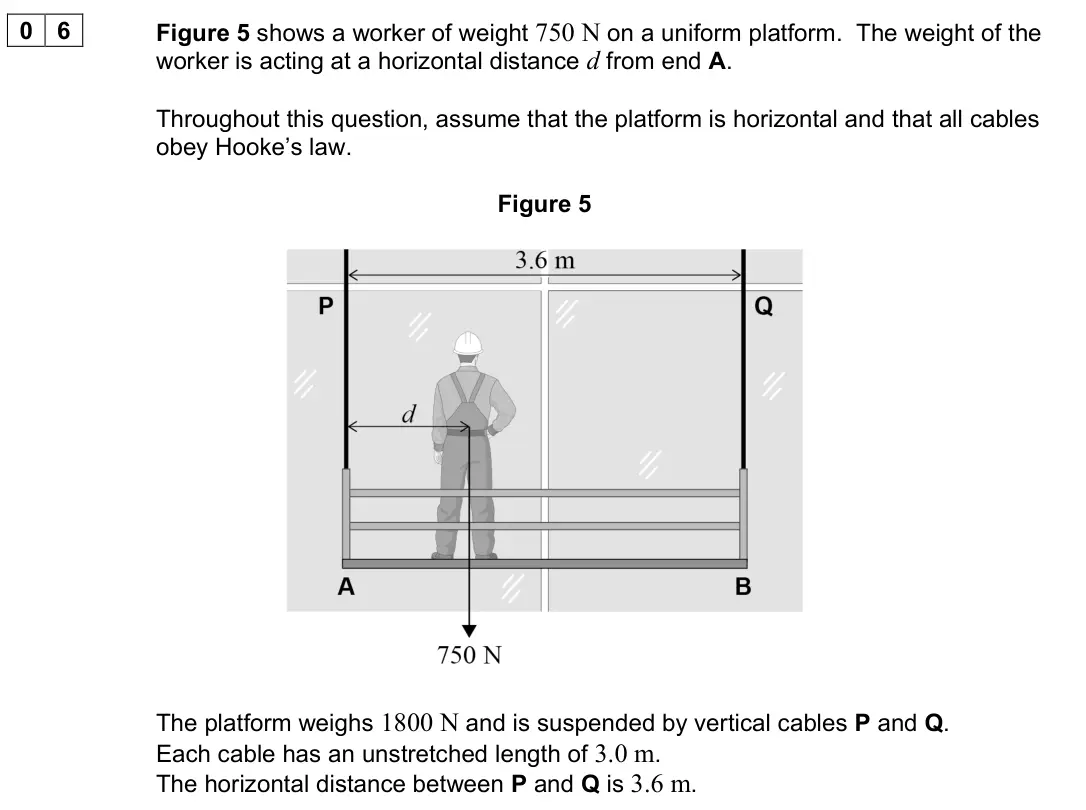
Q06.4
The whole paper ↗Q04.4
The whole paper ↗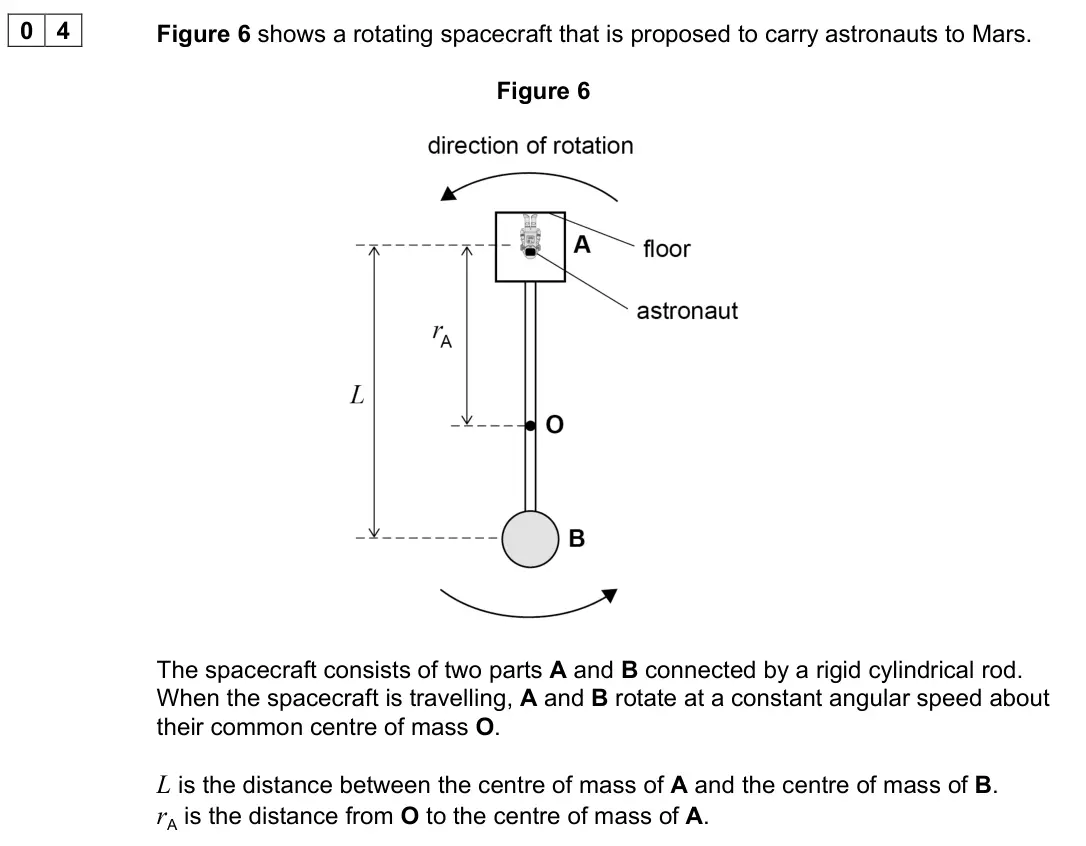
Q02.1
The whole paper ↗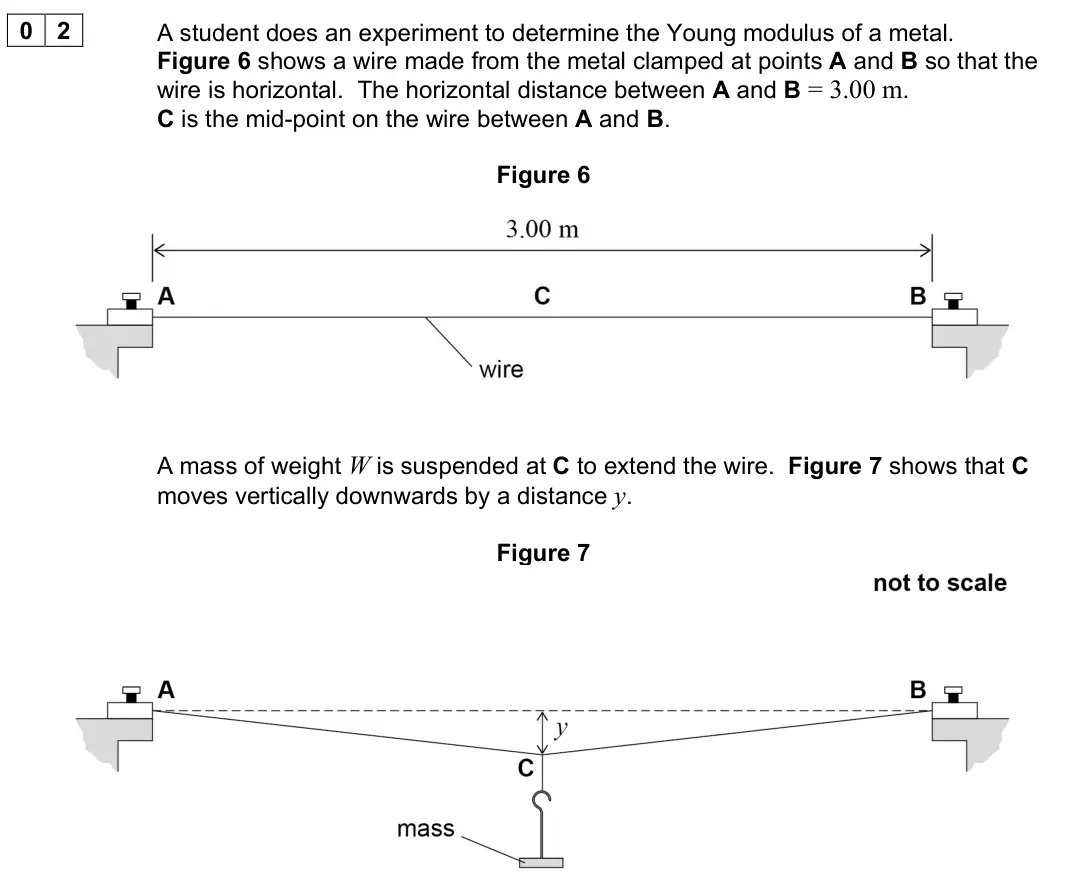
Q02.3
The whole paper ↗
All 72 questions on The Young modulus, as a list
- June 2025, Paper 1, Q04.1 (1 mark): Explain why the Young modulus and the breaking stress of a wire have the same SI unit. [1 mark] Table 1 contains data about four metal wires W, X, Y and Z. Tabl
- June 2025, Paper 1, Q04.4 (4 marks): One of the wires in Table 1 was used to obtain the stress–strain data shown in Figure 5. Figure 5 Draw a line of best fit on Figure 5. Go on to deduce, using yo
- June 2025, AS Paper 1, Q05.1 (4 marks): Determine the extension of Q. [4 marks] extension = m
- June 2025, AS Paper 2, Q21 (1 mark): P and Q are wires made from the same material. The length of Q is double the length of P. The diameter of Q is double the diameter of P. P and Q are joined. One
- June 2025, AS Paper 2, Q24 (1 mark): A rod is made of a metal of Young modulus E. When the rod is unstretched, it has a cross-sectional area A and a length L. A force is then applied to the rod tha
- June 2024, AS Paper 1, Q06.5 (1 mark): Show that each rope has the same stiffness. [1 mark]
- June 2023, Paper 1, Q05.1 (1 mark): Determine, using Figure 11, the Young modulus of the metal. [1 mark] Young modulus = Pa
- June 2023, Paper 1, Q05.3 (3 marks): Calculate the extension of each wire. [3 marks] extension = m
- June 2023, Paper 1, Q05.4 (5 marks): The right-hand steel wire is removed and replaced with an aluminium wire of diameter 1.60 mm. The unloaded length of the aluminium wire is the same as that of t
- June 2023, AS Paper 2, Q27 (1 mark): The graph shows the variation of stress with strain for a material. What is the Young modulus of the material? [1 mark] A 1.2 × 10⁵ Pa B 1.5 × 10⁵ Pa C 1.2 × 10
- June 2022, Paper 1, Q28 (1 mark): Two wires P and Q are made of the same material and have the same cross-sectional area. P has an original length L and is subject to a tensile force F. P extend
- June 2022, Paper 3A, Q02.1 (2 marks): A mass m is suspended from the free end of the strip. This produces a vertical displacement y. A student intends to measure y with the aid of a horizontal pin f
- June 2022, Paper 3A, Q02.2 (5 marks): It can be shown that 3 3 4mgL y Ewt = where: L is the distance between the free end of the unloaded strip and the blocks w is the width of the strip and is appr
- June 2022, AS Paper 1, Q06.3 (1 mark): The cable material has a Young modulus of 1.9 × 10¹¹ N m−2. Calculate the tensile stress in P when the worker is at X. [1 mark] tensile stress = N m−2
- June 2022, AS Paper 1, Q06.4 (3 marks): The original cables P and Q are replaced. Table 2 shows how the properties of the original cables compare with the replacement cables. Table 2 Unstretched lengt
- June 2022, AS Paper 2, Q29 (1 mark): A wire is made from a material of Young modulus E. The wire obeys Hooke’s law. The wire has an unstretched length L and a cross-sectional area A. When a force i
- November 2021, Paper 1, Q04.4 (5 marks): Suggest a suitable diameter for the rod. Justify your answer. [5 marks] diameter = m
- November 2021, Paper 1, Q26 (1 mark): Two wires X and Y have the same extension for the same load. X has a diameter d and is made of a metal of density ρ and Young modulus E. Y has the same mass and
- November 2021, AS Paper 2, Q02.1 (1 mark): When W is 1.0 N, y is 6.34 cm. Show that the wire extends by approximately 3 mm. [1 mark]
- November 2021, AS Paper 2, Q02.3 (4 marks): Determine E using Figure 8. [4 marks] E = Pa
- November 2021, AS Paper 2, Q32 (1 mark): A wire is made from a material of density ρ. The wire has a mass m and an initial length L. When the tensile force in the wire is F the extension of the wire is
- November 2020, Paper 1, Q26 (1 mark): An experiment is carried out to determine the Young modulus E of steel using a vertical wire of initial length L and cross-sectional area A. Various weights are
- November 2020, Paper 3A, Q02.2 (1 mark): Figure 7 shows the beam bending when a hanger of mass 0.050 kg is suspended from the midpoint. Figure 7 The microscope is refocused on the upper surface and the
- November 2020, Paper 3A, Q02.3 (3 marks): Student B performs the experiment using a thinner beam but with the same width and made from the same material as before. Discuss one possible advantage and one
- November 2020, Paper 3A, Q02.4 (4 marks): Figure 8 shows the best-fit line produced using the data collected by student A. Figure 8 It can be shown that s = where E is the Young modulus of the material
- November 2020, Paper 3A, Q02.5 (1 mark): Student C performs a different experiment using the same apparatus shown in Figure 5 on page 10. A mass M is suspended from the midpoint of the beam. The vertic
- November 2020, Paper 3A, Q02.6 (2 marks): Deduce, using Figure 9, the value of s when L = 80 cm. [2 marks] s = m
- November 2020, Paper 3A, Q02.7 (1 mark): Determine M using Figure 8. [1 mark] M = kg
- November 2020, AS Paper 2, Q03.2 (2 marks): The cross-sectional area of A is 7.0 × 10⁻⁶ m2. The unstretched length of A is 150 m. Calculate the extension of A when the tension in it is 430 N. Young modulu
- June 2019, Paper 1, Q20 (1 mark): Which combination of properties would produce the smallest extension of a wire when the same tensile force is applied to the wire? [1 mark] Cross-sectional area
- June 2019, AS Paper 2, Q28 (1 mark): A tensile force produces an extension ∆L in a steel wire of initial length L and diameter d. The same steel is used to make a second wire of initial length 2L a
- June 2018, Paper 1, Q24 (1 mark): A steel wire W has a length l and a circular cross-section of radius r. When W hangs vertically and a load is attached to the bottom end, it extends by e. Anoth
- June 2018, AS Paper 1, Q04.5 (3 marks): The steel cable from the crane has a circular cross-section of diameter 1.5 × 10⁻² m The cable is 12 m long. Calculate the extension of the cable caused by the
- June 2017, Paper 1, Q24 (1 mark): A sample of wire has a Young modulus E. A second sample of wire made from an identical material has three times the length and half the diameter of the first sa
- June 2017, AS Paper 1, Q05.1 (2 marks): Show that the extension produced in a 12 m length of the aerial wire when the tension is 5.0 × 10² N is less than 4 mm. [2 marks]
- June 2017, AS Paper 2, Q26 (1 mark): What cannot be used as a unit for the Young modulus? [1 mark] A N m–2 B Pa C kg m–2 s–2 D kg m–1 s–2
- June 2016, AS Paper 1, Q03.1 (2 marks): State what is meant by tensile stress and tensile strain. [2 marks] tensile stress tensile strain
- June 2016, AS Paper 1, Q03.2 (2 marks): Identify a property of material A using evidence from the graph to support your choice. [2 marks] property evidence
- June 2016, AS Paper 1, Q03.3 (3 marks): A cylindrical specimen of material A under test has a diameter of 1.5 × 10⁻⁴ m and a breaking stress of 1.3 GPa. Calculate the tensile force acting on the speci
- June 2016, AS Paper 1, Q03.4 (6 marks): Discuss which of the four materials shown on the graph is most suitable for each of the following applications: • the cable supporting a lift in a tall building
- June 2016, AS Paper 2, Q01.1 (1 mark): The reading on the vernier scale can be used to determine ∆l, the extension of Q. Determine ∆l using Figure 1. [1 mark] ∆l = ____________________ mm
- June 2016, AS Paper 2, Q01.2 (1 mark): Figure 2 shows how ∆l varies with m, the mass added to the hanger. Determine the mass added to the hanger shown in Figure 1. [1 mark] mass = ___________________
- June 2016, AS Paper 2, Q01.3 (1 mark): A student uses digital vernier callipers to measure the diameter of Q. She places Q between the jaws of the callipers and records the reading indicated. Without
- June 2016, AS Paper 2, Q01.4 (4 marks): The original length of Q was 1.82 m. Determine the Young modulus of the metal in Q. [4 marks] Young modulus = ____________________ Pa
- June 2016, AS Paper 2, Q01.5 (4 marks): The student repeats her experiment using a wire of the same original length and metal but with a smaller diameter. Discuss two ways this change might affect the
- Specimen, Paper 1, Q02.2 (3 marks): A student adds a series of masses to a vertical metal wire of circular cross-section and measures the extension of the wire produced. Figure 1 is a force–extens
- Specimen, Paper 1, Q02.5 (3 marks): A student adds a series of masses to a vertical metal wire of circular cross-section and measures the extension of the wire produced. Figure 1 is a force–extens
- Specimen, Paper 1, Q02.7 (3 marks): A student adds a series of masses to a vertical metal wire of circular cross-section and measures the extension of the wire produced. Figure 1 is a force–extens
- Specimen, Paper 1, Q10 (1 mark): Two vertical copper wires X and Y of equal length are joined as shown. Y has a greater diameter than X. A weight W is hung from the lower end of Y. Which of the
- June 2015, PHYA2 (old spec), Q4(a) (1 mark): Tick () two of the boxes in Table 2 to indicate which are properties of the material from which the wing is made. [1 mark] Table 2 breaking stress stiffness co
- June 2015, PHYA2 (old spec), Q4(b)(ii) (2 marks): Use the graph to determine the Young modulus of the aluminium alloy. Show your working. [2 marks] Young modulus = Pa
- June 2014, PHYA2 (old spec), Q4(a) (6 marks): In order to compare the mechanical properties of two different types of metal alloy, an engineer decides to measure the Young modulus for each of them. She has
- June 2014, PHYA2 (old spec), Q4(b)(ii) (3 marks): On the axes below, sketch possible stress-strain graphs for wires A and B. Label the axes and label the lines A and B. [3 marks]
- June 2014, PHYA2 (old spec), Q4(c)(i) (3 marks): Calculate the stress on the wire for this extension. [3 marks] stress Pa
- June 2014, PHYA2 (old spec), Q4(c)(ii) (3 marks): For the same extension as in part (c)(i), calculate the load that must be applied to wire A. The diameter of the wire A is 1.40mm. [3 marks] load N
- January 2013, PHYA2 (old spec), Q4(c)(ii) (3 marks): The unstretched length of each cable is 35m. Calculate the extension of each cable when supporting the load. extension = m (3 marks)
- January 2012, PHYA2 (old spec), Q4(d) (3 marks): Use the graph to calculate the Young modulus of copper. State an appropriate unit for your answer. answer = (3 marks)
- January 2012, PHYA2 (old spec), Q4(f) (2 marks): A certain material has a Young modulus greater than copper and undergoes brittle fracture at a stress of 176MPa. On Figure 4 draw a line showing the possible va
- June 2011, PHYA2 (old spec), Q6(a) (3 marks): On the axes below, plot a graph of stress against strain using the data in the table. (3 marks) strain 0 1.00 2.00 3.00 4.00 5.00 6.00 7.00 8.00 9.00 10.00 /10–
- June 2011, PHYA2 (old spec), Q6(b) (2 marks): Use your graph to find the Young modulus of the metal. answer = Pa (2 marks)
- June 2011, PHYA2 (old spec), Q6(c) (3 marks): A 3.0m length of steel rod is going to be used in the construction of a bridge. The tension in the rod will be 10kN and the rod must extend by no more than 1.0m
- June 2010, PHYA2 (old spec), Q5(c) (3 marks): Assuming that line A is linear up to an extension of 0.040 m, calculate the Young modulus of the rubber for small strains. The cross-sectional area of the cord
- January 2010, PHYA2 (old spec), Q6(a) (6 marks): Describe how to obtain, accurately by experiment, the data to determine the Young modulus of a metal wire. A space is provided for a labelled diagram. The quali
- January 2010, PHYA2 (old spec), Q6(b)(i) (1 mark): Draw a best-fit line using the data points. (1 mark)
- January 2010, PHYA2 (old spec), Q6(b)(ii) (4 marks): Use your line to find the Young modulus of the metal, stating an appropriate unit. answer = (4 marks)
- January 2010, PHYA2 (old spec), Q6(c) (1 mark): After reaching a strain of 7.7 × 10⁻³, the wire is to be unloaded. On Figure 7, sketch the line you would expect to obtain for this. (1 mark)
- June 2009, PHYA2 (old spec), Q2(b)(ii) (2 marks): Just before the container shown in Figure 2 was raised from the ship, the length of each lifting cable was 25 m. Show that each cable extended by 17 mm when the
- June 2008, PHA3W (2008 spec), Q6 (1 mark): 6 (a) The Young modulus, E, for a material in the form of a wire is given by E = Fl Ae . State what each symbol represents. F l A e (1 mark)
- June 2008, PHA3W (2008 spec), Q6(b) (7 marks): tensile stress 6 (b) (i) A wire, P, is subjected to an increasing tensile stress by application of a force. This results in a tensile strain being produced in t
- June 2008, PHA3W (2008 spec), Q6(c) (3 marks): 6 (c) The two wires, P and Q, are joined together and fixed to a horizontal support. A mass of 5.0 kg is suspended from the free end, as shown in Figure 10. Fig
- January 2008, PHA3W (2008 spec), Q5(b) (8 marks): (b) Two wires, A and B, of equal length and diameter are to be compared. Each of the two wires is subjected, in turn, to an increasing tensile stress until the
- January 2008, PHA3W (2008 spec), Q5(c) (2 marks): (c) A uniform wire of length 1.5 m and cross-sectional area 2.4 × 10 –6 m 2, hangs vertically from a fixed support. A mass of 10 kg is suspended from its lower
Questions, mark schemes and examiner’s reports are © AQA, from their published past papers. Plumi isn’t affiliated with any exam board. Want whole papers? AQA A-Level Physics past papers.
The Plumi iPad app also offers exam-style questions with AI feedback on your handwritten working.