Skip to content
Try on iPad

Style

Get started

Responsible design: AQA A‑Level Fashion and Textiles questions

AQA A-Level Fashion and Textiles past-paper questions on 3.2.8 Responsible design, 2020–2025, with mark schemes and examiner’s reports where available.

Getting your paper ready…

AQA A-Level Fashion and TextilesResponsible design293 questions

Paper
All papers
Exam
All years
Calculations
Difficulty

Loading the full question list…
293 questions

More options
  1. 1
    Original question 17: Analyse and evaluate the environmental benefits of using new generation Lyocell® instead of cotton fibres. [12 marks] __________________________________________

    Loading the question…

    The whole paper ↗
  2. Q10June 2025 · Paper 26 marksChallenge

    3.2.8 Responsible design

    2
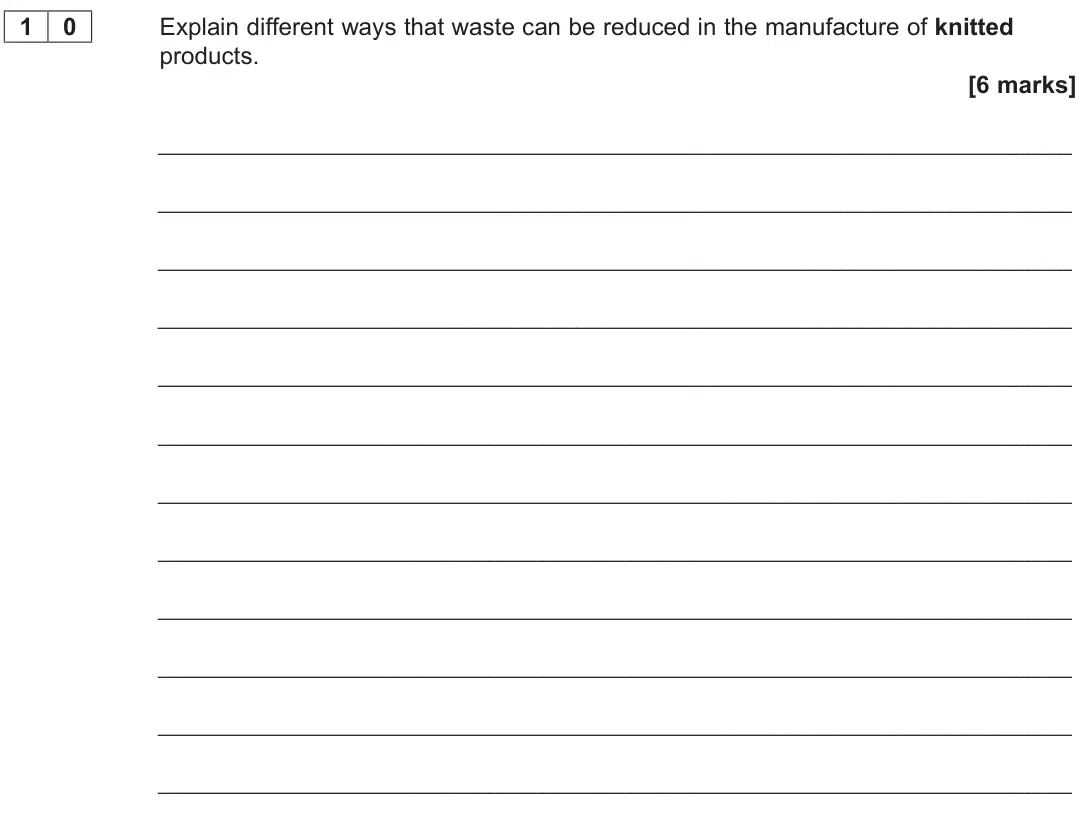
    Original question 10: Explain different ways that waste can be reduced in the manufacture of knitted products. [6 marks] _____________________________________________________________

    Loading the question…

    The whole paper ↗
  3. Q15June 2024 · Paper 19 marksChallenge

    3.1.5 Enhancement of materials3.2.8 Responsible design

    3
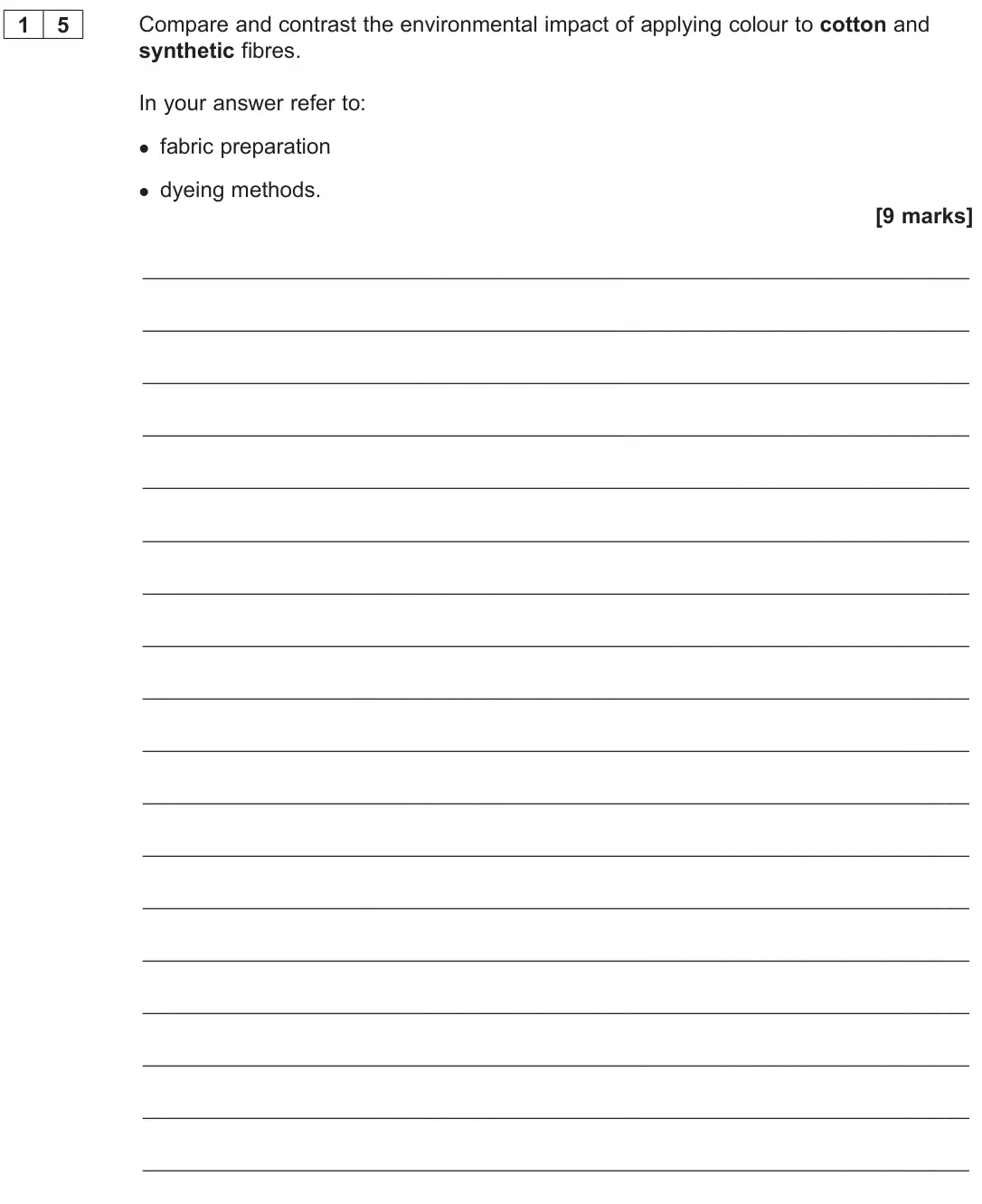
    Original question 15: Compare and contrast the environmental impact of applying colour to cotton and synthetic fibres. In your answer refer to:  fabric preparation  dyeing methods.

    Loading the question…

    The whole paper ↗
  4. Q09June 2024 · Paper 23 marksCore

    3.2.8 Responsible design

    4
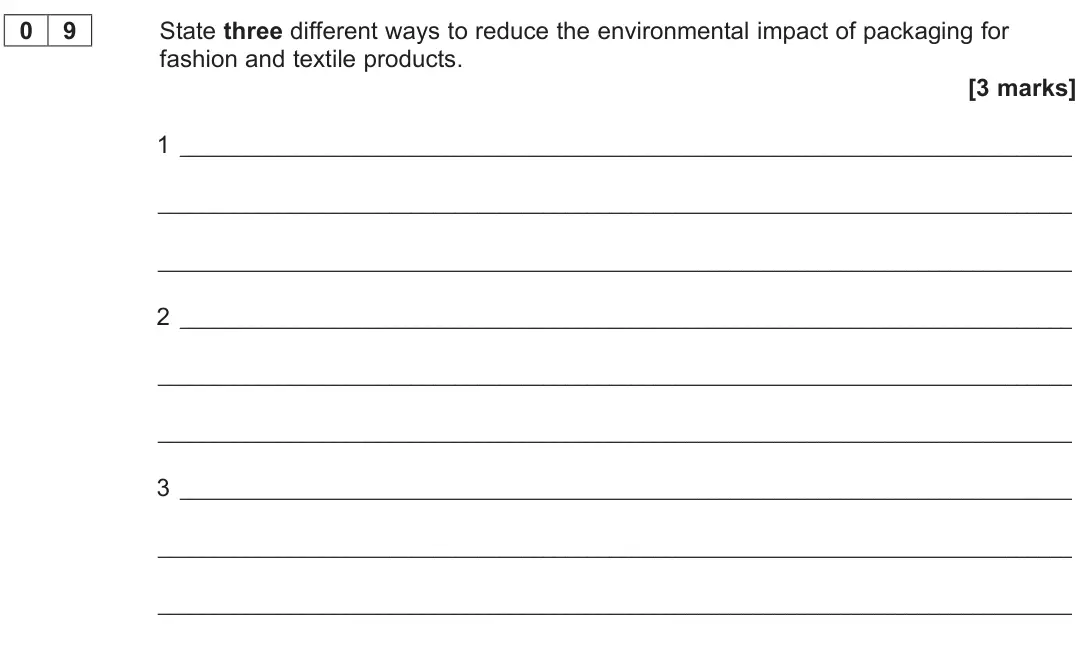
    Original question 09: State three different ways to reduce the environmental impact of packaging for fashion and textile products. [3 marks] 1 _______________________________________

    Loading the question…

    The whole paper ↗
  5. Q11.1June 2024 · Paper 22 marksCore

    3.2.8 Responsible design

    5
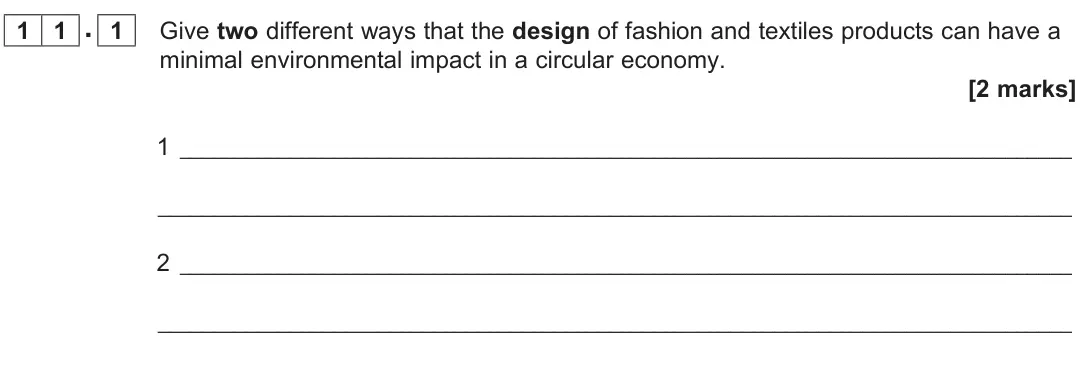
    Original question 11.1: Give two different ways that the design of fashion and textiles products can have a minimal environmental impact in a circular economy. [2 marks] 1 ____________

    Loading the question…

    The whole paper ↗
  6. Q11.2June 2024 · Paper 22 marksCore

    3.2.8 Responsible design

    6
    Original question 11.2: Give two different ways that the manufacture of fashion and textiles products can have a minimal environmental impact in a circular economy. [2 marks] 1 _______

    Loading the question…

    The whole paper ↗
  7. 7
    Original question 11: Compare and contrast the environmental impact of wool, silk and hair fibres with synthetic fibres. In your answer you should refer to:  the sources of raw mate

    Loading the question…

    The whole paper ↗
  8. Q02June 2023 · Paper 26 marksChallenge

    3.2.8 Responsible design

    8
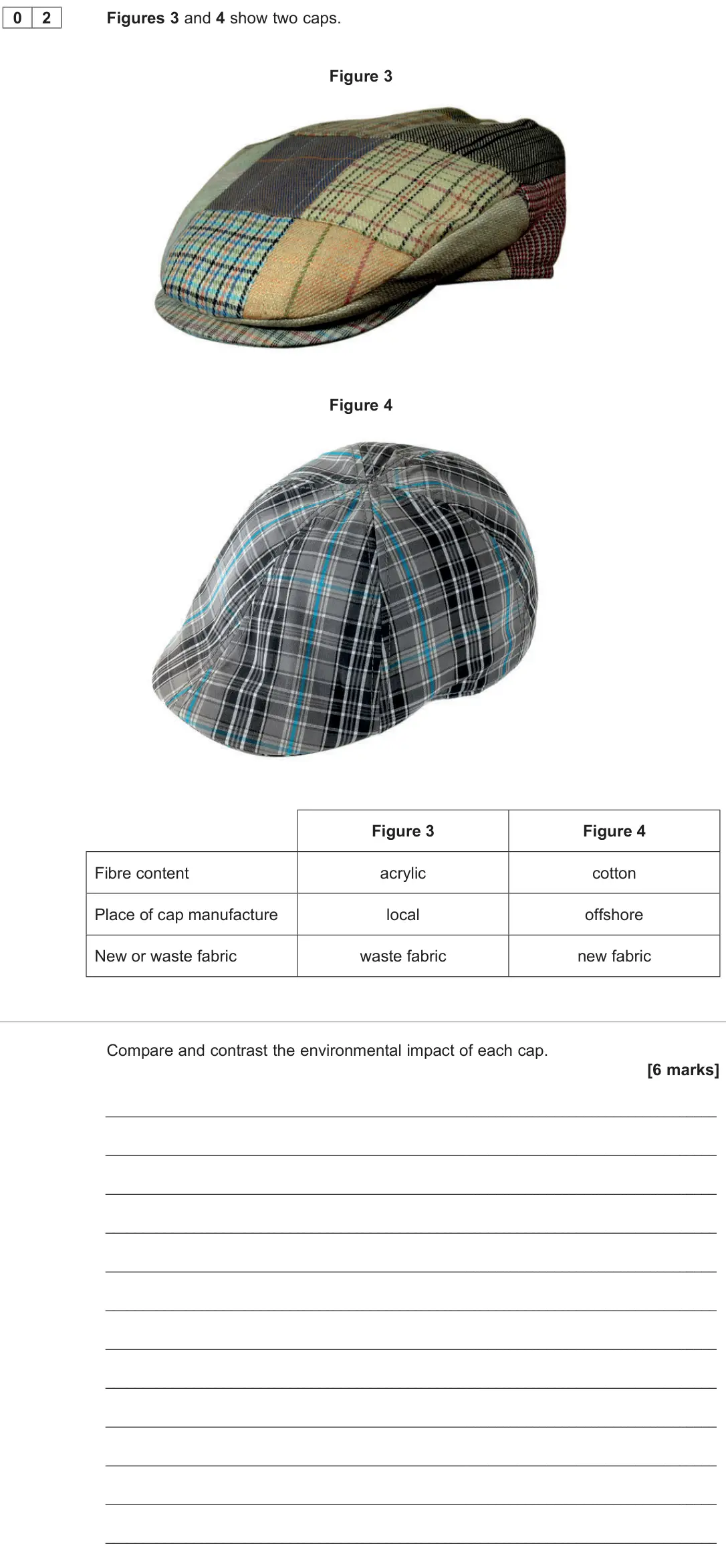
    Original question 02: Figures 3 and 4 show two caps. Figure 3 Figure 4 Figure 3 Figure 4 Fibre content acrylic cotton Place of cap manufacture local offshore New or waste fabric wast

    Loading the question…

    The whole paper ↗
  9. 9
    Original question 10: Analyse and evaluate the environmental sustainability of Lyocell® fibre. In your answer you should refer to:  the source of raw material  fibre manufacturing

    Loading the question…

    The whole paper ↗
  10. Q10June 2022 · Paper 21 markWarm-up

    3.2.8 Responsible design

    10
    Original question 10: State what is meant by the term upcycling. [1 mark] ___________________________________________________________________________________ ________________________

    Loading the question…

    The whole paper ↗
  11. Q11June 2022 · Paper 22 marksCore

    3.2.8 Responsible design

    11
    Original question 11: Give two environmental benefits of making garments from fully fashioned knitted panels. [2 marks] Benefit 1 ____________________________________________________

    Loading the question…

    The whole paper ↗
  12. 12
    Original question 19: Analyse and evaluate the impact of the six Rs of sustainability for retailers and consumers of fashion and textile products. [9 marks] _________________________

    Loading the question…

    The whole paper ↗
  13. 13
    Original question 21: Analyse and evaluate the use of natural and synthetic fibres in textiles. Consider how the sourcing, care and disposal of products affects sustainability. [12 m

    Loading the question…

    The whole paper ↗
  14. Q05November 2020 · Paper 29 marksChallenge

    3.2.8 Responsible design

    14
    Original question 05: Explain how designers and manufacturers respond to consumer demand for ethical and sustainable fashion and textile products. [9 marks] _________________________

    Loading the question…

    The whole paper ↗
  15. Q06November 2020 · Paper 26 marksChallenge

    3.2.8 Responsible design

    15
    Original question 06: Analyse and evaluate why new generation lyocells are better for the environment than cotton. [6 marks] _________________________________________________________

    Loading the question…

    The whole paper ↗
  16. Q09November 2020 · Paper 21 markWarm-up

    3.2.8 Responsible design

    16
    Original question 09: State the purpose of the European Eco label. [1 mark] ___________________________________________________________________________________ ______________________

    Loading the question…

    The whole paper ↗
  17. Q05Specimen · Paper 112 marksChallenge

    3.2.8 Responsible design

    17
    Original question 05: 5 Evaluate the impact the production of fashion products has on the environment. In your answer you should make recommendations for how this impact could be red

    Loading the question…

    The whole paper ↗
All 17 questions on Responsible design, as a list
  1. June 2025, Paper 1, Q17 (12 marks): Analyse and evaluate the environmental benefits of using new generation Lyocell® instead of cotton fibres. [12 marks] __________________________________________
  2. June 2025, Paper 2, Q10 (6 marks): Explain different ways that waste can be reduced in the manufacture of knitted products. [6 marks] _____________________________________________________________
  3. June 2024, Paper 1, Q15 (9 marks): Compare and contrast the environmental impact of applying colour to cotton and synthetic fibres. In your answer refer to:  fabric preparation  dyeing methods.
  4. June 2024, Paper 2, Q09 (3 marks): State three different ways to reduce the environmental impact of packaging for fashion and textile products. [3 marks] 1 _______________________________________
  5. June 2024, Paper 2, Q11.1 (2 marks): Give two different ways that the design of fashion and textiles products can have a minimal environmental impact in a circular economy. [2 marks] 1 ____________
  6. June 2024, Paper 2, Q11.2 (2 marks): Give two different ways that the manufacture of fashion and textiles products can have a minimal environmental impact in a circular economy. [2 marks] 1 _______
  7. June 2023, Paper 1, Q11 (12 marks): Compare and contrast the environmental impact of wool, silk and hair fibres with synthetic fibres. In your answer you should refer to:  the sources of raw mate
  8. June 2023, Paper 2, Q02 (6 marks): Figures 3 and 4 show two caps. Figure 3 Figure 4 Figure 3 Figure 4 Fibre content acrylic cotton Place of cap manufacture local offshore New or waste fabric wast
  9. June 2022, Paper 1, Q10 (12 marks): Analyse and evaluate the environmental sustainability of Lyocell® fibre. In your answer you should refer to:  the source of raw material  fibre manufacturing
  10. June 2022, Paper 2, Q10 (1 mark): State what is meant by the term upcycling. [1 mark] ___________________________________________________________________________________ ________________________
  11. June 2022, Paper 2, Q11 (2 marks): Give two environmental benefits of making garments from fully fashioned knitted panels. [2 marks] Benefit 1 ____________________________________________________
  12. November 2021, Paper 1, Q19 (9 marks): Analyse and evaluate the impact of the six Rs of sustainability for retailers and consumers of fashion and textile products. [9 marks] _________________________
  13. November 2020, Paper 1, Q21 (12 marks): Analyse and evaluate the use of natural and synthetic fibres in textiles. Consider how the sourcing, care and disposal of products affects sustainability. [12 m
  14. November 2020, Paper 2, Q05 (9 marks): Explain how designers and manufacturers respond to consumer demand for ethical and sustainable fashion and textile products. [9 marks] _________________________
  15. November 2020, Paper 2, Q06 (6 marks): Analyse and evaluate why new generation lyocells are better for the environment than cotton. [6 marks] _________________________________________________________
  16. November 2020, Paper 2, Q09 (1 mark): State the purpose of the European Eco label. [1 mark] ___________________________________________________________________________________ ______________________
  17. Specimen, Paper 1, Q05 (12 marks): 5 Evaluate the impact the production of fashion products has on the environment. In your answer you should make recommendations for how this impact could be red

Questions, mark schemes and examiner’s reports are © AQA, from their published past papers. Plumi isn’t affiliated with any exam board. Want whole papers? AQA A-Level Fashion and Textiles past papers.

The Plumi iPad app also offers exam-style questions with AI feedback on your handwritten working.