 plumi
Performance characteristics of materials: AQA A‑Level Fashion and Textiles questions
AQA A-Level Fashion and Textiles past-paper questions on 3.1.2 Performance characteristics of materials, 2020–2025, with mark schemes and examiner’s reports where available.
Getting your paper ready…
AQA A-Level Fashion and TextilesPerformance characteristics of materials293 questions
Paper
All papers
Exam
All years
Calculations
Difficulty
Loading the full question list…
All 37 questions on Performance characteristics of materials, as a list
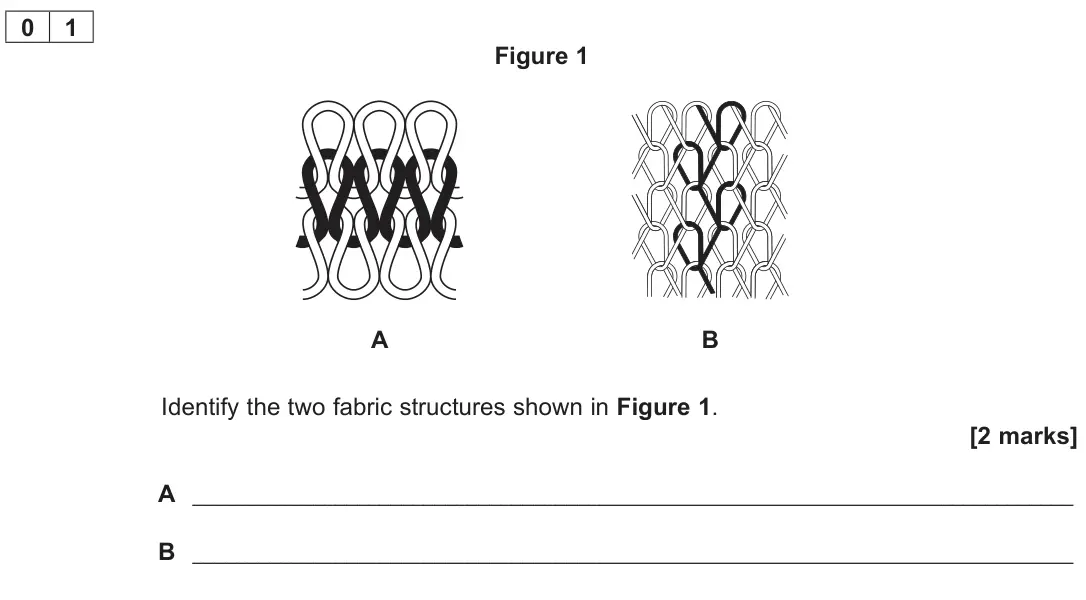
- June 2025, Paper 1, Q01 (2 marks): Figure 1 A B Identify the two fabric structures shown in Figure 1. [2 marks] A ________________________________________________________________________________
- June 2025, Paper 1, Q03.1 (3 marks): Describe the properties of terry towelling fabric. [3 marks] ___________________________________________________________________________________ _______________
- June 2025, Paper 1, Q03.2 (3 marks): Describe the characteristics of herringbone fabric. [3 marks] ___________________________________________________________________________________ ______________
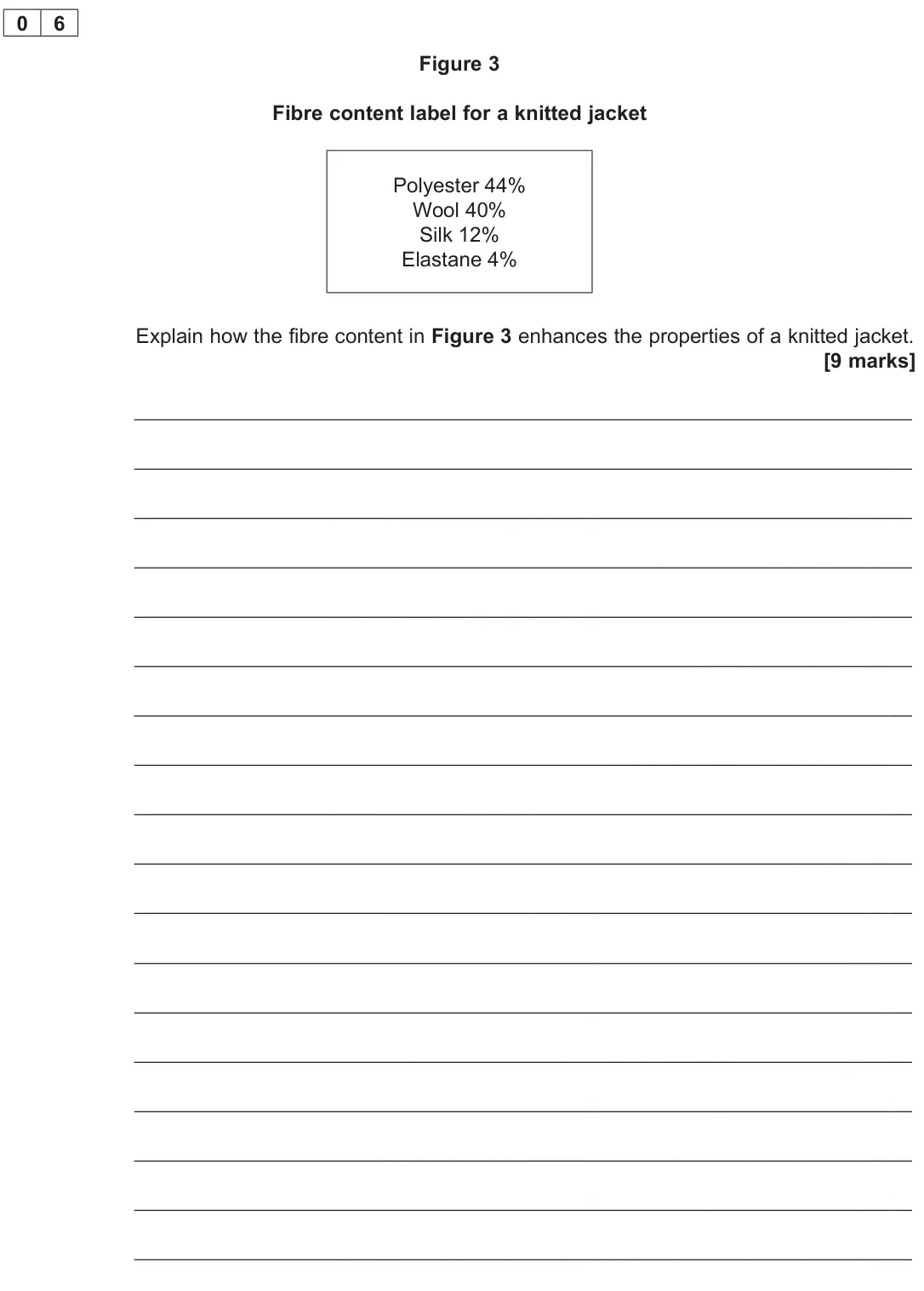
- June 2025, Paper 1, Q06 (9 marks): Figure 3 Fibre content label for a knitted jacket Polyester 44% Wool 40% Silk 12% Elastane 4% Explain how the fibre content in Figure 3 enhances the properties
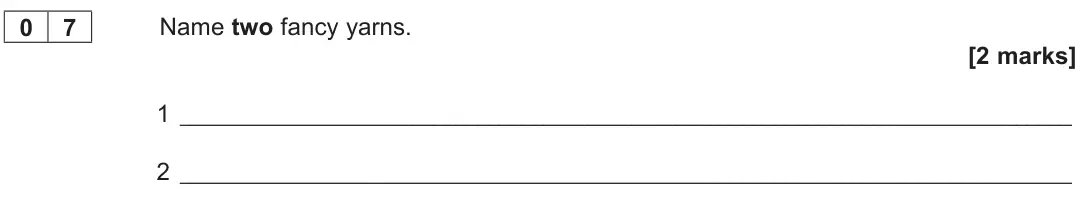
- June 2025, Paper 1, Q07 (2 marks): Name two fancy yarns. [2 marks] 1 _________________________________________________________________________________ 2 __________________________________________
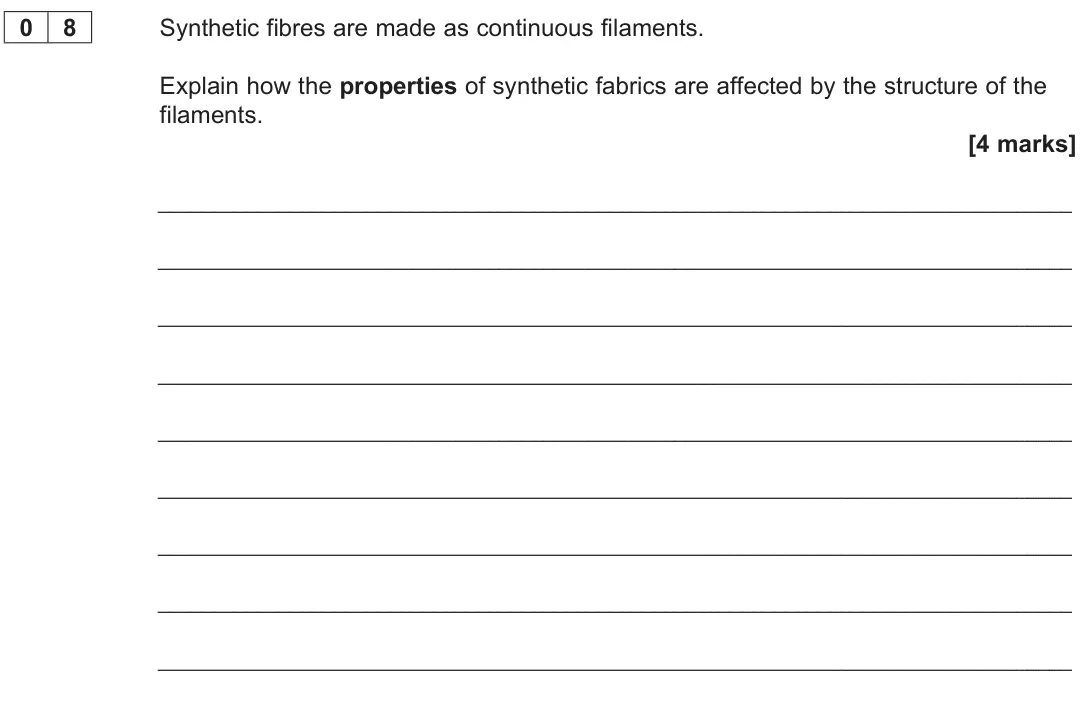
- June 2025, Paper 1, Q08 (4 marks): Synthetic fibres are made as continuous filaments. Explain how the properties of synthetic fabrics are affected by the structure of the filaments. [4 marks] ___
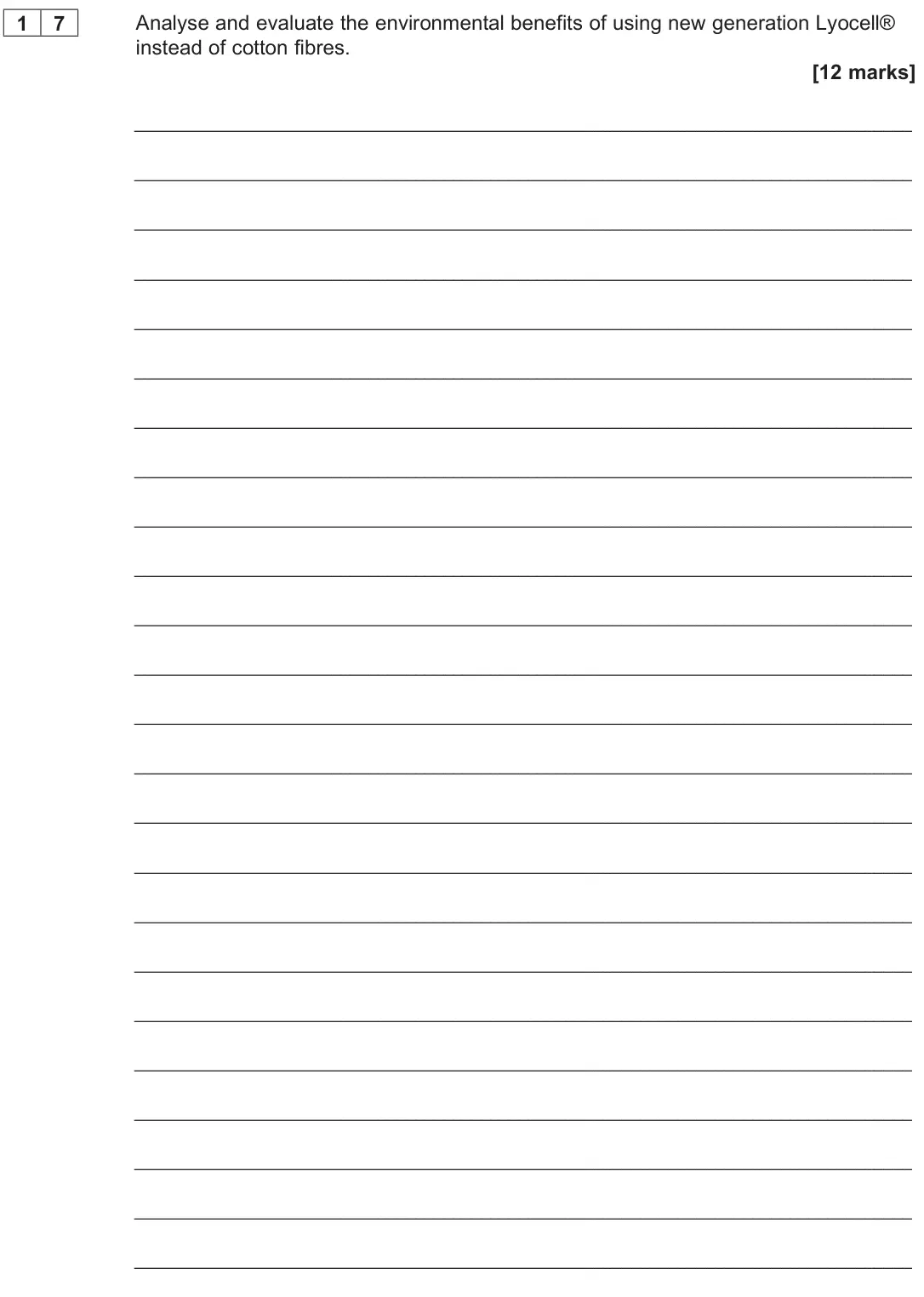
- June 2025, Paper 1, Q17 (12 marks): Analyse and evaluate the environmental benefits of using new generation Lyocell® instead of cotton fibres. [12 marks] __________________________________________
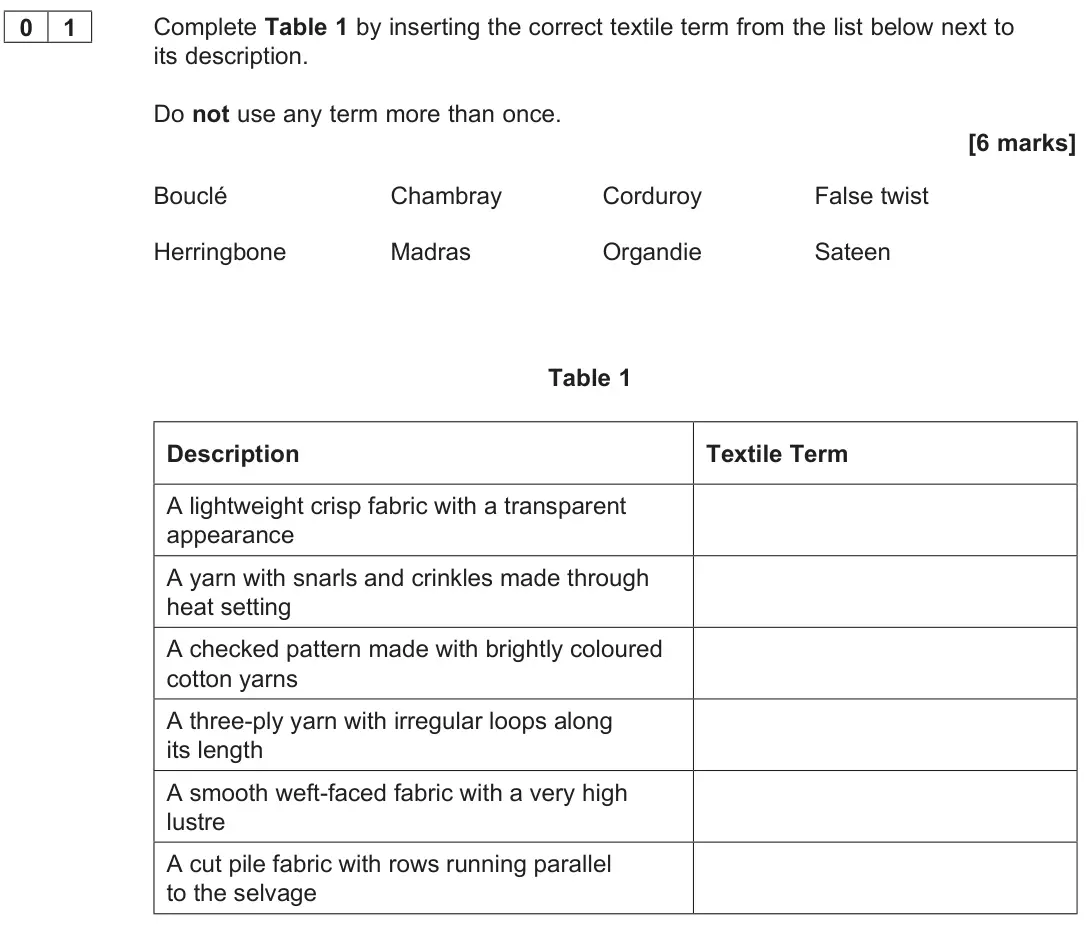
- June 2024, Paper 1, Q01 (6 marks): Complete Table 1 by inserting the correct textile term from the list below next to its description. Do not use any term more than once. [6 marks] Bouclé Chambra
- June 2024, Paper 1, Q03 (9 marks): Explain the differences between plain woven silk and polyester satin fabrics and the reasons why they are used for garment linings. Refer to specific examples o
- June 2024, Paper 1, Q08 (6 marks): Explain why double jersey fabric is used for hoodies. [6 marks] ___________________________________________________________________________________ ____________
- June 2024, Paper 1, Q10 (4 marks): Outline the differences between the manufacture of felt and needle felt. [4 marks] _____________________________________________________________________________
- June 2024, Paper 1, Q21 (9 marks): Explain how modern and smart materials benefit the wearer of clothing and accessories designed for walking and hiking. In your answer refer to specific material
- June 2023, Paper 1, Q01.1 (3 marks): Describe the structure of twill weave fabric. [3 marks] ___________________________________________________________________________________ ____________________
- June 2023, Paper 1, Q01.2 (3 marks): Describe the structure of weft knitted fabric. [3 marks] ___________________________________________________________________________________ ___________________
- June 2023, Paper 1, Q02 (6 marks): Explain how smart materials can improve the performance of sportswear. You should include specific examples of smart materials in your answer. [6 marks] _______
- June 2023, Paper 1, Q11 (12 marks): Compare and contrast the environmental impact of wool, silk and hair fibres with synthetic fibres. In your answer you should refer to: the sources of raw mate
- June 2023, Paper 1, Q17 (4 marks): Describe two different methods of core-spinning yarns. [4 marks] Method 1 _________________________________________________________________________ ____________
- June 2023, Paper 1, Q21 (6 marks): Explain why polar fleece is used for fashion and textiles products. In your answer refer to the structure of the fabric. [6 marks] _____________________________
- June 2022, Paper 1, Q03.1 (3 marks): Describe the appearance and characteristics of crêpe fabric. [3 marks] ___________________________________________________________________________________ _____
- June 2022, Paper 1, Q03.2 (3 marks): Describe the appearance and characteristics of gingham fabric. [3 marks] ___________________________________________________________________________________ ___
- June 2022, Paper 1, Q03.3 (3 marks): Describe the appearance and characteristics of taffeta fabric. [3 marks] ___________________________________________________________________________________ ___
- June 2022, Paper 1, Q07 (9 marks): Figure 2 Fibre content label for a knitted jumper 58% Wool 30% Nylon 10% Metal 2% Elastane Explain how the fibre content in Figure 2 enhances the properties of
- June 2022, Paper 1, Q10 (12 marks): Analyse and evaluate the environmental sustainability of Lyocell® fibre. In your answer you should refer to: the source of raw material fibre manufacturing
- November 2021, Paper 1, Q02.1 (1 mark): State what is meant by the term non-woven fabric. [1 mark] ___________________________________________________________________________________ _________________
- November 2021, Paper 1, Q02.2 (6 marks): Describe two different methods of making non-woven fabric. [6 marks] Method 1 _________________________________________________________________________ ________
- November 2021, Paper 1, Q06 (6 marks): Explain why a designer might choose to use silk velvet fabric for fashion trousers. [6 marks] __________________________________________________________________
- November 2021, Paper 1, Q16 (4 marks): Describe two ways that different fibres can be combined together to make a yarn. [4 marks] _____________________________________________________________________
- November 2020, Paper 1, Q02 (2 marks): Explain what is meant by the term ‘denier’. [2 marks] ___________________________________________________________________________________ ______________________
- November 2020, Paper 1, Q06 (6 marks): Analyse and evaluate the use of warp and weft knitted fabrics for casual wear. [6 marks] _______________________________________________________________________
- November 2020, Paper 1, Q09 (1 mark): Define what is meant by the term ‘smart material’. [1 mark] ___________________________________________________________________________________ ________________
- November 2020, Paper 1, Q11 (4 marks): Describe the structure of slub and bouclé yarns and the appearance of fabrics made from them. [4 marks] ________________________________________________________
- November 2020, Paper 1, Q20 (6 marks): Special occasion wear often has a lustre. Explain how fibres and fabrics contribute to the lustrous qualities of special occasion wear. [6 marks] ______________
- November 2020, Paper 1, Q21 (12 marks): Analyse and evaluate the use of natural and synthetic fibres in textiles. Consider how the sourcing, care and disposal of products affects sustainability. [12 m
- Specimen, Paper 1, Q01 (6 marks): 1 Explain why umbrella fabric is usually made from polyamide fibre. [6 marks]
- Specimen, Paper 1, Q09.1 (6 marks): 9 . 1 Explain why polyester fleece is a popular choice for children's sleepwear. [6 marks]
- Specimen, Paper 1, Q09.2 (4 marks): 9 . 2 Explain the construction of a polyester fleece fabric. [4 marks]
- Specimen, Paper 1, Q12 (9 marks): Explain why fibres are blended. Give examples to support your answer. [9 marks]
Questions, mark schemes and examiner’s reports are © AQA, from their published past papers. Plumi isn’t affiliated with any exam board. Want whole papers? AQA A-Level Fashion and Textiles past papers.
The Plumi iPad app also offers exam-style questions with AI feedback on your handwritten working.