Skip to content
Try on iPad

Style

Get started
Whole past papers

Methods of joining and use of components: AQA A‑Level Fashion and Textiles questions

AQA A-Level Fashion and Textiles past-paper questions on 3.1.3 Methods of joining and use of components, 2020–2025, with mark schemes and examiner’s reports where available.

Getting your paper ready…

AQA A-Level Fashion and TextilesMethods of joining and use of components293 questions

Paper
All papers
Exam
All years
Calculations
Difficulty

Loading the full question list…
293 questions

More options
  1. Q20June 2025 · Paper 16 marksChallenge

    3.1.3 Methods of joining and use of components

    1
    Original question 20: Explain the differences between underlining and interfacing. [6 marks] ___________________________________________________________________________________ _____

    Loading the question…

    The whole paper ↗
  2. Q02June 2024 · Paper 13 marksCore

    3.1.3 Methods of joining and use of components

    2
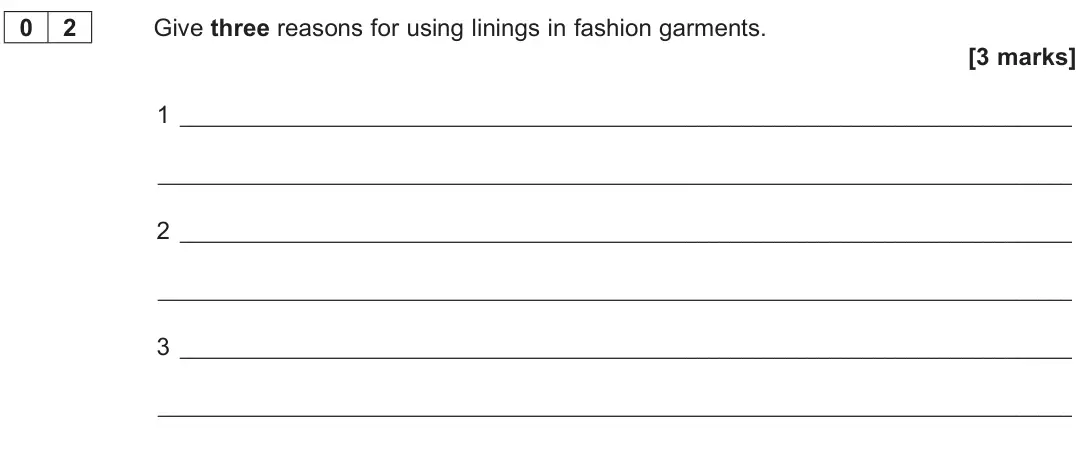
    Original question 02: Give three reasons for using linings in fashion garments. [3 marks] 1 _________________________________________________________________________________ ________

    Loading the question…

    The whole paper ↗
  3. 3
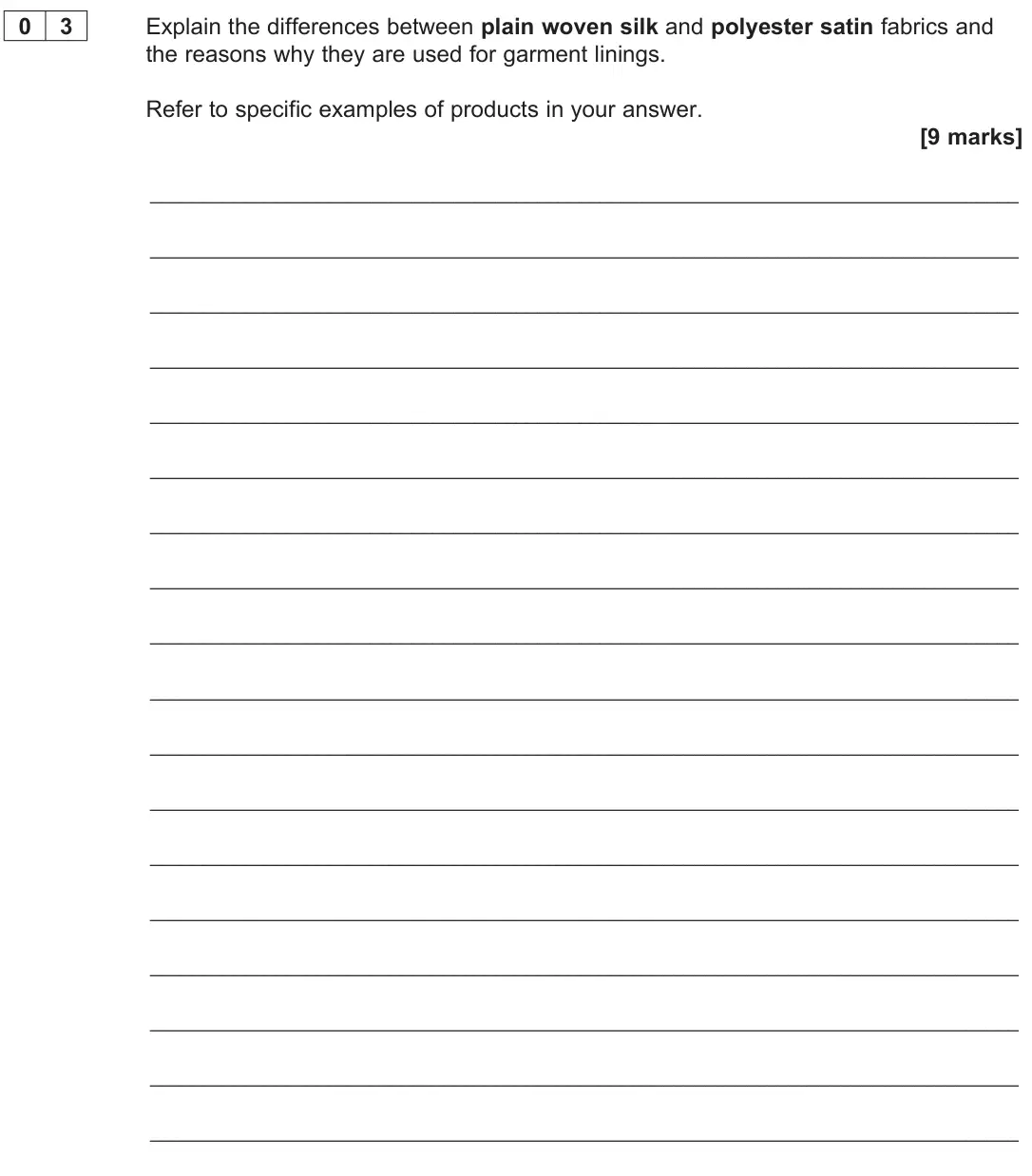
    Original question 03: Explain the differences between plain woven silk and polyester satin fabrics and the reasons why they are used for garment linings. Refer to specific examples o

    Loading the question…

    The whole paper ↗
  4. Q17June 2024 · Paper 16 marksChallenge

    3.1.3 Methods of joining and use of components

    4
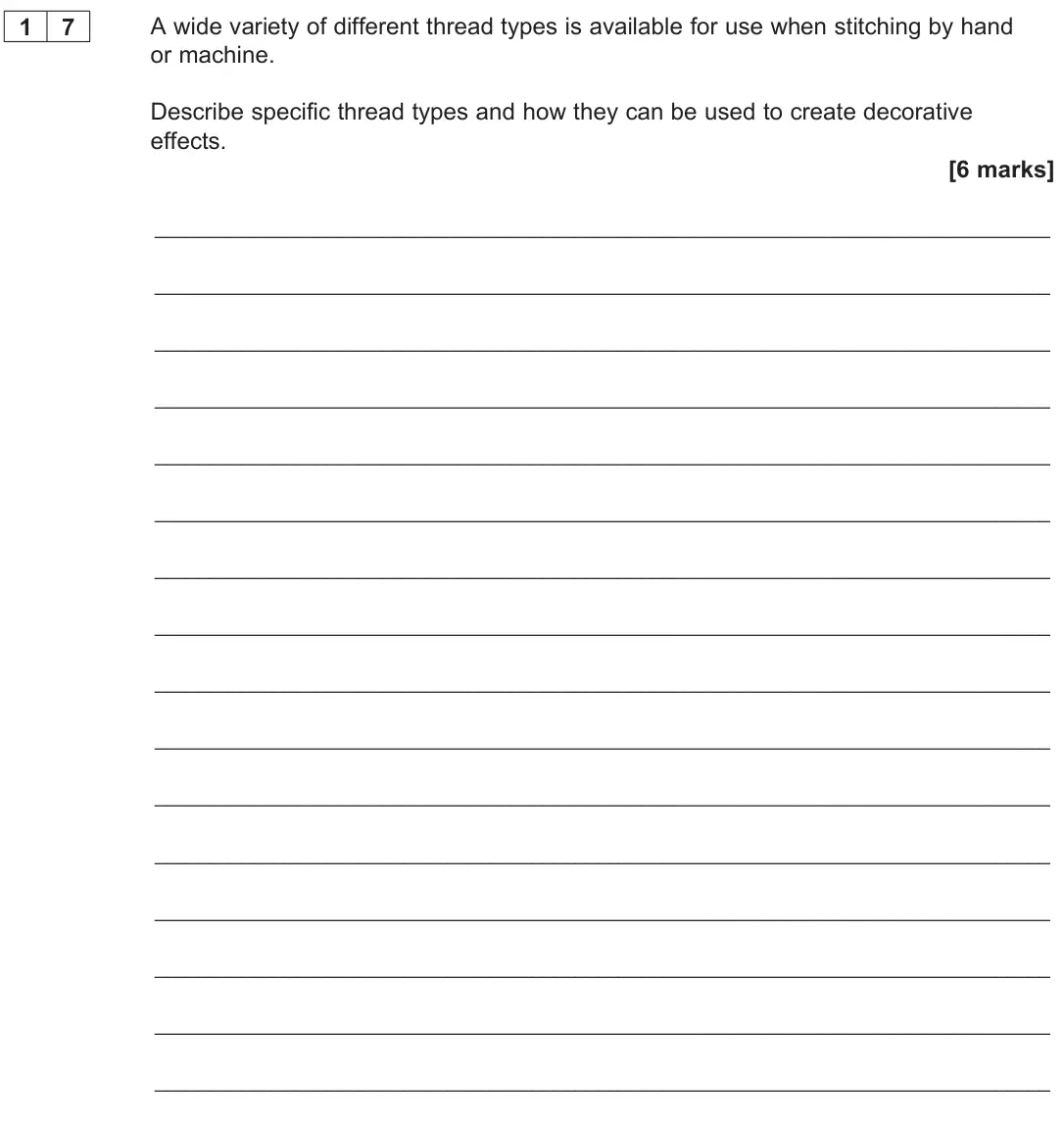
    Original question 17: A wide variety of different thread types is available for use when stitching by hand or machine. Describe specific thread types and how they can be used to crea

    Loading the question…

    The whole paper ↗
  5. Q13June 2023 · Paper 12 marksCore

    3.1.3 Methods of joining and use of components

    5
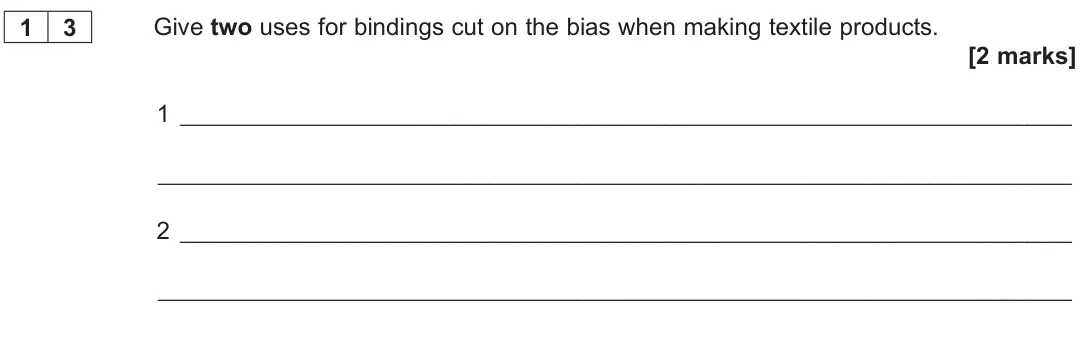
    Original question 13: Give two uses for bindings cut on the bias when making textile products. [2 marks] 1 ___________________________________________________________________________

    Loading the question…

    The whole paper ↗
  6. Q15June 2022 · Paper 12 marksCore

    3.1.3 Methods of joining and use of components

    6
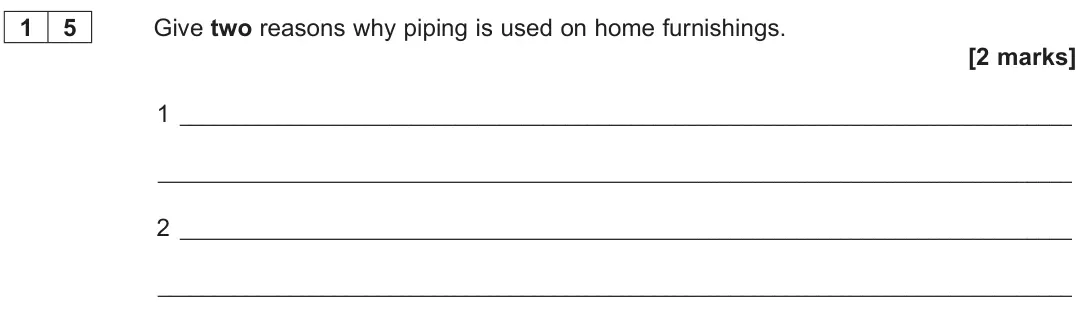
    Original question 15: Give two reasons why piping is used on home furnishings. [2 marks] 1 _________________________________________________________________________________ _________

    Loading the question…

    The whole paper ↗
  7. Q04November 2021 · Paper 16 marksChallenge

    3.1.3 Methods of joining and use of components

    7
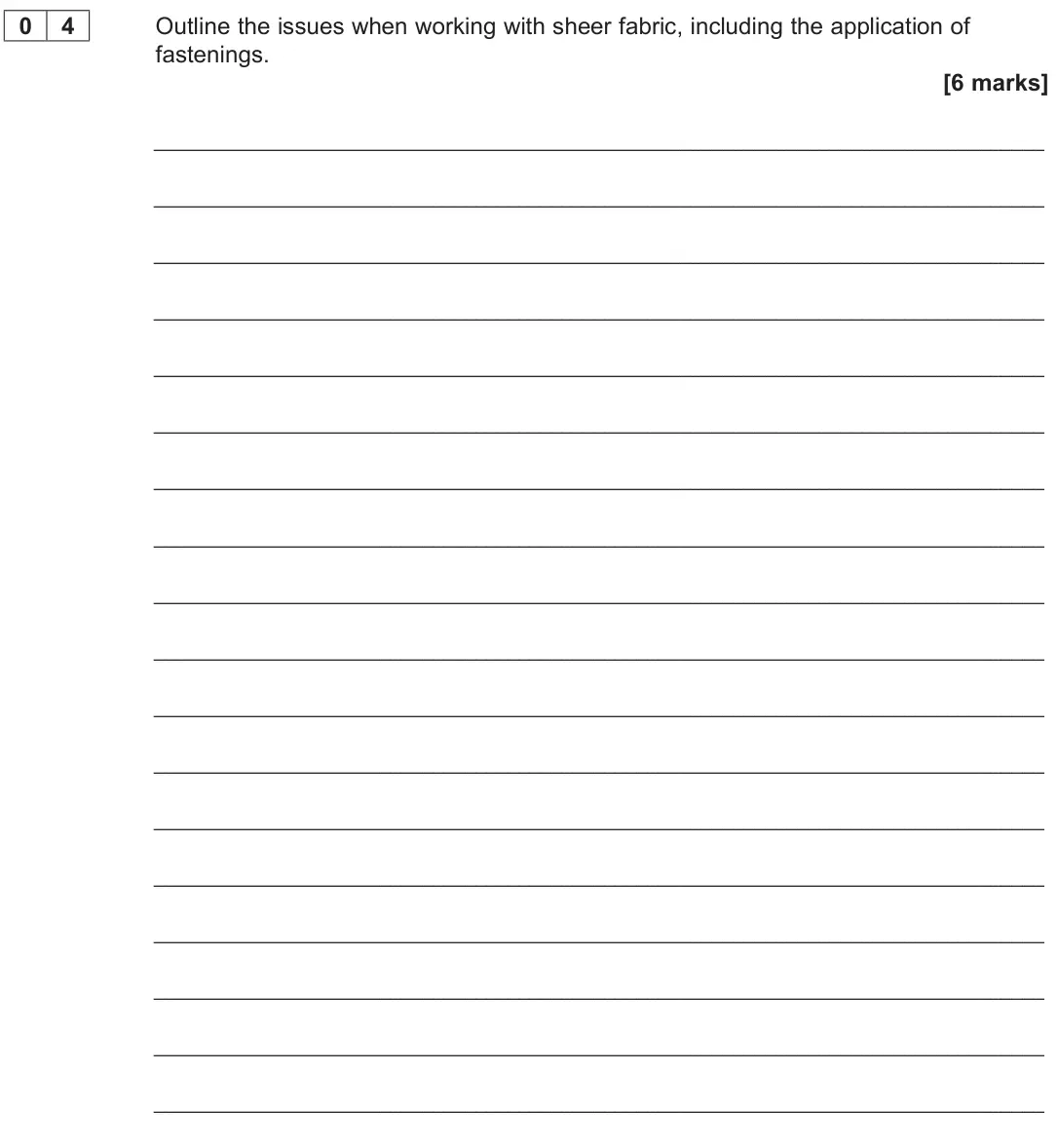
    Original question 04: Outline the issues when working with sheer fabric, including the application of fastenings. [6 marks] __________________________________________________________

    Loading the question…

    The whole paper ↗
  8. Q10November 2020 · Paper 12 marksCore

    3.1.3 Methods of joining and use of components

    8
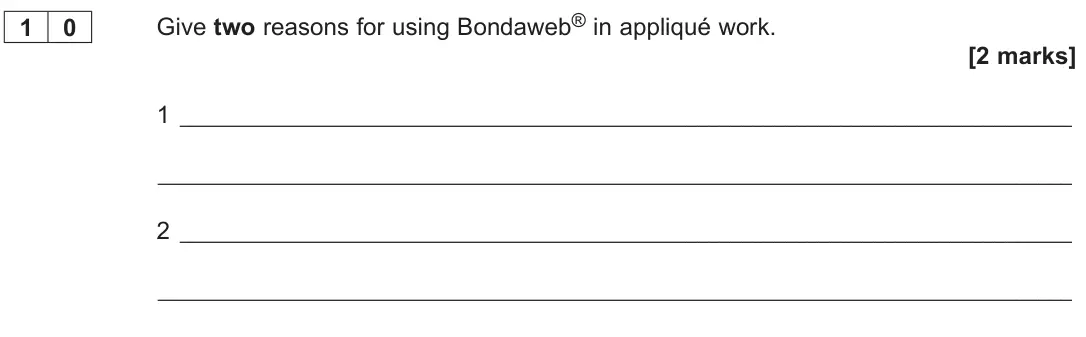
    Original question 10: Give two reasons for using Bondaweb® in appliqué work. [2 marks] 1 _________________________________________________________________________________ ___________

    Loading the question…

    The whole paper ↗
  9. Q14November 2020 · Paper 16 marksChallenge

    3.1.3 Methods of joining and use of components

    9
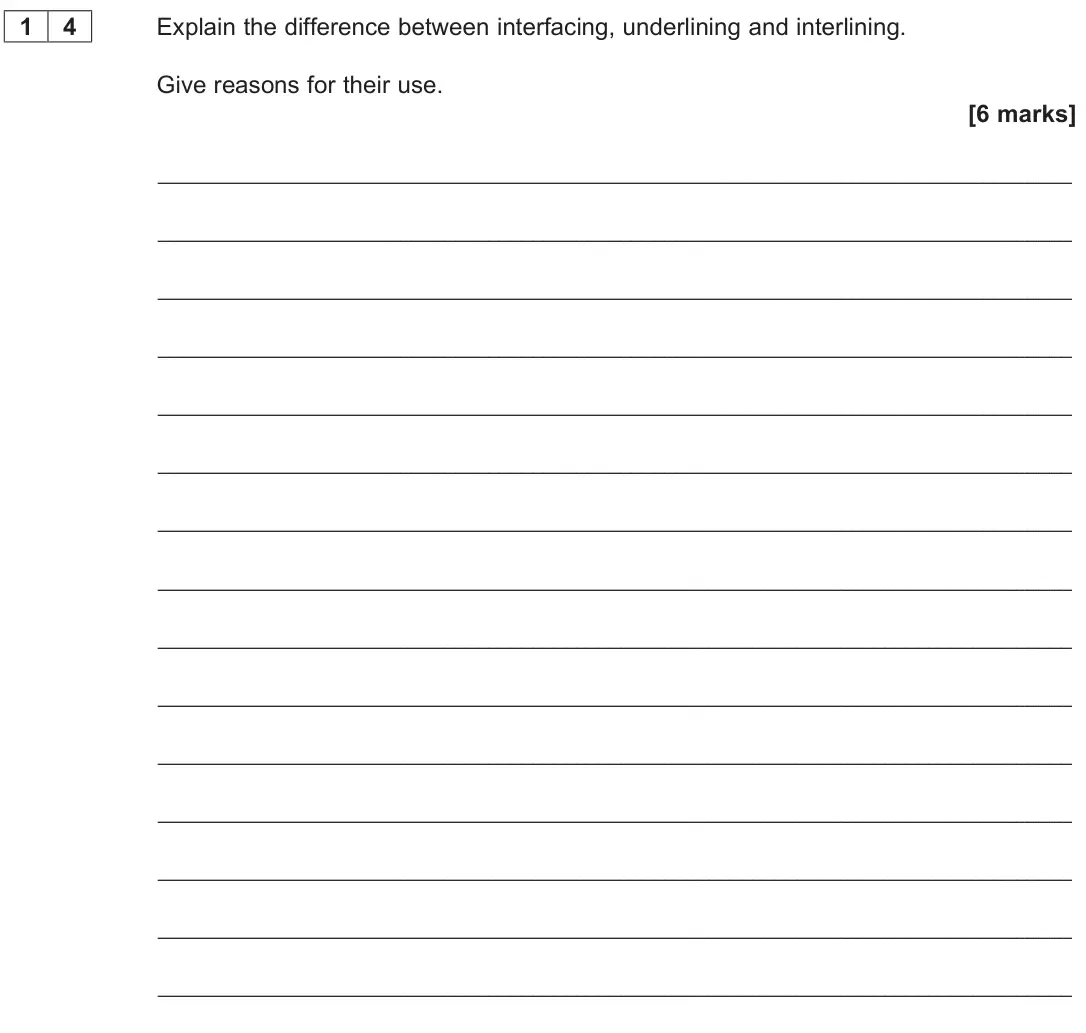
    Original question 14: Explain the difference between interfacing, underlining and interlining. Give reasons for their use. [6 marks] _________________________________________________

    Loading the question…

    The whole paper ↗
  10. Q18November 2020 · Paper 19 marksChallenge

    3.1.3 Methods of joining and use of components

    10
    Original question 18: Describe how fringing, piping and diamantés can be used in a range of home furnishing products. [9 marks] ______________________________________________________

    Loading the question…

    The whole paper ↗
All 10 questions on Methods of joining and use of components, as a list
  1. June 2025, Paper 1, Q20 (6 marks): Explain the differences between underlining and interfacing. [6 marks] ___________________________________________________________________________________ _____
  2. June 2024, Paper 1, Q02 (3 marks): Give three reasons for using linings in fashion garments. [3 marks] 1 _________________________________________________________________________________ ________
  3. June 2024, Paper 1, Q03 (9 marks): Explain the differences between plain woven silk and polyester satin fabrics and the reasons why they are used for garment linings. Refer to specific examples o
  4. June 2024, Paper 1, Q17 (6 marks): A wide variety of different thread types is available for use when stitching by hand or machine. Describe specific thread types and how they can be used to crea
  5. June 2023, Paper 1, Q13 (2 marks): Give two uses for bindings cut on the bias when making textile products. [2 marks] 1 ___________________________________________________________________________
  6. June 2022, Paper 1, Q15 (2 marks): Give two reasons why piping is used on home furnishings. [2 marks] 1 _________________________________________________________________________________ _________
  7. November 2021, Paper 1, Q04 (6 marks): Outline the issues when working with sheer fabric, including the application of fastenings. [6 marks] __________________________________________________________
  8. November 2020, Paper 1, Q10 (2 marks): Give two reasons for using Bondaweb® in appliqué work. [2 marks] 1 _________________________________________________________________________________ ___________
  9. November 2020, Paper 1, Q14 (6 marks): Explain the difference between interfacing, underlining and interlining. Give reasons for their use. [6 marks] _________________________________________________
  10. November 2020, Paper 1, Q18 (9 marks): Describe how fringing, piping and diamantés can be used in a range of home furnishing products. [9 marks] ______________________________________________________

Questions, mark schemes and examiner’s reports are © AQA, from their published past papers. Plumi isn’t affiliated with any exam board. Want whole papers? AQA A-Level Fashion and Textiles past papers.

The Plumi iPad app also offers exam-style questions with AI feedback on your handwritten working.