 plumi
Environmental features and the severity of pollution: AQA A‑Level Environmental Science questions
AQA A-Level Environmental Science past-paper questions on 3.4.2 Environmental features and the severity of pollution, 2020–2025, with mark schemes and examiner’s reports where available.
Getting your paper ready…
AQA A-Level Environmental ScienceEnvironmental features and the severity of pollution551 questions
Paper
All papers
Exam
All years
Calculations
Loading the full question list…
All 7 questions on Environmental features and the severity of pollution, as a list
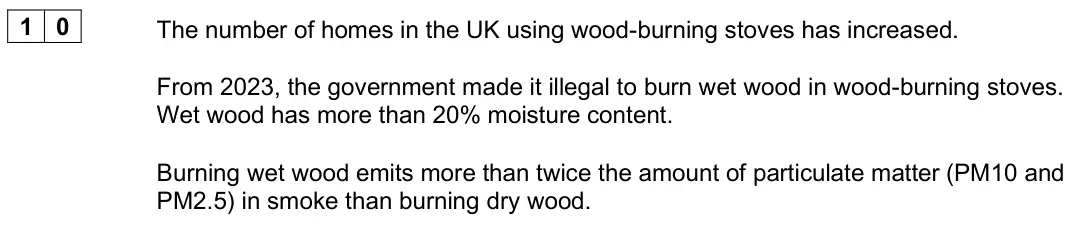
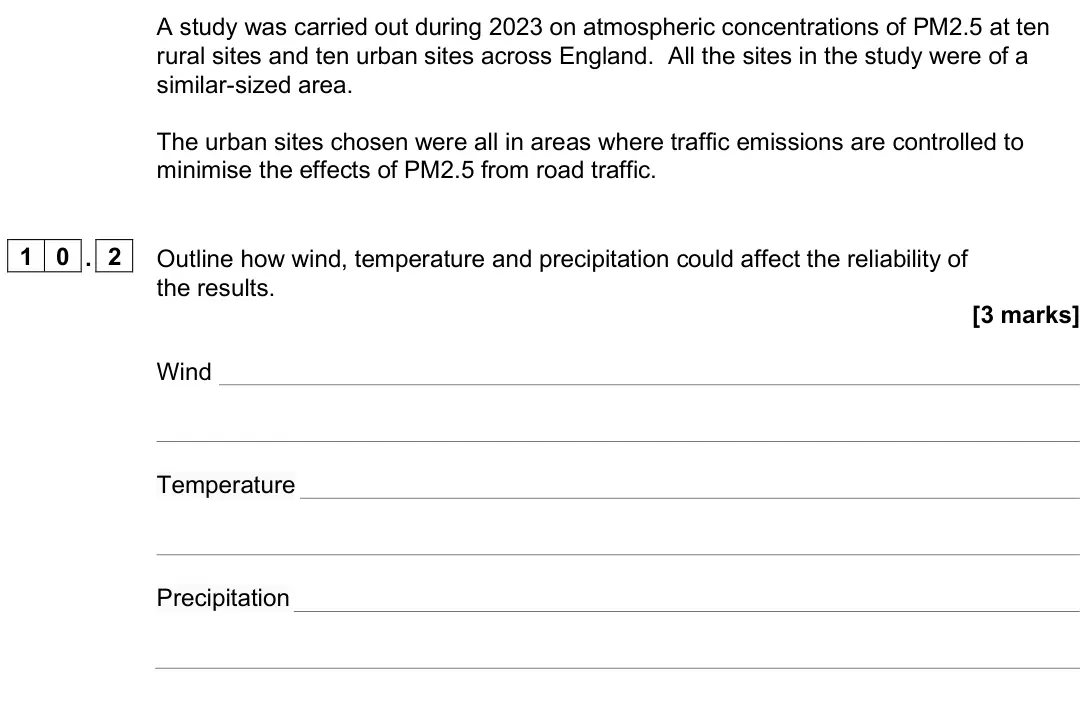
- June 2025, Paper 1, Q10.2 (3 marks): Outline how wind, temperature and precipitation could affect the reliability of the results. [3 marks] Wind Temperature Precipitation
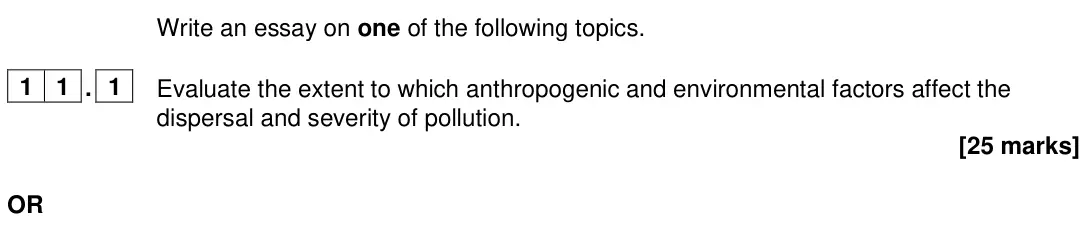
- June 2024, Paper 1, Q11.1 (25 marks): Evaluate the extent to which anthropogenic and environmental factors affect the dispersal and severity of pollution. [25 marks] OR
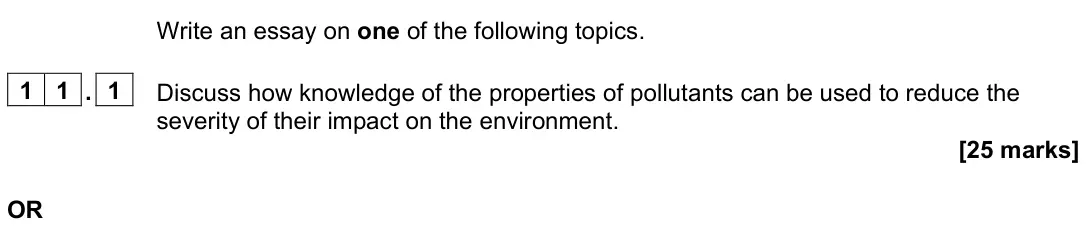
- June 2023, Paper 1, Q11.1 (25 marks): Discuss how knowledge of the properties of pollutants can be used to reduce the severity of their impact on the environment. [25 marks] OR
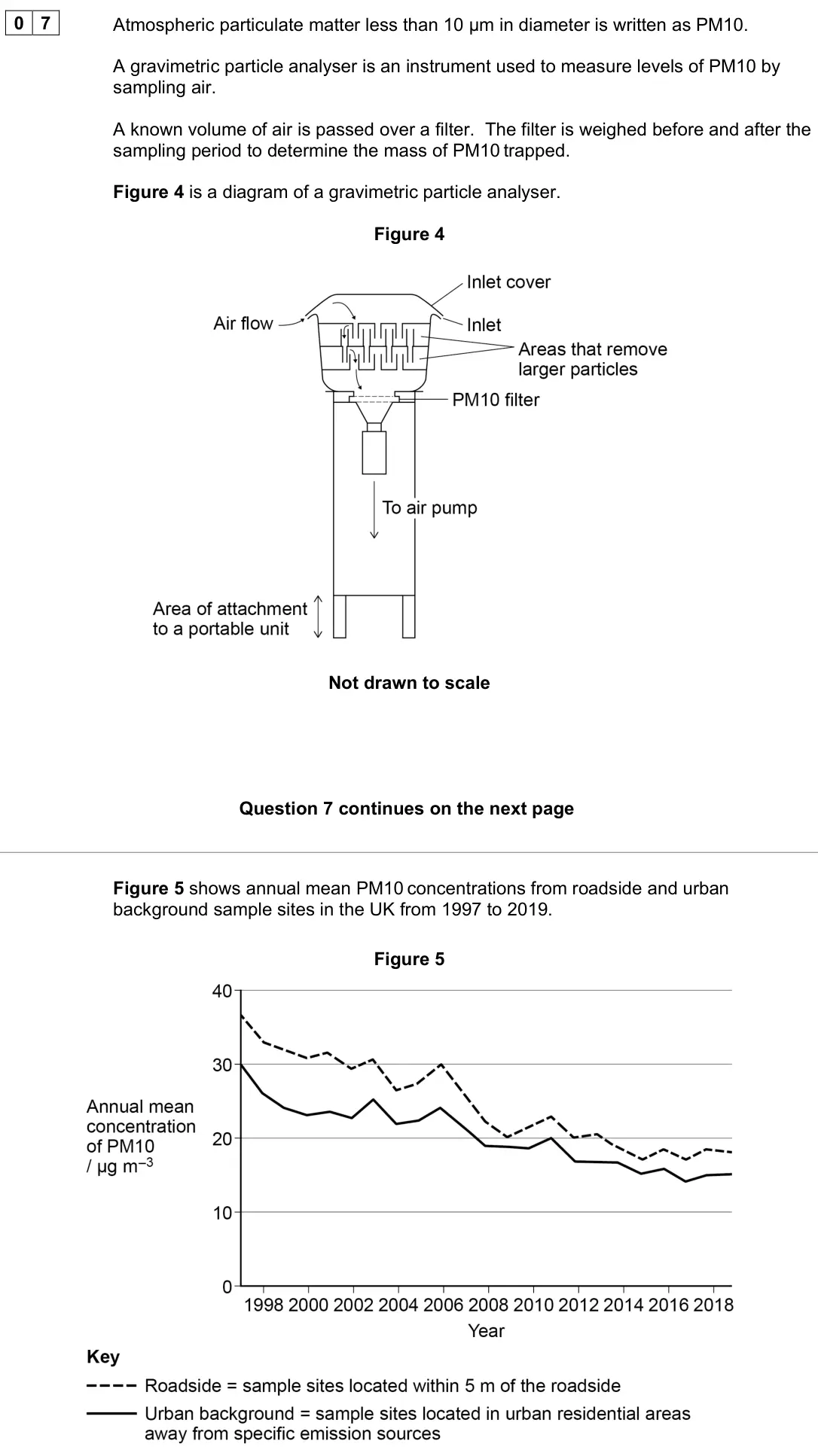
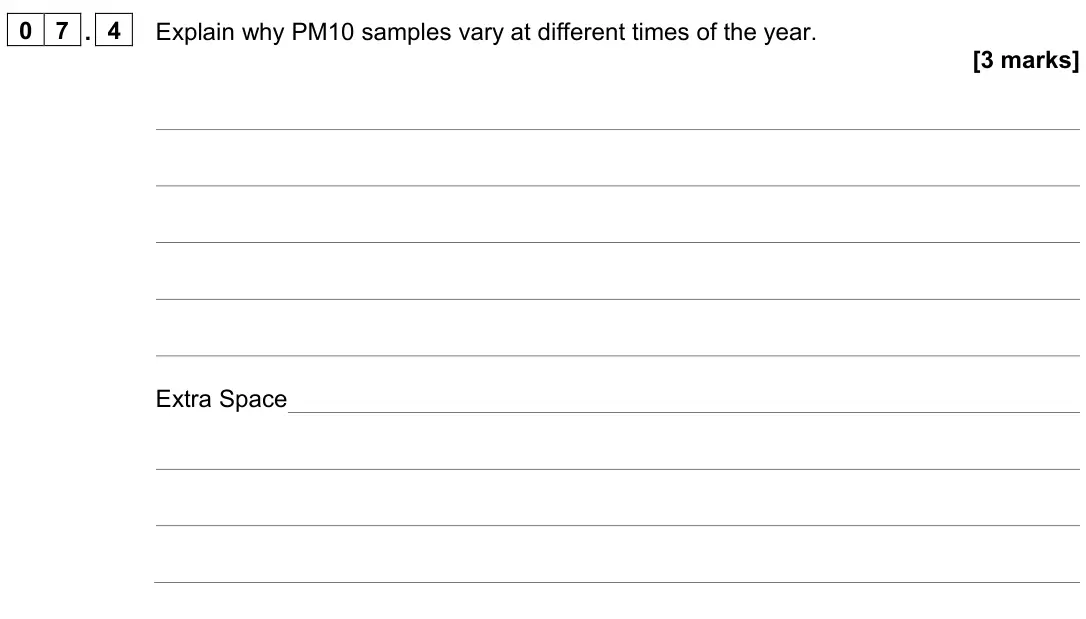
- June 2022, Paper 1, Q07.4 (3 marks): Explain why PM10 samples vary at different times of the year. [3 marks]
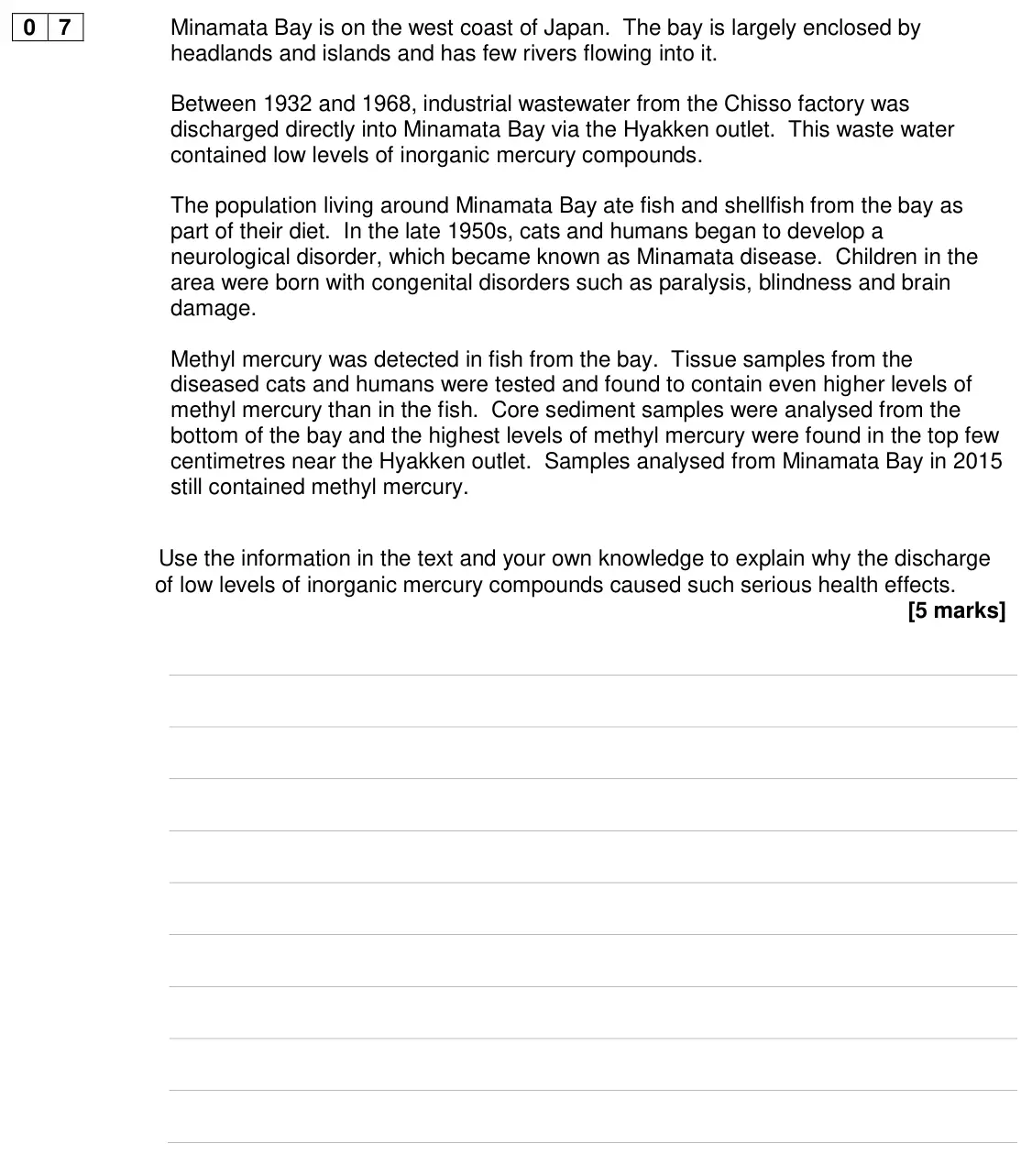
- Specimen, Paper 1, Q07 (5 marks): Minamata Bay is on the west coast of Japan. The bay is largely enclosed by headlands and islands and has few rivers flowing into it. Between 1932 and 1968, indu
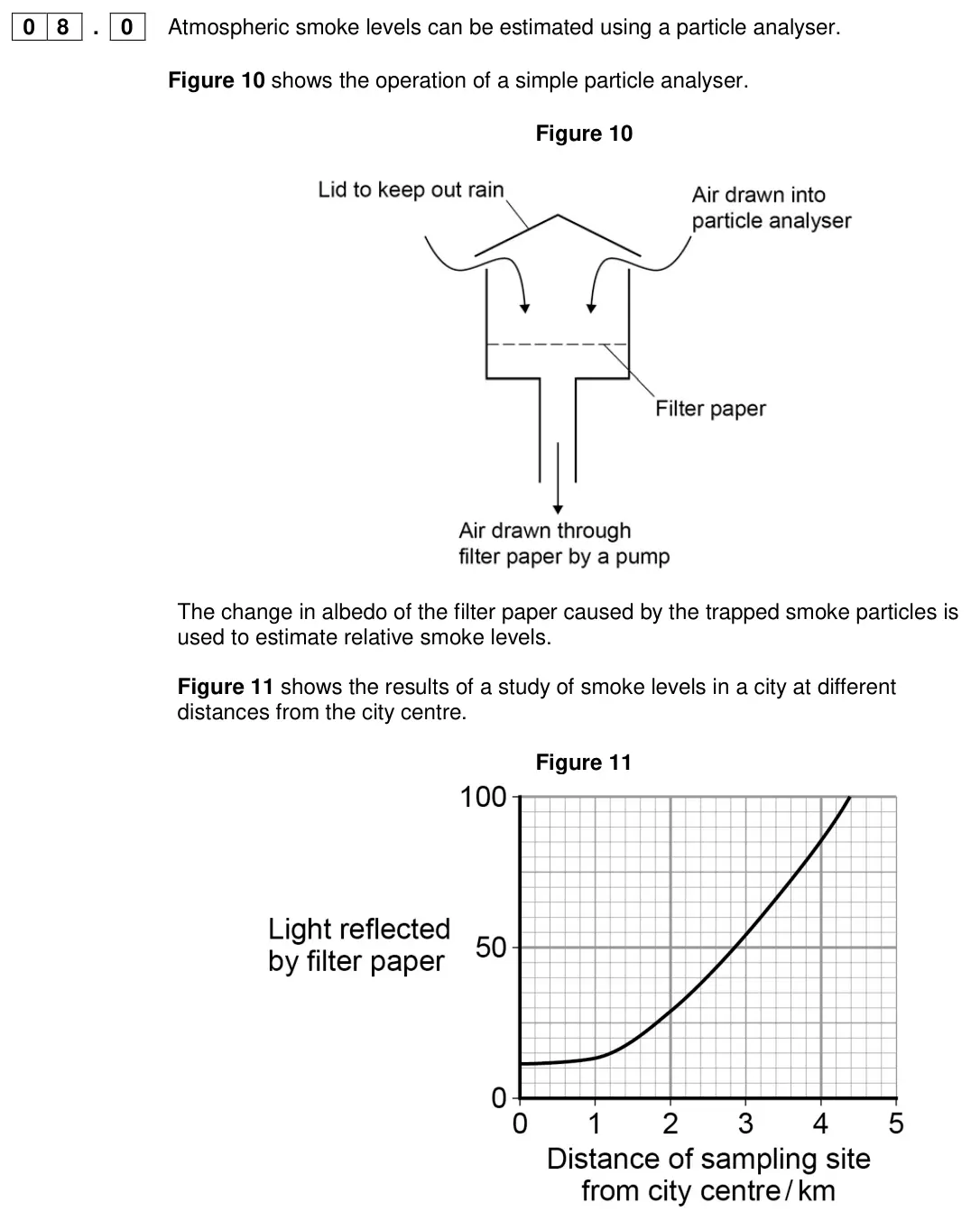
- Specimen, Paper 1, Q08.1 (4 marks): Explain why smoke samples collected at different times in the same location during this study may have produced results that show great variability. [4 marks]
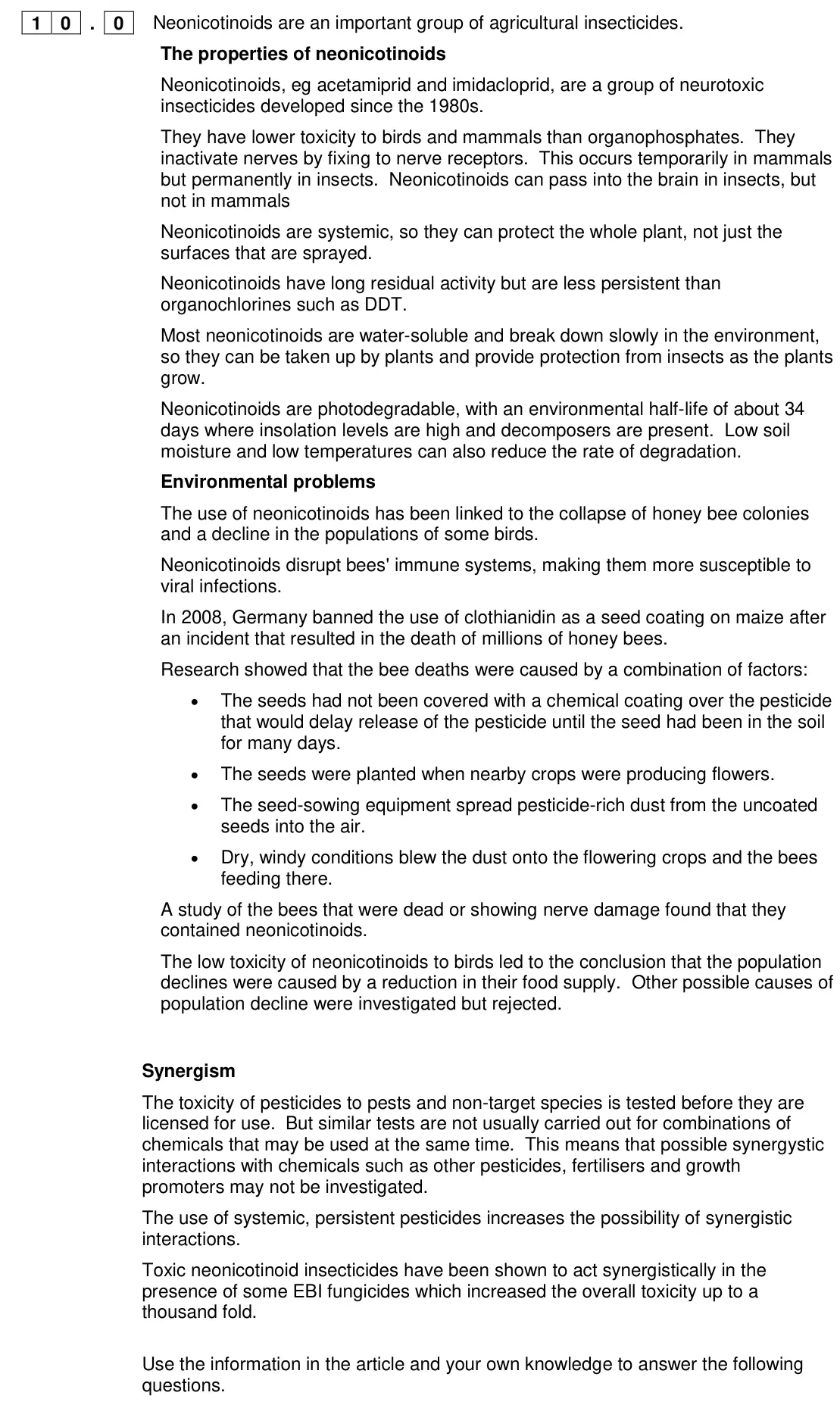
- Specimen, Paper 2, Q10.1 (3 marks): Explain why neonicotinoids are less likely to build up in soil than in aquifers. [3 marks]
Questions, mark schemes and examiner’s reports are © AQA, from their published past papers. Plumi isn’t affiliated with any exam board. Want whole papers? AQA A-Level Environmental Science past papers.
The Plumi iPad app also offers exam-style questions with AI feedback on your handwritten working.