Skip to content
Try on iPad

Style

Get started

Smoke and particulates (PM10): AQA A‑Level Environmental Science questions

AQA A-Level Environmental Science past-paper questions on 3.4.3.2.1 Smoke and particulates (PM10), 2020–2025, with mark schemes and examiner’s reports where available.

Getting your paper ready…

AQA A-Level Environmental ScienceSmoke and particulates (PM10)551 questions

Paper
All papers
Exam
All years
Calculations

Loading the full question list…
551 questions

More options
  1. Q10.1June 2025 · Paper 11 mark

    3.4.3.2.1 Smoke and particulates (PM10)

    1
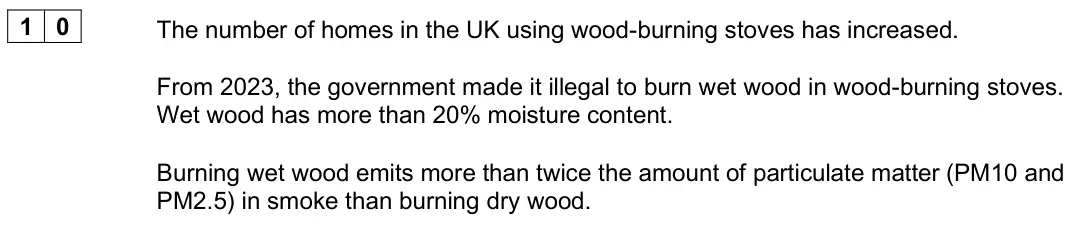
    Setup for original question 10.1

    Loading the question setup…

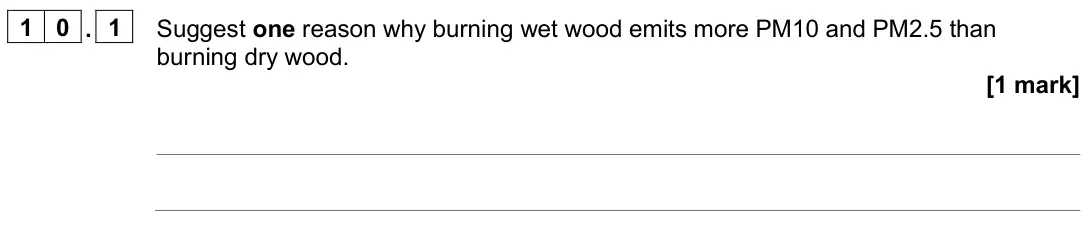
    Original question 10.1: Suggest one reason why burning wet wood emits more PM10 and PM2.5 than burning dry wood. [1 mark]

    Loading the question…

    The whole paper ↗
  2. 2
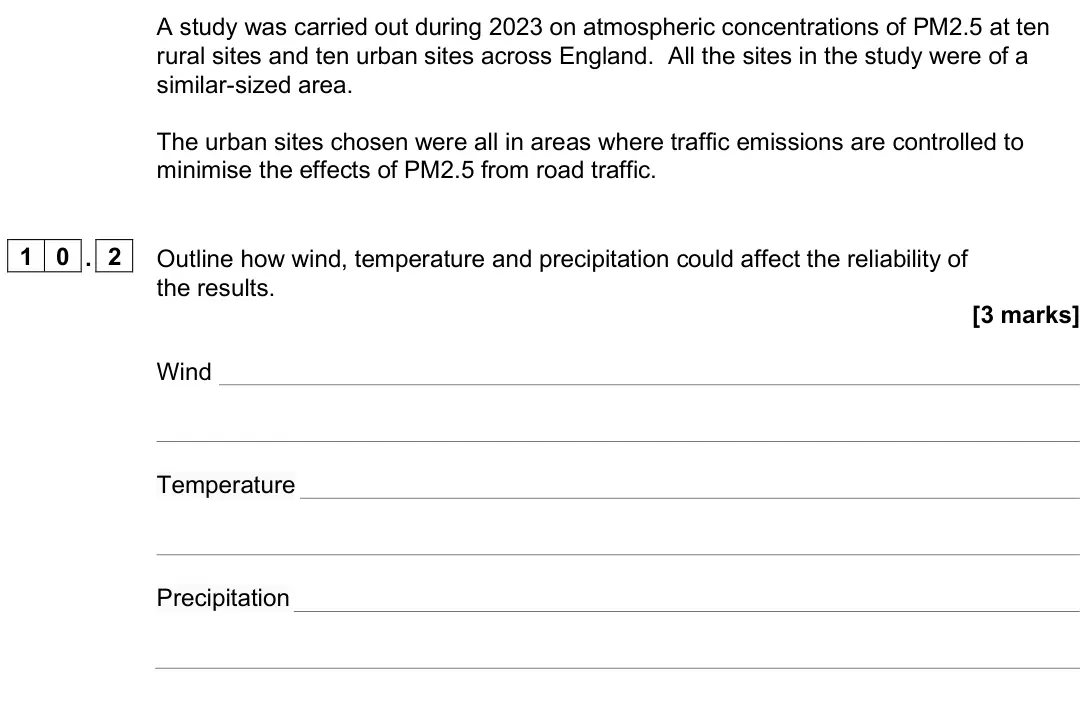
    Original question 10.2: Outline how wind, temperature and precipitation could affect the reliability of the results. [3 marks] Wind Temperature Precipitation

    Loading the question…

    The whole paper ↗
  3. Q10.3June 2025 · Paper 12 marks

    3.4.3.2.1 Smoke and particulates (PM10)

    3
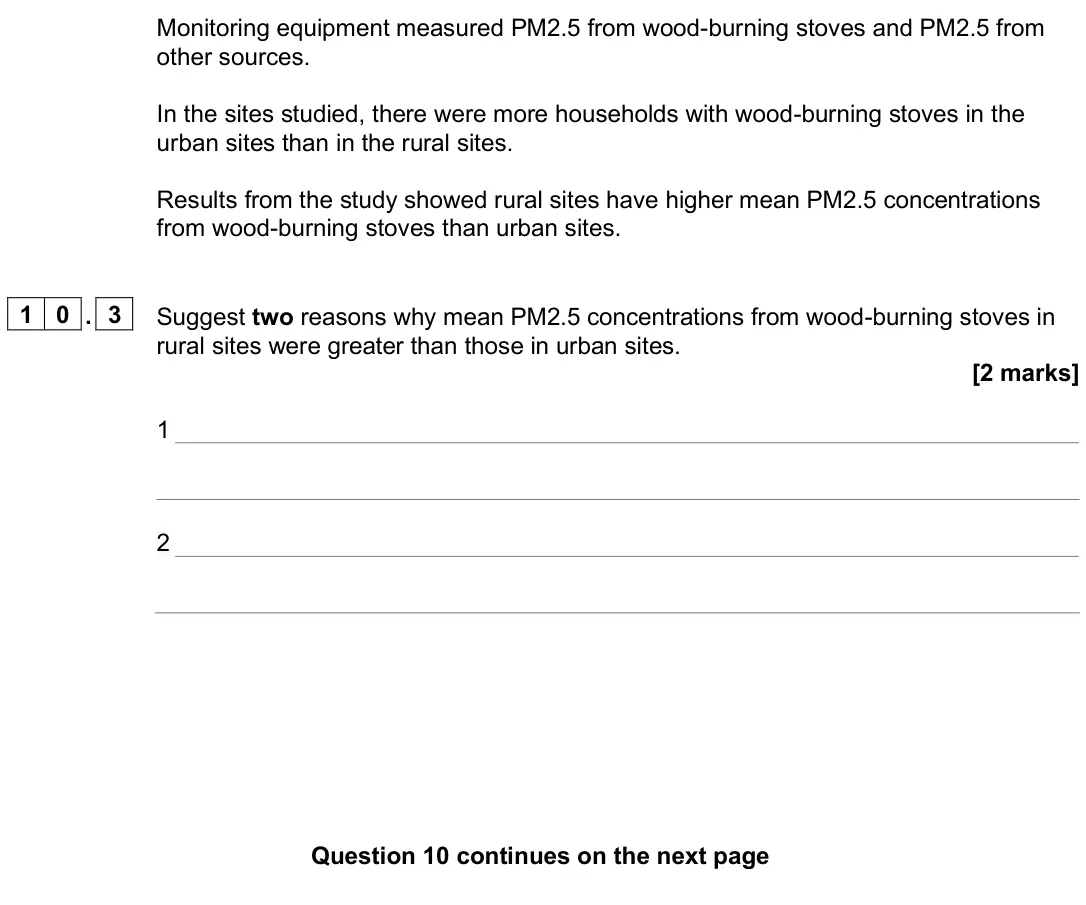
    Original question 10.3: Suggest two reasons why mean PM2.5 concentrations from wood-burning stoves in rural sites were greater than those in urban sites. [2 marks] 1 2

    Loading the question…

    The whole paper ↗
  4. Q10.4June 2025 · Paper 14 marks

    3.4.3.2.1 Smoke and particulates (PM10)

    4
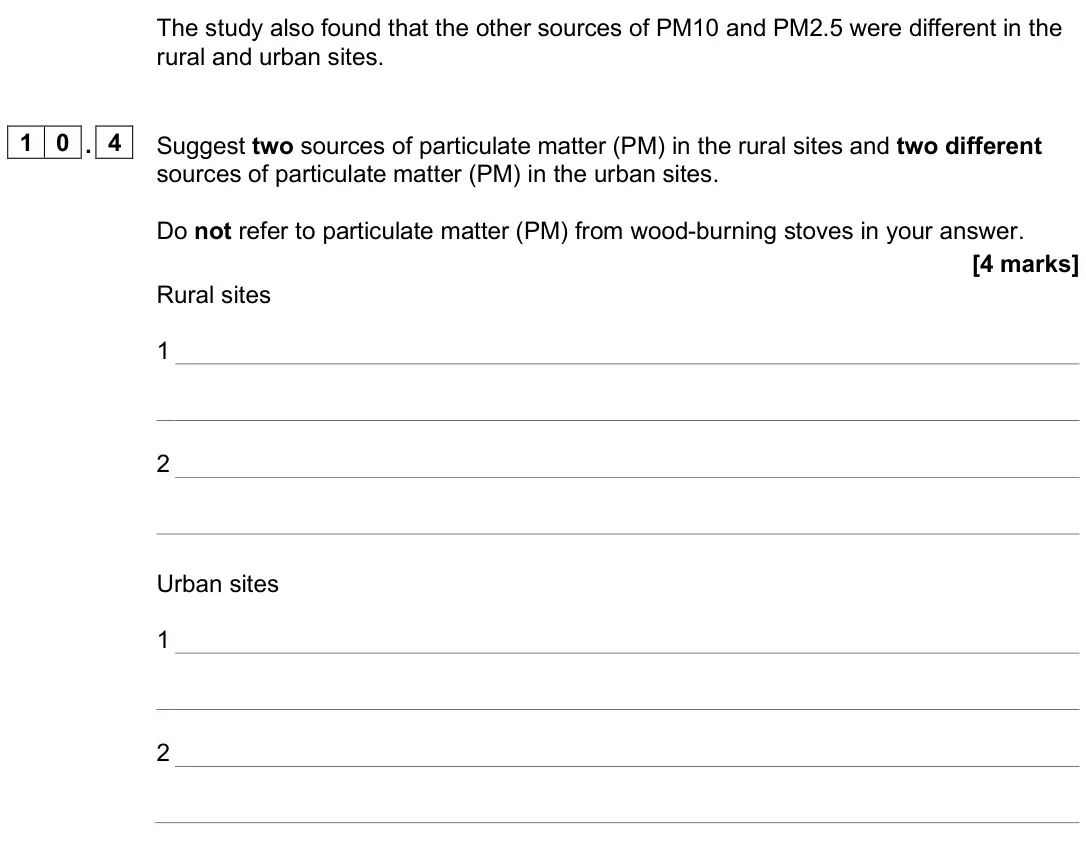
    Original question 10.4: Suggest two sources of particulate matter (PM) in the rural sites and two different sources of particulate matter (PM) in the urban sites. Do not refer to parti

    Loading the question…

    The whole paper ↗
  5. 5
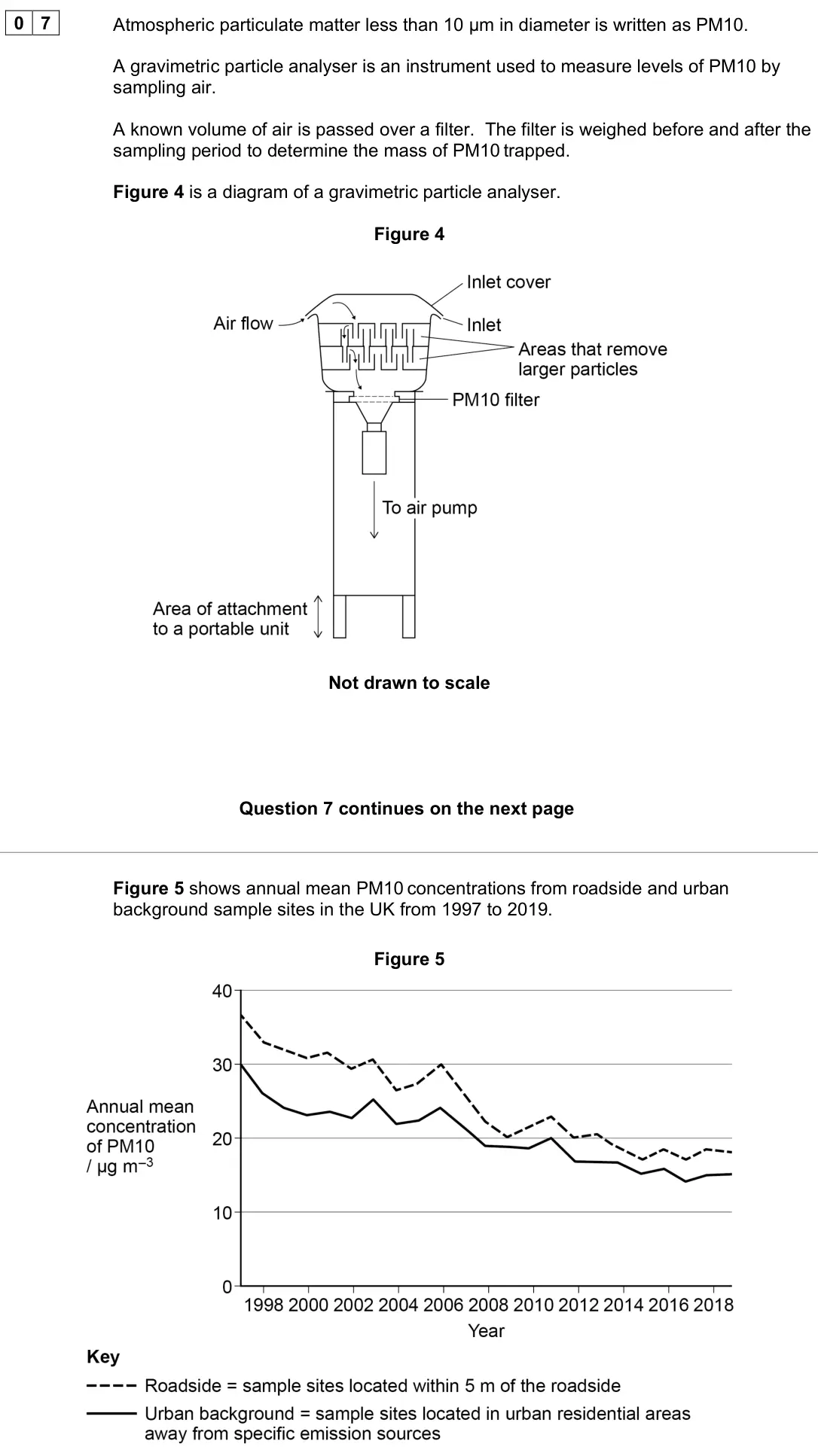
    Setup for original question 07.1

    Loading the question setup…

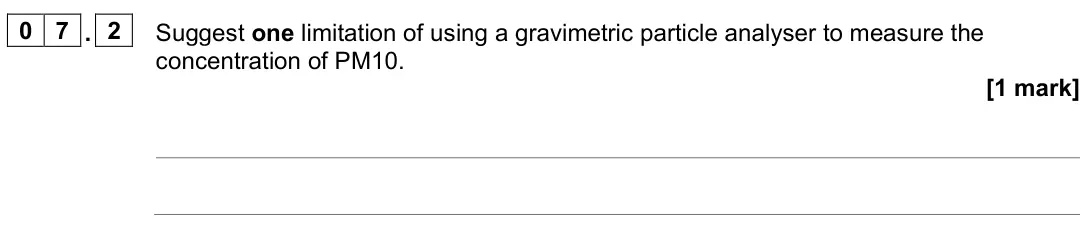
    Original question 07.1: To obtain comparable results for PM10 concentration levels from roadside and urban background areas, suggest three variables that would need to be standardised

    Loading the question…

    The whole paper ↗
  6. Q07.2June 2022 · Paper 11 mark

    3.4.3.2.1 Smoke and particulates (PM10)

    6
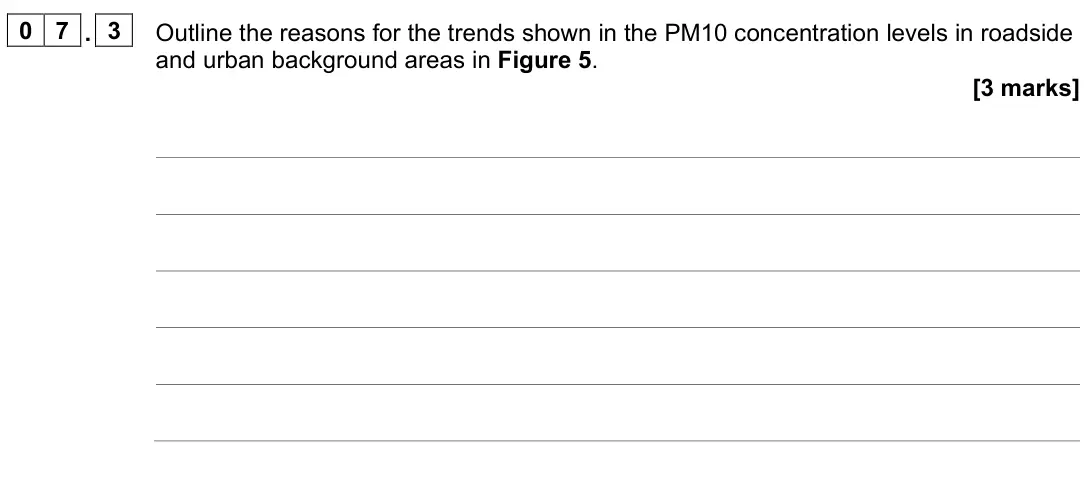
    Original question 07.2: Suggest one limitation of using a gravimetric particle analyser to measure the concentration of PM10. [1 mark]

    Loading the question…

    The whole paper ↗
  7. Q07.3June 2022 · Paper 13 marks

    3.4.3.2.1 Smoke and particulates (PM10)

    7
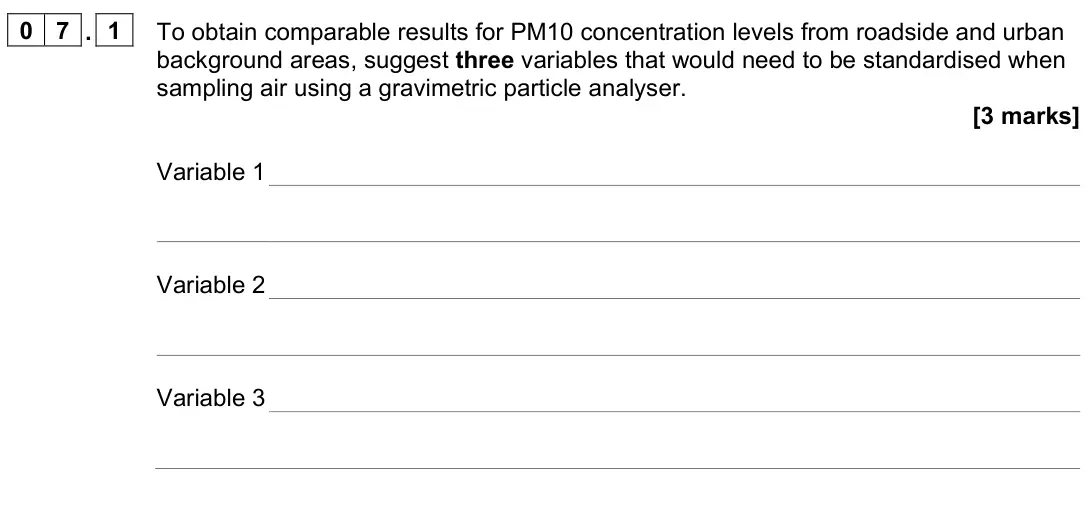
    Original question 07.3: Outline the reasons for the trends shown in the PM10 concentration levels in roadside and urban background areas in Figure 5. [3 marks]

    Loading the question…

    The whole paper ↗
  8. 8
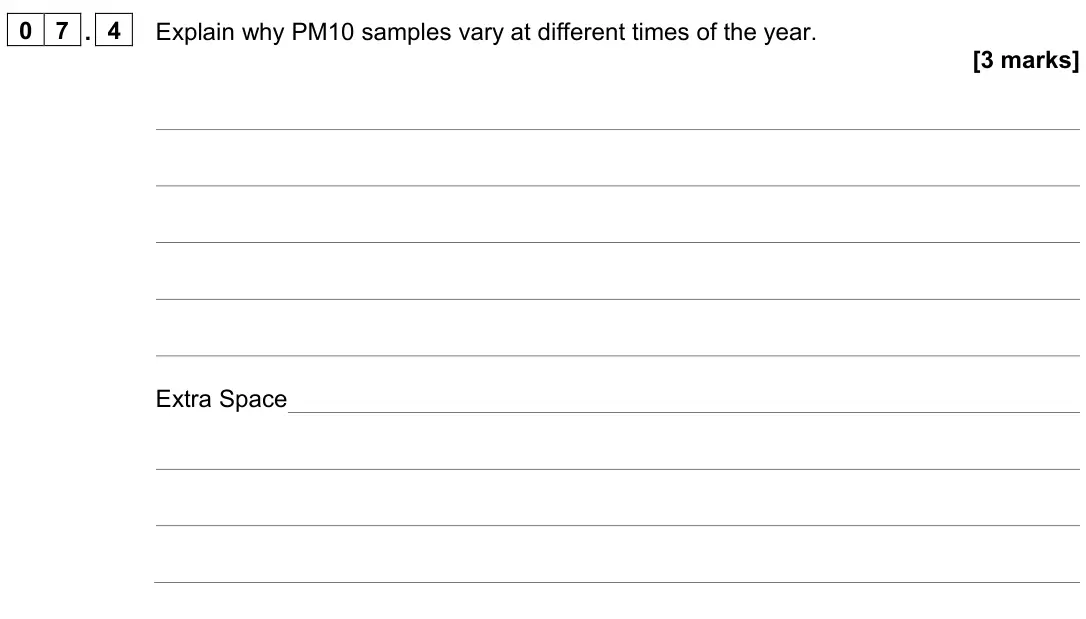
    Original question 07.4: Explain why PM10 samples vary at different times of the year. [3 marks]

    Loading the question…

    The whole paper ↗
  9. 9
    Original question 11.1: Discuss the extent to which improvements in technology have reduced atmospheric pollution on local, regional and global scales. [25 marks] OR

    Loading the question…

    The whole paper ↗
  10. 10
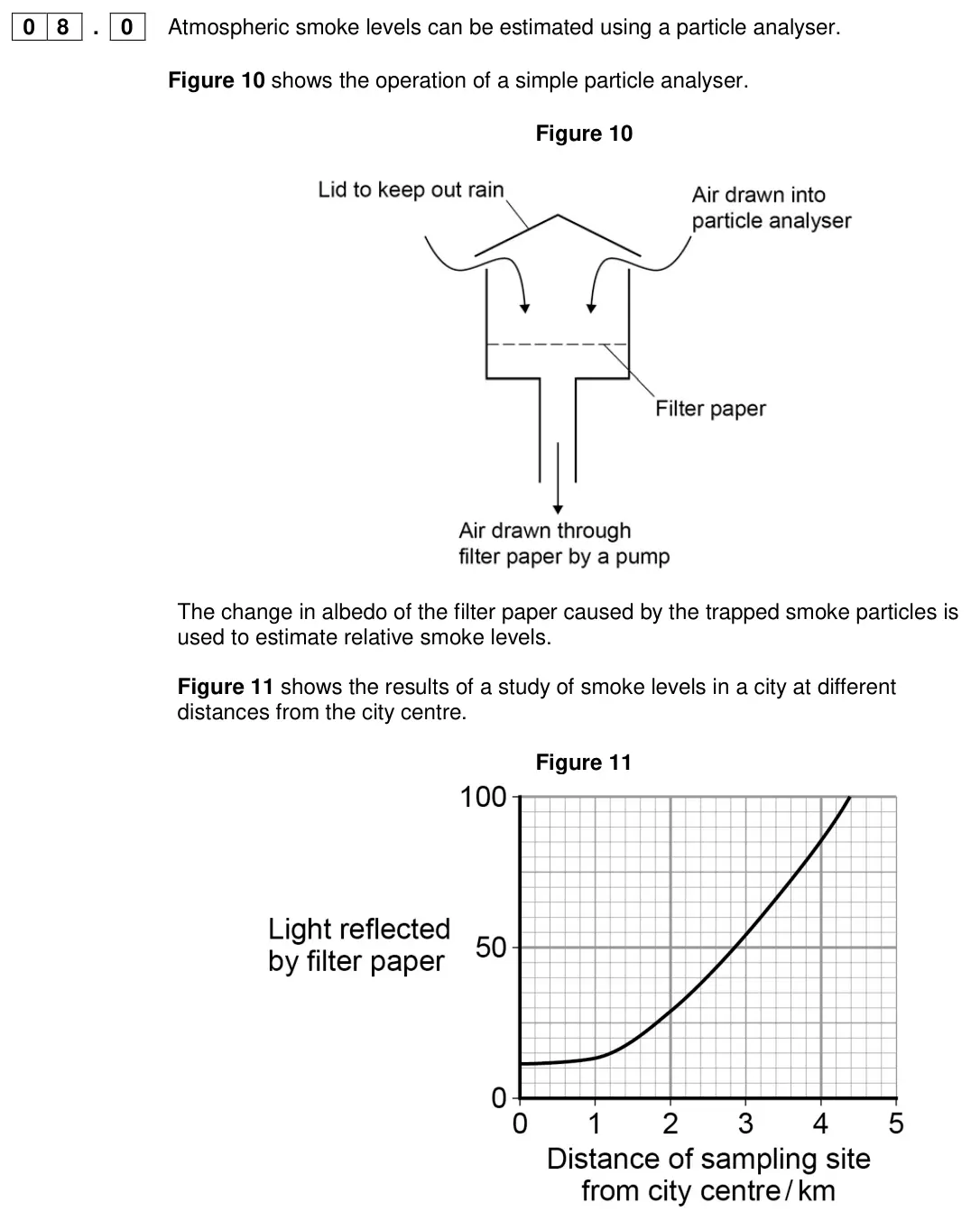
    Setup for original question 08.1

    Loading the question setup…

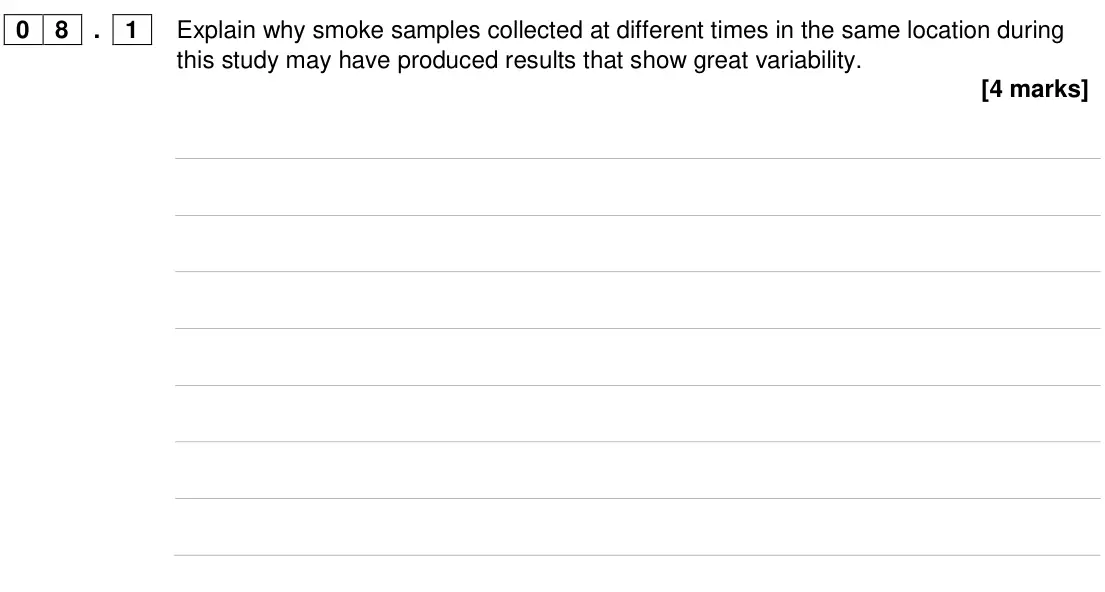
    Original question 08.1: Explain why smoke samples collected at different times in the same location during this study may have produced results that show great variability. [4 marks]

    Loading the question…

    The whole paper ↗
  11. 11
    Original question 08.3: Describe the differences between smoke smogs and photochemical smogs. [3 marks]

    Loading the question…

    The whole paper ↗
All 11 questions on Smoke and particulates (PM10), as a list
  1. June 2025, Paper 1, Q10.1 (1 mark): Suggest one reason why burning wet wood emits more PM10 and PM2.5 than burning dry wood. [1 mark]
  2. June 2025, Paper 1, Q10.2 (3 marks): Outline how wind, temperature and precipitation could affect the reliability of the results. [3 marks] Wind Temperature Precipitation
  3. June 2025, Paper 1, Q10.3 (2 marks): Suggest two reasons why mean PM2.5 concentrations from wood-burning stoves in rural sites were greater than those in urban sites. [2 marks] 1 2
  4. June 2025, Paper 1, Q10.4 (4 marks): Suggest two sources of particulate matter (PM) in the rural sites and two different sources of particulate matter (PM) in the urban sites. Do not refer to parti
  5. June 2022, Paper 1, Q07.1 (3 marks): To obtain comparable results for PM10 concentration levels from roadside and urban background areas, suggest three variables that would need to be standardised
  6. June 2022, Paper 1, Q07.2 (1 mark): Suggest one limitation of using a gravimetric particle analyser to measure the concentration of PM10. [1 mark]
  7. June 2022, Paper 1, Q07.3 (3 marks): Outline the reasons for the trends shown in the PM10 concentration levels in roadside and urban background areas in Figure 5. [3 marks]
  8. June 2022, Paper 1, Q07.4 (3 marks): Explain why PM10 samples vary at different times of the year. [3 marks]
  9. November 2020, Paper 1, Q11.1 (25 marks): Discuss the extent to which improvements in technology have reduced atmospheric pollution on local, regional and global scales. [25 marks] OR
  10. Specimen, Paper 1, Q08.1 (4 marks): Explain why smoke samples collected at different times in the same location during this study may have produced results that show great variability. [4 marks]
  11. Specimen, Paper 1, Q08.3 (3 marks): Describe the differences between smoke smogs and photochemical smogs. [3 marks]

Questions, mark schemes and examiner’s reports are © AQA, from their published past papers. Plumi isn’t affiliated with any exam board. Want whole papers? AQA A-Level Environmental Science past papers.

The Plumi iPad app also offers exam-style questions with AI feedback on your handwritten working.