Skip to content
Try on iPad

Style

Get started
Whole past papers

Energy conservation technologies: AQA A‑Level Environmental Science questions

AQA A-Level Environmental Science past-paper questions on 3.3.4.2 Energy conservation technologies, 2020–2025, with mark schemes and examiner’s reports where available.

Getting your paper ready…

AQA A-Level Environmental ScienceEnergy conservation technologies551 questions

Paper
All papers
Exam
All years
Calculations

Loading the full question list…
551 questions

More options
  1. 1
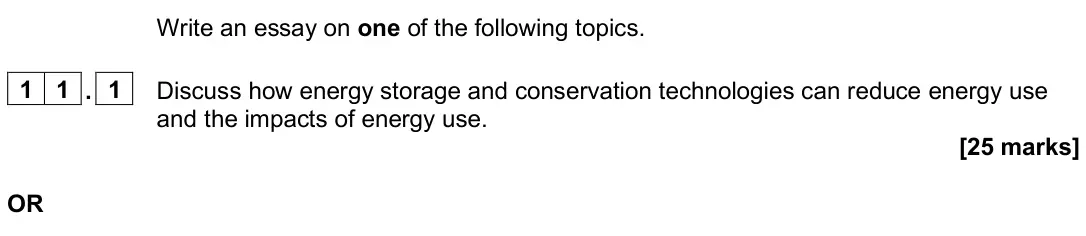
    Original question 11.1: Discuss how energy storage and conservation technologies can reduce energy use and the impacts of energy use. [25 marks] OR

    Loading the question…

    The whole paper ↗
  2. Q05.1June 2022 · Paper 12 marks

    3.3.4.2 Energy conservation technologies

    2
    Setup for original question 05.1

    Loading the question setup…

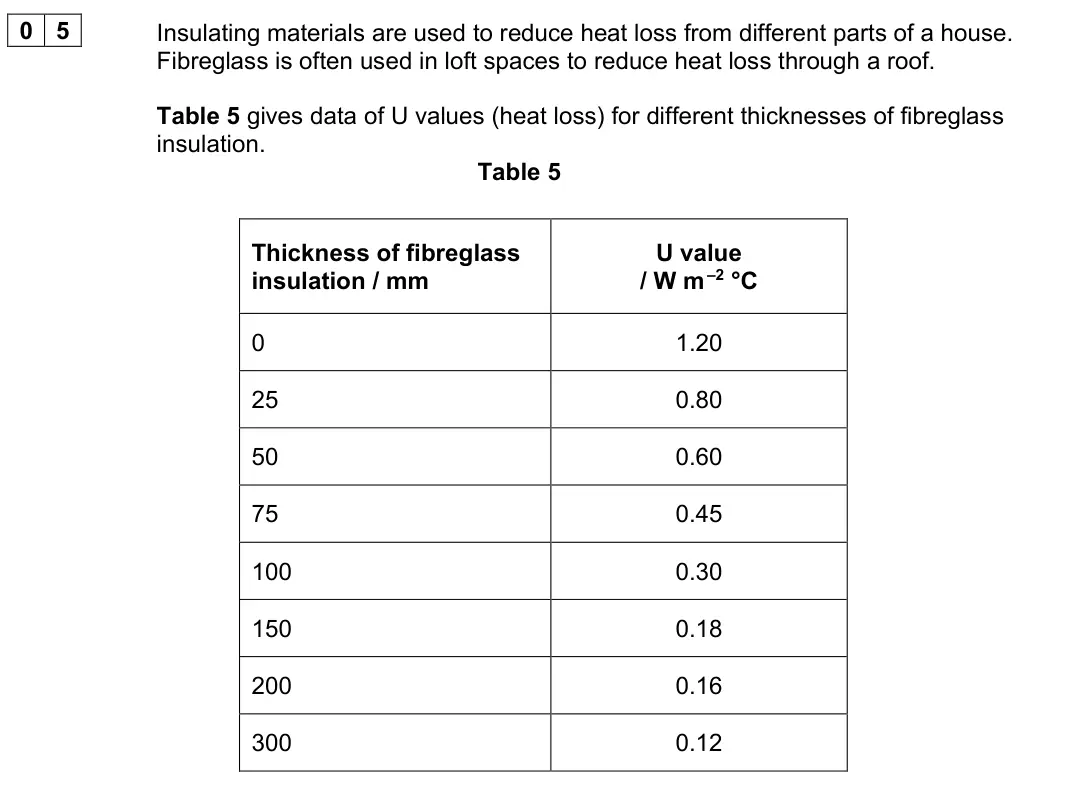
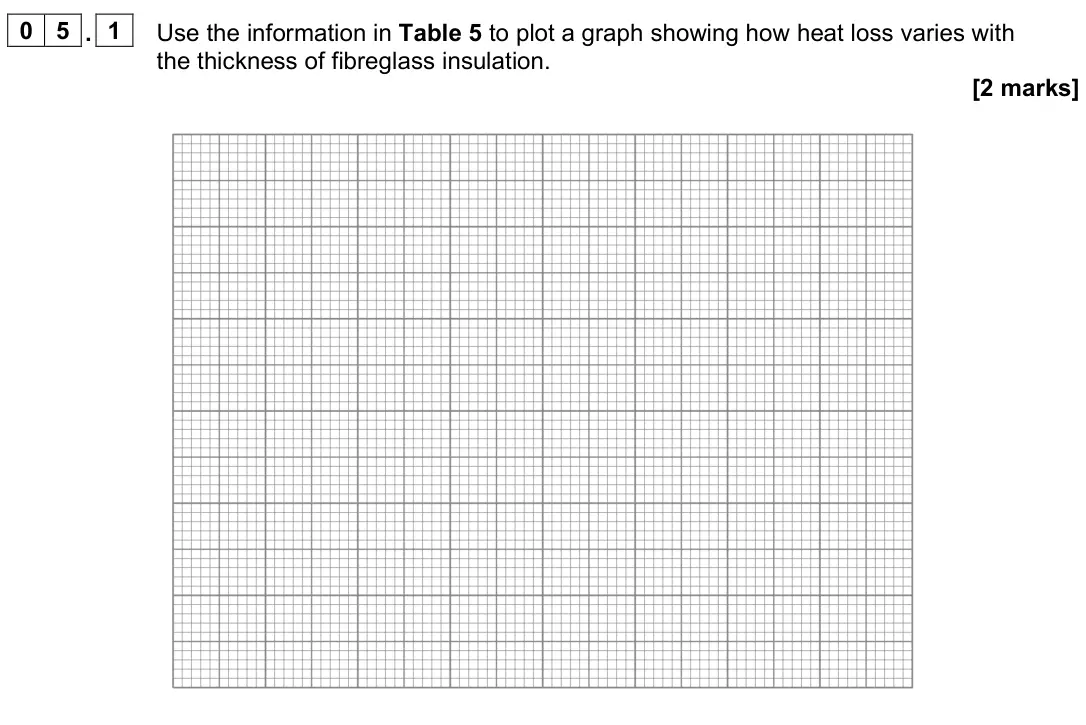
    Original question 05.1: Use the information in Table 5 to plot a graph showing how heat loss varies with the thickness of fibreglass insulation. [2 marks]

    Loading the question…

    The whole paper ↗
  3. Q05.2June 2022 · Paper 12 marks

    3.3.4.2 Energy conservation technologies

    3
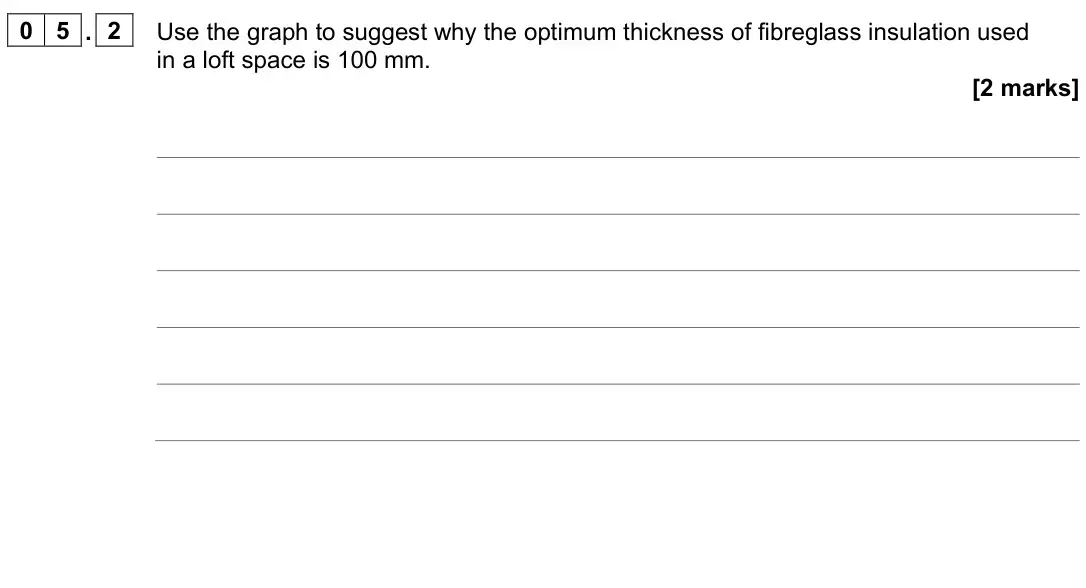
    Original question 05.2: Use the graph to suggest why the optimum thickness of fibreglass insulation used in a loft space is 100 mm. [2 marks]

    Loading the question…

    The whole paper ↗
  4. Q05.3June 2022 · Paper 12 marks

    3.3.4.2 Energy conservation technologies

    4
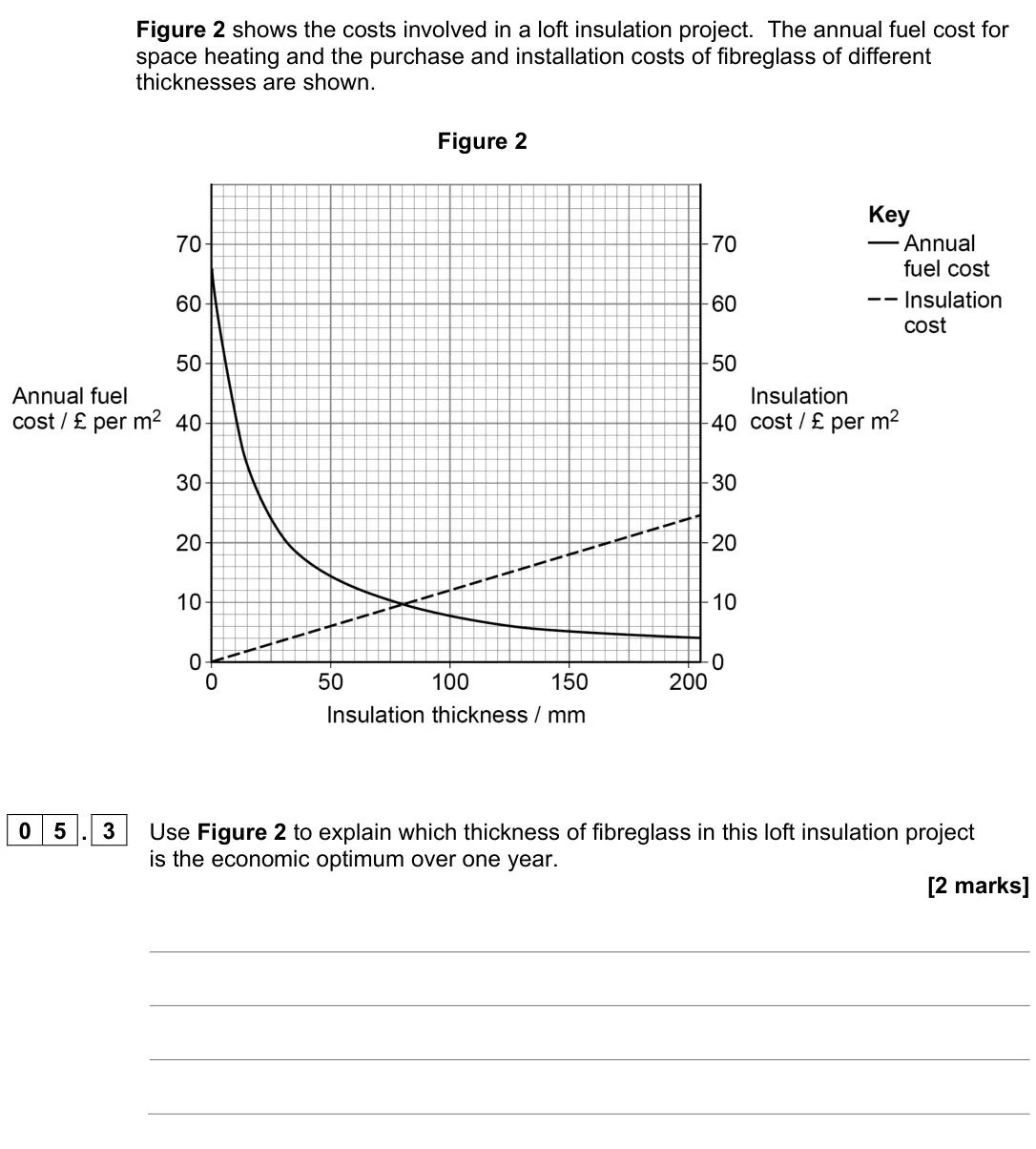
    Original question 05.3: Use Figure 2 to explain which thickness of fibreglass in this loft insulation project is the economic optimum over one year. [2 marks]

    Loading the question…

    The whole paper ↗
  5. 5
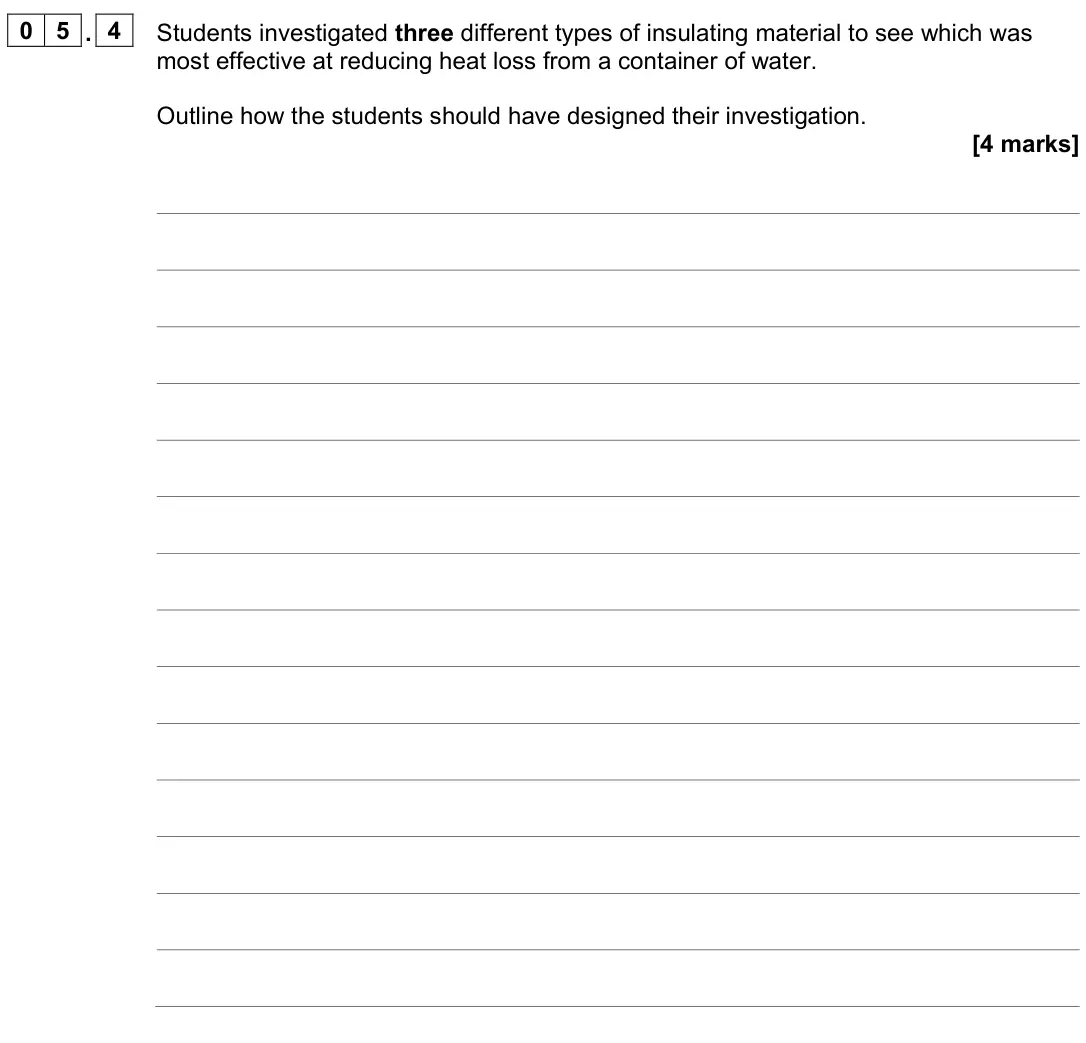
    Original question 05.4: Students investigated three different types of insulating material to see which was most effective at reducing heat loss from a container of water. Outline how

    Loading the question…

    The whole paper ↗
  6. Q11.2November 2021 · Paper 125 marks

    3.3.4.2 Energy conservation technologies

    6
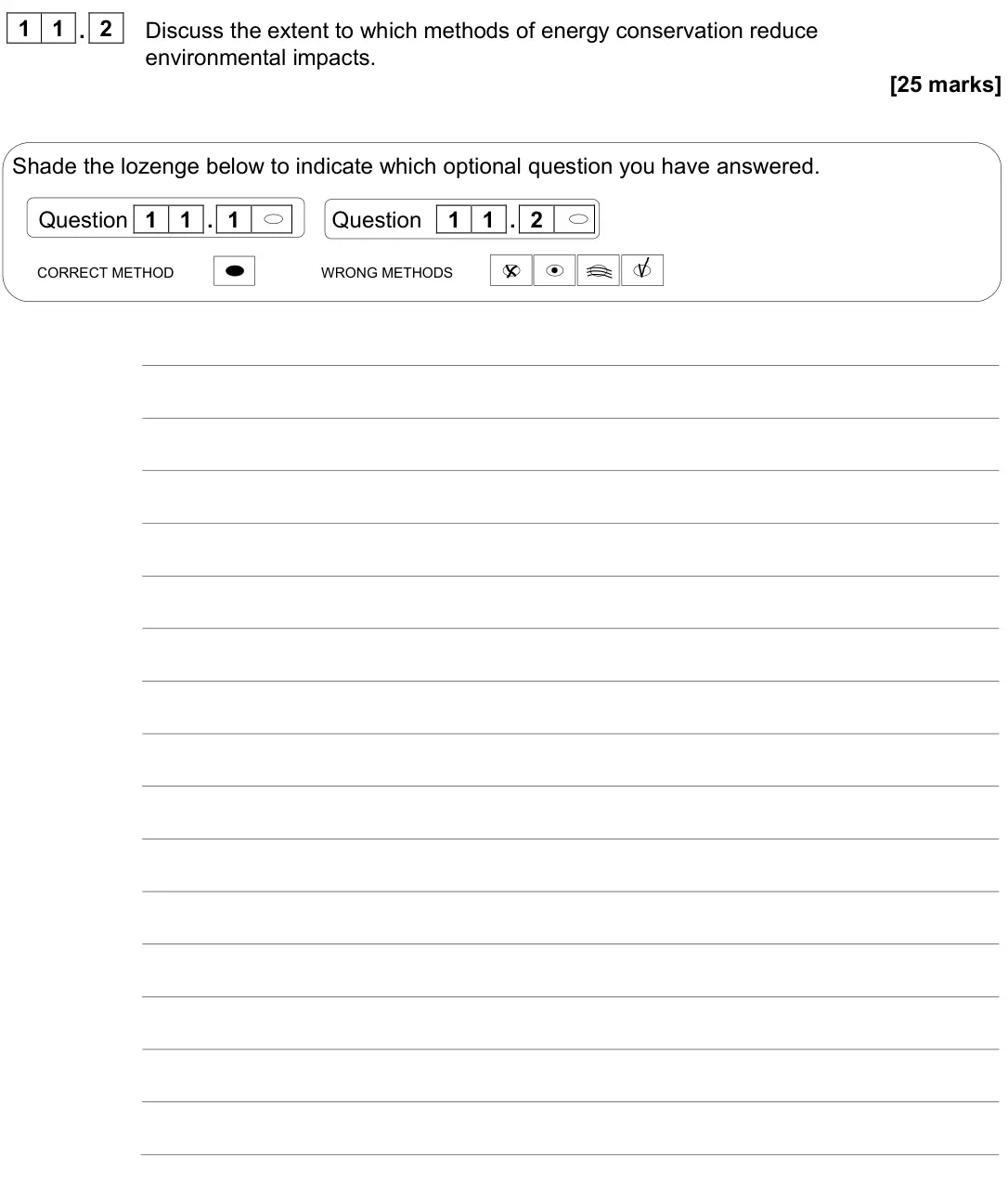
    Original question 11.2: Discuss the extent to which methods of energy conservation reduce environmental impacts. [25 marks]

    Loading the question…

    The whole paper ↗
  7. Q06.3November 2020 · Paper 12 marks

    3.3.4.2 Energy conservation technologies

    7
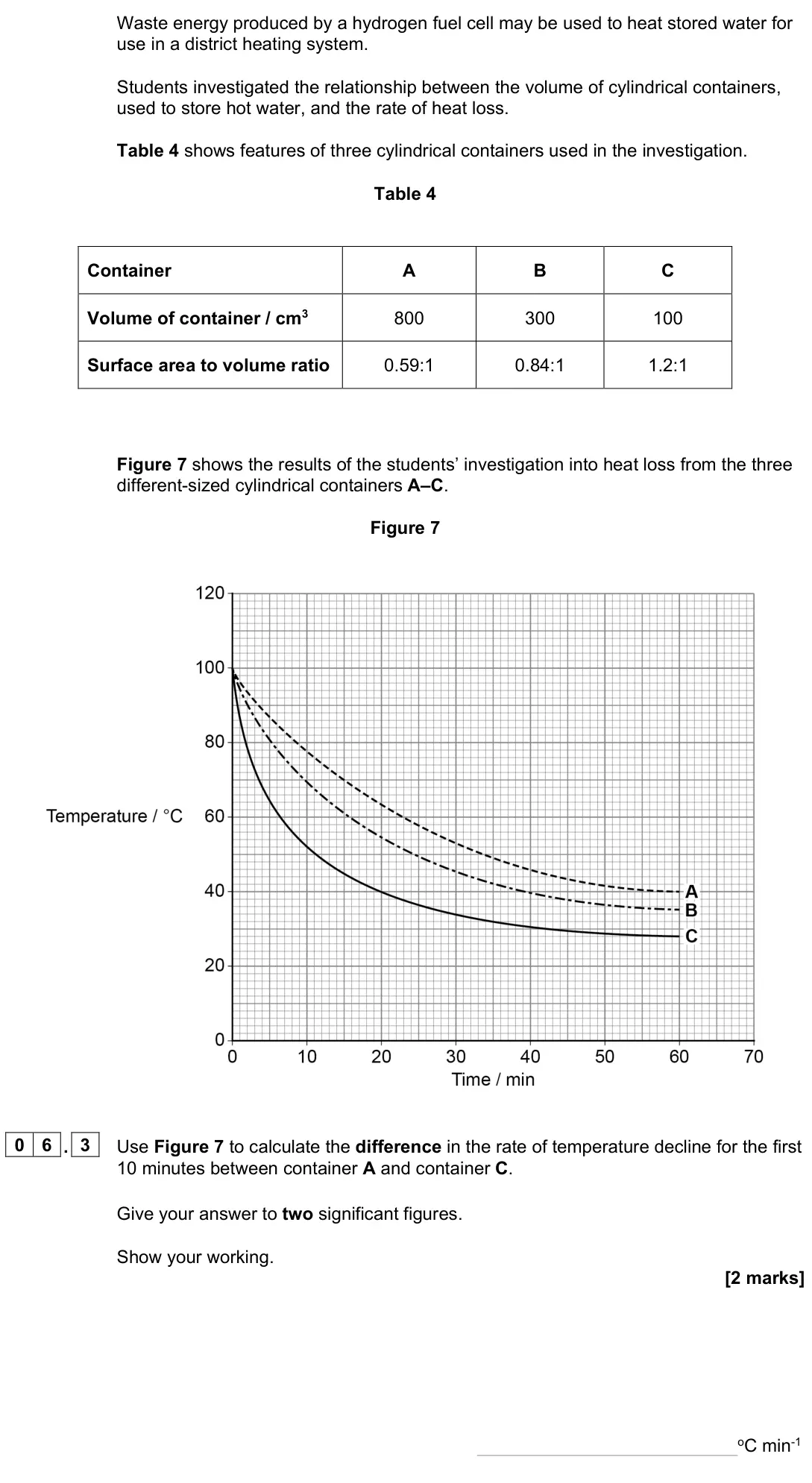
    Setup for original question 06.3

    Loading the question setup…

    Original question 06.3: Use Figure 7 to calculate the difference in the rate of temperature decline for the first 10 minutes between container A and container C. Give your answer to tw

    Loading the question…

    The whole paper ↗
  8. Q06.4November 2020 · Paper 11 mark

    3.3.4.2 Energy conservation technologies

    8
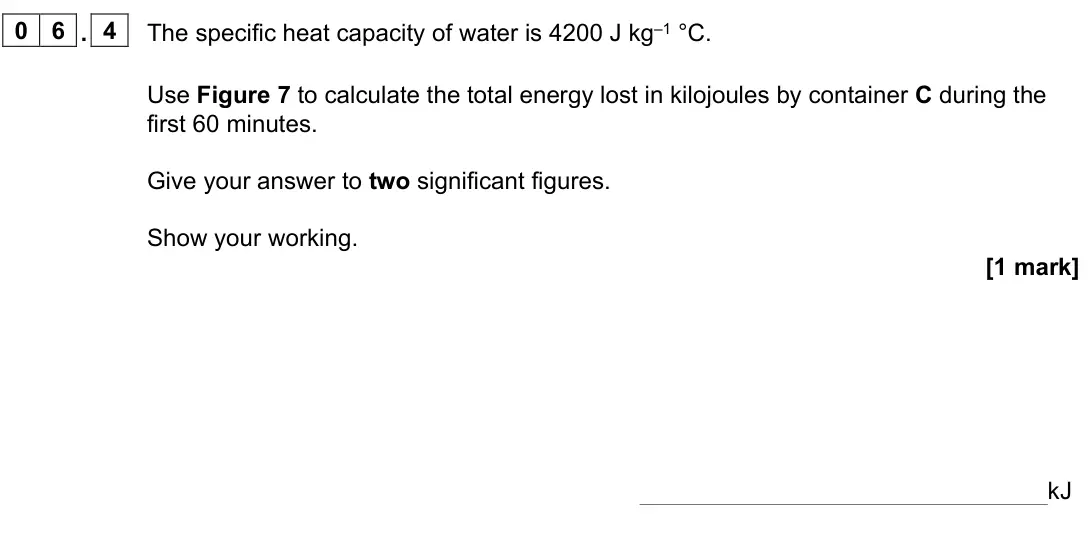
    Original question 06.4: The specific heat capacity of water is 4200 J kg–1 °C. Use Figure 7 to calculate the total energy lost in kilojoules by container C during the first 60 minutes.

    Loading the question…

    The whole paper ↗
All 8 questions on Energy conservation technologies, as a list
  1. June 2025, Paper 1, Q11.1 (25 marks): Discuss how energy storage and conservation technologies can reduce energy use and the impacts of energy use. [25 marks] OR
  2. June 2022, Paper 1, Q05.1 (2 marks): Use the information in Table 5 to plot a graph showing how heat loss varies with the thickness of fibreglass insulation. [2 marks]
  3. June 2022, Paper 1, Q05.2 (2 marks): Use the graph to suggest why the optimum thickness of fibreglass insulation used in a loft space is 100 mm. [2 marks]
  4. June 2022, Paper 1, Q05.3 (2 marks): Use Figure 2 to explain which thickness of fibreglass in this loft insulation project is the economic optimum over one year. [2 marks]
  5. June 2022, Paper 1, Q05.4 (4 marks): Students investigated three different types of insulating material to see which was most effective at reducing heat loss from a container of water. Outline how
  6. November 2021, Paper 1, Q11.2 (25 marks): Discuss the extent to which methods of energy conservation reduce environmental impacts. [25 marks]
  7. November 2020, Paper 1, Q06.3 (2 marks): Use Figure 7 to calculate the difference in the rate of temperature decline for the first 10 minutes between container A and container C. Give your answer to tw
  8. November 2020, Paper 1, Q06.4 (1 mark): The specific heat capacity of water is 4200 J kg–1 °C. Use Figure 7 to calculate the total energy lost in kilojoules by container C during the first 60 minutes.

Questions, mark schemes and examiner’s reports are © AQA, from their published past papers. Plumi isn’t affiliated with any exam board. Want whole papers? AQA A-Level Environmental Science past papers.

The Plumi iPad app also offers exam-style questions with AI feedback on your handwritten working.