 plumi
Electrophilic substitution: AQA A‑Level Chemistry questions
AQA A-Level Chemistry past-paper questions on 3.3.10.2 Electrophilic substitution, 2008–2025, with mark schemes and examiner’s reports where available.
Paper
All papers
Exam
All years
Calculations
Q05.1
The whole paper ↗
Q05.3
The whole paper ↗Q10.2
The whole paper ↗
Q10.3
The whole paper ↗Q03.2
The whole paper ↗
Q08.1
The whole paper ↗
Q08.2
The whole paper ↗Q08.3
The whole paper ↗Q10.1
The whole paper ↗
Q04.3
The whole paper ↗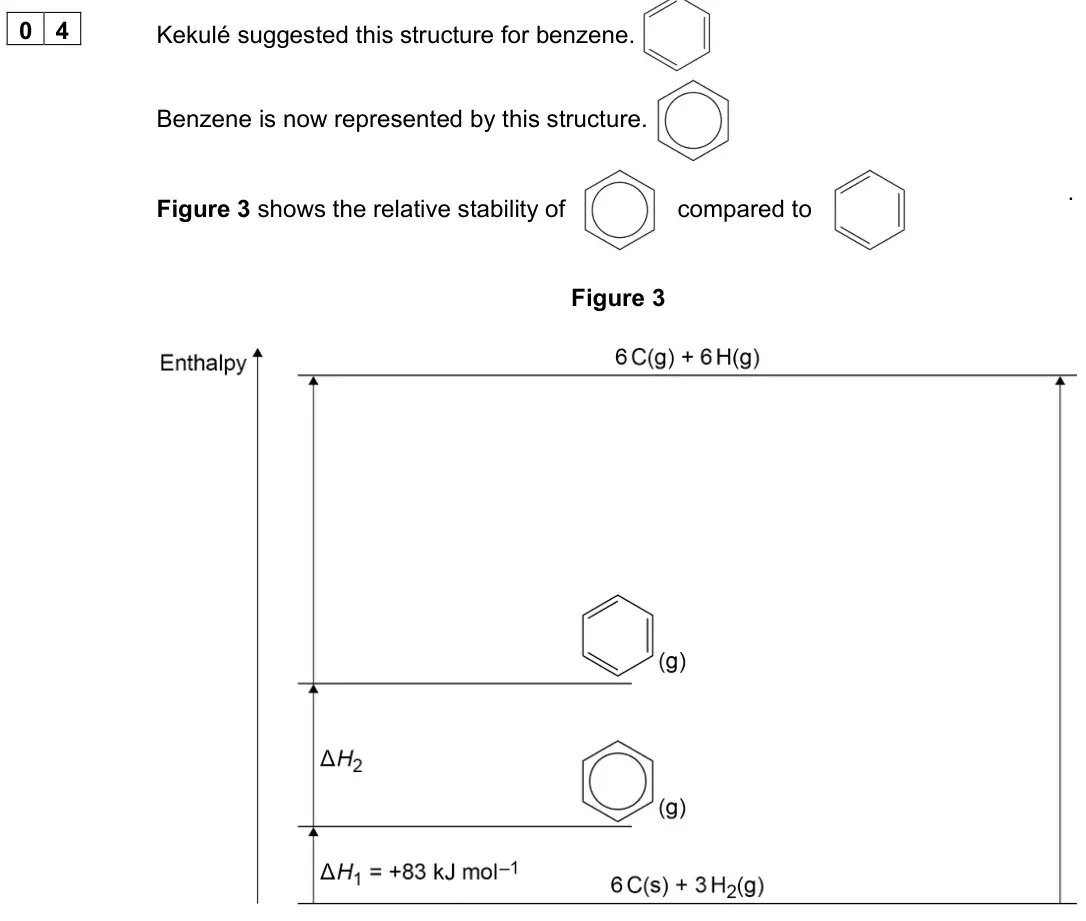
Q06.1
The whole paper ↗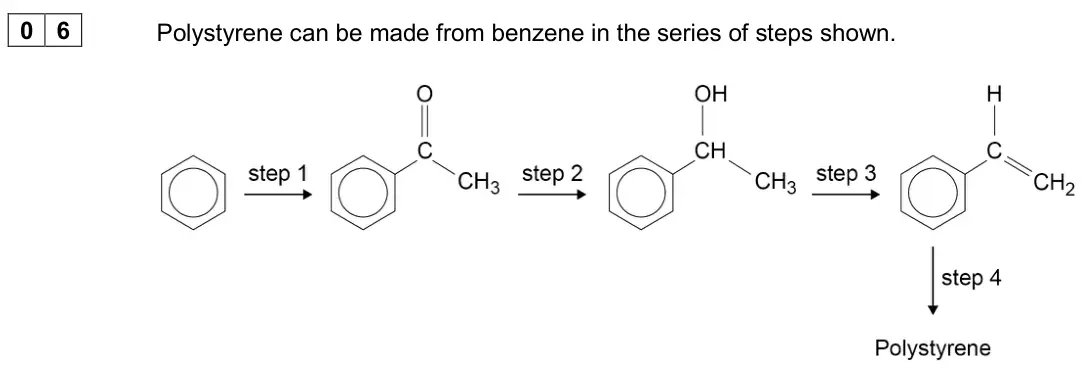
How many marks did you get?
Q07.1
The whole paper ↗
Q08.1
The whole paper ↗
Q08.2
The whole paper ↗Q09.5
The whole paper ↗Q09.6
The whole paper ↗
All 44 questions on Electrophilic substitution, as a list
- June 2025, Paper 2, Q05.1 (2 marks): Give the overall equation for the reaction between methylbenzene and nitric acid. [2 marks]
- June 2025, Paper 2, Q05.3 (5 marks): In the mechanism for this reaction, concentrated nitric acid reacts with concentrated sulfuric acid to produce the nitronium ion O2N+ Give an equation for the r
- June 2024, Paper 2, Q10.2 (2 marks): State the two reagents needed for Step 1. Give an equation to show the formation of the reactive intermediate from these two reagents. [2 marks] Reagents Equati
- June 2024, Paper 2, Q10.3 (3 marks): Outline a mechanism for Step 1. [3 marks]
- June 2023, Paper 2, Q03.2 (4 marks): Figure 4 shows an intermediate formed in the first step of a reaction mechanism of methylbenzene. Figure 4 Complete Figure 4 to show the reactant species and an
- June 2022, Paper 2, Q08.1 (2 marks): Give an equation for the overall reaction when benzene reacts with methanoyl chloride. Name the organic product. [2 marks] Equation Name
- June 2022, Paper 2, Q08.2 (2 marks): Identify the catalyst needed in this reaction. Give an equation to show how the catalyst is used to form the electrophile, [HCO]+ [2 marks] Catalyst Equation
- June 2022, Paper 2, Q08.3 (3 marks): Outline the mechanism for the reaction of benzene with the electrophile, [HCO]+ [3 marks]
- June 2022, Paper 2, Q10.1 (3 marks): State the reagents needed for step 1 and the reagents needed for step 2. [3 marks] step 1 step 2
- November 2021, Paper 2, Q04.3 (5 marks): A mixture of concentrated nitric acid and concentrated sulfuric acid reacts with benzene. Figure 4 shows the incomplete mechanism for this reaction. Name the me
- November 2020, Paper 2, Q06.1 (3 marks): State the type of reaction in step 1. Identify the reagent(s) and conditions needed for step 1. [3 marks] Type of reaction Reagent(s) Conditions
- June 2019, Paper 2, Q08.1 (1 mark): Name the mechanism of the reaction in Step 1. [1 mark]
- June 2019, Paper 3, Q20 (1 mark): Methylbenzene reacts with a mixture of concentrated nitric acid and concentrated sulfuric acid. What is the name of the mechanism for this reaction? [1 mark] A
- June 2019, Paper 3, Q26 (1 mark): The reaction between propanoyl chloride and benzene is an example of acylation. Which is a correct representation of part of the mechanism of this reaction? [1
- June 2018, Paper 2, Q07.1 (4 marks): CH3CH2COCl reacts with benzene in the presence of AlCl3 in an electrophilic substitution reaction. Give an equation for the reaction of CH3CH2COCl with AlCl3 to
- June 2018, Paper 3, Q23 (1 mark): The nitration of benzene uses a nitrating mixture of concentrated nitric acid and concentrated sulfuric acid. HNO3 + 2H2SO4 NO2 + + H3O+ + 2HSO4 – Which state
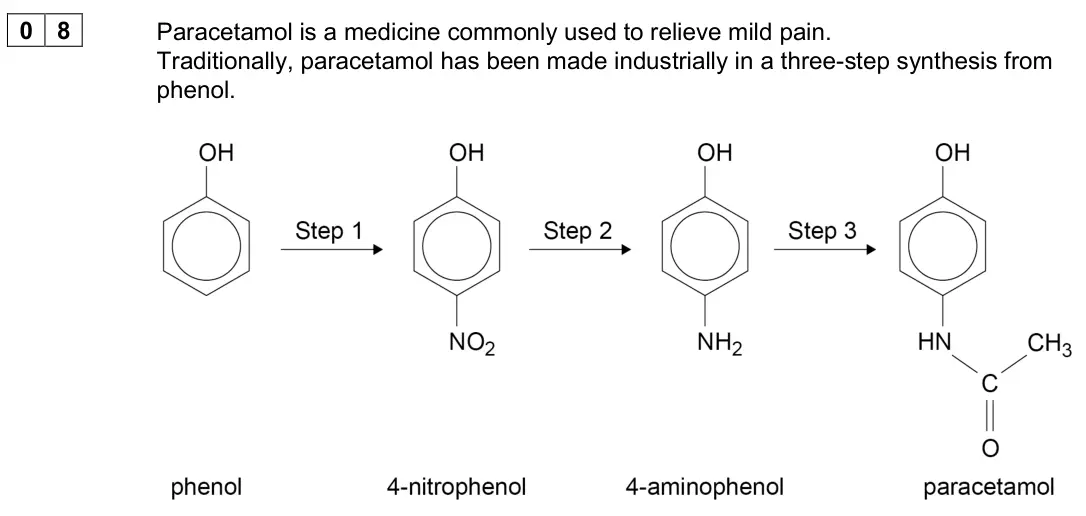
- June 2017, Paper 2, Q08.1 (1 mark): Nitrobenzene reacts when heated with a mixture of concentrated nitric acid an concentrated sulfuric acid to form a mixture of three isomeric dinitrobenzenes. Wr
- June 2017, Paper 2, Q08.2 (4 marks): Name and outline a mechanism for the reaction of this species with nitrobenzene to form 1,3-dinitrobenzene. [4 marks Name of mechanism Mechanism
- Specimen, Paper 2, Q09.5 (1 mark): A reagent for step 2 is a mixture of concentrated nitric acid and concentrated sulfuric acid, which react together to form a reactive intermediate. Write an equ
- Specimen, Paper 2, Q09.6 (1 mark): Name a mechanism for the reaction in step 2. [1 mark] 0 9 . 6
- June 2016, CHEM4 (old spec), Q4(b)(i) (1 mark): Draw the structure of the electrophile formed by the reaction of X with AlCl3 [1 mark]
- June 2016, CHEM4 (old spec), Q4(b)(ii) (3 marks): Outline the mechanism for the reaction of the electrophile from part (b)(i) with benzene in the preparation of P. [3 marks]
- June 2015, CHEM4 (old spec), Q5(a) (1 mark): Name the type of mechanism for reaction 1. [1 mark]
- June 2014, CHEM4 (old spec), Q4(b)(i) (2 marks): Suggest why the reaction of ammonia with X in Stage 1 might be considered unexpected. [2 marks]
- June 2014, CHEM4 (old spec), Q4(b)(iii) (3 marks): Compound X can be produced by nitration of chlorobenzene. Give the combination of reagents for this nitration of chlorobenzene. Write an equation or equations t
- June 2014, CHEM4 (old spec), Q4(b)(iv) (4 marks): Name and outline a mechanism for the formation of X from chlorobenzene and the reactive intermediate in Question 4 (b) (iii). [4 marks] Name of mechanism Mechan
- June 2013, CHEM4 (old spec), Q4(b)(i) (2 marks): Write an equation to show the formation of this acylium ion by the reaction of ethanoyl chloride with one other substance. (2 marks)
- June 2013, CHEM4 (old spec), Q4(b)(ii) (4 marks): Name and outline a mechanism for the reaction of benzene with this acylium ion. Name of mechanism Mechanism (4 marks)
- June 2013, CHEM4 (old spec), Q4(b)(iii) (1 mark): Ethanoic anhydride also reacts with benzene to form C6H5COCH3 Write an equation for this reaction. (1 mark)
- January 2013, CHEM4 (old spec), Q8(a)(i) (4 marks): Write an equation for this reaction and name the organic product. Identify a catalyst for the reaction. Write an equation to show how this catalyst reacts with
- January 2013, CHEM4 (old spec), Q8(a)(ii) (4 marks): Name and outline a mechanism for the reaction of benzene with the reactive intermediate in part (a) (i). Name of mechanism Mechanism (4 marks)
- June 2012, CHEM4 (old spec), Q6(a) (6 marks): Write equations to show the role of aluminium chloride as a catalyst in this reaction. Outline a mechanism for the reaction of benzene. Name the product, C6H5CO
- June 2012, CHEM4 (old spec), Q6(c) (2 marks): When methylbenzene reacts with ethanoyl chloride and aluminium chloride, a similar substitution reaction occurs but the reaction is faster than the reaction of
- January 2012, CHEM4 (old spec), Q9(a)(i) (3 marks): Give the reagents used to produce the electrophile for this reaction. Write an equation or equations to show the formation of this electrophile. Reagents Equati
- January 2012, CHEM4 (old spec), Q9(a)(ii) (3 marks): Outline a mechanism for the reaction of this electrophile with methylbenzene to produce 4-methylnitrobenzene. (3 marks)
- June 2011, CHEM4 (old spec), Q8(b) (6 marks): Benzene can be converted into amine U by the two-step synthesis shown below. The mechanism of Reaction 1 involves attack by an electrophile. Give the reagents u
- January 2011, CHEM4 (old spec), Q6(a)(i) (5 marks): Write an equation for this reaction and name the organic product. Identify the catalyst required in this reaction. Write equations to show how the catalyst is u
- January 2011, CHEM4 (old spec), Q6(a)(ii) (4 marks): Name and outline a mechanism for the reaction of benzene with this reactive intermediate.
- June 2010, CHEM4 (old spec), Q8(a) (3 marks): Give the two substances that react together to form the electrophile and write an equation to show the formation of this electrophile.
- June 2010, CHEM4 (old spec), Q8(b) (3 marks): Outline a mechanism for the reaction of this electrophile with benzene to form P. (3 marks)
- January 2010, CHEM4 (old spec), Q8(b)(i) (2 marks): Give the formula of this inorganic species formed from the two acids and write an equation to show its formation. (2 marks)
- January 2010, CHEM4 (old spec), Q8(b)(ii) (4 marks): Name and outline a mechanism for the reaction of this inorganic species with nitrobenzene to form X. (4 marks)
- June 2008, CHM4 (2008 spec), Q6(b) (8 marks): 6 (b) Write a balanced equation for the overall reaction of propanoyl chloride with benzene. Identify a suitable catalyst for this reaction. Write equations to
- June 2008, CHM6W (2008 spec), Q36 (1 mark): 36 The drug tamoxifen, which is used in the treatment of cancer, has the structure Correct statements about tamoxifen include 1 it can undergo electrophilic add
Questions, mark schemes and examiner’s reports are © AQA, from their published past papers. Plumi isn’t affiliated with any exam board. Want whole papers? AQA A-Level Chemistry past papers.
The Plumi iPad app also offers exam-style questions with AI feedback on your handwritten working.