 plumi
Nervous coordination: AQA A‑Level Biology questions
Every AQA A-Level Biology exam question on 3.6.2 Nervous coordination, 2016–2025, with its mark scheme and examiner’s report.
Find questions1,383
Calculations
Q06.1
The whole paper ↗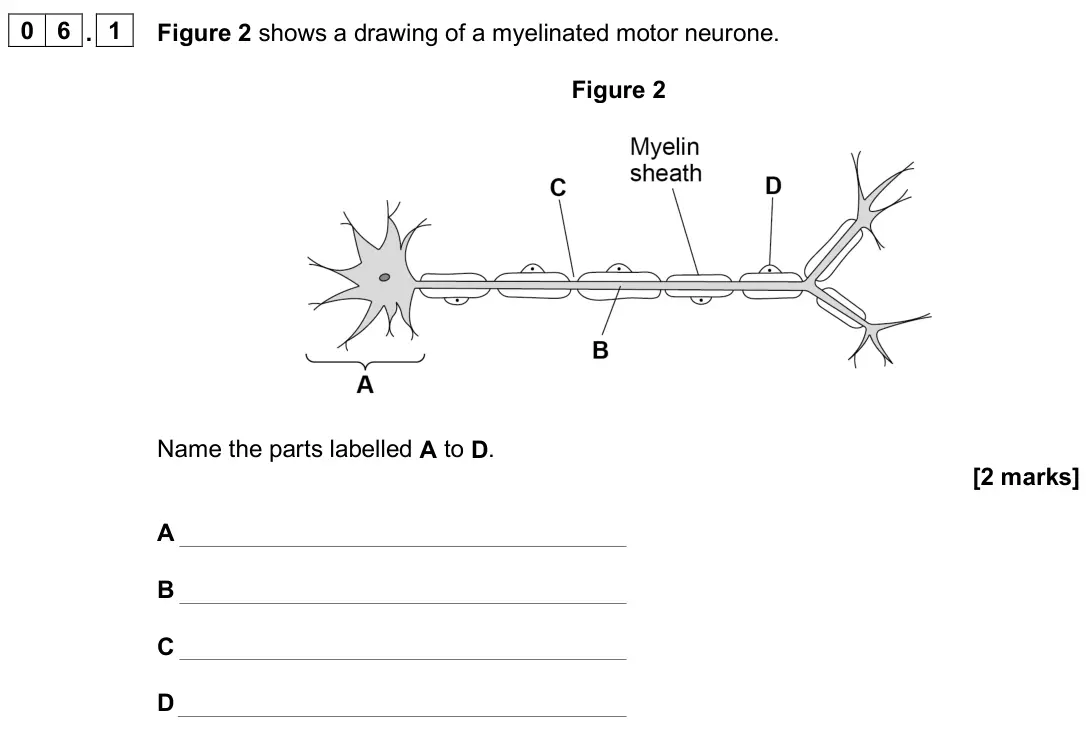
Q06.2
The whole paper ↗
Q01.1
The whole paper ↗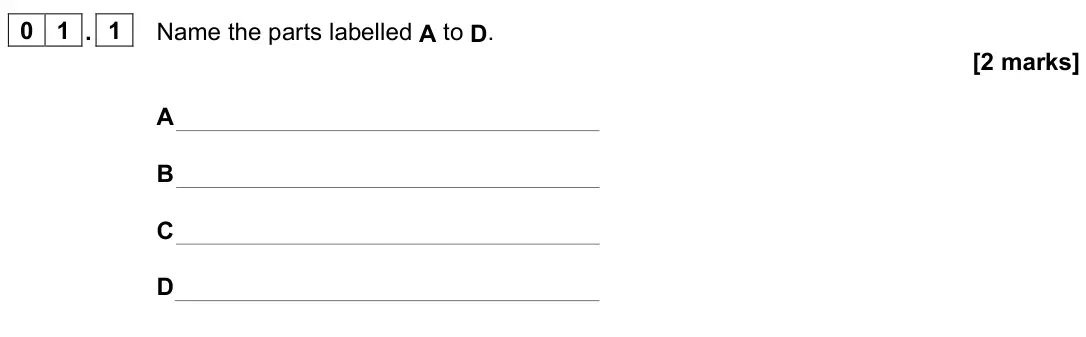
Q01.2
The whole paper ↗
Q01.3
The whole paper ↗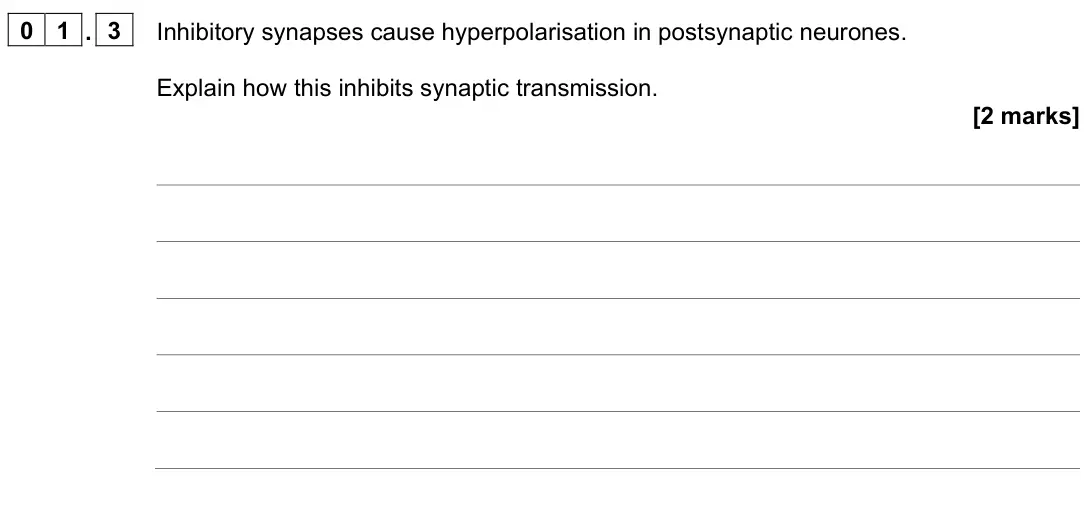
Q02.1
The whole paper ↗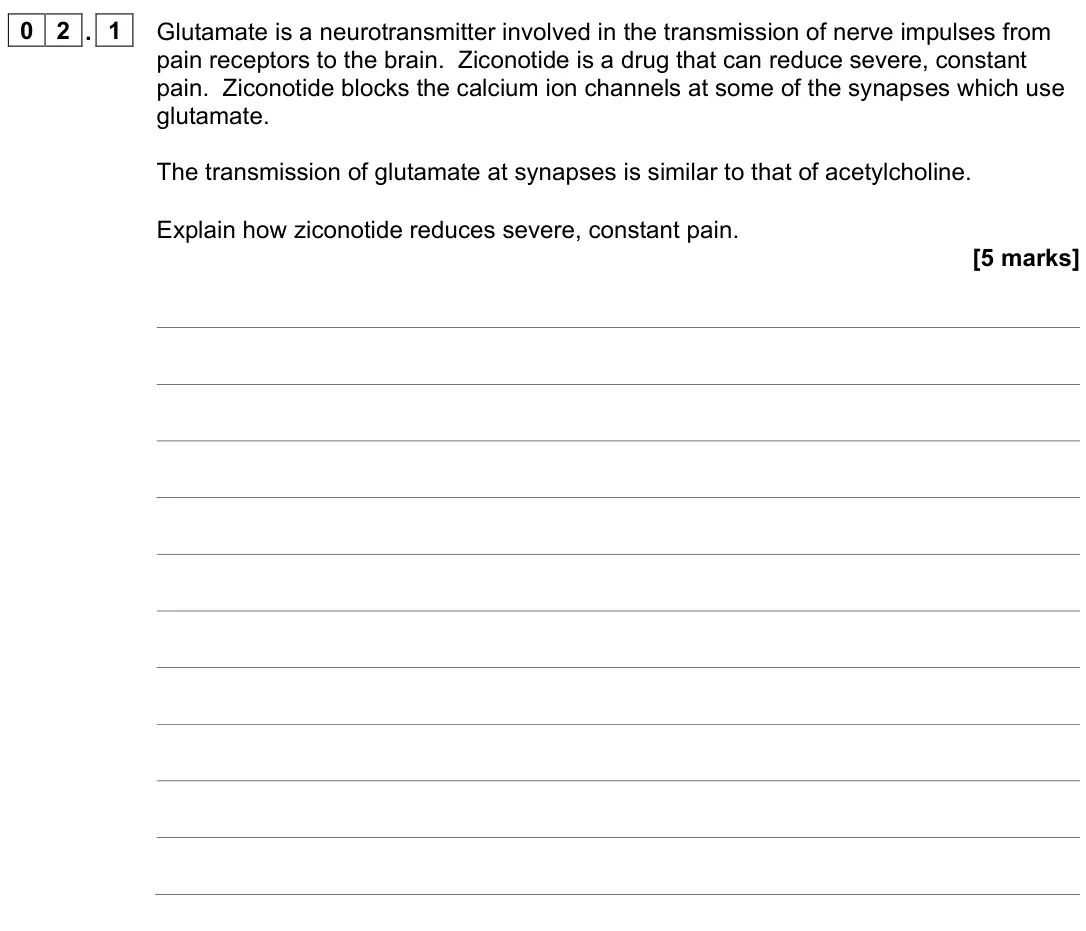
Q02.3
The whole paper ↗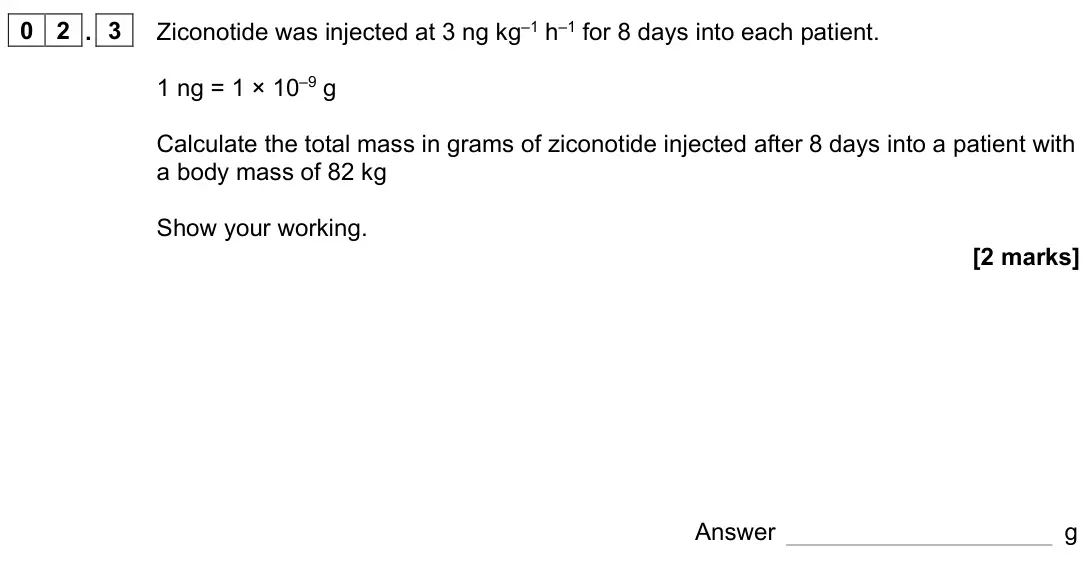
Q02.4
The whole paper ↗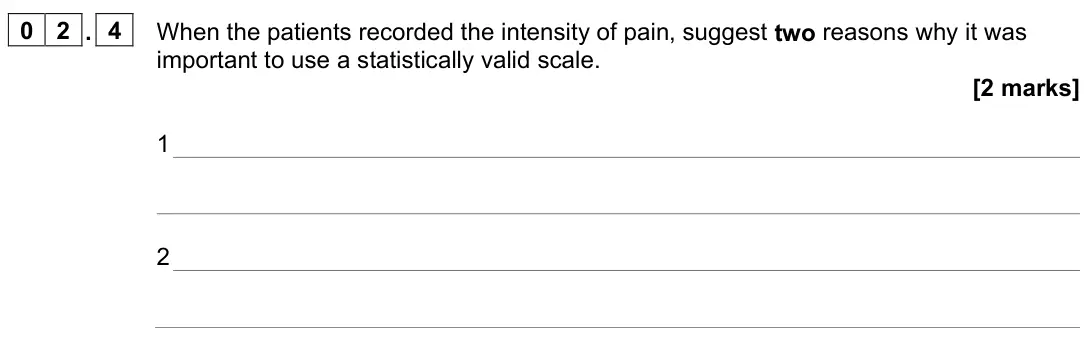
Q01.1
The whole paper ↗
Q01.2
The whole paper ↗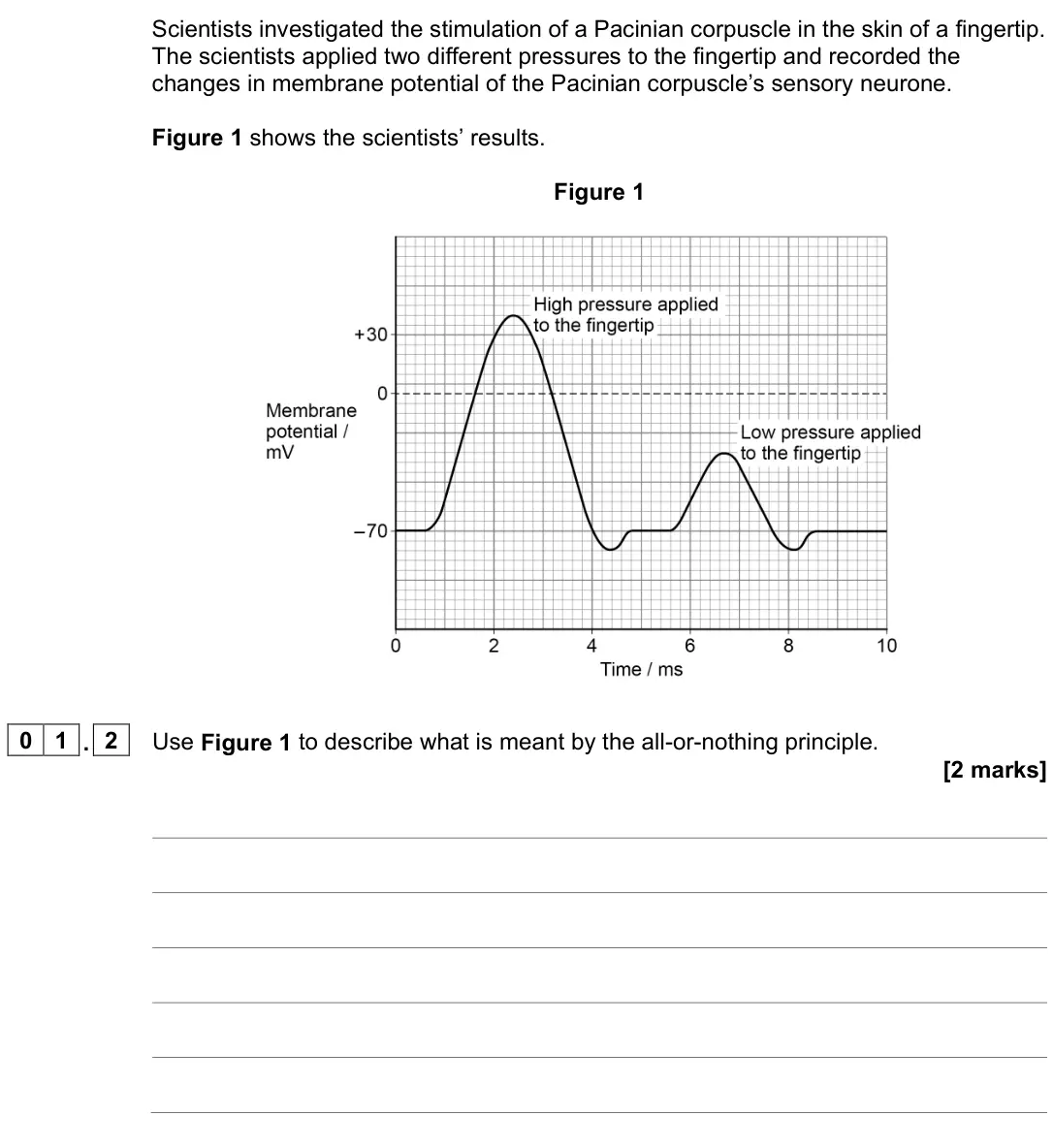
Q01.3
The whole paper ↗
Q07.1
The whole paper ↗
Q07.2
The whole paper ↗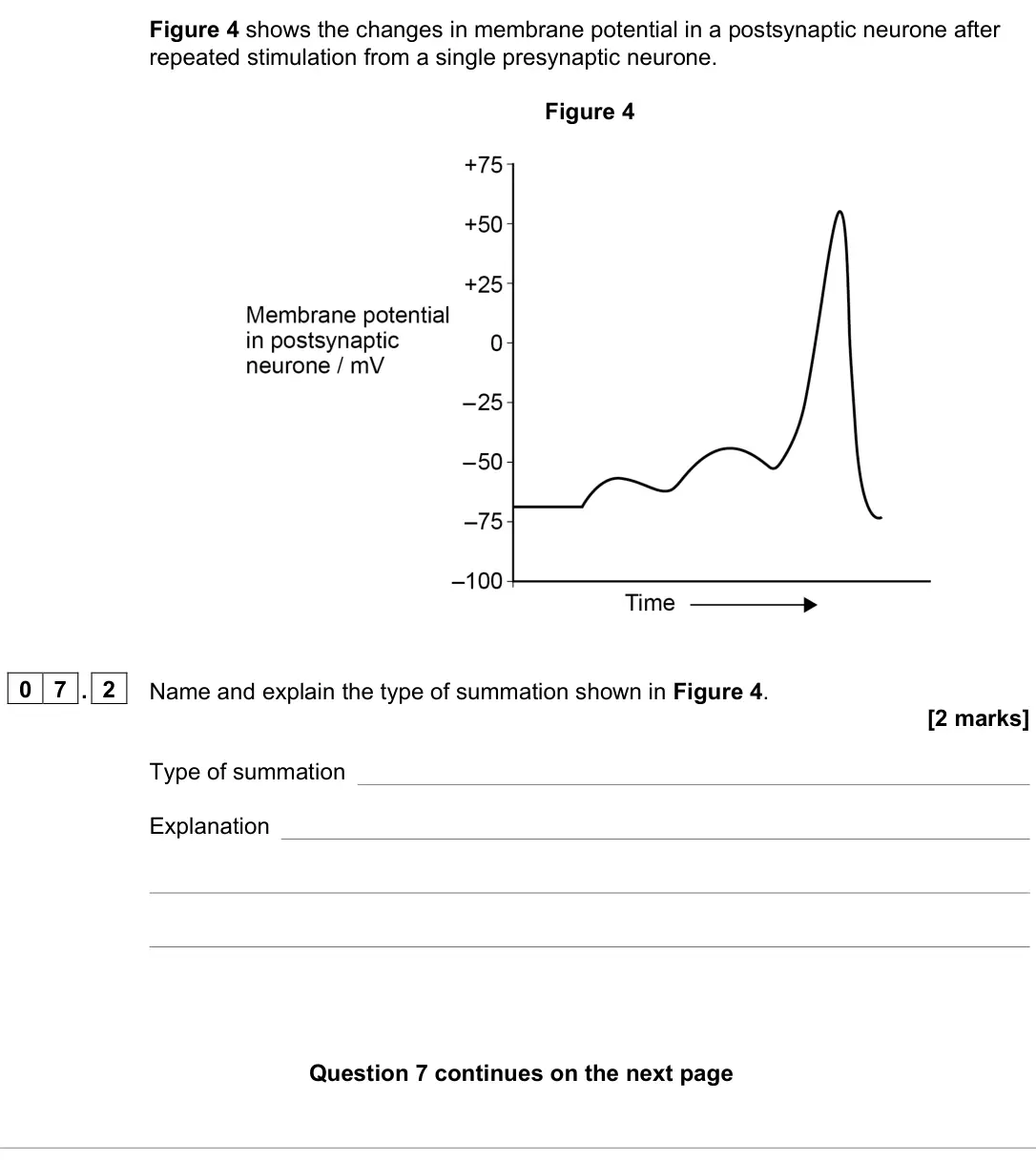
Q07.3
The whole paper ↗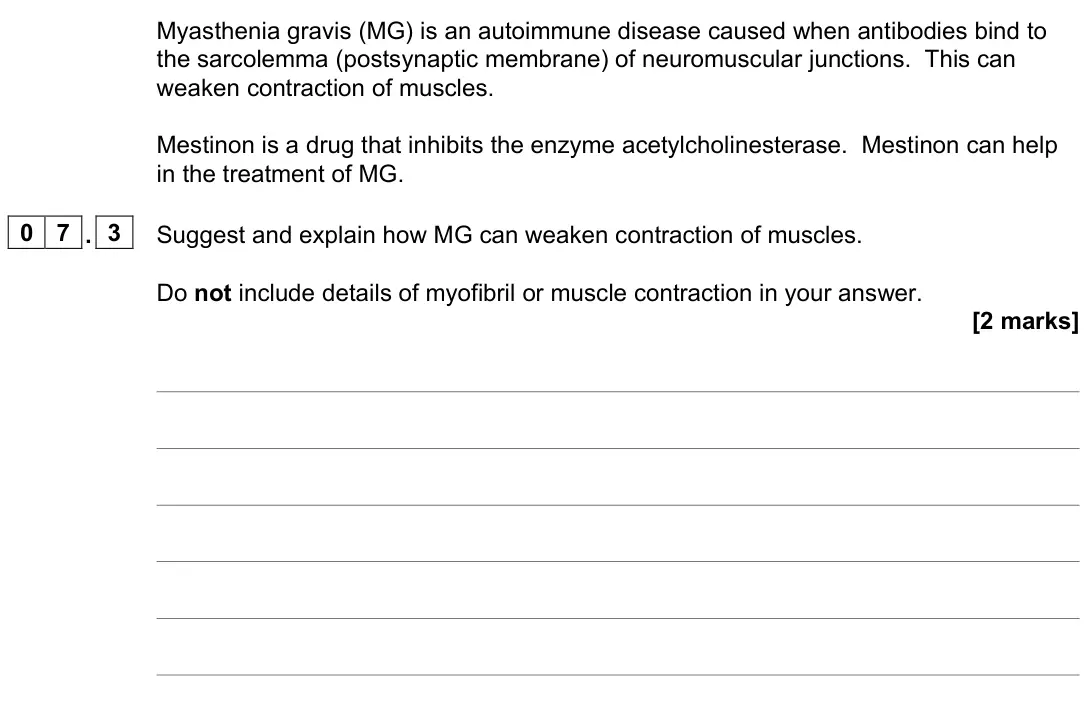
Q07.4
The whole paper ↗
Q02.1
The whole paper ↗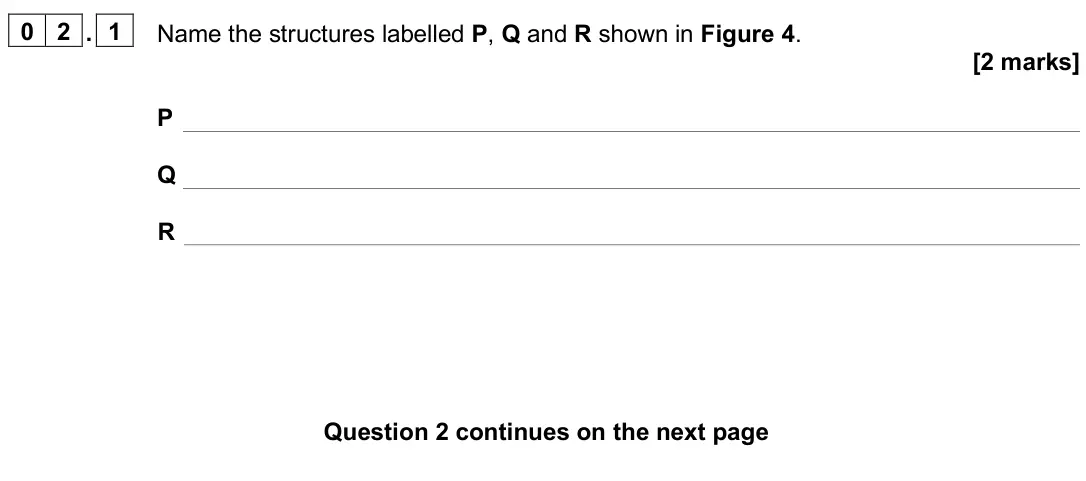
Q02.2
The whole paper ↗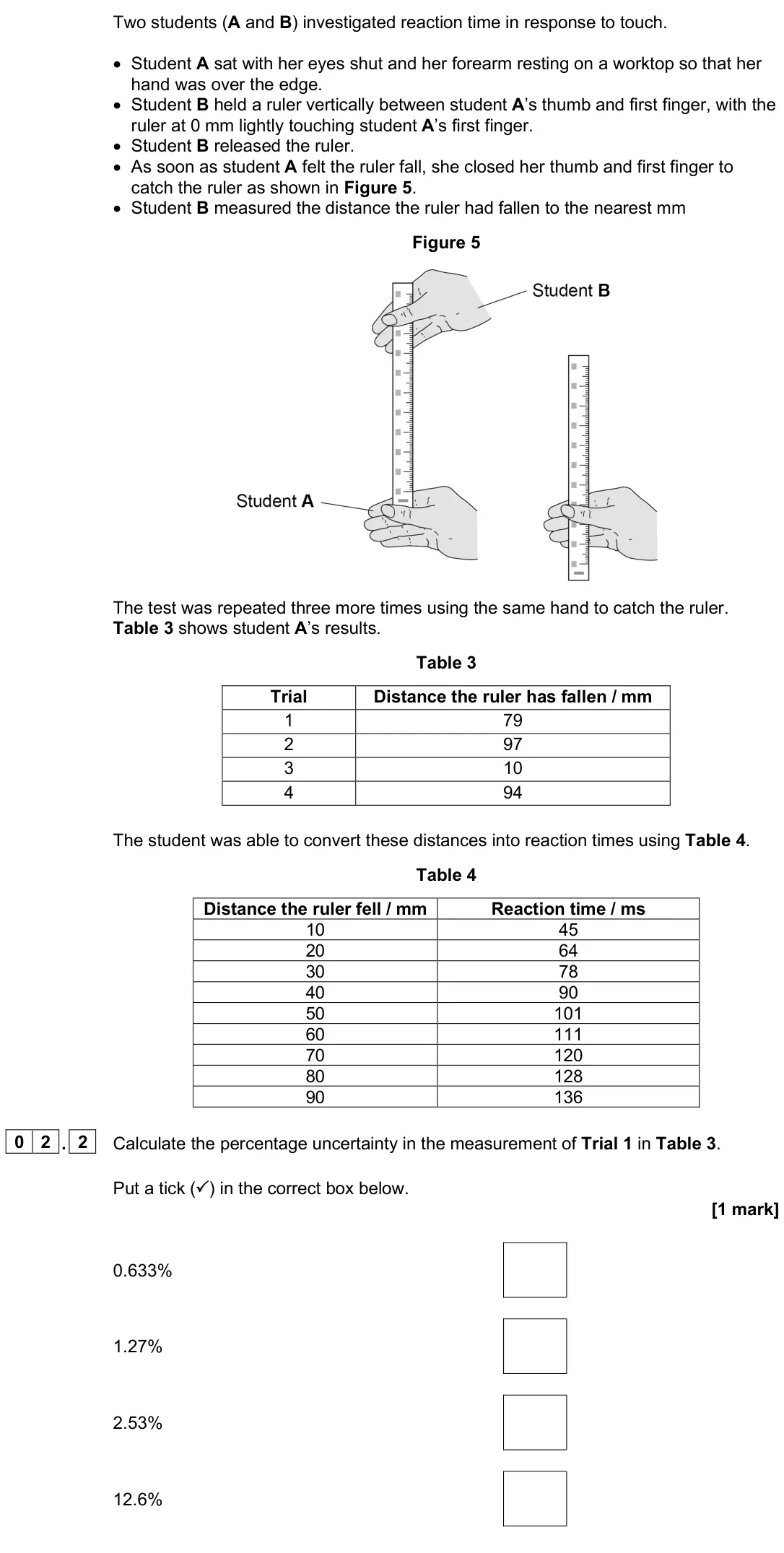
Q02.3
The whole paper ↗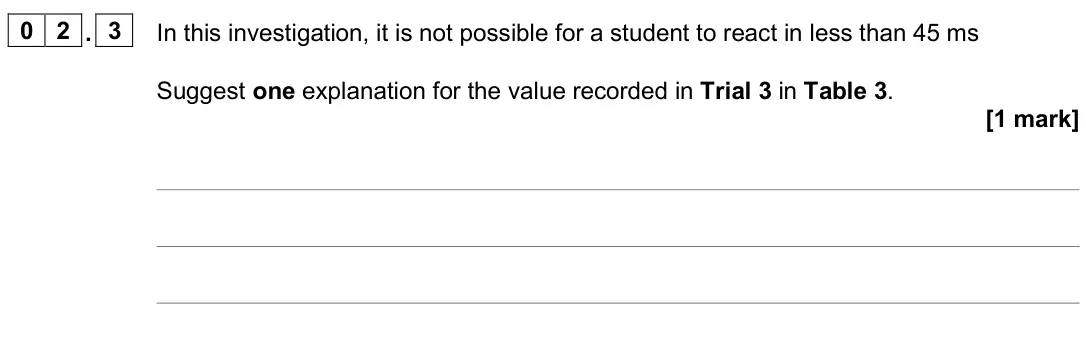
Q02.4
The whole paper ↗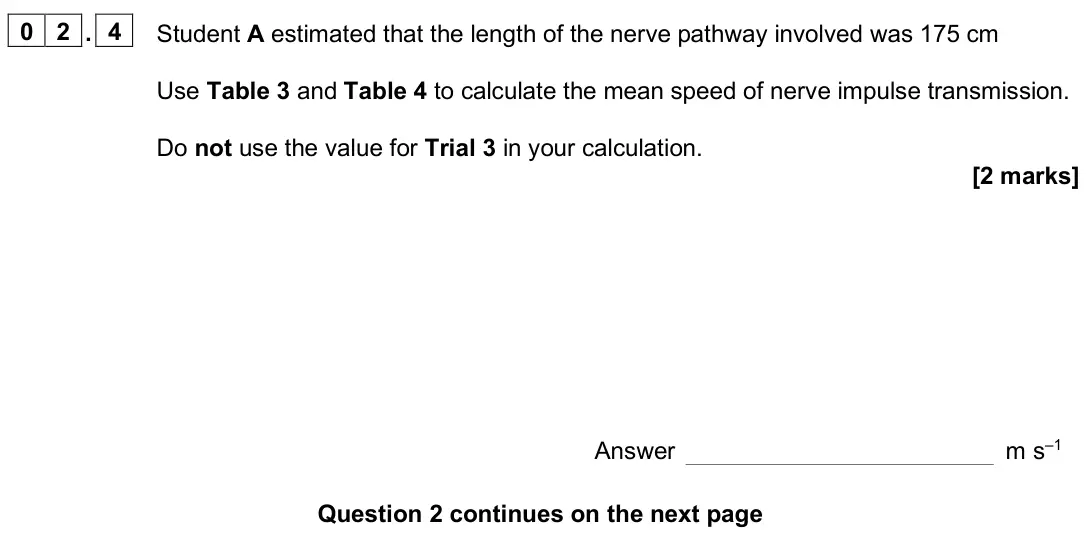
Q02.5
The whole paper ↗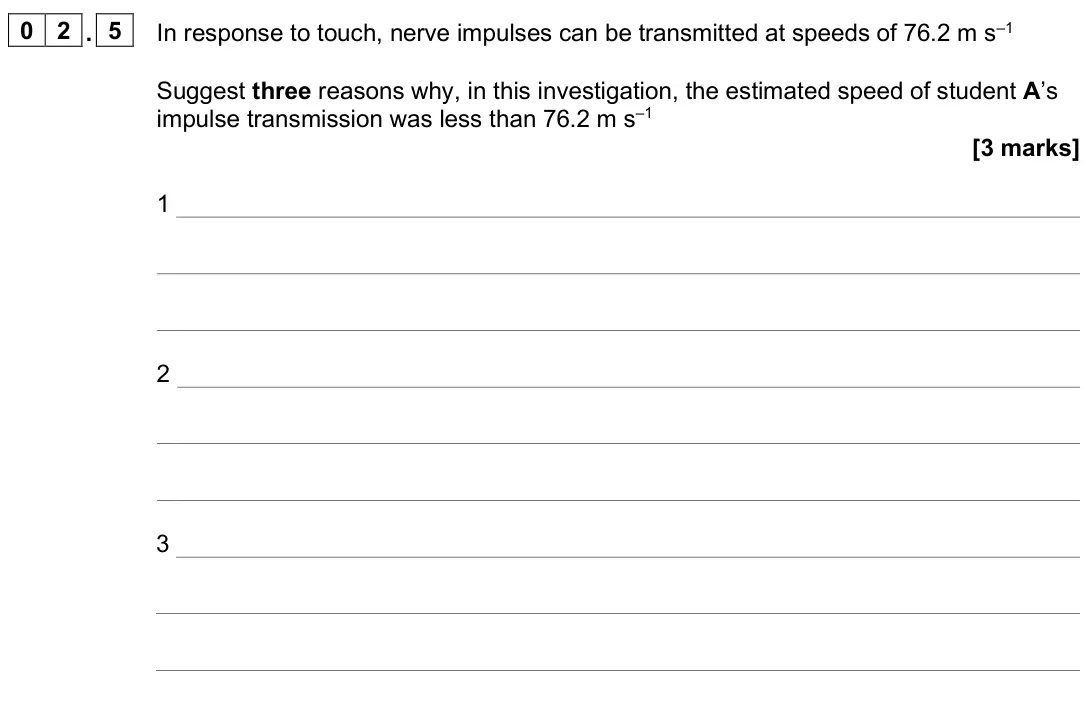
All 38 questions on Nervous coordination, as a list
- June 2025, Paper 2, Q06.1 (2 marks): Figure 2 shows a drawing of a myelinated motor neurone. Figure 2 Name the parts labelled A to D. [2 marks] A B C D
- June 2025, Paper 2, Q06.2 (3 marks): Osmotic demyelination syndrome (ODS) results in destruction of the myelin sheath of neurones in the brain. ODS can increase reflex response times. Explain why.
- June 2024, Paper 2, Q01.1 (2 marks): Name the parts labelled A to D. [2 marks] A B C D
- June 2024, Paper 2, Q01.2 (4 marks): Following the release of acetylcholine into a neuromuscular junction, a muscle contraction occurs. Describe the sequence of events, following the release of ace
- June 2024, Paper 2, Q01.3 (2 marks): Inhibitory synapses cause hyperpolarisation in postsynaptic neurones. Explain how this inhibits synaptic transmission. [2 marks]
- June 2023, Paper 2, Q02.1 (5 marks): Glutamate is a neurotransmitter involved in the transmission of nerve impulses from pain receptors to the brain. Ziconotide is a drug that can reduce severe, co
- June 2023, Paper 2, Q02.3 (2 marks): Ziconotide was injected at 3 ng kg–1 h–1 for 8 days into each patient. 1 ng = 1 × 10⁻⁹ g Calculate the total mass in grams of ziconotide injected after 8 days i
- June 2023, Paper 2, Q02.4 (2 marks): When the patients recorded the intensity of pain, suggest two reasons why it was important to use a statistically valid scale. [2 marks] 1 2
- June 2023, Paper 3, Q01.1 (3 marks): Describe how stimulation of a Pacinian corpuscle produces a generator potential. [3 marks]
- June 2023, Paper 3, Q01.2 (2 marks): Use Figure 1 to describe what is meant by the all-or-nothing principle. [2 marks]
- June 2023, Paper 3, Q01.3 (1 mark): On Figure 1, from 0.6 ms to 4.0 ms, no new generator potential could be produced. What is this time period called? [1 mark]
- June 2022, Paper 2, Q07.1 (2 marks): Give two reasons why transmission across a cholinergic synapse is unidirectional. [2 marks] 1 2
- June 2022, Paper 2, Q07.2 (2 marks): Name and explain the type of summation shown in Figure 4. [2 marks] Type of summation Explanation
- June 2022, Paper 2, Q07.3 (2 marks): Suggest and explain how MG can weaken contraction of muscles. Do not include details of myofibril or muscle contraction in your answer. [2 marks]
- June 2022, Paper 2, Q07.4 (3 marks): Mestinon can help in the treatment of MG. Explain how. [3 marks]
- June 2022, Paper 3, Q02.1 (2 marks): Name the structures labelled P, Q and R shown in Figure 4. [2 marks] P Q R
- June 2022, Paper 3, Q02.2 (1 mark): Calculate the percentage uncertainty in the measurement of Trial 1 in Table 3. Put a tick () in the correct box below. [1 mark] 0.633% 1.27% 2.53% 12.6%
- June 2022, Paper 3, Q02.3 (1 mark): In this investigation, it is not possible for a student to react in less than 45 ms Suggest one explanation for the value recorded in Trial 3 in Table 3. [1 mar
- June 2022, Paper 3, Q02.4 (2 marks): Student A estimated that the length of the nerve pathway involved was 175 cm Use Table 3 and Table 4 to calculate the mean speed of nerve impulse transmission.
- June 2022, Paper 3, Q02.5 (3 marks): In response to touch, nerve impulses can be transmitted at speeds of 76.2 m s–1 Suggest three reasons why, in this investigation, the estimated speed of student
- November 2021, Paper 2, Q02.1 (3 marks): Explain how a resting potential is maintained across the axon membrane in a neurone. [3 marks]
- November 2021, Paper 2, Q02.2 (3 marks): Explain why the speed of transmission of impulses is faster along a myelinated axon than along a non-myelinated axon. [3 marks]
- November 2021, Paper 2, Q02.3 (3 marks): A scientist investigated the effect of inhibitors on neurones. She added a respiratory inhibitor to a neurone. The resting potential of the neurone changed from
- November 2020, Paper 2, Q05 (5 marks): Describe the sequence of events involved in transmission across a cholinergic synapse. Do not include details on the breakdown of acetylcholine in your answer.
- June 2019, Paper 2, Q10.1 (3 marks): Damage to the myelin sheath of neurones can cause muscular paralysis (lines 2–4). Explain how. [3 marks]
- June 2018, Paper 2, Q07.1 (3 marks): Dopamine is a neurotransmitter released in some synapses in the brain. The transmission of dopamine is similar to that of acetylcholine. Dopamine stimulates the
- June 2018, Paper 2, Q07.2 (2 marks): Dopamine has a role in numerous processes in the brain including pain relief. The release of dopamine can be stimulated by chemicals called endorphins produced
- June 2018, Paper 2, Q07.3 (3 marks): GABA is a neurotransmitter released in some inhibitory synapses in the brain. GABA causes negatively charged chloride ions to enter postsynaptic neurones. Expla
- June 2017, Paper 2, Q10.1 (2 marks): 1 0 Alzheimer’s disease (AD) is a non-reversible brain disorder that develops over a number of years. At the start of 2014 the number of Americans with AD was e
- June 2017, Paper 2, Q10.2 (3 marks): 1 0 Alzheimer’s disease (AD) is a non-reversible brain disorder that develops over a number of years. At the start of 2014 the number of Americans with AD was e
- June 2017, Paper 3, Q01.1 (3 marks): When a nerve impulse arrives at a synapse, it causes the release of neurotransmitter from vesicles in the presynaptic knob. Describe how. [3 marks]
- June 2017, Paper 3, Q01.3 (2 marks): This movement of mitochondria happens when nerve impulses arrive at the synapse. Suggest and explain one advantage of the movement of mitochondria towards the p
- Specimen, Paper 2, Q04.1 (2 marks): A biologist investigated the stimulation of a Pacinian corpuscle in the skin of a fingertip. She used microelectrodes to measure the maximum membrane potential
- Specimen, Paper 2, Q04.2 (3 marks): [ ]
- Specimen, Paper 2, Q04.3 (2 marks): The membrane potential at Q was the same whether medium or heavy pressure was applied to the finger tip. Explain why. [2 marks] 0 4 . 3
- Specimen, Paper 2, Q04.4 (2 marks): Silkworms secrete silk fibres, which are harvested and used to manufacture silk fabric. Scientists have produced genetically modified (GM) silkworms that contai
- Specimen, Paper 2, Q06.3 (2 marks): The KDR plus allele codes for the sodium ion channels found in neurones. When DDT binds to a sodium ion channel, the channel remains open all the time. Use this
- Specimen, Paper 3, Q06.2 (25 marks):
Questions, mark schemes and examiner’s reports are © AQA, from their published past papers. Plumi isn’t affiliated with any exam board. Want whole papers? Every AQA A-Level Biology paper.
Rather write your answers by hand on iPad? Plumi marks them against the same mark schemes.