 plumi
Homeostasis is the maintenance of a stable internal environment: AQA A‑Level Biology questions
Every AQA A-Level Biology exam question on 3.6.4 Homeostasis is the maintenance of a stable internal environment, 2016–2025, with its mark scheme and examiner’s report.
Find questions1,383
Calculations
Q02.1
The whole paper ↗
Q02.2
The whole paper ↗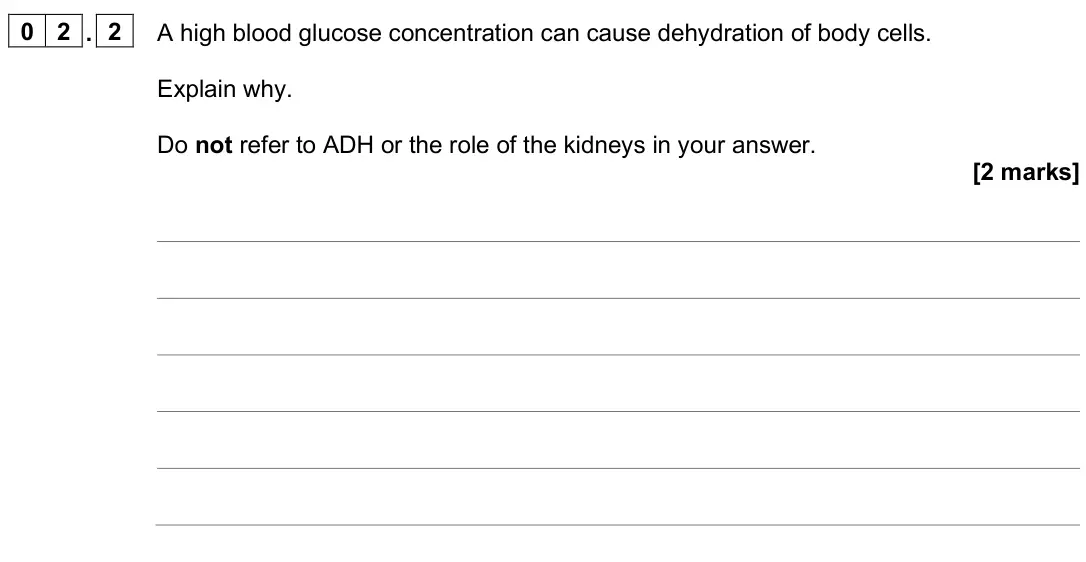
Q02.3
The whole paper ↗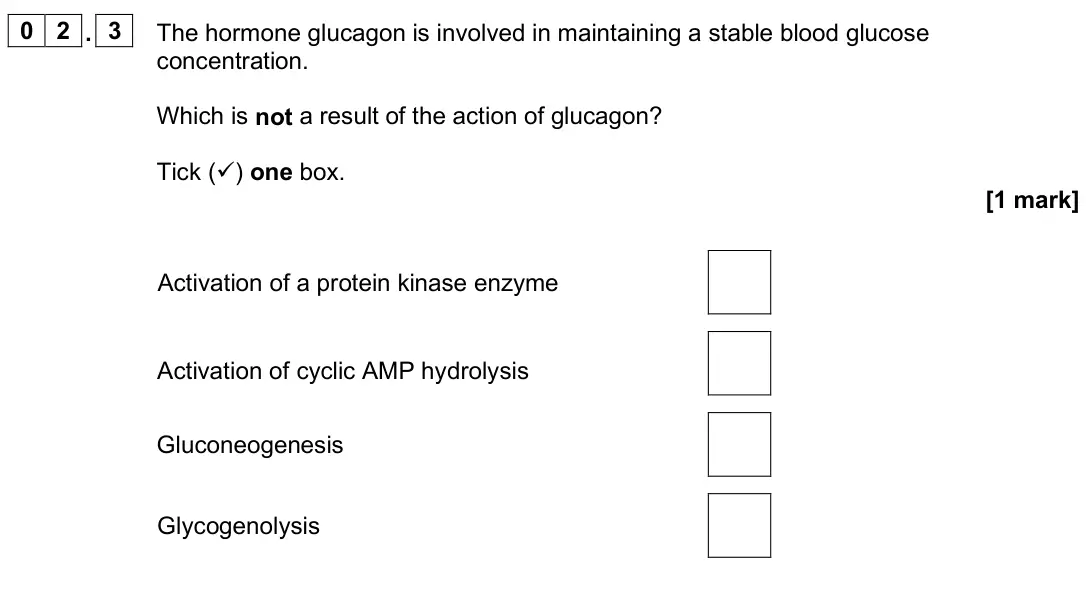
Q02.4
The whole paper ↗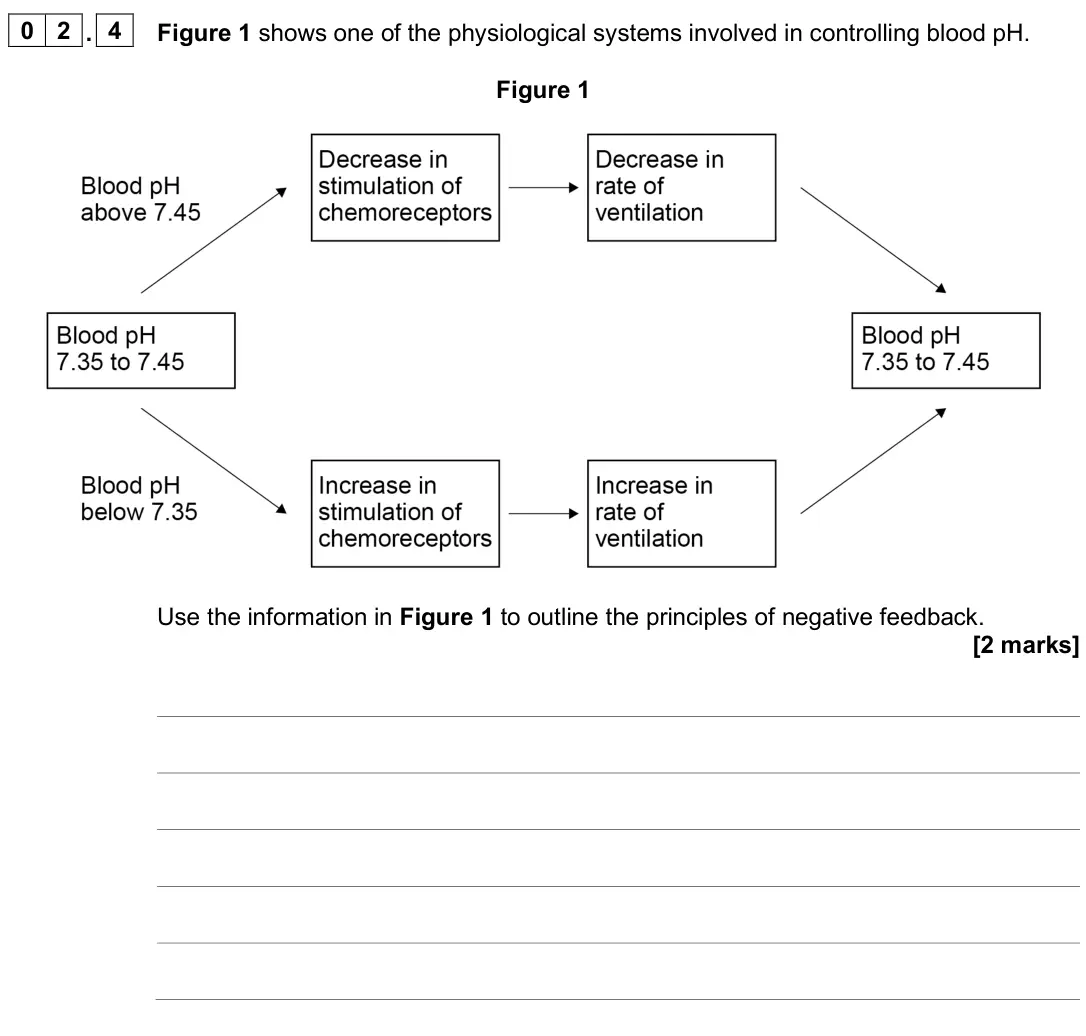
Q02.5
The whole paper ↗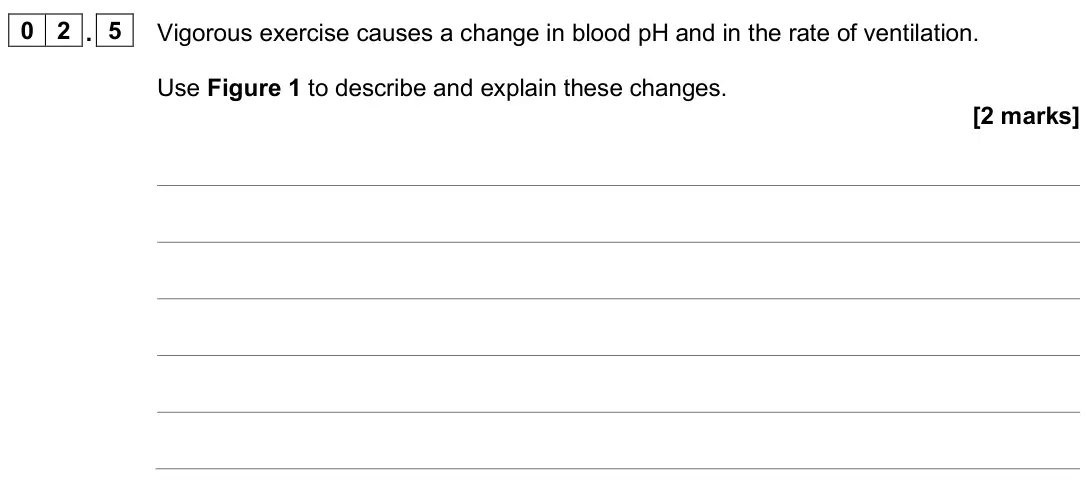
Q02.1
The whole paper ↗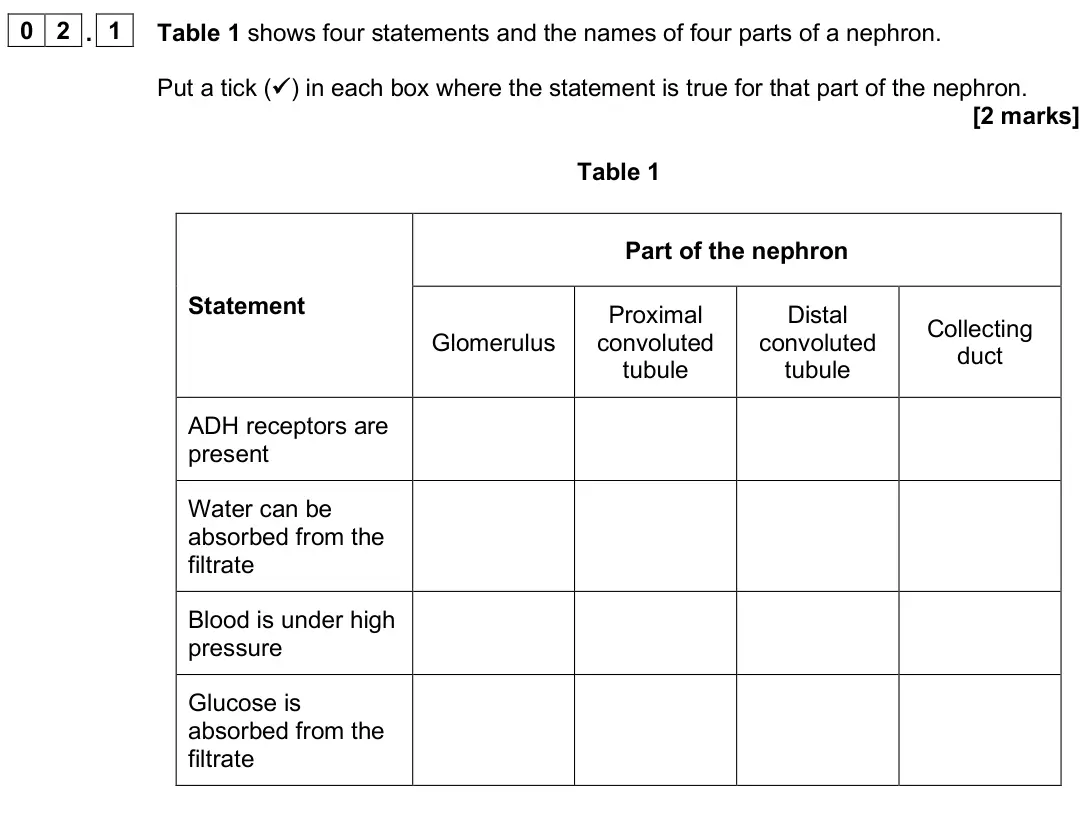
Q02.2
The whole paper ↗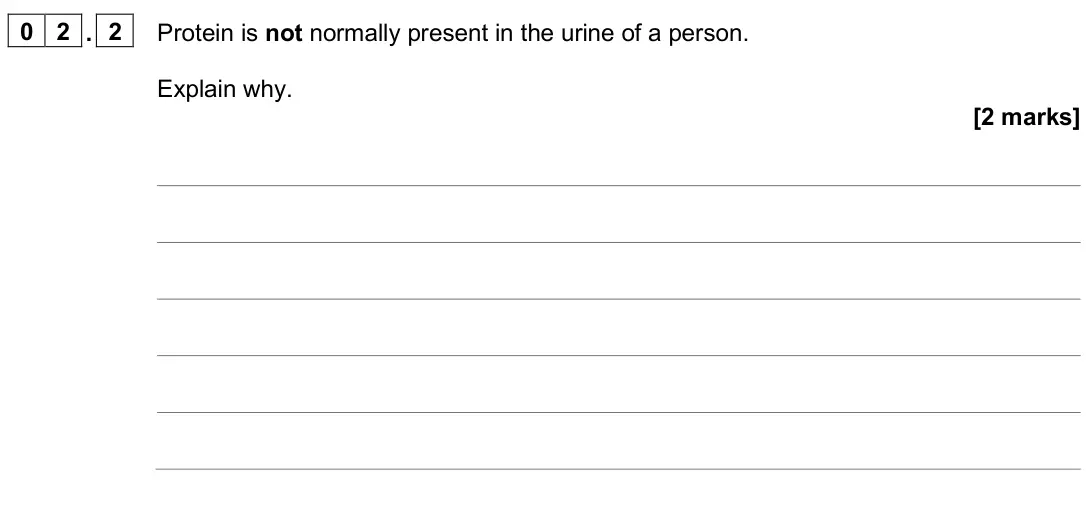
Q02.3
The whole paper ↗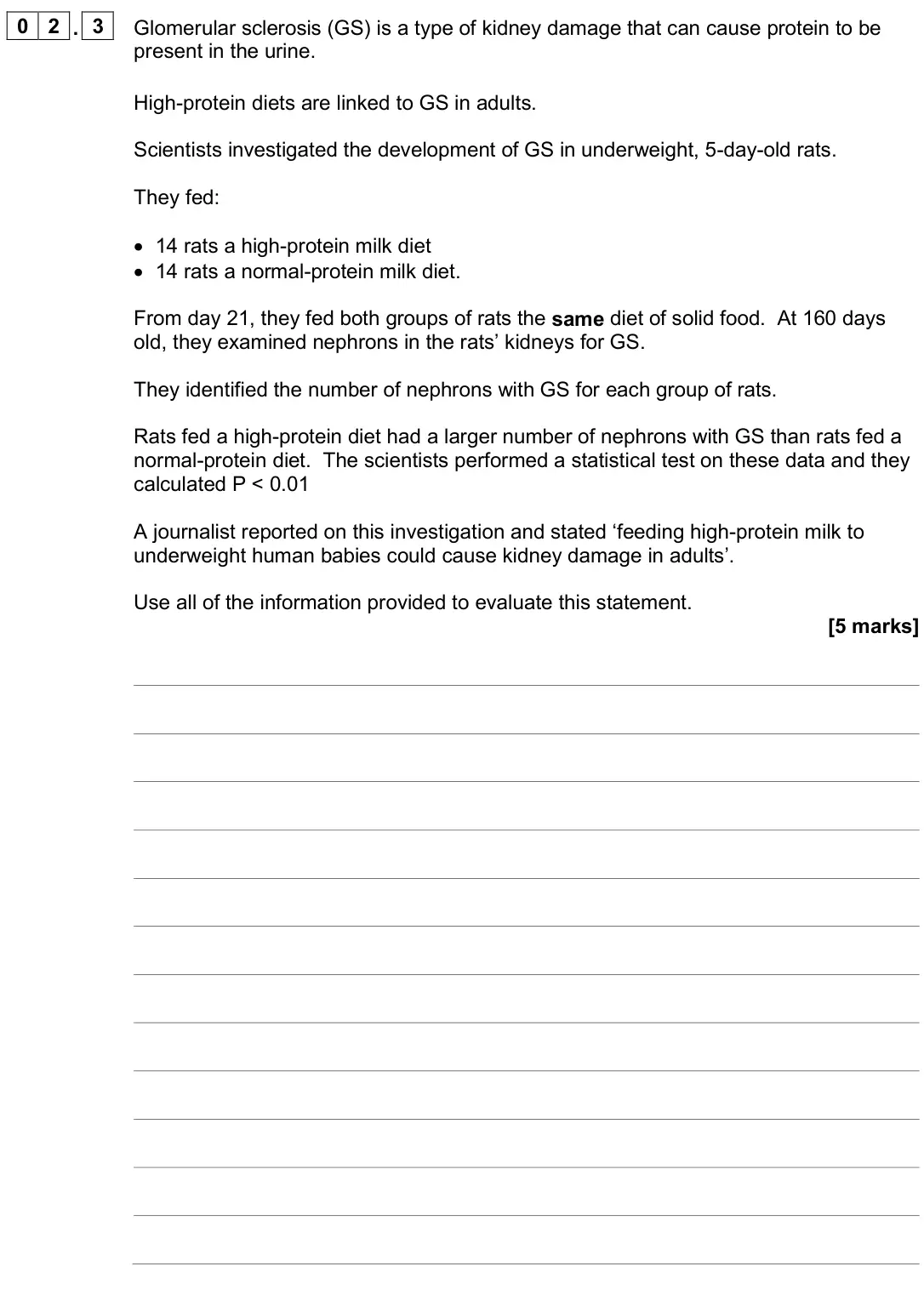
Q07.2
The whole paper ↗
Q09.1
The whole paper ↗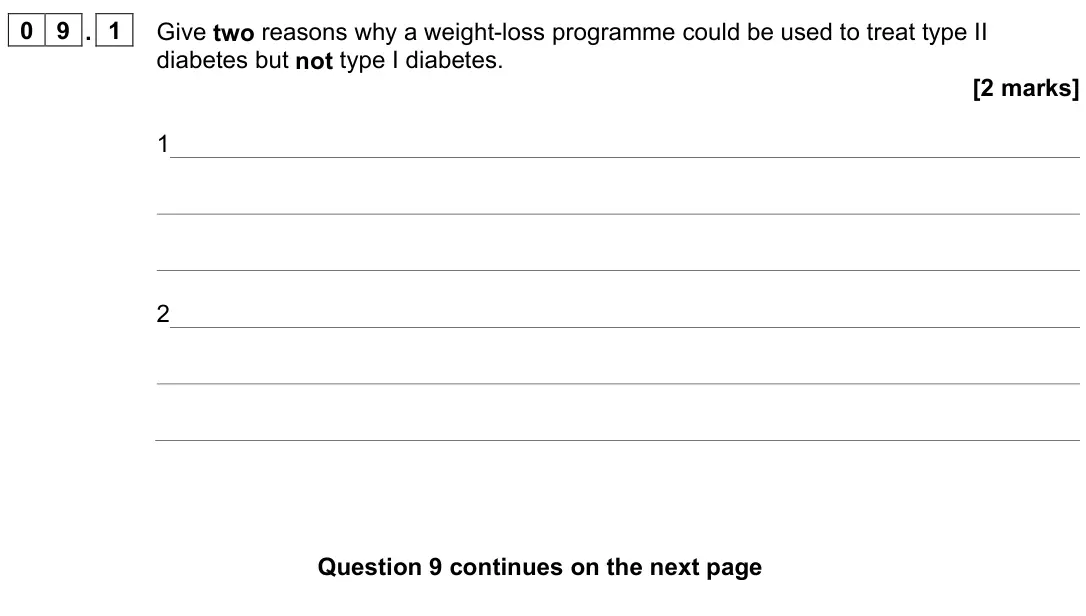
Q09.2
The whole paper ↗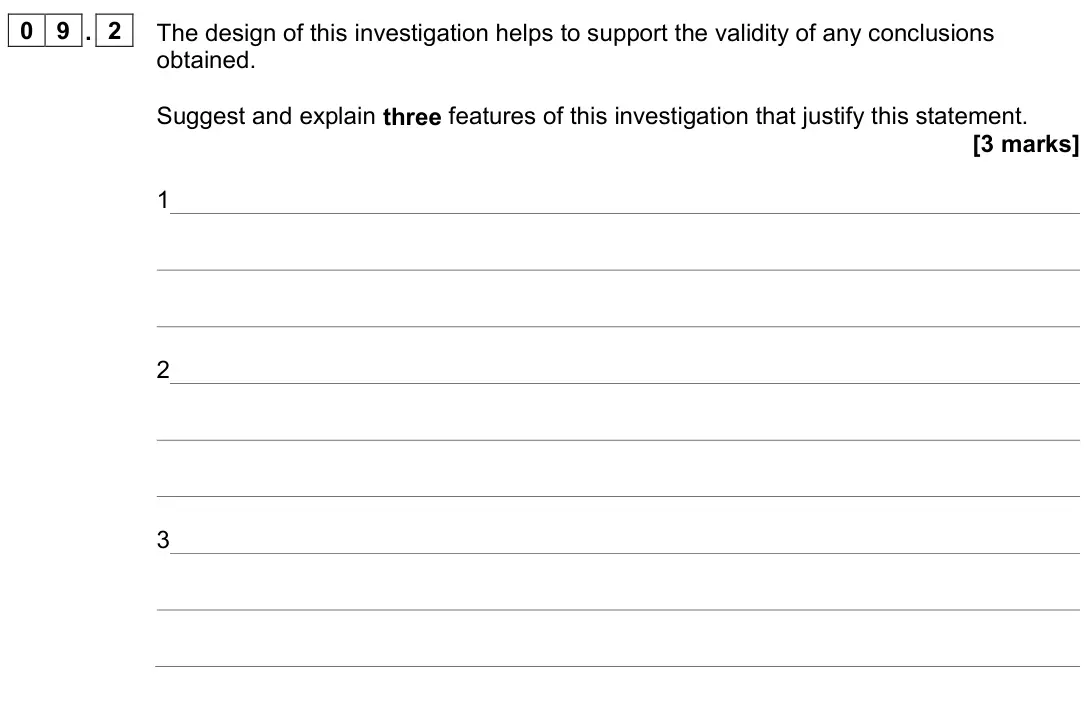
Q09.3
The whole paper ↗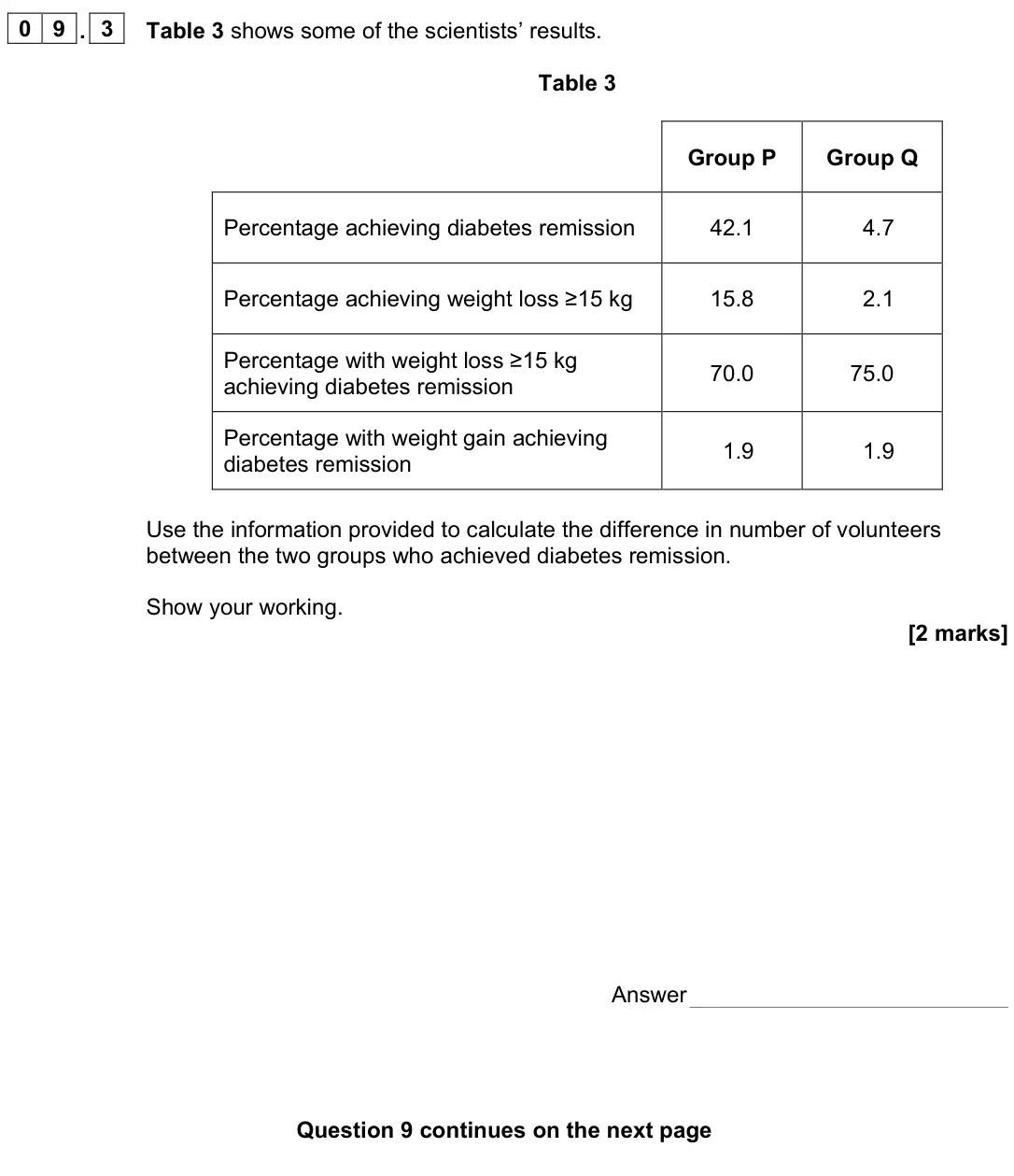
Q09.4
The whole paper ↗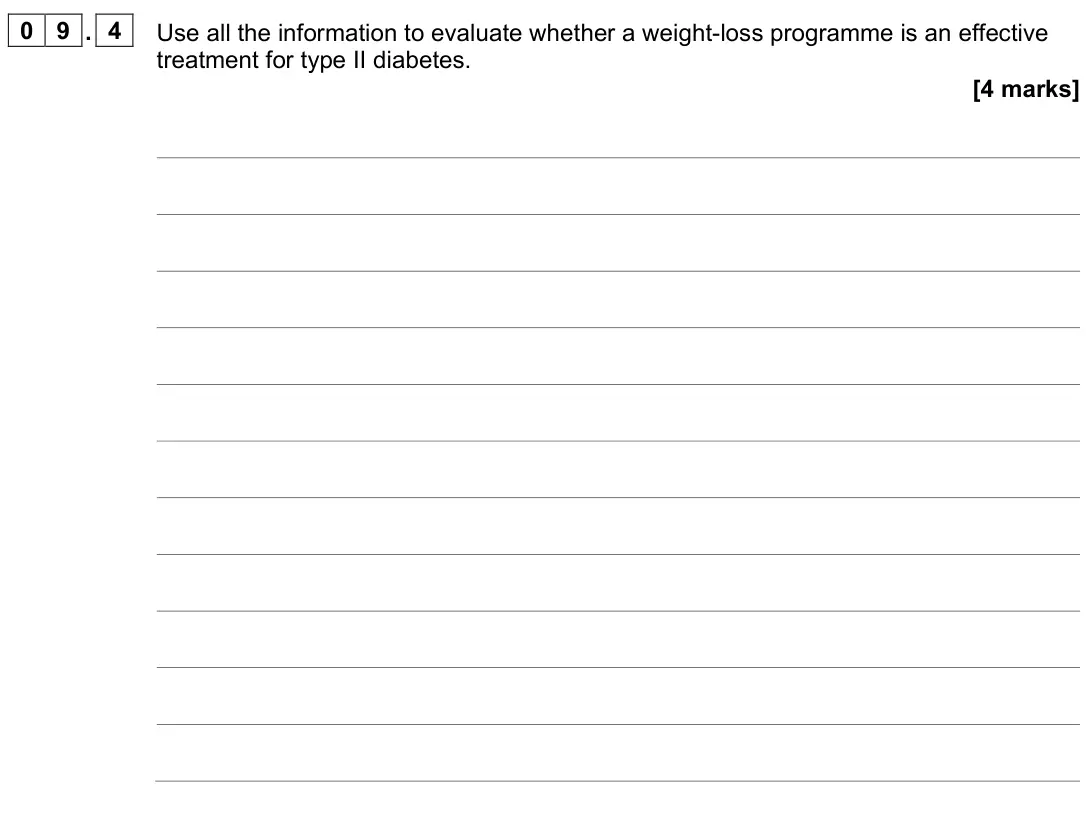
Q06.1
The whole paper ↗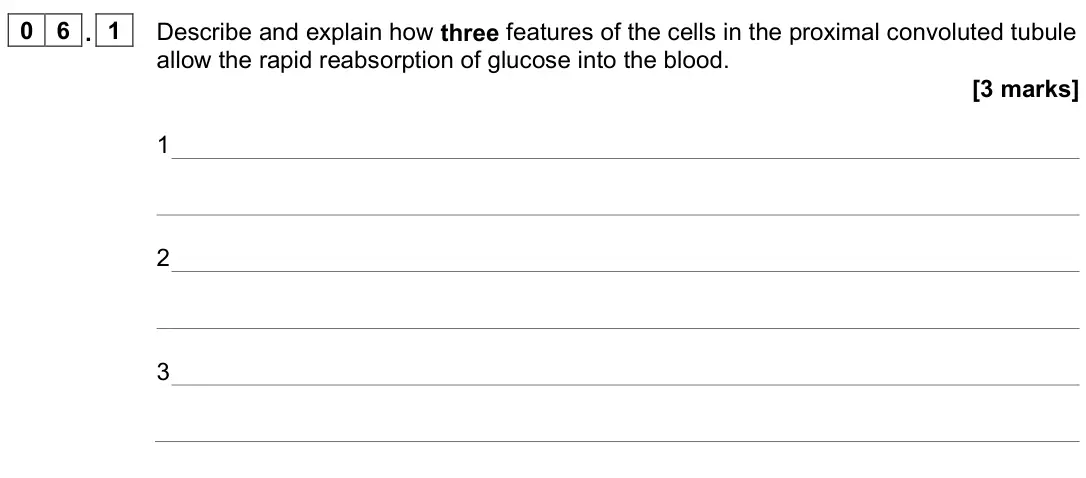
Q06.2
The whole paper ↗
Q06.3
The whole paper ↗
Q06.4
The whole paper ↗
Q08.1
The whole paper ↗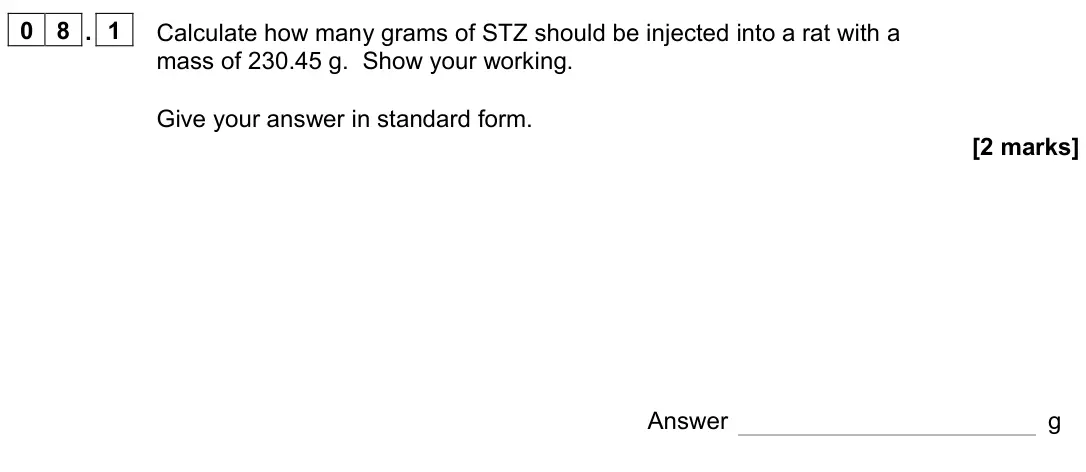
Q08.2
The whole paper ↗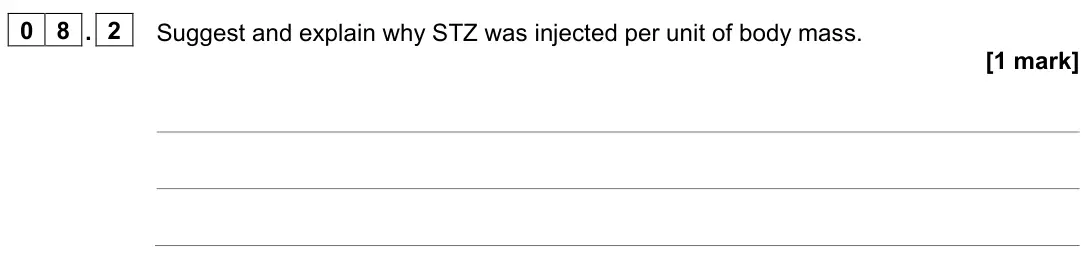
Q08.3
The whole paper ↗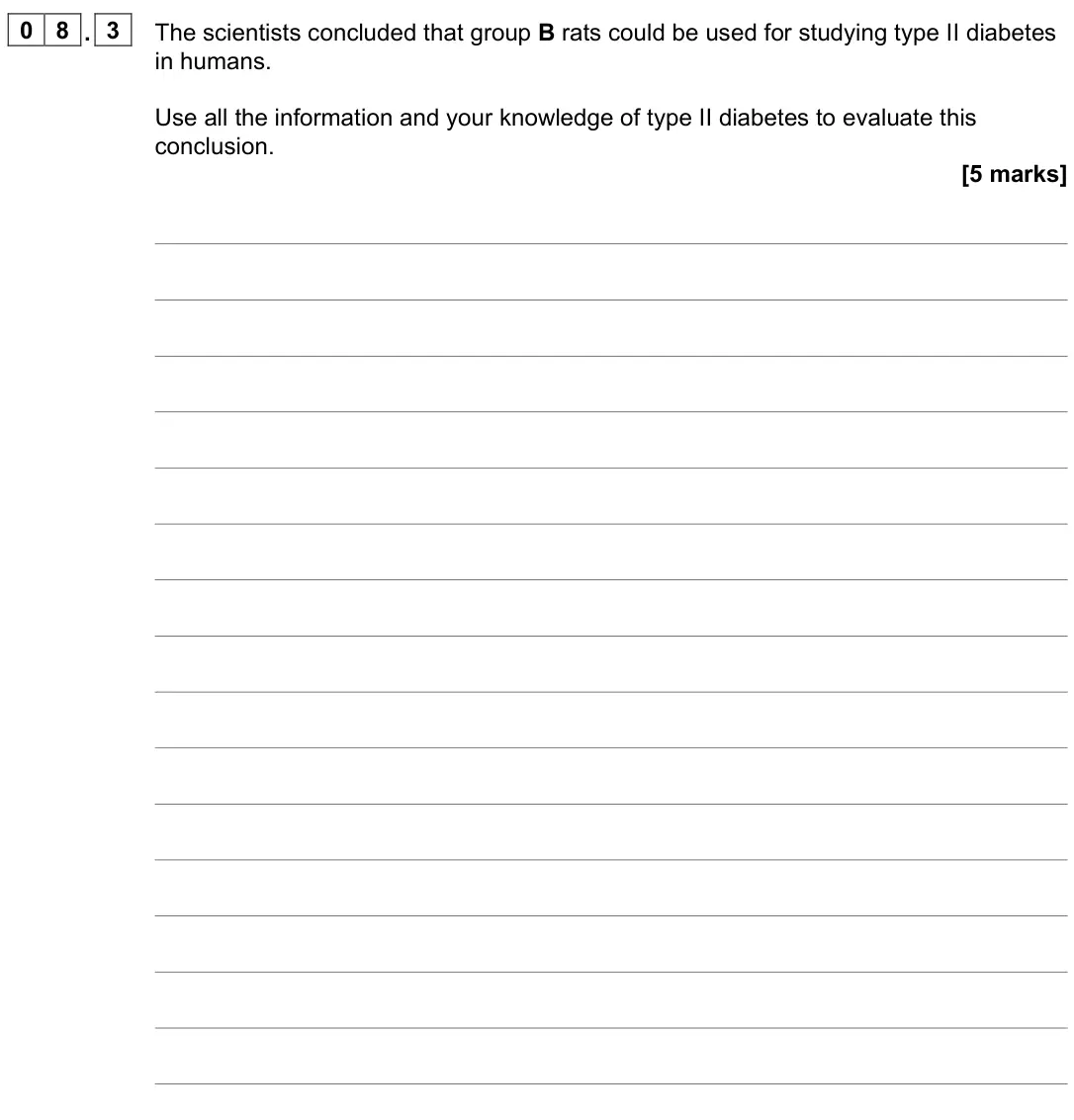
All 49 questions on Homeostasis is the maintenance of a stable internal environment, as a list
- June 2025, Paper 2, Q02.1 (1 mark): What term is used to describe the maintenance of a stable internal environment? [1 mark]
- June 2025, Paper 2, Q02.2 (2 marks): A high blood glucose concentration can cause dehydration of body cells. Explain why. Do not refer to ADH or the role of the kidneys in your answer. [2 marks]
- June 2025, Paper 2, Q02.3 (1 mark): The hormone glucagon is involved in maintaining a stable blood glucose concentration. Which is not a result of the action of glucagon? Tick () one box. [1 mark
- June 2025, Paper 2, Q02.4 (2 marks): Figure 1 shows one of the physiological systems involved in controlling blood pH. Figure 1 Use the information in Figure 1 to outline the principles of negative
- June 2025, Paper 2, Q02.5 (2 marks): Vigorous exercise causes a change in blood pH and in the rate of ventilation. Use Figure 1 to describe and explain these changes. [2 marks]
- June 2025, Paper 3, Q02.1 (2 marks): Table 1 shows four statements and the names of four parts of a nephron. Put a tick ( ) in each box where the statement is true for that part of the nephron. [2
- June 2025, Paper 3, Q02.2 (2 marks): Protein is not normally present in the urine of a person. Explain why. [2 marks]
- June 2025, Paper 3, Q02.3 (5 marks): Glomerular sclerosis (GS) is a type of kidney damage that can cause protein to be present in the urine. High-protein diets are linked to GS in adults. Scientist
- June 2025, Paper 3, Q07.2 (25 marks): The importance of responses to changes in the internal and external environment of organisms. [25 marks]
- June 2024, Paper 2, Q09.1 (2 marks): Give two reasons why a weight-loss programme could be used to treat type II diabetes but not type I diabetes. [2 marks] 1 2
- June 2024, Paper 2, Q09.2 (3 marks): The design of this investigation helps to support the validity of any conclusions obtained. Suggest and explain three features of this investigation that justif
- June 2024, Paper 2, Q09.3 (2 marks): Table 3 shows some of the scientists’ results. Table 3 Group P Group Q Percentage achieving diabetes remission 42.1 4.7 Percentage achieving weight loss ≥15 kg
- June 2024, Paper 2, Q09.4 (4 marks): Use all the information to evaluate whether a weight-loss programme is an effective treatment for type II diabetes. [4 marks]
- June 2023, Paper 2, Q06.1 (3 marks): Describe and explain how three features of the cells in the proximal convoluted tubule allow the rapid reabsorption of glucose into the blood. [3 marks] 1 2 3
- June 2023, Paper 2, Q06.2 (1 mark): Antidiuretic hormone (ADH) binds to V receptors found in cell-surface membranes in two parts of a nephron. Name the two parts of a nephron where V receptors are
- June 2023, Paper 2, Q06.3 (2 marks): V receptors only bind with ADH. Suggest and explain why. [2 marks]
- June 2023, Paper 2, Q06.4 (3 marks): A decrease in blood pressure stimulates the release of ADH. Give the location of the receptors that detect a decrease in blood pressure and explain how the rele
- June 2022, Paper 2, Q08.1 (2 marks): Calculate how many grams of STZ should be injected into a rat with a mass of 230.45 g. Show your working. Give your answer in standard form. [2 marks] Answer g
- June 2022, Paper 2, Q08.2 (1 mark): Suggest and explain why STZ was injected per unit of body mass. [1 mark]
- June 2022, Paper 2, Q08.3 (5 marks): The scientists concluded that group B rats could be used for studying type II diabetes in humans. Use all the information and your knowledge of type II diabetes
- June 2022, Paper 2, Q08.4 (2 marks): The scientists repeated the investigation using much higher doses of STZ. This led to destruction of pancreatic cells. The scientists concluded that these rats
- June 2022, Paper 2, Q09.1 (1 mark): Name the part of the body which releases antidiuretic hormone (ADH) into the blood. [1 mark]
- June 2022, Paper 2, Q09.2 (2 marks): Alcohol decreases the release of ADH into the blood. Suggest two signs or symptoms which may result from a decrease in ADH. [2 marks] 1 2
- June 2022, Paper 2, Q09.3 (3 marks): Describe the effect of ADH on the collecting ducts in kidneys. [3 marks]
- November 2021, Paper 2, Q05.1 (2 marks): Neonatal diabetes is a disease that affects newly born children. The disease is caused by a change in the amino acid sequence of insulin. This change prevents i
- November 2021, Paper 2, Q05.2 (3 marks): A decrease in the activity of PI3K can cause type II diabetes. Use Figure 5 to explain why. [3 marks]
- November 2021, Paper 2, Q05.3 (3 marks): Using your knowledge of the kidney, explain why glucose is found in the urine of a person with untreated diabetes. [3 marks]
- November 2020, Paper 2, Q04.2 (4 marks): Use the information provided to describe how you could produce a calibration curve for creatinine. Do not include details on the use of glassware in your answer
- November 2020, Paper 2, Q04.3 (2 marks): Describe how you would determine the concentration of creatinine in a urine sample using your calibration curve. [2 marks]
- November 2020, Paper 2, Q08.1 (2 marks): Suggest how AS could cause proteinuria. [2 marks]
- June 2019, Paper 2, Q05.1 (2 marks): Describe the role of glucagon in gluconeogenesis. Do not include in your answer details on the second messenger model of glucagon action. [2 marks]
- June 2019, Paper 2, Q05.3 (2 marks): Explain how increasing a cell’s sensitivity to insulin will lower the blood glucose concentration. [2 marks]
- June 2019, Paper 2, Q05.4 (3 marks): Explain how inhibiting adenylate cyclase may help to lower the blood glucose concentration. [3 marks]
- June 2019, Paper 3, Q01.1 (3 marks): Describe how ultrafiltration occurs in a glomerulus. [3 marks]
- June 2019, Paper 3, Q01.2 (1 mark): Glucose and water are reabsorbed by the proximal convoluted tubule of a nephron. Put a tick () in the box next to the correct ways in which glucose and water a
- June 2019, Paper 3, Q01.3 (1 mark): The equation shows the relationship between urine concentration in arbitrary units (𝑦𝑦) and mean length of the loop of Henle in mm (𝑥𝑥). 𝑦𝑦 = 0.72𝑥𝑥 + 4 Calcula
- June 2019, Paper 3, Q01.4 (3 marks): Scientists investigated the relationship between the thickness of the kidney medulla of different species of mammals and the concentration of their urine. Figur
- June 2018, Paper 2, Q05.1 (2 marks): All the volunteers were given the same food for 3 days. Suggest and explain one reason why they were given the same food. [2 marks]
- June 2018, Paper 2, Q05.2 (2 marks): Using Table 1, what can you conclude about the effectiveness of furosemide and CVT in the removal of excess fluid from the body? [2 marks]
- June 2018, Paper 2, Q05.3 (1 mark): Furosemide is sometimes used to treat high blood pressure. Suggest how furosemide would cause a decrease in blood pressure. [1 mark]
- June 2018, Paper 2, Q05.4 (3 marks): Furosemide inhibits the absorption of sodium and chloride ions from the filtrate produced in the nephrons. Explain how furosemide causes an increase in the volu
- June 2018, Paper 2, Q05.5 (1 mark): The mean rate of flow of blood plasma is 60% of the mean rate of blood flow into the kidneys. How much greater is the flow of blood into the kidneys with furose
- June 2017, Paper 2, Q06.1 (2 marks): Each year, a few people with type I diabetes are given a pancreas transplant. Pancreas transplants are not used to treat people with type II diabetes. Give two
- June 2017, Paper 2, Q06.2 (1 mark): The pancreas produces the hormone insulin. Put a tick () in the box next to the statement which describes incorrectly the action of insulin. [1 mark] Activates
- Specimen, Paper 2, Q07.1 (1 mark): Osmoreceptors are specialised cells that respond to changes in the water potential of the blood. 7 Give the location of osmoreceptors in the body of a mammal. [
- Specimen, Paper 2, Q07.2 (2 marks): When a person is dehydrated, the cell volume of an osmoreceptor decreases. Explain why. [2 marks] 0 7 . 2
- Specimen, Paper 2, Q07.3 (4 marks): [ ]
- Specimen, Paper 2, Q07.4 (1 mark): Answer =
- Specimen, Paper 2, Q07.5 (1 mark): 1 2 8
Questions, mark schemes and examiner’s reports are © AQA, from their published past papers. Plumi isn’t affiliated with any exam board. Want whole papers? Every AQA A-Level Biology paper.
Rather write your answers by hand on iPad? Plumi marks them against the same mark schemes.