 plumi
Gene technologies allow the study and alteration of gene function allowing a better understanding of organism function and the design of new industrial and medical processes: AQA A‑Level Biology questions
Every AQA A-Level Biology exam question on 3.8.4 Gene technologies allow the study and alteration of gene function allowing a better understanding of organism function and the design of new industrial and medical processes, 2016–2025, with its mark scheme and examiner’s report.
Find questions1,383
Calculations
Q04.2
The whole paper ↗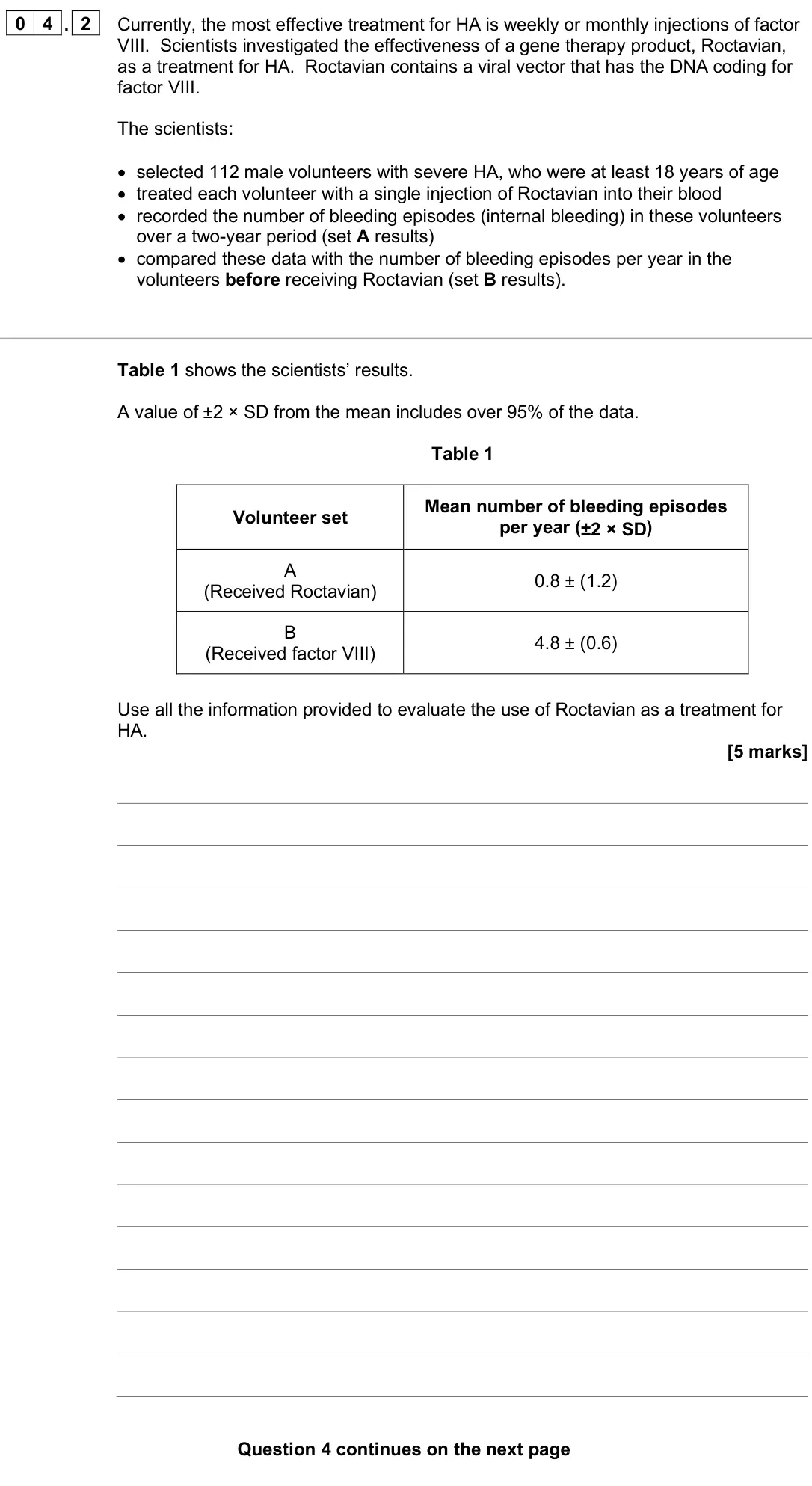
Q09.2
The whole paper ↗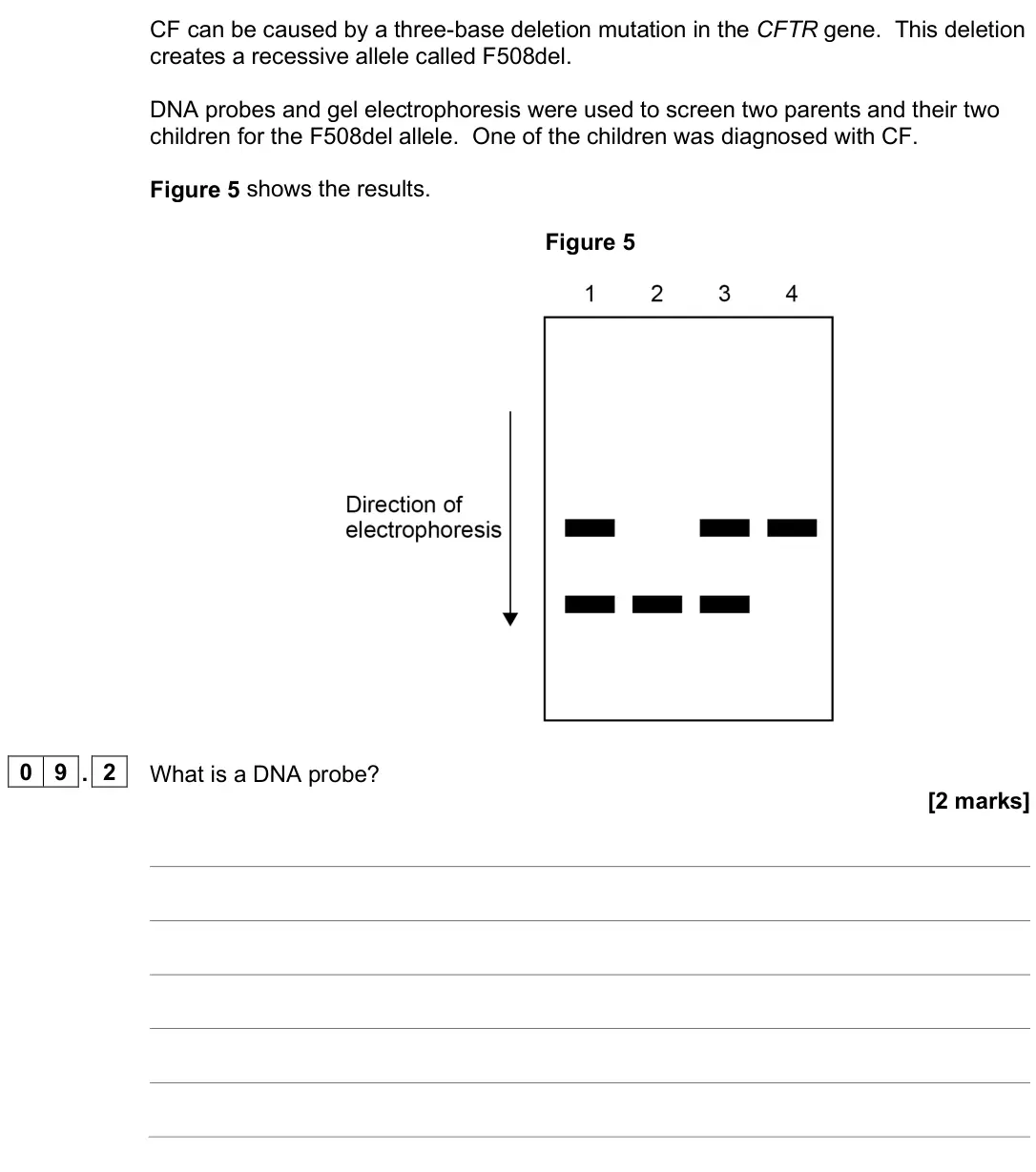
Q09.3
The whole paper ↗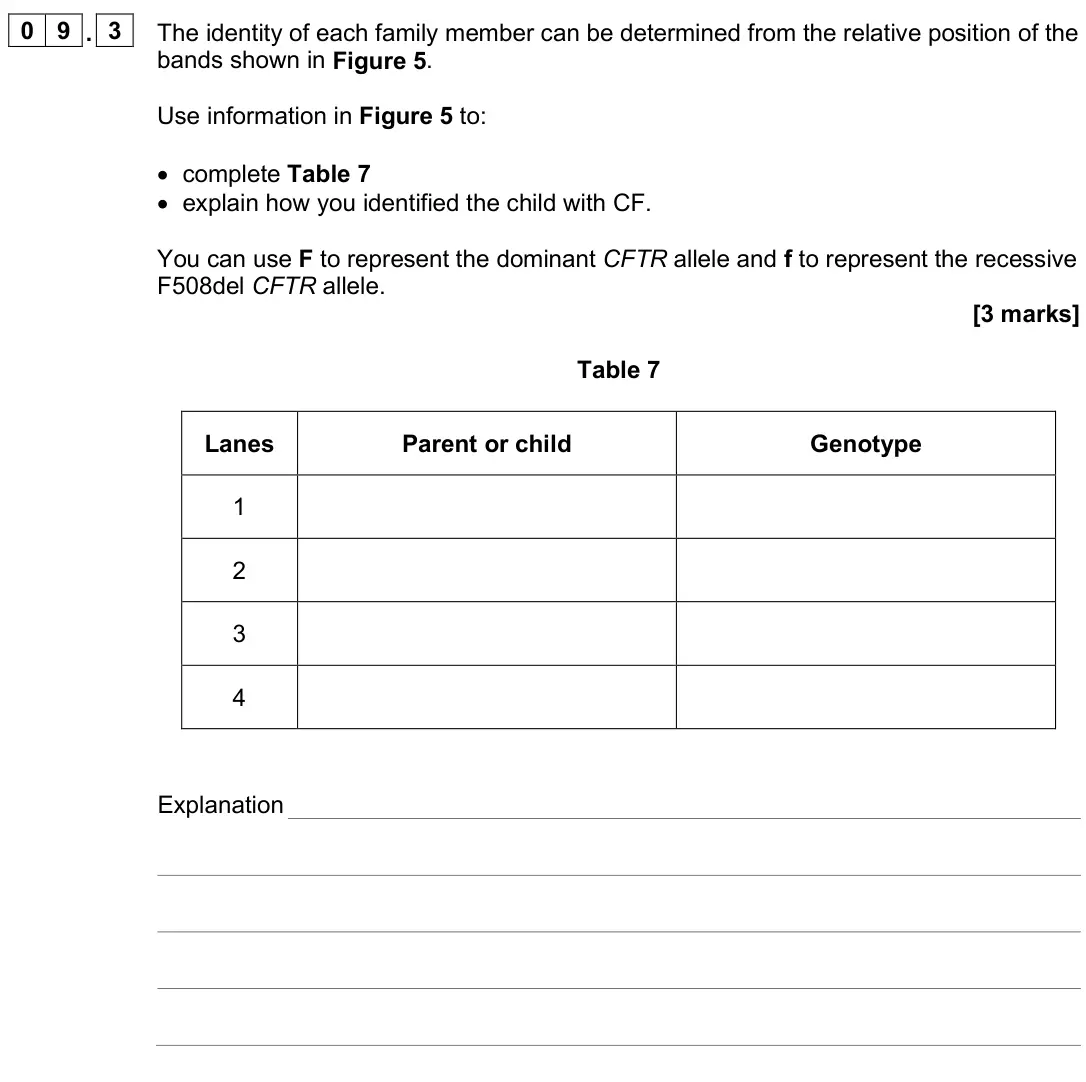
Q07.1
The whole paper ↗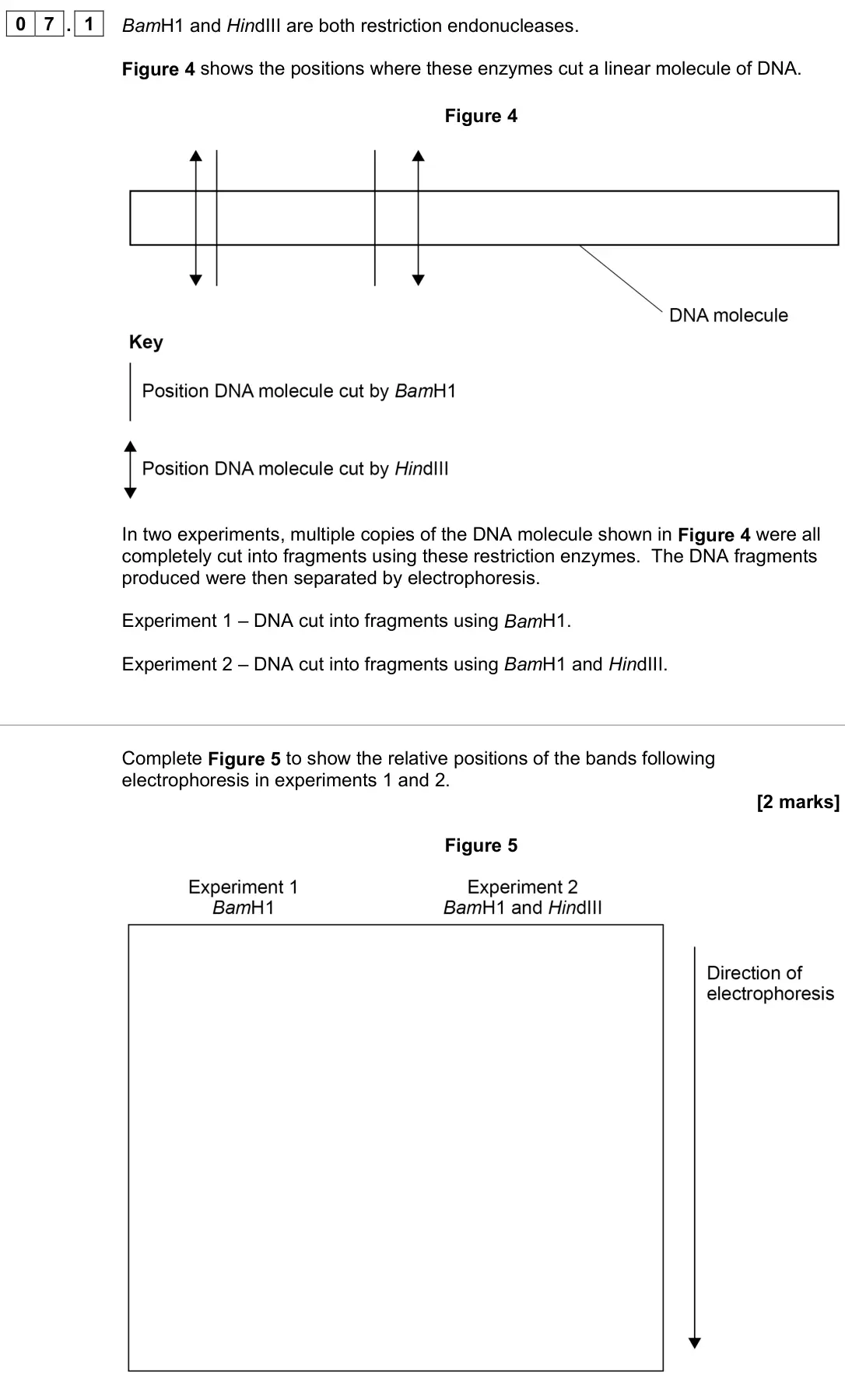
Q07.2
The whole paper ↗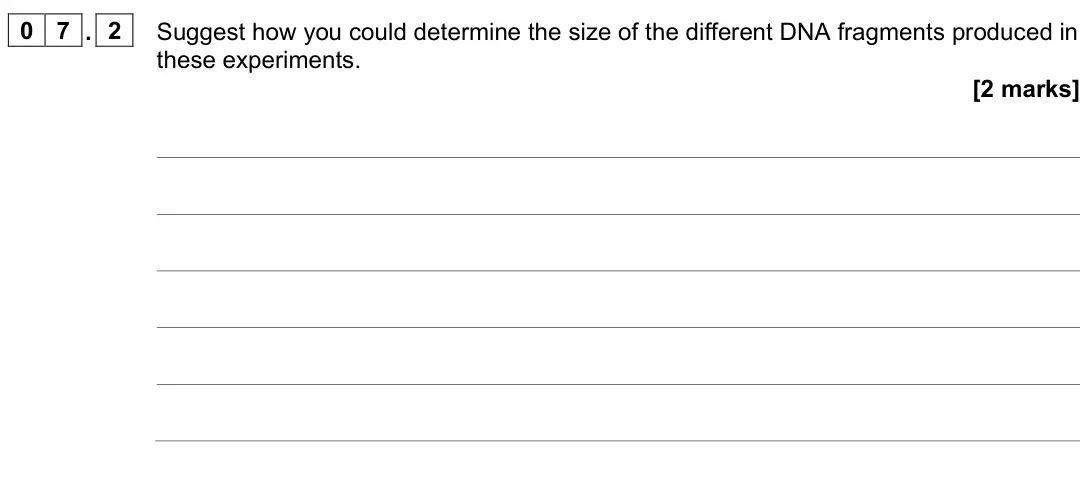
Q07.3
The whole paper ↗
Q07.4
The whole paper ↗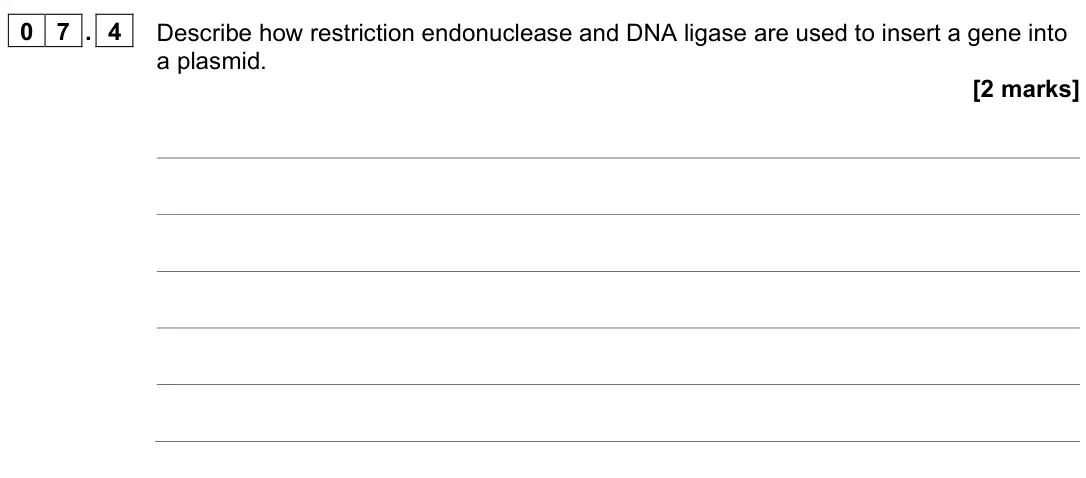
Q09.1
The whole paper ↗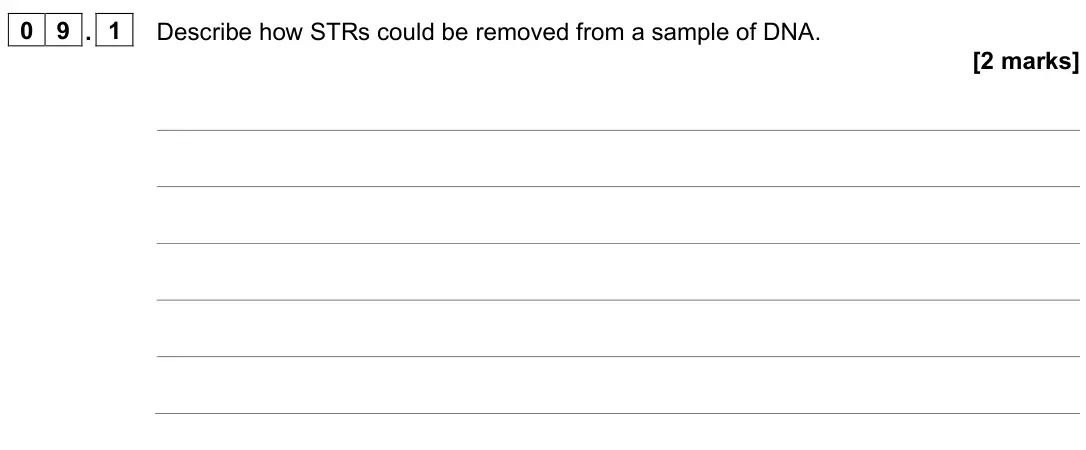
Q09.2
The whole paper ↗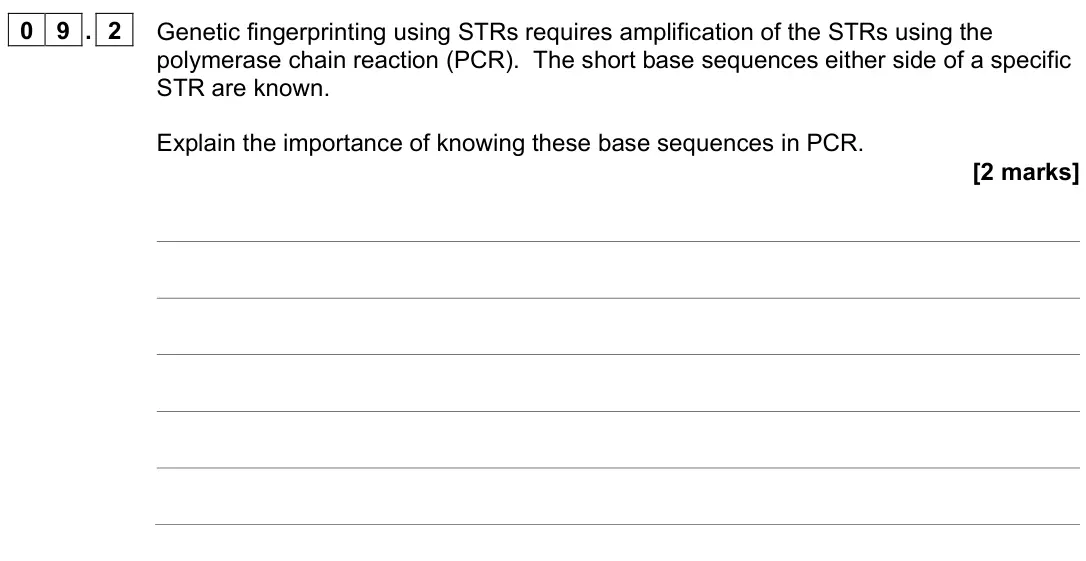
Q09.3
The whole paper ↗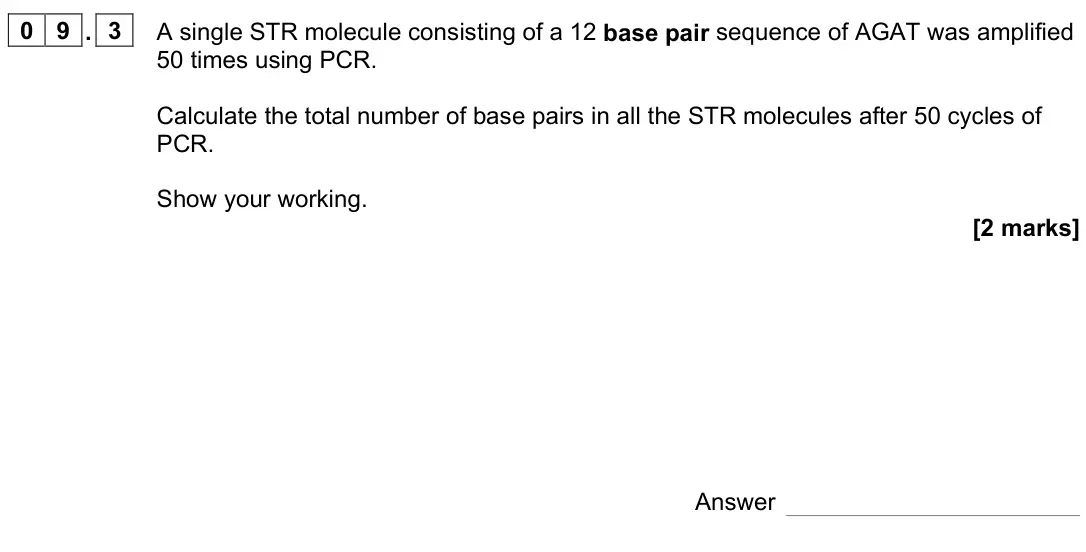
Q09.4
The whole paper ↗
Q10.2
The whole paper ↗
Q04.2
The whole paper ↗
Q04.3
The whole paper ↗
Q04.4
The whole paper ↗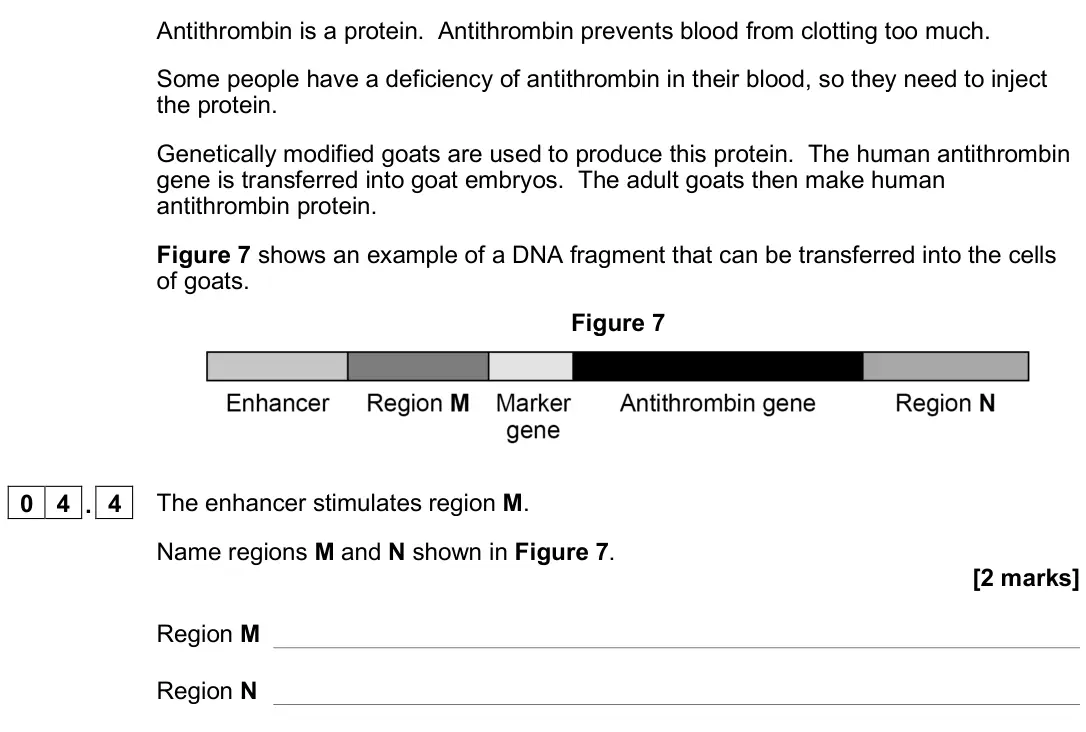
Q04.5
The whole paper ↗
Q04.6
The whole paper ↗
Q08.1
The whole paper ↗
Q08.2
The whole paper ↗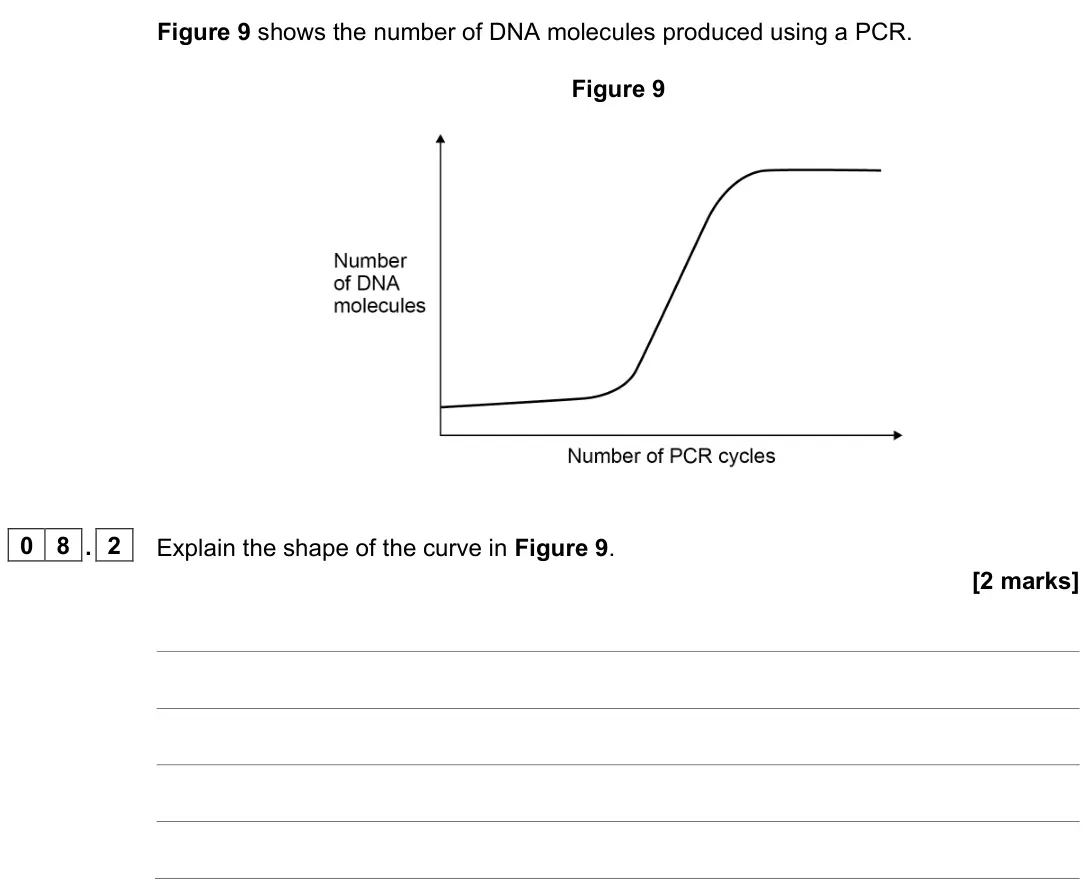
Q06.1
The whole paper ↗
All 45 questions on Gene technologies allow the study and alteration of gene function allowing a better understanding of organism function and the design of new industrial and medical processes, as a list
- June 2025, Paper 2, Q04.2 (5 marks): Currently, the most effective treatment for HA is weekly or monthly injections of factor VIII. Scientists investigated the effectiveness of a gene therapy produ
- June 2025, Paper 2, Q09.2 (2 marks): What is a DNA probe? [2 marks]
- June 2025, Paper 2, Q09.3 (3 marks): The identity of each family member can be determined from the relative position of the bands shown in Figure 5. Use information in Figure 5 to: • complete Table
- June 2024, Paper 2, Q07.1 (2 marks): BamH1 and HindIII are both restriction endonucleases. Figure 4 shows the positions where these enzymes cut a linear molecule of DNA. Figure 4 In two experiments
- June 2024, Paper 2, Q07.2 (2 marks): Suggest how you could determine the size of the different DNA fragments produced in these experiments. [2 marks]
- June 2024, Paper 2, Q07.3 (1 mark): How many DNA fragments would be produced in experiment 2 if the original DNA molecule was a plasmid? [1 mark]
- June 2024, Paper 2, Q07.4 (2 marks): Describe how restriction endonuclease and DNA ligase are used to insert a gene into a plasmid. [2 marks]
- June 2023, Paper 2, Q09.1 (2 marks): Describe how STRs could be removed from a sample of DNA. [2 marks]
- June 2023, Paper 2, Q09.2 (2 marks): Genetic fingerprinting using STRs requires amplification of the STRs using the polymerase chain reaction (PCR). The short base sequences either side of a specif
- June 2023, Paper 2, Q09.3 (2 marks): A single STR molecule consisting of a 12 base pair sequence of AGAT was amplified 50 times using PCR. Calculate the total number of base pairs in all the STR mo
- June 2023, Paper 2, Q09.4 (2 marks): During genetic fingerprinting, the different STRs are separated by gel electrophoresis. Give two features of STRs which enable them to be separated by gel elect
- June 2022, Paper 2, Q10.2 (4 marks): Genetic testing, using DNA from saliva, can screen for all known harmful mutations in both genes (lines 5–6). Describe how this DNA could be screened for all kn
- June 2022, Paper 3, Q04.2 (2 marks): Give two reasons why bacteria are able to use human DNA to produce human proteins. [2 marks] 1 2
- June 2022, Paper 3, Q04.3 (1 mark): Suggest and explain one reason why bacteria might not be able to produce every human protein. [1 mark]
- June 2022, Paper 3, Q04.4 (2 marks): The enhancer stimulates region M. Name regions M and N shown in Figure 7. [2 marks] Region M Region N
- June 2022, Paper 3, Q04.5 (1 mark): Explain the purpose of the marker gene. [1 mark]
- June 2022, Paper 3, Q04.6 (2 marks): The enhancer only stimulates region M in the milk-producing glands of a goat. Suggest two explanations for the importance of the enhancer being included in the
- November 2021, Paper 2, Q08.1 (4 marks): Describe and explain how the polymerase chain reaction (PCR) is used to amplify a DNA fragment. [4 marks]
- November 2021, Paper 2, Q08.2 (2 marks): Explain the shape of the curve in Figure 9. [2 marks]
- November 2021, Paper 3, Q06.1 (4 marks): The scientists used a radioactively labelled DNA probe to show that the cells of tobacco plant leaves contained the SUT1 gene. Describe how they would do this.
- November 2020, Paper 2, Q09.1 (2 marks): Describe how enzymes could be used to insert the GH gene into a plasmid. [2 marks]
- November 2020, Paper 2, Q09.2 (2 marks): Microinjection of DNA into fertilised egg cells is a frequent method of producing transgenic fish. However, the insertion of the transferred gene into nuclear D
- November 2020, Paper 2, Q09.3 (2 marks): Using Table 3, what can you conclude about the effectiveness of the GH gene on the growth of zebrafish? [2 marks]
- November 2020, Paper 2, Q09.4 (2 marks): Explain how two features of the design of this investigation helped to ensure the validity of any conclusions obtained. Do not include calculating the mean or S
- June 2019, Paper 2, Q02.3 (3 marks): Some scientists have concluded that this method of gene therapy will be a more effective long-term treatment for SCD than HSCT. Use all the information provided
- June 2019, Paper 2, Q08.1 (2 marks): What is a DNA probe? [2 marks]
- June 2019, Paper 2, Q08.2 (2 marks): Describe how the DNA is broken down into smaller fragments. [2 marks]
- June 2019, Paper 2, Q08.3 (1 mark): The DNA on the nylon membrane is treated to form single strands. Explain why. [1 mark]
- June 2019, Paper 2, Q08.4 (2 marks): Lane 1 of Figure 7 enabled the size of the different viral fragments to be determined. Suggest and explain how. [2 marks] The lengths of the viral DNA fragments
- June 2019, Paper 2, Q08.5 (1 mark): Which volunteers had at least one of the viral DNA fragments with 250 base pairs or 535 base pairs? [1 mark]
- June 2019, Paper 3, Q07.1 (25 marks): The importance of DNA as an information-carrying molecule and its use in gene technologies. [25 marks] OR
- June 2018, Paper 2, Q08.5 (2 marks): Describe the roles of two named types of enzymes used to insert DNA fragments into plasmids. [2 marks] Type of enzyme Role Type of enzyme Role
- June 2018, Paper 2, Q08.6 (2 marks): The soybean cells were screened for the presence of the P34 protein. This process involved the use of gel electrophoresis to separate proteins extracted from so
- June 2017, Paper 2, Q08.1 (1 mark): Explain the role of reverse transcriptase in RT-PCR. [1 mark]
- June 2017, Paper 2, Q08.2 (1 mark): Explain the role of DNA polymerase in RT-PCR. [1 mark]
- June 2017, Paper 2, Q08.3 (2 marks): Any DNA in the sample is hydrolysed by enzymes before the sample is added to the reaction mixture. Explain why. [2 marks]
- June 2017, Paper 2, Q08.4 (2 marks): Figure 9 shows the results from using RT-PCR to detect RNA in two different samples, A and B. Figure 9 A quantitative comparison can be made of the amount of RN
- June 2017, Paper 2, Q08.5 (1 mark): Suggest one reason why DNA replication stops in the polymerase chain reaction. [1 mark]
- June 2017, Paper 2, Q08.6 (2 marks): Scientists have used the RT-PCR method to detect the presence of different RNA viruses in patients suffering from respiratory diseases. The scientists produced
- June 2017, Paper 2, Q10.7 (2 marks): 1 0 Alzheimer’s disease (AD) is a non-reversible brain disorder that develops over a number of years. At the start of 2014 the number of Americans with AD was e
- Specimen, Paper 2, Q05.1 (2 marks): Suggest why the plasmids were injected into the eggs of silkworms, rather than into the silkworms. [2 marks] 0 5 . 1
- Specimen, Paper 2, Q05.2 (2 marks): Suggest why the scientists used a marker gene and why they used the EGFP gene. [2 marks] 0 5 . 2
- Specimen, Paper 2, Q05.3 (1 mark): The scientists ensured the spider gene was expressed only in cells within the silk glands. What would the scientists have inserted into the plasmid along with t
- Specimen, Paper 2, Q05.4 (2 marks): 1 2
- Specimen, Paper 2, Q10.5 (2 marks): Read the following passage carefully. A large and growing number of disorders are now known to be due to types of mitochondrial disease (MD). MD often affects s
Questions, mark schemes and examiner’s reports are © AQA, from their published past papers. Plumi isn’t affiliated with any exam board. Want whole papers? Every AQA A-Level Biology paper.
Rather write your answers by hand on iPad? Plumi marks them against the same mark schemes.