WJEC GCSE Physics questions by topic
Getting your paper ready…
WJEC GCSE Physics1,171 questions
Paper
All papers
Exam
All years
Calculations
Difficulty
More filters
Exam boards
WJEC
Loading the full question list…

Browse all topics
Questions, mark schemes and examiner’s reports are © WJEC CBAC Ltd, from their published past papers. Plumi isn’t affiliated with any exam board. Want whole papers? WJEC GCSE Physics past papers.
The Plumi iPad app also offers exam-style questions with AI feedback on your handwritten working.

![Original question 1(a): State the difference between a.c. and d.c. [1]](https://pub-e8a9dbab8e2a4d089f52b2a45e0d0b50.r2.dev/bank/3420ua0-jun25-01-a-qp.webp?v=1)


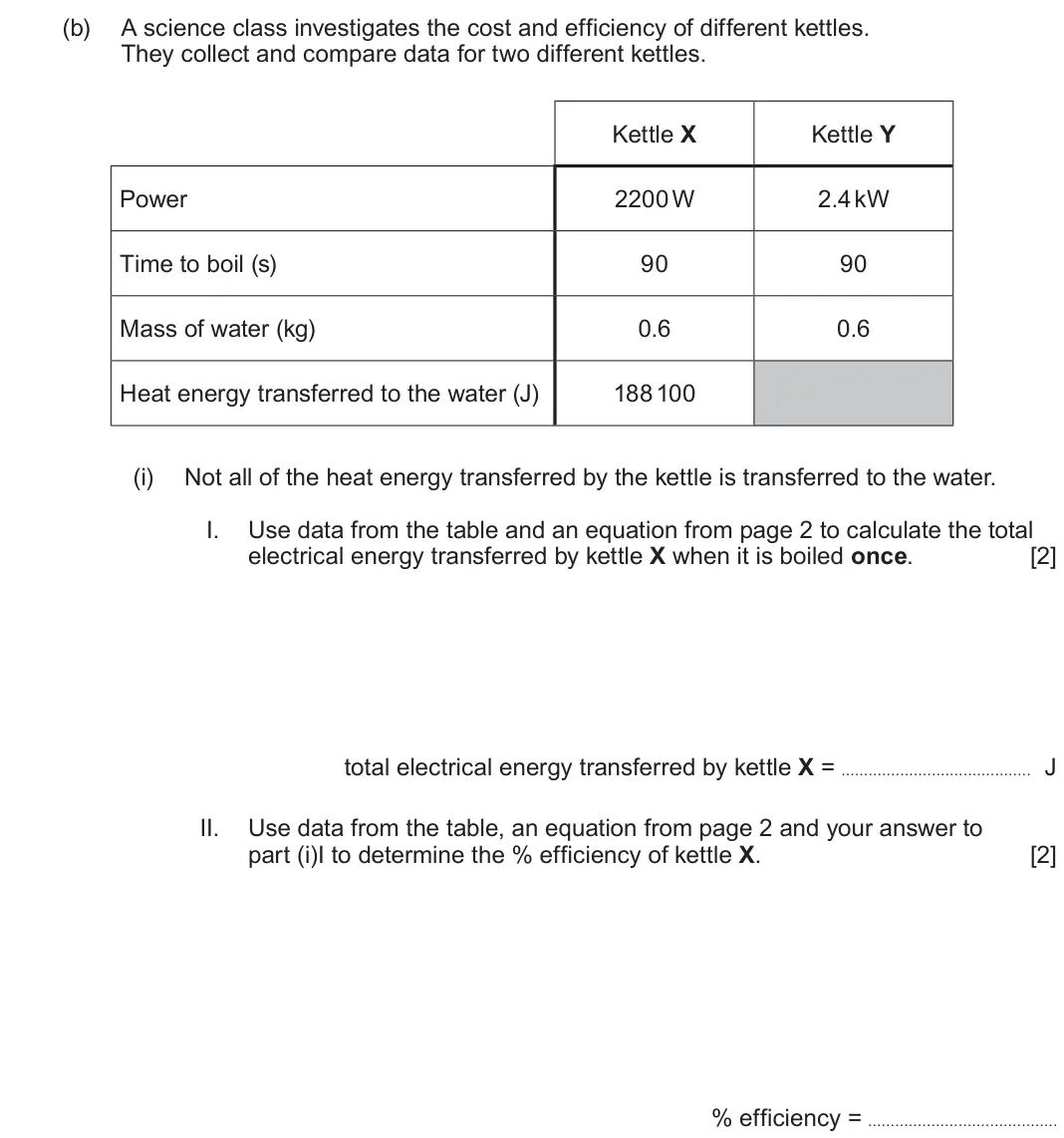
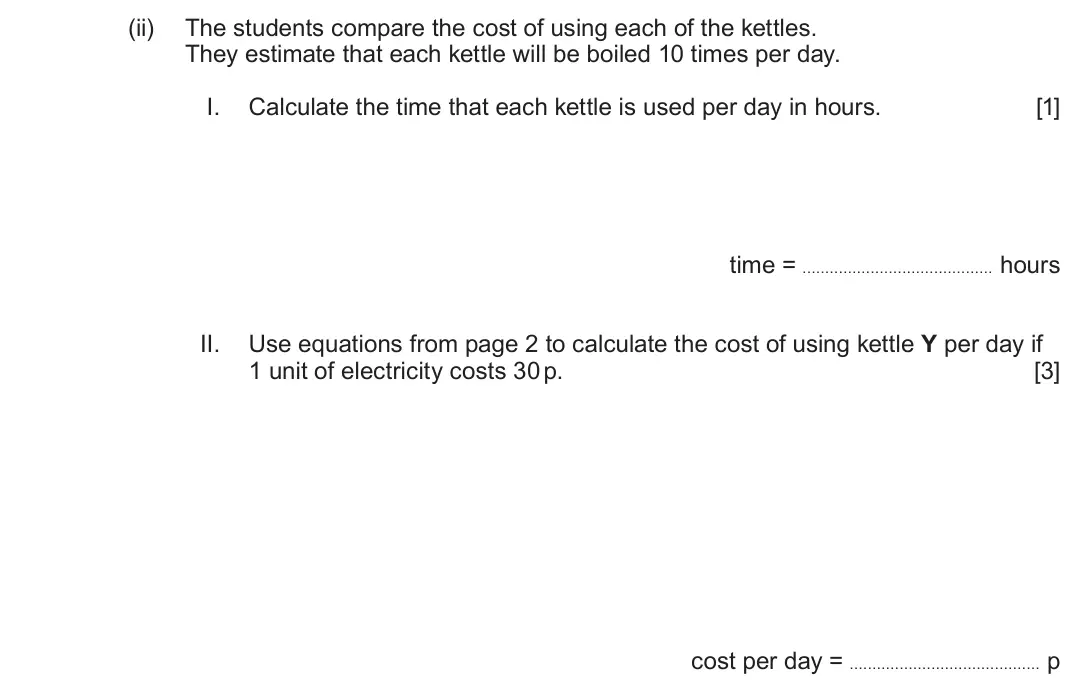
![Original question 1(b)(iii): It is suggested that kettle X will cost more to use per day, than kettle Y, when used for the same time. Explain whether you agree with this suggestion. [2]](https://pub-e8a9dbab8e2a4d089f52b2a45e0d0b50.r2.dev/bank/3420ua0-jun25-01-biii-qp.webp?v=1)


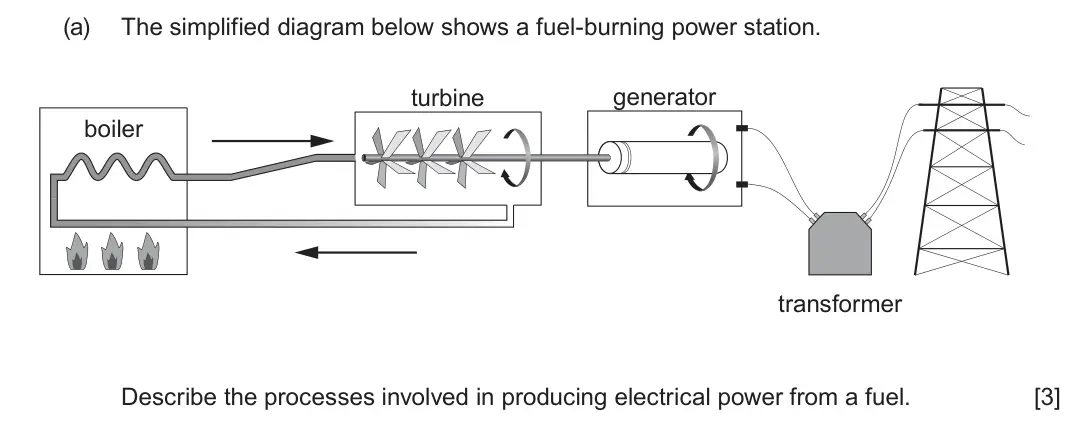
![Original question 2(b): Burning biomass does not produce sulfur dioxide. State and explain another environmental advantage of burning biomass rather than coal. [2]](https://pub-e8a9dbab8e2a4d089f52b2a45e0d0b50.r2.dev/bank/3420ua0-jun25-02-b-qp.webp?v=1)
![Original question 2(c)(i): Suggest why demand for electricity increases as the temperature increases above 20 °C in the summer. [1]](https://pub-e8a9dbab8e2a4d089f52b2a45e0d0b50.r2.dev/bank/3420ua0-jun25-02-ci-qp.webp?v=1)


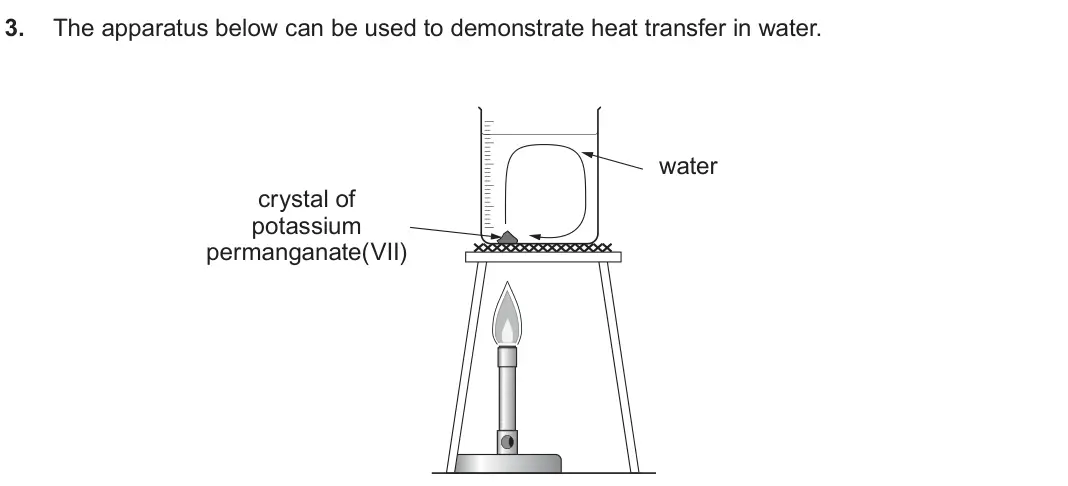
![Original question 3(a): Name the heat transfer process being demonstrated. [1]](https://pub-e8a9dbab8e2a4d089f52b2a45e0d0b50.r2.dev/bank/3420ua0-jun25-03-a-qp.webp?v=1)
![Original question 3(b)(i): Describe what happens to the water particles when the water is heated. [2]](https://pub-e8a9dbab8e2a4d089f52b2a45e0d0b50.r2.dev/bank/3420ua0-jun25-03-bi-qp.webp?v=1)
![Original question 3(b)(ii): Explain, in terms of density, why the water moves in the direction shown by the arrow when it is heated. [2]](https://pub-e8a9dbab8e2a4d089f52b2a45e0d0b50.r2.dev/bank/3420ua0-jun25-03-bii-qp.webp?v=1)
![Original question 4: Describe the properties of P and S waves and explain how a model of the structure of the Earth has been produced from seismic records. [6 QER]](https://pub-e8a9dbab8e2a4d089f52b2a45e0d0b50.r2.dev/bank/3420ua0-jun25-04-qp.webp?v=1)

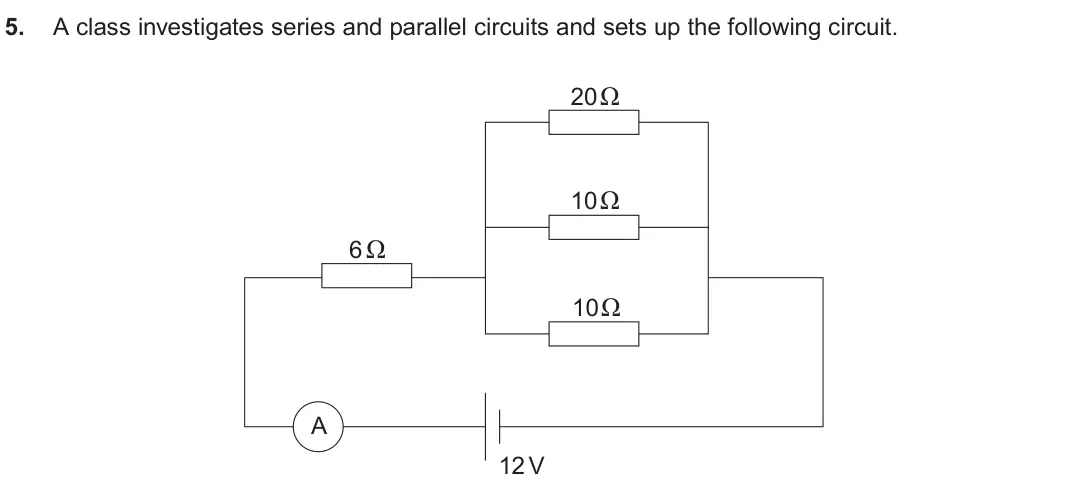
![Original question 5(a): Use the equation: R = 1 1 + 1 + 1 R1 R2 R3 to determine the resistance of the parallel combination. [3] resistance = Ω](https://pub-e8a9dbab8e2a4d089f52b2a45e0d0b50.r2.dev/bank/3420ua0-jun25-05-a-qp.webp?v=1)
![Original question 5(b): Use an equation from page 2 to calculate the total resistance of the circuit. [1] total resistance = Ω](https://pub-e8a9dbab8e2a4d089f52b2a45e0d0b50.r2.dev/bank/3420ua0-jun25-05-b-qp.webp?v=1)
![Original question 5(c): Use an equation from page 2 to calculate the current measured by the ammeter. [2] current = A](https://pub-e8a9dbab8e2a4d089f52b2a45e0d0b50.r2.dev/bank/3420ua0-jun25-05-c-qp.webp?v=1)
![Original question 5(d): Use an equation from page 2 to calculate the voltage across the 6 Ω resistor. [3] voltage = V](https://pub-e8a9dbab8e2a4d089f52b2a45e0d0b50.r2.dev/bank/3420ua0-jun25-05-d-qp.webp?v=1)
![Original question 5(e): Explain how you could use your answer to part (d) to determine the current through the 20 Ω resistor. [2] Calculations are not required.](https://pub-e8a9dbab8e2a4d089f52b2a45e0d0b50.r2.dev/bank/3420ua0-jun25-05-e-qp.webp?v=1)


![Original question 6(c): Most waves can be described as either transverse or longitudinal. Describe the difference between transverse and longitudinal waves. [2]](https://pub-e8a9dbab8e2a4d089f52b2a45e0d0b50.r2.dev/bank/3420ua0-jun25-06-c-qp.webp?v=1)