Skip to content
Try on iPad

Style

Get started

WJEC GCSE Chemistry questions by topic

Getting your paper ready…

WJEC GCSE Chemistry1,423 questions

Topics Pick as many as you like. Open one to choose its sub-topics.

By area

Paper
All papers
Exam
All years
Calculations
Difficulty
More filters
Exam boards
WJEC

Loading the full question list…
1,423 questions

More options
Full page
  1. Q1(a)(i)Summer 2025 · Unit 1 Higher1 markWarm-up

    1
    Setup for original question 1(a)(i)

    Loading the question setup…

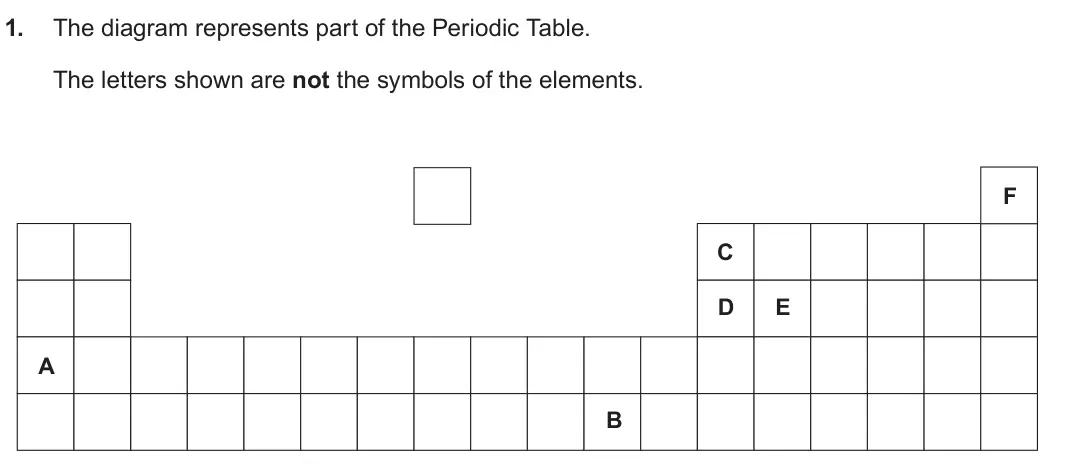
    Original question 1(a)(i): and (ii). (i) Give the letters of two elements that have atoms with three electrons in their outer shell. [1] and

    Loading the question…

    The whole paper ↗
  2. Q1(a)(ii)Summer 2025 · Unit 1 Higher1 markWarm-up

    2
    Original question 1(a)(ii): Give the letter of the element that has atoms with four electron shells. [1]

    Loading the question…

    The whole paper ↗
  3. Q1(b)Summer 2025 · Unit 1 Higher1 markWarm-up

    3
    Original question 1(b): Name the element represented by the letter F. Give one use of this element. [1] Name Use

    Loading the question…

    The whole paper ↗
  4. Q1(c)Summer 2025 · Unit 1 Higher2 marksCore

    4
    Original question 1(c): State two properties that you would expect element B to have. [2] Property 1 Property 2

    Loading the question…

    The whole paper ↗
  5. Q2(a)(i)Summer 2025 · Unit 1 Higher1 markWarm-up

    5
    Original question 2(a)(i): Give the numbers of two plates which share a constructive boundary. [1] and

    Loading the question…

    The whole paper ↗
  6. Q2(a)(ii)Summer 2025 · Unit 1 Higher2 marksCore

    6
    Original question 2(a)(ii): Describe what happens at a destructive plate boundary. [2]

    Loading the question…

    The whole paper ↗
  7. Q2(b)(i)Summer 2025 · Unit 1 Higher2 marksCore

    7
    Original question 2(b)(i): Give two pieces of evidence that Alfred Wegener used to support his theory of continental drift. [2] Evidence 1 Evidence 2

    Loading the question…

    The whole paper ↗
  8. Q2(b)(ii)Summer 2025 · Unit 1 Higher1 markWarm-up

    8
    Original question 2(b)(ii): State why Wegener’s theory was not initially accepted. [1]

    Loading the question…

    The whole paper ↗
  9. Q3(a)(i)Summer 2025 · Unit 1 Higher1 markWarm-up

    9
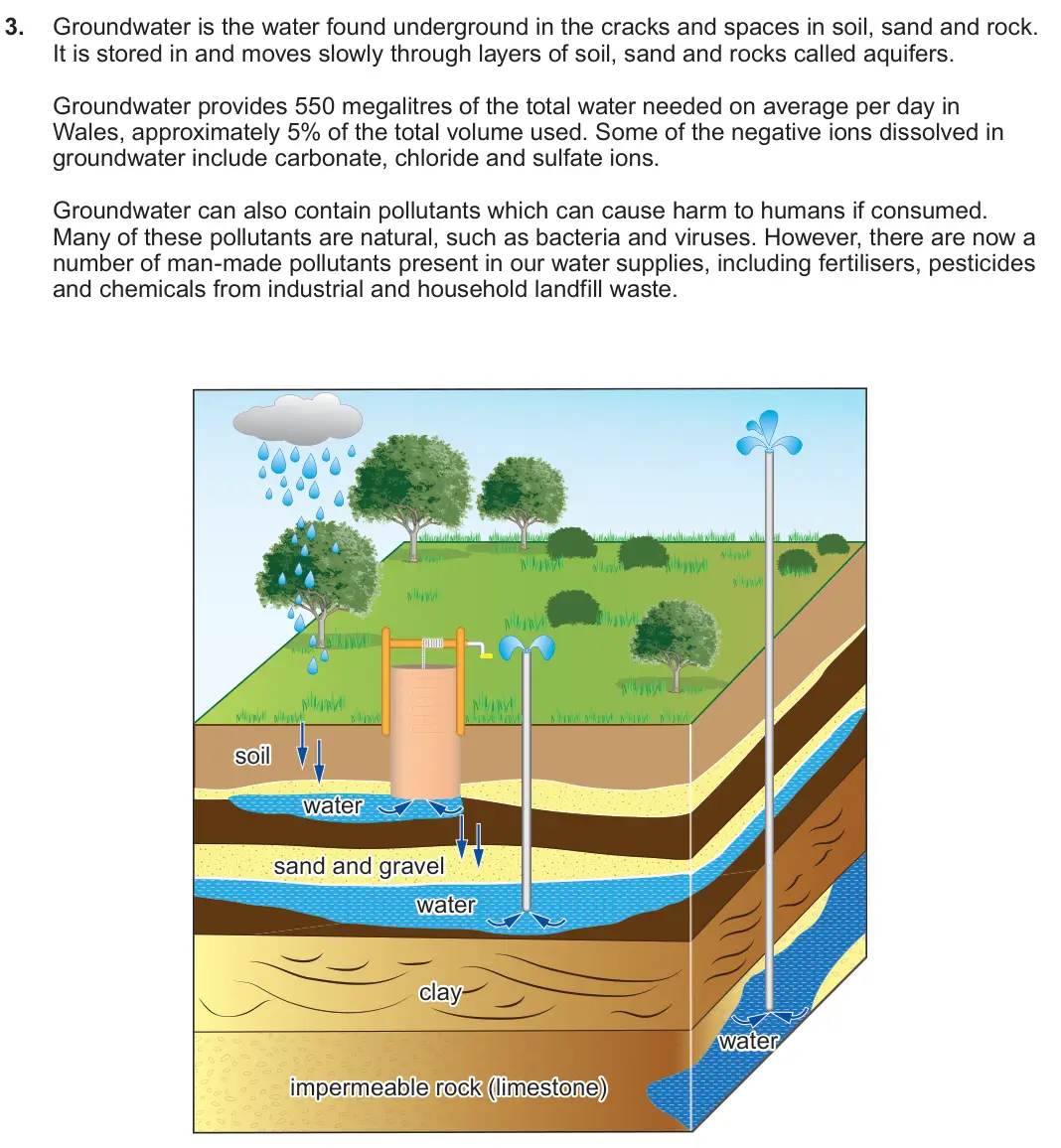
    Setup for original question 3(a)(i)

    Loading the question setup…

    Original question 3(a)(i): Tick (√) the box next to the approximate total volume of water used daily in Wales. [1] 110 megalitres 550 megalitres 11 000 megalitres

    Loading the question…

    The whole paper ↗
  10. Q3(a)(ii)Summer 2025 · Unit 1 Higher1 markCore

    10
    Original question 3(a)(ii): Suggest why recycling more industrial chemicals could improve the quality of groundwater. [1]

    Loading the question…

    The whole paper ↗
  11. Q3(a)(iii)Summer 2025 · Unit 1 Higher1 markWarm-up

    11
    Original question 3(a)(iii): Tick (√) the box next to the solution that could be used to identify one of the negative ions present in groundwater supplies. [1] sodium hydroxide, NaOH silver

    Loading the question…

    The whole paper ↗
  12. Q3(b)Summer 2025 · Unit 1 Higher2 marksCore

    12
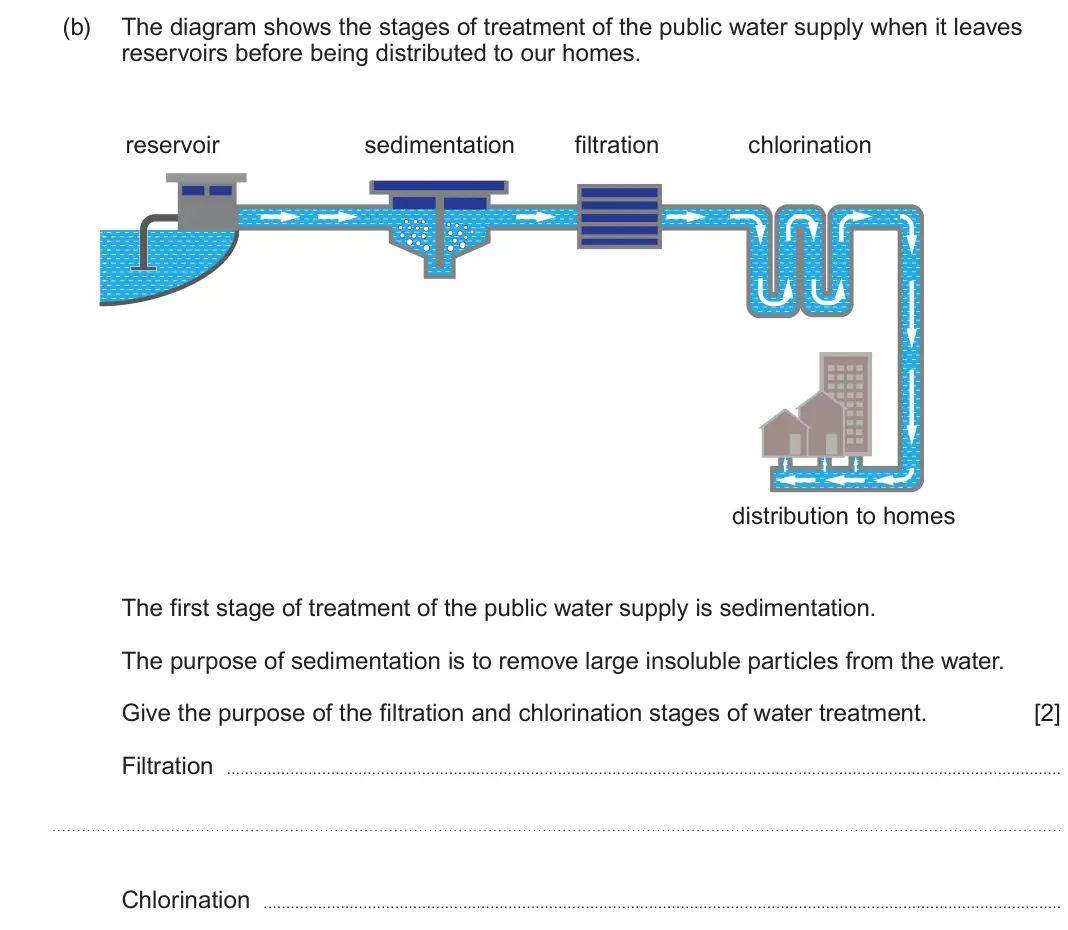
    Original question 3(b): The diagram shows the stages of treatment of the public water supply when it leaves reservoirs before being distributed to our homes. reservoir sedimentation fi

    Loading the question…

    The whole paper ↗
  13. Q3(c)(i)Summer 2025 · Unit 1 Higher1 markWarm-up

    13
    Original question 3(c)(i): In some areas, fluoride is added to water supplies. Give the reason why fluoride is added to water supplies. [1]

    Loading the question…

    The whole paper ↗
  14. Q3(c)(ii)Summer 2025 · Unit 1 Higher1 markWarm-up

    14
    Original question 3(c)(ii): Give one reason why some people disagree with the addition of fluoride to water supplies. [1]

    Loading the question…

    The whole paper ↗
  15. Q3(c)(iii)Summer 2025 · Unit 1 Higher2 marksCore

    15
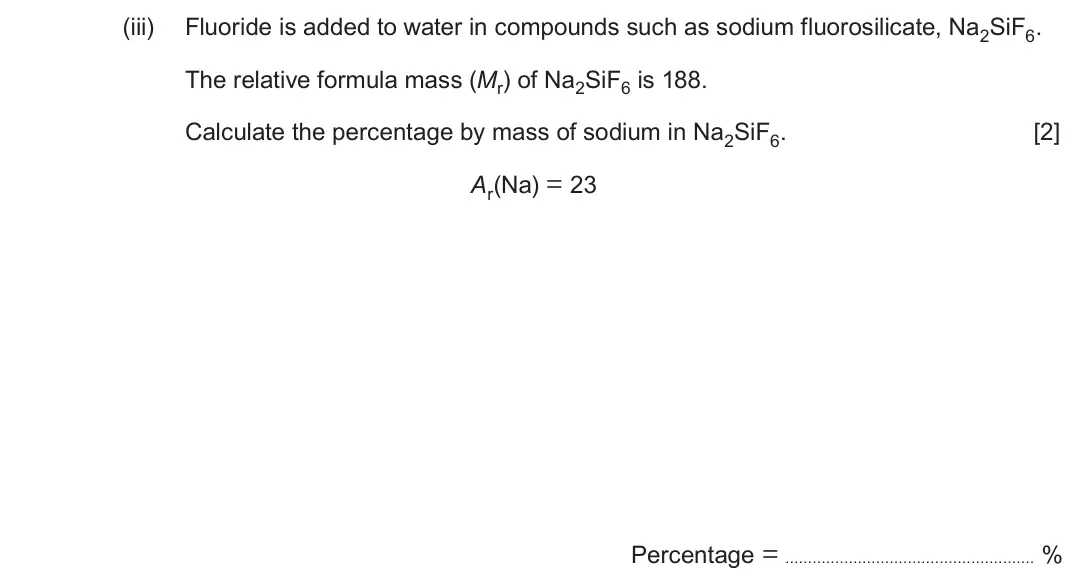
    Original question 3(c)(iii): Fluoride is added to water in compounds such as sodium fluorosilicate, Na2SiF6. The relative formula mass (Mr) of Na2SiF6 is 188. Calculate the percentage by ma

    Loading the question…

    The whole paper ↗
  16. Q4(a)Summer 2025 · Unit 1 Higher1 markWarm-up

    16
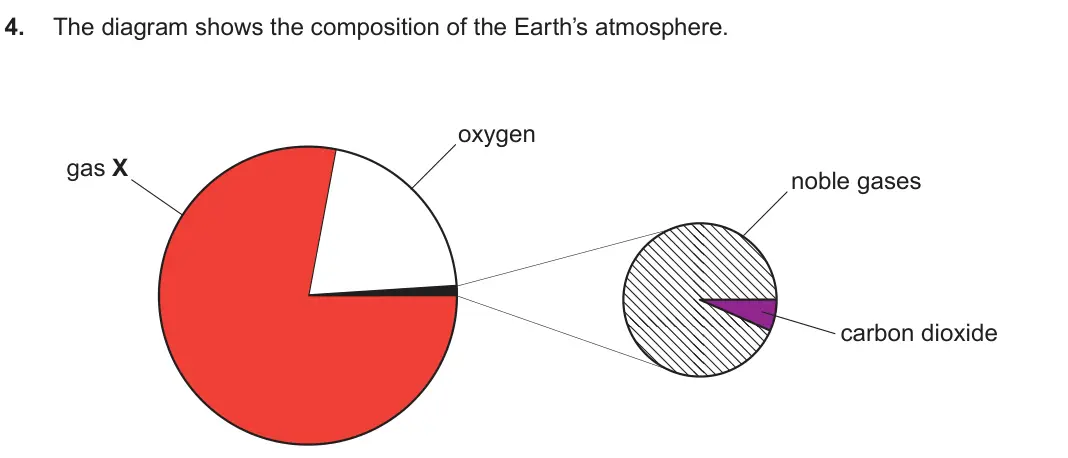
    Setup for original question 4(a)

    Loading the question setup…

    Original question 4(a): Give the name of gas X. [1]

    Loading the question…

    The whole paper ↗
  17. Q4(b)Summer 2025 · Unit 1 Higher3 marksStretch

    17
    Original question 4(b): Explain how the levels of oxygen and carbon dioxide in the atmosphere are kept broadly the same through biological processes. [3]

    Loading the question…

    The whole paper ↗
  18. Q4(c)Summer 2025 · Unit 1 Higher1 markWarm-up

    18
    Original question 4(c): Describe the test that can be used to identify oxygen gas. Include the observation made in a positive test. [1]

    Loading the question…

    The whole paper ↗
  19. Q5(a)(i)Summer 2025 · Unit 1 Higher2 marksCore

    19
    Setup for original question 5(a)(i)

    Loading the question setup…

    Original question 5(a)(i): State two observations you would make when a small piece of lithium is added to a large trough of water. [2]

    Loading the question…

    The whole paper ↗
  20. Q5(a)(ii)Summer 2025 · Unit 1 Higher1 markWarm-up

    20
    Original question 5(a)(ii): When lithium reacts with water, lithium hydroxide and hydrogen gas are produced. Describe how you could show that the lithium hydroxide formed is an alkali. [1]

    Loading the question…

    The whole paper ↗
Browse all topics

Questions, mark schemes and examiner’s reports are © WJEC CBAC Ltd, from their published past papers. Plumi isn’t affiliated with any exam board. Want whole papers? WJEC GCSE Chemistry past papers.

The Plumi iPad app also offers exam-style questions with AI feedback on your handwritten working.