 plumi
Markets: WJEC A‑Level Business questions
Every WJEC A-Level Business exam question on 1.3 Markets, 2016–2025, with its mark scheme and examiner’s report.
Find questions410
Exam
All years
Calculations

Q1(a)
The whole paper ↗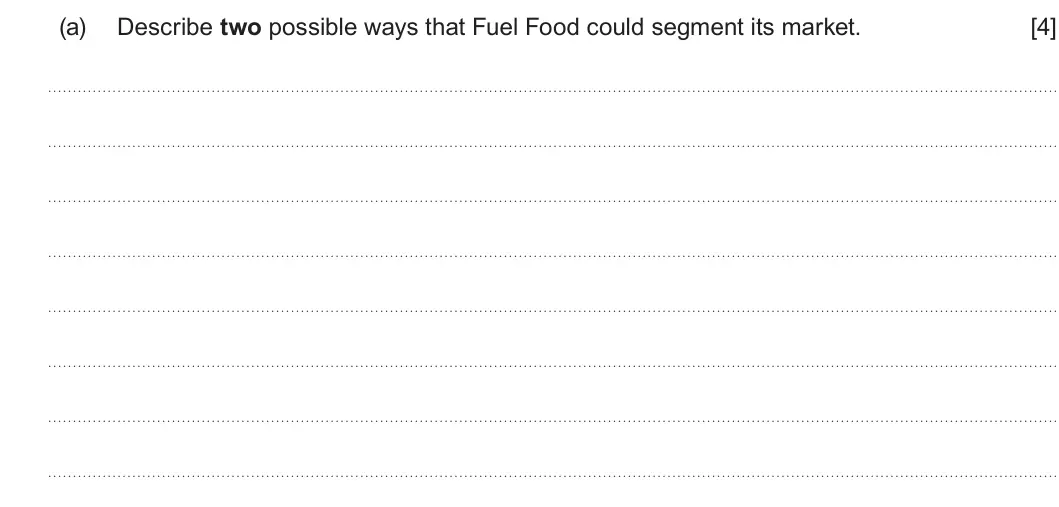
Q2(a)
The whole paper ↗
Q2(b)(i)
The whole paper ↗
Q2(b)(ii)
The whole paper ↗
Q3(b)
The whole paper ↗
Q1(a)
The whole paper ↗
Q2(a)
The whole paper ↗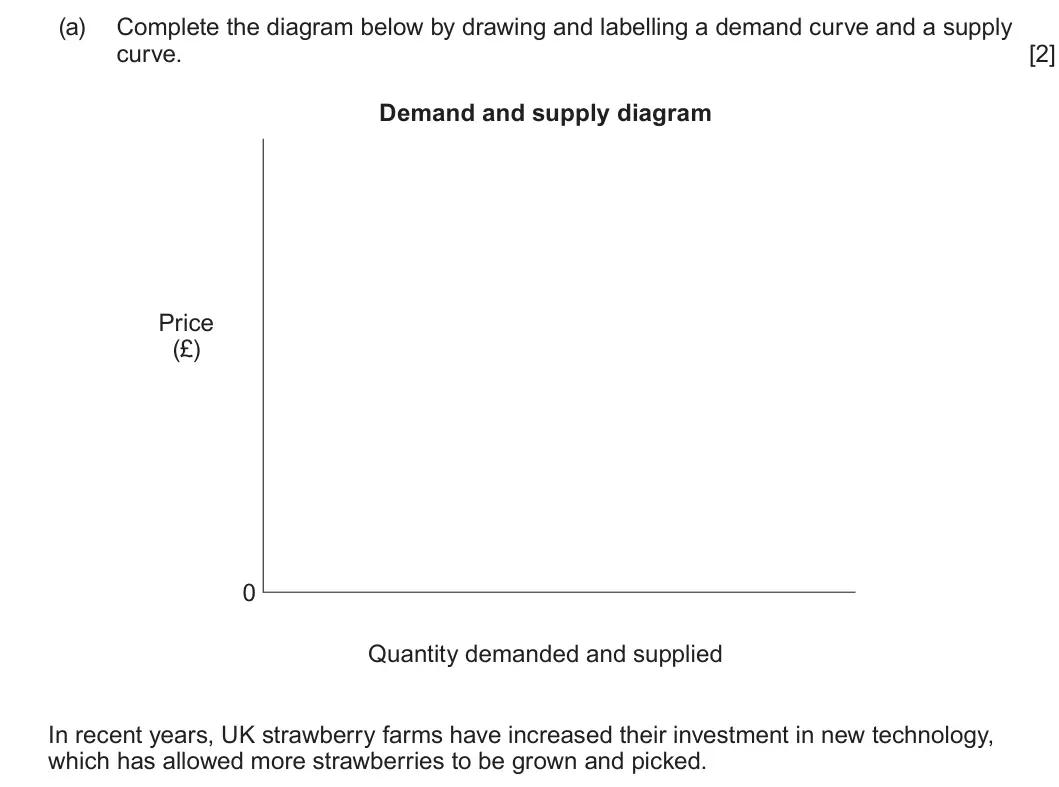
Q2(b)(i)
The whole paper ↗
Q2(b)(ii)
The whole paper ↗
Q2(c)
The whole paper ↗
Q2(a)(i)
The whole paper ↗
Q2(a)(ii)
The whole paper ↗
Q2(b)
The whole paper ↗
Q4(a)
The whole paper ↗
Q4(b)
The whole paper ↗
Q2(a)
The whole paper ↗
Q2(b)
The whole paper ↗
Q3(b)
The whole paper ↗
All 35 questions on Markets, as a list
- Summer 2025, Unit 4, Q2.1 (10 marks): Marketing strategy and profit 2 1 Describe how a holiday company, such as TUI or Jet2holidays, may use market segmentation to attract customers to purchase a ho
- Summer 2025, AS Unit 1, Q1(a) (4 marks): Fuel Food Fuel Food is an online business that creates ready-made meals in a warehouse in Cardiff. Customers can order from its website and the meals are delive
- Summer 2025, AS Unit 1, Q2(a) (2 marks): Define what is meant by the concept of price elasticity of demand. [2]
- Summer 2025, AS Unit 1, Q2(b)(i) (1 mark): State what is meant by price inelastic demand. [1]
- Summer 2025, AS Unit 1, Q2(b)(ii) (1 mark): Identify one reason why the demand for a product may be price inelastic. [1]
- Summer 2025, AS Unit 1, Q3(b) (4 marks): Penderyn The Welsh Whisky Company Ltd produces and sells a range of premium alcoholic drinks including whisky, gin, rum and vodka. Its strongest brand is Pender
- Summer 2024, AS Unit 1, Q1(a) (2 marks): Outline what is meant by the term market. [2]
- Summer 2024, AS Unit 1, Q2(a) (2 marks): Complete the diagram below by drawing and labelling a demand curve and a supply curve. [2] Demand and supply diagram Price (£) 0 Quantity demanded and supplied
- Summer 2024, AS Unit 1, Q2(b)(i) (1 mark): Adapt your demand and supply diagram to demonstrate the change in the UK strawberry market. [1]
- Summer 2024, AS Unit 1, Q2(b)(ii) (2 marks): On your diagram, draw and label: • the original equilibrium price and equilibrium quantity [1] • the new equilibrium price and equilibrium quantity. [1]
- Summer 2024, AS Unit 1, Q2(c) (6 marks): Other than new technology, explain two factors which could affect the supply of strawberries in the UK. [6] Additional space for Question 2(c) only.
- Summer 2023, AS Unit 1, Q2(a)(i) (1 mark): a seasonal market. [1]
- Summer 2023, AS Unit 1, Q2(a)(ii) (1 mark): a global market. [1]
- Summer 2023, AS Unit 1, Q2(b) (4 marks): With reference to the data, describe the changes in the way people shop. [4]
- Summer 2023, AS Unit 1, Q3 (6 marks): Luxury, normal and inferior goods With reference to elasticity of demand, explain the difference between luxury, normal and inferior goods. [6] Additional space
- Summer 2023, AS Unit 1, Q4(a) (2 marks): With reference to High & Mighty, outline what is meant by a niche market. [2]
- Summer 2023, AS Unit 1, Q4(b) (6 marks): Describe how Next plc has used market segmentation to benefit its business and its customers. [6] Additional space for Question 4(b) only.
- Summer 2022, AS Unit 1, Q2(a) (2 marks): Outline what is meant by a competitive market. [2]
- Summer 2022, AS Unit 1, Q2(b) (6 marks): With reference to the dairy industry, explain the key features of a perfectly competitive market. [6]
- Summer 2022, AS Unit 1, Q3(b) (4 marks): With reference to hoverboards, describe reasons why consumers sometimes need protection. [4] In order to avoid negative publicity, Buzz Ltd decided to purchase
- Summer 2019, AS Unit 1, Q1(a) (4 marks): Consider how useful the information in Fig. 1 might be to those thinking about opening a tattoo parlour in 2019. [4] Fig. 2 Percentage of people who have tattoo
- Summer 2019, AS Unit 1, Q1(b) (3 marks): Using Fig. 2, calculate the number of people in the UK in 2015 who say they have ‘no regrets’ about having a tattoo. [3] Entrepreneurs have opened registered ta
- Summer 2019, AS Unit 1, Q1(d) (8 marks): Analyse the factors that may affect the demand for tattoos in the UK. [8]
- Summer 2019, AS Unit 1, Q1(e) (2 marks): What is meant by the term niche market? [2]
- Summer 2019, AS Unit 1, Q1(f) (8 marks): Explain why the tattoo market could not be regarded as an oligopolistic market. [8]
- Summer 2019, AS Unit 1, Q2(a) (2 marks): Using the data provided in the demand forecast table, construct and label the weekly demand curve for Jackson’s Pies on the graph provided below. [2] Demand cur
- Summer 2019, AS Unit 1, Q2(b)(i) (2 marks): Calculate the difference in revenue earned when the pies are sold at 70 pence and 90 pence. [2]
- Summer 2019, AS Unit 1, Q2(b)(ii) (2 marks): With reference to your calculation in 2(b)(i), explain why Jessica is concerned about the possible price rise proposed by her brother. [2] Peter was also keen t
- Summer 2018, Unit 4, Q4(b) (20 marks): ‘Customers need protection from exploitation by businesses.’ Evaluate this statement. [20]
- Summer 2018, AS Unit 1, Q3(b)(i) (4 marks): With reference to Springer Sports Ltd, what do you understand by the term market segmentation? [4]
- Summer 2018, AS Unit 1, Q3(b)(ii) (2 marks): Analyse one benefit to a business of market segmentation. [2]
- Summer 2016, AS Unit 1, Q2 (6 marks): Using examples of goods sold in a supermarket, explain the difference between inferior and normal goods. [6]
- Summer 2016, AS Unit 1, Q3(a) (2 marks): What is meant by the term market? [2]
- Summer 2016, AS Unit 1, Q3(b) (6 marks): Explain, with reference to the examples given in the text, what is meant by monopolistic competition. [6]
- Summer 2016, AS Unit 1, Q4 (8 marks): Llinos runs a coffee shop in Aberystwyth and business has been good in recent months. She has decided to increase the price of her cups of coffee. Her daughter,
Questions, mark schemes and examiner’s reports are © WJEC CBAC Ltd, from their published past papers. Plumi isn’t affiliated with any exam board. Want whole papers? Full past papers.
Rather write your answers by hand on iPad? Plumi marks them against the same mark schemes.