 plumi
Transition metals: OxfordAQA International A Level Chemistry questions
OxfordAQA International A Level Chemistry past-paper questions on 3.2.5 Transition metals, Official specimen papers for Units 1–5, with mark schemes and examiner’s reports where available.
Past paper difficulty
Paper
All papers
Exam
All years
Calculations
Loading the full question list…
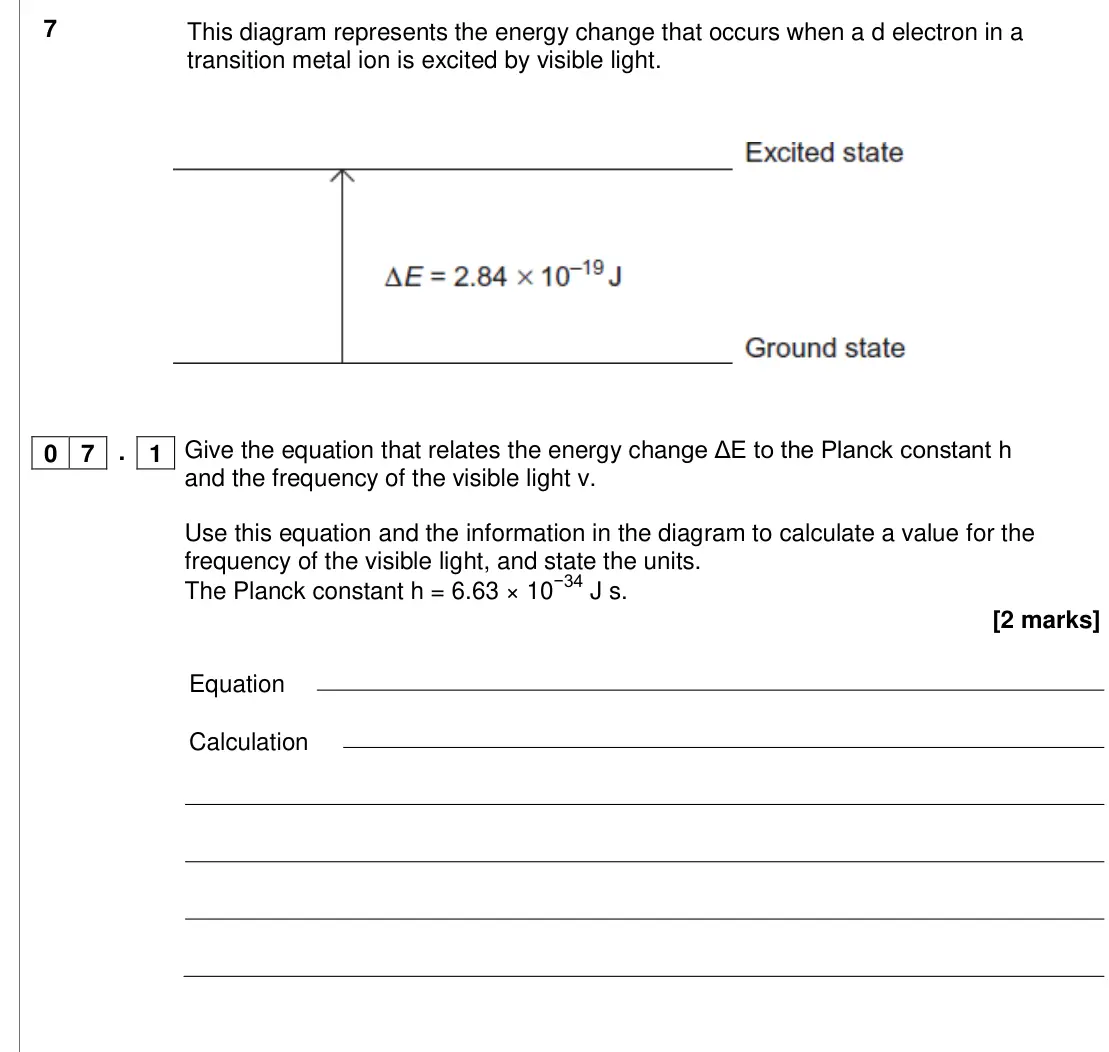
Q07.1
The whole paper ↗Q07.2
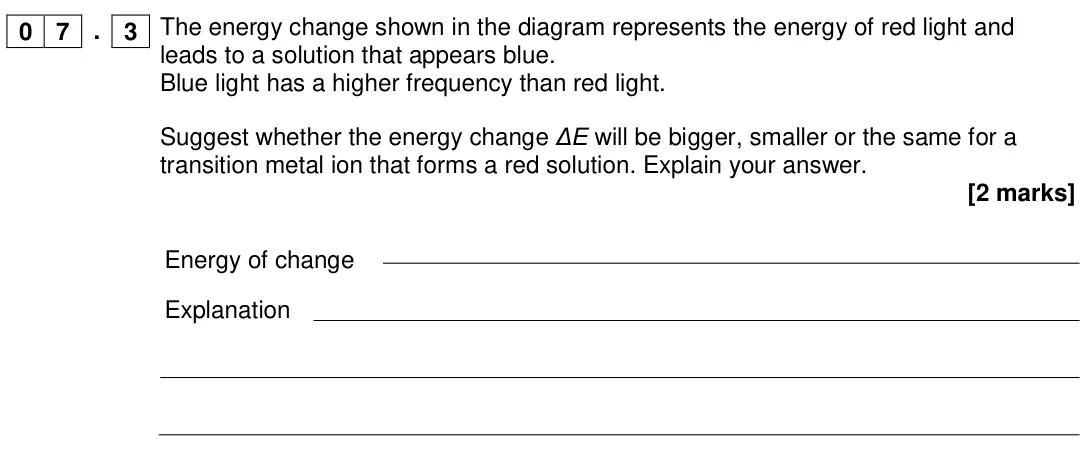
The whole paper ↗Q07.3
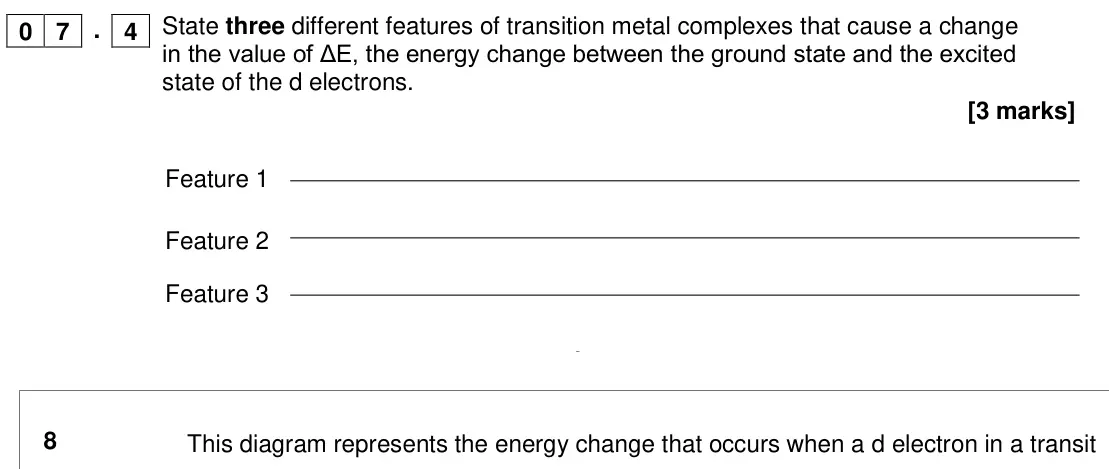
The whole paper ↗Q07.4
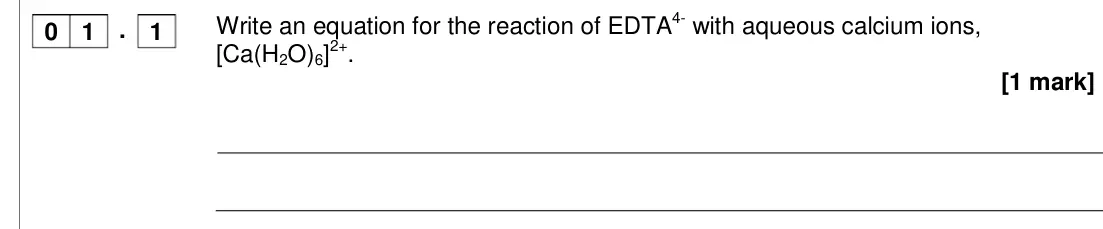
The whole paper ↗Q01.1
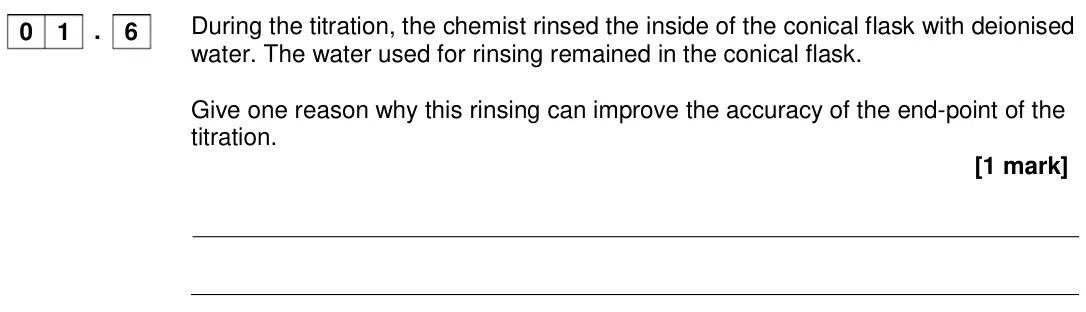
The whole paper ↗Q01.6
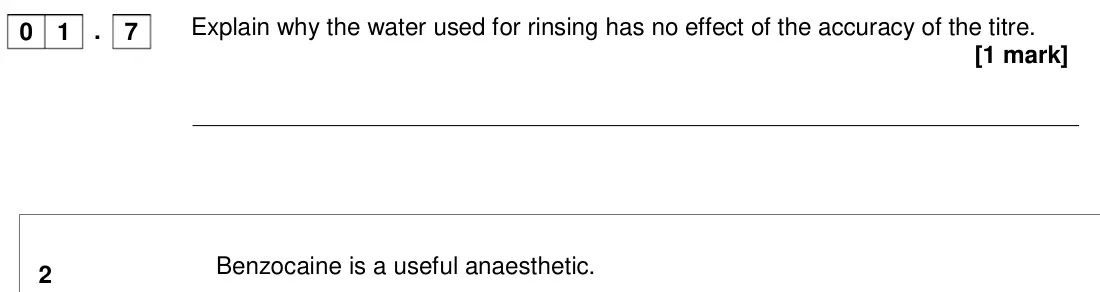
The whole paper ↗Q01.7
The whole paper ↗


All 8 questions on Transition metals, as a list
- Specimen, Unit 3, Q07.1 (2 marks): This diagram represents the energy change that occurs when a d electron in a transition metal ion is excited by visible light. Give the equation that relates the energy change ΔE t
- Specimen, Unit 3, Q07.2 (2 marks): Explain why this electron transition causes a solution containing the transition metal ion to be coloured. [2 marks] 0 7 . 2 5
- Specimen, Unit 3, Q07.3 (2 marks): The energy change shown in the diagram represents the energy of red light and leads to a solution that appears blue. Blue light has a higher frequency than red light. Suggest wheth
- Specimen, Unit 3, Q07.4 (3 marks): State three different features of transition metal complexes that cause a change in the value of ΔE, the energy change between the ground state and the excited state of the d elect
- Specimen, Unit 5, Q01.1 (1 mark): Water that reacts with soap to form a scum is called Hard Water. Hardness is caused by the presence of dissolved calcium or magnesium ions. The hardness of a sample of water can be
- Specimen, Unit 5, Q01.6 (1 mark): Water that reacts with soap to form a scum is called Hard Water. Hardness is caused by the presence of dissolved calcium or magnesium ions. The hardness of a sample of water can be
- Specimen, Unit 5, Q01.7 (1 mark): Water that reacts with soap to form a scum is called Hard Water. Hardness is caused by the presence of dissolved calcium or magnesium ions. The hardness of a sample of water can be
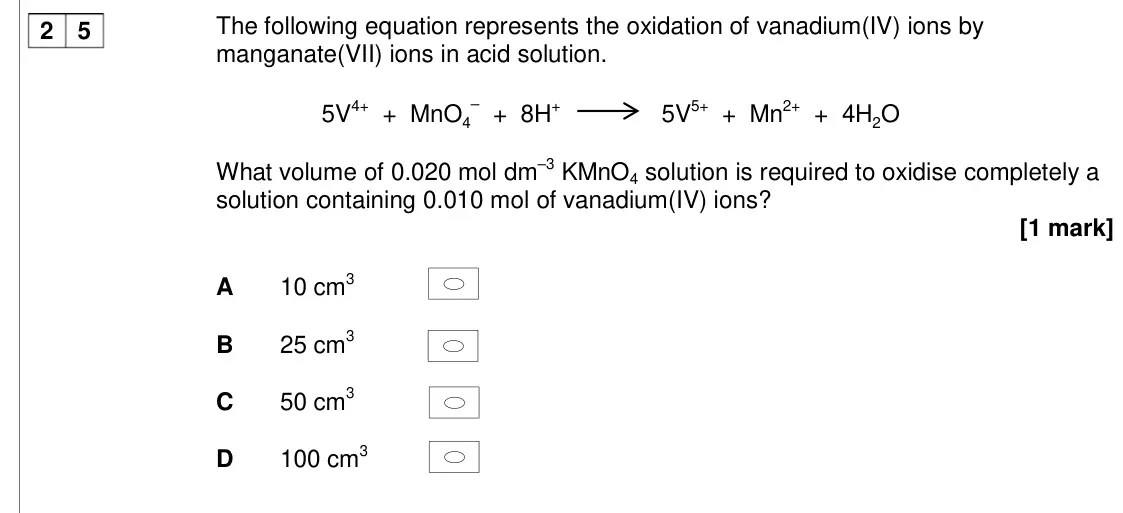
- Specimen, Unit 5, Q25 (1 mark): The following equation represents the oxidation of vanadium(IV) ions by manganate(VII) ions in acid solution. 5V4+ + MnO4 – + 8H+ 5V5+ + Mn2+ + 4H2O What volume of 0.020 mol dm–3 K
Questions, mark schemes and examiner’s reports are © OxfordAQA, from their published past papers. Plumi isn’t affiliated with any exam board. Want whole papers? OxfordAQA International A Level Chemistry past papers.
The Plumi iPad app also offers exam-style questions with AI feedback on your handwritten working.